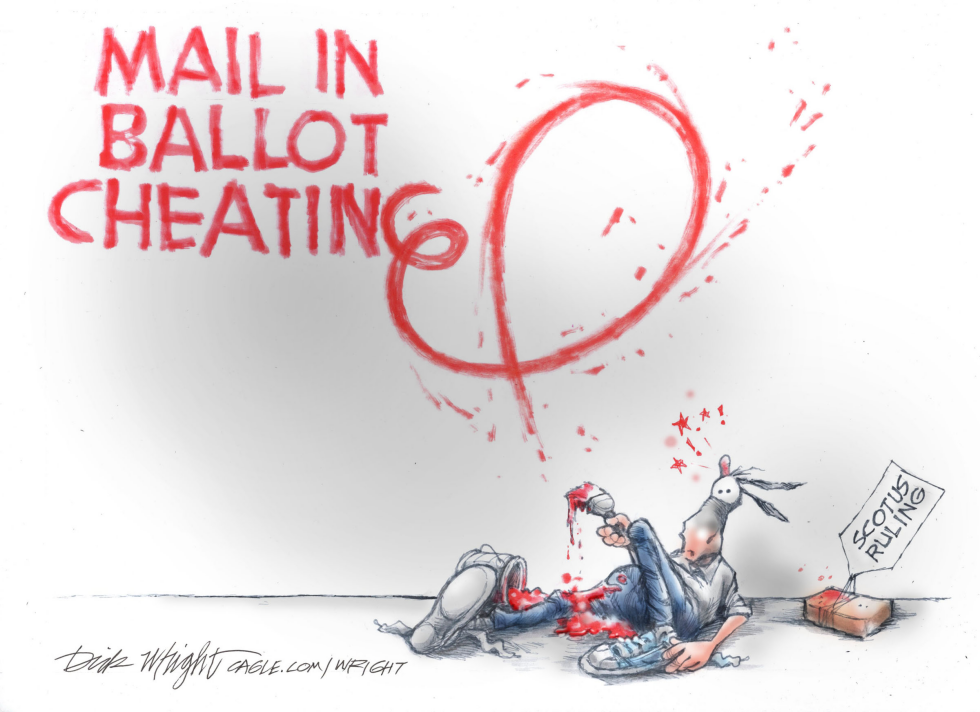
The image depicts the Democratic Party symbol as a donkey lying wounded on the ground with red liquid visible near its body. A large red prohibition symbol covers the words mail in ballot cheating at the top. A sign reading SCOTUS ruling stands nearby next to a box. The composition responds to a Supreme Court decision limiting certain mail-in ballot procedures. The visual argument centers on claims of reduced opportunities for improper voting practices. Publication occurred on August 25 2026. The work uses the party emblem to illustrate the effect of the ruling on one political side. No specific prior case details appear in the image itself.
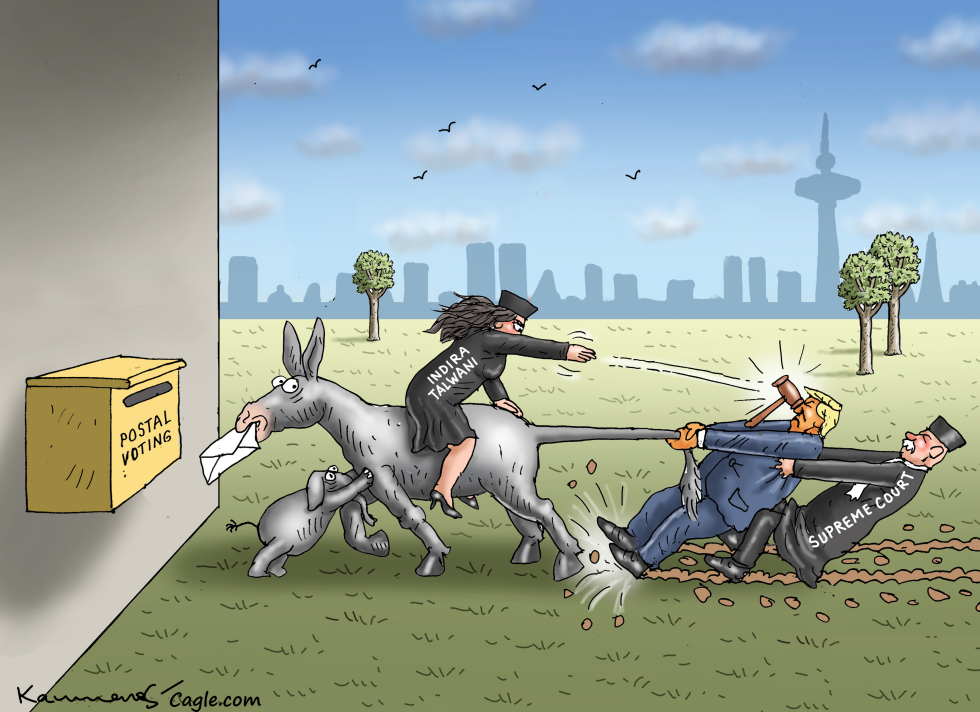
A political cartoon shows federal Judge Indira Talwani riding a Democratic donkey labeled with postal voting while dragging two Supreme Court justices across a field near the Space Needle. The image responds to ongoing disputes over postal voting rules and federal court involvement in election procedures. Talwani, a U.S. District Judge, has issued rulings affecting voting access in recent cases. The cartoon uses the donkey as a party symbol and a yellow ballot box to illustrate the conflict between lower court decisions and the Supreme Court. The visual argument centers on judicial power in election law matters active in 2026.
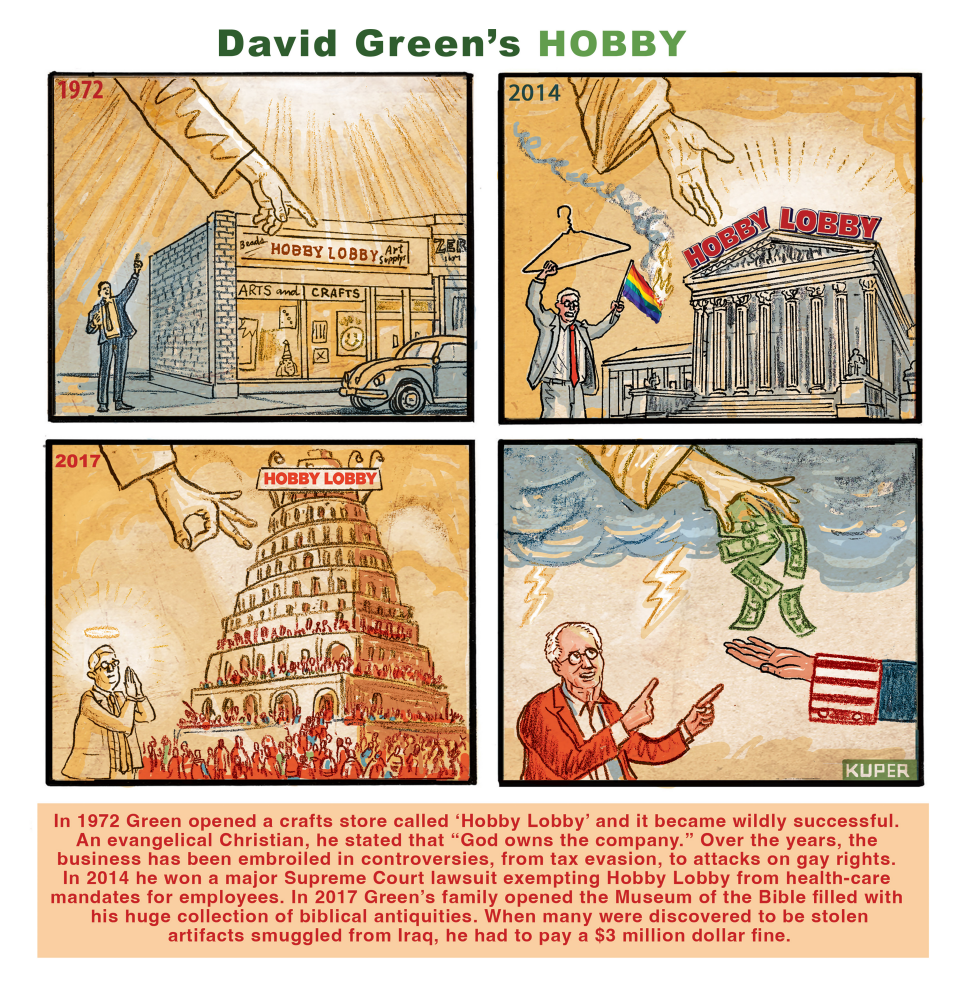
David Green opened Hobby Lobby in 1972 and built it into a major chain while declaring God owns the company. The business faced repeated controversies including a 2014 Supreme Court case on health care mandates and a 2017 Bible Museum scandal involving smuggled Iraqi artifacts that resulted in a $3 million fine. The piece presents these events as a pattern of legal and ethical issues tied to the company's evangelical leadership.
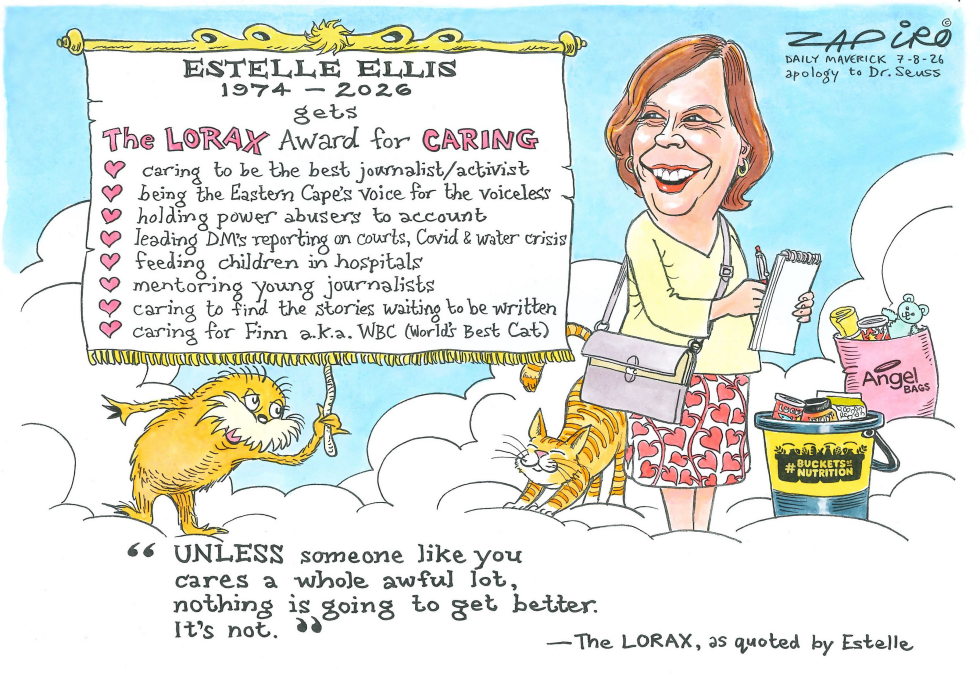
Estelle Ellis, the Eastern Cape journalist known for holding power abusers accountable and feeding children in hospitals, receives the Lorax Caring Award. Her work includes court reporting on DMs, Covid and water issues plus mentoring young journalists. The award recognizes her voice for the voiceless and care for animals. The piece presents her as a model activist journalist whose efforts improve conditions for others.
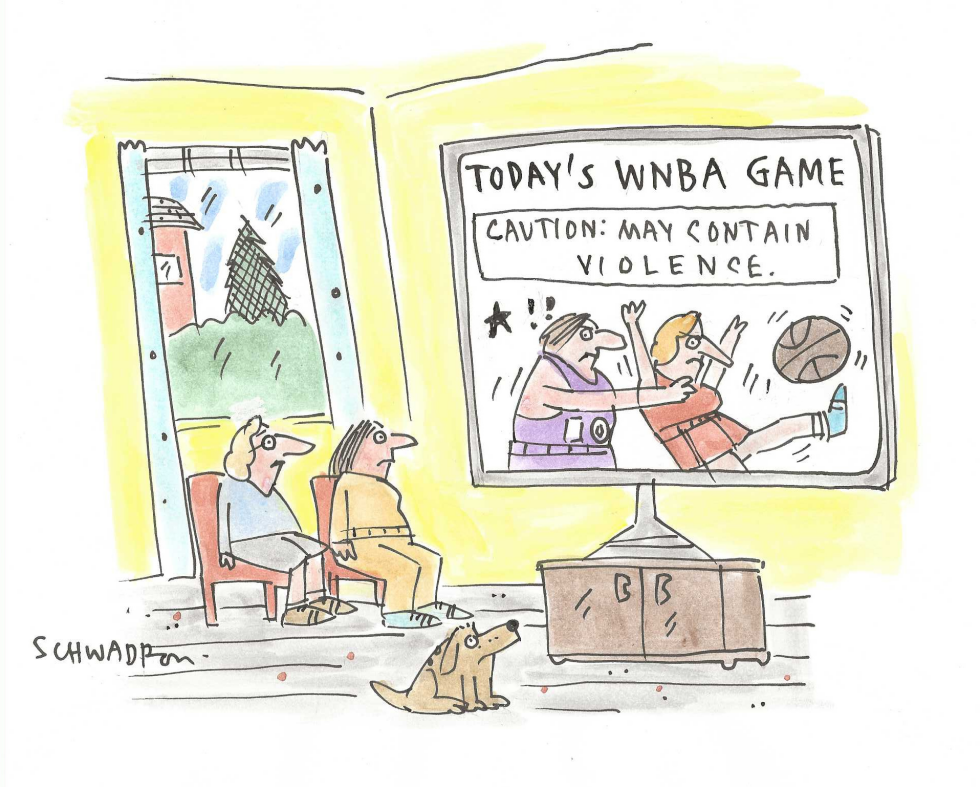
Sports networks have begun attaching violence disclaimers to WNBA game coverage following a series of on-court altercations. The move responds to rising physical confrontations during matches that have drawn broader attention. Broadcasters cite standard content guidelines applied to other programming. The editorial stance questions whether such alerts overstate routine basketball contact or accurately reflect escalating incidents that warrant viewer preparation.
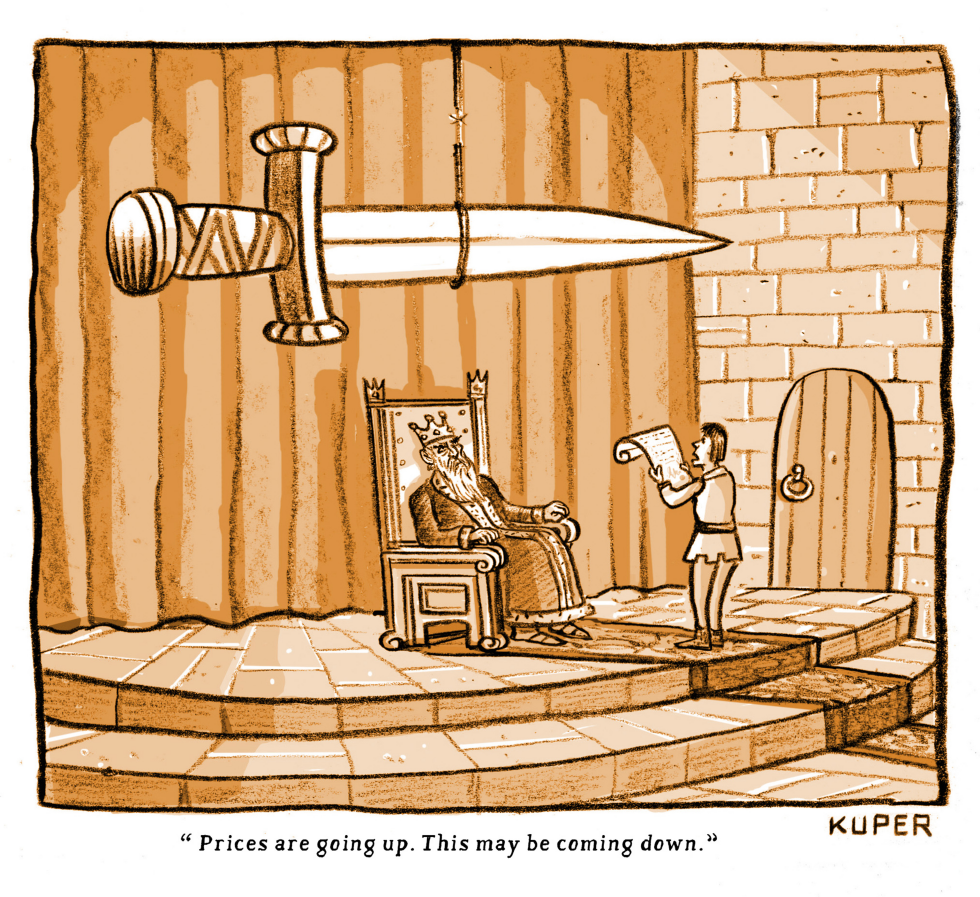
Rising prices continue to pressure economies worldwide as leaders confront persistent inflation data. The situation matters because unchecked costs erode public confidence and strain household budgets. The piece takes the position that such economic threats hang precariously over those in power, much like the ancient warning.
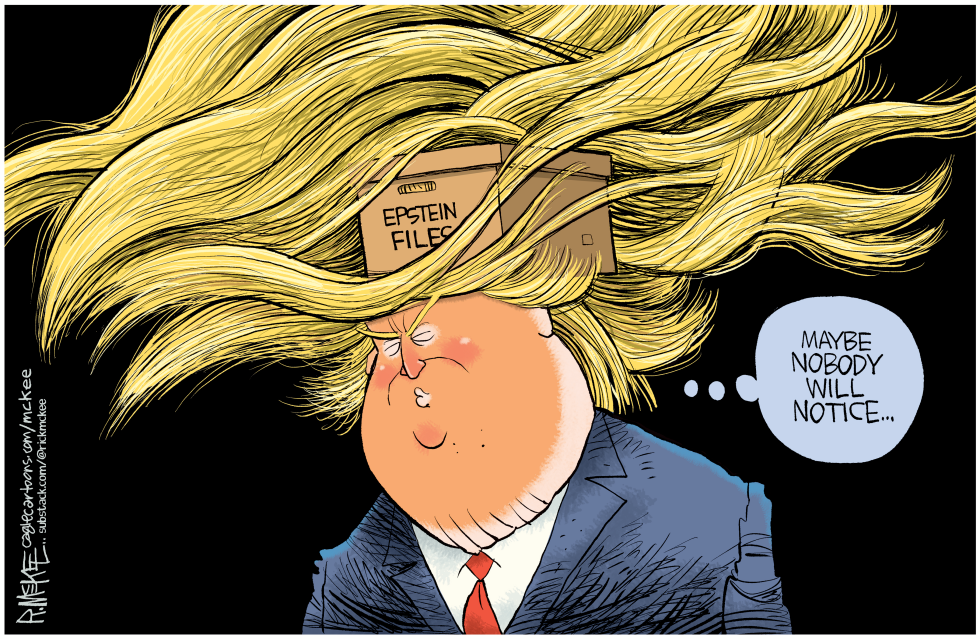
Donald Trump faces renewed public attention over the release of Epstein files detailing past connections. The documents have drawn fresh examination from investigators and media outlets. The editorial takes the position that attempts to downplay or obscure the material only intensify questions about accountability.
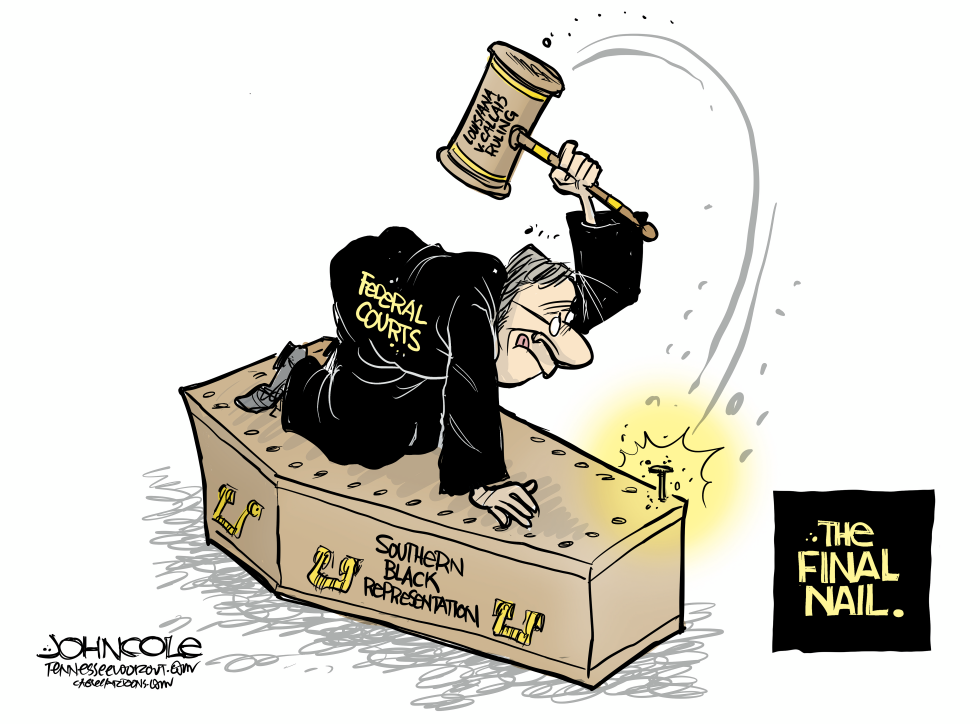
A federal court ruling on Louisiana redistricting has reduced black congressional representation across southern states. The decision follows ongoing litigation over district maps and voting access. It matters because it alters the number of majority-minority seats available in Congress. The piece argues the ruling delivers a decisive setback to those representation gains.
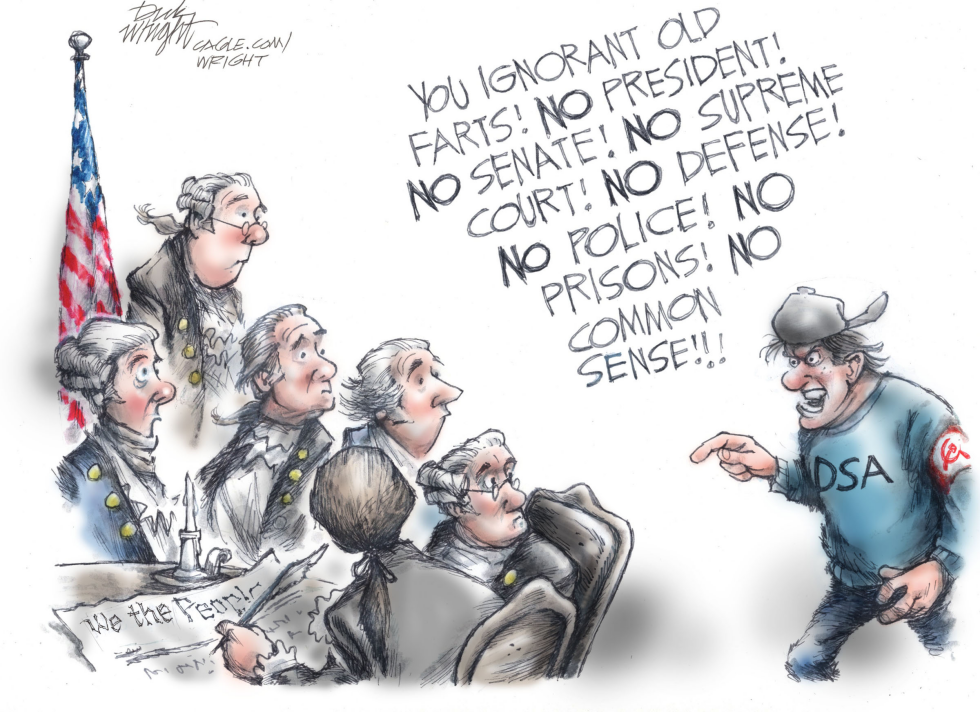
A DSA activist publicly rejects the presidency, Senate, Supreme Court, defense forces, police and prisons while addressing figures associated with the Constitution's creation. The exchange highlights ongoing tensions between socialist activists and defenders of established American governmental structures. The position frames these institutions as unnecessary and lacking basic logic.
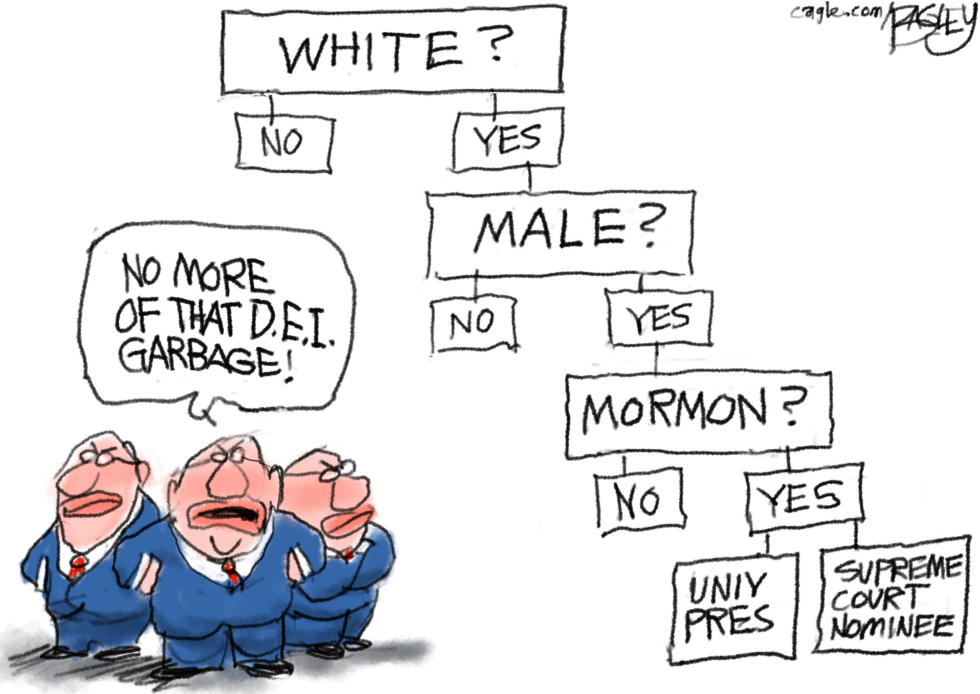
A flowchart circulating in political circles outlines a narrow path to Supreme Court nomination that begins with questions about race, gender and religion. The diagram routes only white male Mormons to the top position while directing others toward university presidencies. Three figures in the image voice opposition to diversity initiatives. The piece responds to ongoing debates over judicial selection standards and identity considerations in appointments. It takes the position that such rigid criteria undermine broader merit-based processes.
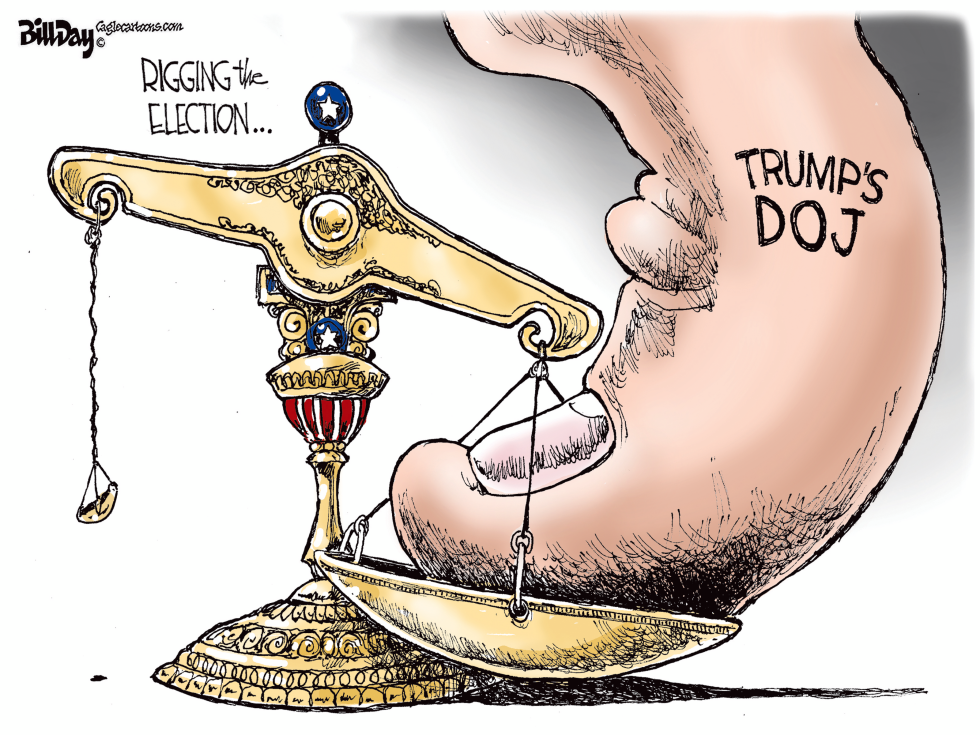
A political cartoon dated July 10, 2026, depicts an ornate scales of justice buckling under the weight of a massive figure labeled Trump's DOJ. The opposite pan hangs empty and elevated. Text above reads RIGGING the ELECTION. The image responds to ongoing concerns over Department of Justice actions and their potential impact on electoral processes during the Trump administration.
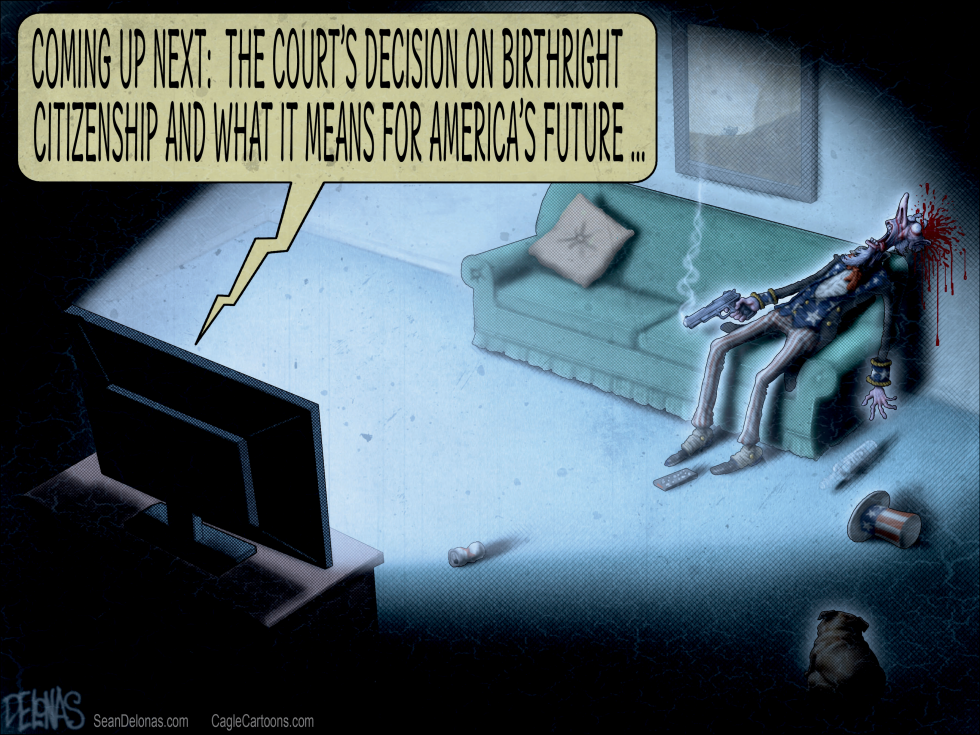
A political cartoon dated July 4, 2026, previews a Supreme Court decision on birthright citizenship. The image shows the figure of Uncle Sam slumped dead on a living room couch with a gunshot wound to the head and blood on the wall. A television in the foreground carries a news teaser about the ruling and its implications for America's future. Scattered items include a handgun, remote control, and top hat on the floor. The cartoon uses stark lighting and a speech bubble to frame the scene as an imminent broadcast segment.