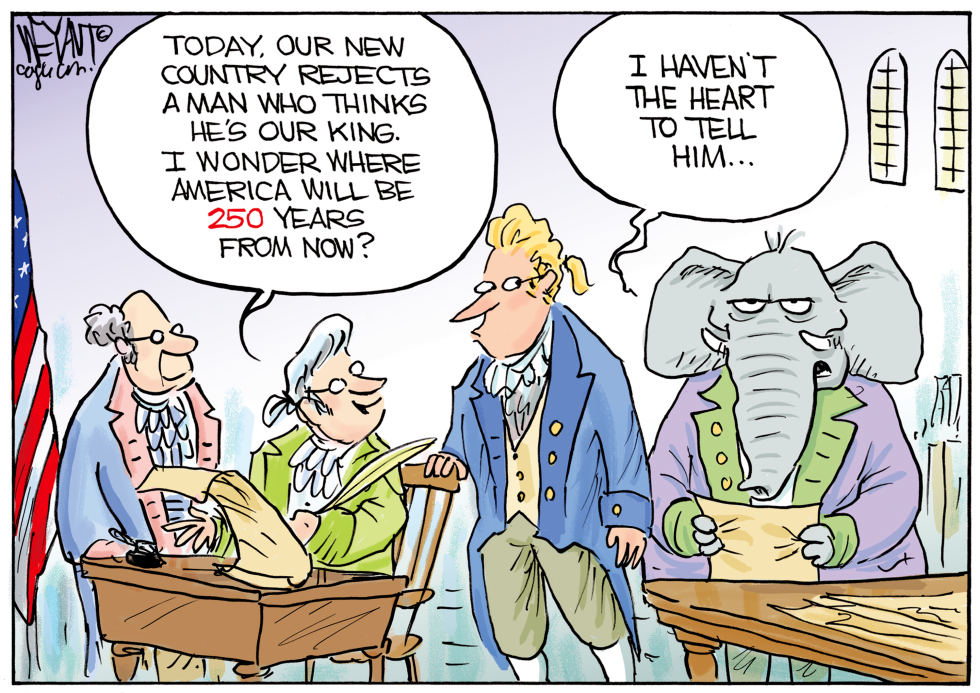
On July 4, 2026, a cartoon shows Founding Fathers in colonial dress at wooden desks with papers, one central figure speaking about rejecting a self-proclaimed king and wondering about America in 250 years, while a Republican elephant in matching attire holds back a reply beside an American flag.
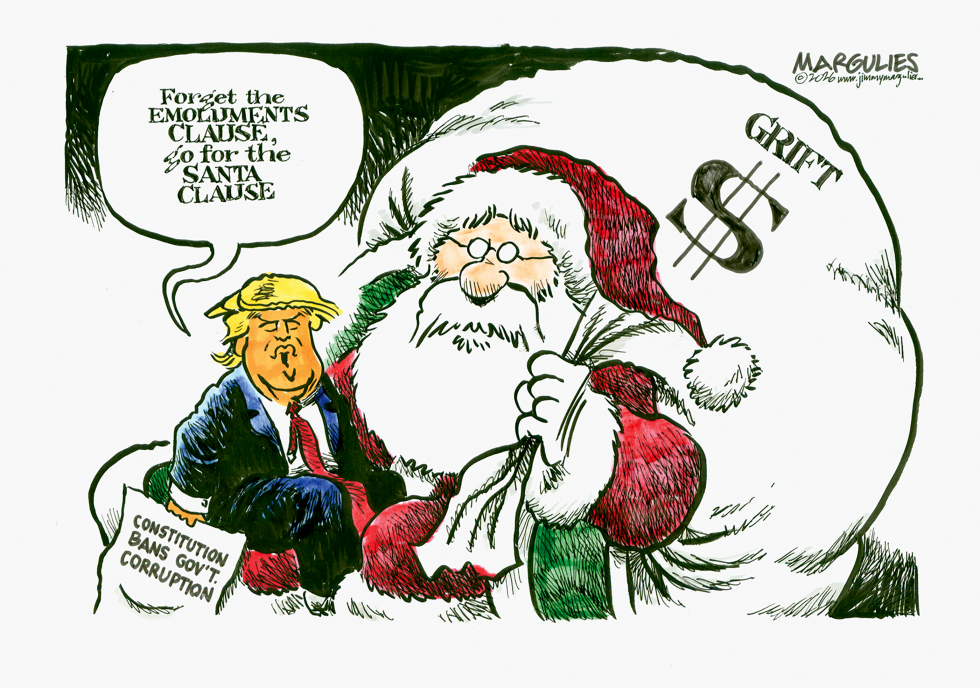
On July 3 2026 Jimmy Margulies depicts Donald Trump dressed as Santa Claus pushing aside the emoluments clause in favor of holiday presents. Trump sits holding a document citing the Constitution ban on government corruption while gripping a large sack marked GRIFT filled with dollar signs. The speech bubble urges forgetting the emoluments clause to pursue the Santa clause instead. The image responds to ongoing debates about presidential business dealings and foreign payments during the holiday period.
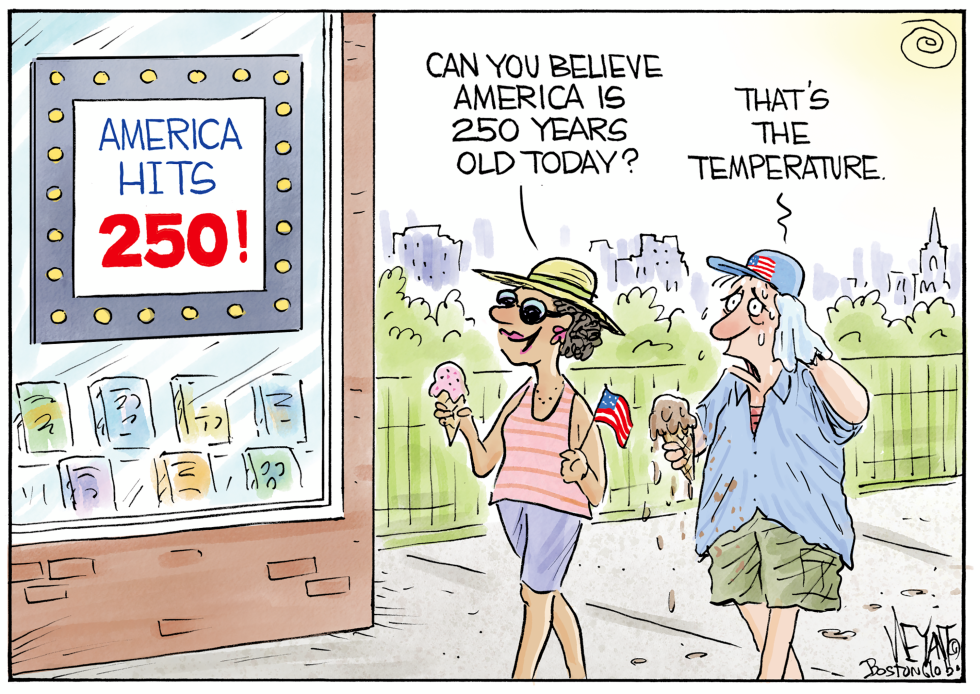
On July 2 2026 two figures pause outside an ice cream shop whose sign proclaims America Hits 250. The woman in a flag tank top asks if anyone can believe the country is 250 years old today. Her companion replies that the figure matches the current temperature as his cone melts onto the pavement. The exchange occurs two days before the July Fourth holiday during a period of elevated summer readings. Background buildings and greenery place the scene in an urban park setting.
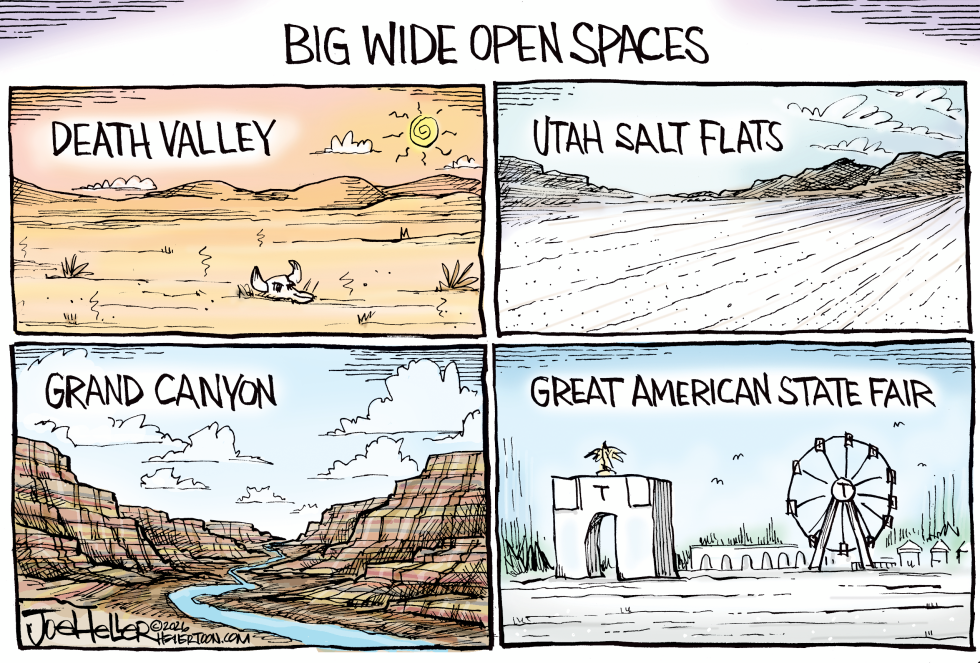
A four-panel illustration titled Big Wide Open Spaces places Death Valley, Utah Salt Flats, and the Grand Canyon next to the Great American State Fair. Each panel shows wide horizons in the natural settings while the fair panel includes a Ferris wheel, entrance gate, and tents. The comparison highlights scale differences between remote landscapes and a populated event ground. The piece appeared online on July 2, 2026.
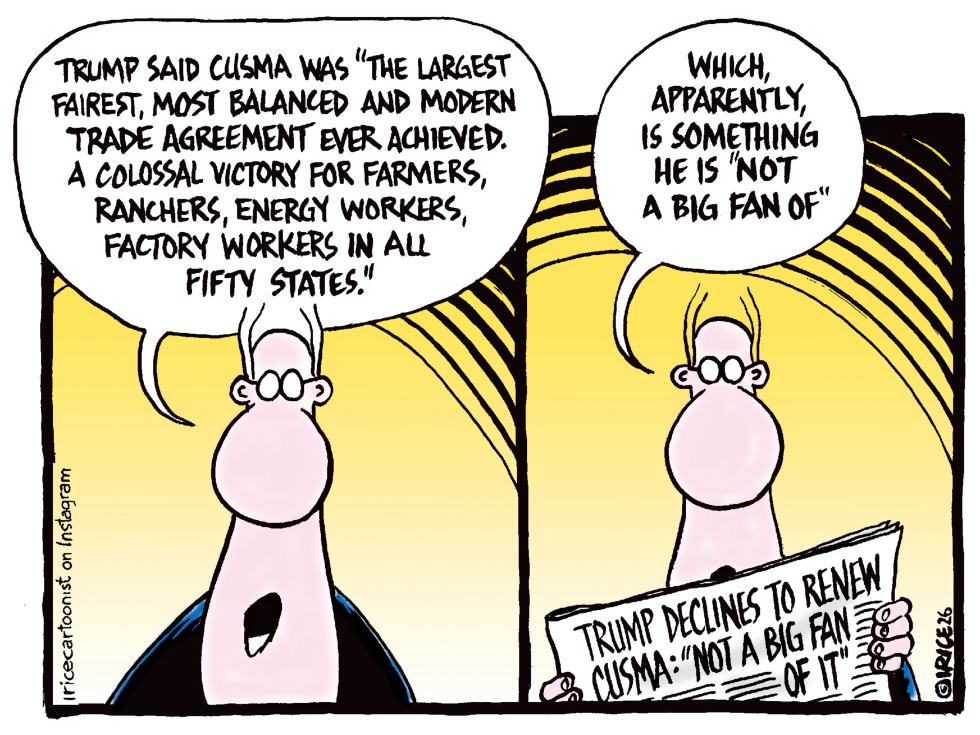
The July 2026 cartoon depicts a figure resembling President Trump in two panels. The left shows praise for CUSMA as the best trade deal. The right shows the same figure reading a newspaper headline about declining to renew it. The visual points to a shift in position on the agreement covering Canada, the US, and Mexico.
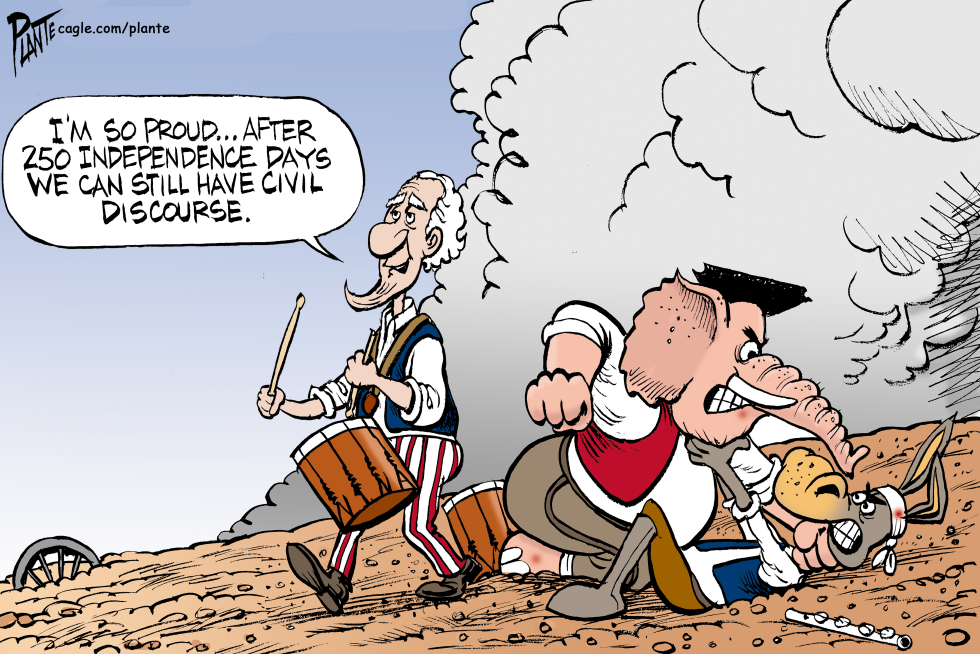
On the 250th anniversary of American independence, a Revolutionary War drummer expresses pride in continued civil discourse even as the Republican elephant and Democratic donkey grapple violently on the ground nearby.
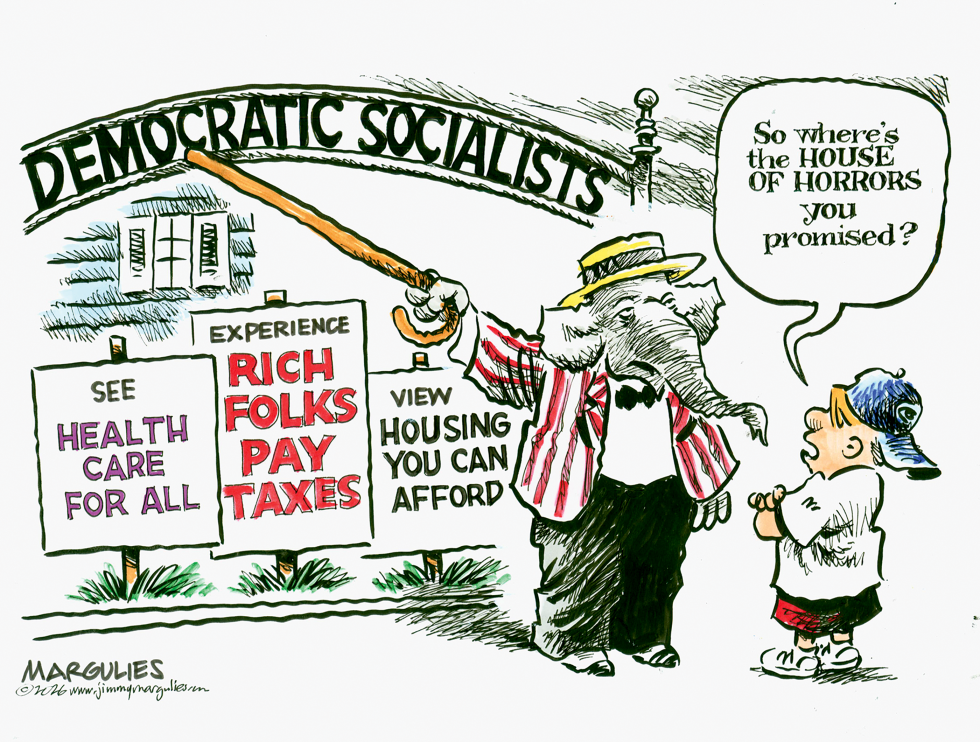
An elephant representing Republicans conducts a tour of attractions labeled Democratic Socialists on July 1 2026. Three signs advertise health care for all, taxes paid by the rich and housing that average people can afford. A young visitor in a cap asks where the house of horrors is that was promised. The scene uses the classic elephant symbol to frame policy offerings as ordinary exhibits rather than frightening outcomes.
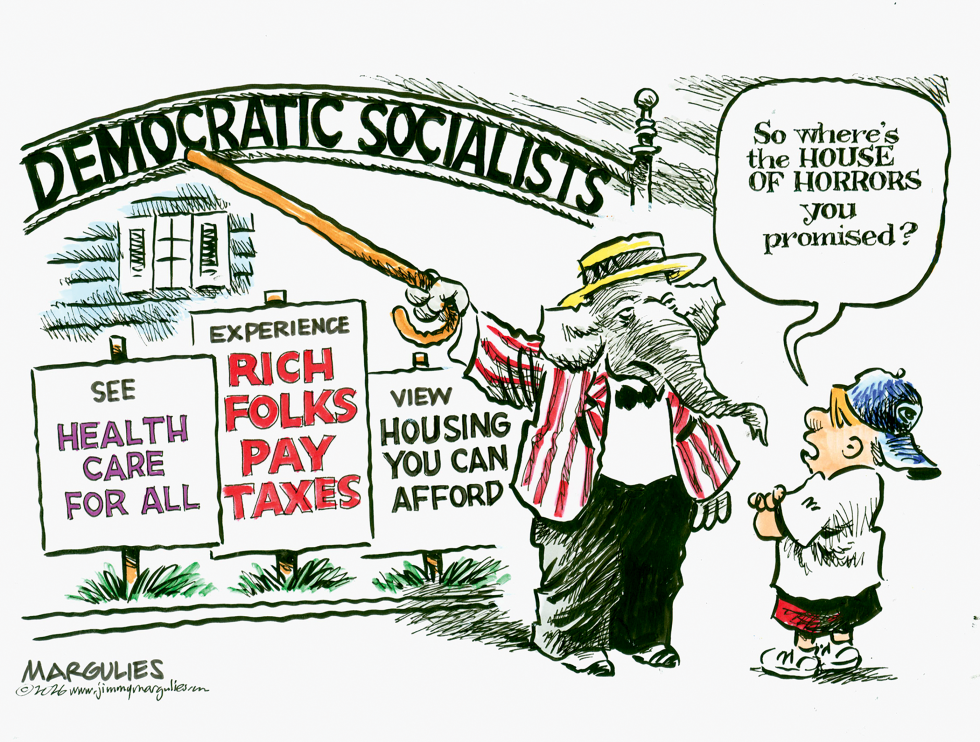
An elephant dressed as a barker stands at a Democratic Socialists booth displaying signs for health care for all, rich folks paying taxes, and housing you can afford. The figure holds a pointer toward the arch and addresses a child visitor. The child asks where the house of horrors is located. The scene is set outdoors with a building facade visible behind the signs. Publication occurred on July 1 2026.
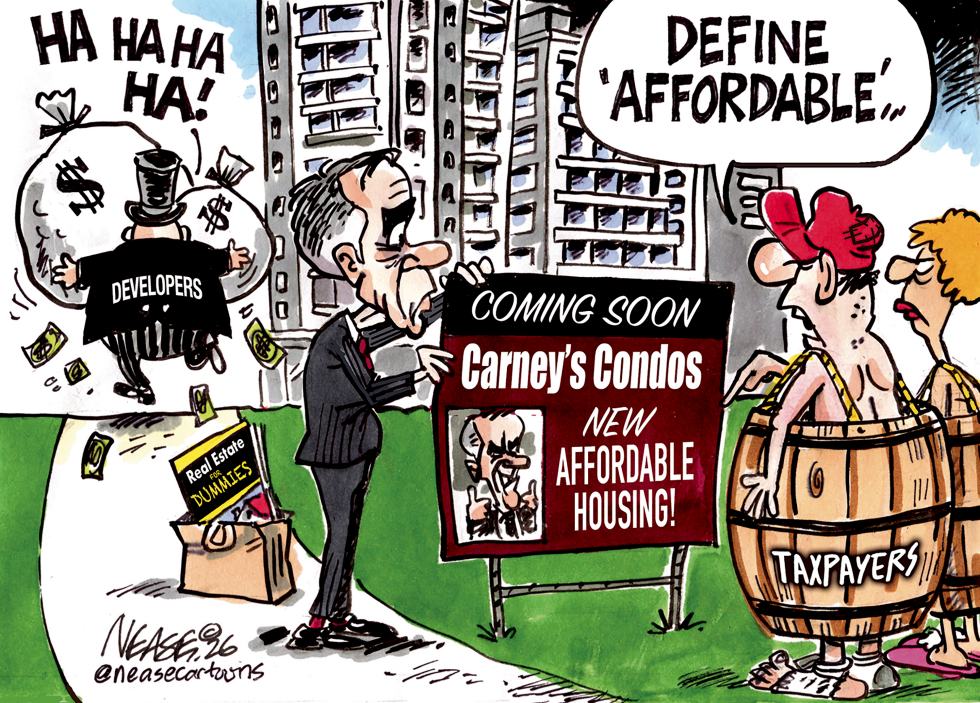
A real estate sign for Carney's Condos promotes new affordable housing. Developers in top hats collect money while laughing. Two taxpayers trapped in barrels question the definition of affordable. A book on real estate basics sits on the ground near high rise buildings.
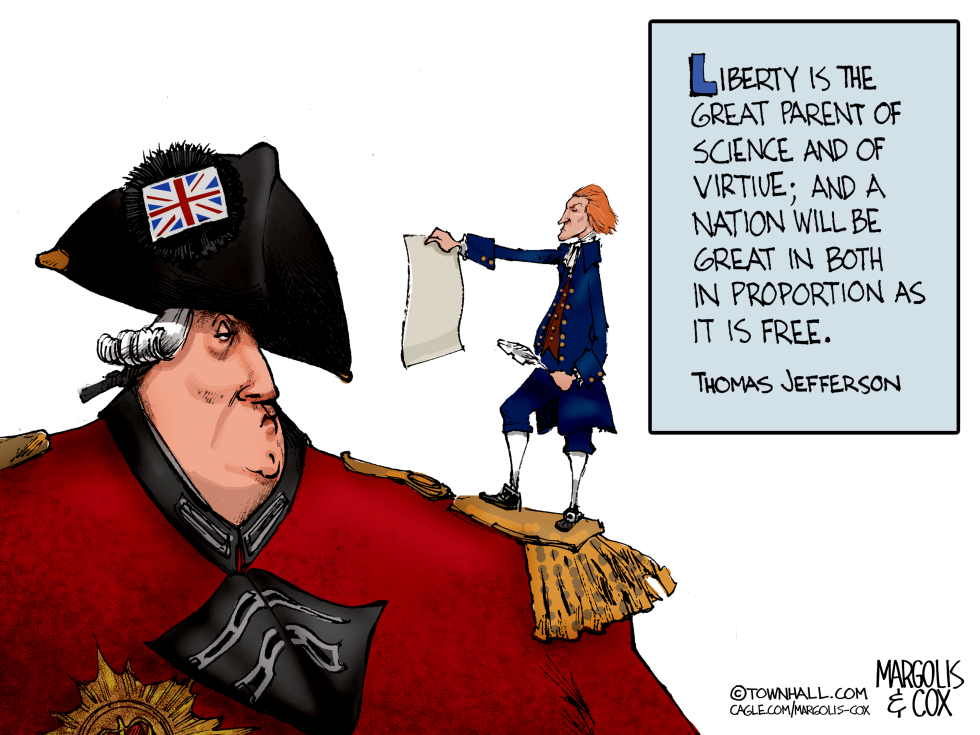
A British redcoat in 18th-century uniform stares ahead while a diminutive Thomas Jefferson perches on his shoulder and displays a handwritten quote on liberty. The 2026 image pairs the founding words with the opposing military figure to underscore the contrast between authority and freedom.
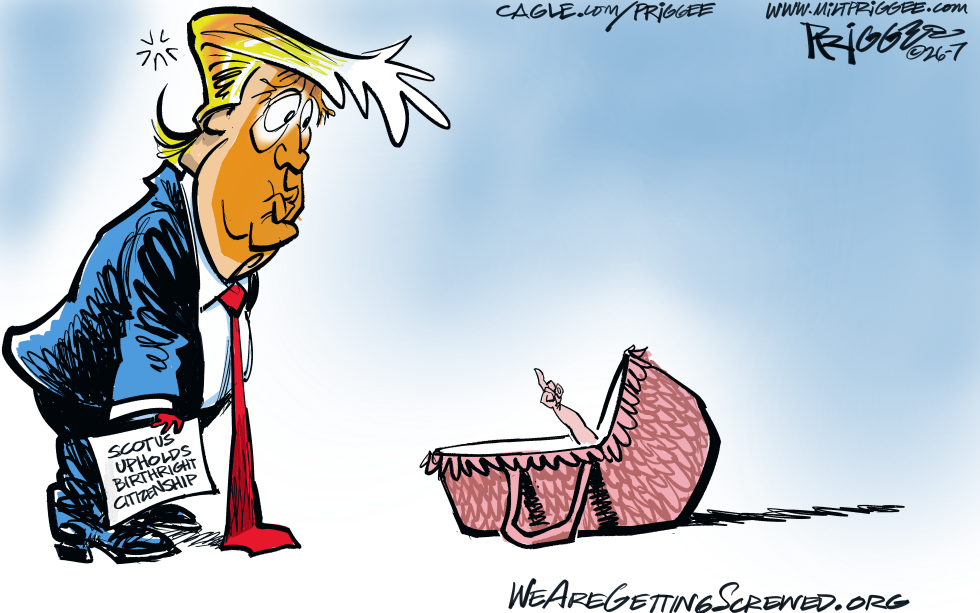
The cartoon illustrates Donald Trump holding a document announcing that the Supreme Court has upheld birthright citizenship. He stands over a bassinet from which an infant extends a middle finger. The image references the constitutional clause granting citizenship to those born on U.S. soil and positions the ruling as a direct rebuke to efforts to alter that interpretation.
A suited figure with an open book for a head stands against a yellow background while raising a smartphone with a bright screen. The image captures the tension between traditional reading and modern device use. The book displays visible pages and eyes, while the phone emits light and small spark lines. The composition places the figure in profile view with one arm extended toward the device.
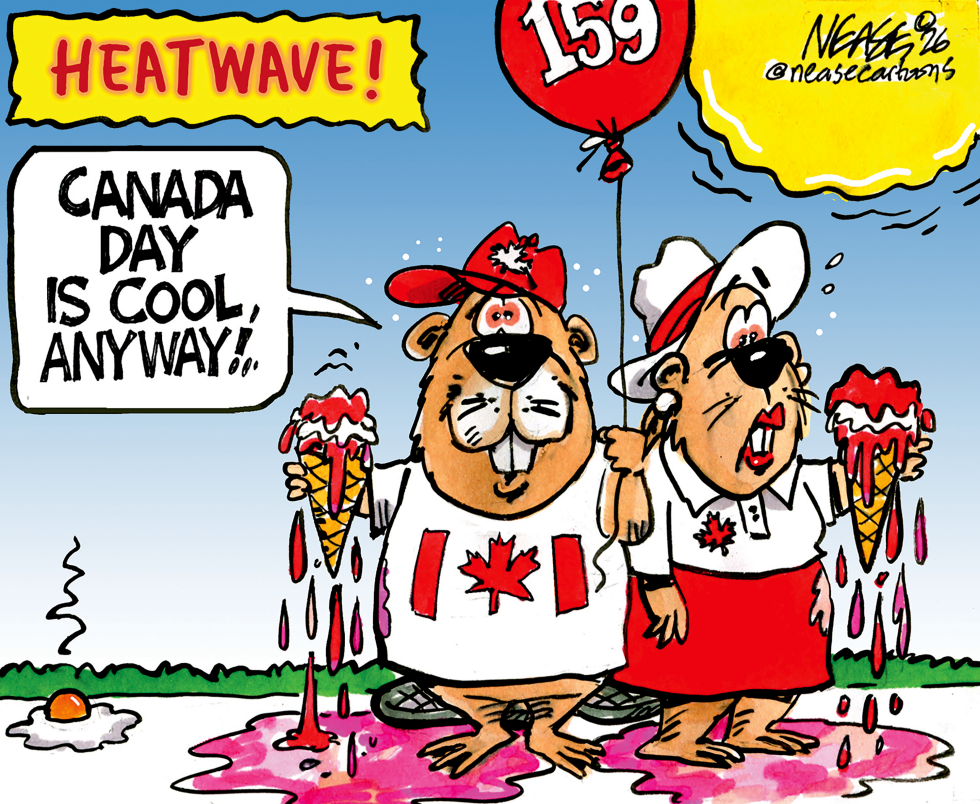
On June 30 2026 two cartoon beavers dressed in Canadian flag attire stand on melting pavement holding ice cream cones that drip heavily during an intense heatwave. A red balloon marked 159 floats above while a speech bubble declares Canada Day cool anyway. A fried egg lies on the ground near the pink puddle formed by the melting treats.
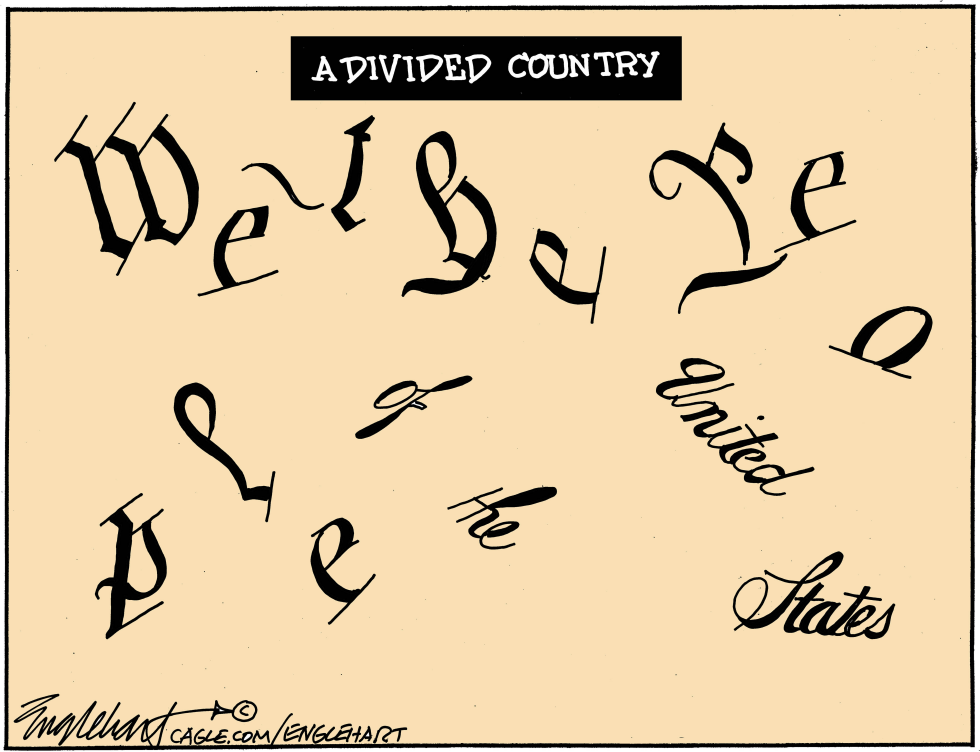
The cartoon displays the opening words of the U.S. Constitution scattered in disconnected segments across a plain background. A black banner at the top reads A DIVIDED COUNTRY. The arrangement of the familiar preamble text visually breaks the phrase into isolated parts. This presentation coincides with the approach of Independence Day on the 2026 calendar. The work draws attention to fractures within the national fabric without naming specific events or figures.
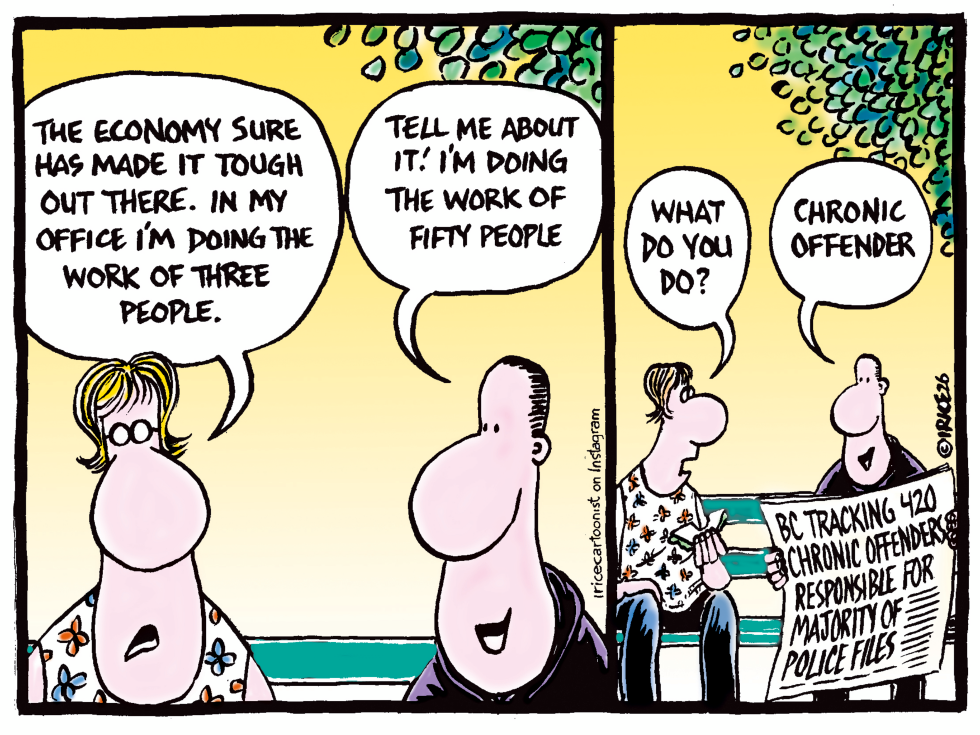
In a two-panel scene dated July 5 2026, office workers discuss heavy workloads caused by economic conditions, with one claiming to handle the work of three people and another fifty. The exchange shifts when a man on a bench identifies himself as a chronic offender, while a nearby newspaper headline reports British Columbia tracking 420 such individuals responsible for the majority of police files.