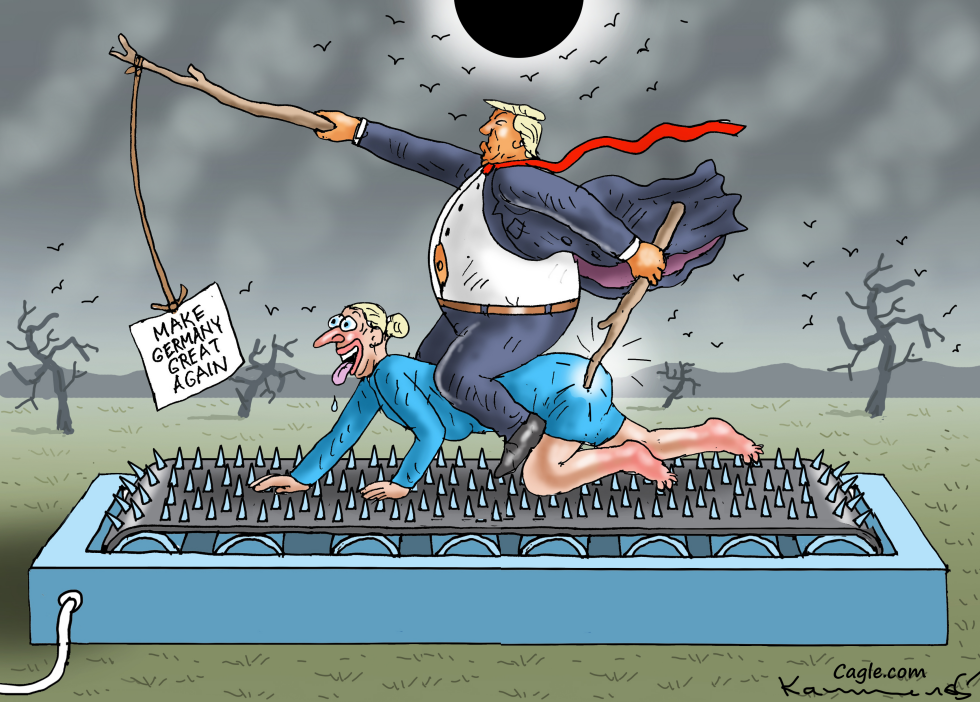
Donald Trump promotes a revival slogan aimed at Germany while Angela Merkel faces the consequences. The effort highlights ongoing tensions in transatlantic relations and questions about external influence on European domestic policy. The piece argues that such interventions impose unnecessary hardship without delivering benefits.
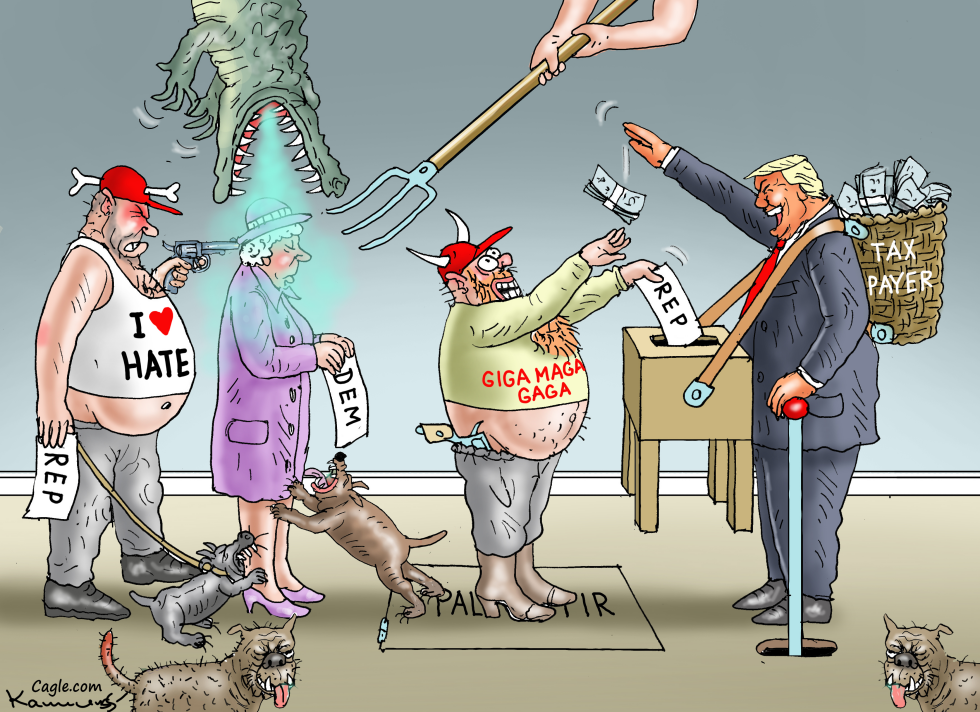
As the 2026 midterm elections approach, former President Trump has positioned himself as a central force in Republican campaigns, directing resources and mobilizing supporters. The cartoon highlights the use of taxpayer money in these efforts and the intense partisan divide, with Democrats portrayed as under attack. It takes the position that such involvement risks undermining fair electoral processes.
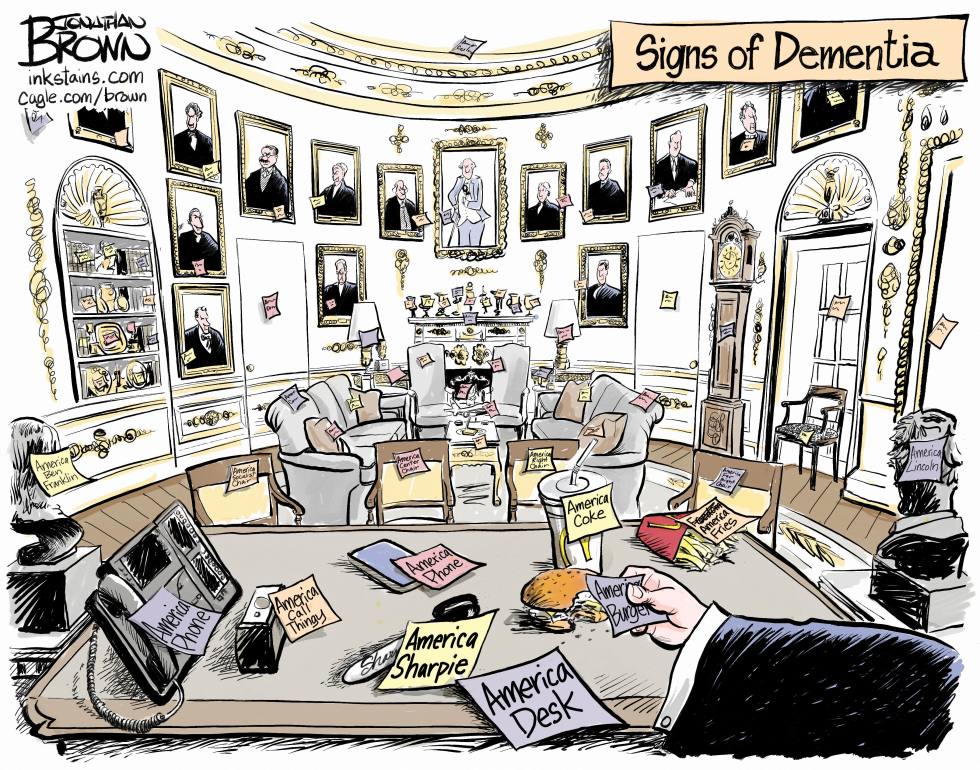
A new editorial cartoon depicts the Oval Office overrun with sticky notes labeling everyday items as America. The scene highlights signs of dementia through repeated branding on phones, desks, food and furniture. Published on September 9, 2026, the work comments on ongoing concerns about cognitive fitness in the presidency. The visual uses the familiar setting of the White House to underscore confusion and memory issues. Observers note the cartoon captures public debate over leadership capacity without naming specific individuals.
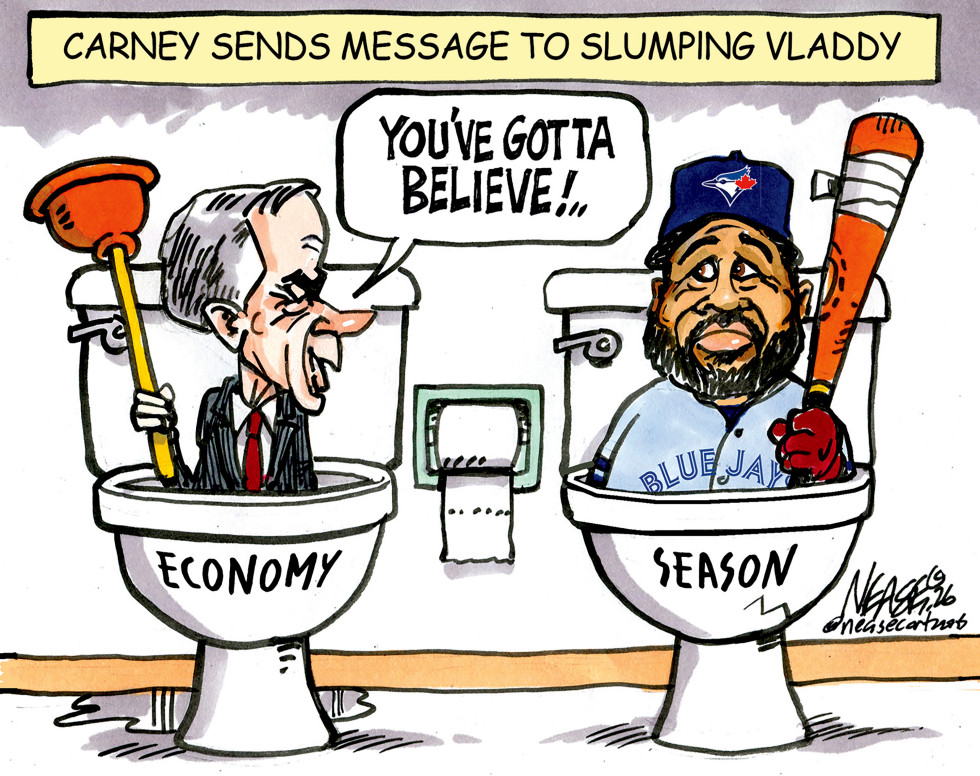
On August 12 2026 Mark Carney addressed Vladimir Guerrero Jr. during simultaneous downturns for the Canadian economy and the Toronto Blue Jays season. The exchange highlights ongoing pressures on both fronts with Carney positioned as a voice of encouragement. The piece frames the interaction as a direct motivational message from the political sphere to the sports world.
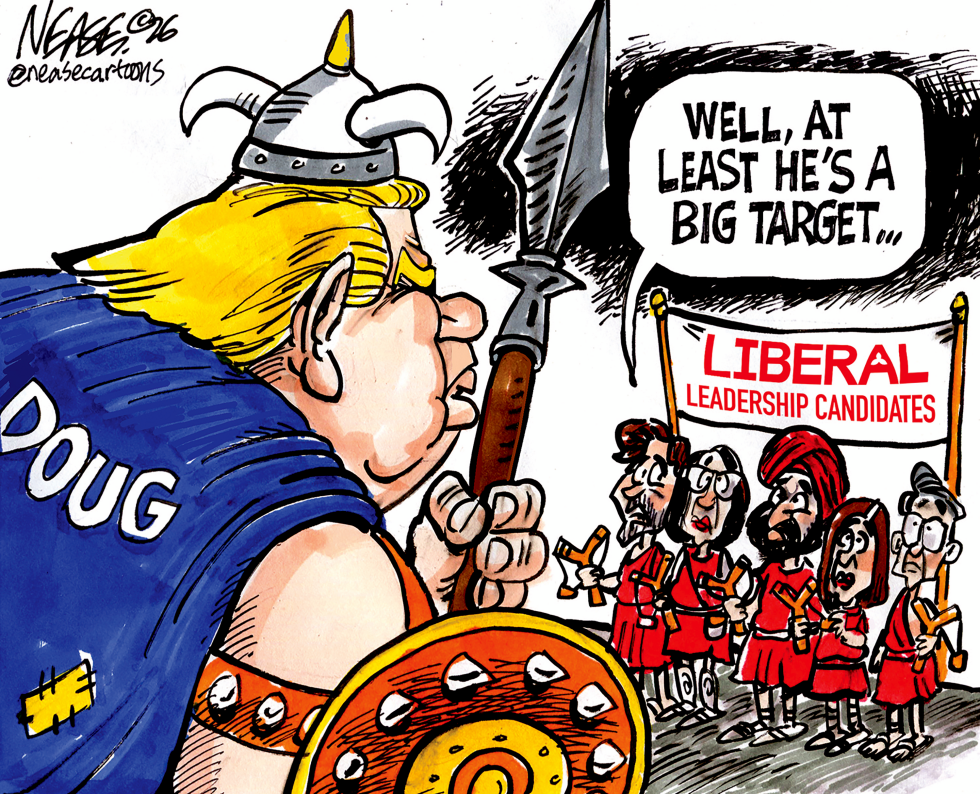
Liberal leadership candidates have identified a prominent opponent as their primary focus in an ongoing contest. The opponent, labeled Doug, appears as a large and visible figure in the political landscape. This dynamic highlights how one individual can dominate attention during a party’s internal selection process. The piece presents the situation as an opportunity for the candidates to rally around a clear adversary rather than internal divisions.
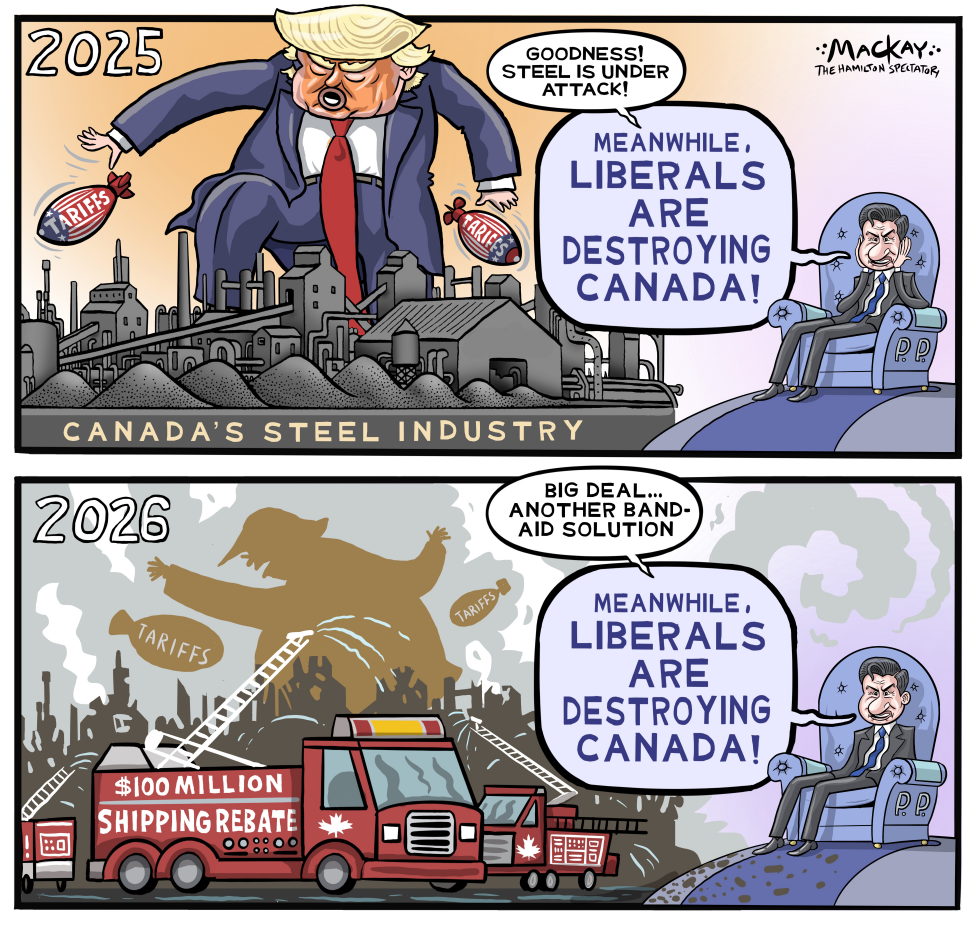
U.S. tariffs imposed on Canadian steel in 2025 triggered sharp declines in the domestic industry by 2026. The federal government responded with a $100 million shipping rebate. Conservative Leader Pierre Poilievre continued to focus attacks on the Liberal government rather than the trade shock. The cartoon argues this stance amounts to a repeated distraction from the core economic damage.
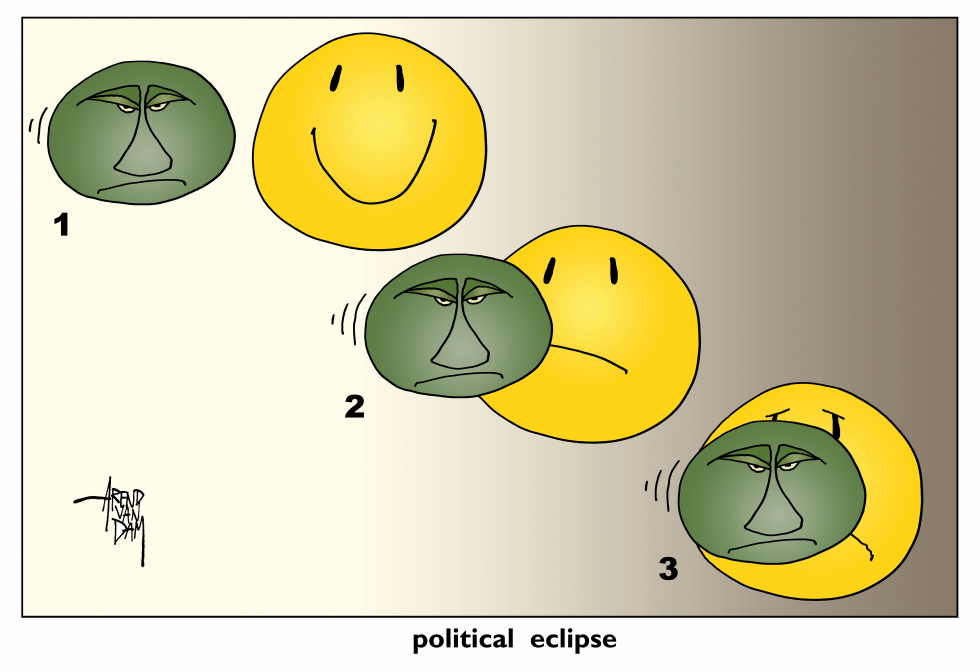
A political figure represented by a green frowning face progressively covers a yellow smiling face across three labeled stages. The interaction illustrates one presence gaining dominance while diminishing the other. The piece comments on the dynamics of political competition and shifting influence between rivals.
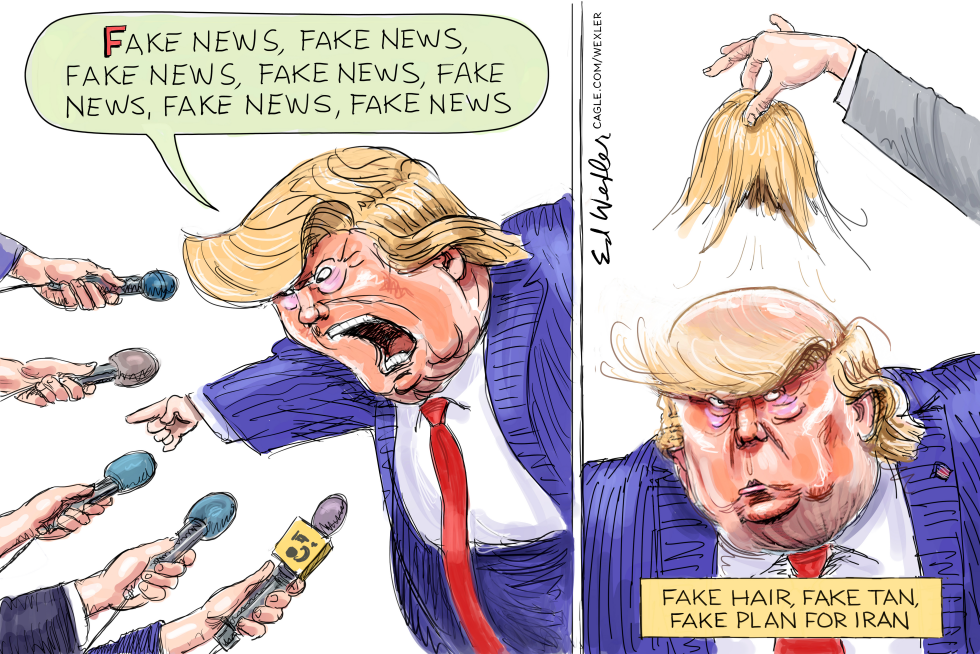
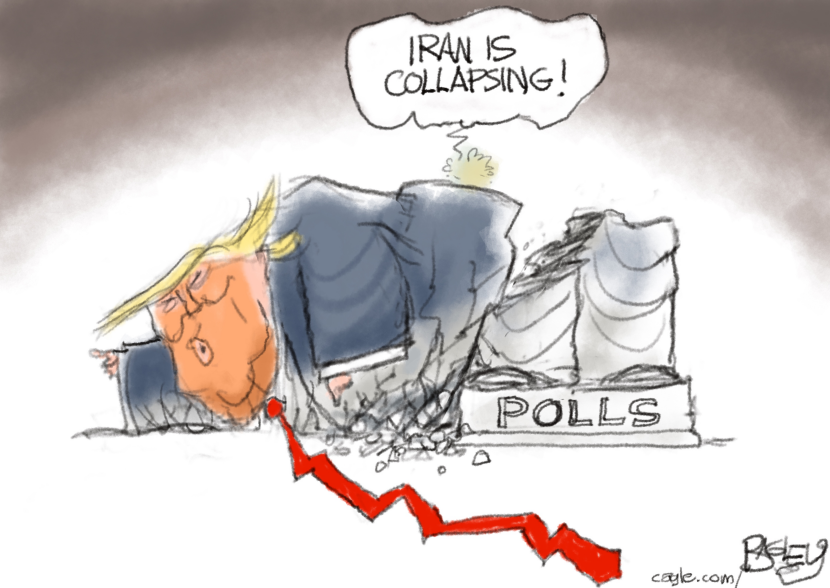
Donald Trump repeatedly labels media coverage as fake news during press encounters. The cartoon responds by questioning the authenticity of his appearance and his approach to Iran policy. It portrays the disconnect between his public statements and underlying realities.
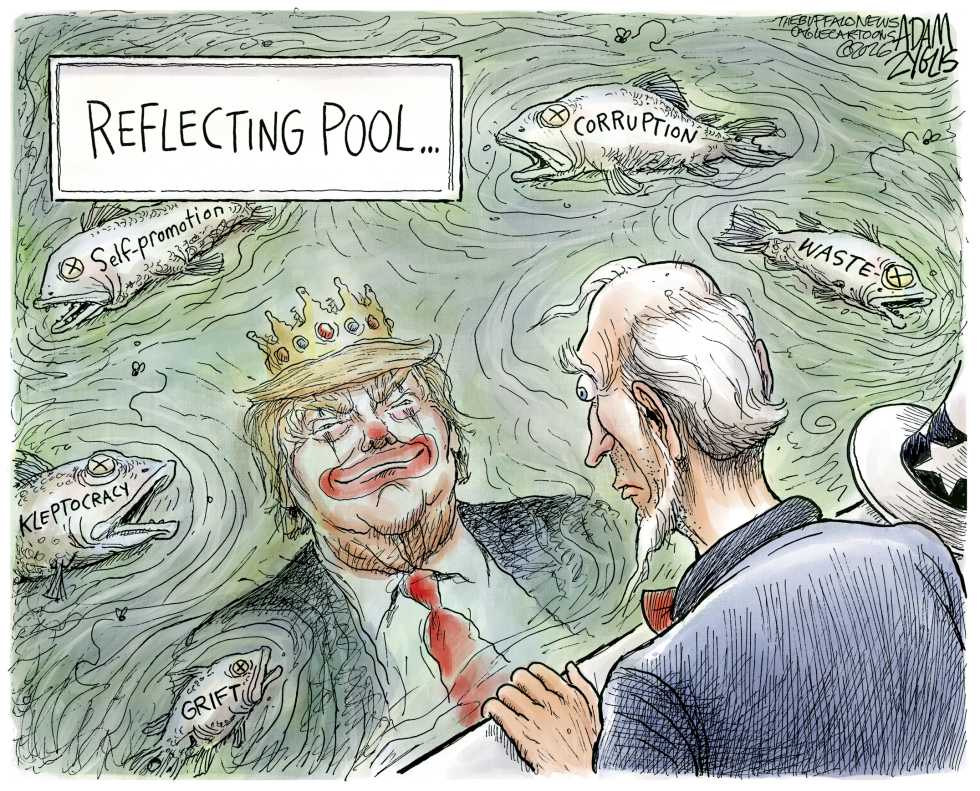
Accusations of kleptocracy and self-dealing have followed Donald Trump through multiple phases of his political career. Critics point to patterns of self-promotion and waste in government dealings. The cartoon frames these issues as dead fish surfacing in a reflecting pool, with Trump depicted wearing a crown and clown makeup while an older observer looks on. The editorial position criticizes Trump as emblematic of corruption and grift.
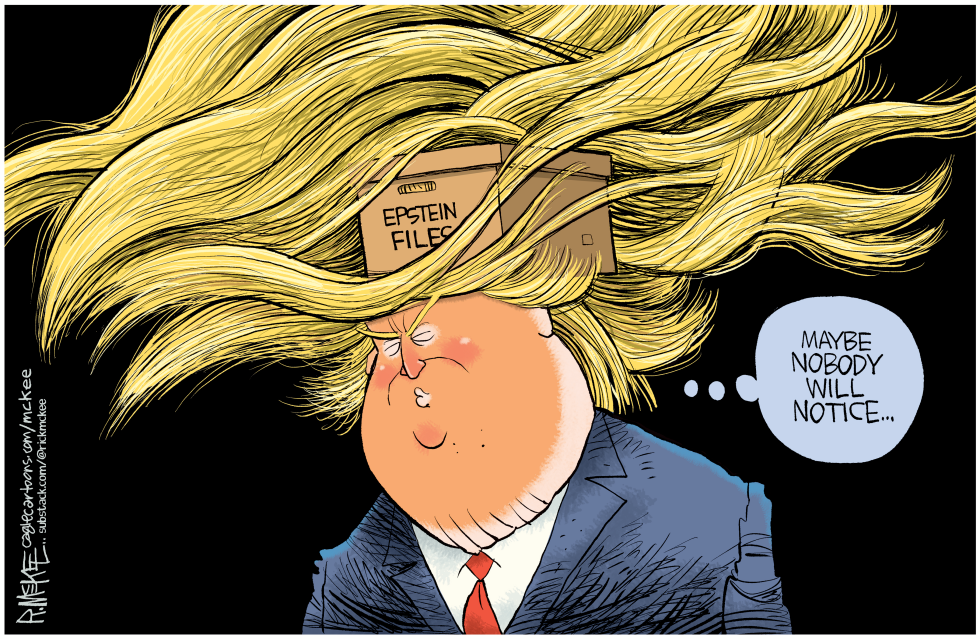
Donald Trump faces renewed public attention over the release of Epstein files detailing past connections. The documents have drawn fresh examination from investigators and media outlets. The editorial takes the position that attempts to downplay or obscure the material only intensify questions about accountability.
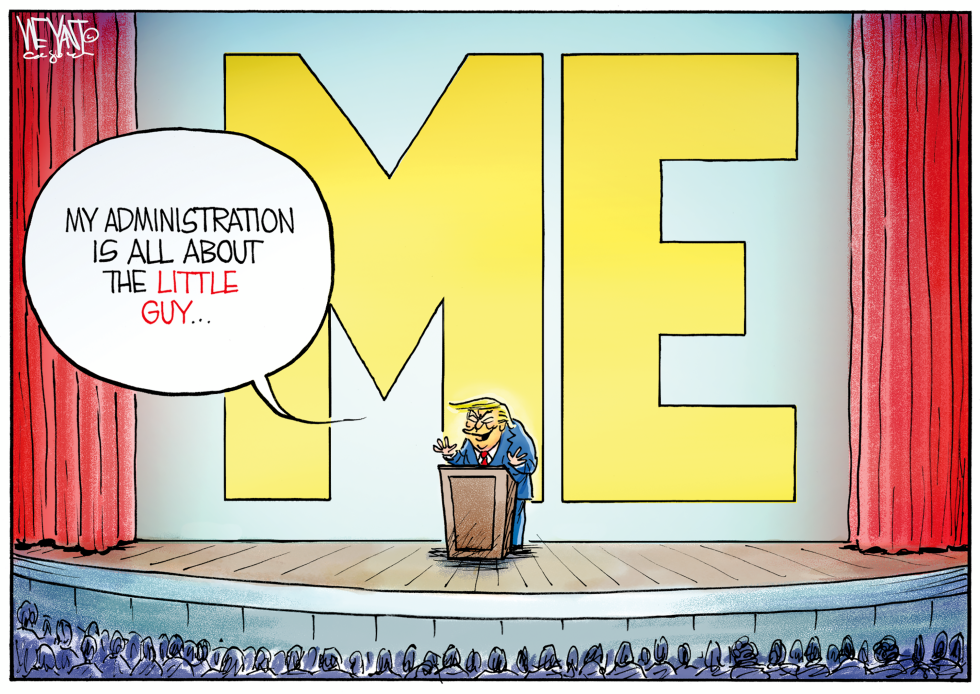
Donald Trump has repeatedly positioned his administration as champion of ordinary Americans during public addresses. The claim comes amid ongoing debates over policy priorities and personal branding in the White House. The piece portrays the rhetoric as centered on the speaker rather than the public.
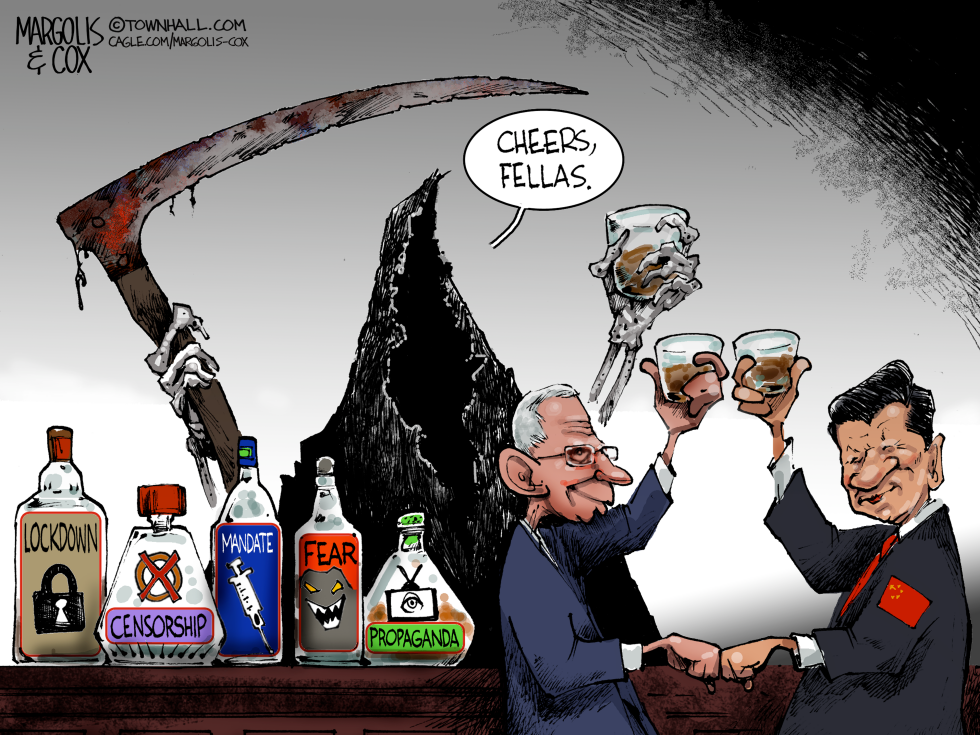
On August 6, 2026, the cartoon responds to lingering debates over COVID-19 policies by depicting former NIAID director Anthony Fauci and Chinese leader Xi Jinping toasting with the Grim Reaper. The image frames pandemic tools as shared instruments of control. The editorial position criticizes both figures for embracing fear-driven measures and information suppression.
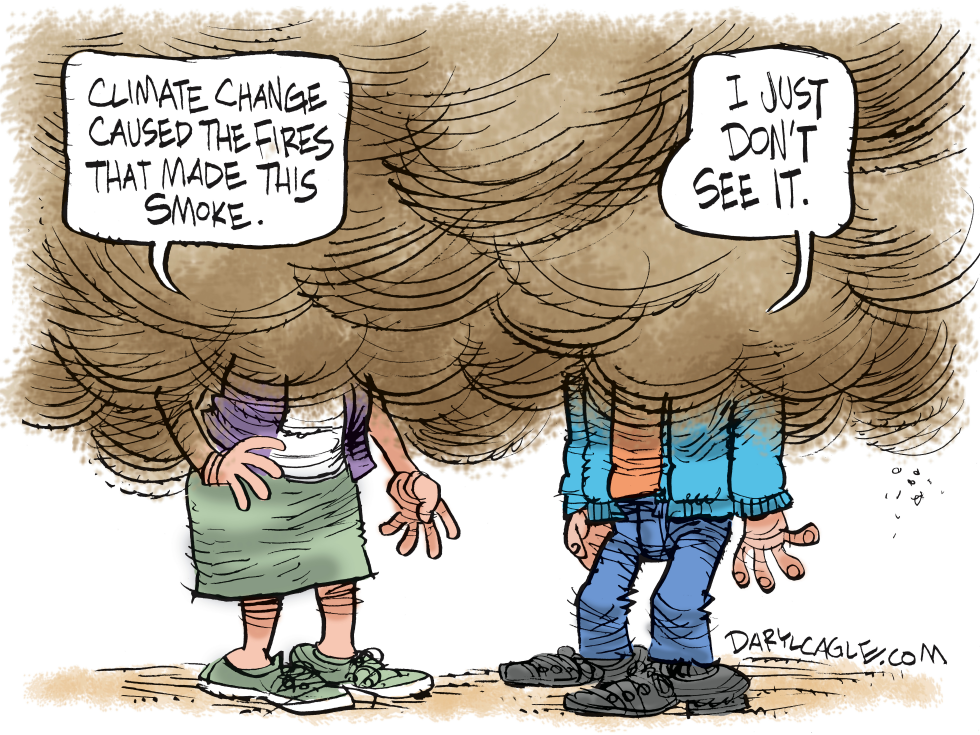
Canadian wildfires have produced widespread smoke affecting air quality across regions. The debate centers on whether climate change drives the fires or if other factors dominate. Public discourse shows persistent skepticism despite visible evidence. The piece highlights how some reject the link between rising temperatures and increased fire activity. It critiques the refusal to acknowledge observable environmental changes tied to climate patterns.
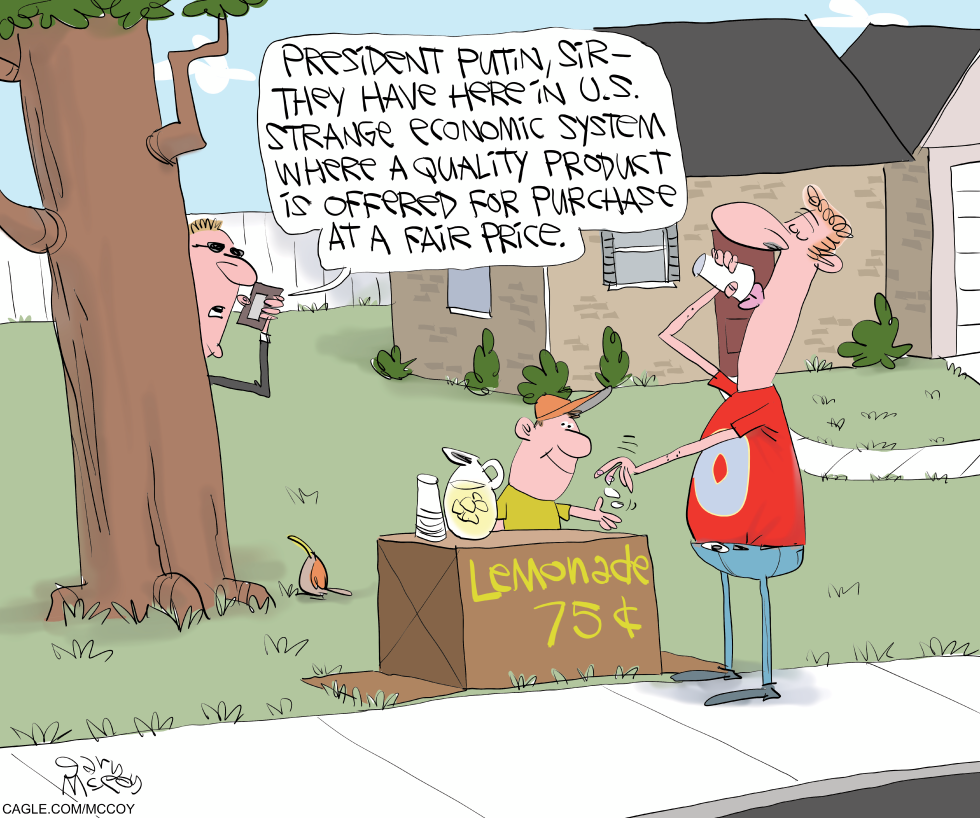
A cartoon depicts a man explaining the U.S. free-market system of offering quality goods at fair prices to President Putin during a phone call next to a child's lemonade stand. The scene underscores the perceived strangeness of American capitalism from a Russian perspective. The editorial position critiques the disconnect between market-driven economies and state-controlled systems.