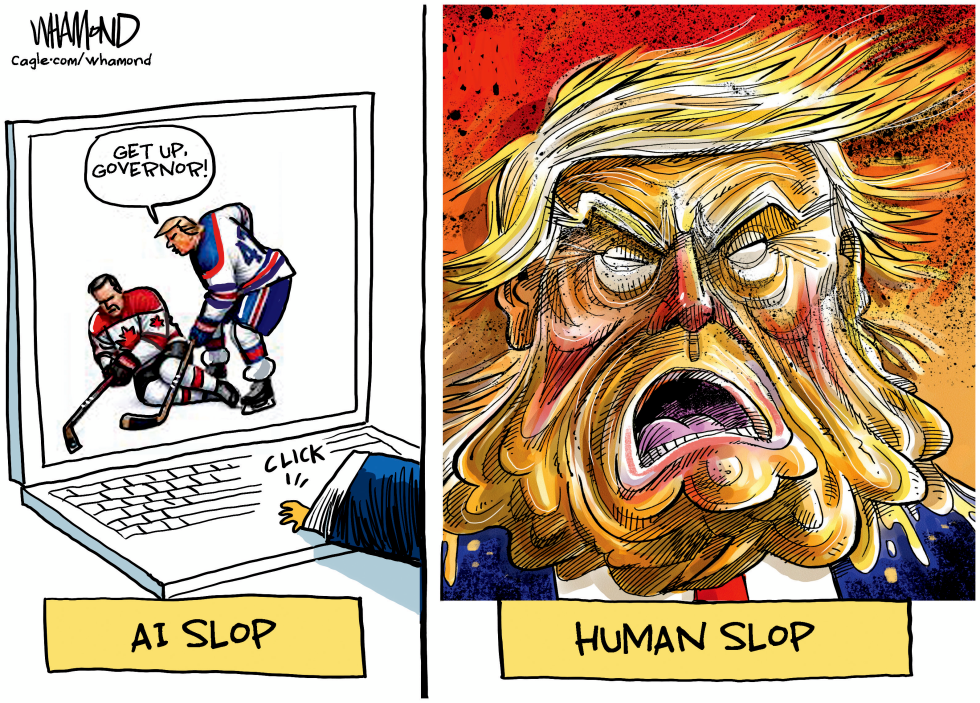
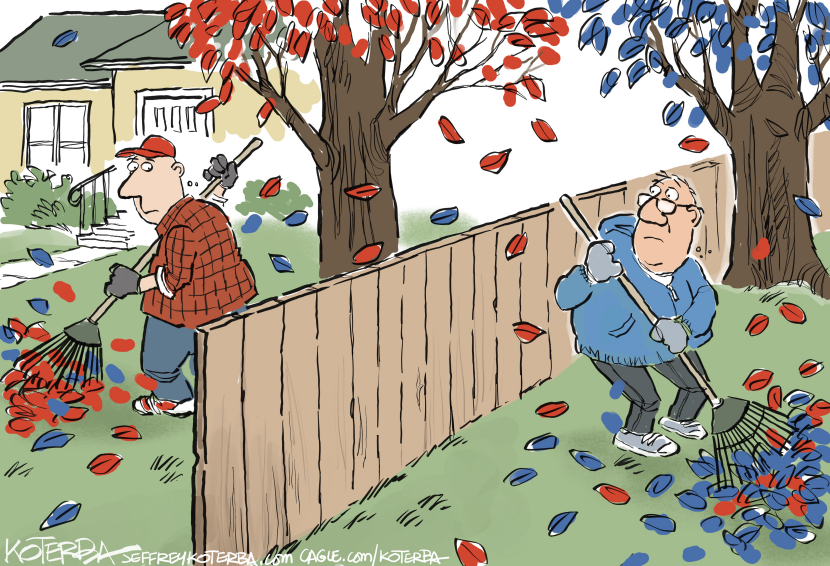
AI tools produce flawed political images while human artists create equally flawed ones. The piece highlights declining quality in both digital generation and traditional caricature of figures like Donald Trump. It argues neither approach delivers credible or effective visual commentary.
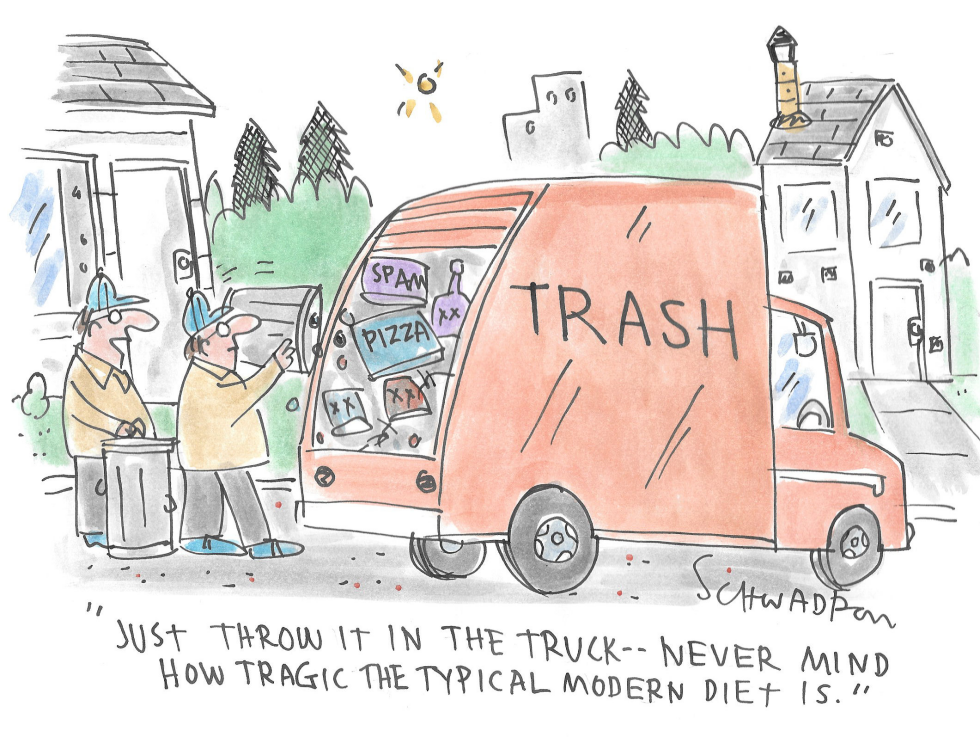
Public discussion continues over the health impacts of widespread junk food consumption and other modern lifestyle habits. The piece takes the position that these elements of daily life are so poor they belong in the garbage.
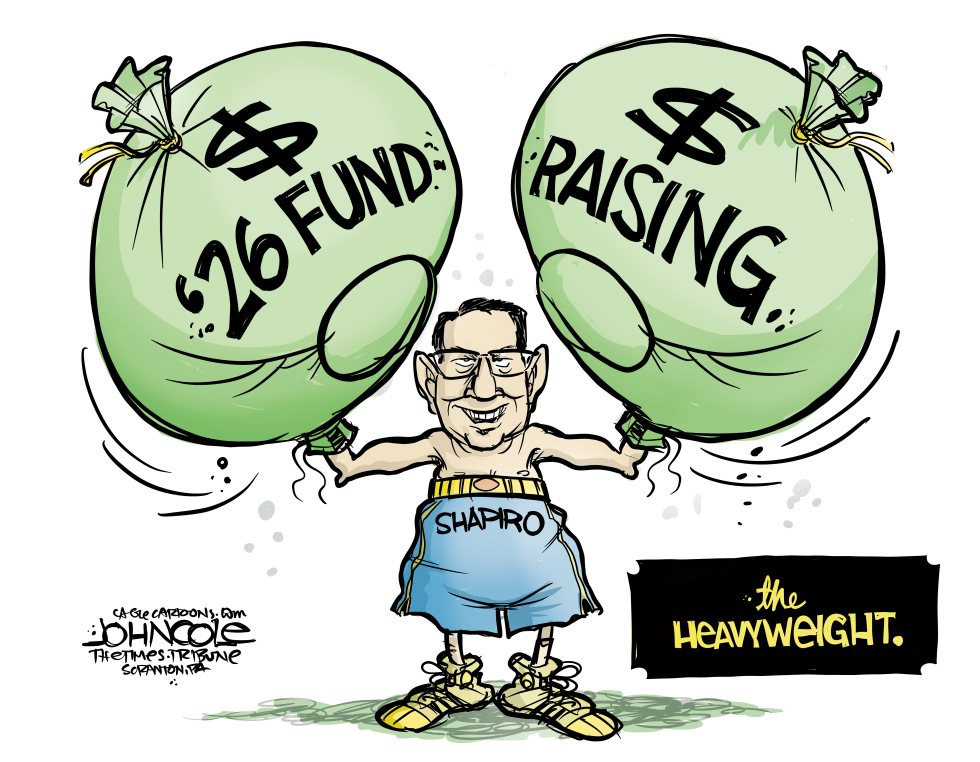
Ben Shapiro has built a substantial fundraising operation centered on a $26 fund and ongoing raising activities. The effort underscores the role of individual donors in sustaining prominent conservative media voices. The piece presents Shapiro as a dominant force in this arena.
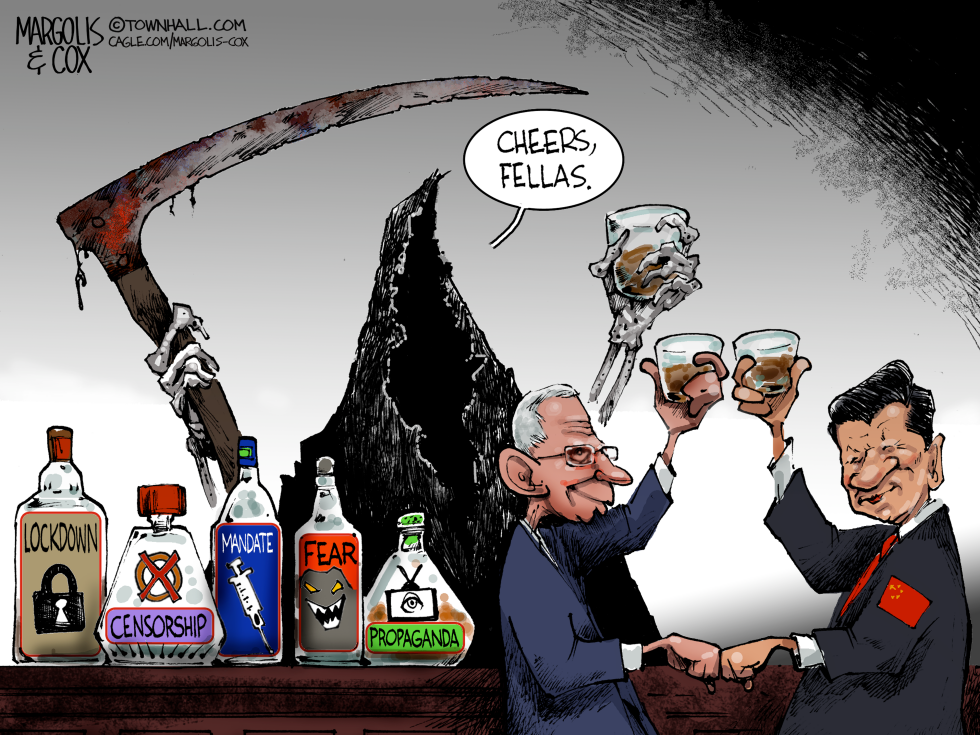
On August 6, 2026, the cartoon responds to lingering debates over COVID-19 policies by depicting former NIAID director Anthony Fauci and Chinese leader Xi Jinping toasting with the Grim Reaper. The image frames pandemic tools as shared instruments of control. The editorial position criticizes both figures for embracing fear-driven measures and information suppression.
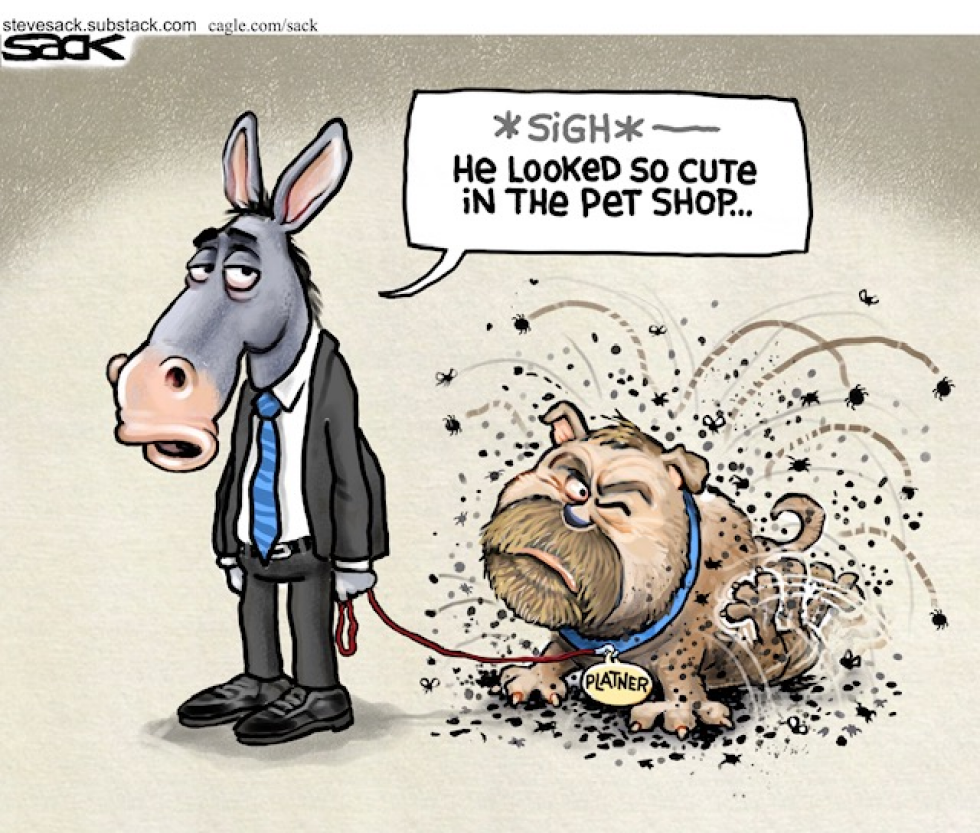
A suited donkey on a leash holds a flea-infested bulldog named Platner on the publication date of July 9, 2026. The donkey sighs about the pet shop appearance while bugs swarm the scene. The image uses standard party symbols to depict buyer remorse over a recent political choice.
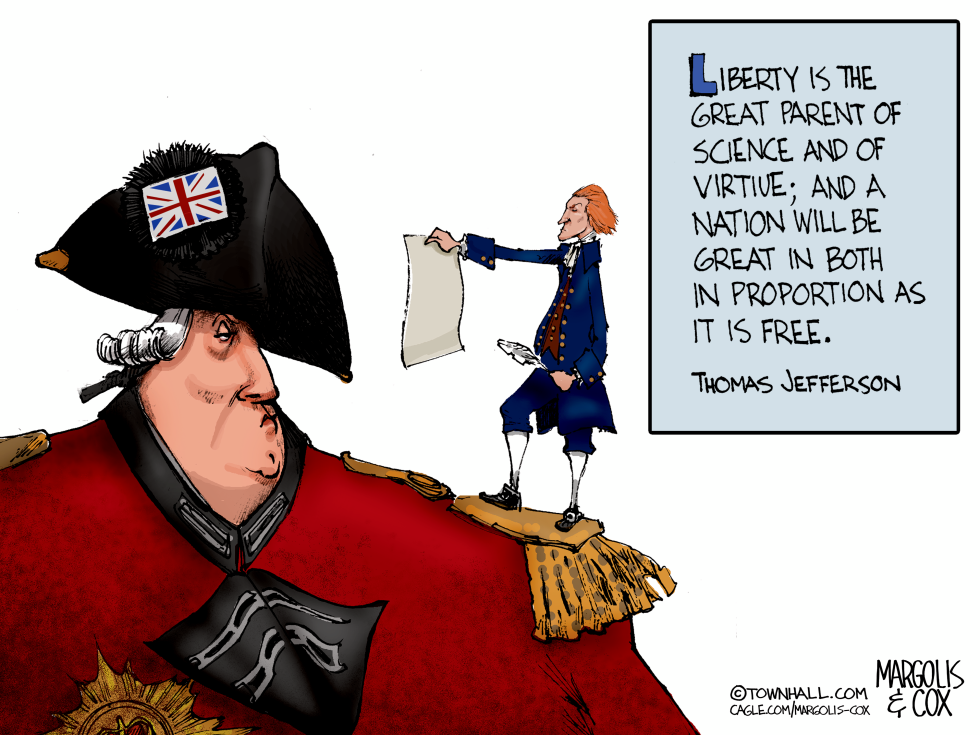
The cartoon depicts Thomas Jefferson standing on the shoulder of a British redcoat soldier while holding a document and reciting his quote on liberty as the parent of science and virtue. The redcoat wears a black tricorn hat with a Union Jack emblem. Jefferson appears in period blue coat and breeches. The quote box attributes the words directly to Jefferson. The image includes artist credits and website references at the bottom. Publication occurred on July 1, 2026.
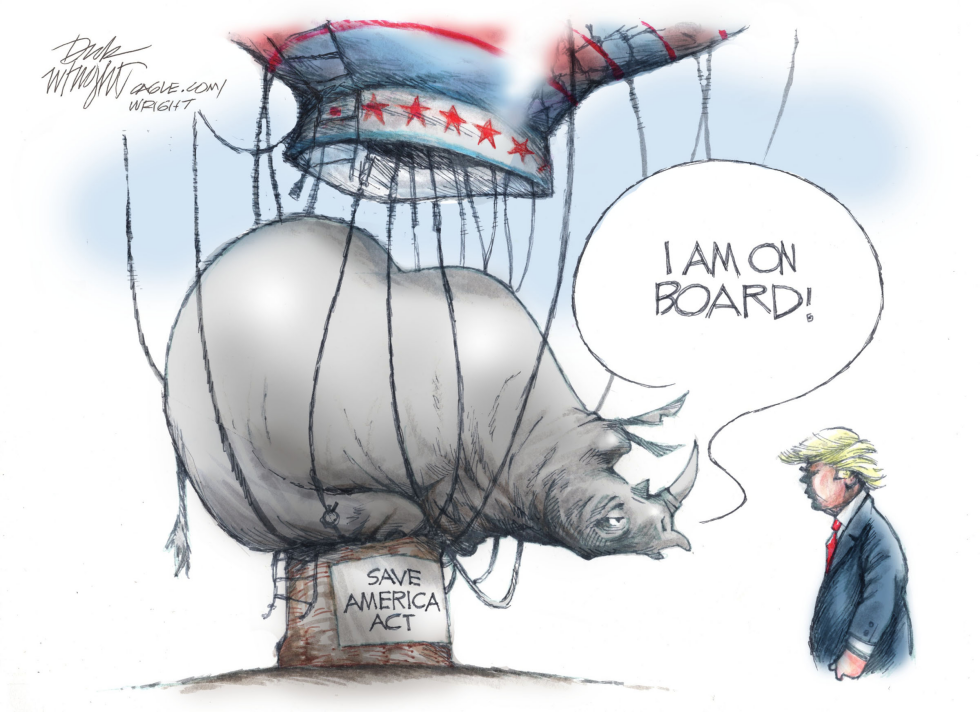
Donald Trump appears on the right side of the scene and states support for the Save America Act. A large rhino figure rests on a base marked with the act name and is connected to an overhead structure resembling the Capitol dome. The rhino faces toward Trump. The date of the image is July 1 2026.
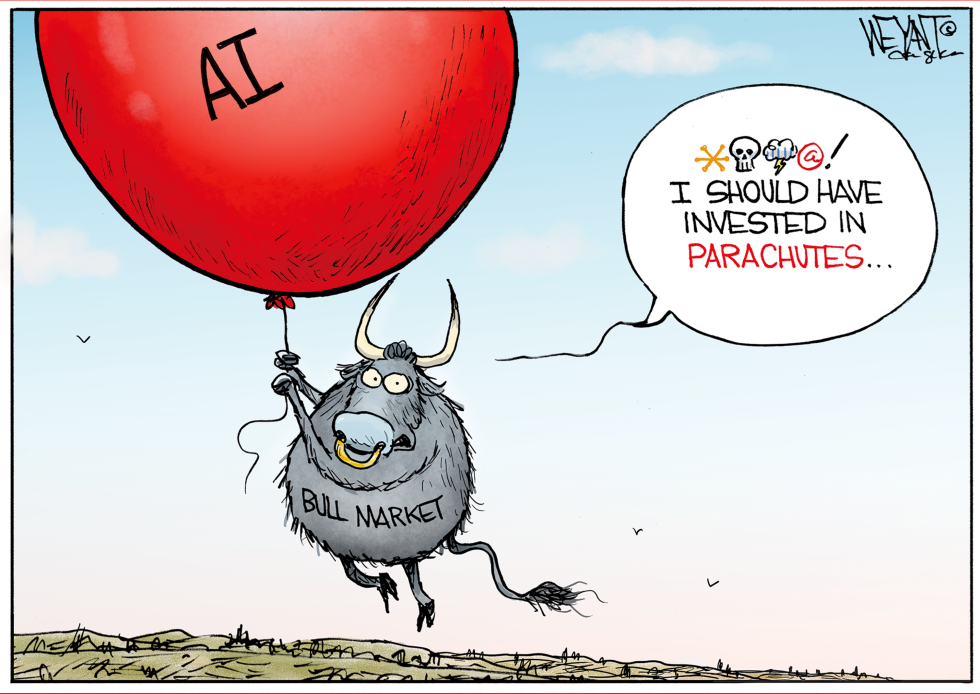
A bull labeled as the market hangs from a large red balloon marked AI. The figure speaks of wishing for parachutes instead. The scene appears on June 30 2026 and shows the bull suspended high with symbols of trouble in the speech area.
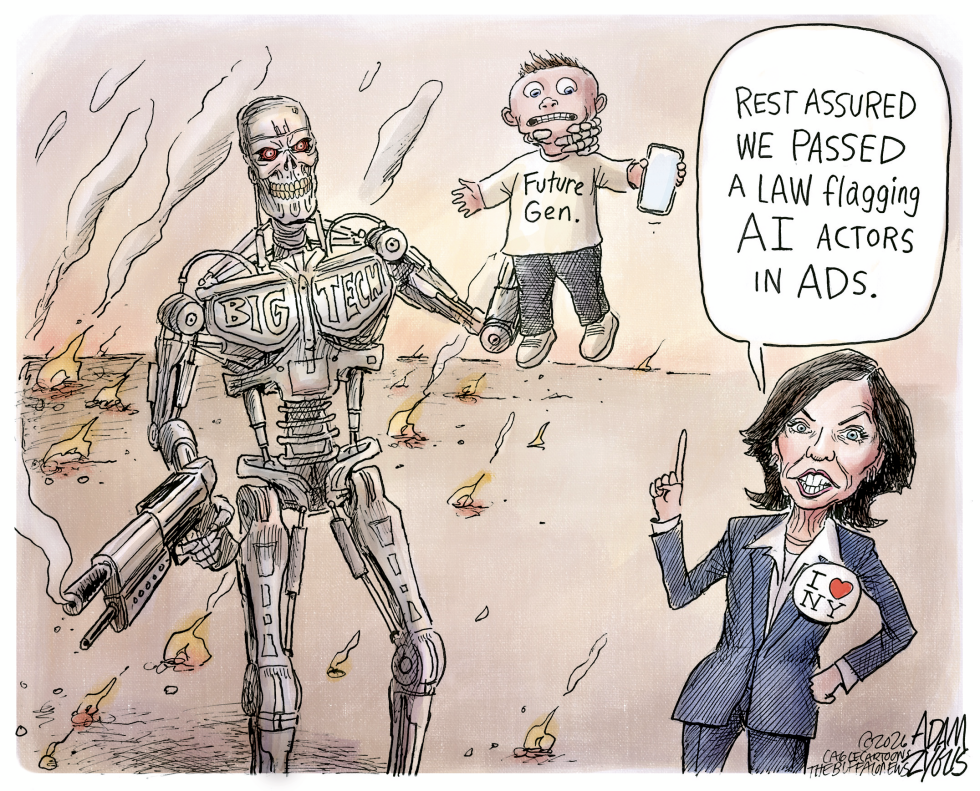
A Terminator-style robot marked Big Tech clutches a child labeled Future Gen. in a scorched landscape. The child holds a smartphone. A woman resembling New York Governor Kathy Hochul stands nearby, raising a finger and declaring that lawmakers passed a measure to flag AI actors in advertisements.
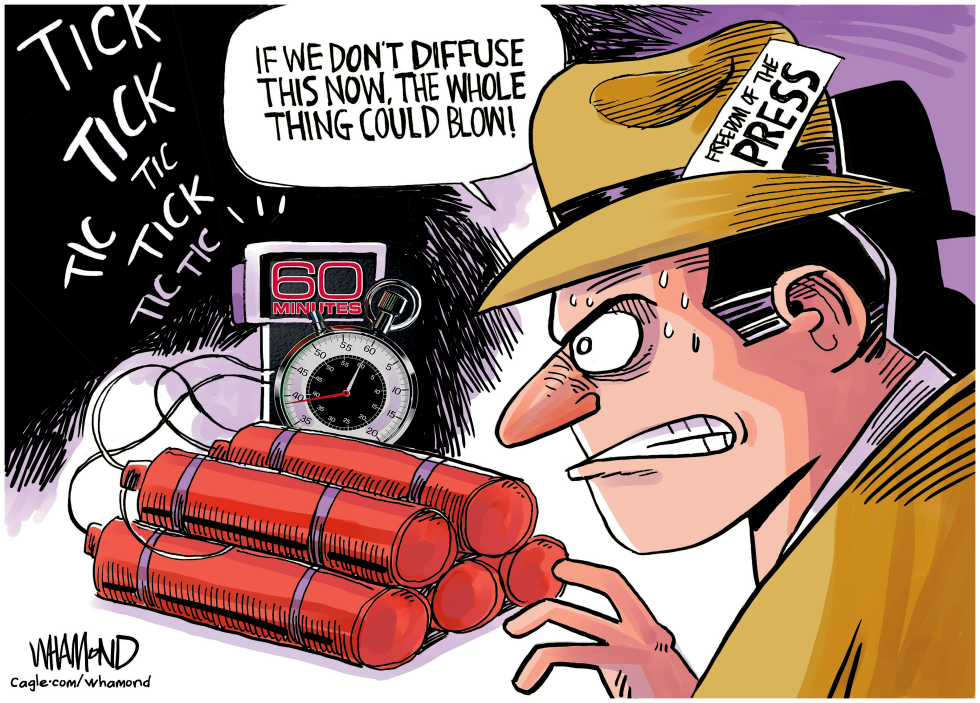
A sweating journalist wearing a Freedom of the Press hat leans over a bundle of dynamite sticks wired to a 60 Minutes timer. The timer ticks loudly as the figure warns in a speech bubble that failure to defuse the crisis will cause everything to blow. The image responds to reported turmoil at CBS News involving 60 Minutes correspondents and leadership changes at Paramount.
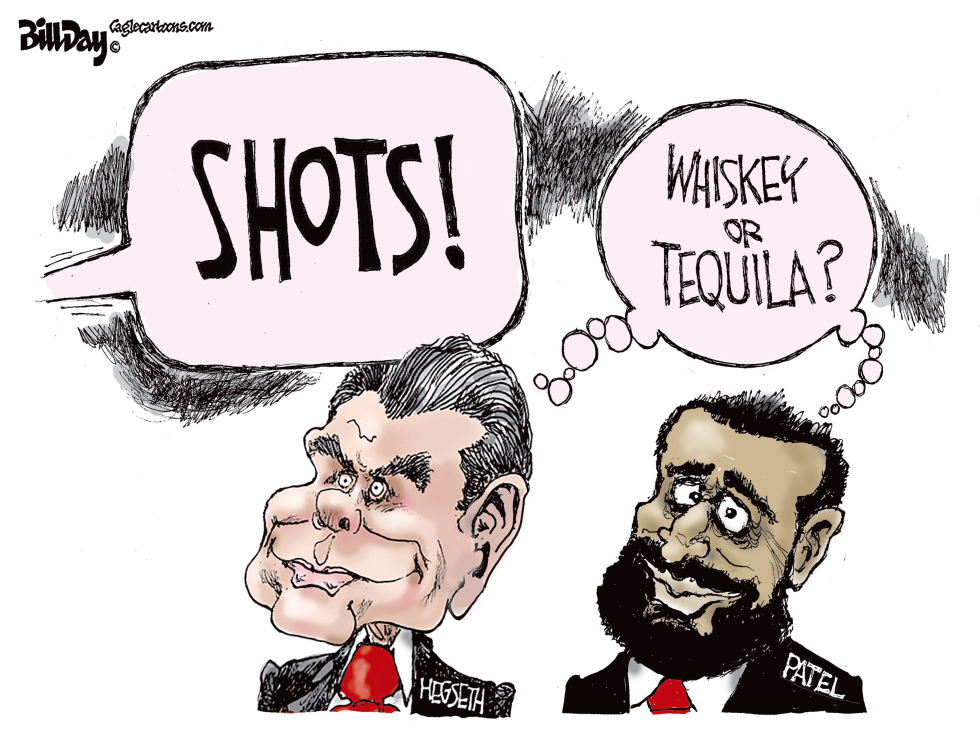
Bill Day's cartoon captures two suited figures, labeled Hegseth and Patel, in a moment of apparent revelry. Hegseth, on the left, bellows 'SHOTS!' from a speech bubble, his expression intense and caricatured. Patel, to the right, responds with a thought bubble pondering 'WHISKEY or TEQUILA?', his face drawn with wide eyes and a beard. The artwork, signed by Bill Day and linked to CagleCartoons.com, uses simple lines and shading for a classic political cartoon style. Tags such as shots, whiskey, tequila, Hegseth, Patel, and correspondence dinner frame the scene, suggesting a lighthearted jab at social or political gatherings. The white background keeps focus on the characters and their dialogue, emphasizing the pun on 'shots' without additional context or props visible.
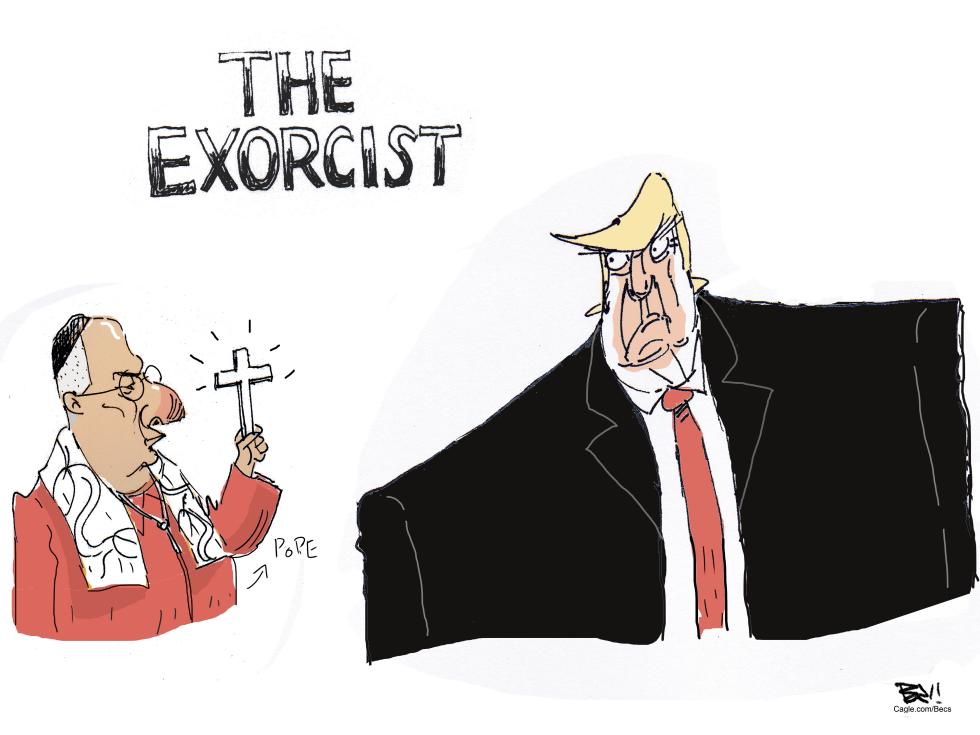
This political cartoon by Becs parodies the classic horror film 'The Exorcist' with a pope figure confronting a demonic Trump caricature. Labeled clearly with 'POPE' and the movie title overhead, the image uses simple lines to show the pope wielding a glowing cross against the oversized, frowning Trump in a black suit and red tie. The dry humor lies in the exaggerated features and direct setup, highlighting tensions between religious authority and political figures. Tags like political satire, exorcism parody, Trump caricature, pope illustration, religious humor, and cartoon exaggeration make it shareable and relevant for editorial pages.
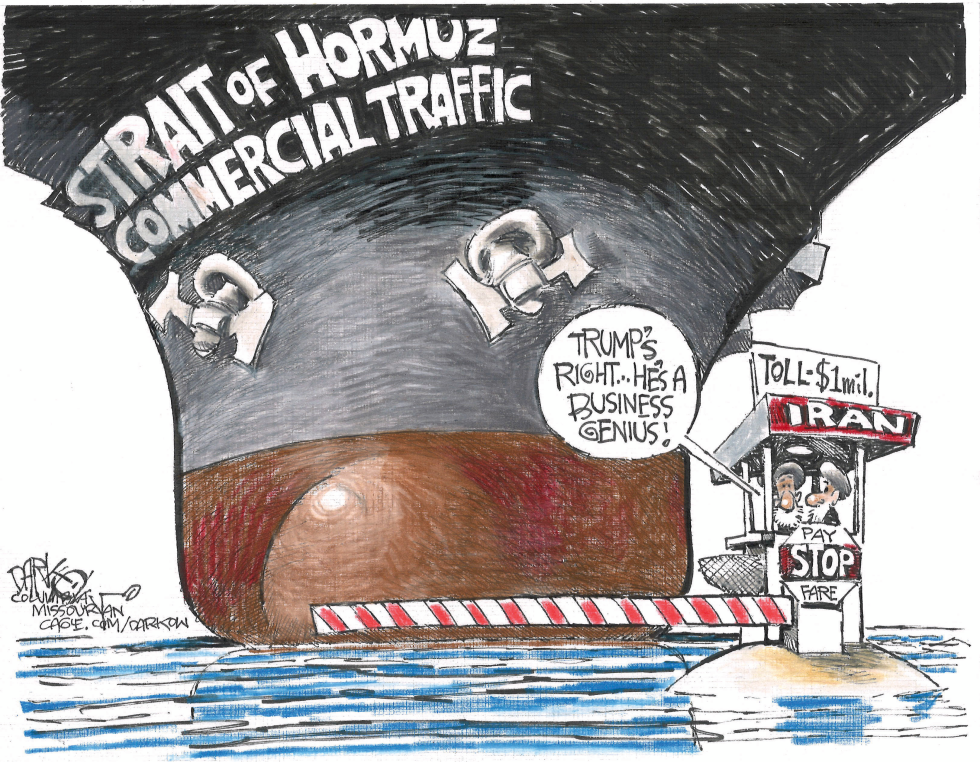
The cartoon shows a massive ship representing commercial traffic through the Strait of Hormuz approaching an Iran-operated toll booth charging one million dollars. Two figures in the booth exchange remarks crediting Trump with business acumen. The scene illustrates tensions over control of the vital shipping route between Iran and Gulf states.
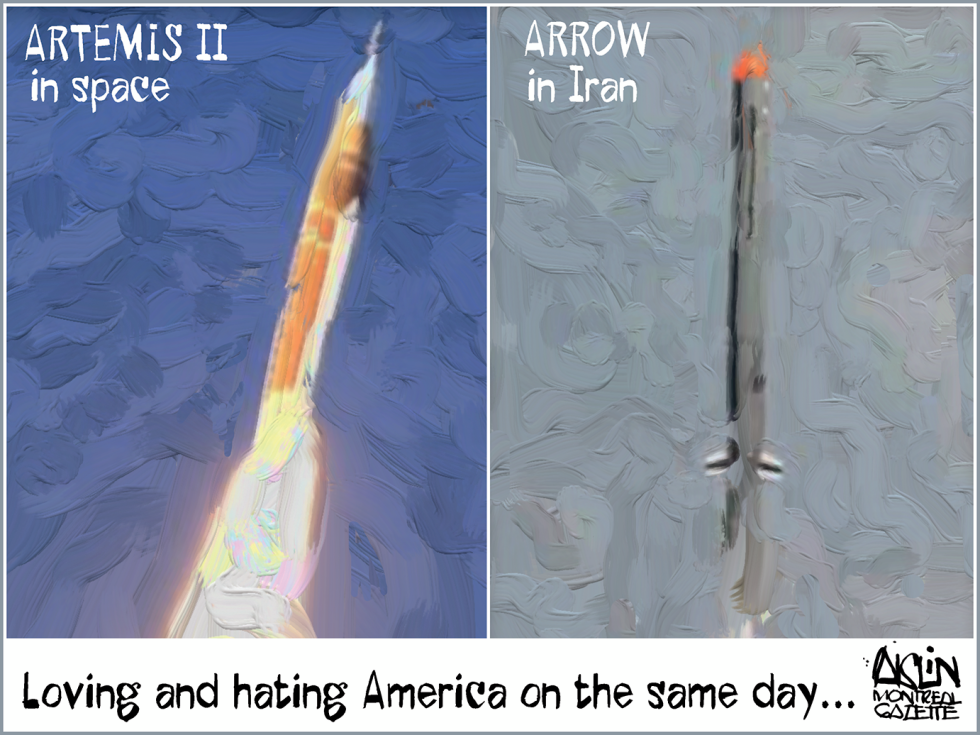
In this irreverent political cartoon, a vibrant Artemis II space launch rockets upward in a blue expanse on the left, symbolizing American innovation and triumph in US space exploration. Contrasting sharply on the right, a stark Arrow in Iran points downward with an orange glow against a gray sky, evoking geopolitical tension and Iranian weaponry. The caption 'Loving and hating America on the same day....' ties it together, offering a humorous take on the bipolar view of America in world news. With its simple yet effective composition, the artwork captures the absurdity of global perceptions, blending satire on international conflict with admiration for NASA's feats. This piece underscores the dichotomy in how the world engages with American power, from awe at space missions to ire over foreign policy frictions.
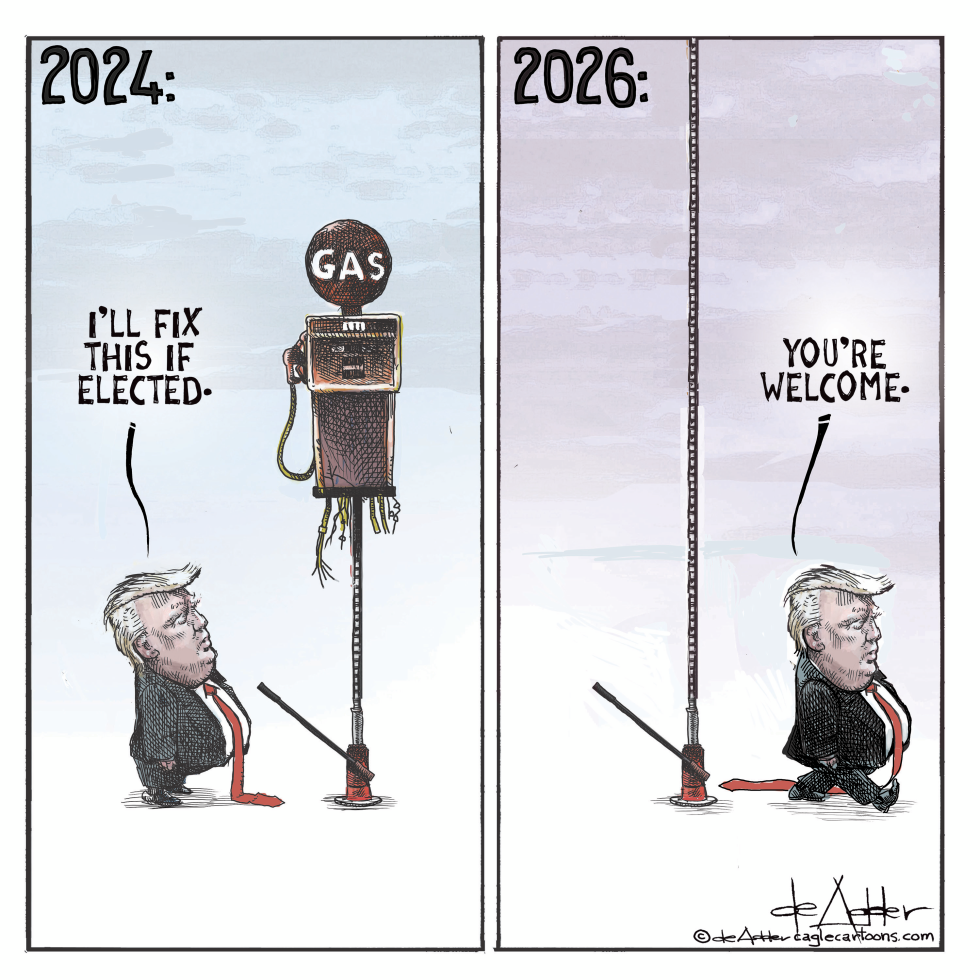
Michael de Adder's cartoon splits into 2024 and 2026 panels, showing a figure resembling Trump addressing a high gas pump with a promise to fix it if elected, tagged with Trump, gas, prices. In the later panel, the same figure pulls the pump down low, saying 'you're welcome,' tying into election, energy, Iran, war themes. The satire highlights contrasts in promise versus action on cost, economy, inflation, oil, barrel issues. This visual commentary underscores political pledges on energy costs, with the figure's actions suggesting a direct, perhaps misguided intervention. Tags like conflict and prices emphasize the economic satire at play.