consumers pay
Jun
9
2026
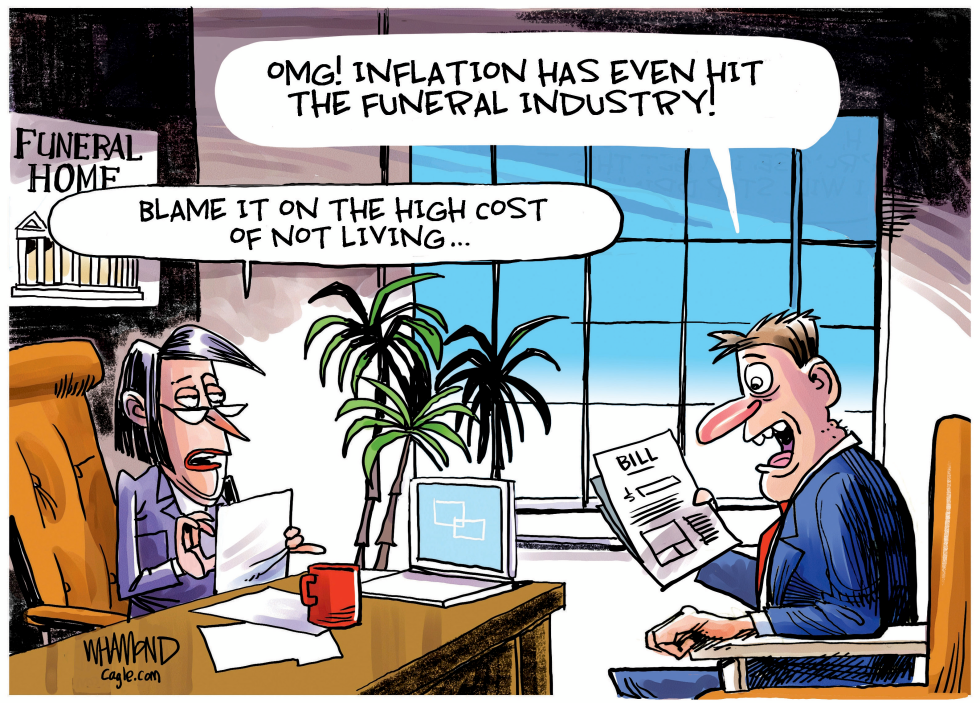
A funeral home director and client react to a high bill in an office setting. The exchange highlights how inflation has extended to the funeral sector. Speech bubbles deliver a pun on the high cost of not living. The scene reflects ongoing economic pressures on consumers including tariffs and rising prices for essentials. Publication occurs amid discussions of affordability challenges tied to recent policy decisions.
May
8
2026
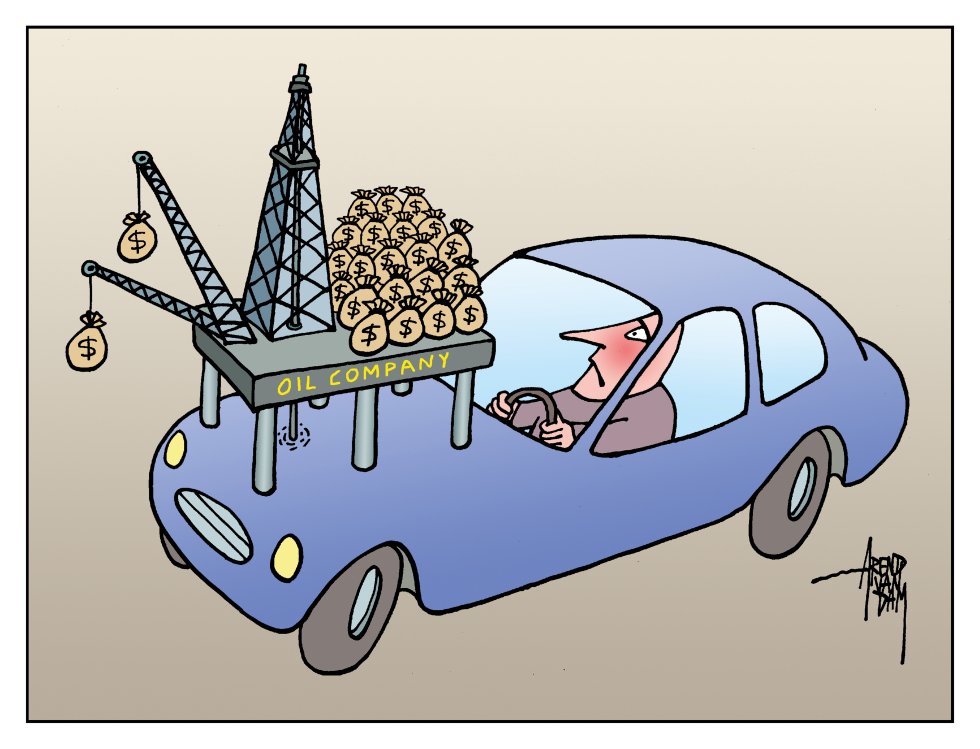
In this pointed political cartoon, an oil company platform sits atop a blue car, loaded with piles of dollar-sign money bags, while cranes dangle more profits. The frustrated motorist grips the wheel, face red with anger, illustrating how excessive profits from oil companies crush consumers at the pump. Tags like excessive profits, motorists, fuel, petrol, and refuel capture the essence, with Iran and Strait of Hormuz hinting at geopolitical tensions driving prices. This visual satire underscores the disparity between corporate windfalls and everyday drivers' pain, a timeless theme in energy politics.
Mar
22
2026

Bruce Plante's cartoon depicts a typical American driver at a gas station, his purple car parked under the canopy, as he reacts with censored profanity to a coin-operated viewer. The sign reads 'TO SEE GAS PRICES DEPOSIT 25¢,' cleverly satirizing how #HighGasPrices have soared beyond easy visibility, like distant sights needing magnification. The man's USA shirt and coffee cup add a relatable everyman touch, emphasizing consumer shock. This piece fits into ongoing #FuelCosts debates, blending #InflationHumor with #EconomicSatire. Plante's style, straightforward and punchy, targets #EnergyPrices and their impact on daily life, making it shareable for #PoliticalCartoons enthusiasts. The dry humor underscores the absurdity without overstatement, a hallmark of syndicated work.
Mar
17
2026
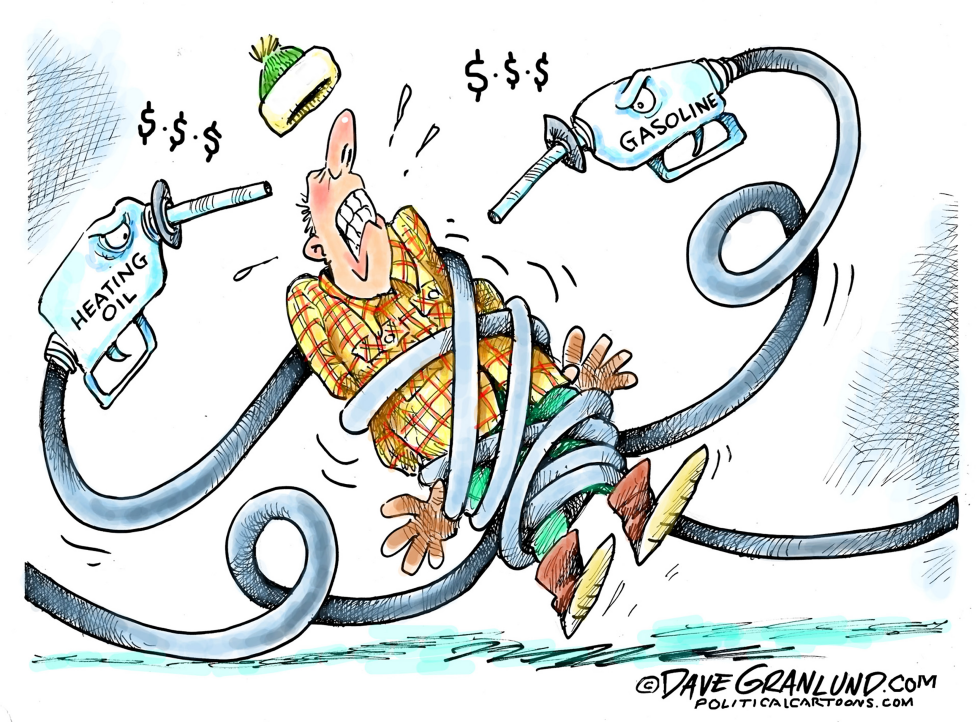
Dave Granlund's gasoline prices cartoon captures a man wrapped in hoses from heating oil and gasoline pumps, his hat flying off amid floating dollar signs. The heating oil cost squeeze is evident as the figure grimaces under the fuel price hike. This energy crisis political cartoon uses exaggerated lines to show consumer distress. High gas prices humor comes through the absurd entanglement, a classic trope in political art. Economic pressure from fuel costs dominates the scene, with no background details to distract. The image stays simple, focusing on the core satire of rising energy bills.
Mar
12
2026
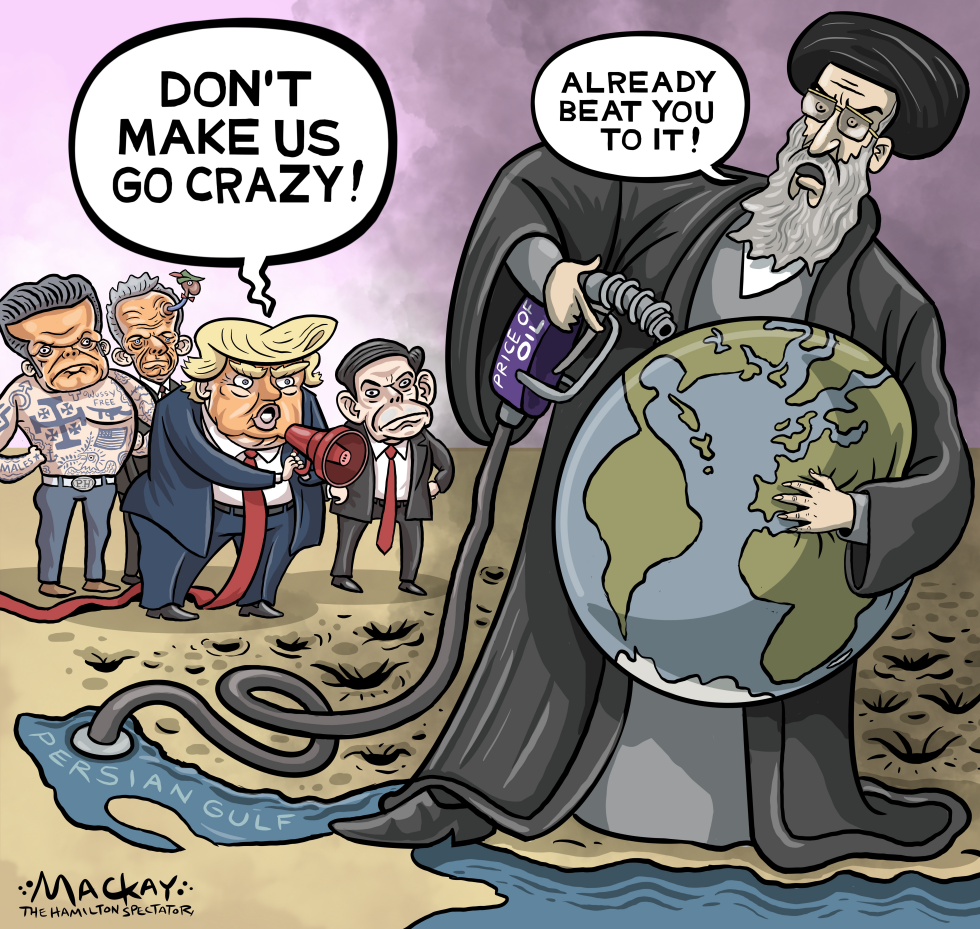
A political cartoon published March 12, 2026, shows Donald Trump and Iran's Ayatollah exchanging threats over oil prices and access to the Persian Gulf. Trump, holding a megaphone, warns against forcing the U.S. side to escalate, while the Ayatollah, gripping a gas pump labeled price of oil attached to a globe, claims to have already matched the move. Three figures stand behind Trump, including recognizable administration members. The scene references ongoing concerns about energy supplies and regional stability in the Middle East.
Mar
11
2026
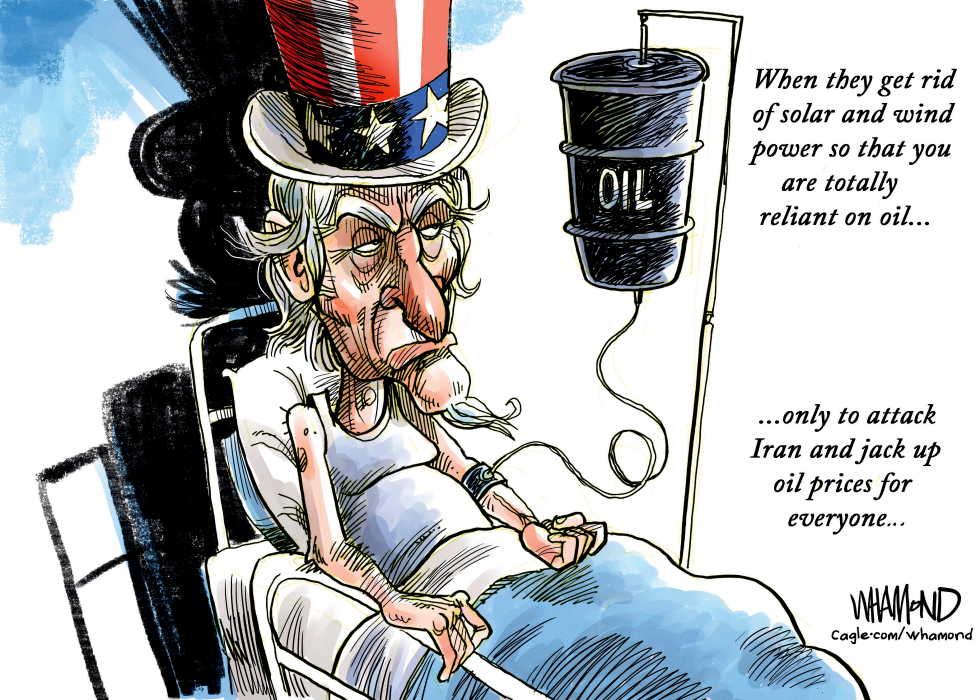
The cartoon depicts Uncle Sam as an elderly patient in a hospital bed receiving an intravenous drip from an oil barrel. Text on the right panel criticizes the decision to eliminate solar and wind power initiatives, leaving the country reliant on oil, only for an attack on Iran to drive up prices for everyone.
Feb
20
2026
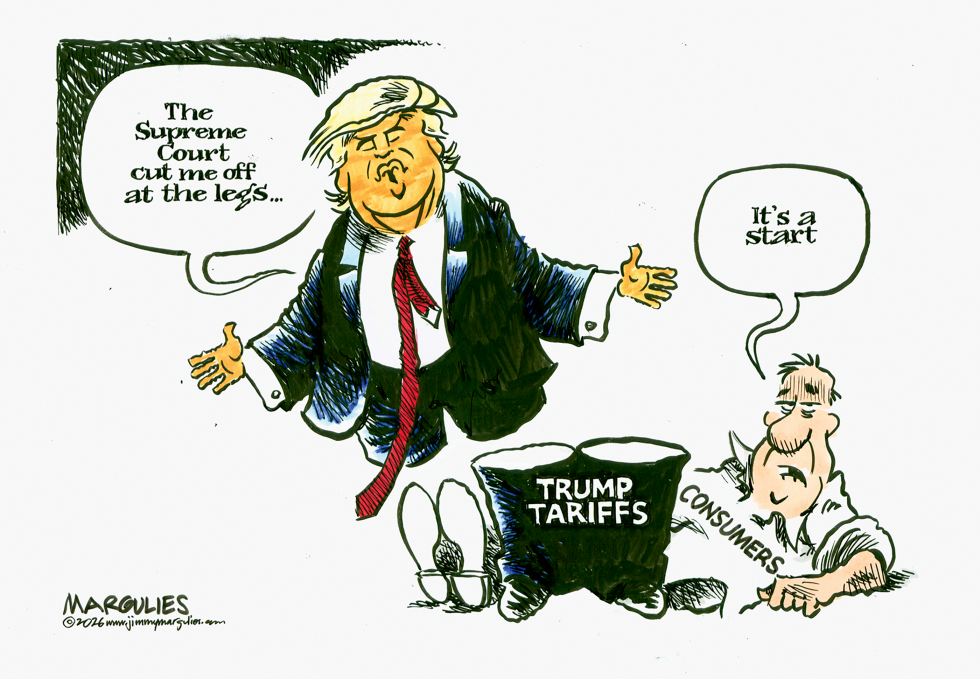
The Supreme Court struck down tariffs in a ruling dated near February 2026. Donald Trump appears cut off at the legs by the decision while a consumer figure notes progress. The image highlights effects on costs and protectionist measures amid ongoing economic pressures.
Dec
31
2025
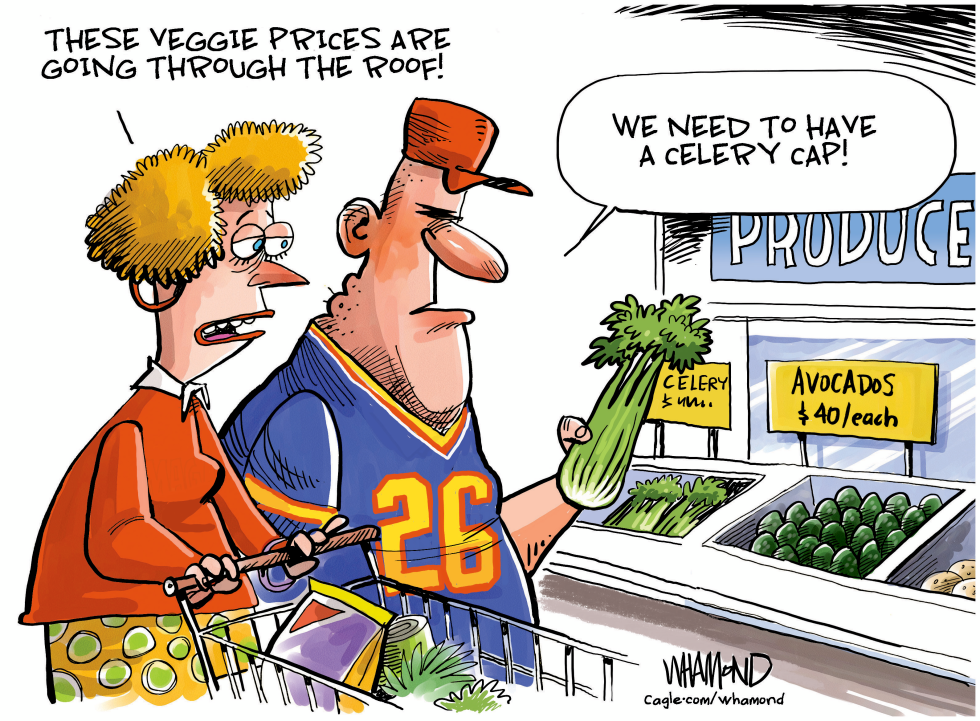
A political cartoon depicts two shoppers in a grocery produce section reacting to high vegetable prices. One figure in a sports jersey suggests imposing a celery cap while the other exclaims that veggie prices are going through the roof. Signs show celery at $4.99 and avocados at $40 each. The image responds to ongoing discussions about inflation and proposed tariffs on imports as of late 2025. It illustrates consumer concerns over affordability and the impact on everyday purchases like fresh produce.
Dec
2
2025