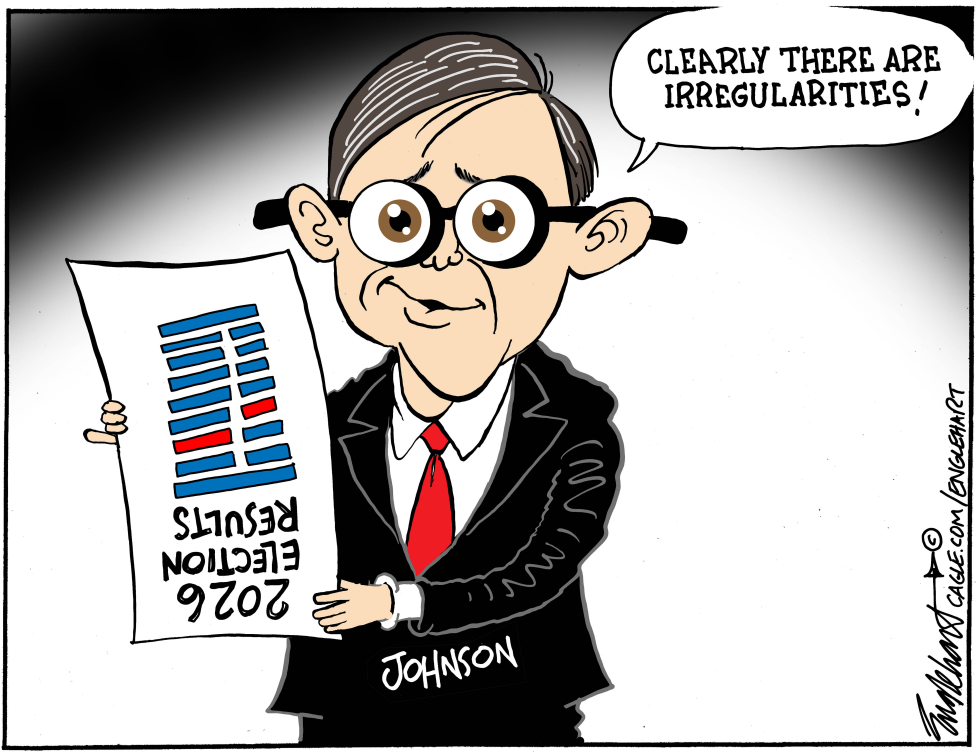
House Speaker Mike Johnson publicly questioned the integrity of the 2026 election results in September 2026, citing irregularities in a bar chart of outcomes. The move raised alarms about potential delays or challenges to congressional certification of the vote. Critics argue the statements undermine public confidence in the electoral process without evidence of widespread fraud. The cartoon portrays Johnson as actively sowing doubt in the results to influence outcomes. It takes the position that such rhetoric from congressional leadership threatens democratic norms and the peaceful transfer of power.
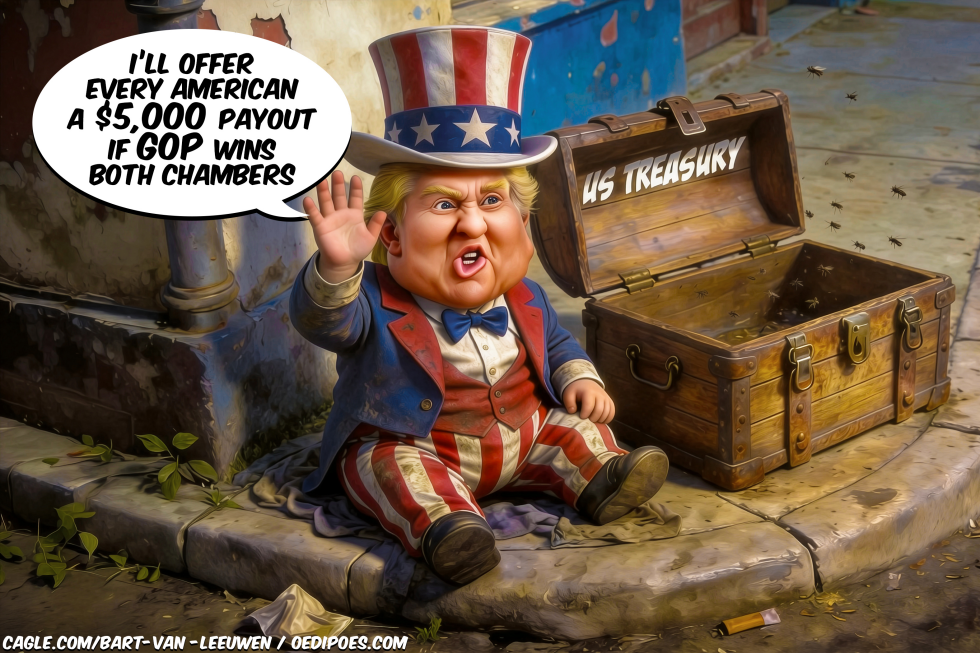
The cartoon depicts Donald Trump dressed as Uncle Sam seated on a curb beside an open US Treasury chest filled with flies. He promises every American a $5,000 payout if Republicans win both chambers of Congress. The image responds to campaign rhetoric tying government funds to electoral outcomes ahead of the 2026 midterms. It highlights concerns over using Treasury resources for political advantage. The visual uses the empty chest and insects to suggest depletion or misuse of public money.
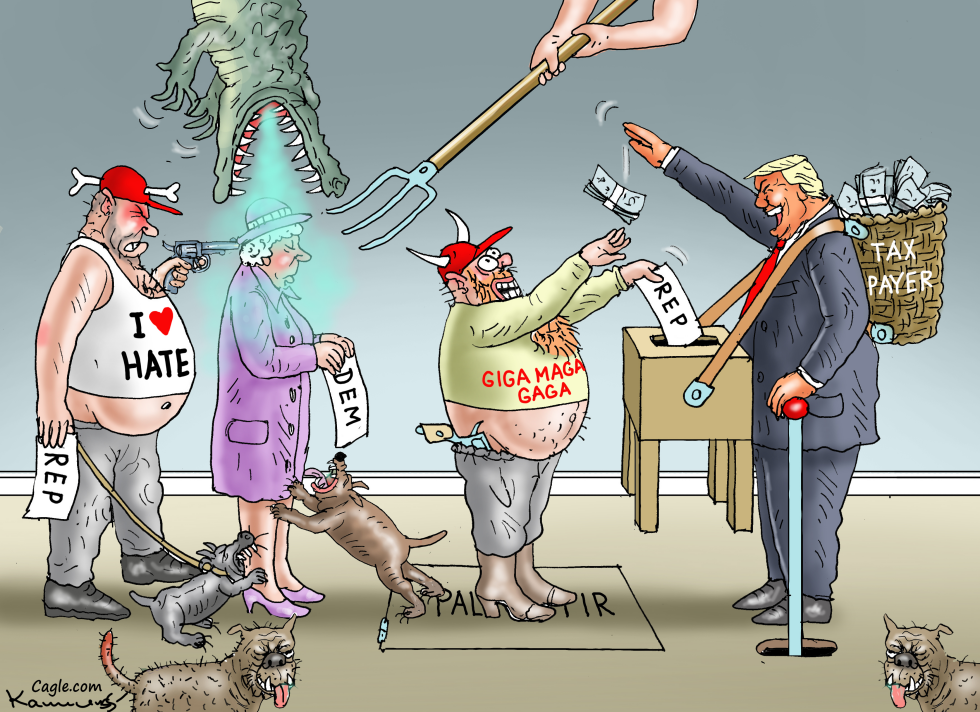
As the 2026 midterm elections approach, former President Trump has positioned himself as a central force in Republican campaigns, directing resources and mobilizing supporters. The cartoon highlights the use of taxpayer money in these efforts and the intense partisan divide, with Democrats portrayed as under attack. It takes the position that such involvement risks undermining fair electoral processes.
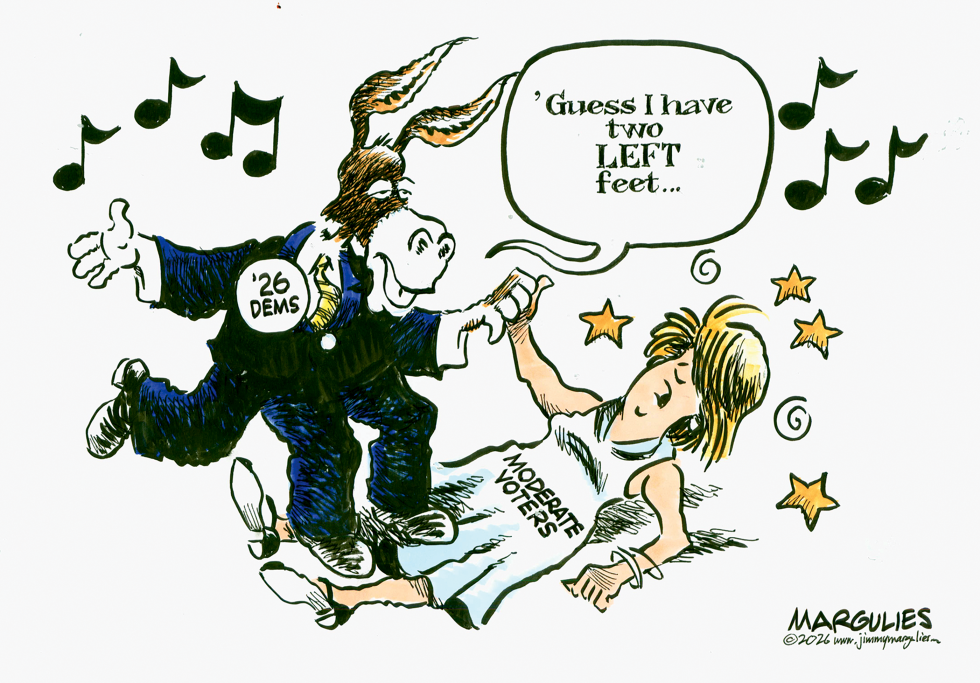
Democrats heading into the 2026 midterms face internal pressure to energize their base with progressive policies, yet this risks further distancing moderate voters essential for broader electoral success. The party has advanced left-leaning positions on issues like spending and social policy in recent cycles. Critics argue this approach prioritizes ideological purity over coalition building. The piece portrays the Democratic donkey as stepping on moderates while acknowledging its own missteps, highlighting the tension between base mobilization and centrist appeal.
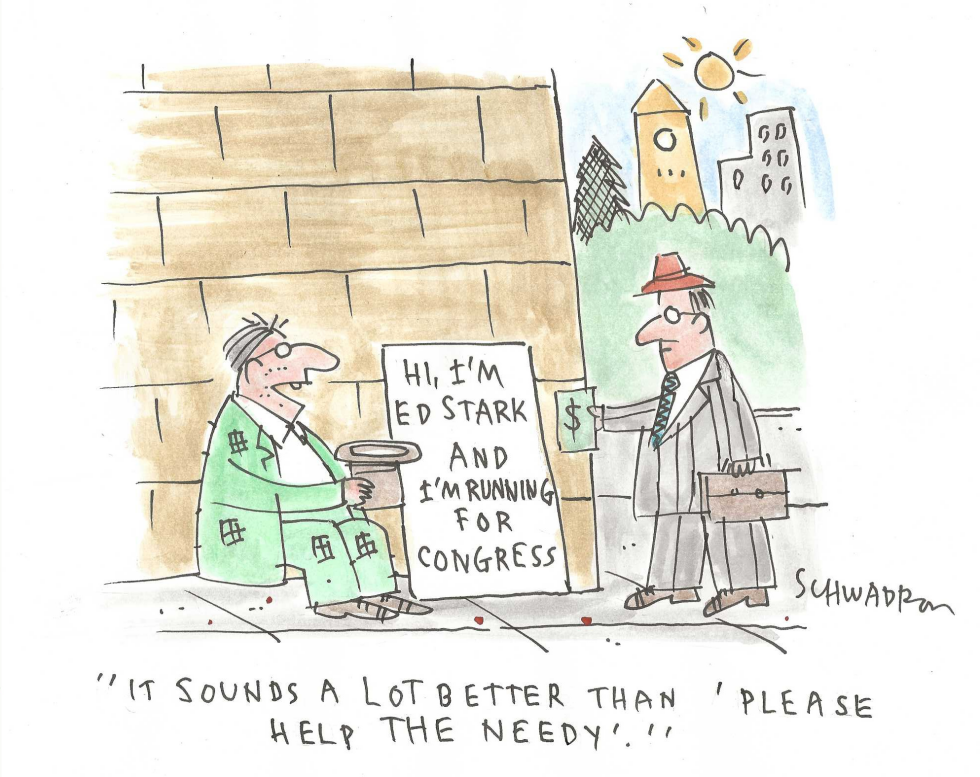
Ed Stark, identified on his campaign sign as a congressional candidate, sits on a sidewalk displaying his bid for office. A suited donor extends cash toward him. The scene highlights the routine nature of campaign fundraising. The piece frames the candidate's appeal as a more respectable version of street solicitation. It underscores how candidates routinely seek contributions to sustain their races.
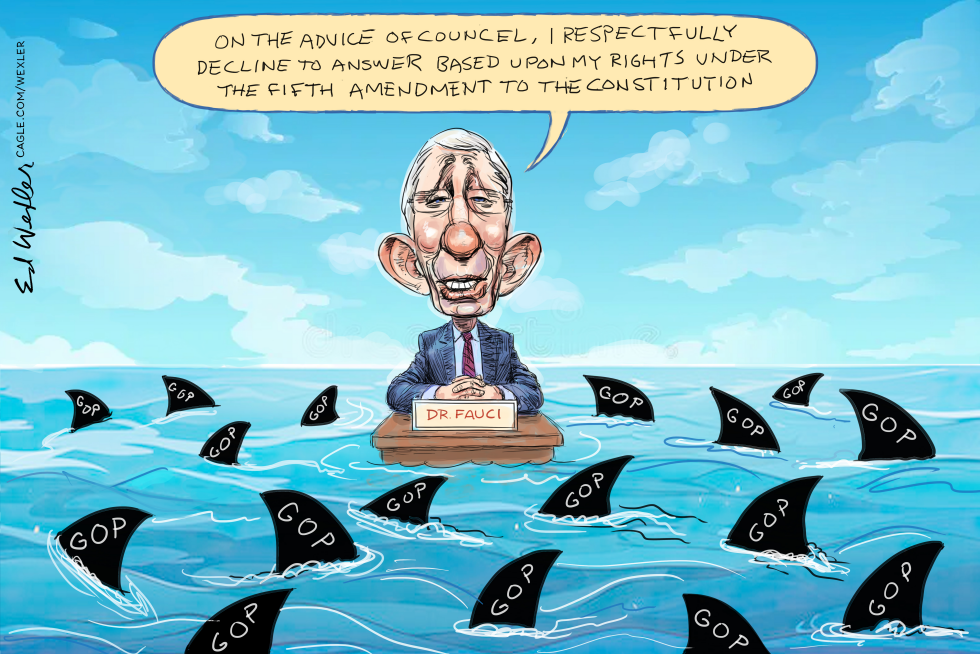
Dr. Anthony Fauci declined to answer questions at a House hearing, invoking his Fifth Amendment protections. The piece responds to Republican-led scrutiny of his role in pandemic-era public health decisions. It depicts the proceeding as a hostile setting rather than a neutral fact-finding exercise.
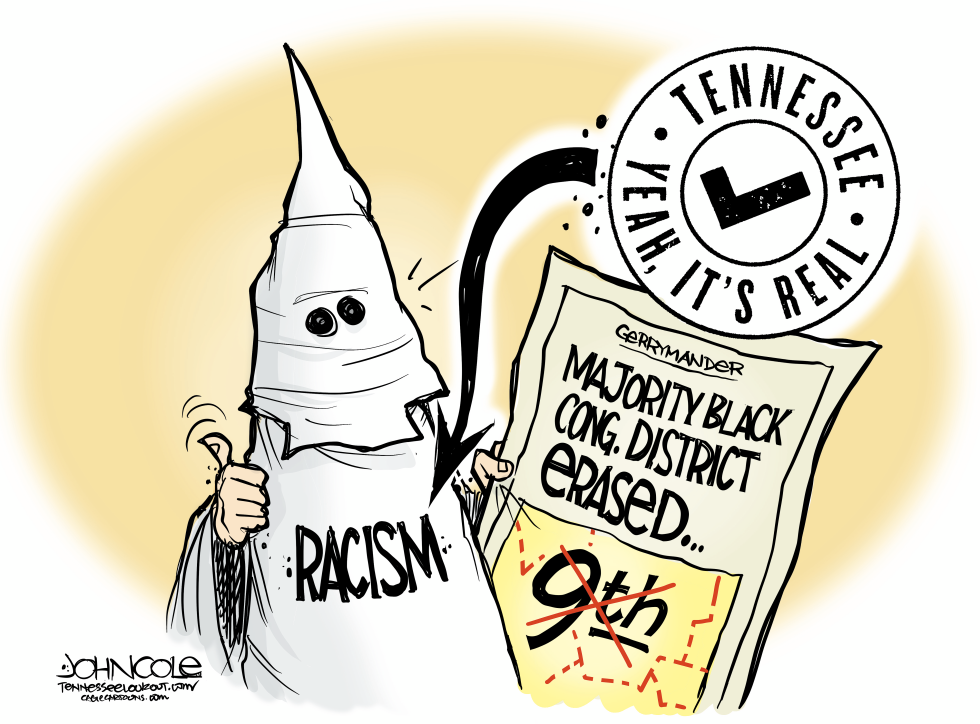
A robed figure labeled racism holds a newspaper headlined about the erasure of Tennessee's majority-Black congressional district. The cartoon responds to the state's new map that eliminates the 9th district. The stamp affirms the change as real. The image ties the redistricting directly to racial motivations in voting maps.
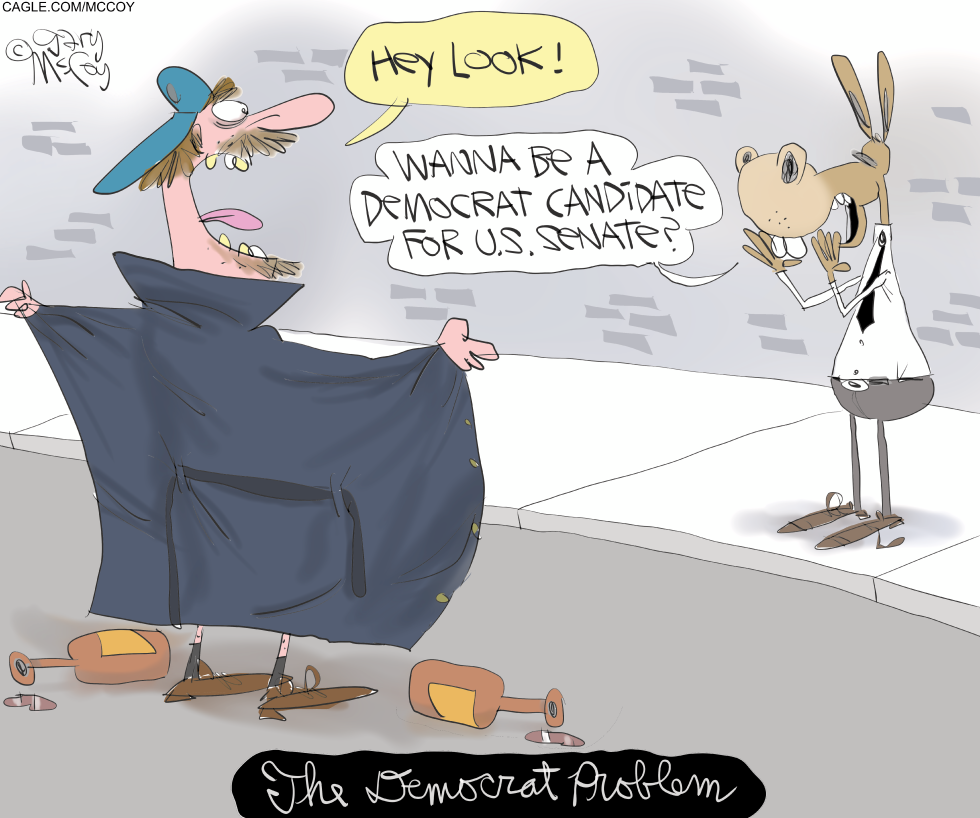
A trench-coated figure flashes on a sidewalk as a donkey in business attire extends a Senate candidacy offer. The July 2026 image from Gary McCoy labels the exchange as the Democrat problem. Scattered bottles and shoes lie at the flasher feet. The donkey speech bubble directly invites the figure to run for U.S. Senate. A separate bubble from the flasher draws attention to the moment.