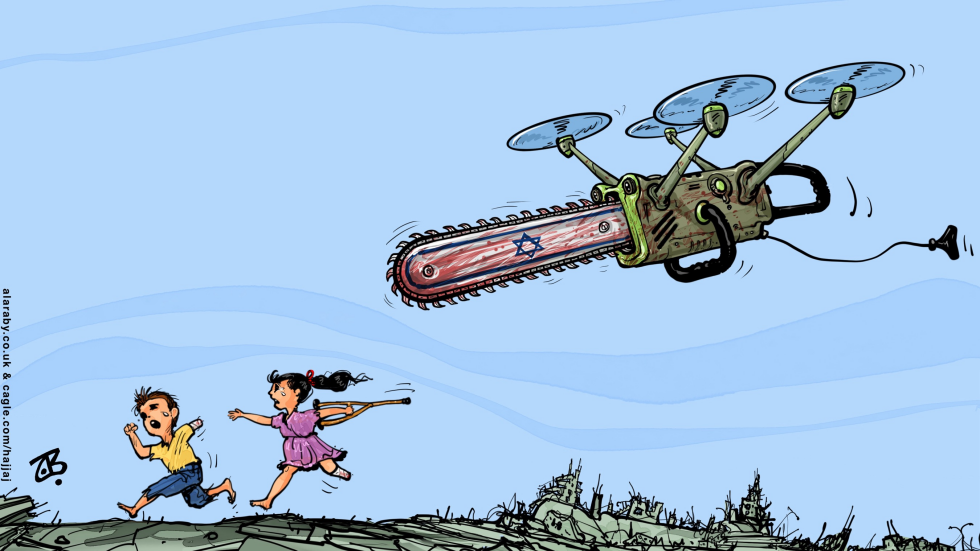
Israeli forces have deployed quadcopter drones equipped for combat in Gaza operations. The tactic has intensified scrutiny over risks to noncombatants in dense urban zones. Critics argue the approach blurs lines between targeted strikes and broader harm. The cartoon frames these weapons as indiscriminate threats to local populations. It takes the position that such technology exacerbates the humanitarian toll of the conflict.
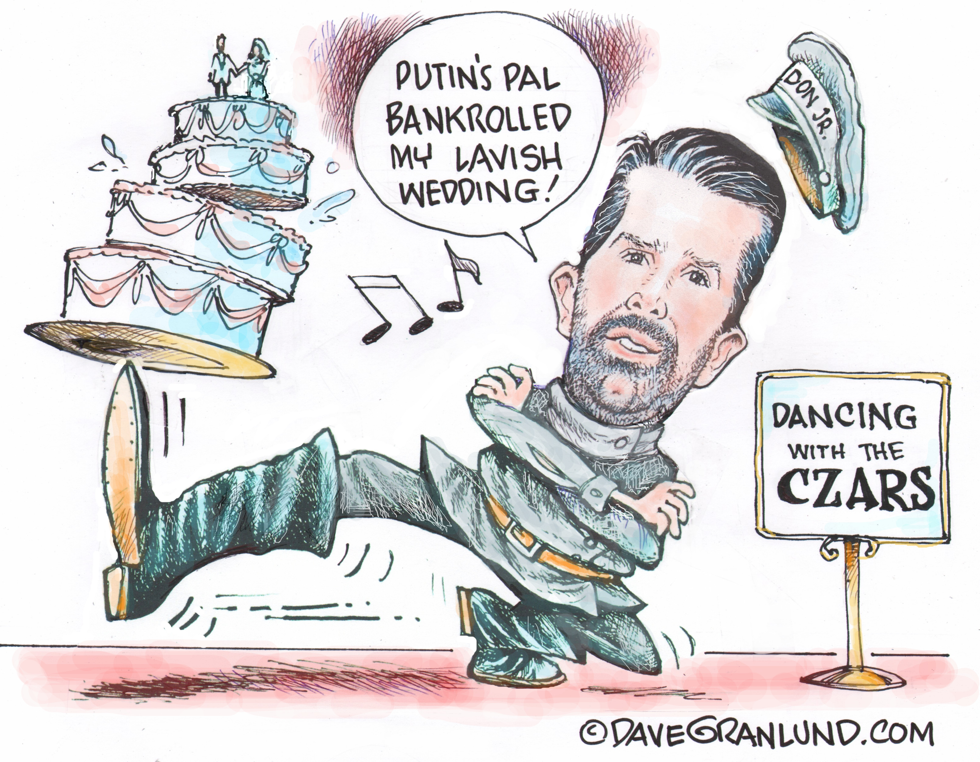
The cartoon by Dave Granlund depicts Donald Trump Jr in a military uniform dancing as a wedding cake collapses. A speech bubble has him claiming Putin's pal bankrolled the lavish wedding. A sign reads Dancing with the Czars. The image responds to ongoing allegations of Russian financial ties to the Trump family. It uses visual metaphors of dance and falling cake to highlight perceived influence. The publication date of September 16 2026 places it in a period of renewed scrutiny over foreign funding in U.S. politics. The work critiques the relationship without naming a single breaking event.
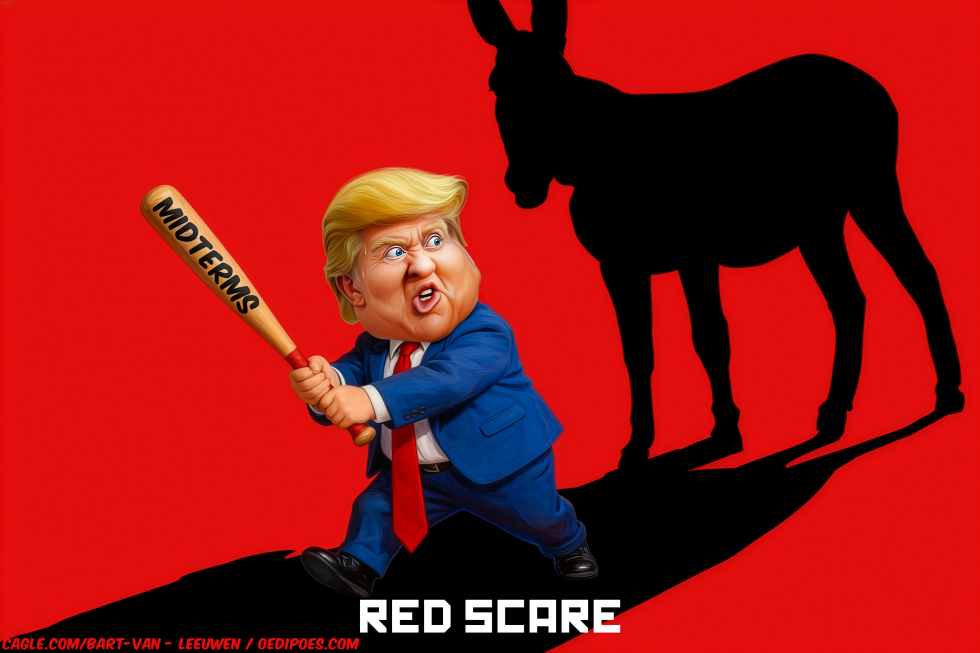
The cartoon shows Donald Trump in a blue suit swinging a baseball bat labeled MIDTERMS toward a black donkey silhouette on a red background. The phrase RED SCARE appears prominently at the bottom. Published on September 14, 2026, the image comments on Trump's approach to the upcoming midterm elections. It portrays the former president as aggressively pursuing Democratic opponents. The visual draws on historical Red Scare imagery to suggest fear-based political tactics. The composition places Trump in the foreground with the donkey shadow looming behind him.
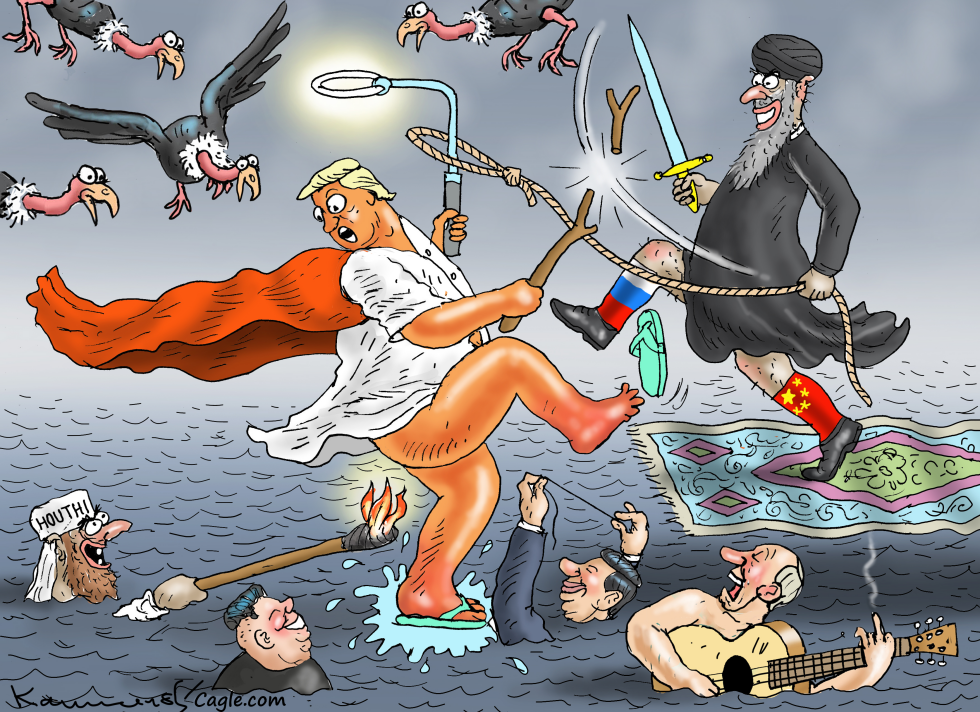
Donald Trump faces mounting complications in Middle East engagements involving Houthi forces and shifting ties with Russia and China. The cartoon portrays these entanglements as self-inflicted disorder that invites scavengers and undermines stability. It critiques the approach as reckless and counterproductive.
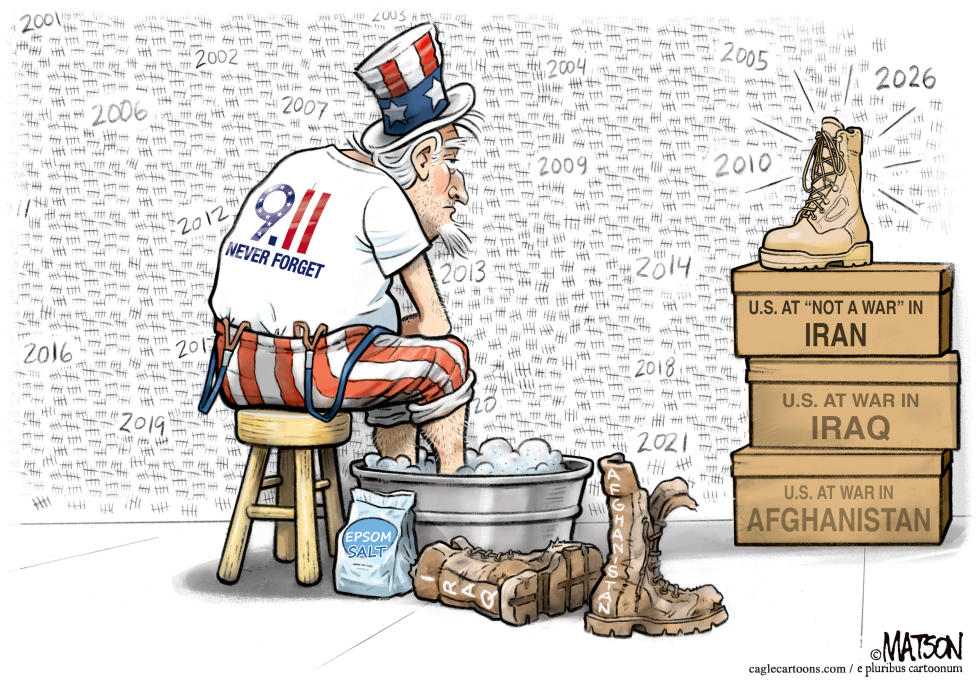
The United States has maintained military involvement across Iraq and Afghanistan for more than two decades following the September 11 attacks. Ongoing regional tensions with Iran now raise the prospect of additional commitments. The cartoon captures public and institutional exhaustion with extended deployments and questions the capacity for another prolonged engagement.
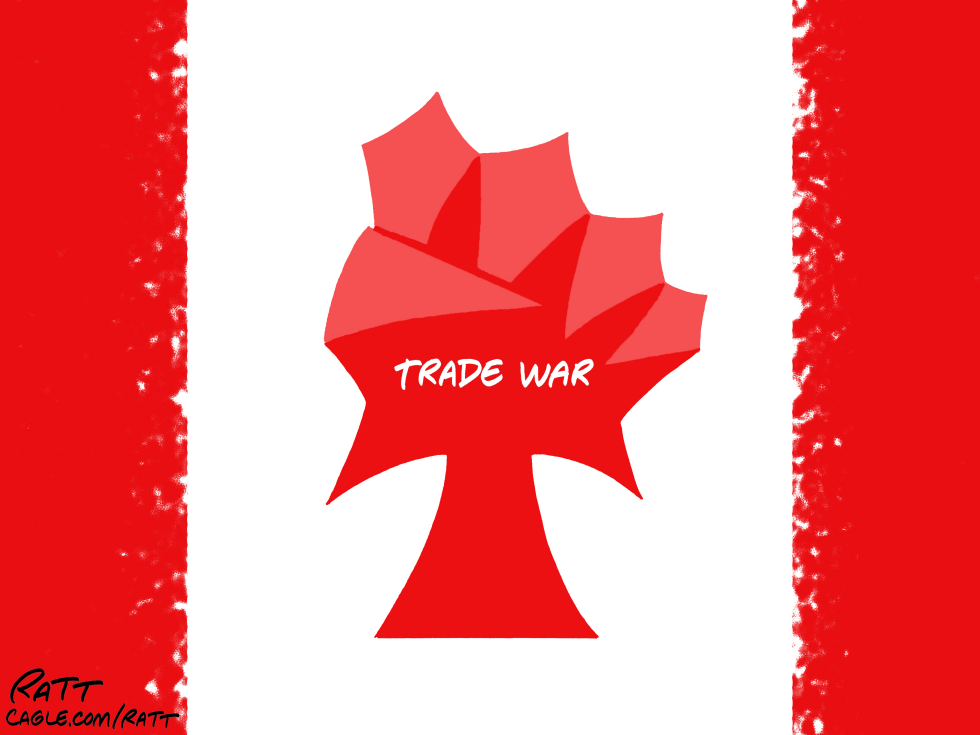
Ongoing US-Canada trade tensions escalated in 2026 with new tariff threats targeting Canadian exports. The dispute threatens key sectors including autos, lumber and agriculture, raising costs for consumers on both sides of the border. Canada has signaled plans to diversify markets and strengthen domestic industry. The cartoon frames the conflict as a direct assault on Canadian sovereignty and economic stability. It portrays the trade war as fracturing national symbols while urging a stronger northern response.
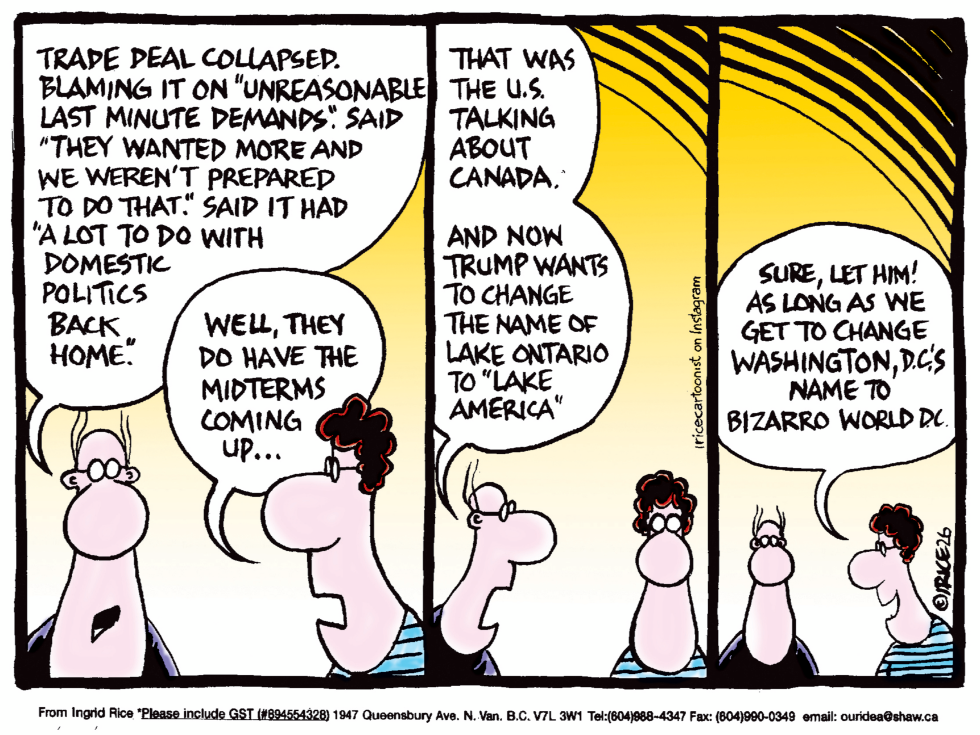
A Canada-U.S. trade deal collapsed after U.S. negotiators cited unreasonable last-minute demands and linked the failure to domestic politics ahead of midterms. President Trump then proposed renaming Lake Ontario to Lake America. Canadian officials responded by offering to rename Washington D.C. to Bizarro World DC if the change proceeds. The exchange highlights how trade tensions and political posturing are escalating between the two countries. The cartoon mocks the name-change idea as emblematic of broader dysfunction in bilateral relations.
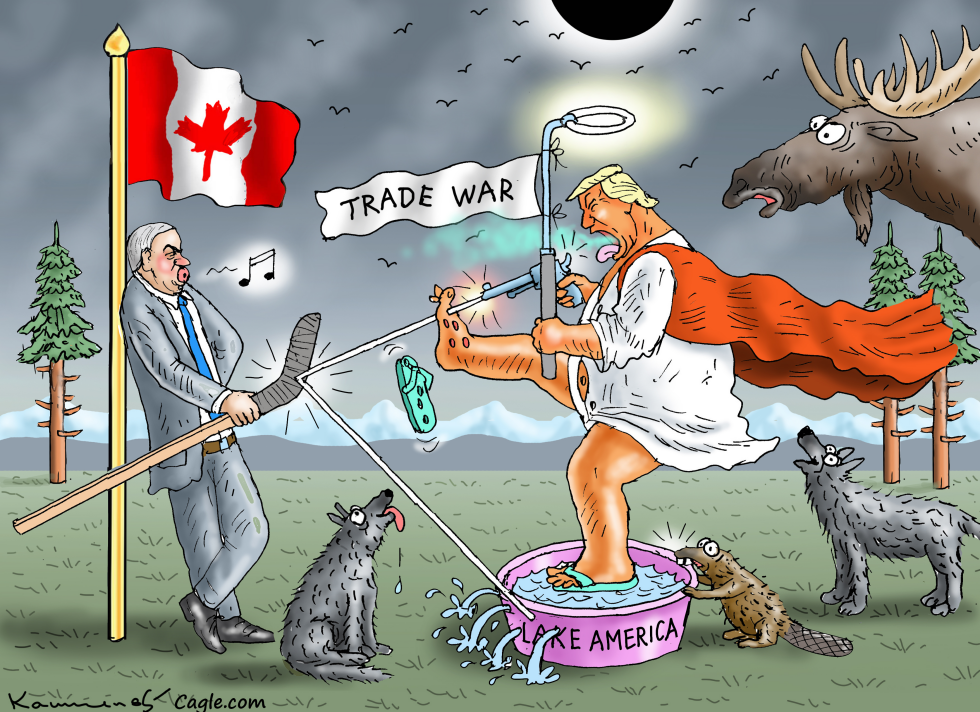
President Trump launched new tariffs on Canadian goods in early September 2026, citing trade imbalances and border issues. The move immediately prompted Canadian countermeasures including duties on US exports. The policy shift disrupts integrated supply chains in autos, energy and agriculture that support millions of jobs on both sides of the border. Markets reacted with volatility as investors weighed the costs of renewed protectionism. The cartoon portrays the tariff campaign as self-inflicted harm that leaves the US exposed to swift Canadian pushback.
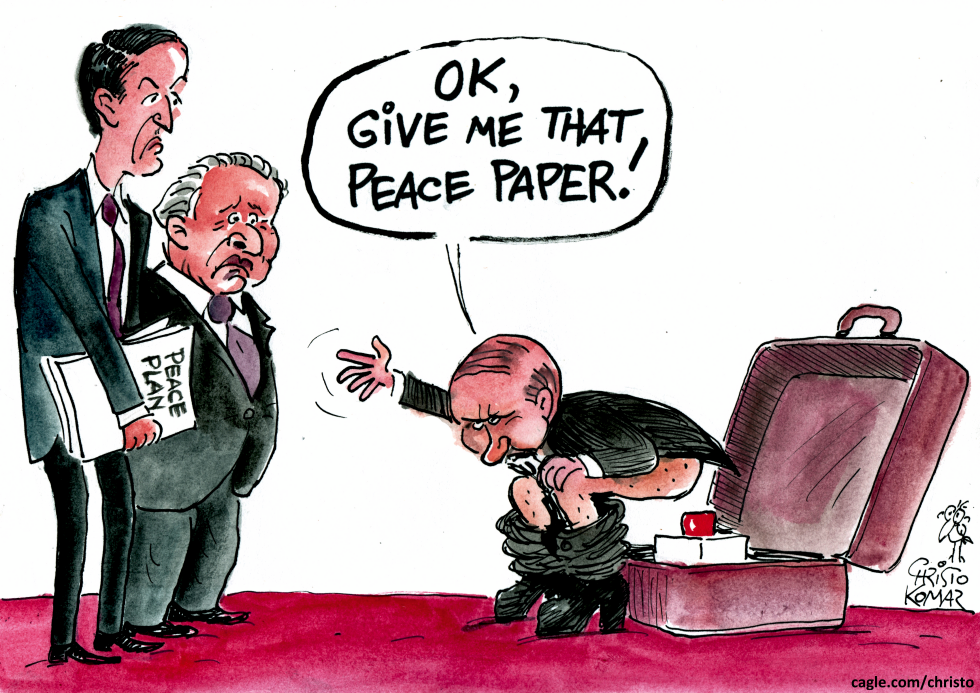
Vladimir Putin has signaled interest in renewed talks to end the war in Ukraine, a conflict that has now stretched for years with heavy costs on all sides. Recent diplomatic overtures have gained little traction as battlefield positions remain entrenched. The cartoon portrays Putin as constrained by his own choices yet eager to claim any available peace document. It underscores the gap between Russian rhetoric and the reality of prolonged fighting. The piece suggests that genuine progress remains unlikely without major concessions from Moscow.
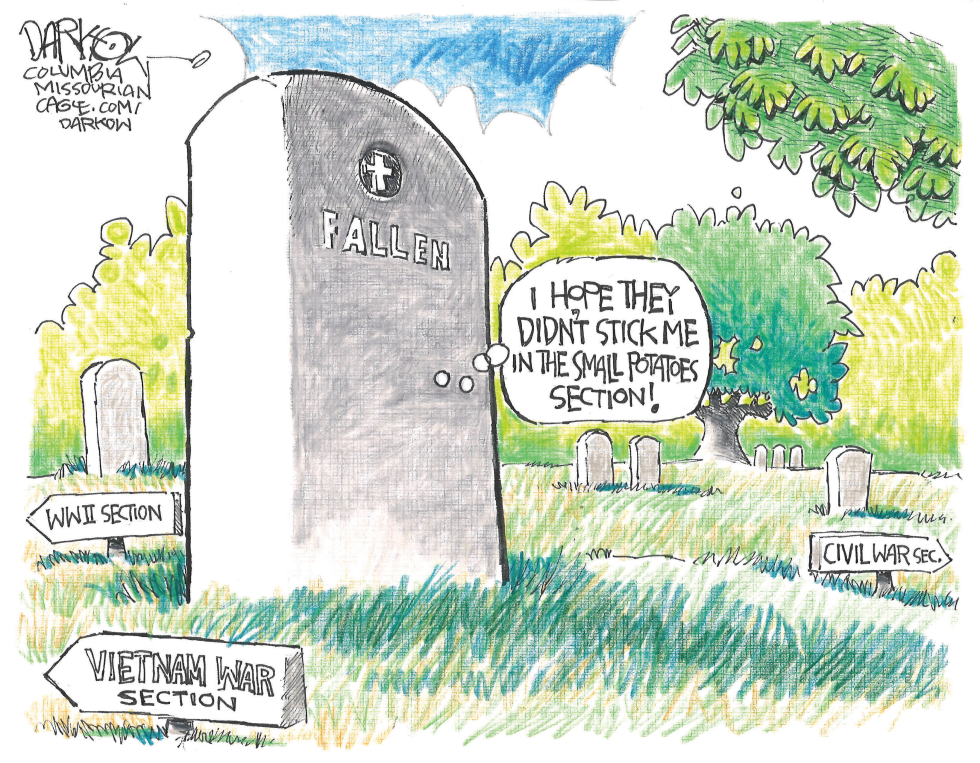
Recent developments in U.S. policy toward Iran have included public statements framing the conflict as limited in scope and consequence. Officials have emphasized de-escalation and avoided comparisons to major 20th-century wars. The approach has drawn criticism from those who see the engagement as carrying substantial long-term costs for American forces and regional stability. The cartoon argues that such framing diminishes the sacrifices involved and places the Iran conflict in a lesser category than earlier wars.
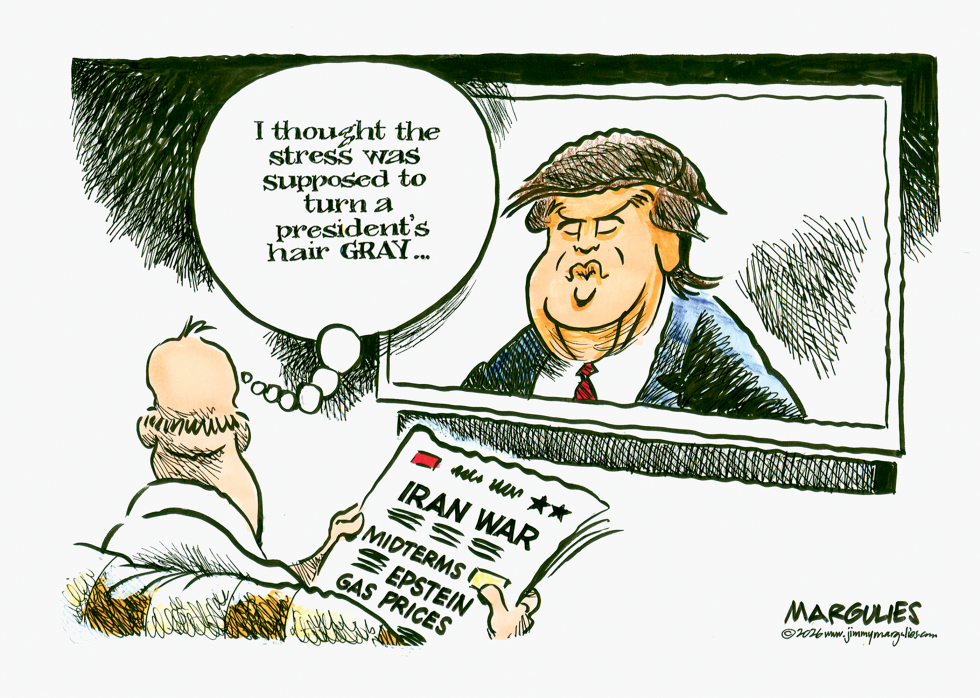
President Donald Trump confronts an Iran war, midterm election pressures, Epstein-related revelations and rising gas prices in September 2026. These overlapping challenges test the administration's capacity to manage foreign conflict and domestic economic strain simultaneously. The cartoon argues that the expected physical toll of such stress on the president has not materialized in the anticipated way.
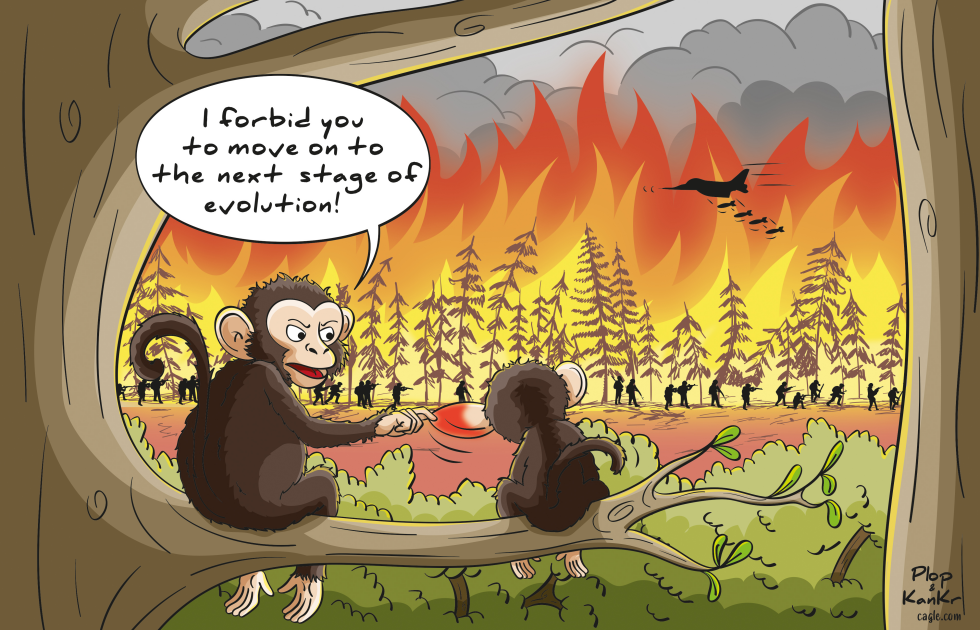
The cartoon published on September 7, 2026, shows two monkeys on a tree branch overlooking a forest fire. One monkey holds a red object and declares it forbids the next stage of evolution. In the background, soldiers stand in formation and a fighter jet flies overhead. The image responds to ongoing themes of war disrupting societal and human development. It uses the monkeys to represent humanity stalled by violence and destruction rather than advancing.
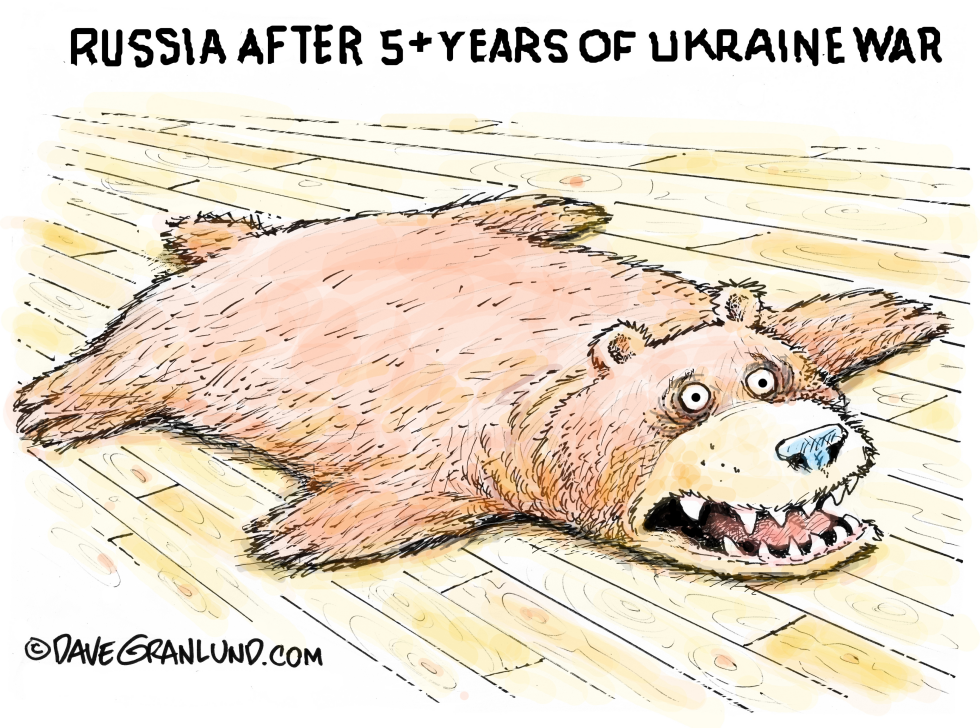
The cartoon depicts Russia as a large brown bear sprawled on a wooden floor, its eyes wide and mouth open in a weary expression. The title directly references the ongoing Ukraine war after five years. This visual metaphor illustrates the strain on Russia from the prolonged conflict. The drawing responds to the extended nature of the war that began in 2022 and continued into 2026. It highlights how the invasion has left Russia in a weakened state without resolving the underlying issues.
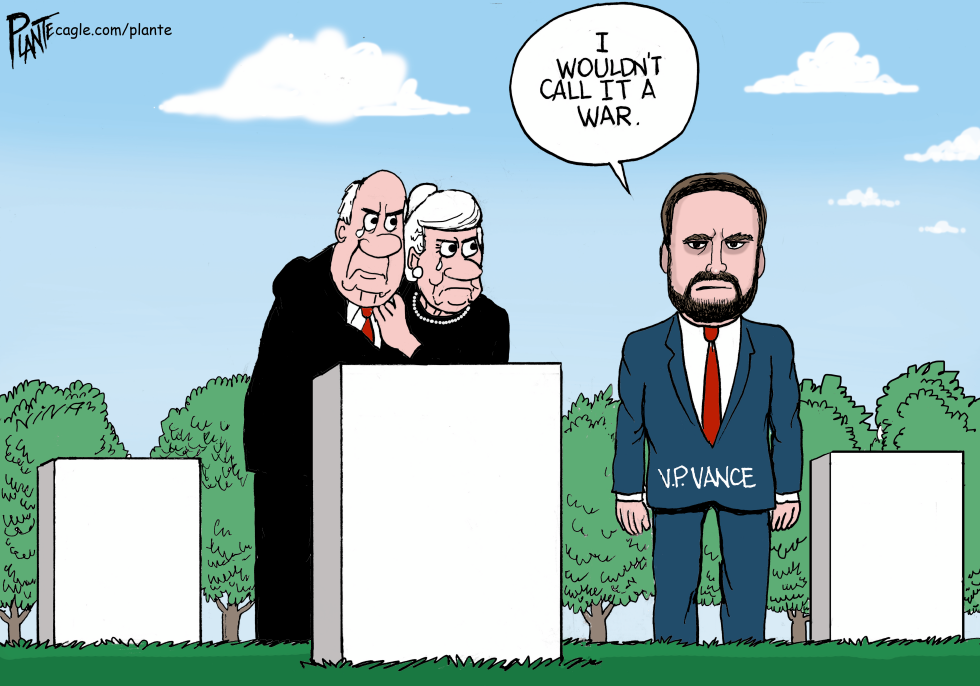
Vice President JD Vance has publicly stated that the United States is not at war with Iran even as reports indicate American casualties in the region. The administration frames operations as limited strikes rather than full conflict. This downplaying occurs amid broader tensions over Iran's nuclear program and regional influence. The cartoon argues that the human cost in the cemetery makes the denial untenable and that the situation qualifies as war.
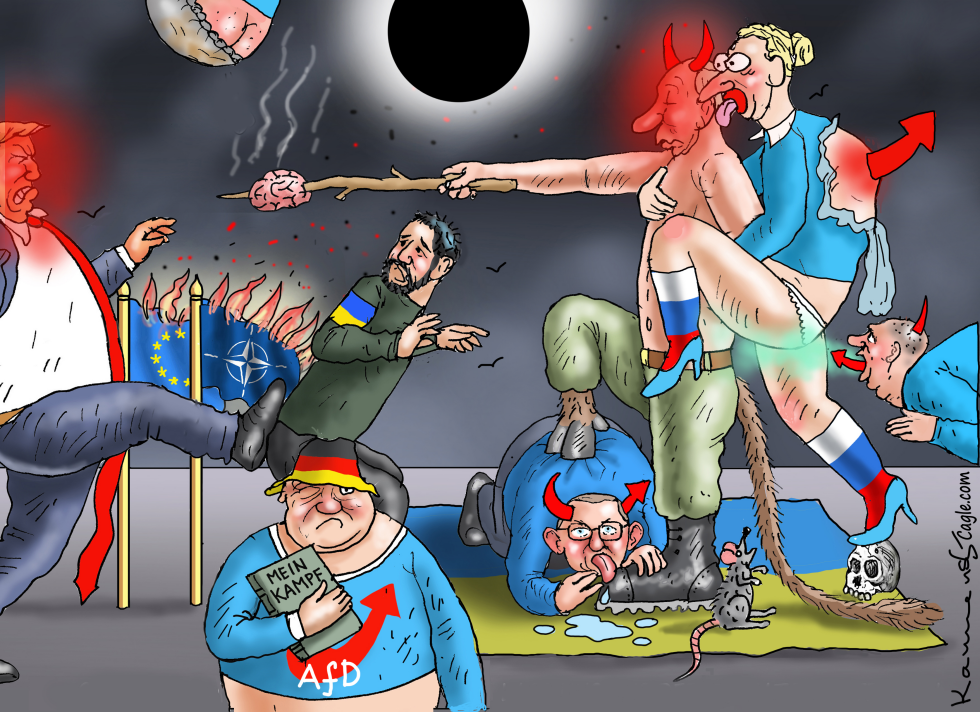
The Alternative for Germany party faces renewed criticism for its associations with international far-right figures including Donald Trump and apparent sympathy toward Vladimir Putin amid the Russia-Ukraine conflict. The cartoon portrays AfD embracing these influences while rejecting NATO and EU structures. It argues that such alignments expose the party's extremist leanings and undermine Germany's democratic commitments.