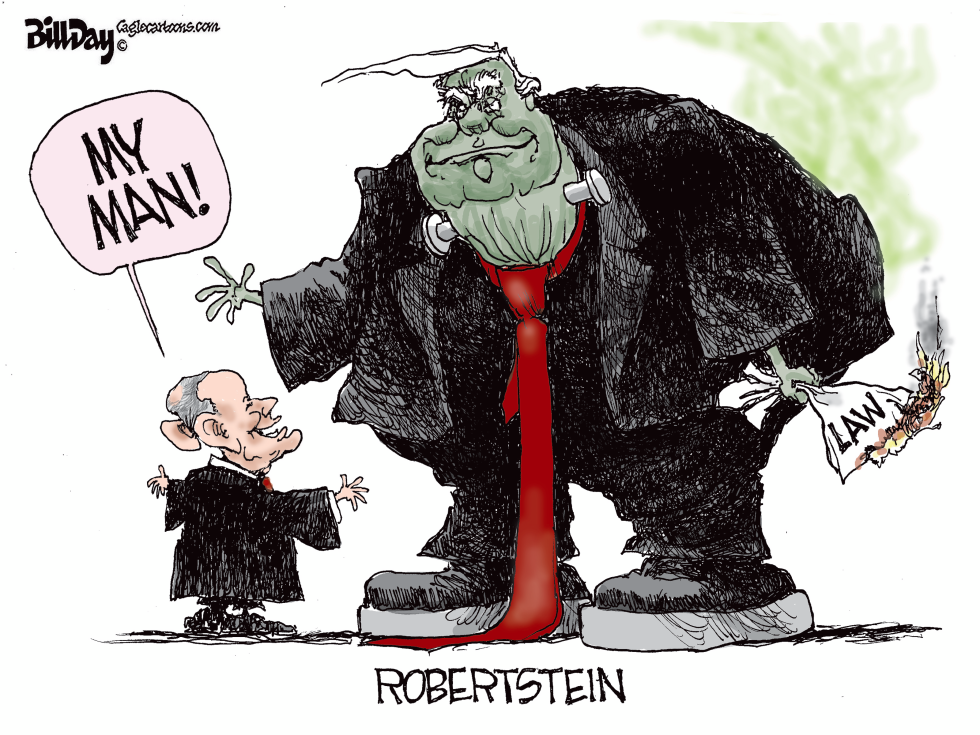
A judge nicknamed Robertstein appears as a stitched-together monster clutching a burning copy of the law while a smaller political figure hails him as 'my man.' The image responds to ongoing concerns over judicial appointments that produce ideologically driven rulings. Critics argue such selections prioritize loyalty over legal restraint, weakening institutional guardrails. The cartoon takes the position that these appointments create uncontrollable forces that damage the rule of law.
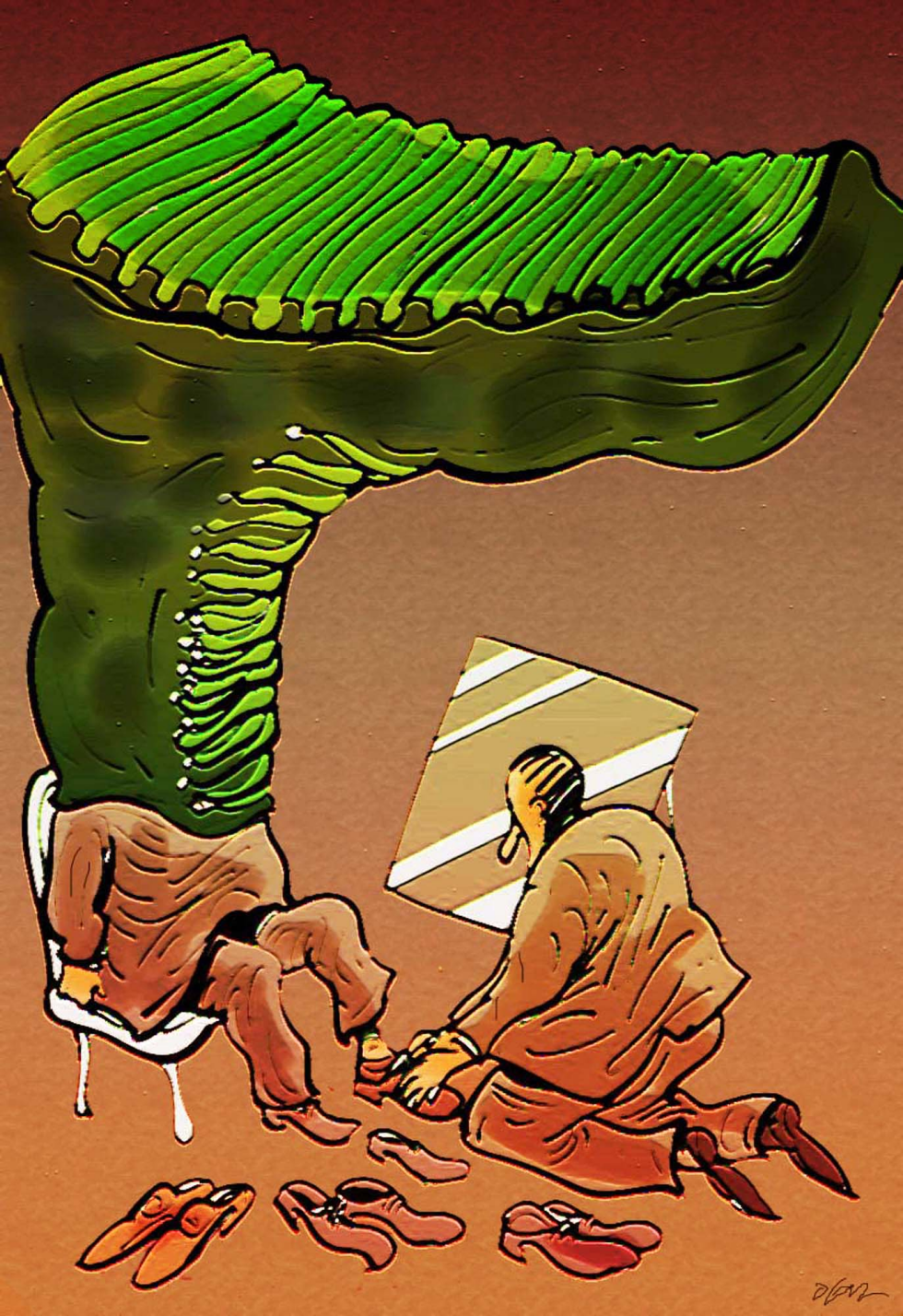
Political power structures continue to exert pressure on individuals and rivals in ongoing governance disputes. The dynamic highlights how dominant forces can sideline or overwhelm those in subordinate positions. The piece takes the position that such overreach undermines fair political processes and individual agency.
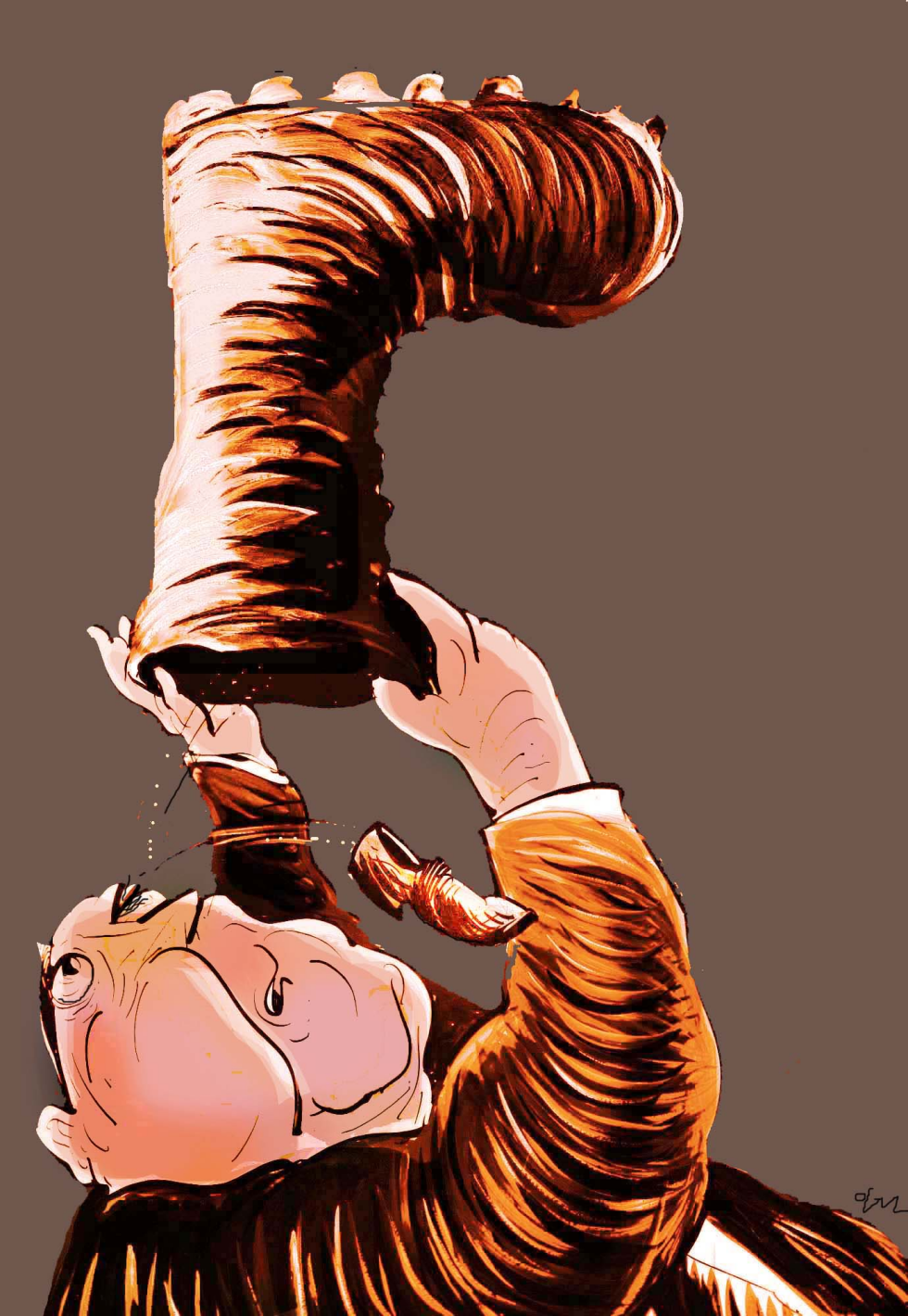
Workers across manufacturing and construction sectors continue to manage heavy equipment and components as part of routine operations. These tasks carry direct implications for safety, productivity, and workforce sustainability. The piece underscores the persistent physical toll such responsibilities impose.
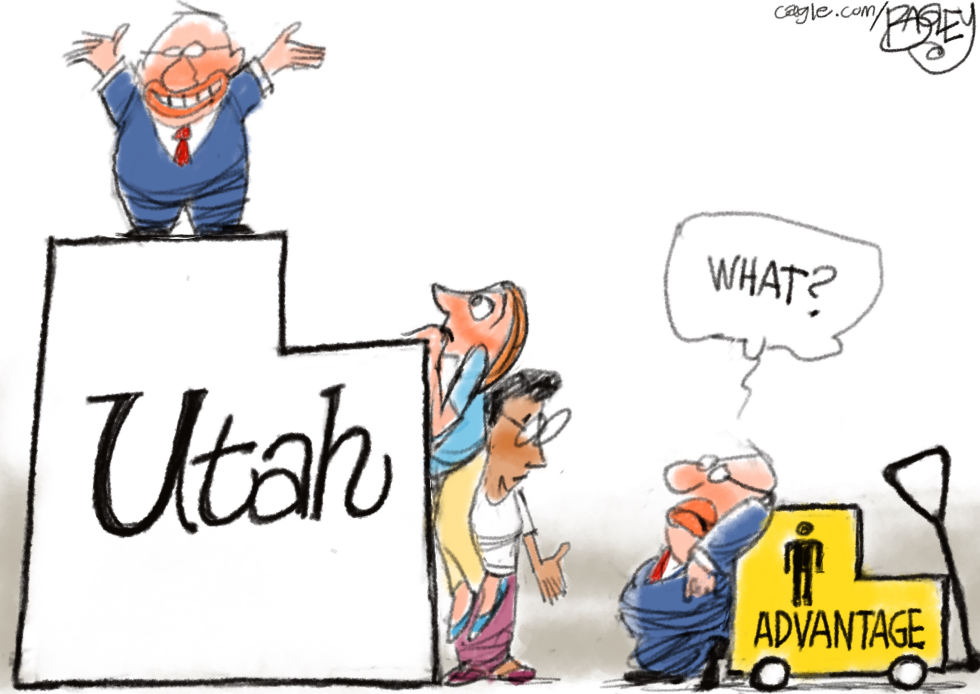
Utah's political advantage has changed hands following recent election developments. Key figures react with visible surprise as power dynamics realign in the state. The shift matters because it alters control and strategy for upcoming contests. The cartoon highlights the unexpected nature of the transition and questions how the new arrangement will hold.
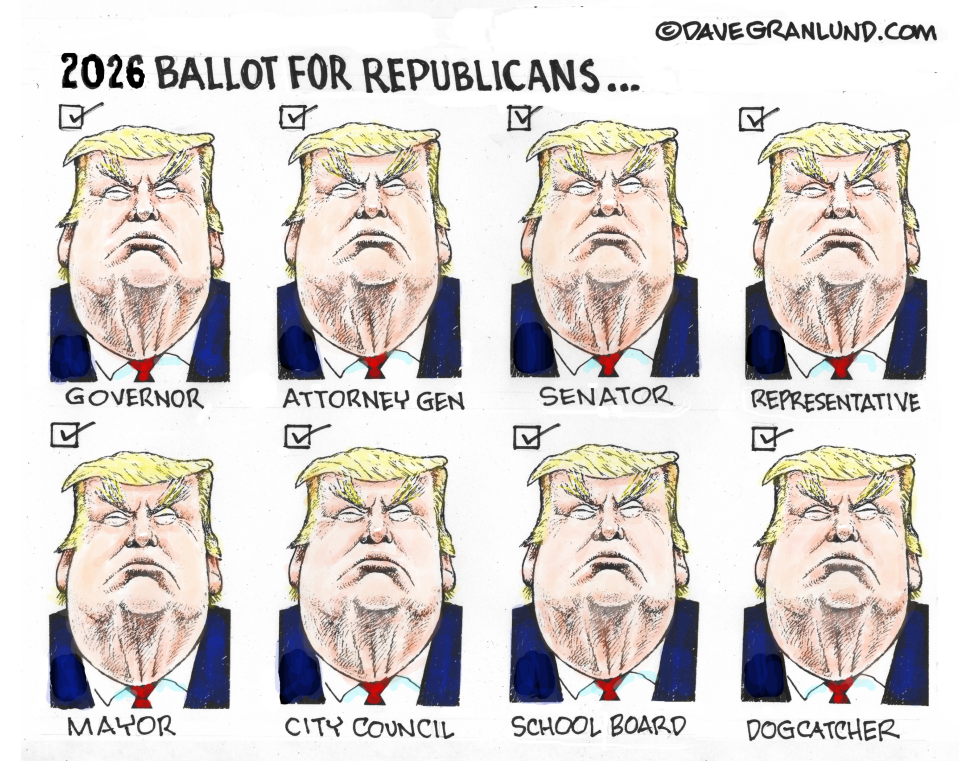
The cartoon depicts eight identical caricatures of Donald Trump filling every position on a 2026 Republican ballot, from governor and attorney general down to dogcatcher. Each image carries a checkmark, underscoring the editorial point that Trump loyalty has become the sole qualification for GOP candidates at every level. Published September 11, 2026, the image comments on the ongoing consolidation of Republican primaries around Trump-aligned figures ahead of the midterm cycle. The visual repetition emphasizes how the former president's influence extends from high-profile statewide offices to local contests. This approach mirrors real-world patterns where Trump endorsements shape candidate selection across the party.
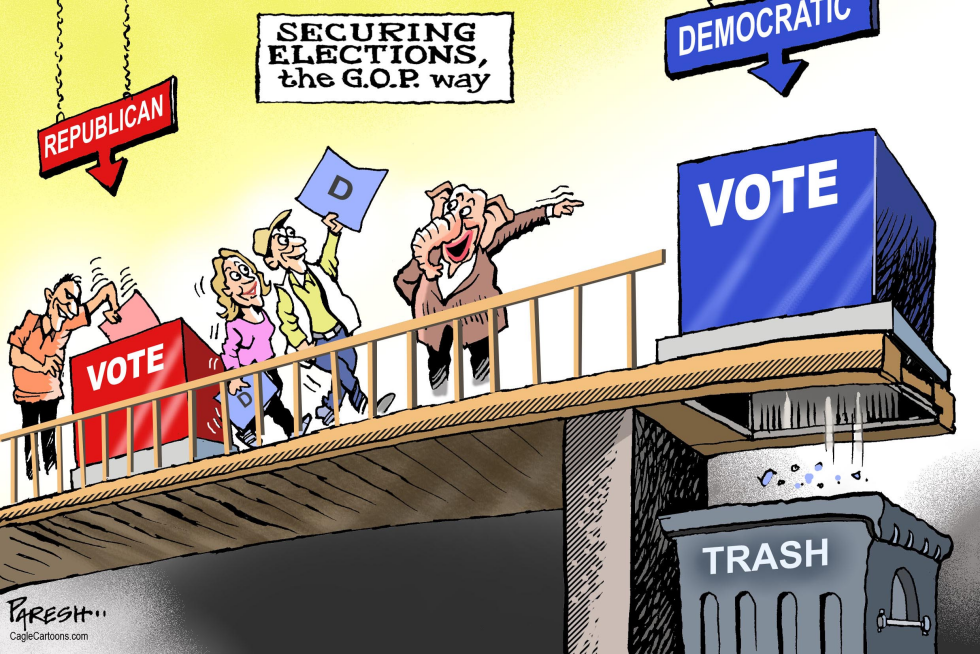
The cartoon depicts Republicans on a platform guiding a large blue vote box labeled Democratic into a trash can below while a red Republican vote box remains on the structure. A sign reads Securing Elections the G.O.P. way. The elephant symbol of the GOP points toward the action as figures including one holding a D flag stand nearby. The image comments on claims of election integrity by showing ballots from one party discarded. This reflects ongoing partisan debates over voting procedures and access as of the 2026 publication date.
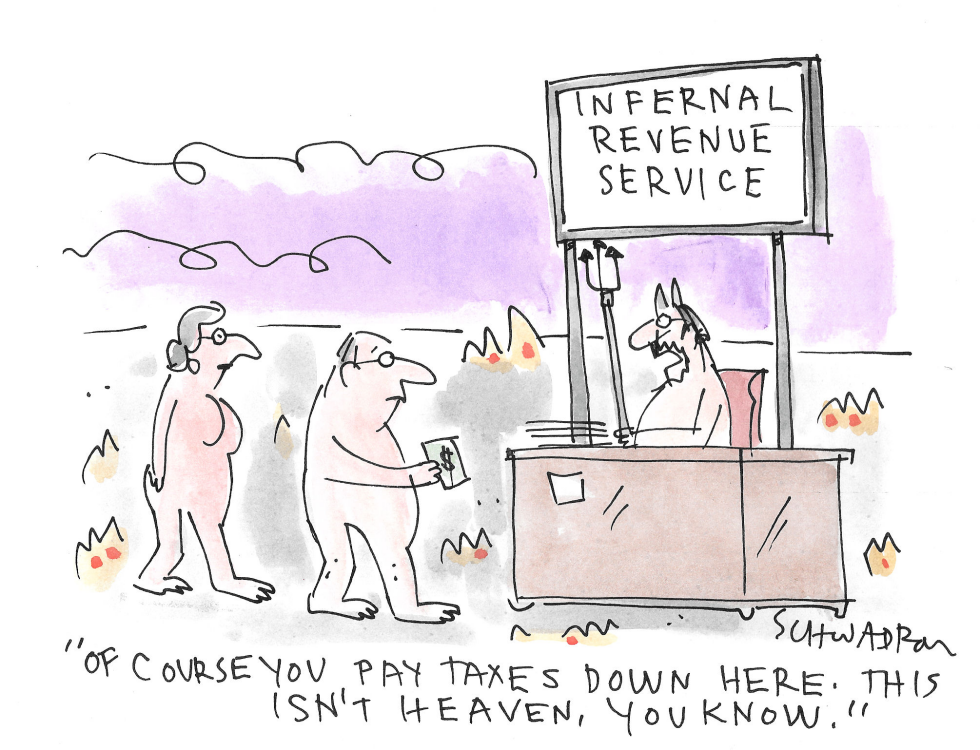
The long-standing adage that only death and taxes are certain receives fresh treatment in a cartoon depicting an IRS outpost operating in hell. No specific policy change or ruling prompted the piece, which instead plays on the enduring public frustration with tax collection as an inescapable force. The editorial stance pokes at bureaucratic persistence, suggesting the tax man follows citizens beyond the grave with the same relentless efficiency seen in life.
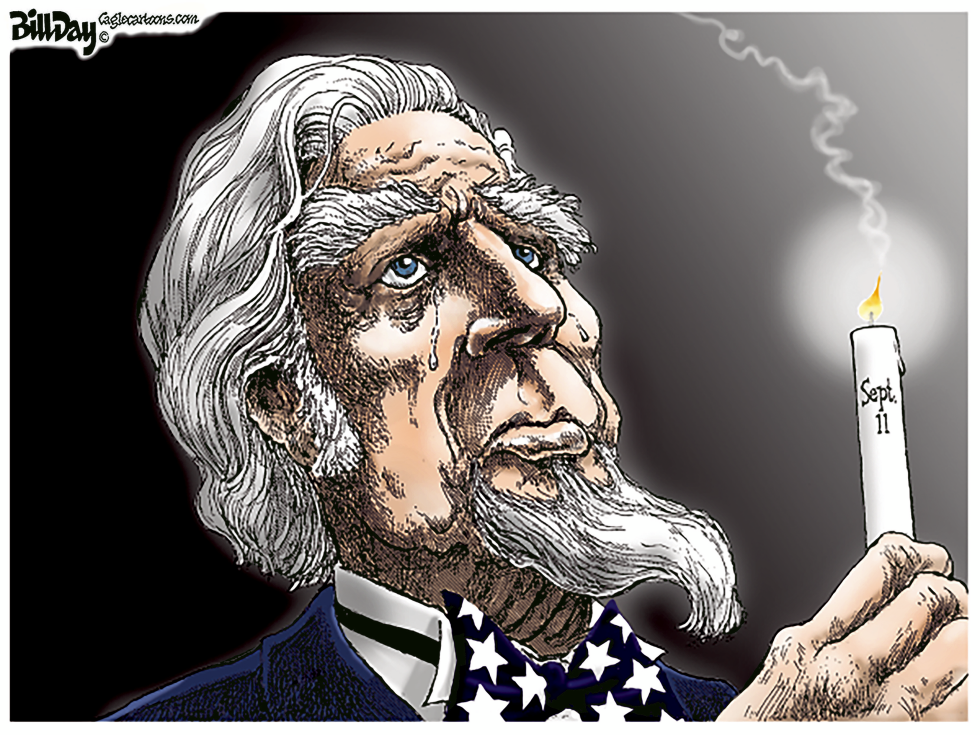
On the eve of the September 11 anniversary, Americans pause to remember the lives lost in the 2001 attacks. The annual observance continues to draw national attention as survivors, families, and officials gather at memorials across the country. The cartoon captures the enduring grief and patriotic resolve that mark the day each year.
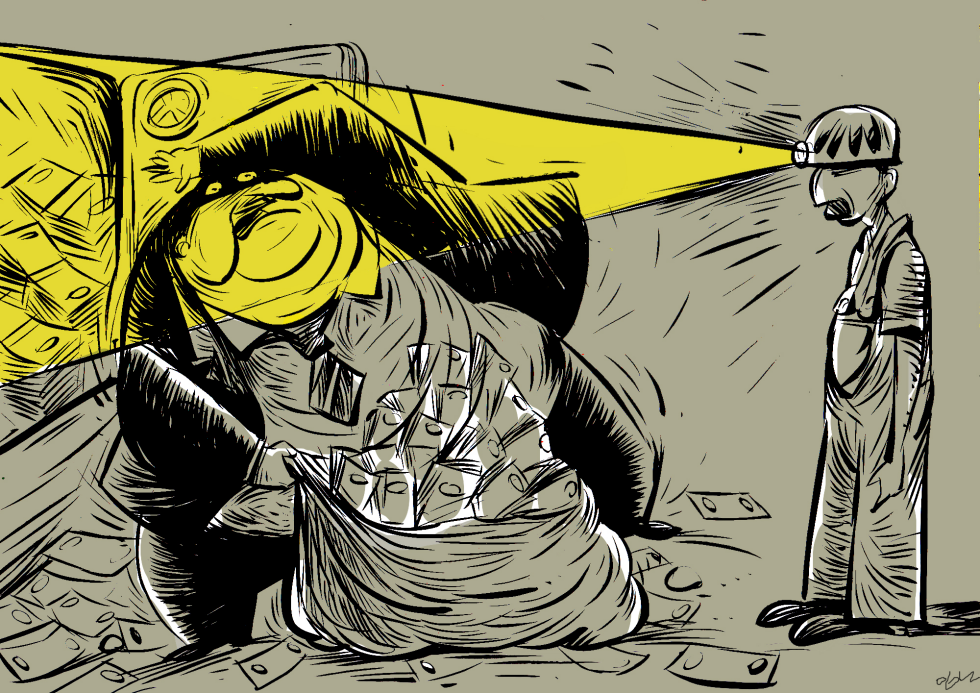
Ongoing concerns about officials and contractors mishandling public resources continue to surface in various jurisdictions. Weak controls allow individuals to divert funds meant for public projects. The cartoon underscores the need for stronger accountability measures to prevent such diversion and restore trust in government spending.
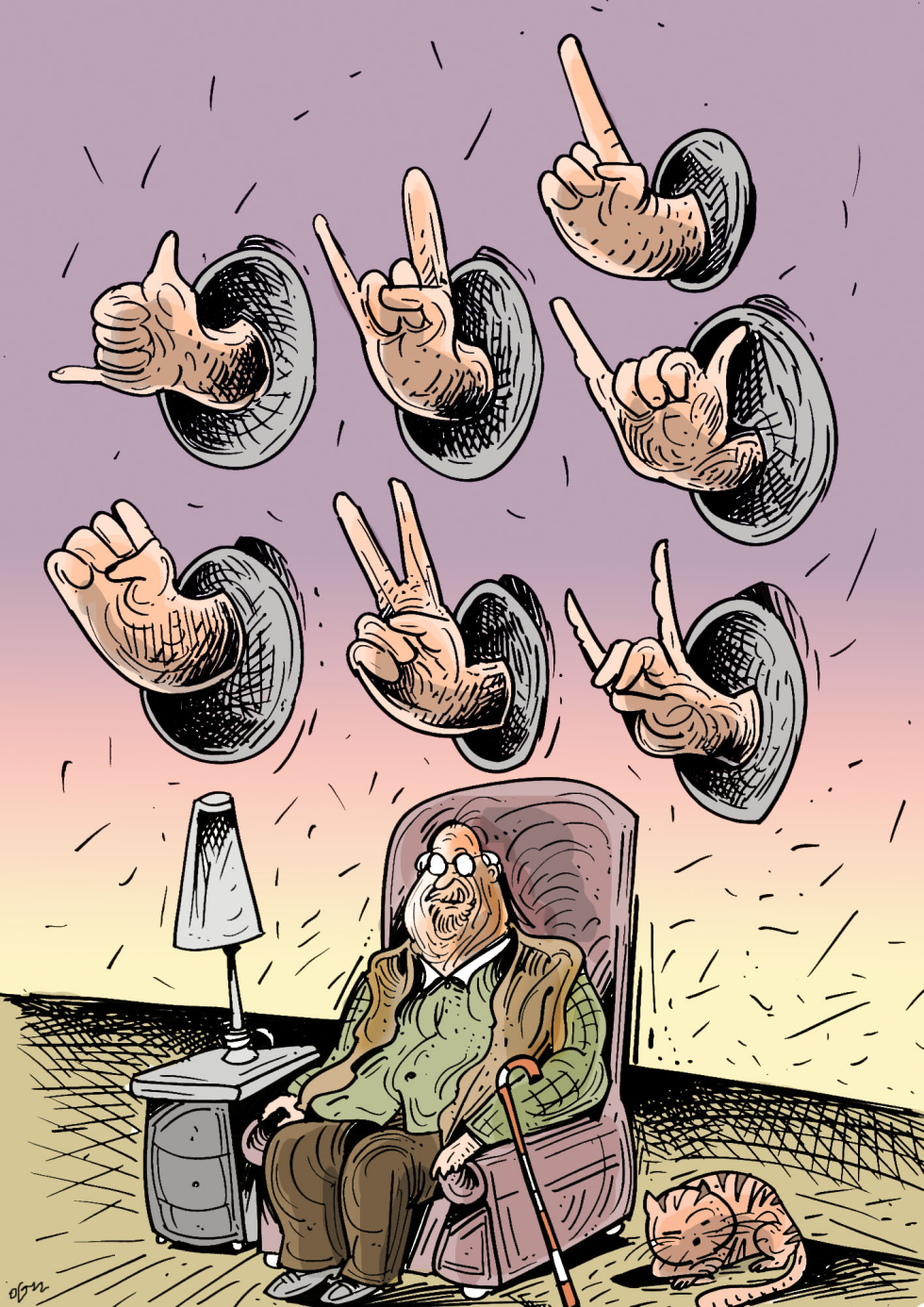
Public figures, particularly older officials in government roles, continue to face intense scrutiny and negative public reaction in 2026. Criticism has intensified through various channels, highlighting frustration with established leadership. The piece portrays an overwhelmed elderly man absorbing a barrage of dismissive gestures, underscoring the editorial view that such backlash reflects legitimate fatigue with unresponsive or out-of-touch figures in power.
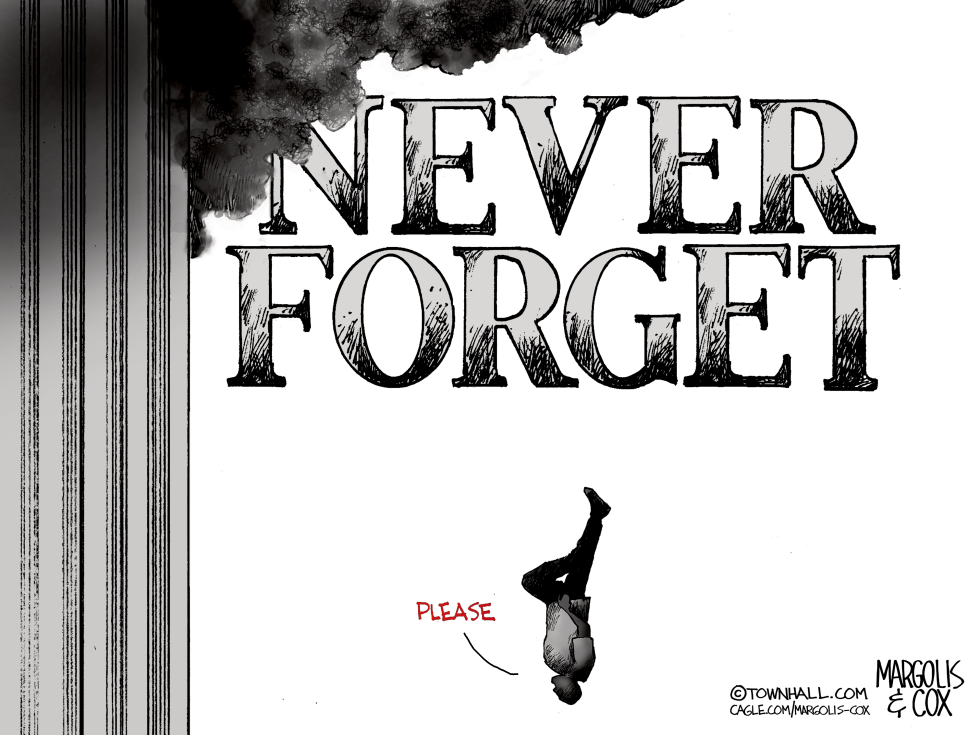
The 25th anniversary of the September 11, 2001 attacks arrives on September 11, 2026. Families and survivors continue to mark the loss of nearly 3,000 people at the World Trade Center, Pentagon and Flight 93. The milestone renews calls to remember the victims and the day's impact on national security and foreign policy. The cartoon underscores the enduring human tragedy through its central image of a falling figure.
Israeli Prime Minister Benjamin Netanyahu has maintained policies of territorial control and military operations in areas bordering Israel including Gaza the West Bank southern Lebanon and parts of Syria. These actions have drawn international scrutiny over sovereignty violations and regional stability. The cartoon frames the policy as aggressive expansion that damages neighboring states.
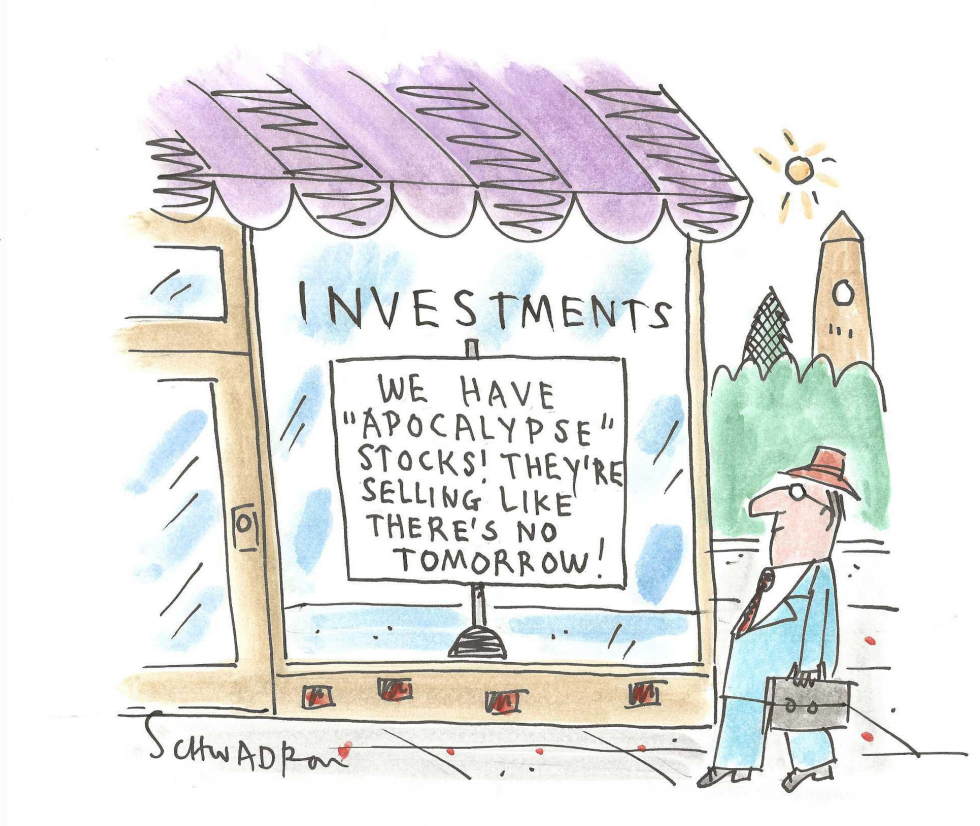
Investor interest in so-called apocalypse stocks has risen as markets reflect broader economic uncertainty. The trend highlights how some traders position for worst-case scenarios in business and finance. The cartoon underscores the ironic appeal of such products, suggesting hype around end-times investing reveals deeper anxieties about stability.
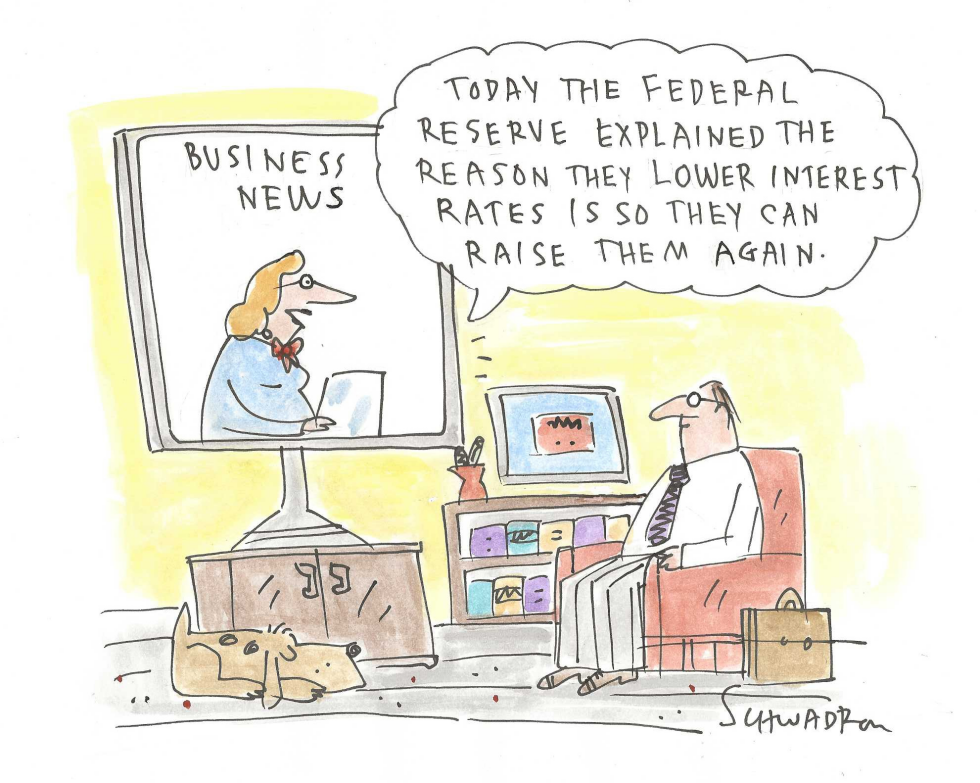
The Federal Reserve announced interest rate reductions in late summer 2026 to support economic conditions. Observers noted the central bank's stated goal of eventual rate increases created confusion about policy direction. The move affects borrowing costs for businesses and households nationwide. Markets reacted with mixed signals on inflation control and growth prospects. The cartoon presents the explanation as self-contradictory, underscoring public doubt about the clarity of Fed communications.
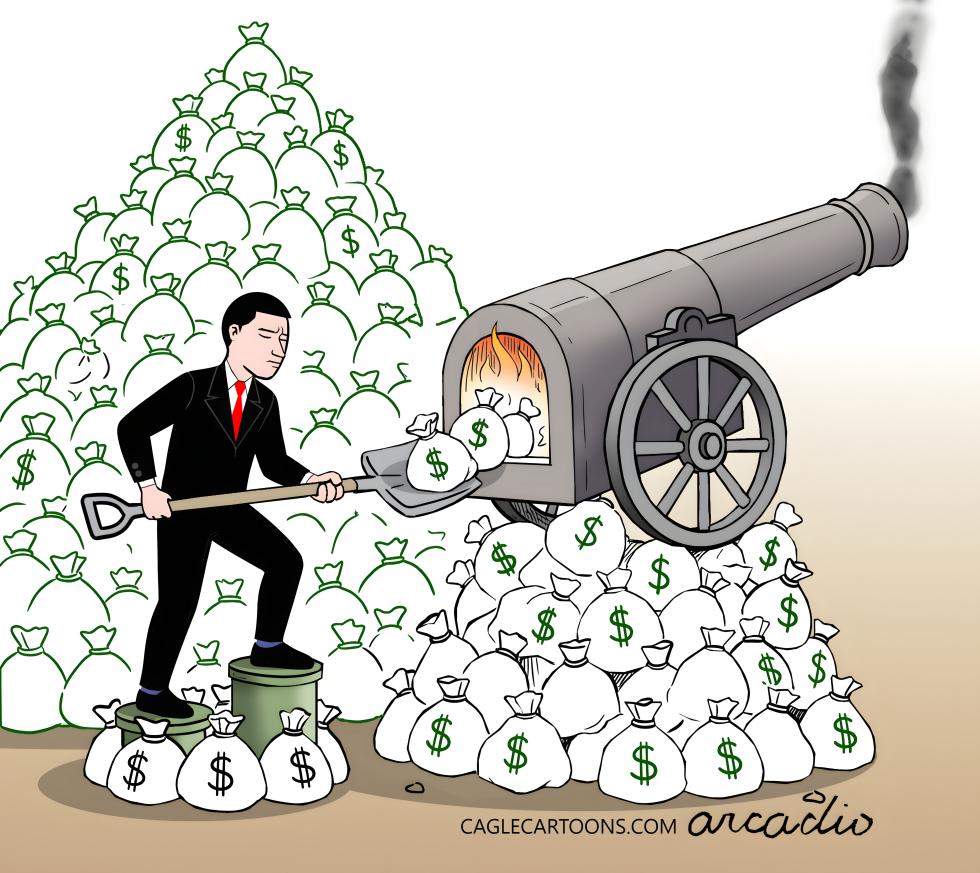
Business leaders continue to allocate large sums toward unproductive or destructive ends, drawing criticism for prioritizing short-term displays over sustainable practices. The pattern reflects ongoing concerns about corporate priorities where substantial resources vanish without clear returns. The piece argues that such spending represents a fundamental misallocation that harms long-term stability.