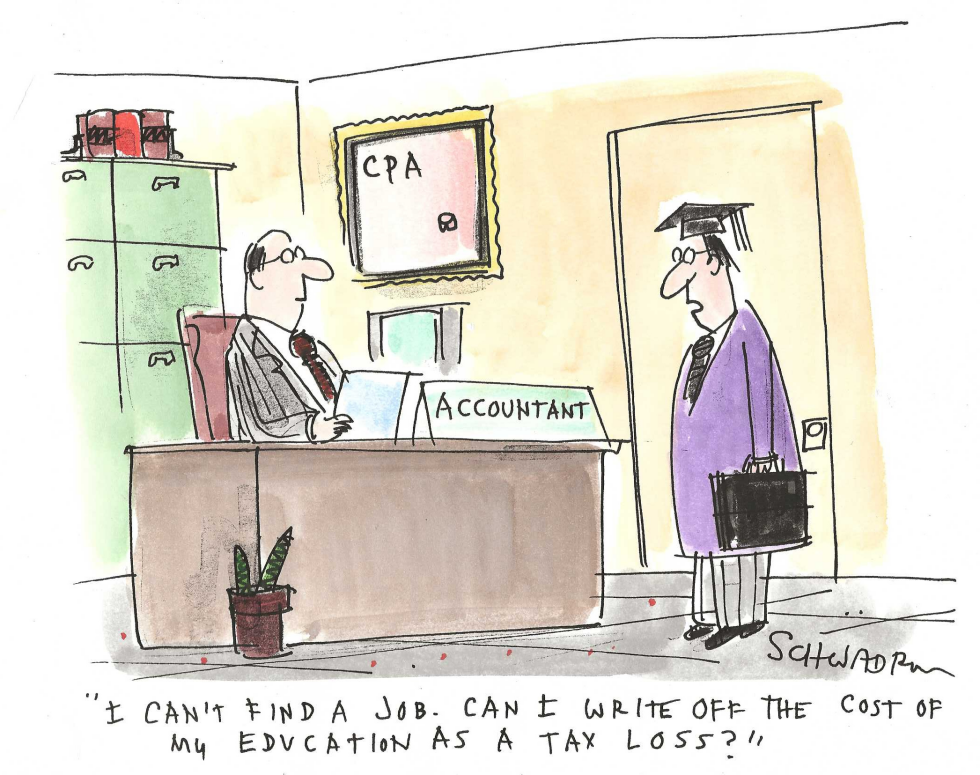
Recent college graduates facing extended unemployment have begun inquiring whether the cost of their degrees can be treated as a tax-deductible loss. Accountants report fielding more such questions as hiring in some sectors remains slow. The inquiry reflects broader frustration with the return on investment for higher education when entry-level positions are scarce. The cartoon captures this practical, if unconventional, approach to offsetting student debt through the tax code. It underscores ongoing debates about the value of degrees and the limits of existing tax relief for education expenses.
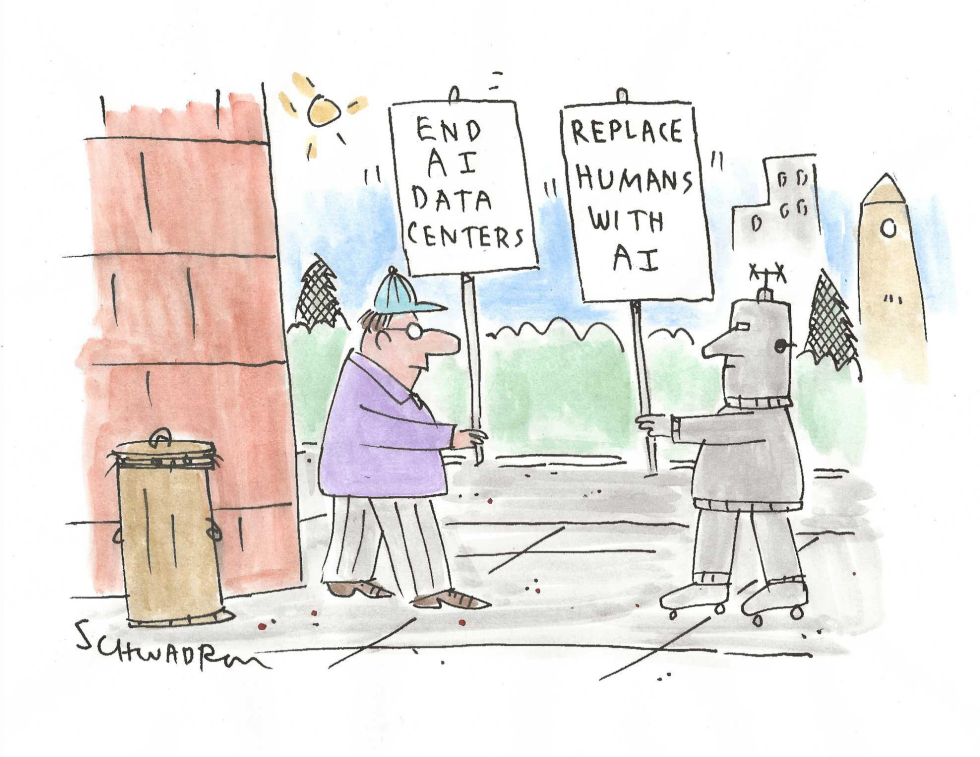
Public demonstrations against AI data centers and for replacing human workers with artificial intelligence underscore growing societal friction over the technology's rapid expansion. Data centers powering AI systems face criticism for energy demands and environmental costs, while automation threatens widespread job losses across sectors. The cartoon illustrates these contradictory positions through direct confrontation between a human protester and a robotic counterpart. This reflects ongoing debates where environmental concerns clash with arguments for efficiency gains from AI. The piece takes a neutral stance, simply presenting the absurdity of simultaneous opposition to and advocacy for AI dominance without resolving the tension.
Ongoing US-Canada trade tensions escalated in 2026 with new tariff threats targeting Canadian exports. The dispute threatens key sectors including autos, lumber and agriculture, raising costs for consumers on both sides of the border. Canada has signaled plans to diversify markets and strengthen domestic industry. The cartoon frames the conflict as a direct assault on Canadian sovereignty and economic stability. It portrays the trade war as fracturing national symbols while urging a stronger northern response.
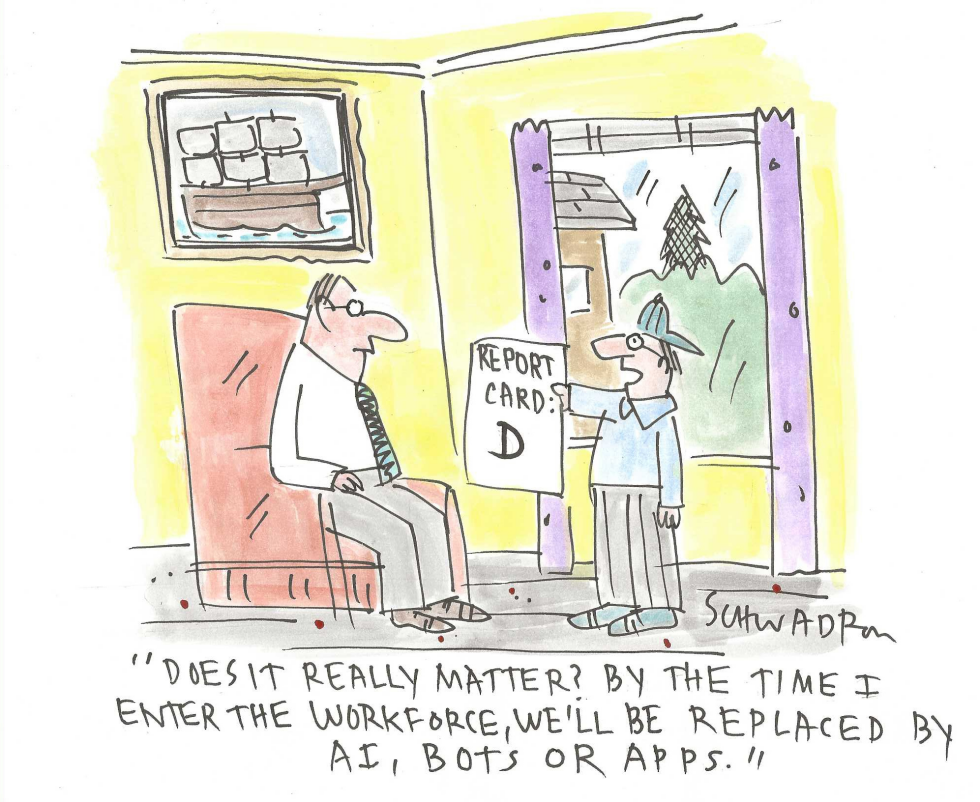
Rising student skepticism about academic effort stems from widespread predictions that AI and automation will eliminate many jobs before today's students graduate. The cartoon responds to this dynamic by showing a student using those forecasts to shrug off a poor grade. It highlights how fears of technological displacement may undermine motivation in schools. The piece suggests such excuses reflect a broader cultural shift where traditional education credentials appear less relevant. The editorial stance questions whether this mindset accelerates the very problems it cites.
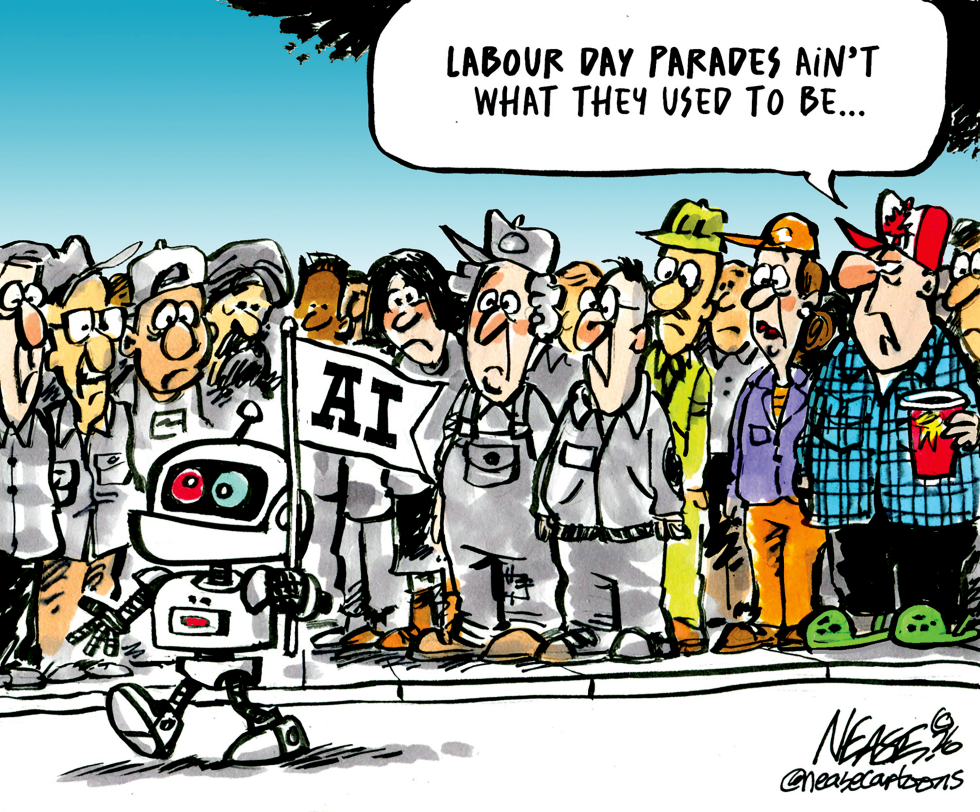
On Labour Day 2026, artificial intelligence continues its rapid integration into workplaces across Canada and beyond, prompting questions about job security for human workers. The cartoon captures this transition by placing a robot at the head of a traditional parade. The editorial position highlights the irreversible change automation brings to labor traditions and employment.
Pierre Poilievre assumes an elbows-up defensive posture in response to mounting leadership questions within the Conservative Party. The visual ties the hockey-derived stance to efforts to retain his position as party leader ahead of future electoral tests. The piece portrays the move as self-preservation rather than genuine unity.
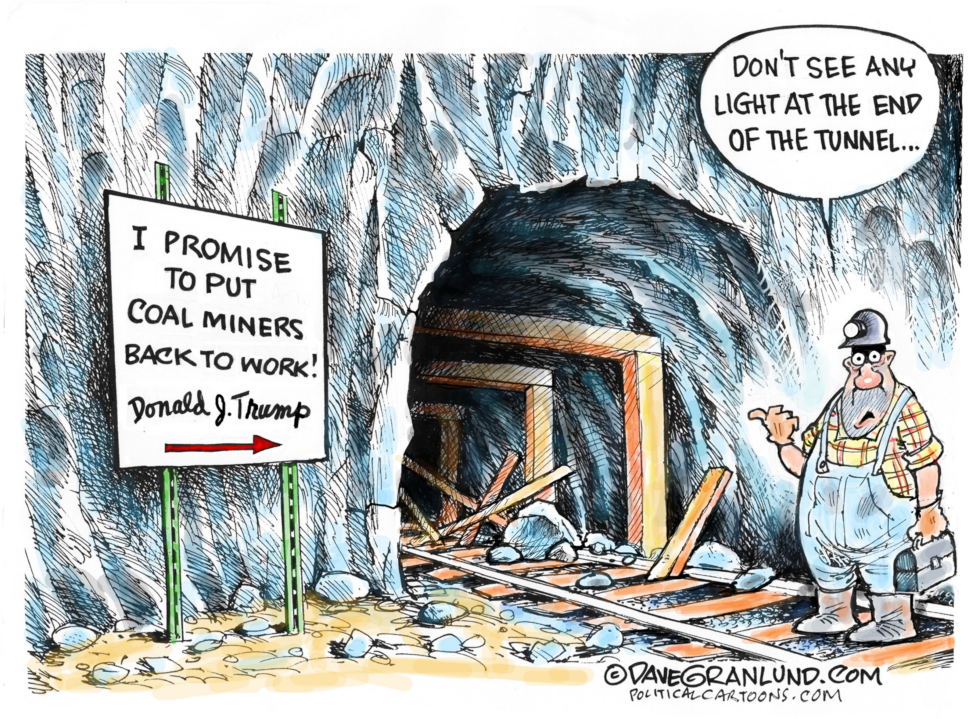
Donald Trump repeatedly pledged during his campaigns and terms to revive coal mining employment by rolling back regulations and boosting domestic production. Those commitments have not translated into sustained job growth for miners amid shifting energy markets and automation. The cartoon underscores the gap between the repeated assurances and the persistent lack of visible progress for workers in the sector.
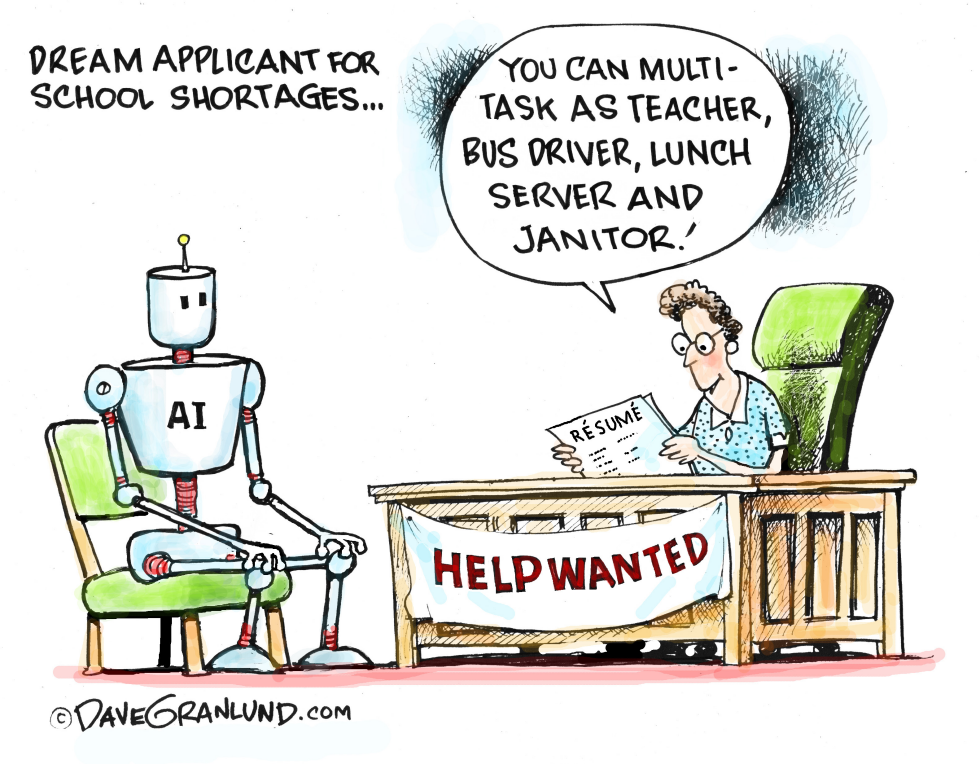
A political cartoon depicts a robot marked AI seated across from a school administrator during a job interview. The administrator holds a resume and states the applicant can serve as teacher, bus driver, lunch server and janitor. Text in the upper left identifies the robot as a dream applicant for school shortages. A help wanted banner hangs on the desk. The image comments on ongoing efforts to use artificial intelligence to ease teacher and support staff shortages in schools.
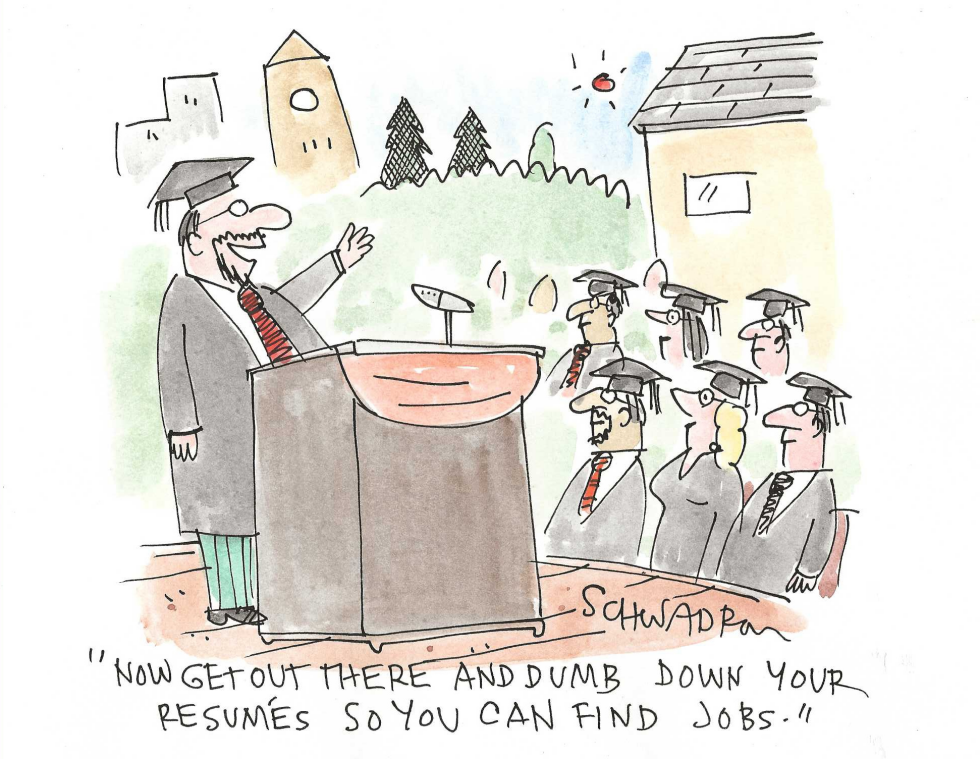
A commencement speaker at a college graduation advised new graduates to simplify their resumes by removing advanced qualifications to better compete in the current job market. The advice reflects ongoing concerns about hiring managers overlooking overqualified candidates and economic pressures limiting entry-level opportunities. The editorial takes the position that such guidance underscores systemic mismatches between higher education outcomes and employer demands rather than individual shortcomings.
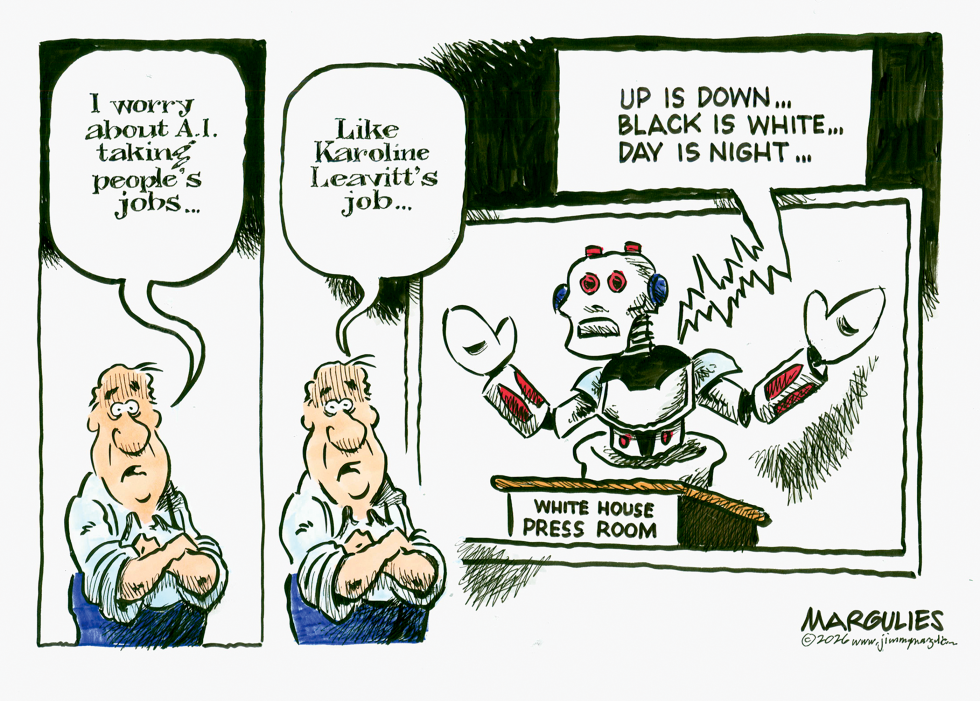
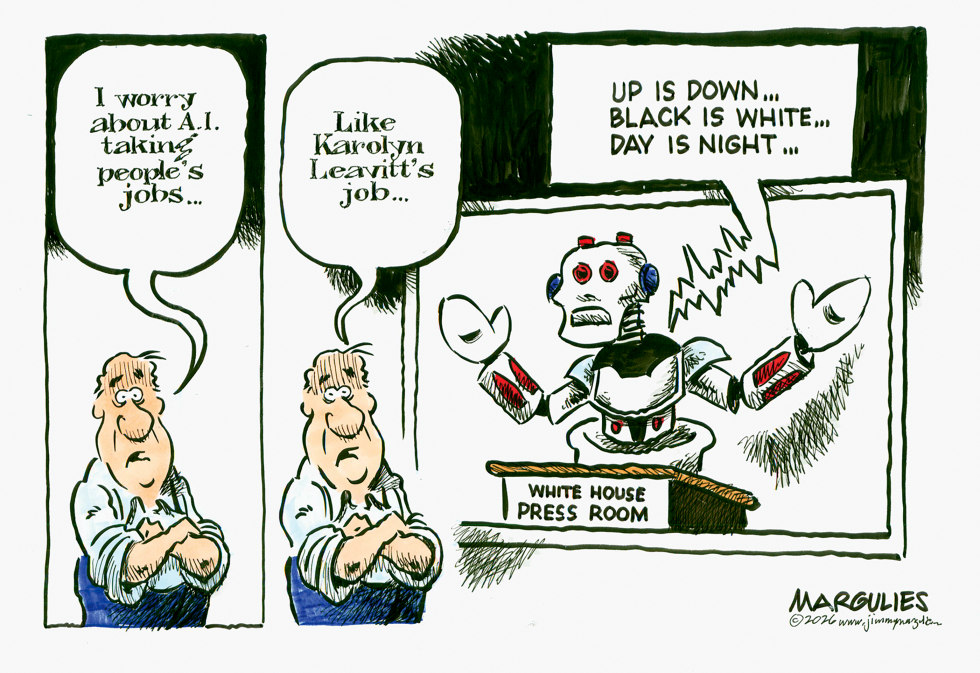
As artificial intelligence advances into government communications roles, concerns grow over job displacement for human staff including White House press secretary Karoline Leavitt. The piece responds to this development by depicting an AI robot assuming the podium and issuing contradictory statements. It takes the position that such automation risks eroding clarity and accountability in official messaging.
An AI robot has assumed duties as White House press secretary amid ongoing debates over automation displacing human roles in government communications. The development highlights tensions between technological efficiency and traditional staffing in high-profile federal positions. The piece portrays the shift as enabling scripted, contradictory messaging from the briefing room.
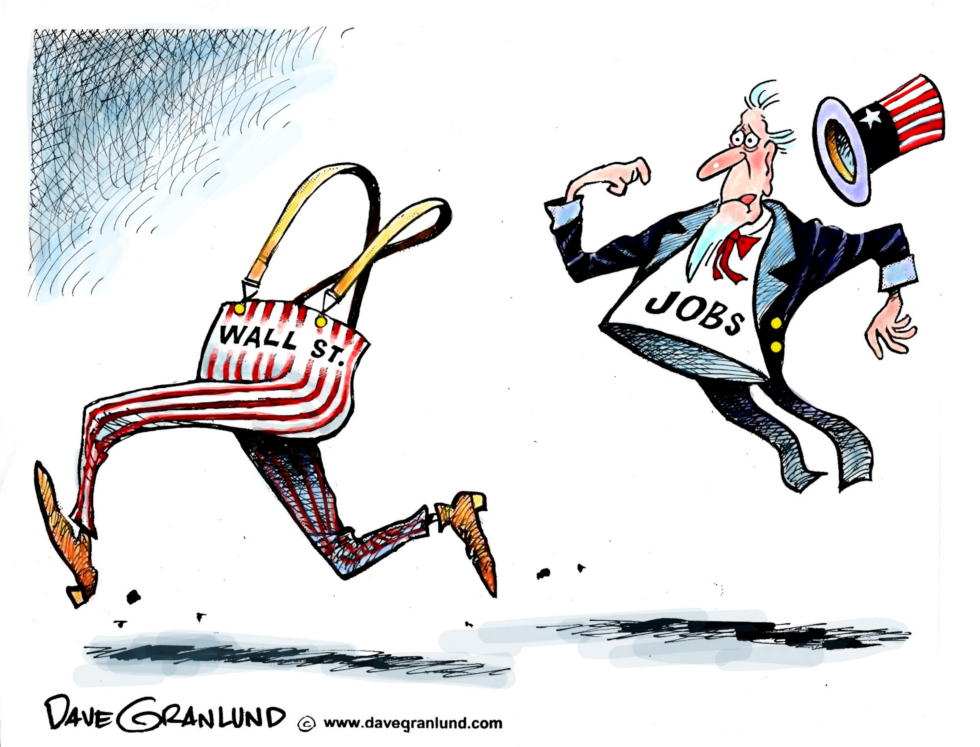
Wall Street and employment figures remain at odds in ongoing market dynamics. The separation underscores persistent challenges in aligning financial markets with job creation efforts amid broader economic pressures.
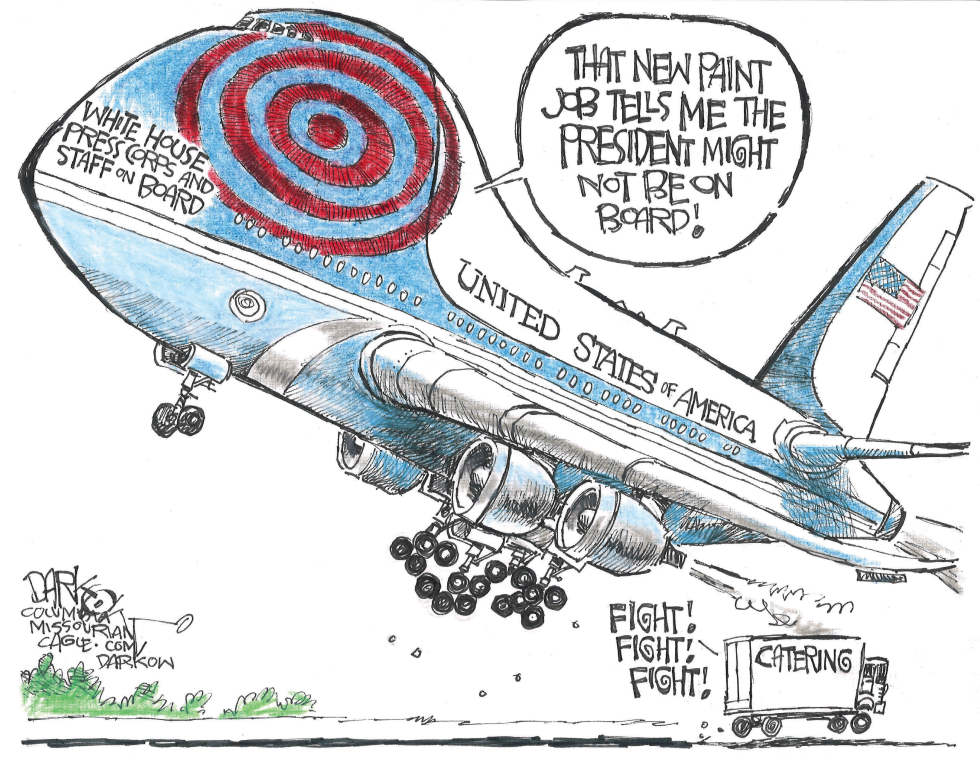
Air Force One appears with a large target painted on its upper fuselage while carrying White House press corps and staff. A nearby catering truck chants fight slogans as the plane descends. The image suggests the president may not be aboard the targeted aircraft. This visual plays on recent tensions surrounding presidential travel and security. The editorial stance highlights perceived risks or distancing from official duties.
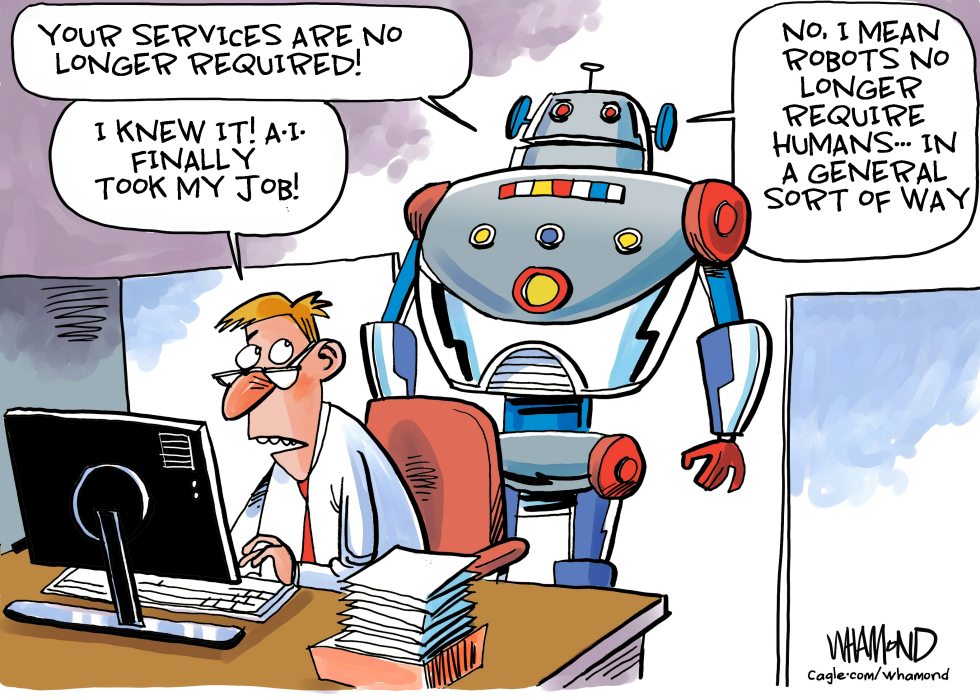
Artificial intelligence continues displacing office roles as automation advances. A worker assumes the robot has taken his position only to learn the technology now operates without any human involvement. The piece highlights growing concerns over complete workforce independence from people.
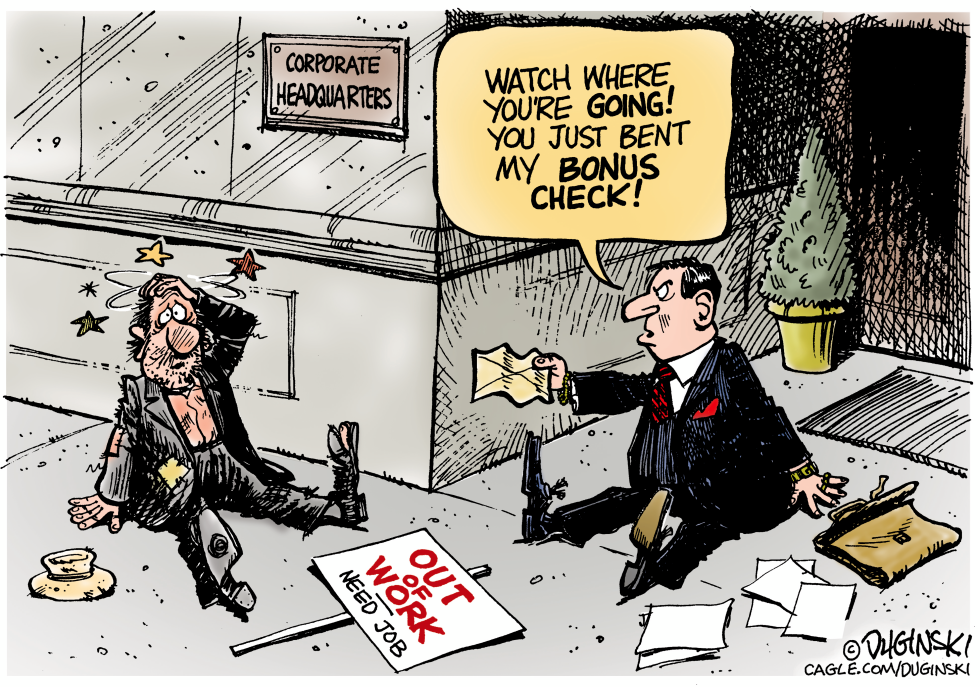
Corporate executives continue to receive large bonuses even as layoffs persist across sectors. The piece responds to ongoing debates over executive compensation packages during periods of workforce reduction. It takes the position that such bonuses appear disconnected from the realities facing displaced employees.