A Nobel Prize presentation for Dr. Anthony Fauci highlights his public health role during the COVID-19 period. The ceremony focuses on his contributions to medicine while avoiding reference to earlier statements from former President Trump about potential treatments. The moment underscores ongoing public debate over pandemic messaging and leadership accountability. The editorial position frames the award as recognition tied to selective memory rather than solely scientific achievement.
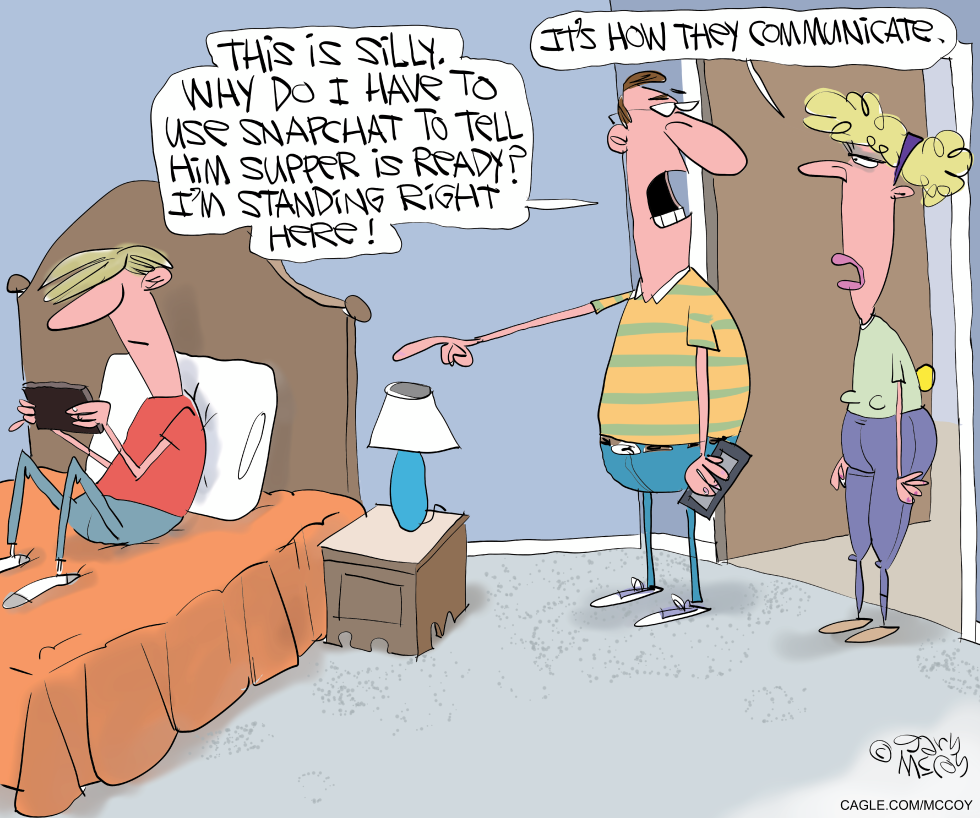
Parents increasingly rely on messaging apps to reach children inside the home rather than speaking directly. The practice reflects broader shifts in how families interact amid constant device use. The cartoon takes the position that this reliance on digital tools for routine matters like calling someone to supper has become normalized even when unnecessary.
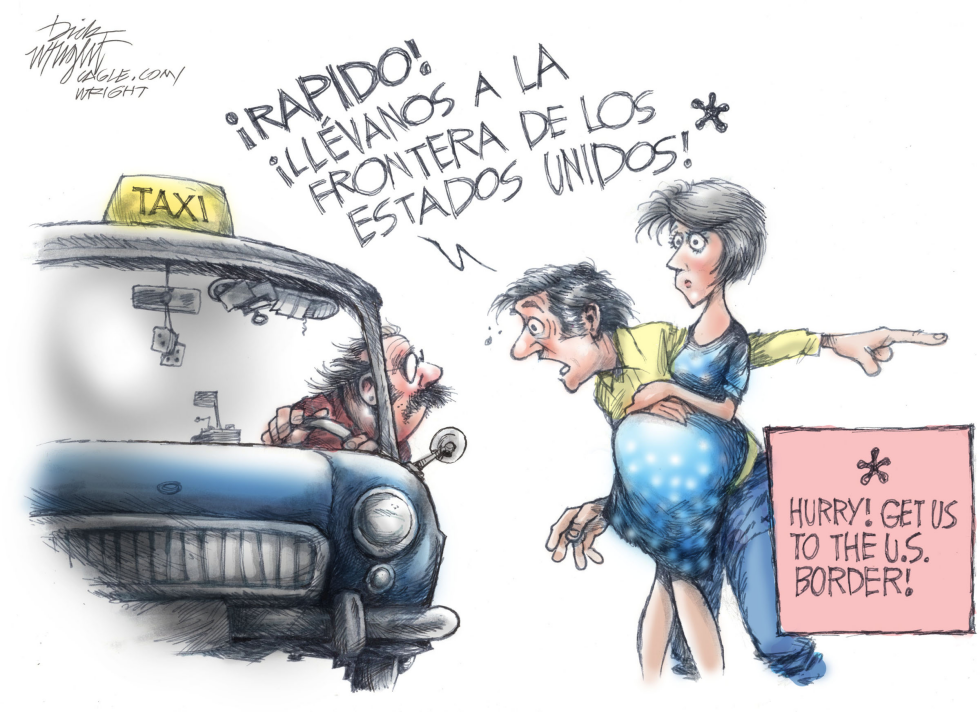
A man carries his pregnant partner toward a waiting taxi while she points urgently toward the US border. The driver leans from the vehicle as Spanish and English text convey a hurried request to reach the frontier. The July 2026 cartoon depicts a common immigration scenario at the southern border where individuals seek quick transport amid enforcement concerns.
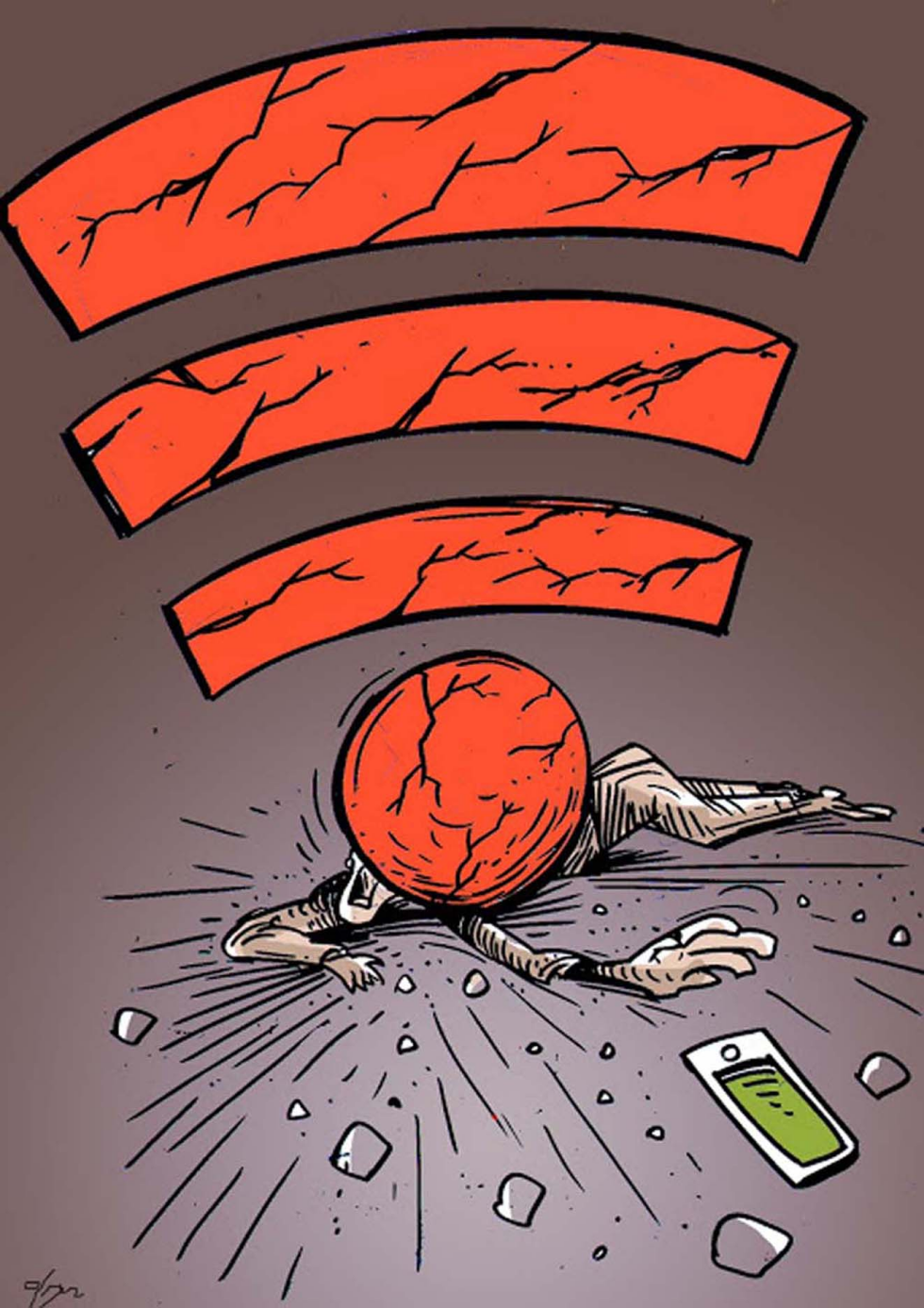
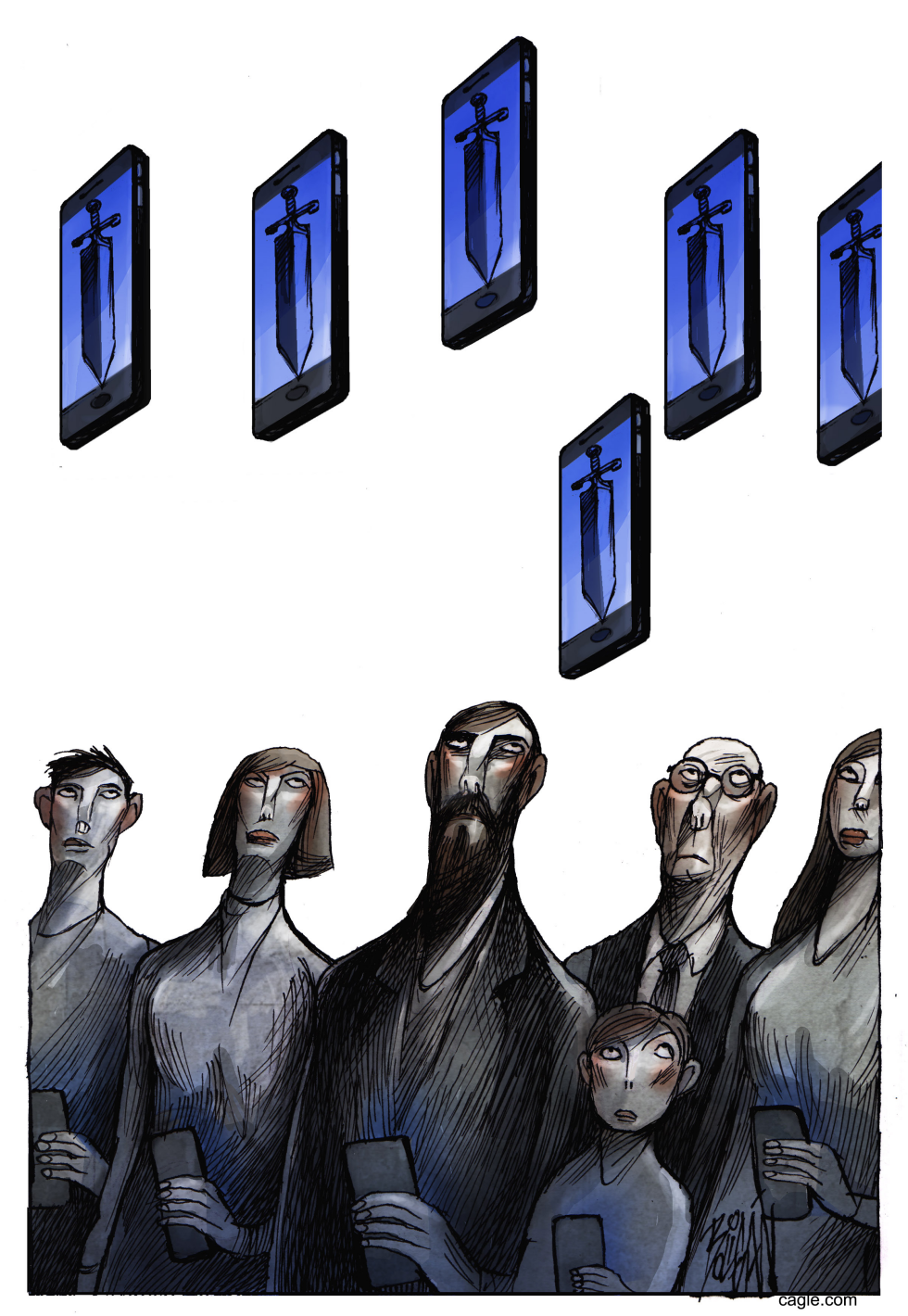
Wireless networks face mounting pressure from rising demand and aging infrastructure, leaving users stranded when signals falter. A dead phone battery compounds the isolation during outages. The piece frames this as a cautionary view of overreliance on fragile digital systems that can collapse without warning.
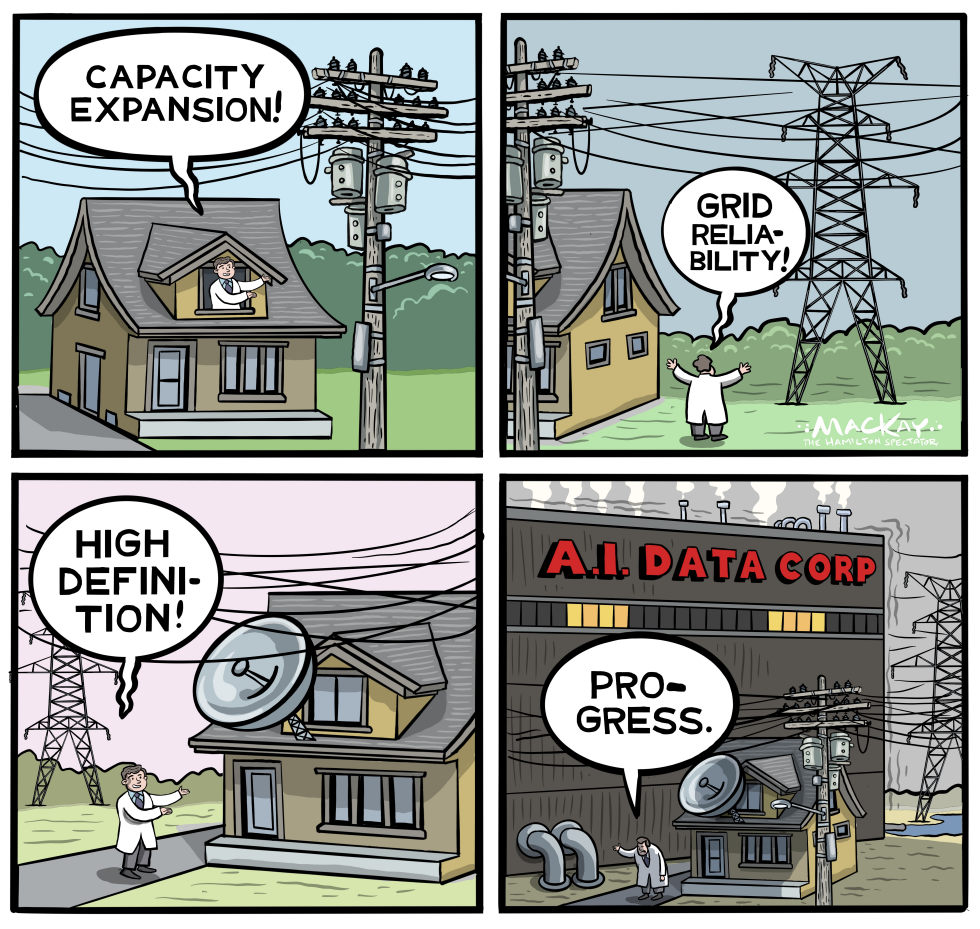
A four-panel comic depicts a man in a lab coat outside a suburban house promoting successive infrastructure upgrades. Early panels show utility poles and power lines added for capacity expansion and grid reliability. Later scenes introduce satellite dishes for high definition service. The final panel reveals an industrial A.I. DATA CORP building releasing smoke amid pipes and additional towers. The sequence highlights how artificial intelligence facilities intensify energy use and visible environmental effects on residential areas.
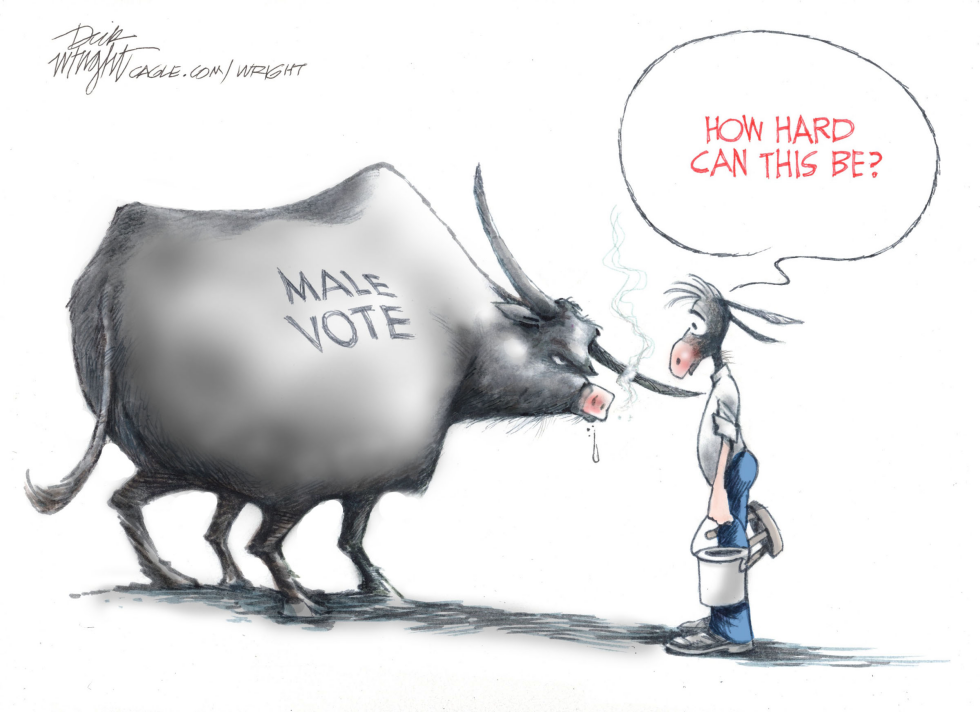
The cartoon depicts a Democratic donkey holding a bucket and gripping the nose ring of a large bull marked male vote. The donkey asks how hard the task can be while the bull resists. This visual reflects Democratic efforts to regain support among men who have trended away from the party in recent elections. The image uses the classic donkey and bull symbols to illustrate outreach difficulties. Publication occurs during a period of party reflection on voter demographics and messaging strategies.
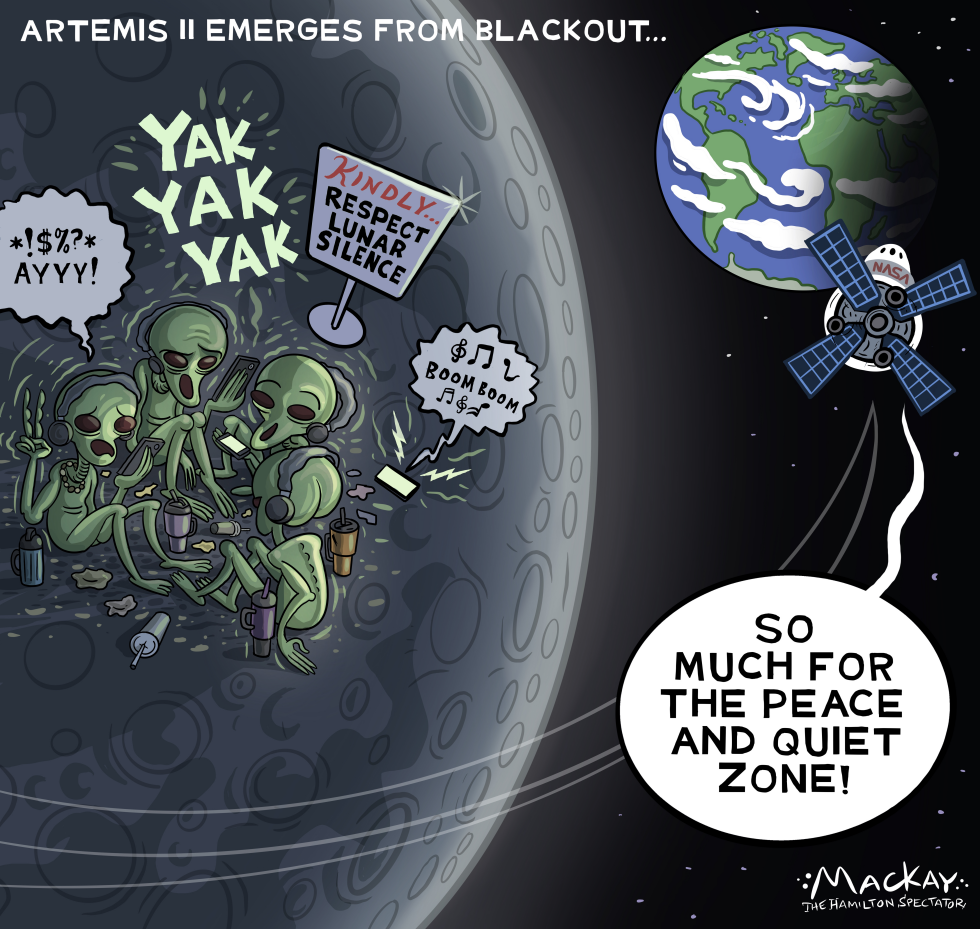
Graeme MacKay's cartoon shows a group of green aliens on the moon, clearly annoyed by the approaching NASA Artemis II spacecraft emerging from blackout. The aliens, depicted with headphones, phones, and drinks, make noisy exclamations like 'Yak Yak Yak' and music notes, while a sign pleads 'Kindly Respect Lunar Silence.' One alien laments, 'So much for the peace and quiet zone!' against the backdrop of Earth. This piece satirizes space exploration's impact on supposed lunar solitude, touching on tags like Artemis, moon, NASA, aliens, quiet zone, and communication. The far side setting emphasizes the interruption of silence by human astronauts.