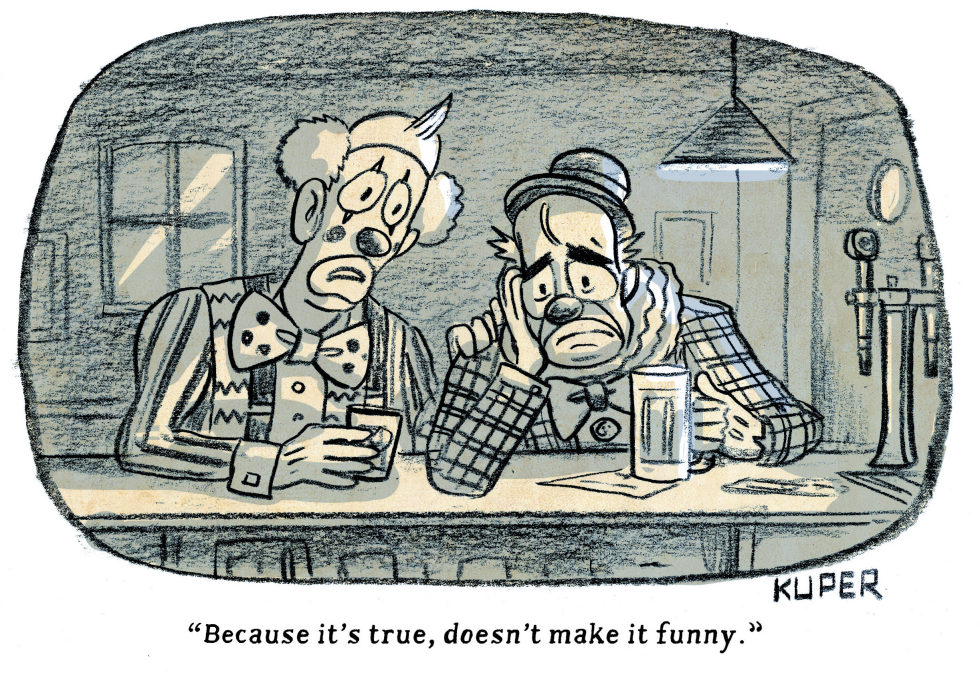
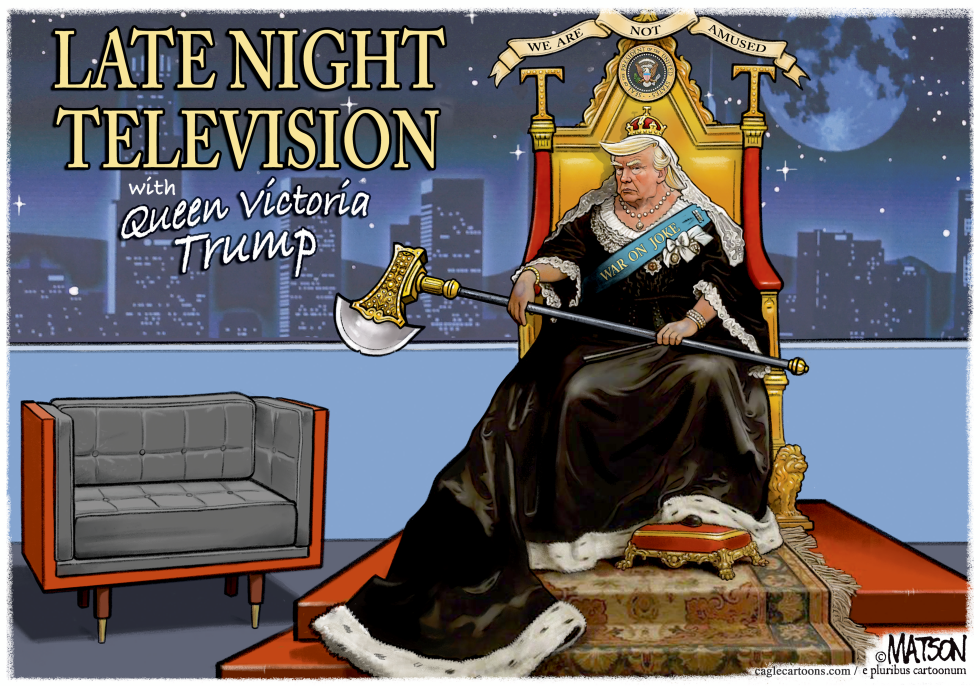
Unsettling political and social developments continue to dominate headlines, leaving little room for lighthearted takes. Observers note that many current events resist easy humor despite their factual basis. The piece contends that acknowledging hard truths does not automatically render them amusing or palatable for public consumption.
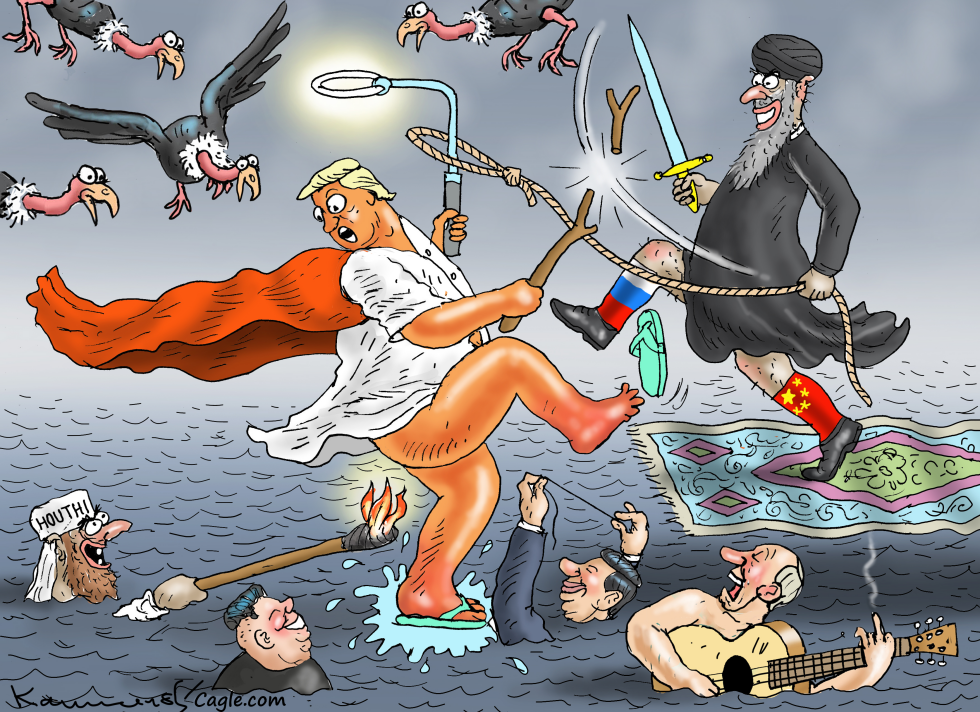
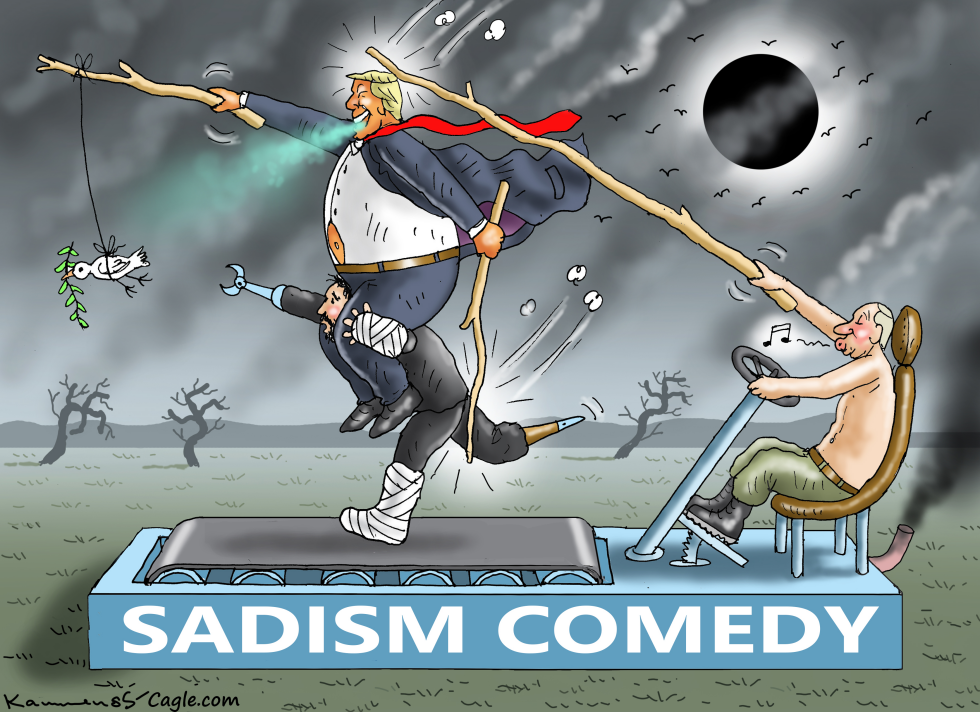
Donald Trump faces mounting complications in Middle East engagements involving Houthi forces and shifting ties with Russia and China. The cartoon portrays these entanglements as self-inflicted disorder that invites scavengers and undermines stability. It critiques the approach as reckless and counterproductive.
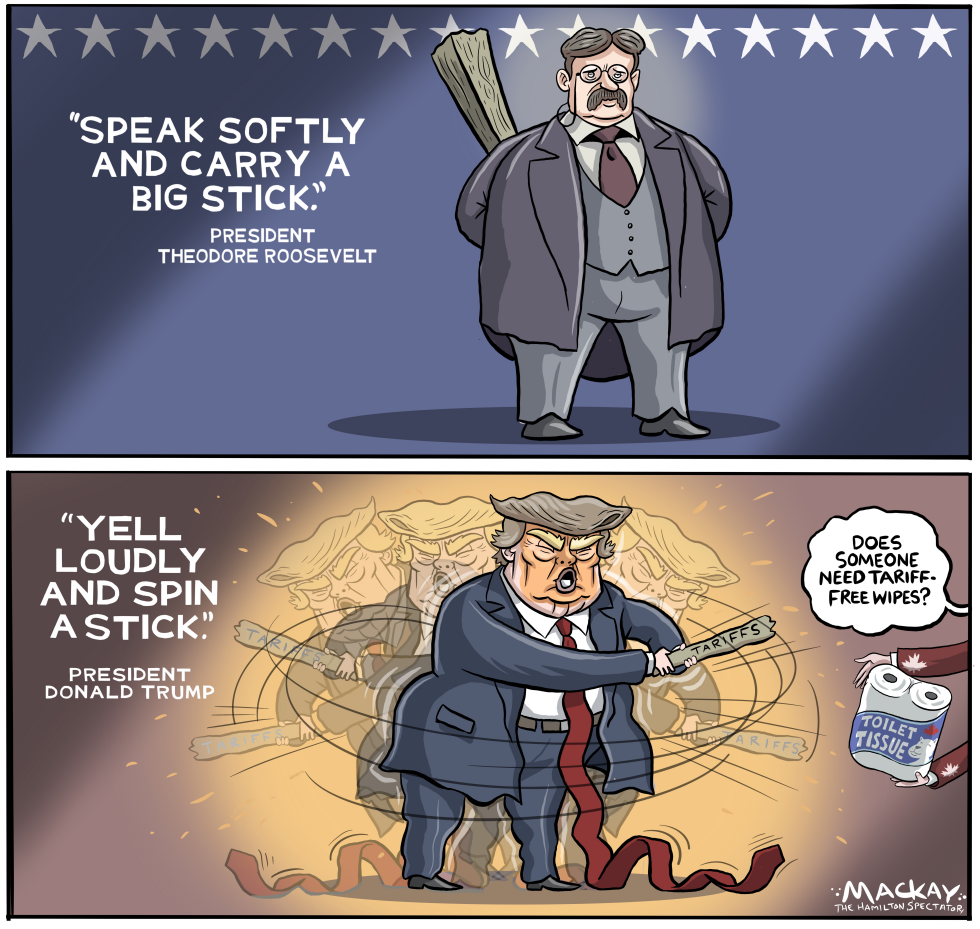
The cartoon by Graeme MacKay contrasts Theodore Roosevelt's famous speak softly and carry a big stick approach with Donald Trump's version of yelling loudly and spinning a stick covered in tariffs. In the lower panel Trump appears dizzy from the motion as a Canadian hand offers toilet tissue labeled tariff-free wipes. The image comments on recent US tariff actions and their impact on Canadian trade relations as of the September 2026 publication date.
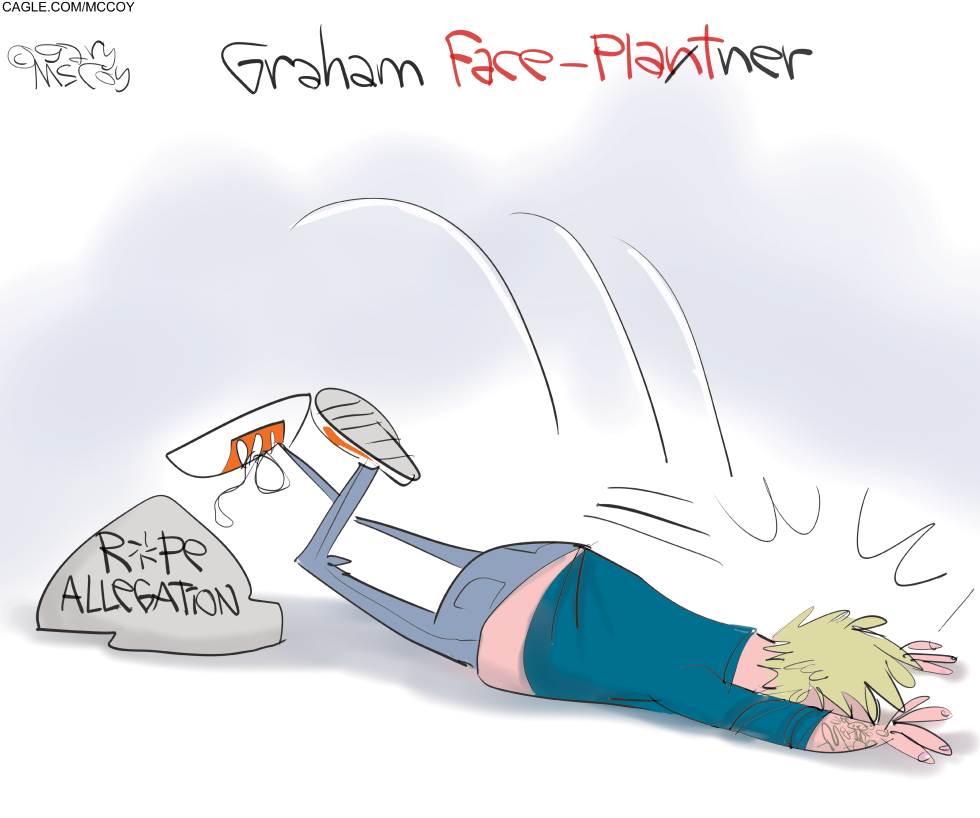
The cartoon depicts a figure identified as Graham sprawled on the ground after tripping over a rock labeled R*PE ALLEGATION. The title plays on face-plant with the word Plantner highlighted in red. Published July 9 2026 the image captures the senator in a prone position with motion lines indicating a fall. The rock sits to the left with one shoe detached nearby.
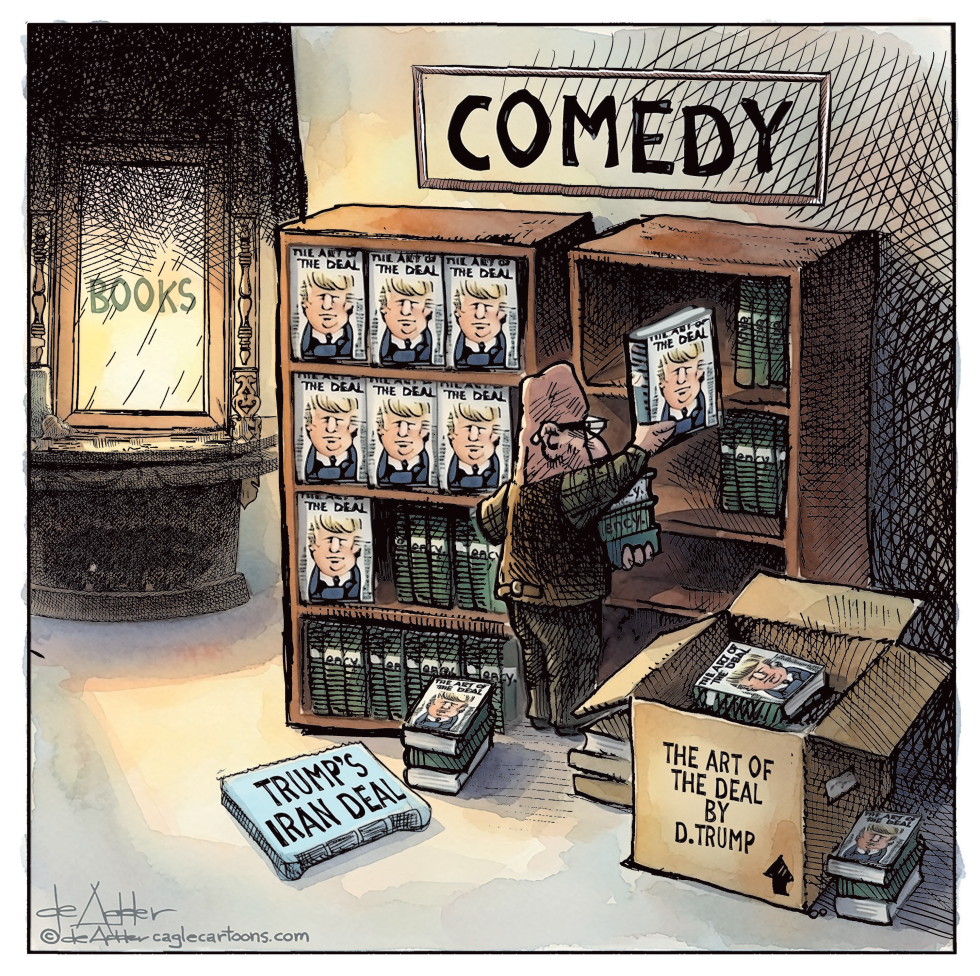
A bookstore worker moves stacks of Donald Trump's The Art of the Deal from the main bookshelves into the comedy section. Additional copies sit in open cardboard boxes labeled with the author's name. One volume on the floor is titled Trump's Iran Deal. The scene is set beneath a prominent comedy sign.
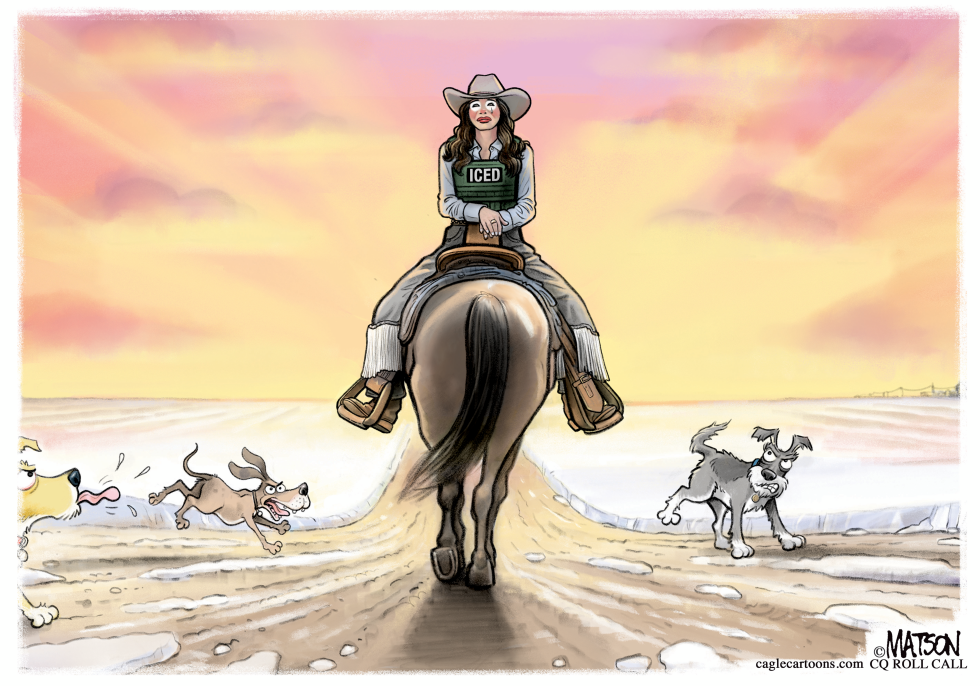
This sharp political cartoon captures an ICE agent, styled as a plucky cowgirl in a cowboy hat, galloping into a pastel sunset on her trusty horse, while a pack of frantic dogs—stand-ins for coyote smugglers—scatter in disarray. The 'ICED' vest adds a punny twist, perhaps nodding to the agency being put on ice amid heated immigration debates. With tags like political satire, border security, ICE criticism, cartoon dogs, western theme, and immigration policy, the image skewers the often chaotic world of enforcement, where even the bad guys (or dogs) get a comedic getaway. Matson's irreverent style shines through in this insightful jab at bureaucratic rodeos.
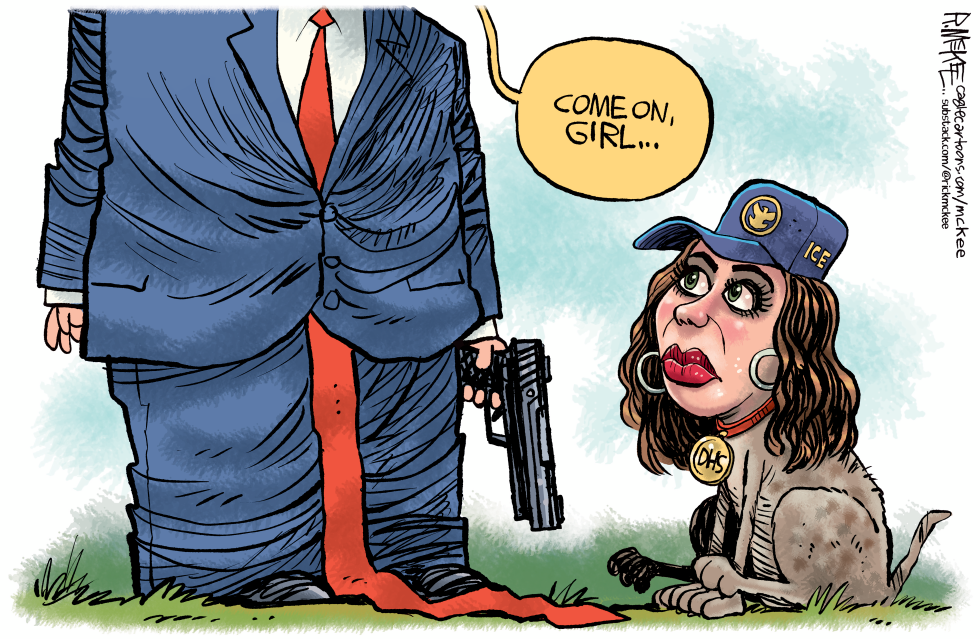
This political cartoon features Donald Trump coaxing a dog-like figure with Alexandria Ocasio-Cortez's face, donned in an ICE cap and DHS tag, gripping a gun on a leash— a sharp satire on immigration enforcement and border control. The image lampoons the Trump administration's hardline stance on deportation and US politics, using caricature to underscore the dehumanizing aspects of border patrol. With elements of political humor, it critiques how figures like AOC are portrayed in opposition, blending viral meme potential with editorial cartoon flair. The scene evokes questions about power dynamics in immigration policy, making it a timely piece for discussions on satire and governance.
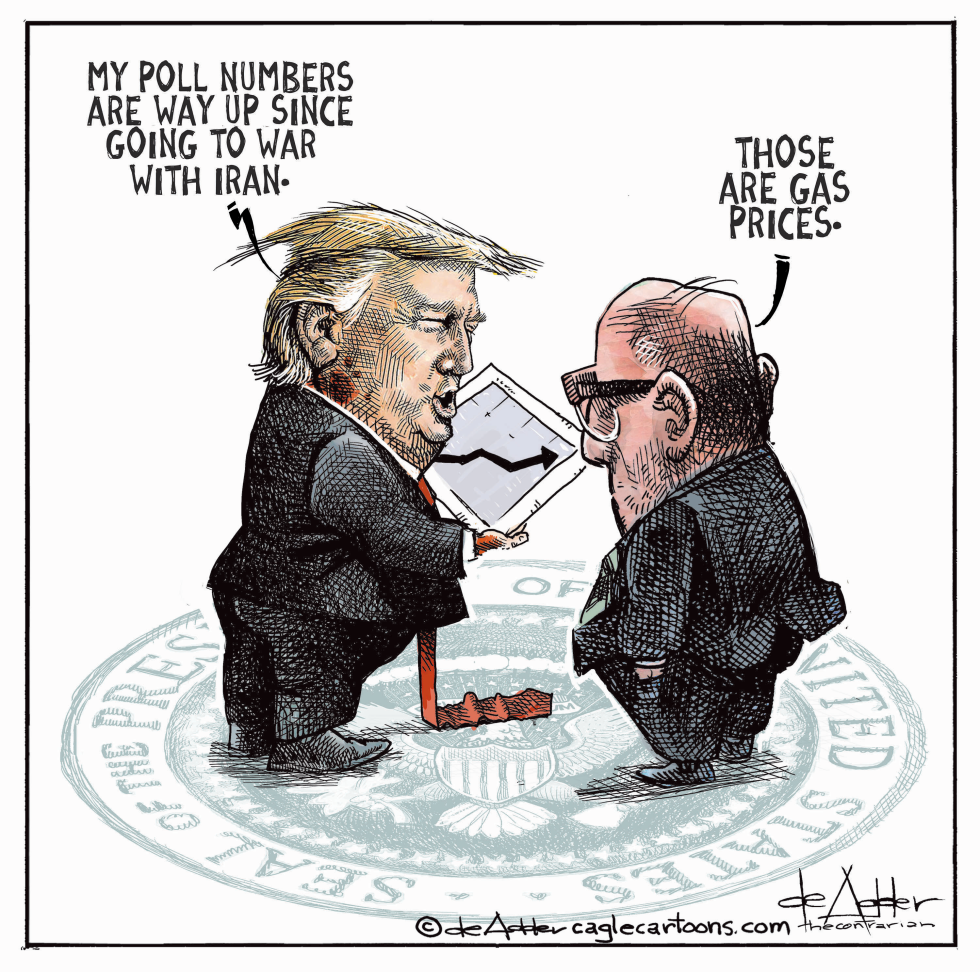
This sharp political cartoon by Michael de Adder captures Donald Trump triumphantly holding a chart of upward trends, claiming his poll numbers have skyrocketed since going to war with Iran. However, a bespectacled Dick Cheney corrects him, revealing those are actually gas prices soaring. The satire highlights the ironic consequences of Middle East conflict on the US economy, blending humor with commentary on presidential approval ratings tied to foreign policy blunders. Incorporating elements of US politics, oil prices, and war economy, the image stands on the presidential seal, emphasizing official folly. It's a witty jab at how leaders might misread economic fallout as personal gains, perfect for editorial discussions on satire and current events.
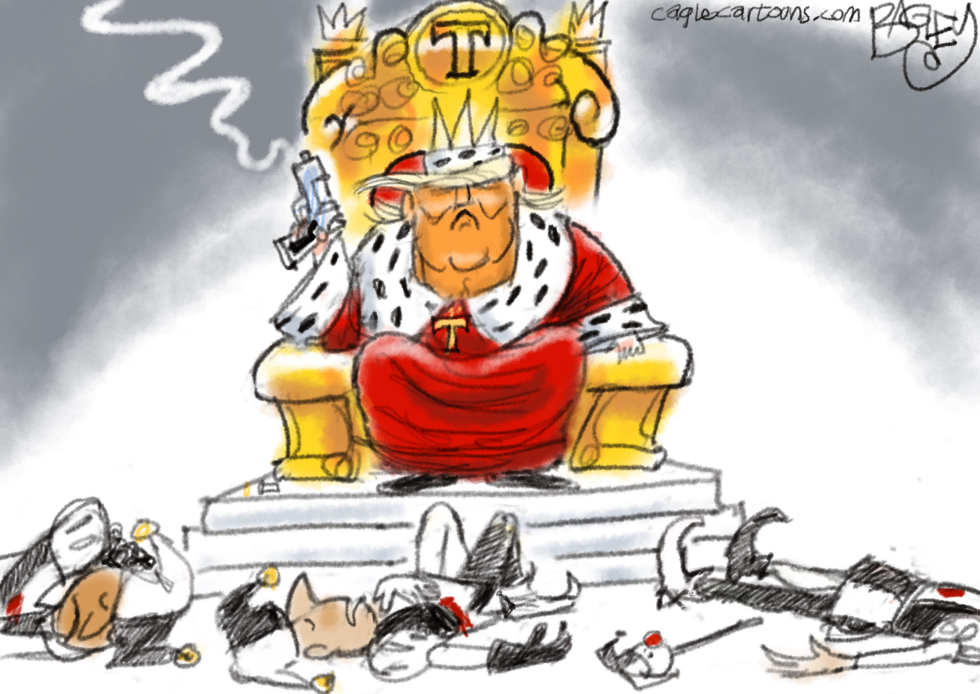
Pat Bagley's 'King Trump' captures a regal Donald Trump caricature seated on an ornate golden throne marked with a prominent 'T,' his expression stern as he grips a smoking pistol. Surrounding the throne's base lie several jester figures in black-and-white outfits, sprawled lifelessly with red blood spots, evoking themes of comedy suppression. Tags like Kimmel, Colbert, and Charlie Kirk hint at late-night hosts and conservative voices, but the image sticks to visible elements: the king's red robe, ermine trim, and the smoky aftermath. This piece comments on cancel culture, GOP dynamics, MAGA loyalty, hate, humor, and first amendment issues without overt labels, relying on caricature for impact. The dry wit underscores a tyrant's intolerance for jesters, a straightforward jab at power and censorship.