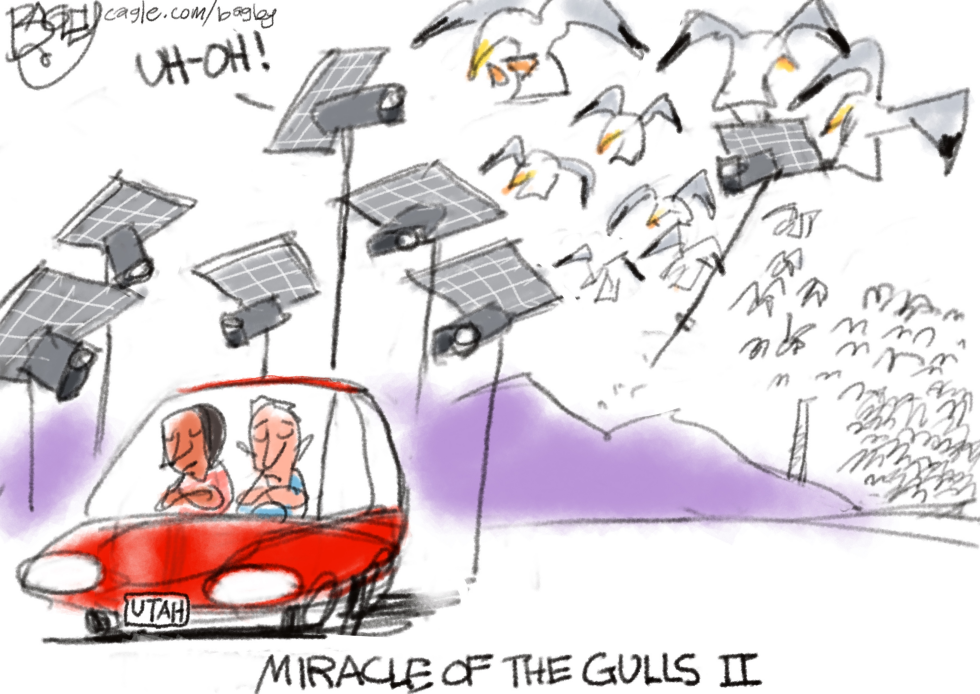
Seagulls have begun targeting solar panel arrays in Utah, damaging equipment at renewable energy sites. The incidents echo the state's historic Miracle of the Gulls story but now pose practical problems for clean power development. Officials and operators must address wildlife mitigation to protect investments in solar infrastructure. The cartoon frames the events as an unexpected obstacle to Utah's energy goals.
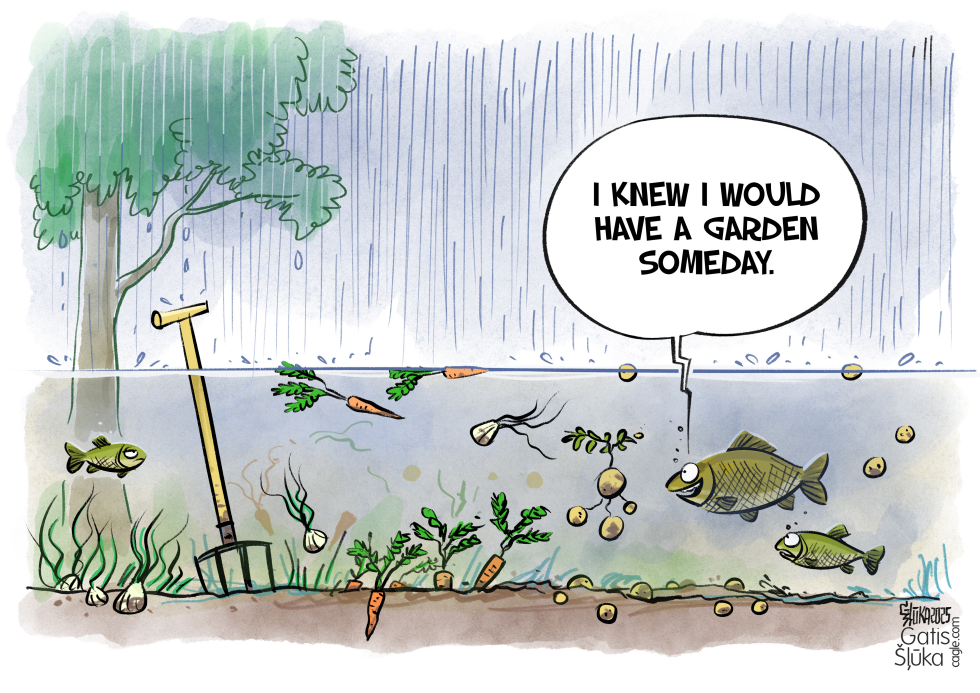
The cartoon shows fish swimming among carrots and other vegetables in a garden submerged by floodwaters, with one fish stating it always knew it would have a garden someday. A shovel stands upright in the soil below the waterline while rain pours down. The image responds to ongoing concerns about extreme weather events and their effects on farming. Heavy rainfall has become more frequent in many regions, turning fields into temporary ponds. The visual uses the fish's unexpected claim to underscore how flooding alters traditional land use and creates new, if temporary, aquatic environments.
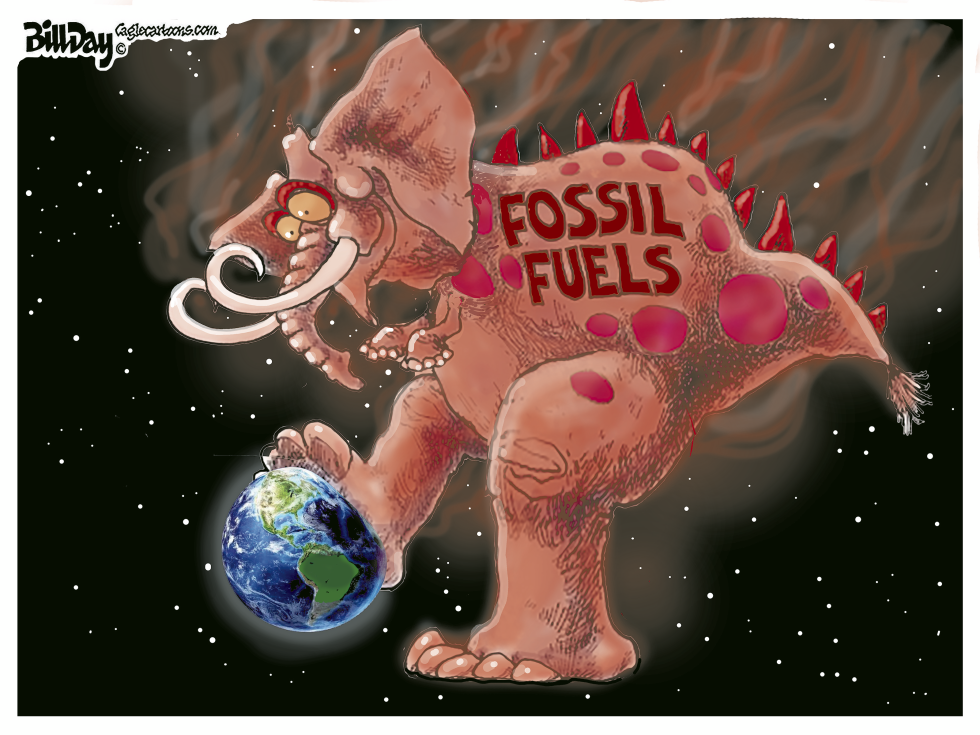
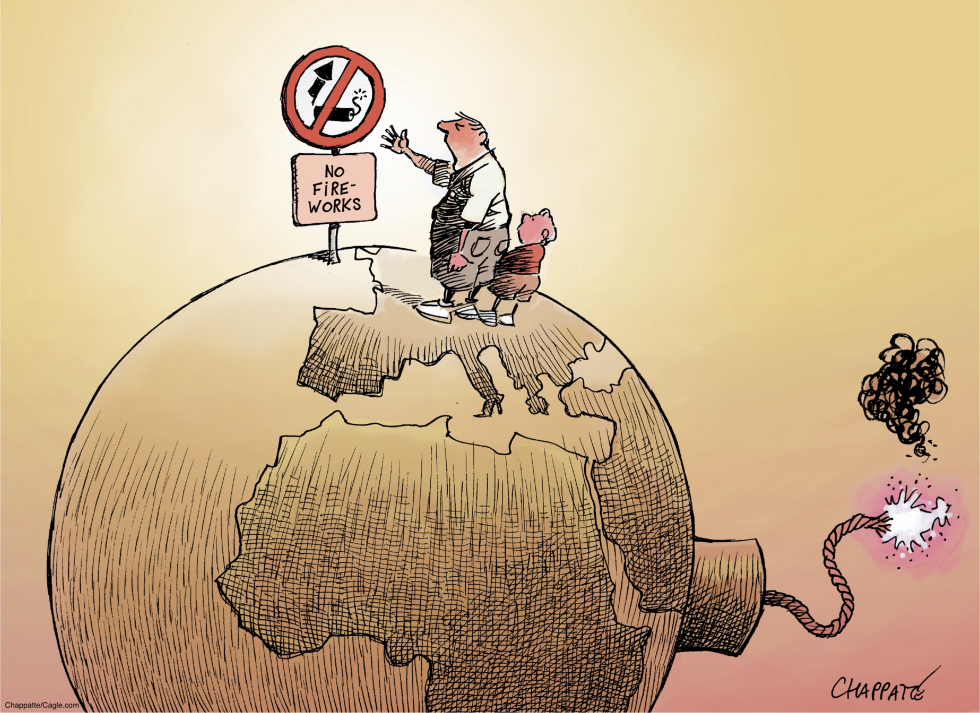
Fossil fuel dependence continues to drive global emissions and accelerate planetary warming. The ongoing reliance on oil, coal and gas extraction sustains economic activity but heightens risks of extreme weather and ecosystem collapse. The piece frames fossil fuels as an oversized destructive force that endangers the planet's future.
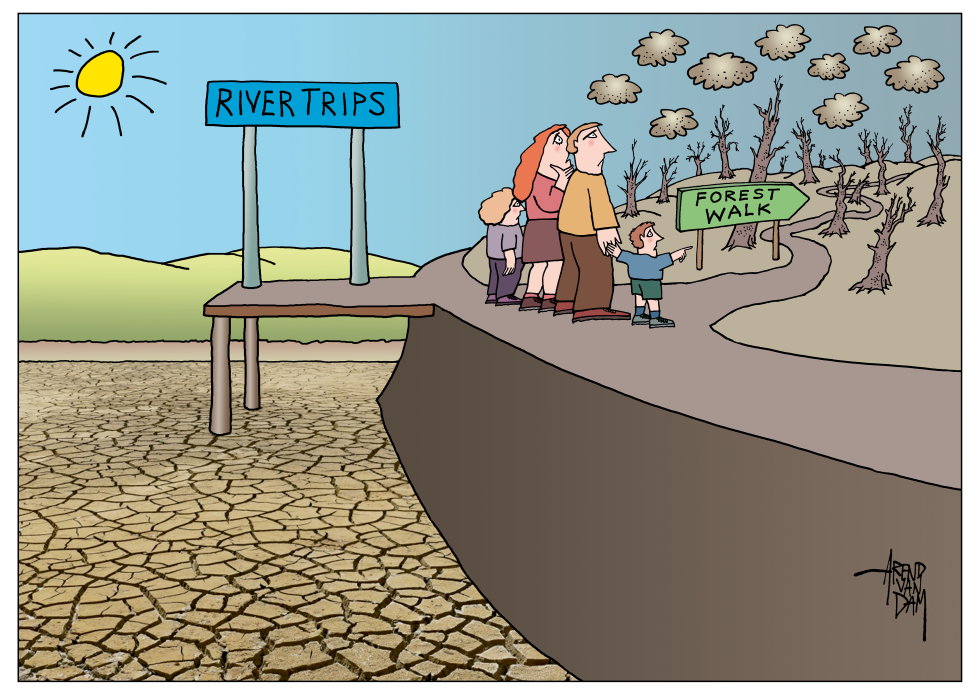
Persistent drought has left riverbeds cracked and forests withered across affected regions, undermining tourism and outdoor recreation. Families arriving for advertised river trips and forest walks instead encounter dry ground and dead trees. The piece highlights how climate-driven water shortages continue to disrupt normal seasonal activities without immediate policy relief in sight.
Global leaders continue to dismiss repeated scientific warnings about accelerating climate impacts even as extreme weather events intensify worldwide. The ongoing failure to curb emissions and adopt binding reductions leaves future generations exposed to rising temperatures, sea levels, and resource conflicts. The editorial argues that such willful disregard of clear danger signs amounts to reckless endangerment of the planet itself.
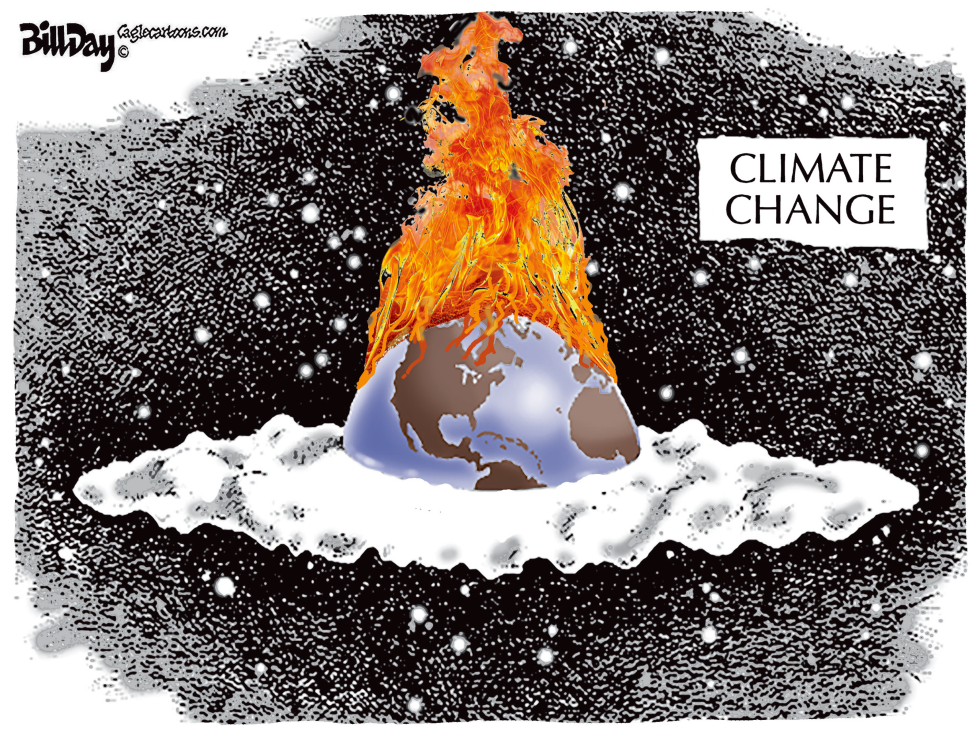
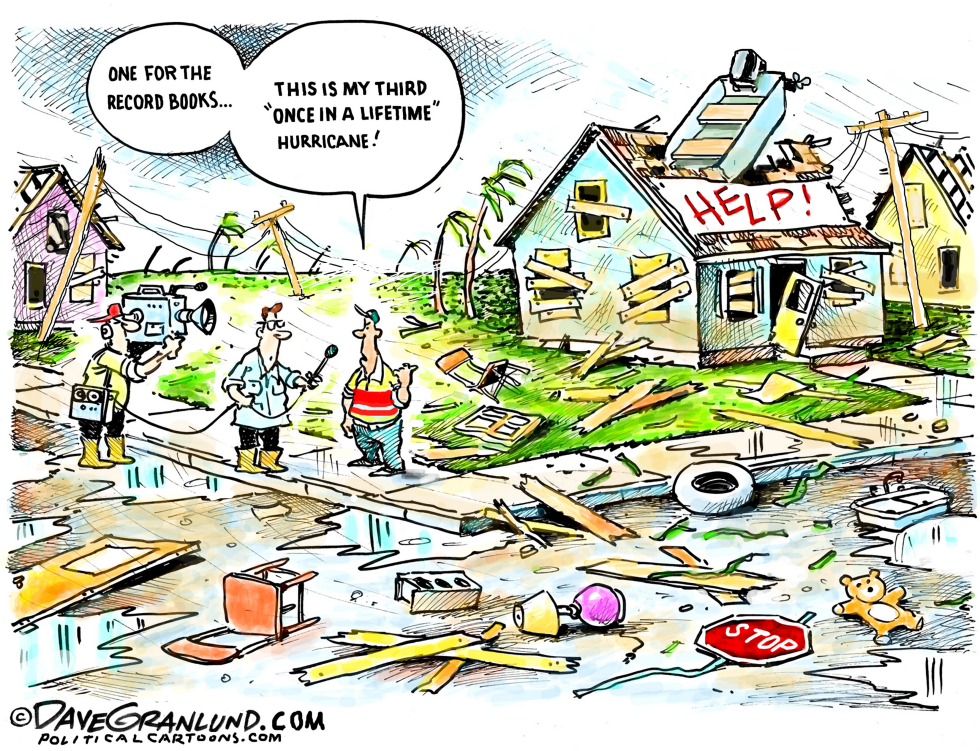
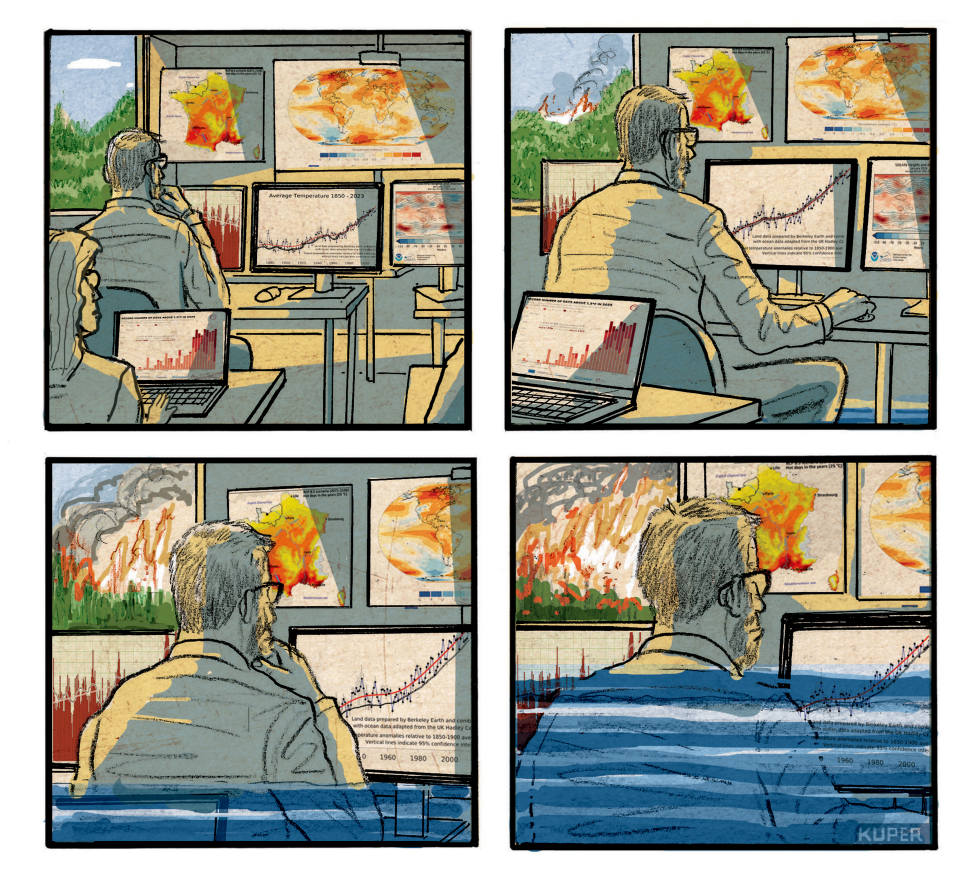
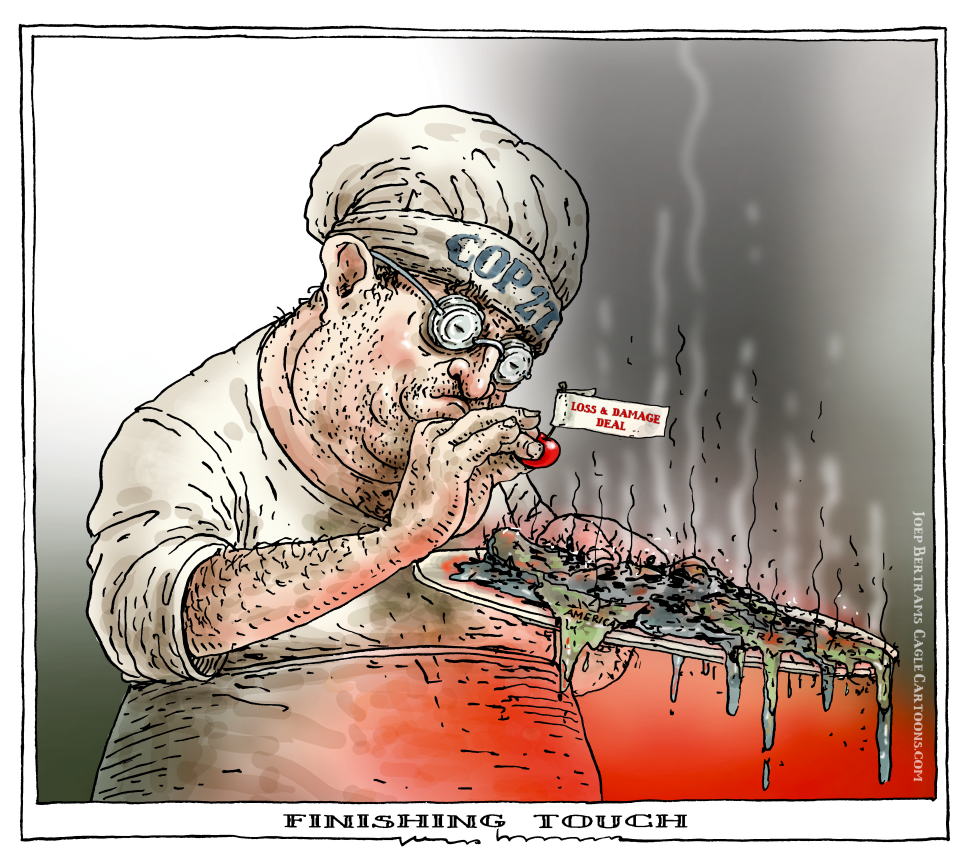
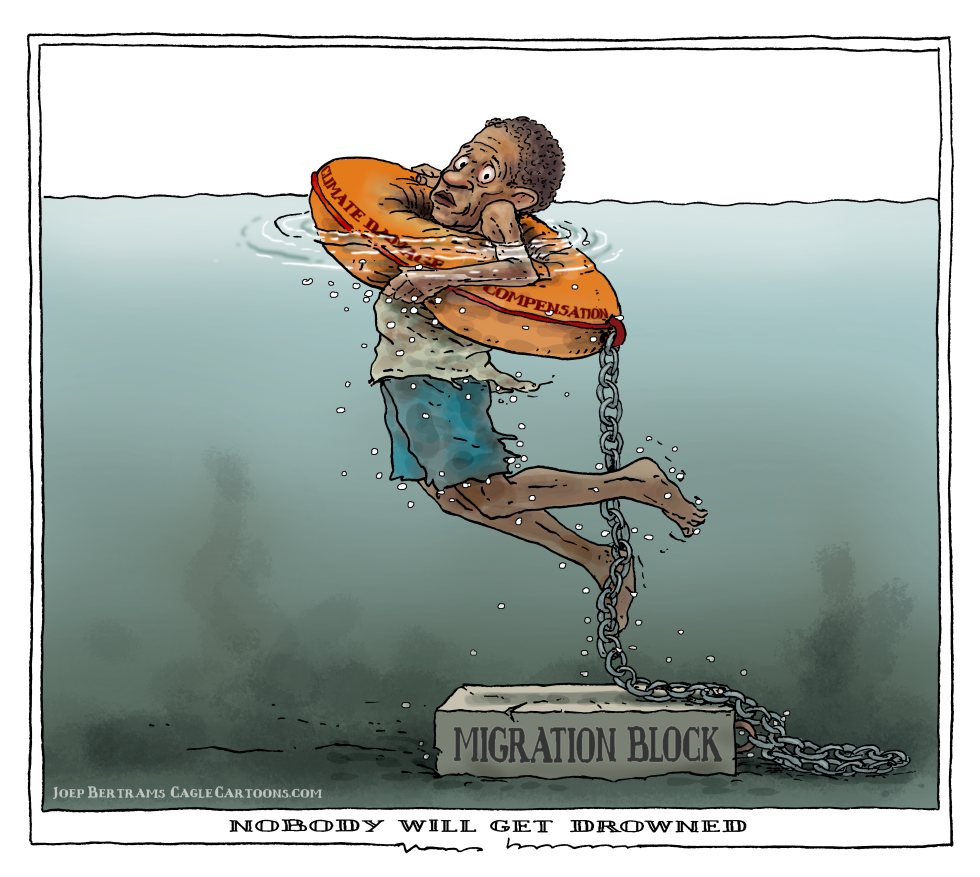
Ongoing global temperature records continue to climb in mid-2026 amid extreme weather events worldwide. Scientists and governments track accelerating impacts from greenhouse gas emissions. The cartoon underscores the direct link between human-driven climate change and planetary distress, presenting the crisis as an immediate and visible threat rather than a distant concern.
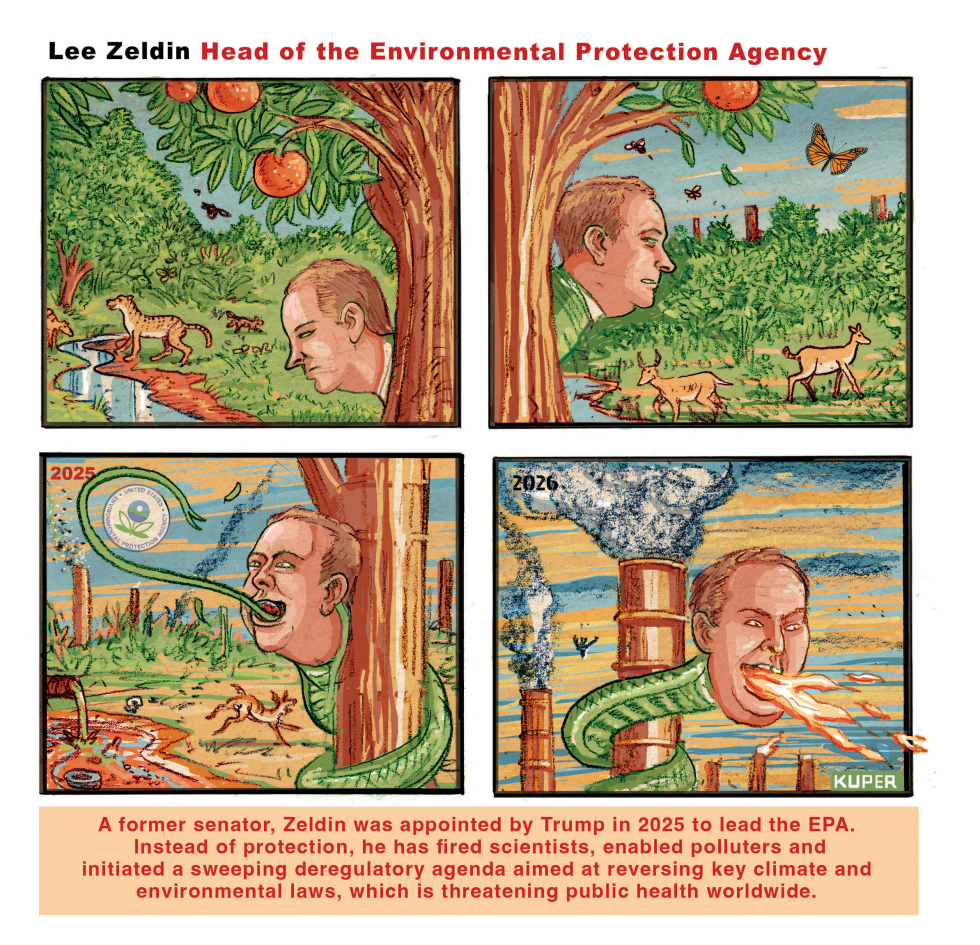
The cartoon by Peter Kuper portrays Lee Zeldin, appointed EPA administrator in 2025, across four panels that show a progression from intact natural habitats to scenes of industrial pollution and species loss. Early panels place Zeldin amid trees, animals and an EPA emblem. Later panels show him consuming the agency logo and exhaling flames from a smokestack. The caption states that Zeldin fired scientists and advanced deregulation targeting climate and environmental statutes. The work responds to ongoing policy shifts at the agency during the second Trump administration.
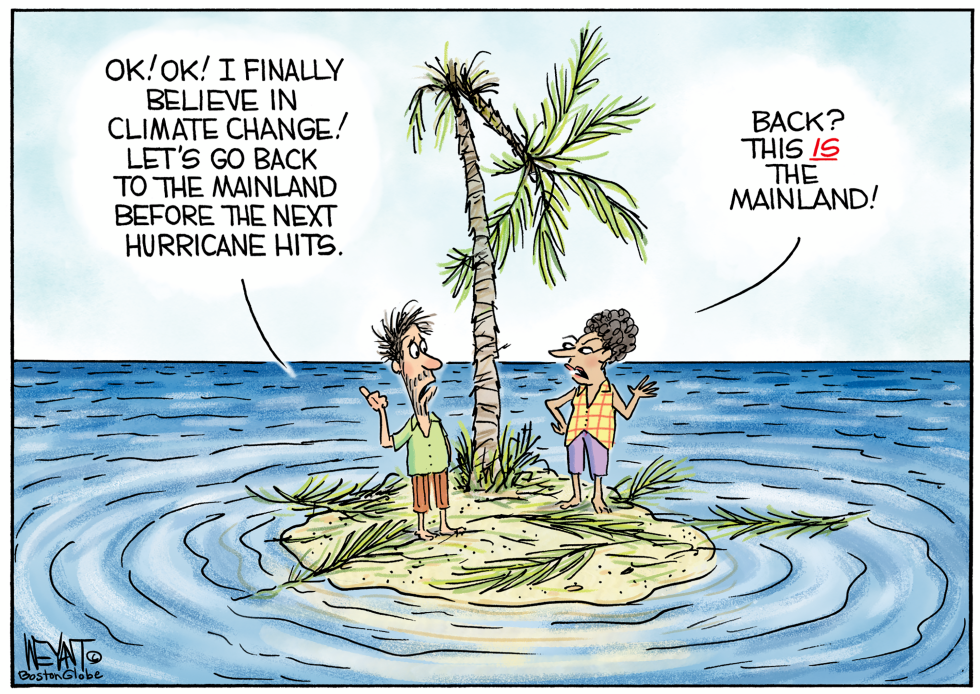
A political cartoon published October 11, 2024, depicts a climate change denier on a nearly submerged island who finally accepts the science and asks to return to the mainland before the next hurricane. His companion points out that the flooded land is the mainland. The image responds to Hurricanes Helene and Milton, which caused widespread flooding in Florida and North Carolina in September and October 2024. The cartoon uses the desert island trope to illustrate how some skeptics only acknowledge climate impacts after personal exposure to extreme weather. It underscores the irreversible effects of sea level rise and storm intensification already underway.
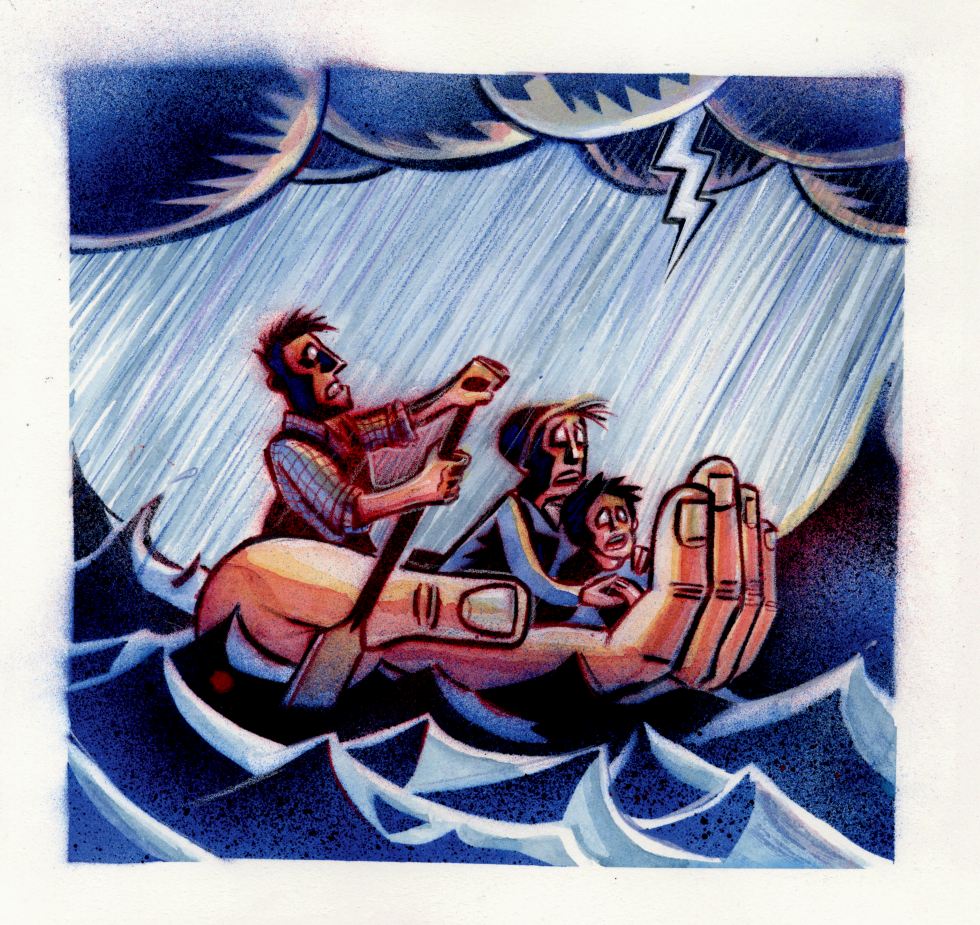
The cartoon depicts a family adrift in turbulent waters during a fierce storm, with a large hand emerging from the waves. It responds to 2021 hurricane season flooding in states like Texas, Florida and Louisiana. Heavy rains, lightning and high waves symbolize rising sea levels and extreme weather linked to climate change. The image highlights the need for FEMA support and federal action under the Biden administration while noting partisan divides with GOP positions on climate policy. As of September 2021, recent storms had caused widespread water damage, erosion and rescue operations along the Gulf Coast.