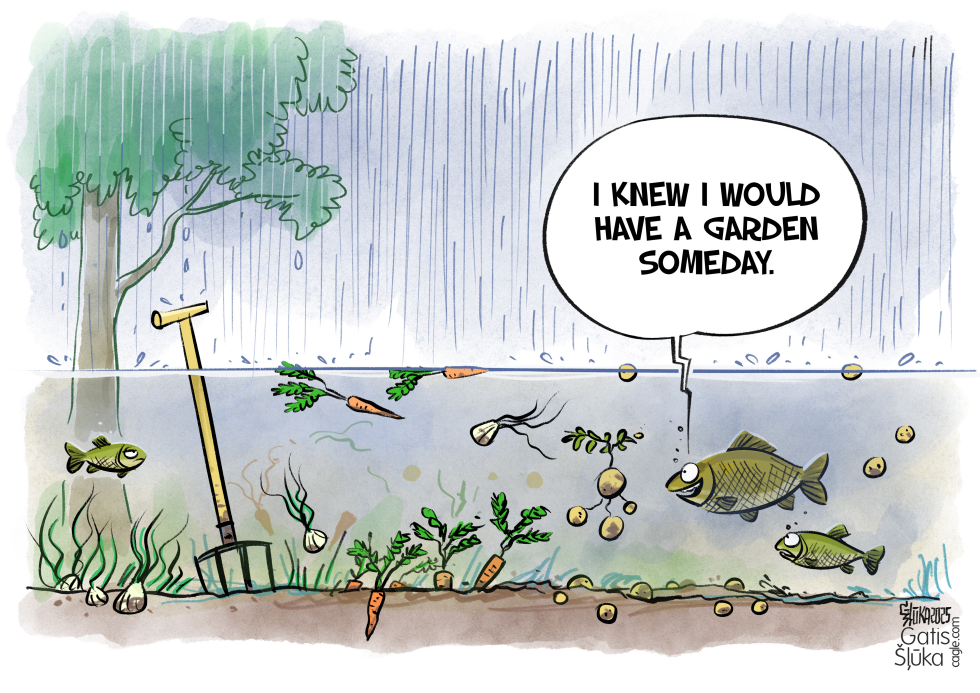
The cartoon shows fish swimming among carrots and other vegetables in a garden submerged by floodwaters, with one fish stating it always knew it would have a garden someday. A shovel stands upright in the soil below the waterline while rain pours down. The image responds to ongoing concerns about extreme weather events and their effects on farming. Heavy rainfall has become more frequent in many regions, turning fields into temporary ponds. The visual uses the fish's unexpected claim to underscore how flooding alters traditional land use and creates new, if temporary, aquatic environments.
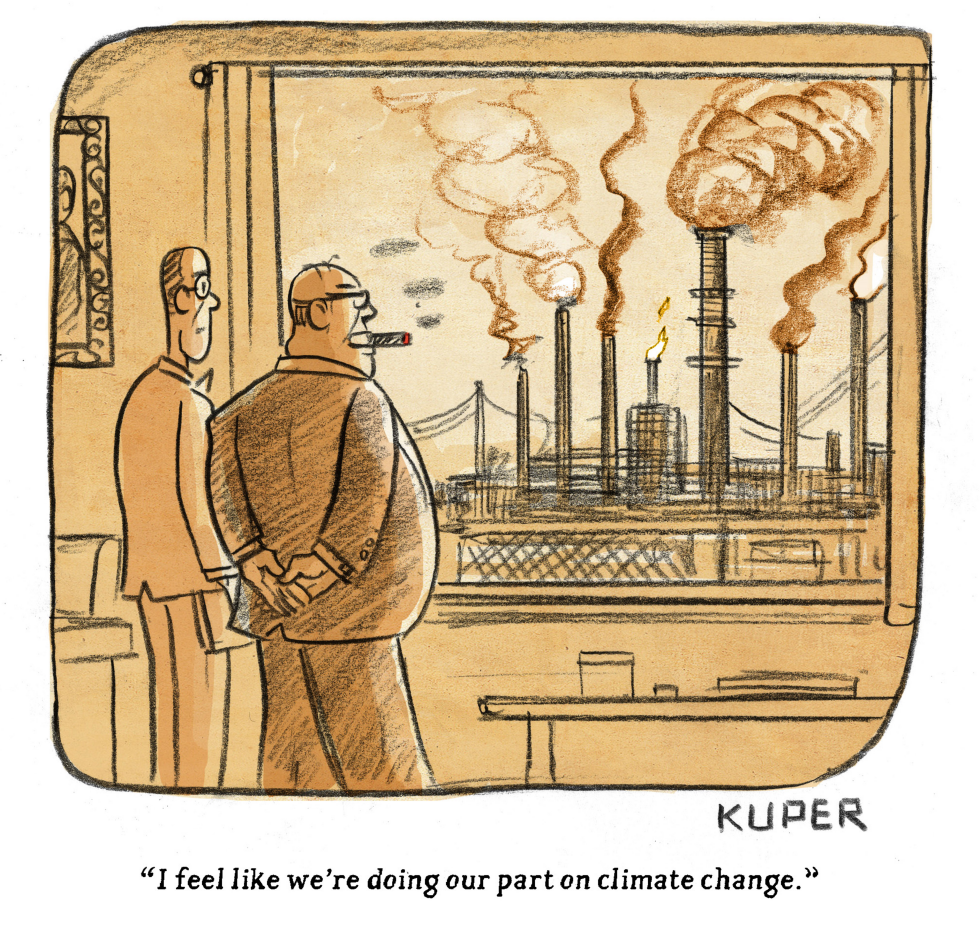
Corporate executives continue to oversee industrial operations that release substantial emissions into the atmosphere. This ongoing pattern occurs as global temperatures rise and regulatory pressures mount on heavy industry. The situation highlights tensions between profit-driven activities and environmental accountability. The piece portrays the executives as detached from the consequences of their facilities. It critiques the tendency among business leaders to minimize their sector's role in climate issues despite clear evidence of ongoing pollution.
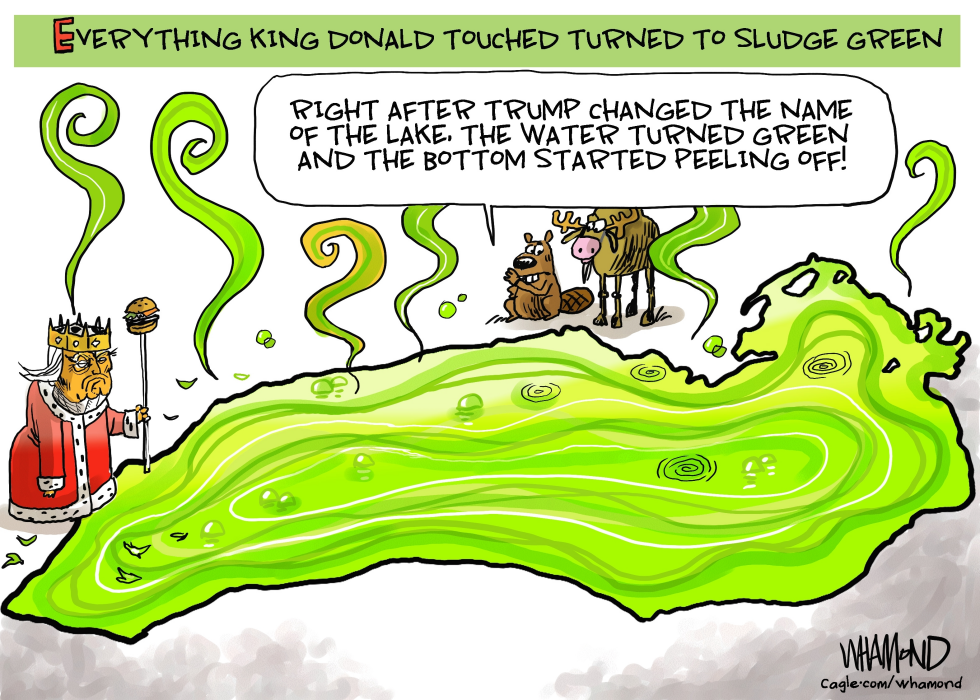
Donald Trump, depicted as a king, changes the name of a lake, after which the water turns green with sludge and the bottom begins peeling. Wildlife observers connect the timing directly to the renaming. The development raises concerns about environmental damage tied to executive actions. The piece portrays the outcome as an inevitable result of Trump's influence, turning natural areas into polluted sludge.
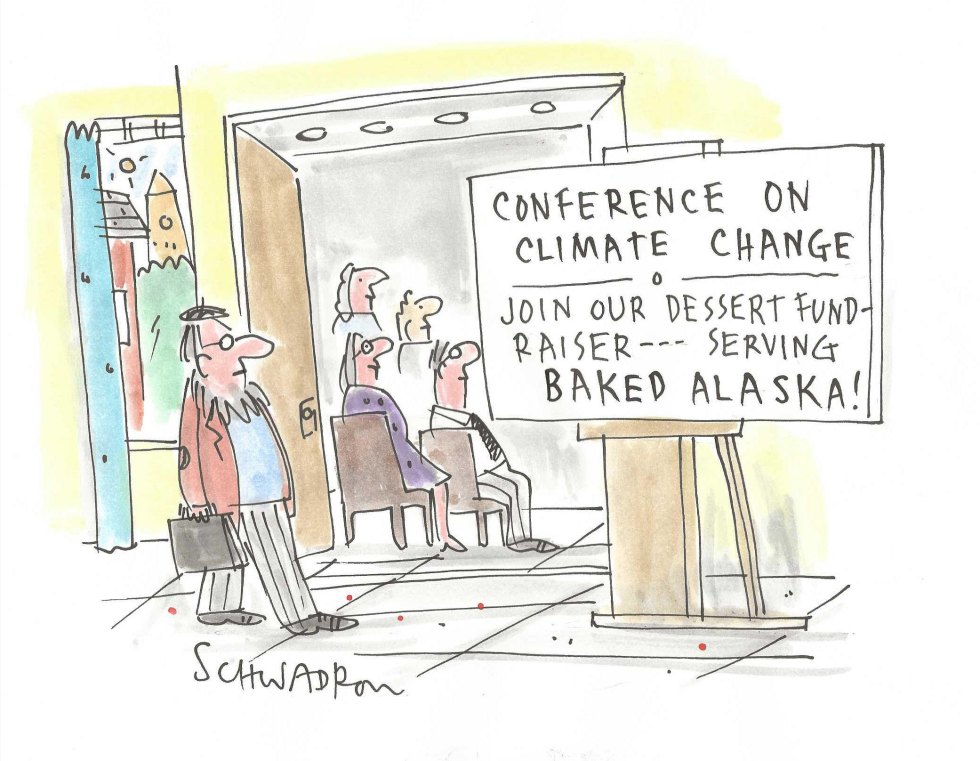
Climate conferences continue to draw scrutiny over perceived inconsistencies between stated goals and on-site activities. Organizers promote a dessert fundraiser featuring baked Alaska at an event focused on environmental issues. The piece highlights the tension between messaging and execution in ongoing climate policy discussions.
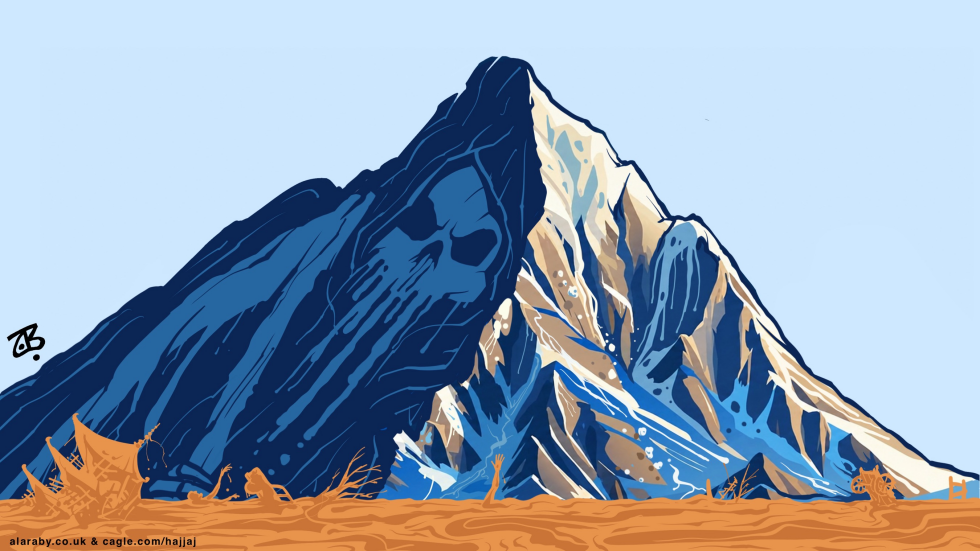
Severe flooding in the Himalayas has displaced thousands and caused significant loss of life amid accelerating glacial melt and intensified monsoon rains linked to climate change. The disaster highlights the vulnerability of mountain communities to extreme weather events that have grown more frequent in recent years. This piece frames the catastrophe as a stark warning of nature's retribution, underscoring the urgent need for global action on emissions to prevent further tragedies in fragile ecosystems.
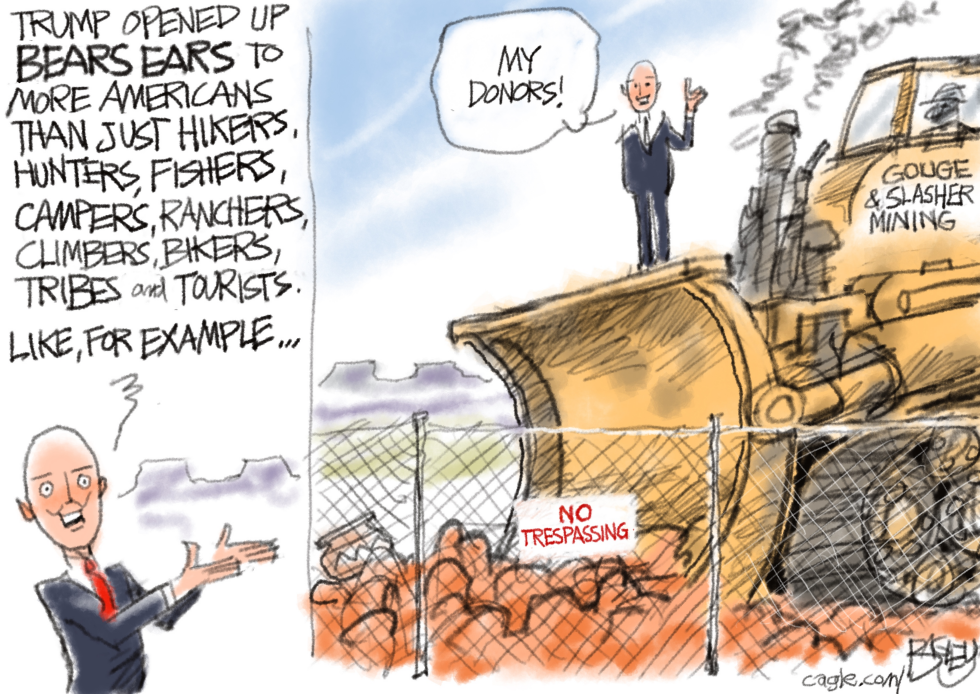
President Trump opened Bears Ears National Monument to expanded mining operations, citing broader public access. The move benefits mining companies and political donors while limiting protections for hikers, tribes and recreational users. The cartoon criticizes the decision as donor-driven favoritism over conservation.
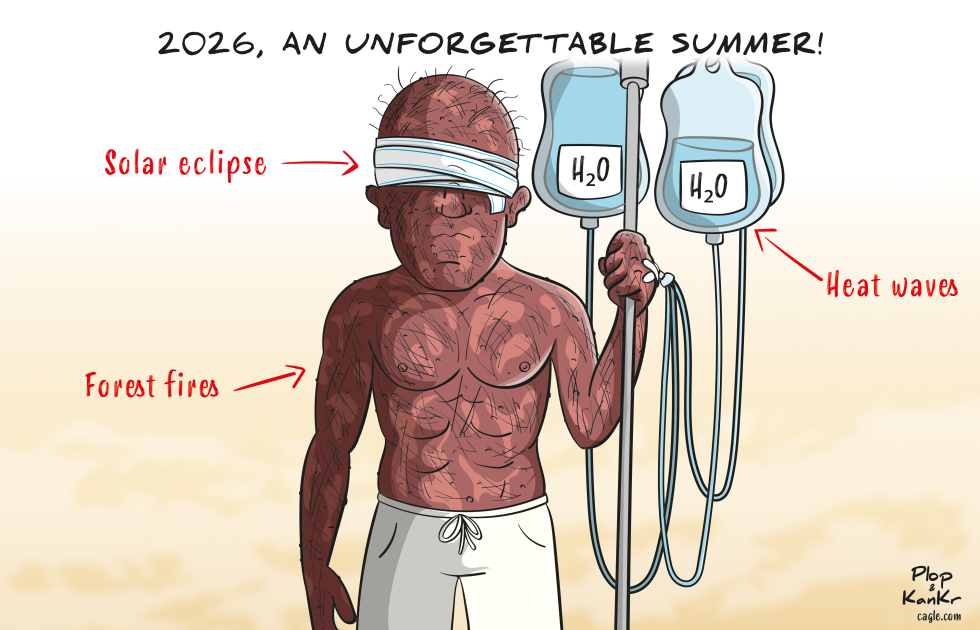
The image shows a shirtless man standing with two IV bags delivering H2O. One bag is labeled heat waves. A blindfold covers his eyes with an arrow from solar eclipse. Another arrow points to forest fires on his arm. The top text reads 2026 an unforgettable summer. The scene places multiple seasonal events on one body at once.
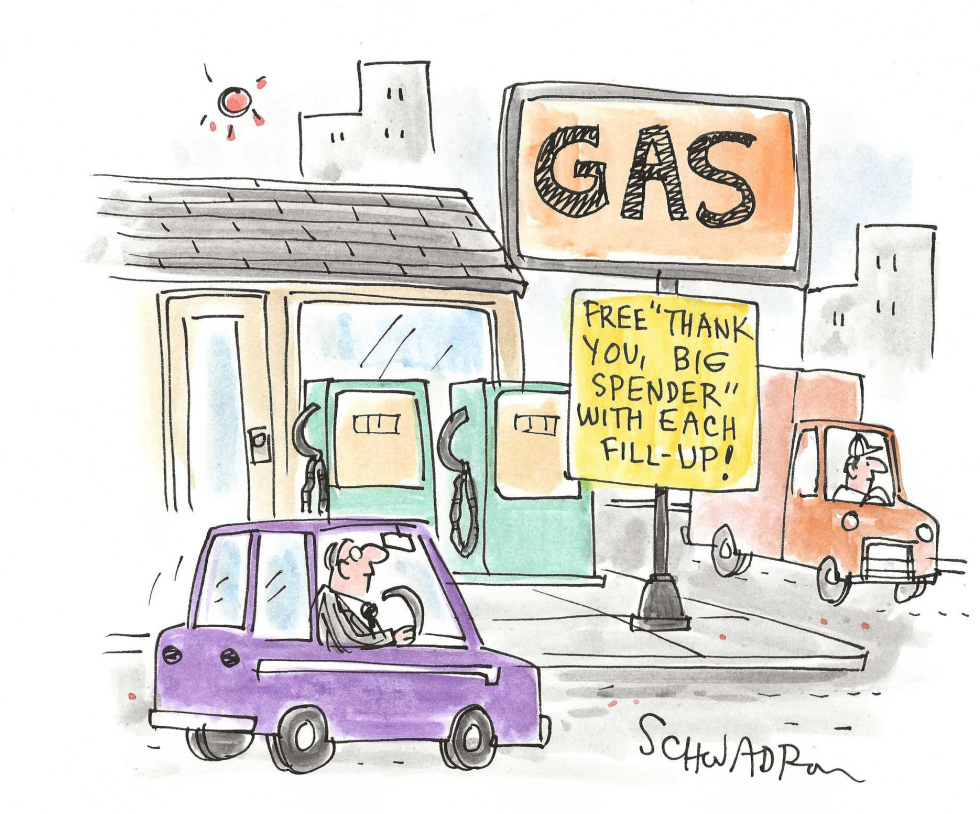
High gasoline prices continue to strain household budgets as drivers face elevated costs at the pump. The cartoon depicts a gas station using a sarcastic promotion that labels every fill-up customer a big spender. This reflects ongoing public frustration with energy costs and their impact on daily commuting and small business operations. The piece takes the position that such prices make routine purchases feel extravagant.
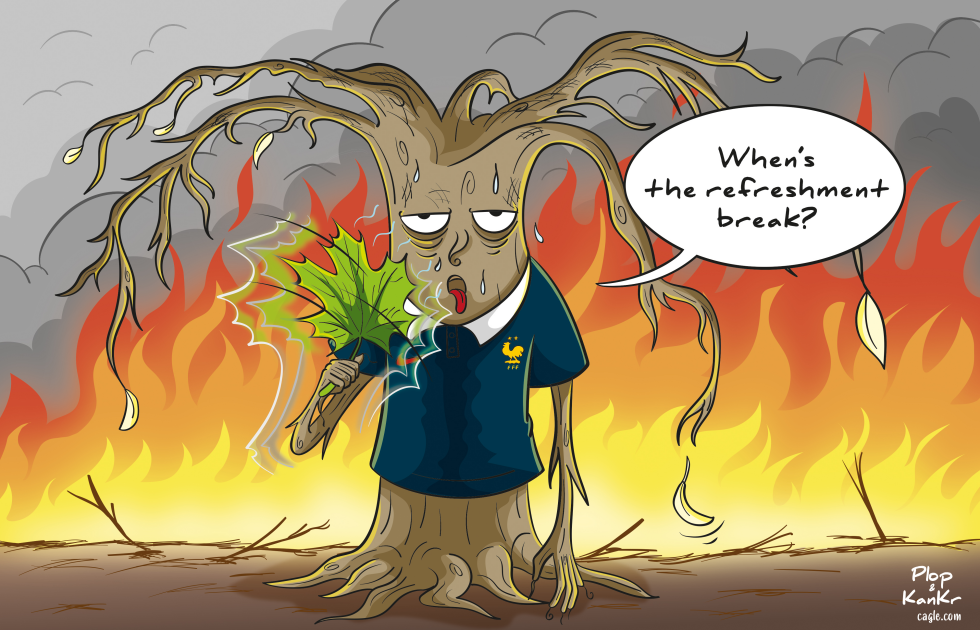
A tree figure dressed in a French national football jersey stands engulfed in flames while holding a smoking maple leaf. The figure sweats heavily and asks in a speech bubble when the refreshment break will occur. The scene uses fire and withered branches to depict environmental stress on a sports-themed character.
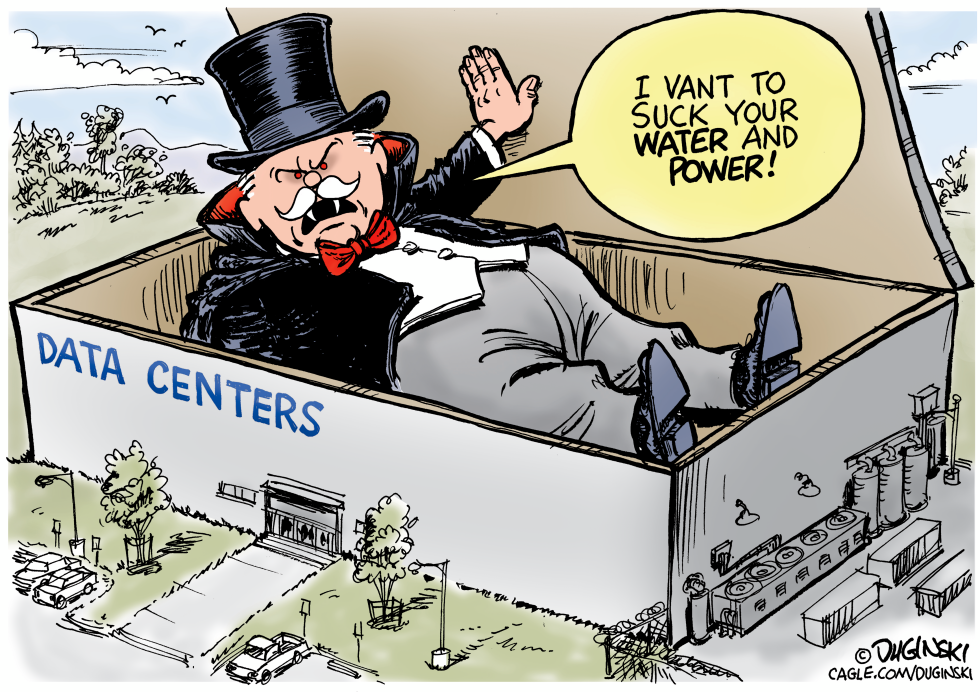
Data center operators continue rapid expansion to support cloud computing and artificial intelligence workloads, driving sharp increases in electricity and water consumption across multiple states. Local utilities report strain on grids and aquifers as facilities require constant cooling and backup power. The editorial takes the position that unchecked growth treats public resources as unlimited, urging stronger oversight before shortages worsen.
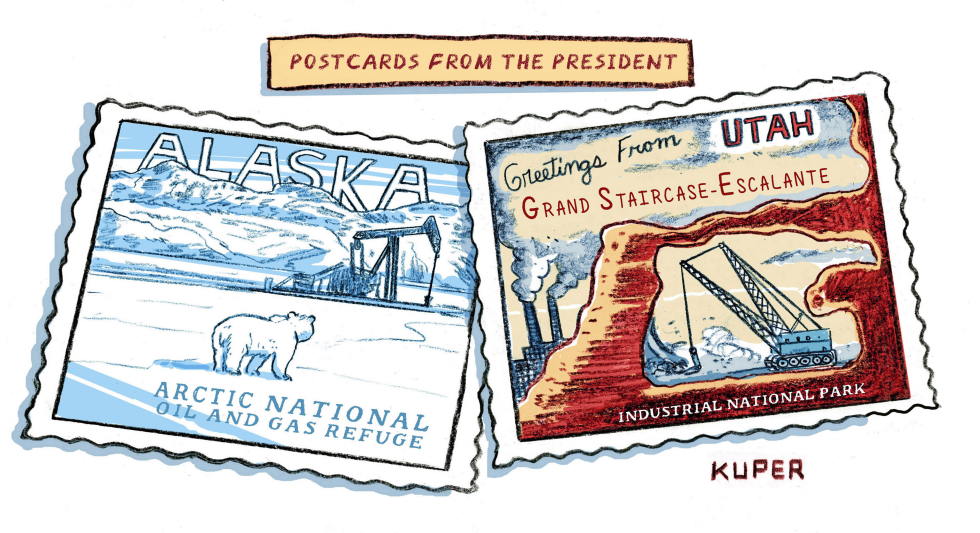
The president has advanced policies opening Arctic National Wildlife Refuge and Grand Staircase-Escalante to expanded oil and gas development. These moves prioritize domestic energy production over prior conservation designations. The editorial uses postcard imagery to critique the transformation of protected lands into industrial zones, arguing that short-term extraction gains undermine long-term environmental protections and public lands legacy.
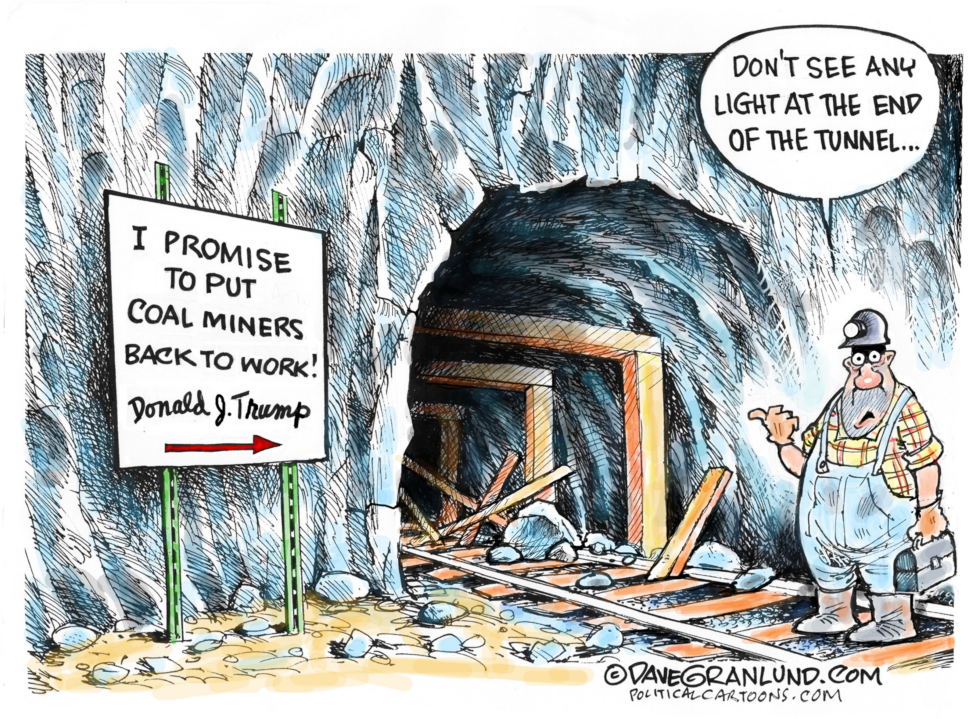
Donald Trump repeatedly pledged during his campaigns and terms to revive coal mining employment by rolling back regulations and boosting domestic production. Those commitments have not translated into sustained job growth for miners amid shifting energy markets and automation. The cartoon underscores the gap between the repeated assurances and the persistent lack of visible progress for workers in the sector.
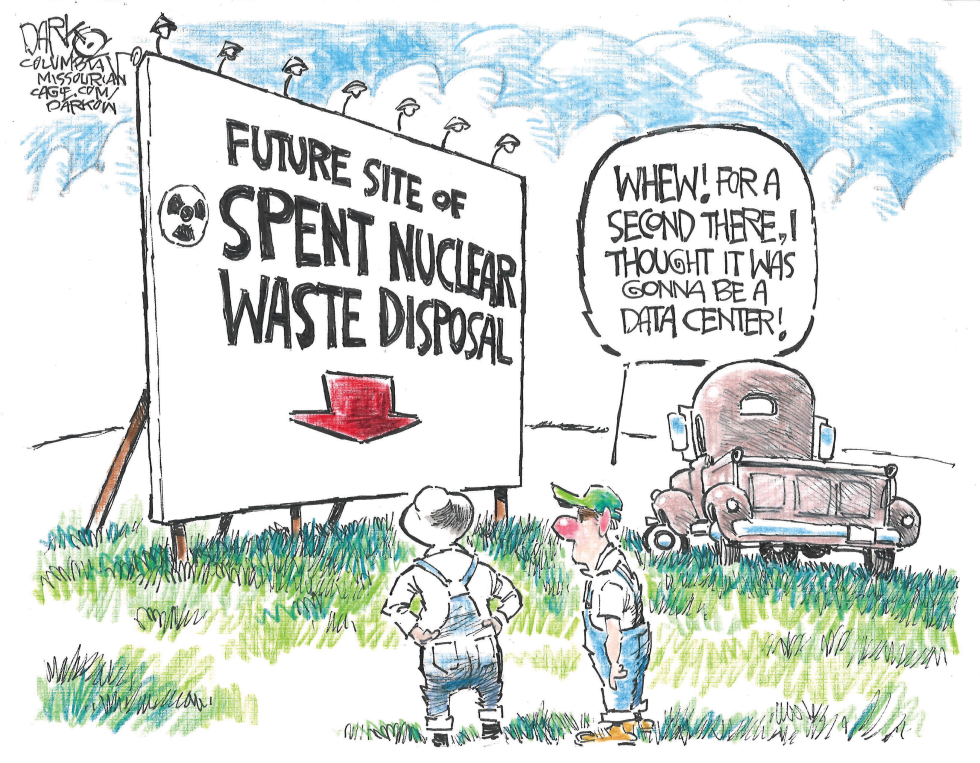
Rural communities continue to face competing proposals for large-scale projects on agricultural land. A planned spent nuclear waste disposal facility draws attention as residents weigh it against potential data center developments that often bring high energy demands and infrastructure changes. The editorial takes the position that such choices reflect broader tensions in siting energy-related facilities versus technology operations in farming areas.
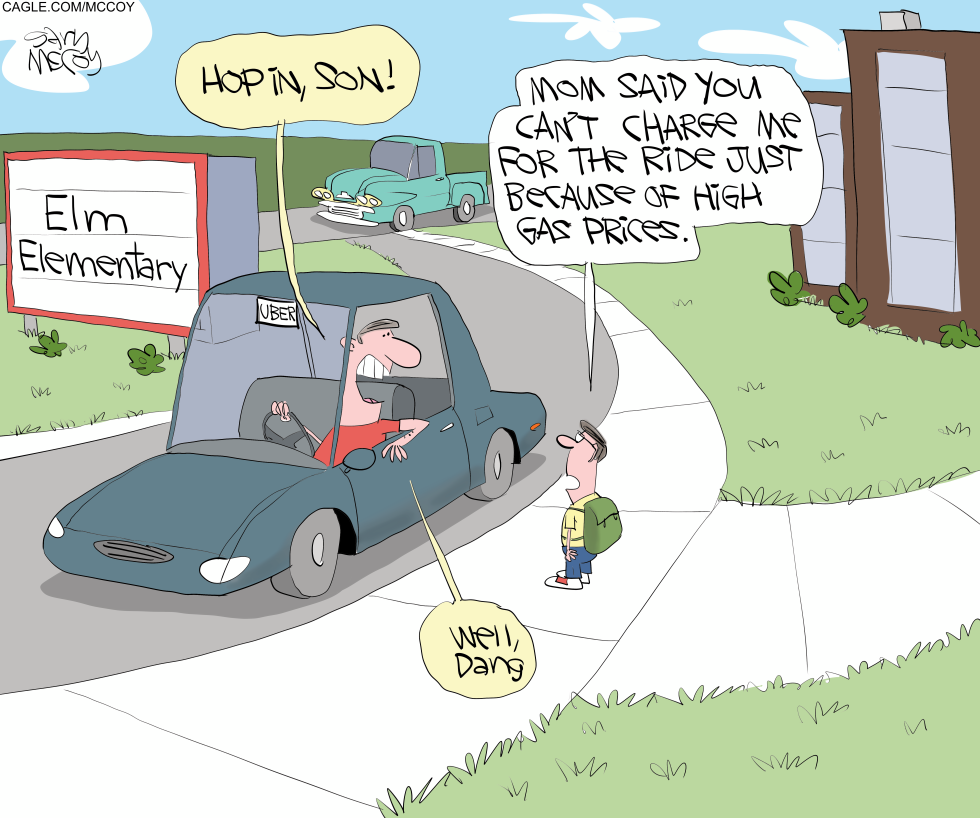
Families continue to feel pressure from elevated fuel costs during routine activities such as school transportation. Parents weigh creative ways to offset expenses while children and spouses push back on new charges. The cartoon highlights the everyday tension between household budgets and parental expectations around shared rides.
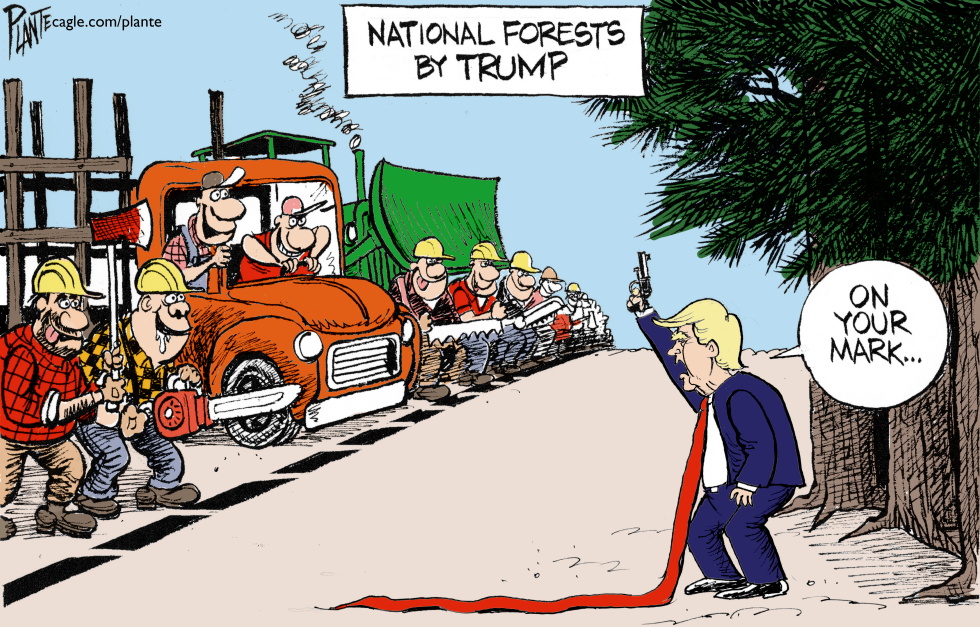
President Trump has directed expanded logging across national forests, ordering crews to begin timber harvests on federal lands. The move opens protected areas to commercial cutting under new administration policy. Critics argue the action prioritizes industry over conservation while supporters cite economic benefits and reduced wildfire risk. The cartoon depicts Trump firing the starting gun to launch the operations.