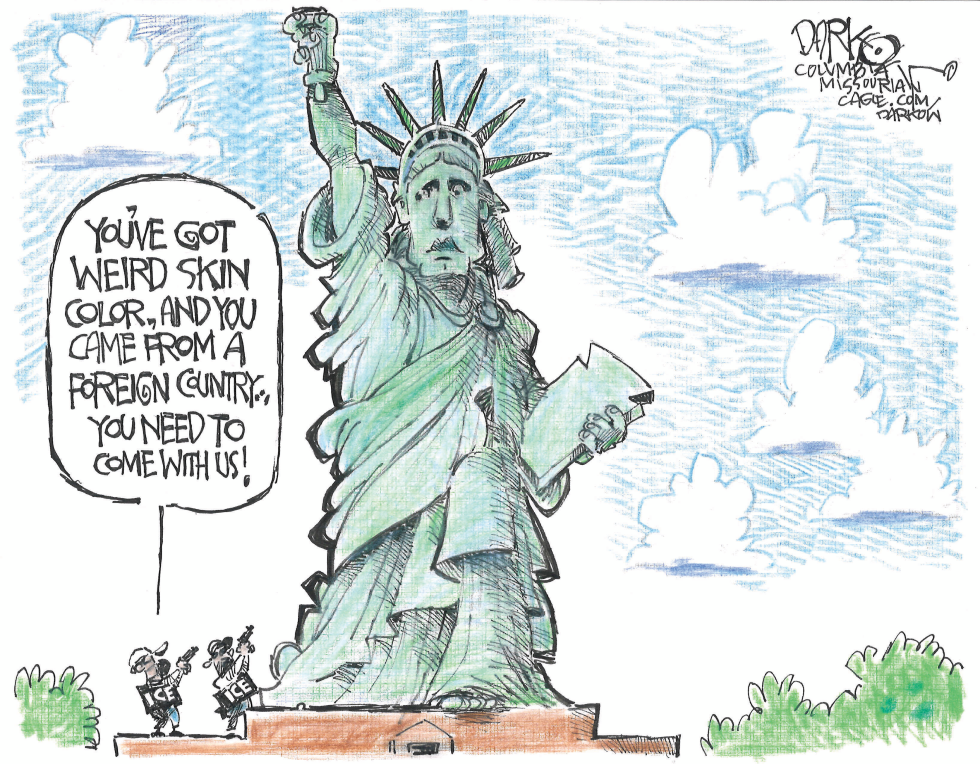
ICE agents have been depicted confronting the Statue of Liberty at its base while citing the monument's skin color and foreign origin as grounds for removal. The action highlights ongoing debates over immigration enforcement priorities and the use of appearance-based criteria in federal operations. The editorial position frames such tactics as inconsistent with the monument's historic role welcoming immigrants.
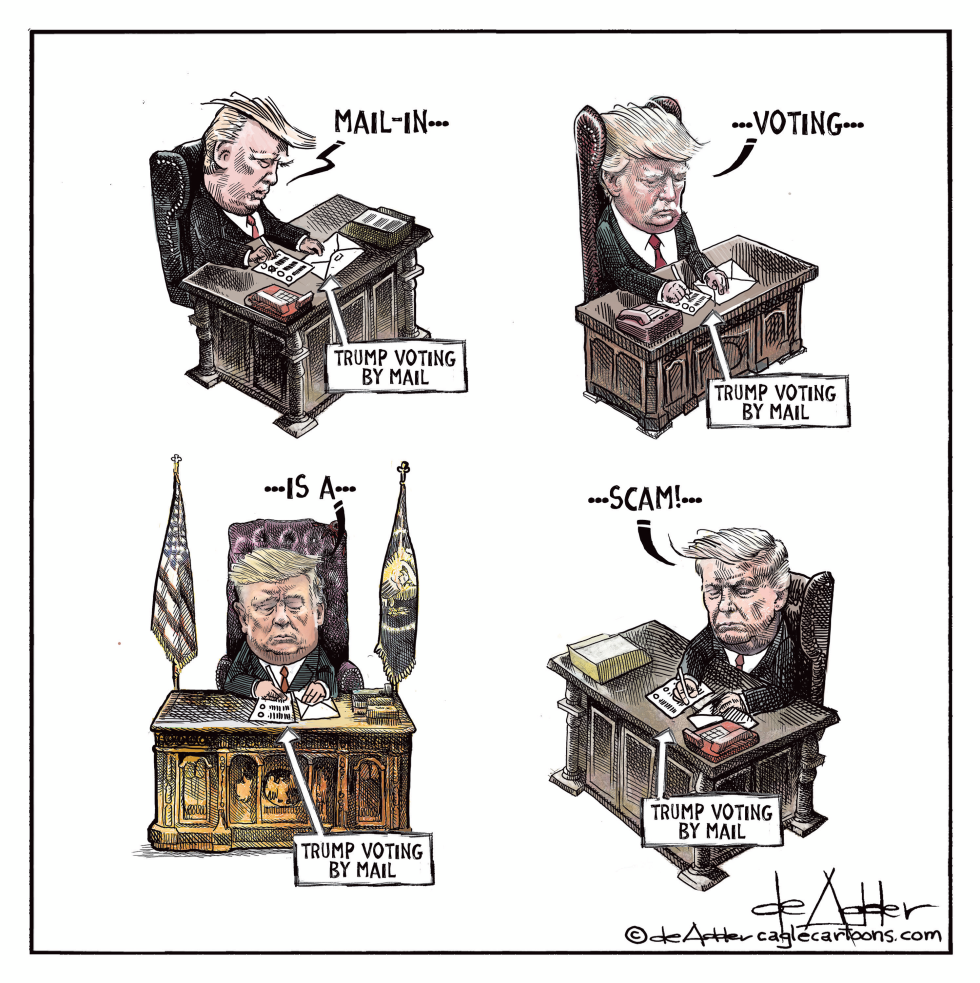
A four-panel cartoon by Michael de Adder published August 18, 2026, shows Donald Trump seated at desks completing mail-in ballots. Text builds across panels to spell MAIL-IN VOTING IS A SCAM while each scene is labeled TRUMP VOTING BY MAIL. The work responds to ongoing debates over mail voting ahead of the 2026 midterms. Trump has repeatedly questioned the security of mail ballots in public statements. The cartoon uses repetition to highlight the contrast between those statements and the depicted actions. No specific new event from the prior month is named in the image itself.
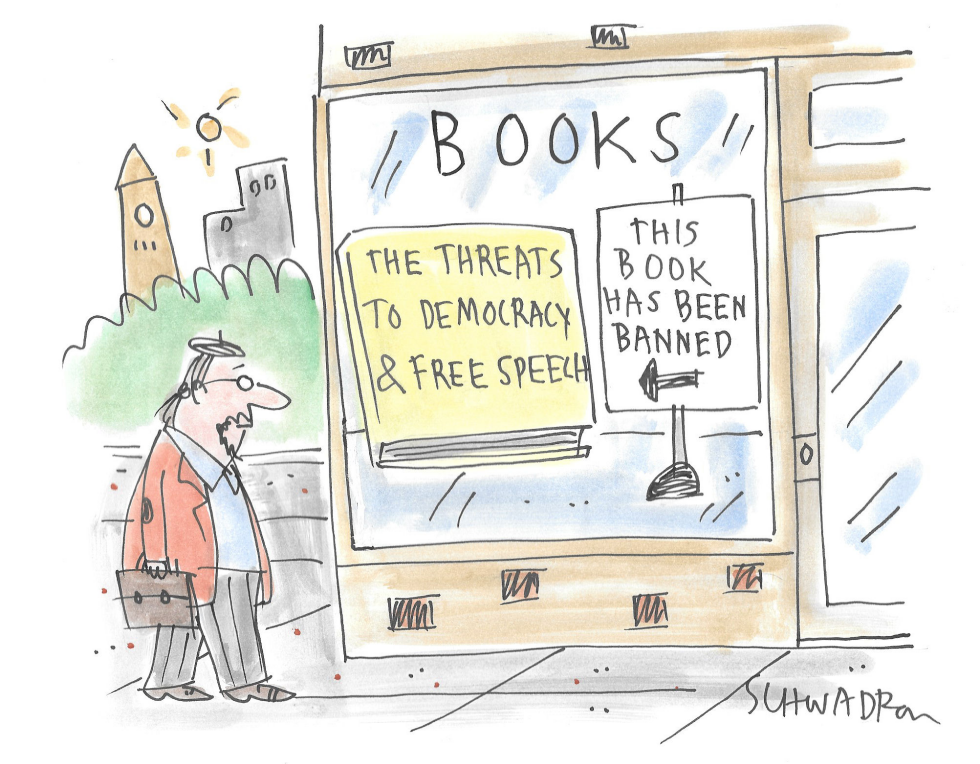
A bookstore window features a prominently displayed book titled The Threats to Democracy and Free Speech alongside a sign announcing its ban. The scene underscores ongoing debates over book removals from public access. The editorial position criticizes such bans as direct assaults on open discourse and democratic principles.
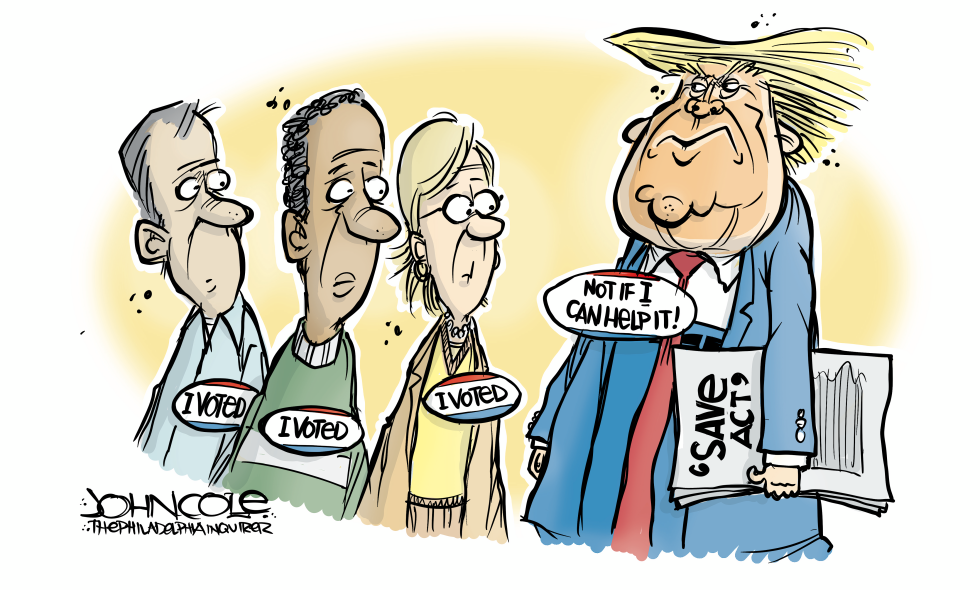
The cartoon shows Donald Trump on the right clutching documents labeled SAVE Act and declaring through a speech bubble, 'NOT IF I CAN HELP IT!' Three voters on the left, an older white man, a Black man and a white woman, each wear prominent I Voted stickers. The composition contrasts the former president's stance against the visible participation of citizens in elections. Published August 16, 2026, the image addresses Trump's resistance to the SAVE Act, a measure aimed at strengthening voter identification requirements. The visual places emphasis on the disconnect between voter engagement and political opposition to related legislation.
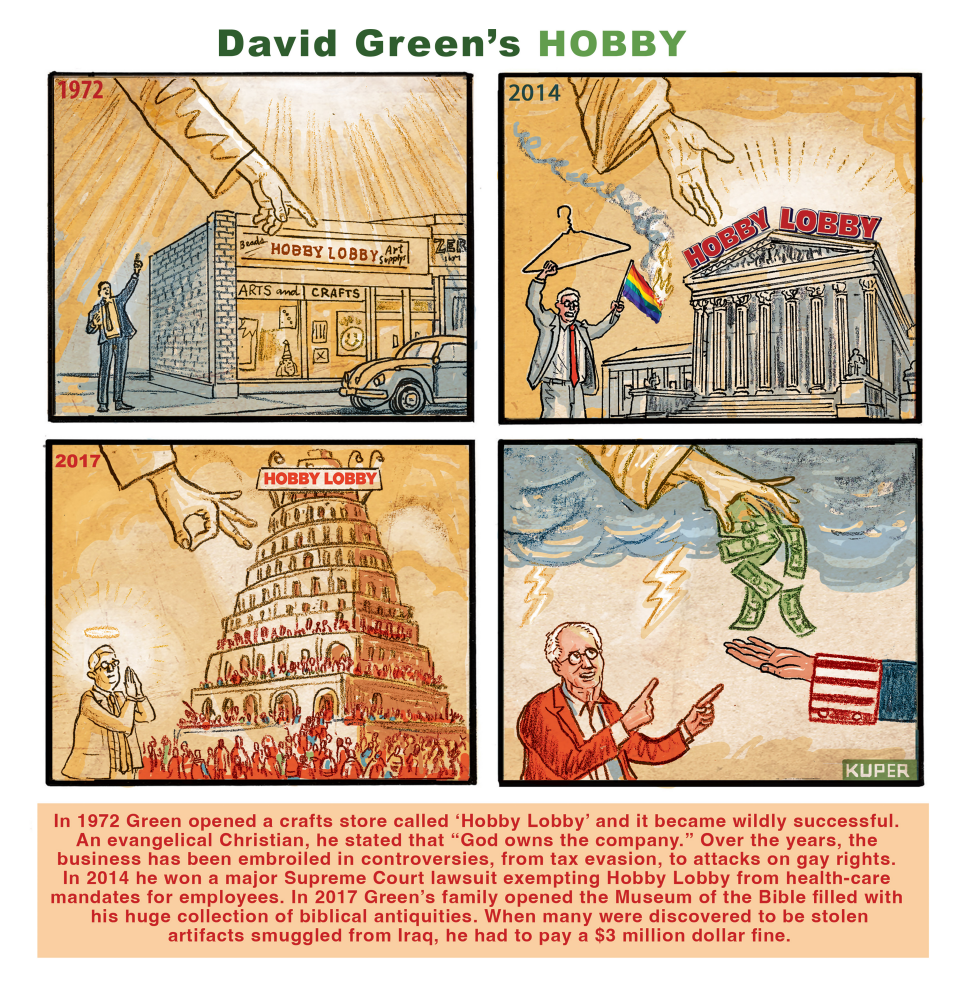
David Green opened Hobby Lobby in 1972 and built it into a major chain while declaring God owns the company. The business faced repeated controversies including a 2014 Supreme Court case on health care mandates and a 2017 Bible Museum scandal involving smuggled Iraqi artifacts that resulted in a $3 million fine. The piece presents these events as a pattern of legal and ethical issues tied to the company's evangelical leadership.
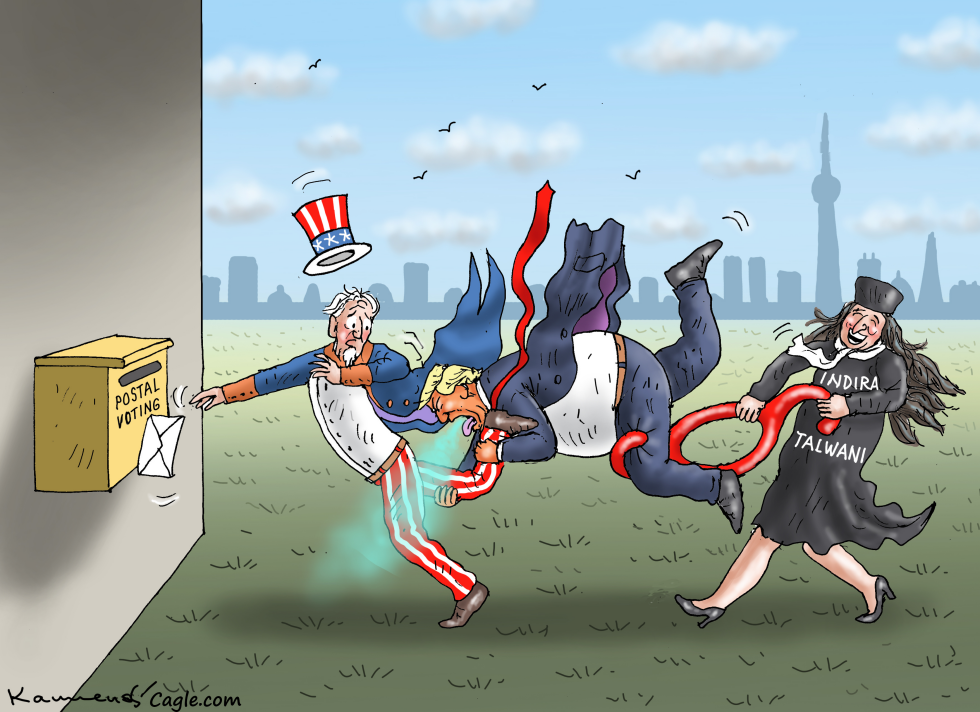
U.S. District Judge Indira Talwani issued a ruling blocking expanded postal voting measures sought by former President Donald Trump in a key election case. The decision highlights ongoing legal battles over ballot access and voting procedures. The piece portrays the conflict as a direct physical struggle between the judge, Trump, and the symbol of American government.
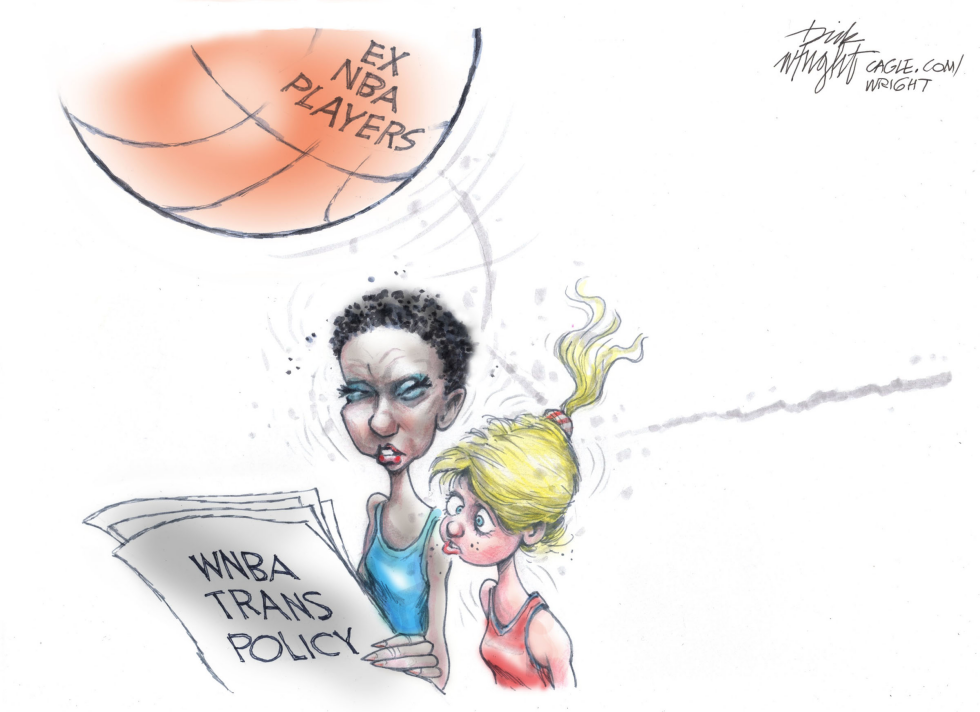
Former NBA players have begun publicly commenting on the WNBA's transgender participation policy amid broader discussions about fairness and safety in women's professional basketball. The involvement of ex-NBA voices adds external pressure to an internal league matter that affects roster decisions and competitive standards. The piece portrays the policy review as under direct challenge from these outside perspectives.
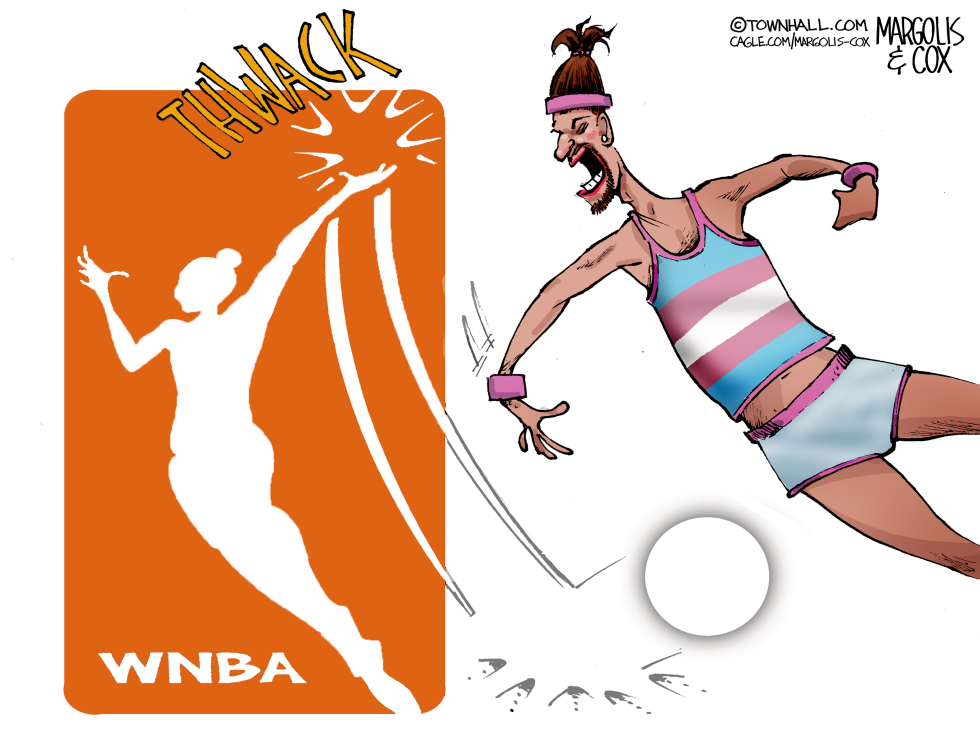
A transgender athlete in women's basketball draws renewed scrutiny as debates over fairness and eligibility persist in professional leagues. The piece critiques the inclusion of biological males in female competitions.
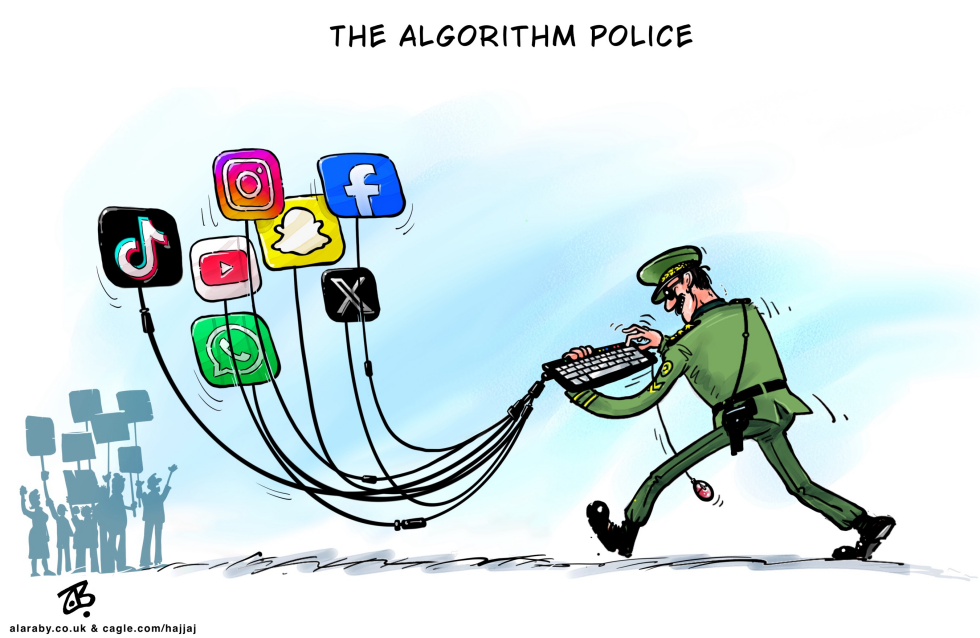
Authorities worldwide continue expanding oversight of social media platforms through algorithmic tools and regulatory pressure to curb misinformation and dissent. This approach affects major apps including TikTok, Instagram, Facebook, and X by prioritizing content moderation at scale. The development matters because it shapes public discourse and information access for billions of users. The piece portrays such controls as heavy-handed policing that provokes public resistance.
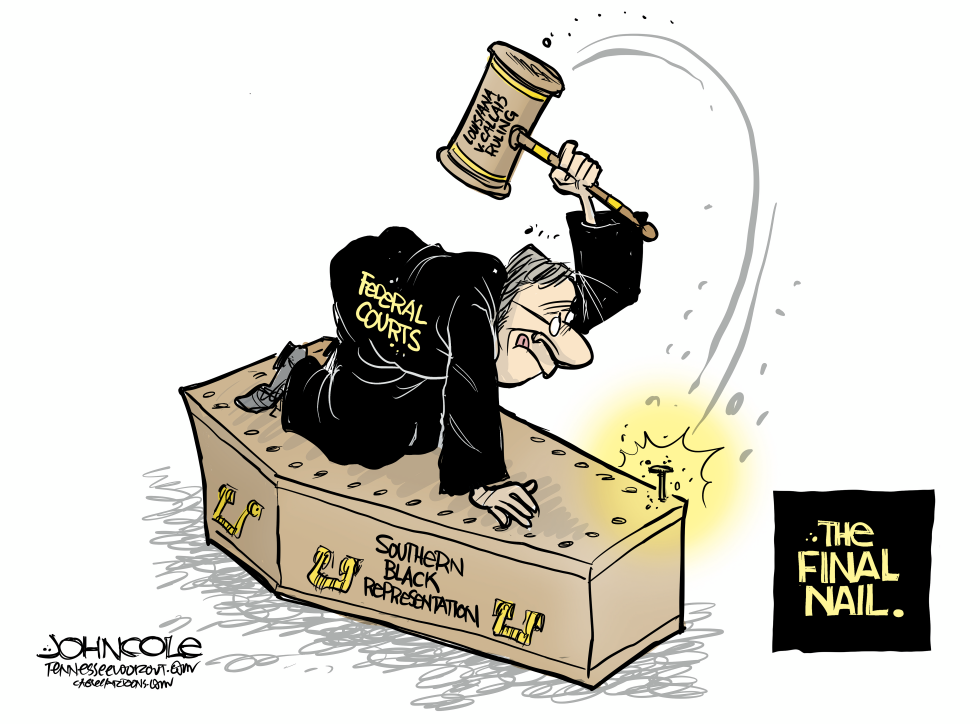
A federal court ruling on Louisiana redistricting has reduced black congressional representation across southern states. The decision follows ongoing litigation over district maps and voting access. It matters because it alters the number of majority-minority seats available in Congress. The piece argues the ruling delivers a decisive setback to those representation gains.
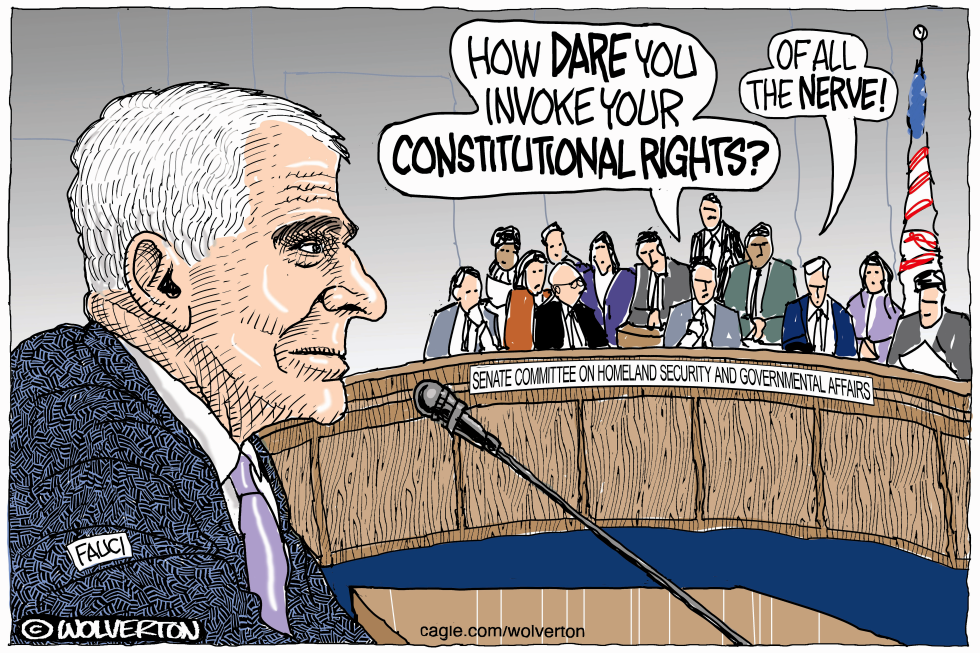
Anthony Fauci appeared before the Senate Committee on Homeland Security and Governmental Affairs on August 6, 2026. Committee members reacted sharply when the witness referenced constitutional protections. The exchange highlights ongoing tensions between congressional oversight and individual rights in high-profile hearings. The piece portrays the senators as overreaching in their response to the rights claim.
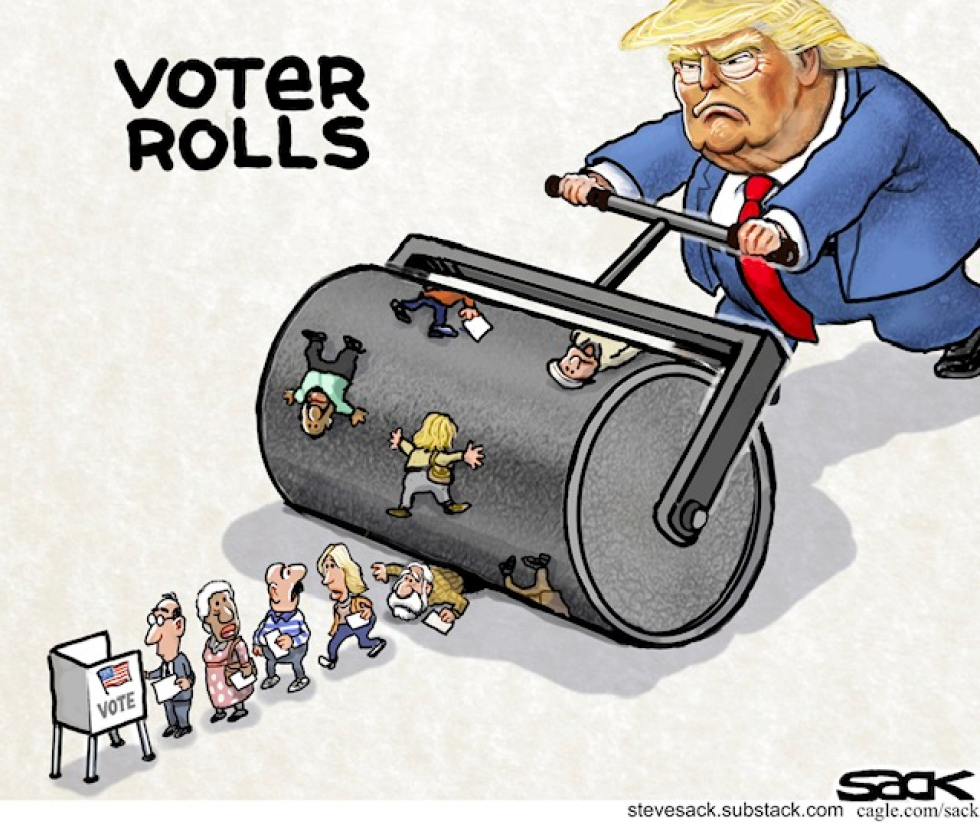
Donald Trump has pushed aggressive reviews of state voter rolls in multiple states, citing fraud concerns ahead of upcoming elections. Critics argue the moves risk removing eligible voters and suppressing turnout. The piece portrays the effort as a blunt instrument harming ordinary citizens waiting to cast ballots.
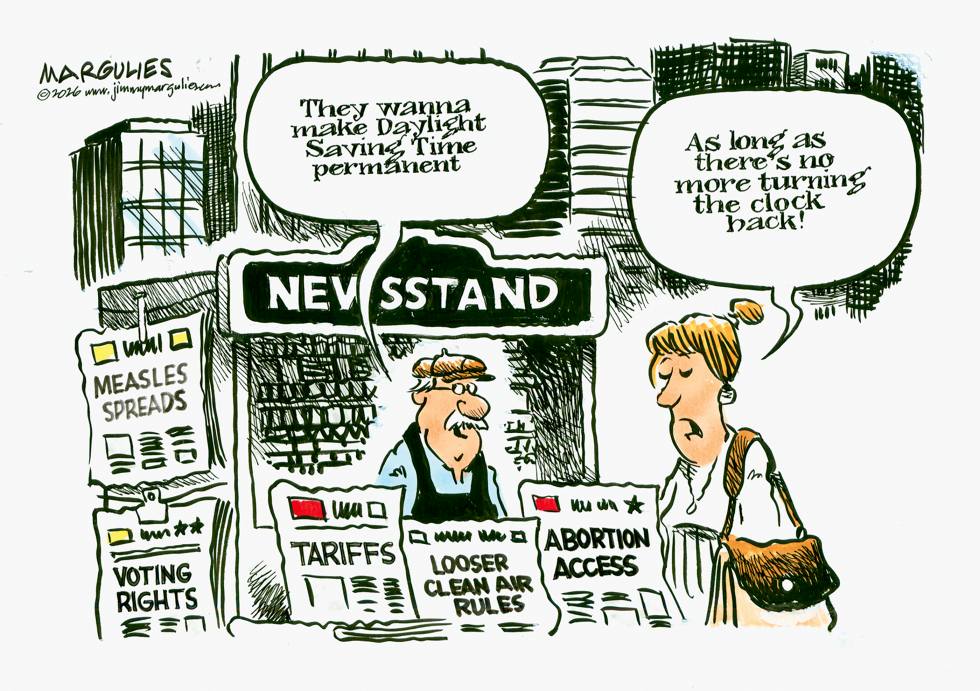
Proposals to make daylight saving time permanent coincide with debates over tariffs, abortion access, voting rights and environmental rules. The cartoon frames these as part of a broader pattern of policy shifts that some view as steps backward.
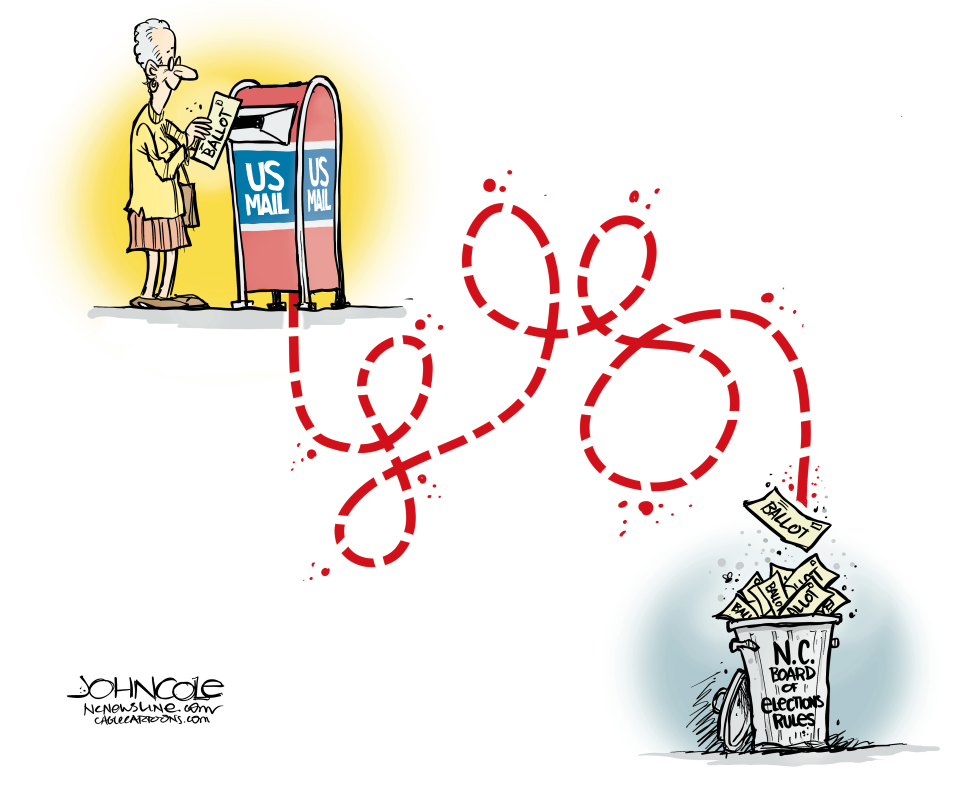
North Carolina election officials have implemented rules that invalidate or discard large numbers of mail ballots. The changes affect voter access in the state. The editorial criticizes the policy as an unnecessary barrier to participation.
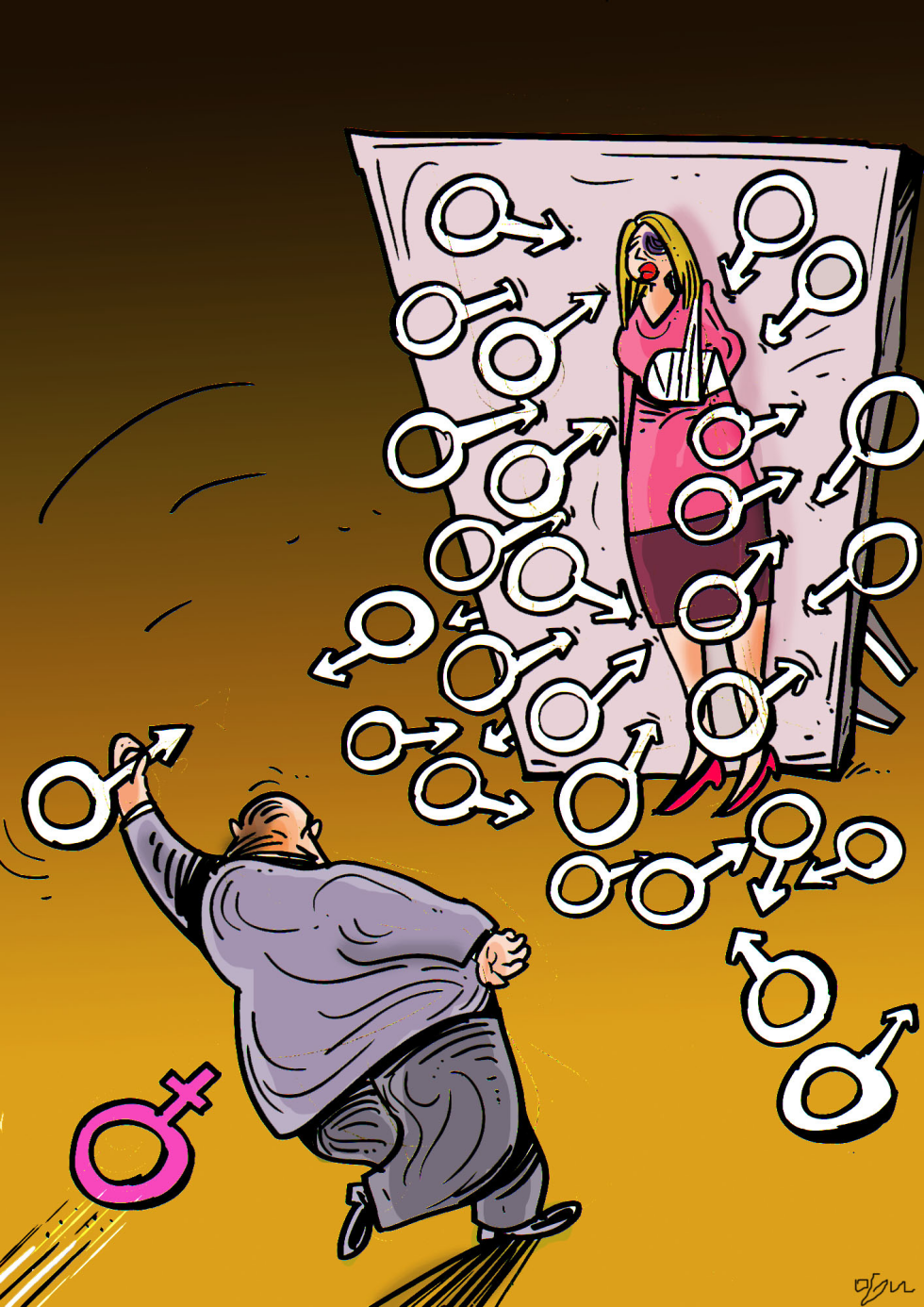
Violence against women remains a persistent social problem, with physical assaults and intimidation continuing in many communities. The piece responds to this ongoing dynamic by showing a male figure directing male symbols at an already injured woman, underscoring the editorial position that such aggression must be confronted directly.