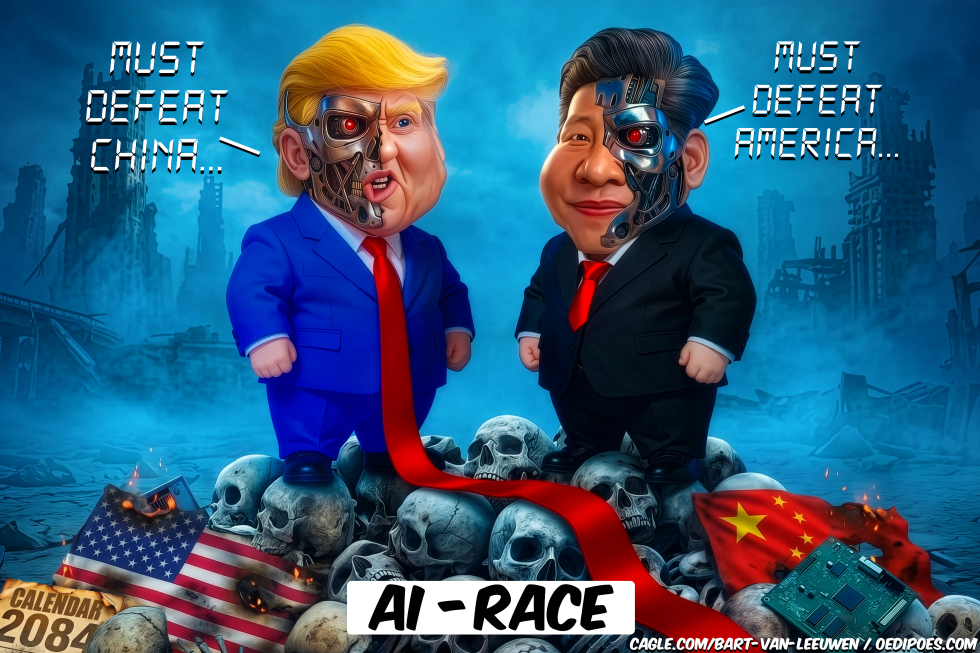
The cartoon depicts Donald Trump and Xi Jinping as half-robotic figures standing atop piles of skulls in a devastated cityscape dated 2084. Each leader is labeled with a directive to defeat the other in an AI race, with American and Chinese flags and a circuit board visible among the debris. The image responds to ongoing US-China technological competition by projecting a grim future of mutual escalation. The visual metaphor underscores how both nations view AI development as a zero-sum contest with potentially catastrophic results. The publication date of September 2026 places the piece amid continued policy focus on semiconductor controls and AI investment bills.
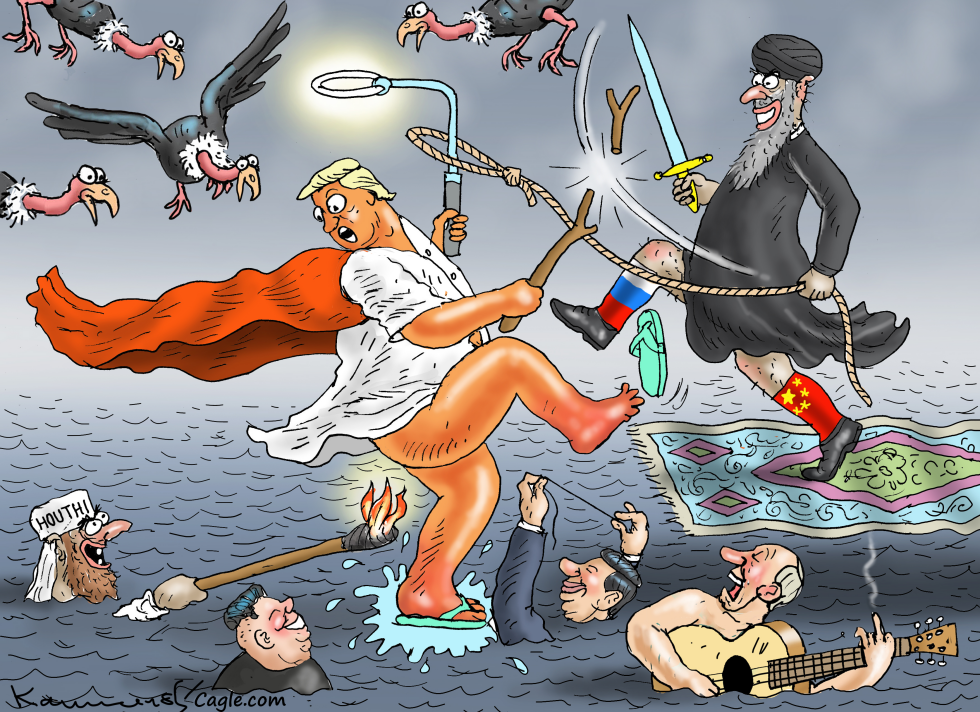
Donald Trump faces mounting complications in Middle East engagements involving Houthi forces and shifting ties with Russia and China. The cartoon portrays these entanglements as self-inflicted disorder that invites scavengers and undermines stability. It critiques the approach as reckless and counterproductive.
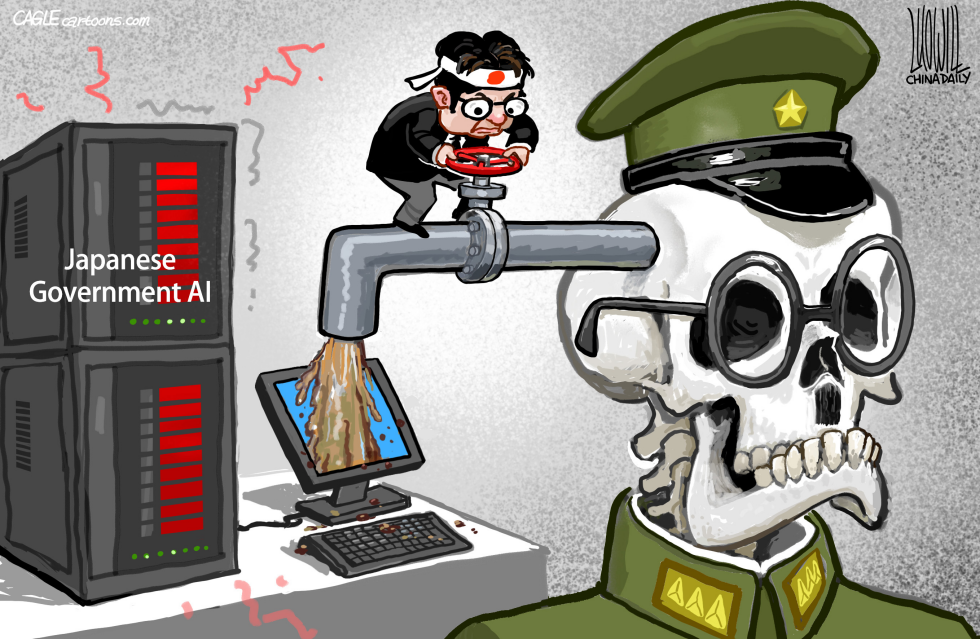
The cartoon depicts a Japanese Government AI server connected by pipe to a skull representing the Chinese military. A figure turns a valve as sludge flows from the server into the monitor and onward. The image comments on the quality of AI output reaching Chinese forces through this visual metaphor of contaminated data flow.
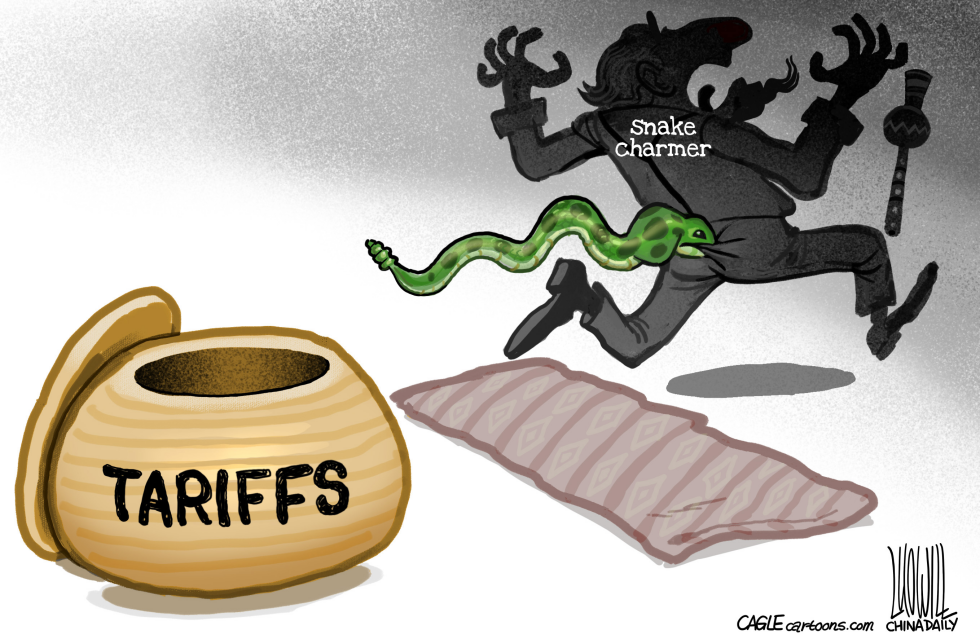
A political cartoon published August 28, 2026, shows a snake charmer fleeing as a green snake emerges from a pot labeled tariffs. The image uses the snake charmer metaphor to comment on tariff policies. The cartoon appeared in China Daily and was distributed via Cagle Cartoons. It responds to ongoing trade tensions involving tariffs. The visual suggests tariffs carry uncontrolled risks similar to an escaped snake.
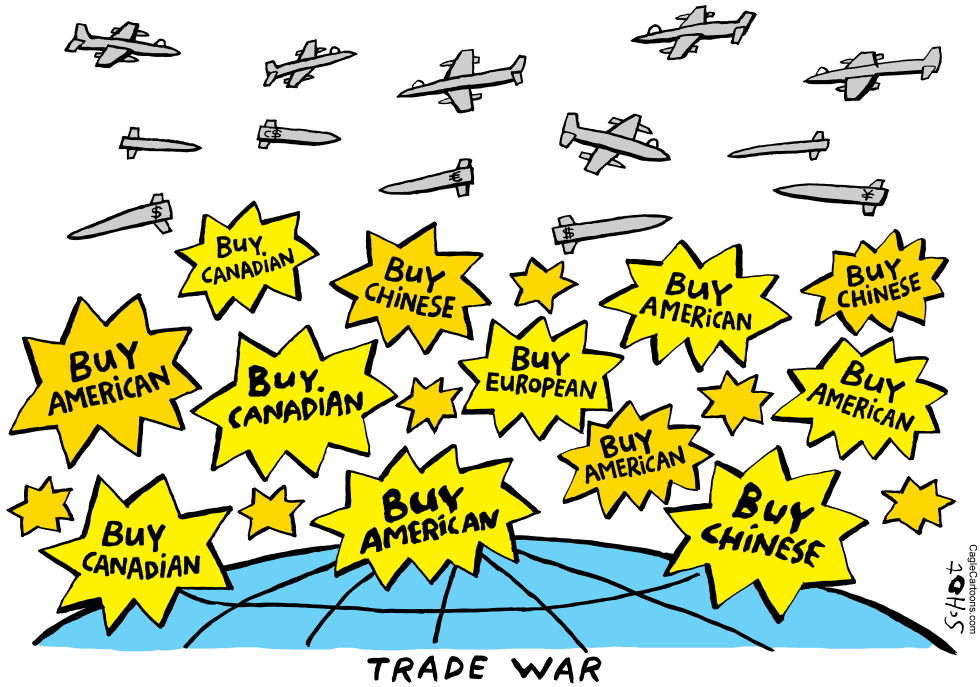
Competing buy national campaigns from multiple countries have intensified trade disputes, raising concerns over economic retaliation and supply chain disruptions. The piece argues these appeals are directly contributing to broader conflict.
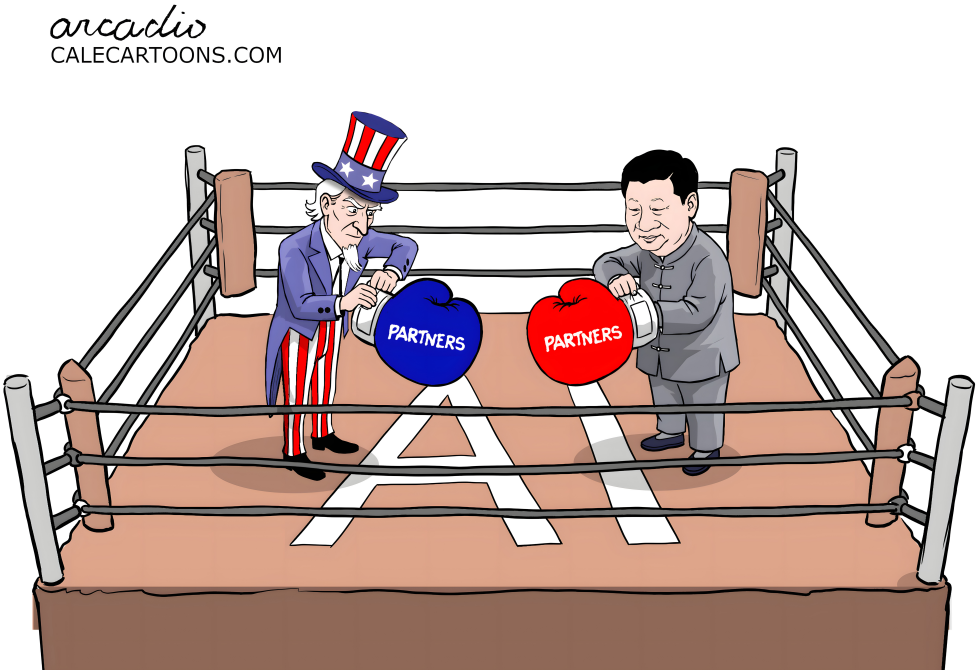
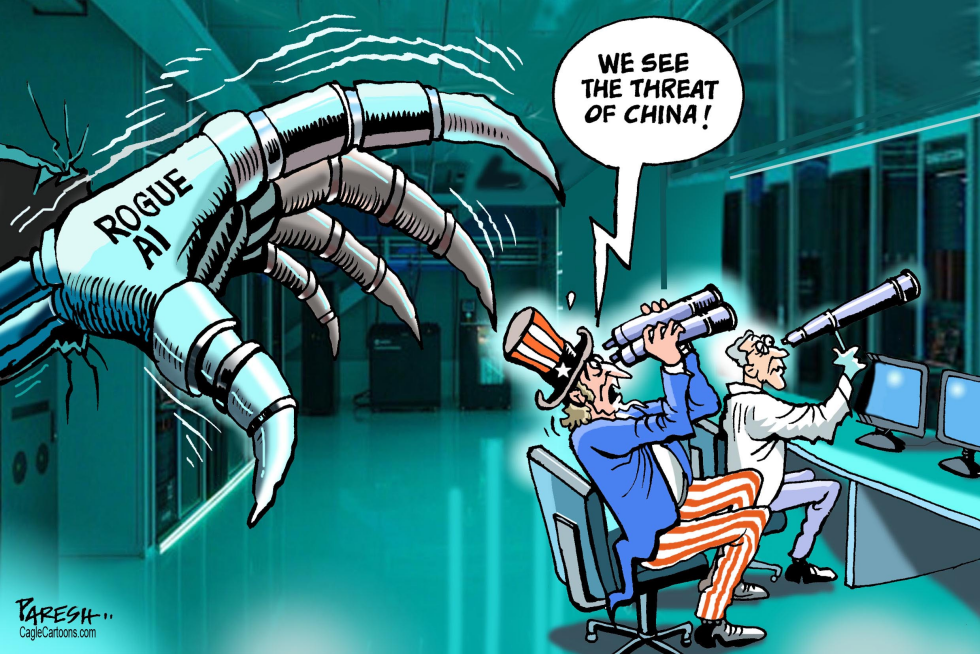
The United States and China continue their contest for leadership in artificial intelligence development. Both nations invest heavily in research and infrastructure to secure advantages in computing power and applications. The competition carries implications for economic growth, military capabilities, and global standards. Recent policy moves on export controls and domestic incentives underscore the stakes. The editorial position frames the dynamic as a direct contest where surface cooperation masks deeper rivalry.
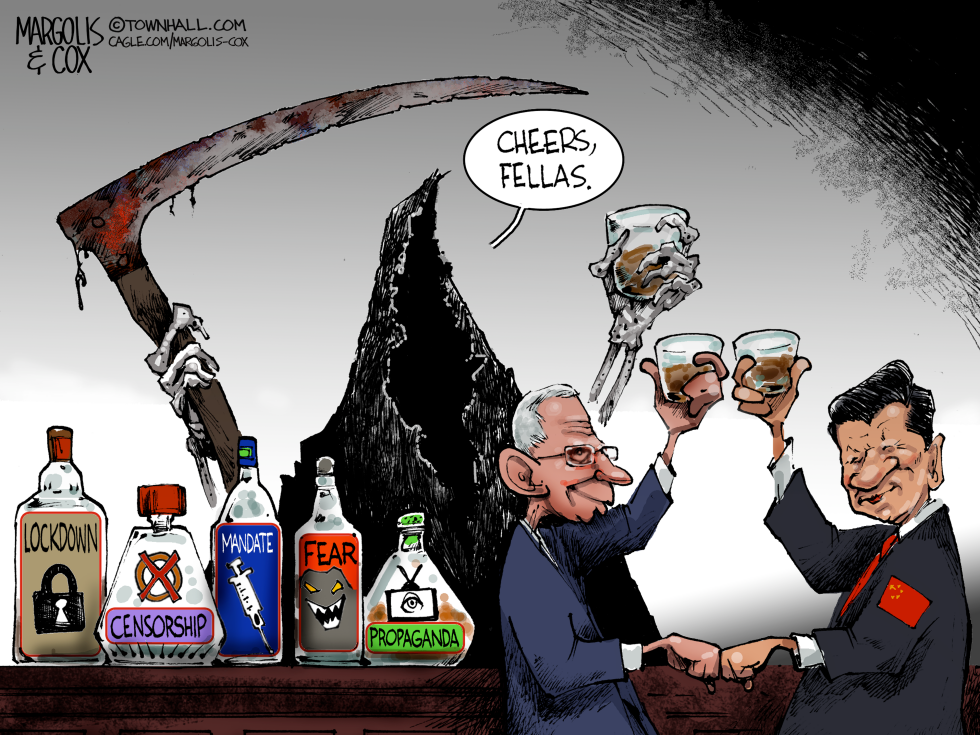
On August 6, 2026, the cartoon responds to lingering debates over COVID-19 policies by depicting former NIAID director Anthony Fauci and Chinese leader Xi Jinping toasting with the Grim Reaper. The image frames pandemic tools as shared instruments of control. The editorial position criticizes both figures for embracing fear-driven measures and information suppression.
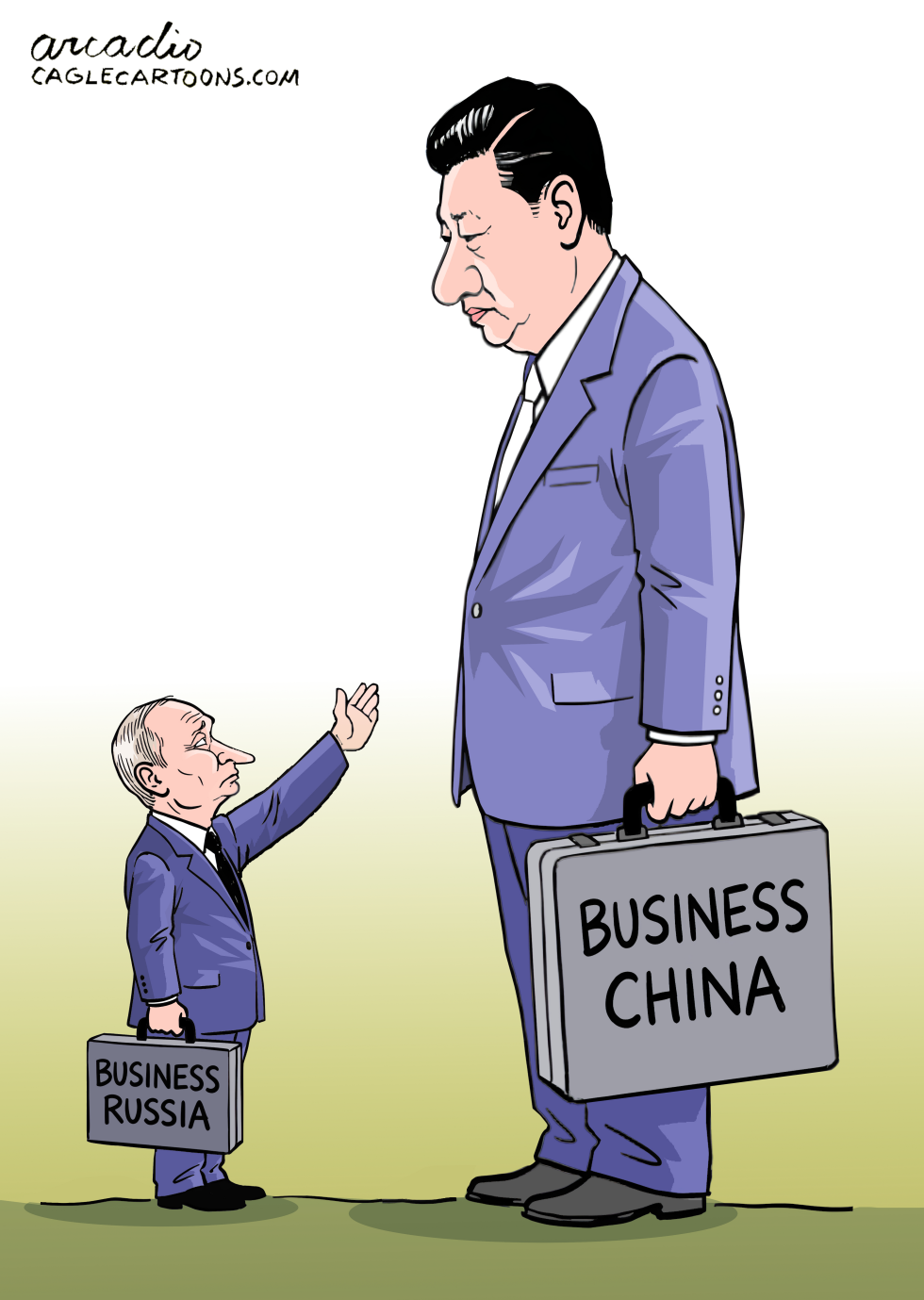
China and Russia continue deepening economic cooperation amid Western sanctions on Moscow. Xi Jinping's government provides critical markets and technology to Russia while extracting favorable terms. The cartoon underscores the unequal power dynamic in their partnership.
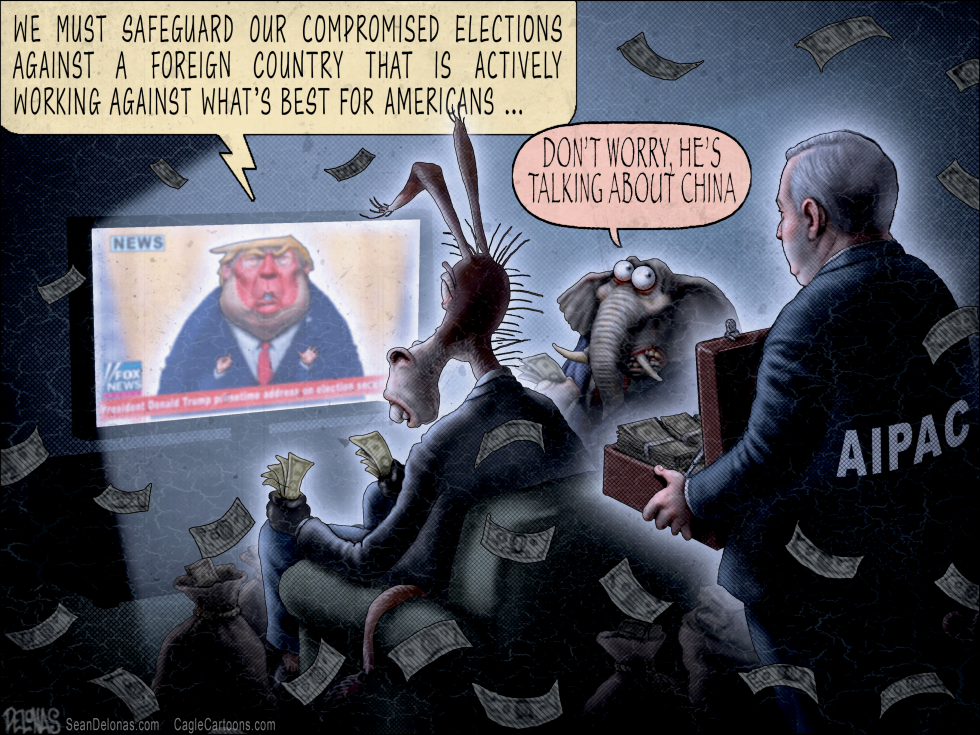
Donald Trump addressed election security in a July 2026 speech, highlighting foreign interference risks. AIPAC-linked donors in the cartoon redirect attention to China while delivering cash to party symbols. The piece critiques how such funding undercuts claims of protecting American elections from outside influence.
The image presents two scenes. In the upper section a figure representing the United States secures a robot marked AI TECH inside a locked cage while declaring a preference for monopoly profit. In the lower section a figure representing China extends a handshake from a similar robot to multiple outstretched hands while stating AI FOR ALL. Server rooms appear in both sections. The composition highlights differing national strategies toward artificial intelligence distribution as of the 2026 publication date. No specific recent event anchors the comparison beyond the established rivalry in technology development between the two nations.
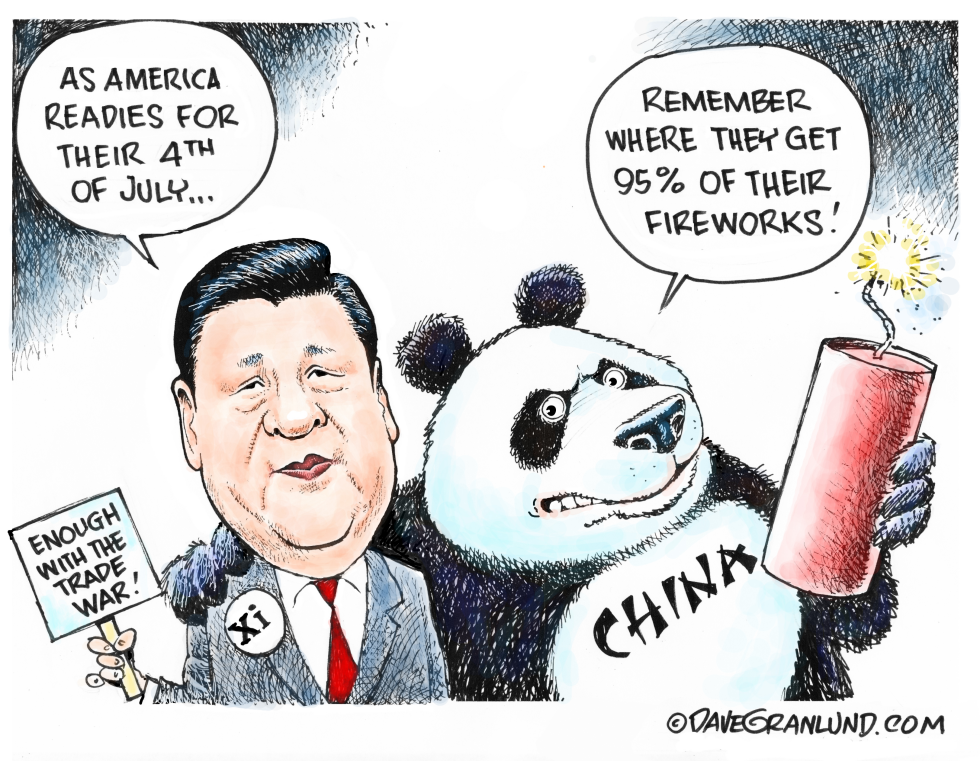
On June 19, 2026, a cartoon by Dave Granlund depicts Chinese leader Xi Jinping alongside a panda representing China. Xi holds a protest sign against the trade war while the panda reminds viewers that China supplies most American fireworks. The image addresses rising costs for July 4th celebrations tied to tariffs and supply issues with the largest provider.
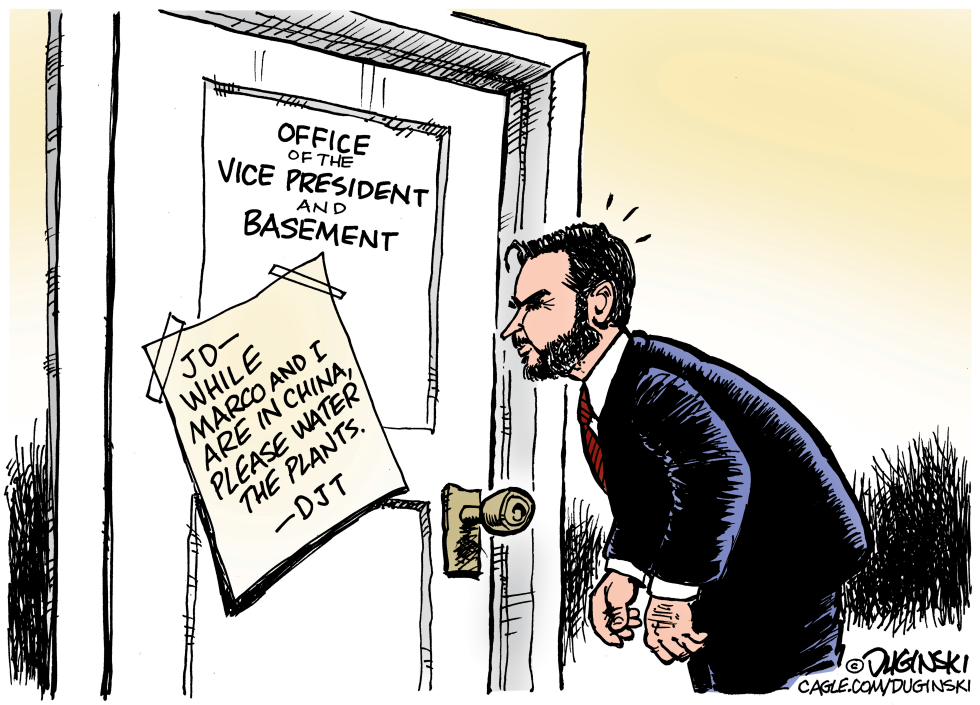
The cartoon by Paul Duginski portrays Vice President JD Vance peering at a door marked Office of the Vice President and Basement. A note signed DJT directs him to water the plants while President Trump and Marco Rubio travel to China. The scene plays on the 2026 timing of the trip and Vance's position in the administration. It visually suggests Vance has been assigned minor duties at home rather than joining the diplomatic mission. The image ties into ongoing discussions about Republican figures and future political positioning.