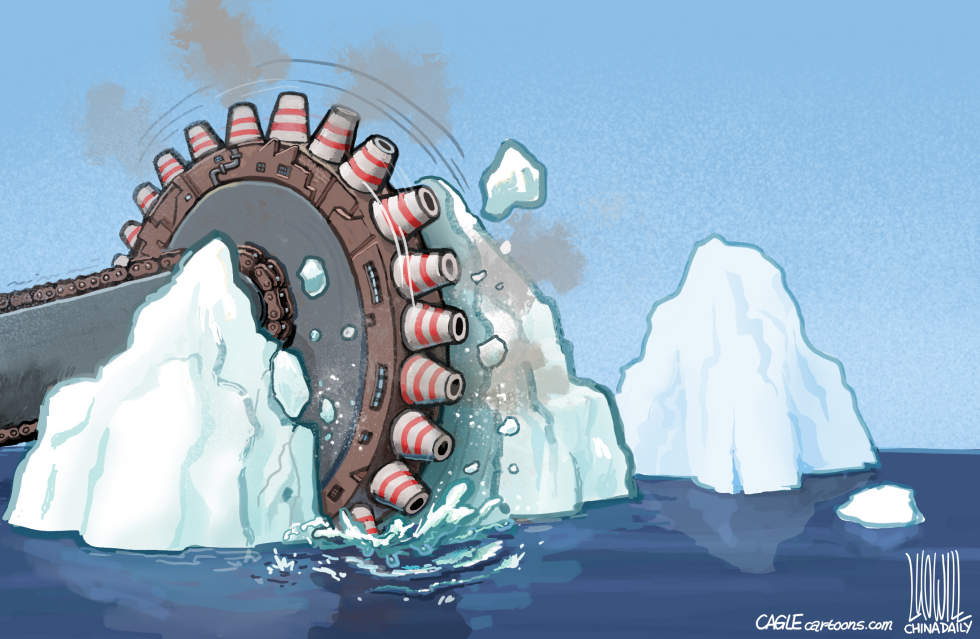
The cartoon depicts a large industrial drilling machine actively breaking through Arctic ice floes in open water. The machine features multiple red-and-white striped cylindrical components and emits dark exhaust. Icebergs float nearby under a clear sky. Published by China Daily, the image addresses ongoing concerns over resource extraction in polar regions and its contribution to ice loss.
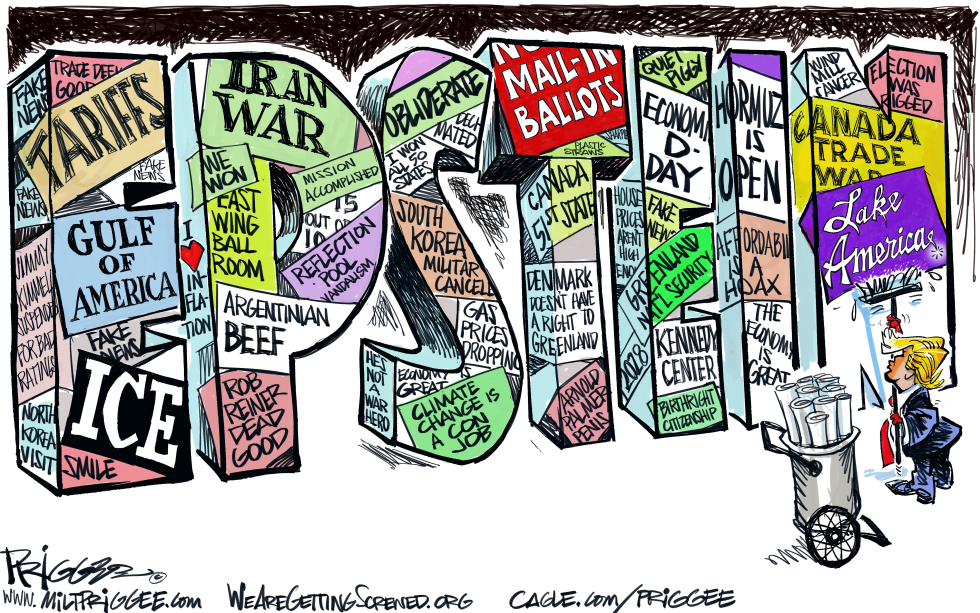
Donald Trump appears in a September 2026 cartoon pushing a cart stacked with signs promoting tariffs, questioning mail-in ballots, and asserting claims about Iran, Canada trade, and domestic issues. The image captures a pattern of public messaging that blends economic nationalism with repeated challenges to established processes. The editorial position frames these statements as a deliberate strategy to keep multiple controversies in motion at once.
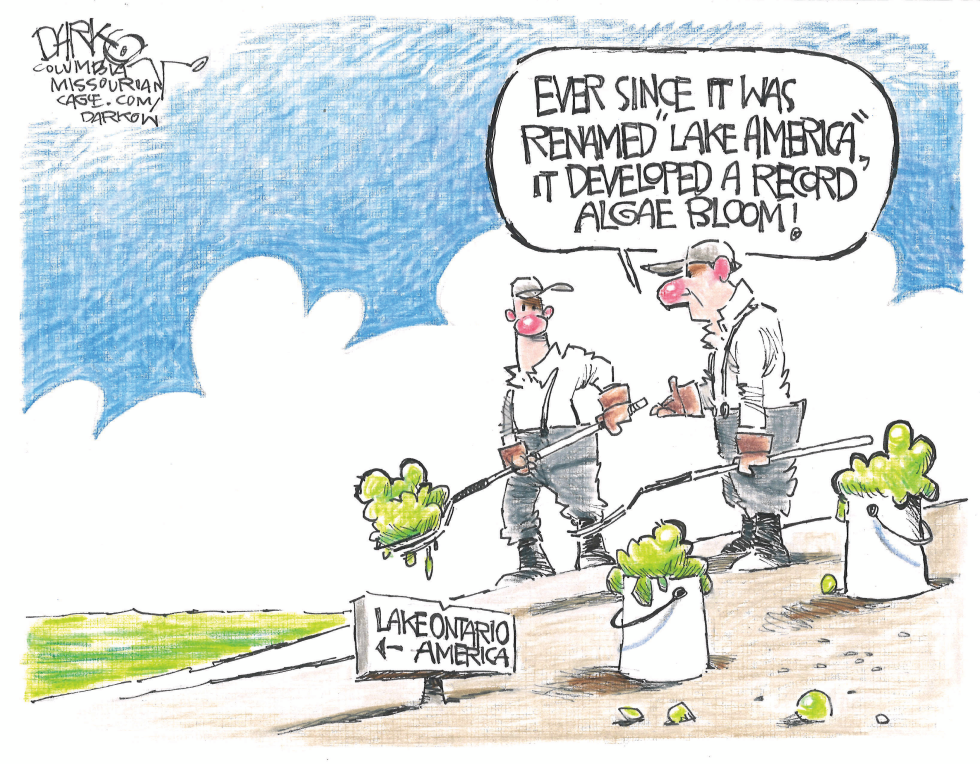
Workers clean a massive algae bloom from a lake recently renamed Lake America, formerly Lake Ontario. The outbreak follows the rebranding and draws attention to environmental conditions. The piece argues that superficial political gestures fail to address underlying ecological problems and may even coincide with worsening conditions.
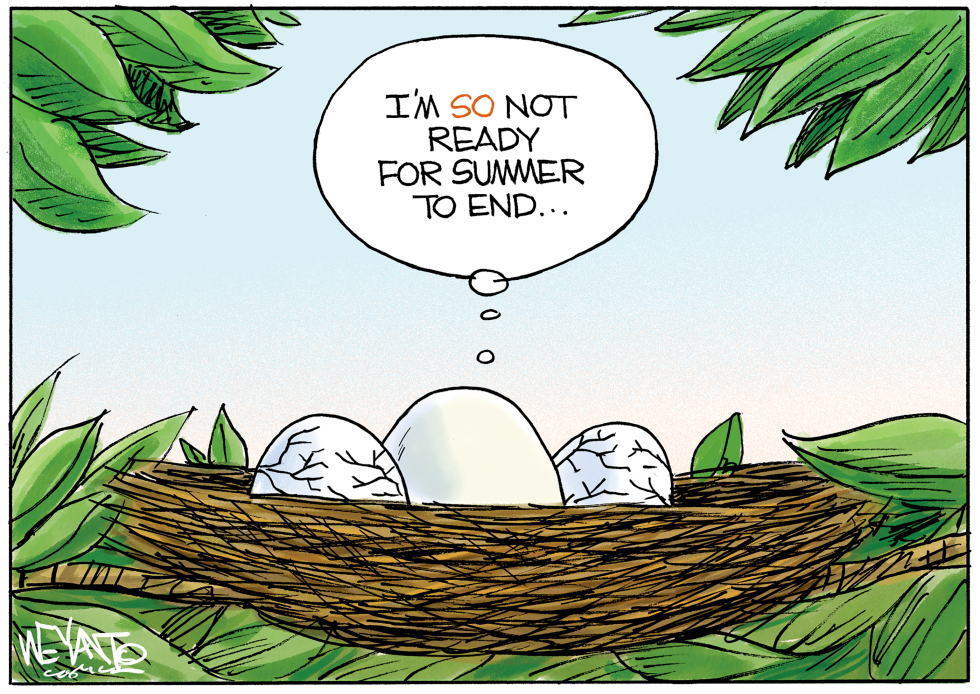
As summer draws to a close in late August, many express reluctance to embrace the coming autumn. The seasonal transition brings cooler weather and shorter days, prompting widespread nostalgia for warm months. This dynamic highlights common human resistance to change and the end of leisure periods. The piece captures that sentiment through a simple natural scene, underscoring the universal desire to prolong summer.
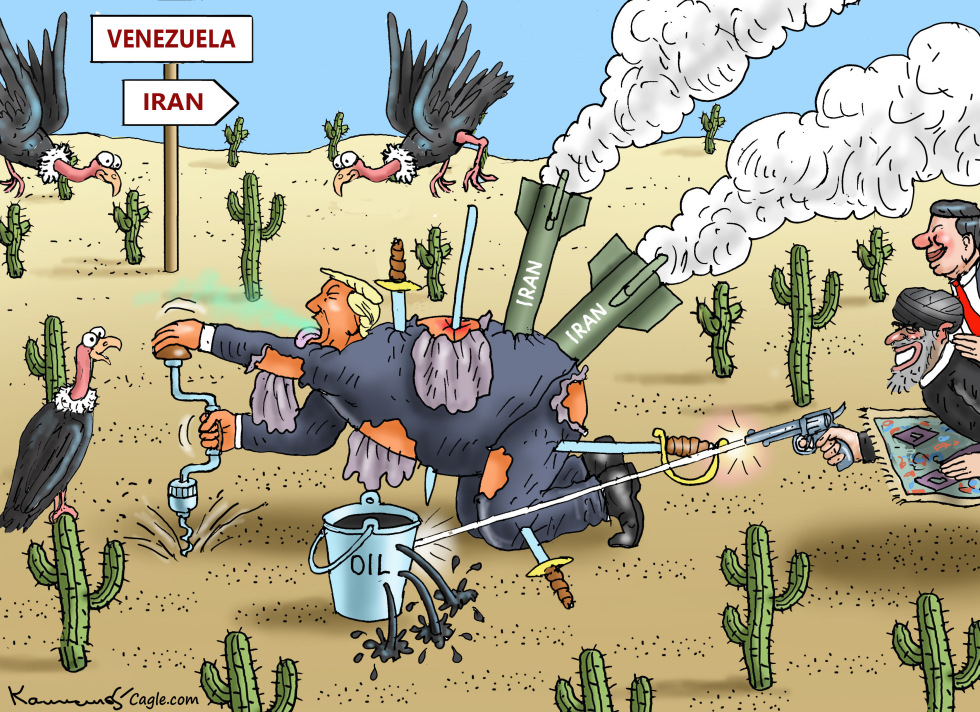
Donald Trump continued efforts to secure oil resources from Venezuela and Iran despite ongoing missile strikes and political pressure from those nations. The moves highlight US energy independence goals amid regional instability. The piece portrays these actions as defiant and opportunistic in the face of direct threats.
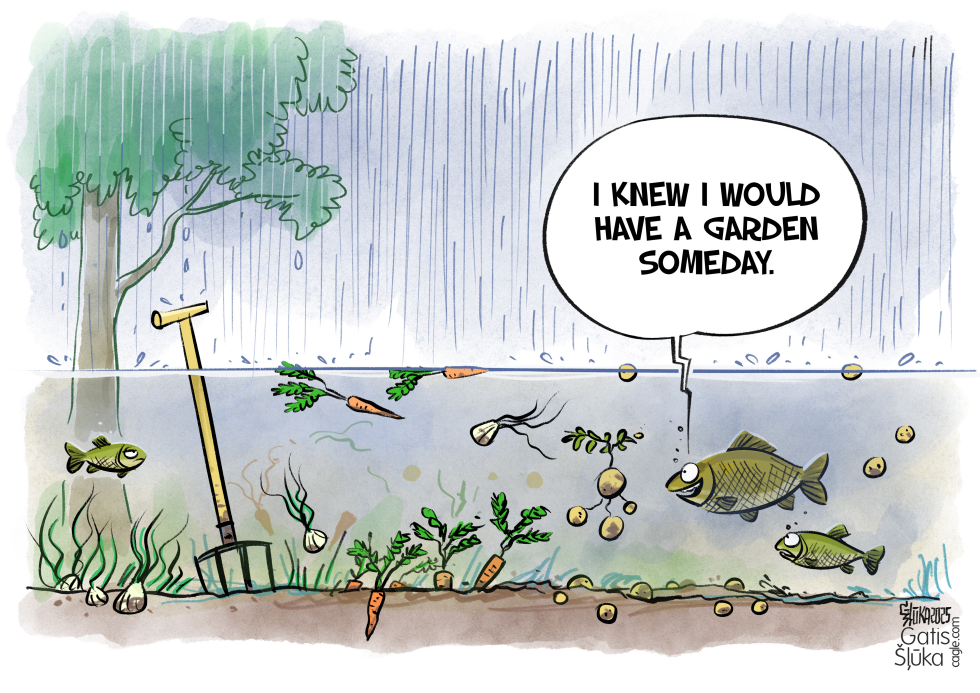
The cartoon shows fish swimming among carrots and other vegetables in a garden submerged by floodwaters, with one fish stating it always knew it would have a garden someday. A shovel stands upright in the soil below the waterline while rain pours down. The image responds to ongoing concerns about extreme weather events and their effects on farming. Heavy rainfall has become more frequent in many regions, turning fields into temporary ponds. The visual uses the fish's unexpected claim to underscore how flooding alters traditional land use and creates new, if temporary, aquatic environments.
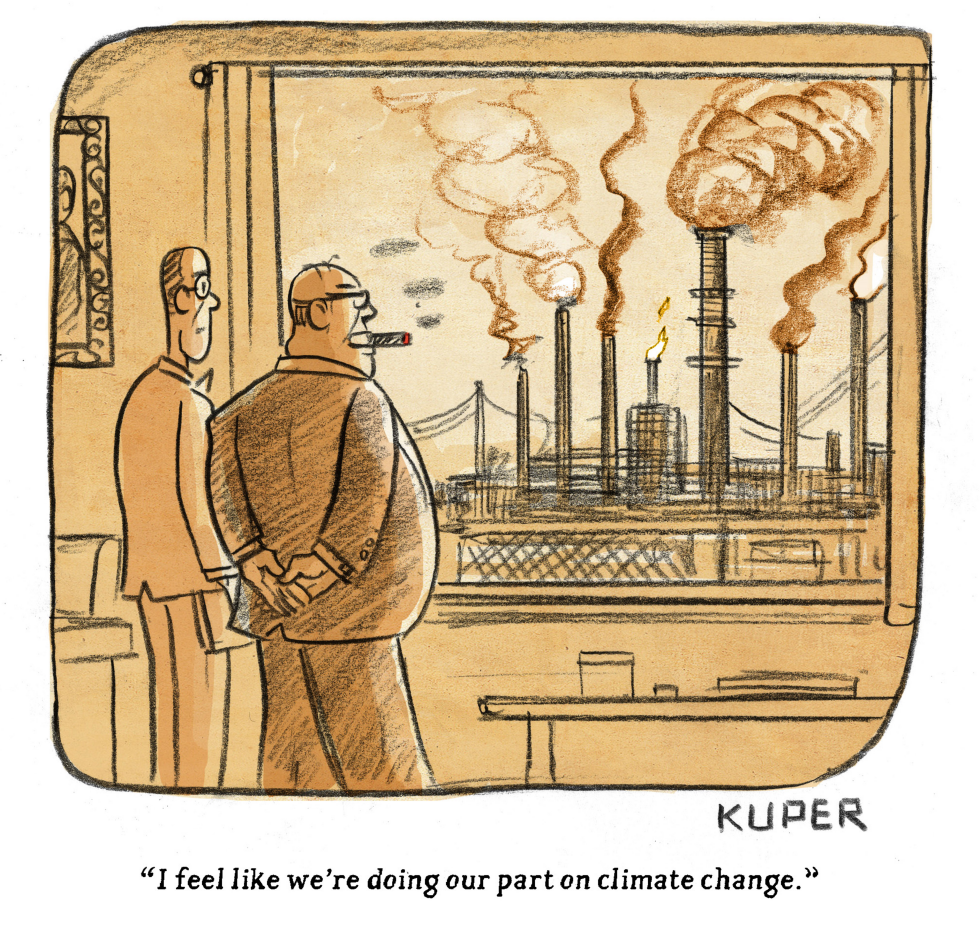
Corporate executives continue to oversee industrial operations that release substantial emissions into the atmosphere. This ongoing pattern occurs as global temperatures rise and regulatory pressures mount on heavy industry. The situation highlights tensions between profit-driven activities and environmental accountability. The piece portrays the executives as detached from the consequences of their facilities. It critiques the tendency among business leaders to minimize their sector's role in climate issues despite clear evidence of ongoing pollution.
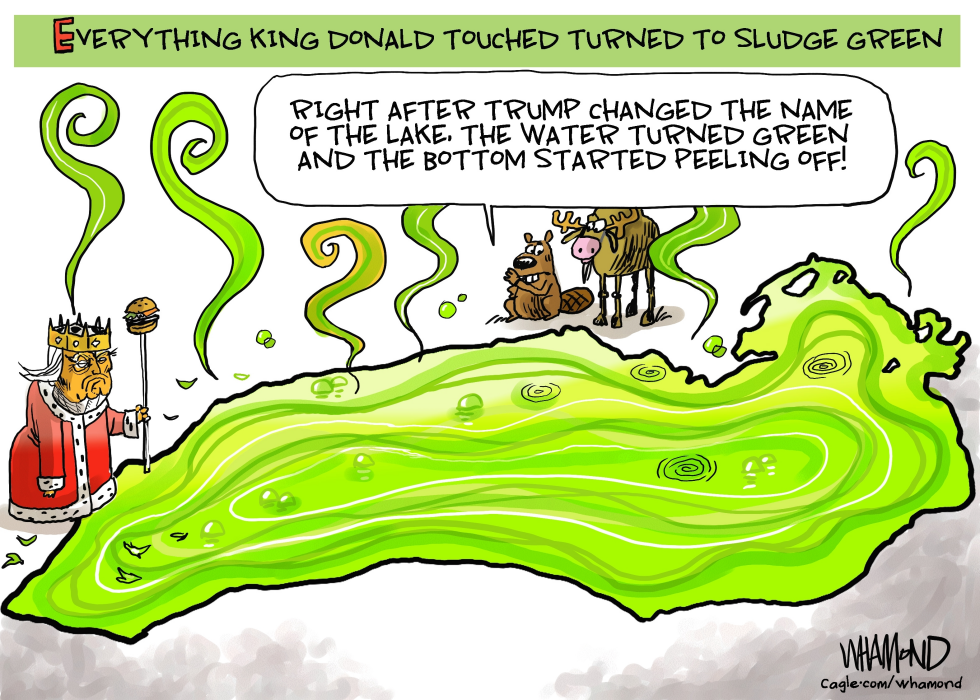
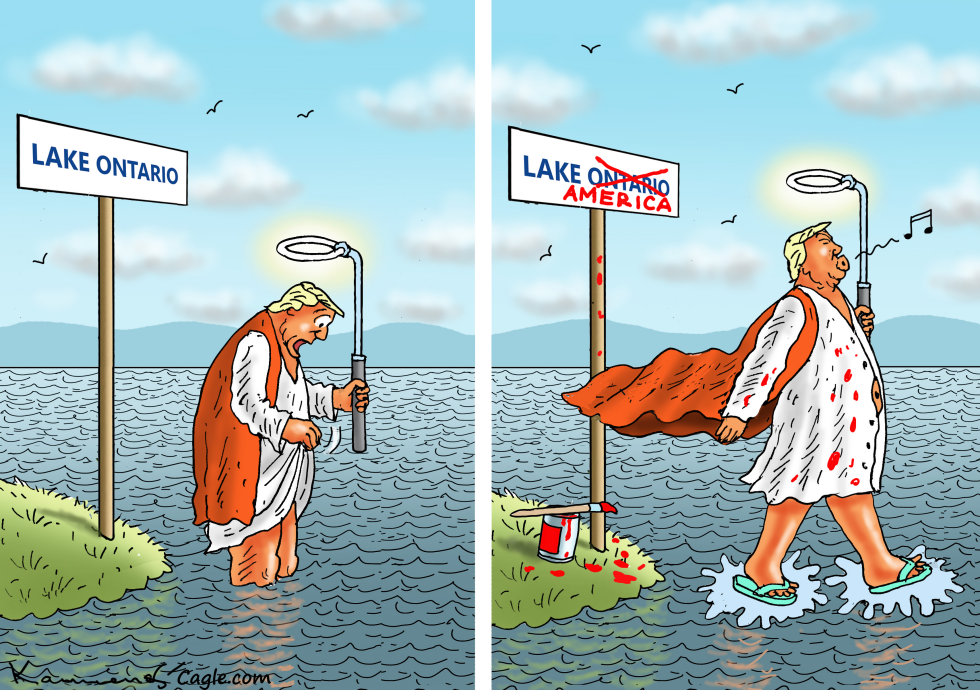
Donald Trump, depicted as a king, changes the name of a lake, after which the water turns green with sludge and the bottom begins peeling. Wildlife observers connect the timing directly to the renaming. The development raises concerns about environmental damage tied to executive actions. The piece portrays the outcome as an inevitable result of Trump's influence, turning natural areas into polluted sludge.
Donald Trump has moved to rename Lake Ontario as Lake America in a symbolic gesture tied to national branding efforts. The action underscores ongoing debates over executive reach into geographic and cultural symbols. Critics view the move as an extension of personal branding into public spaces. The piece portrays the effort as self-aggrandizing and detached from practical governance concerns.
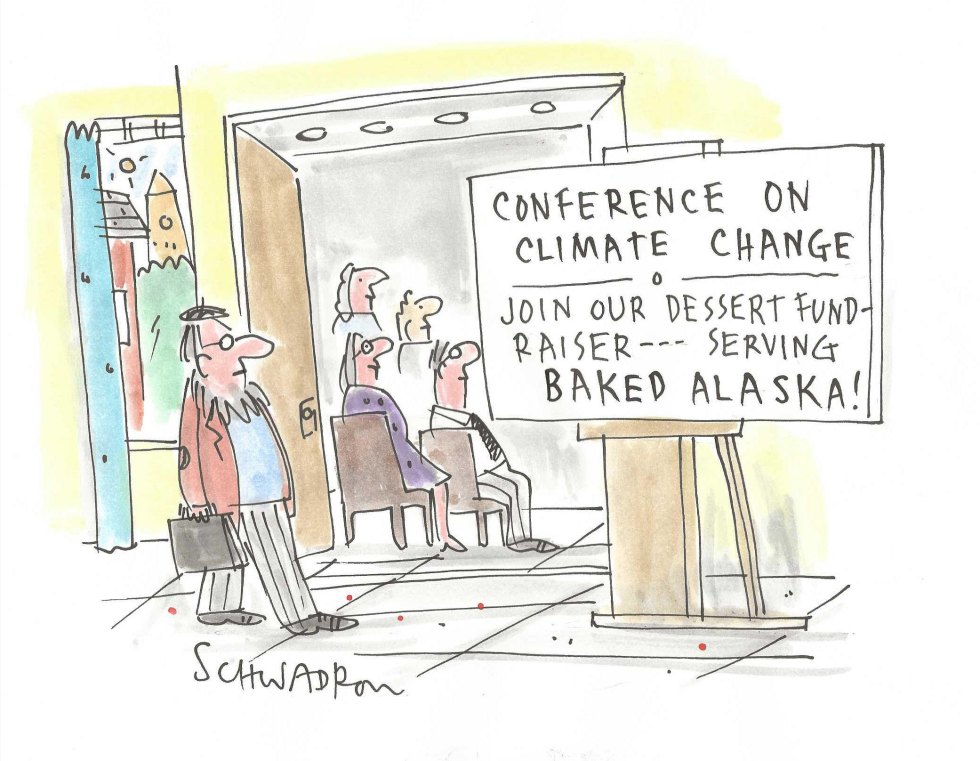
Climate conferences continue to draw scrutiny over perceived inconsistencies between stated goals and on-site activities. Organizers promote a dessert fundraiser featuring baked Alaska at an event focused on environmental issues. The piece highlights the tension between messaging and execution in ongoing climate policy discussions.
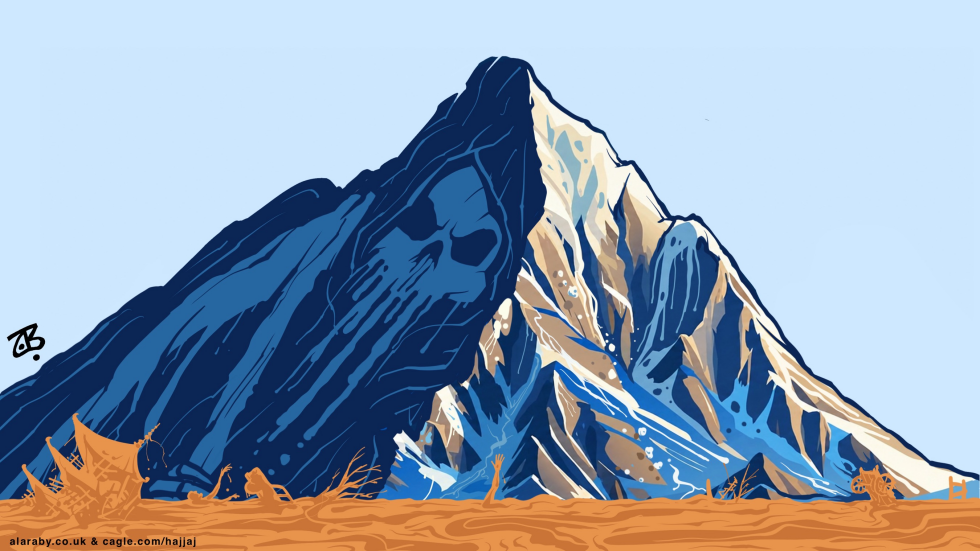
Severe flooding in the Himalayas has displaced thousands and caused significant loss of life amid accelerating glacial melt and intensified monsoon rains linked to climate change. The disaster highlights the vulnerability of mountain communities to extreme weather events that have grown more frequent in recent years. This piece frames the catastrophe as a stark warning of nature's retribution, underscoring the urgent need for global action on emissions to prevent further tragedies in fragile ecosystems.
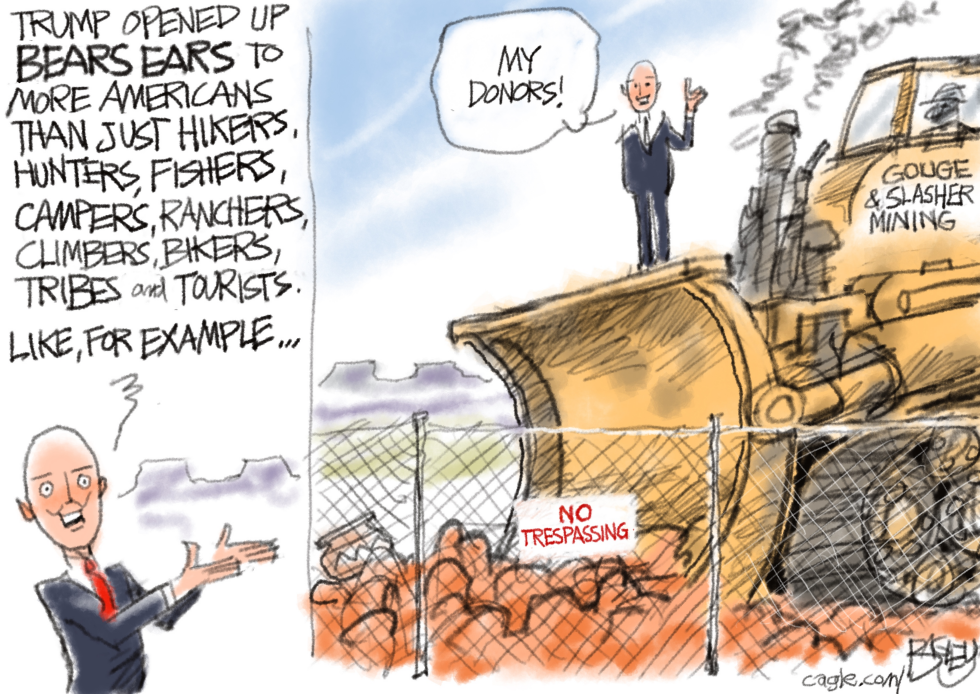
President Trump opened Bears Ears National Monument to expanded mining operations, citing broader public access. The move benefits mining companies and political donors while limiting protections for hikers, tribes and recreational users. The cartoon criticizes the decision as donor-driven favoritism over conservation.
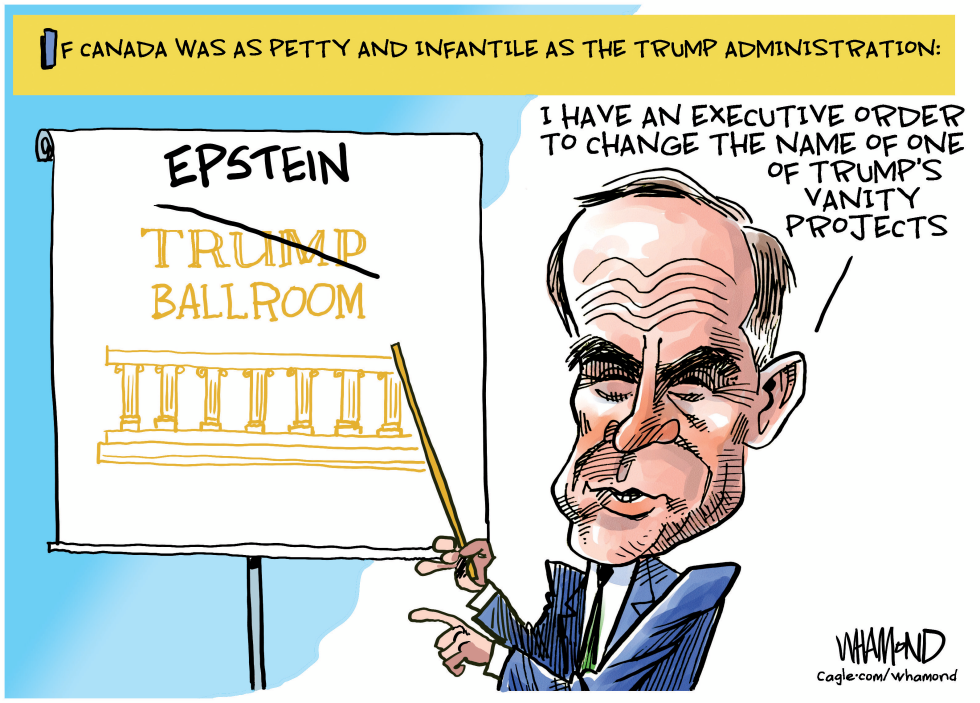
On August 27, 2026, a cartoon depicted Canadian Prime Minister Justin Trudeau issuing a mock executive order to rename a property tied to Jeffrey Epstein as the Trump Ballroom. The move parodies perceived pettiness in the Trump administration's handling of vanity projects and branding disputes. The piece argues that such tit-for-tat gestures underscore how executive actions can devolve into personal score-settling rather than substantive governance.
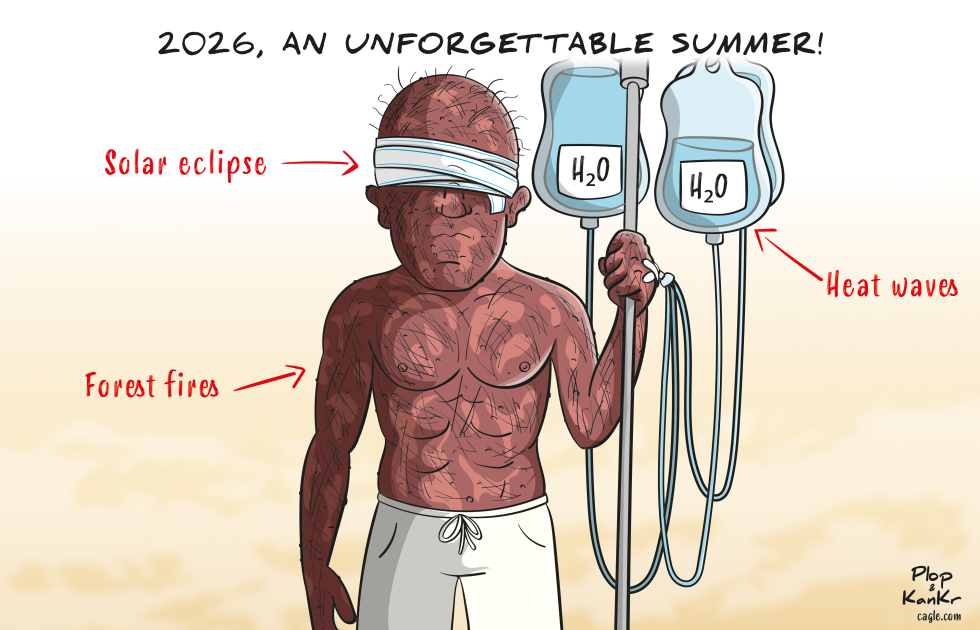
The image shows a shirtless man standing with two IV bags delivering H2O. One bag is labeled heat waves. A blindfold covers his eyes with an arrow from solar eclipse. Another arrow points to forest fires on his arm. The top text reads 2026 an unforgettable summer. The scene places multiple seasonal events on one body at once.
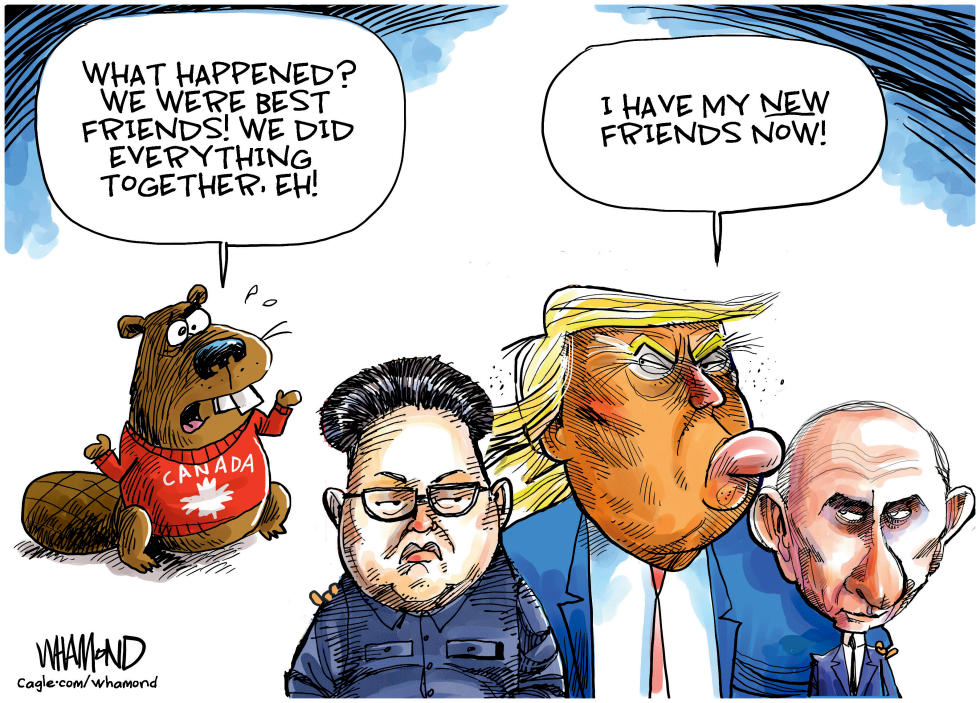
President Trump has redirected diplomatic priorities toward closer ties with Russian President Vladimir Putin and North Korean leader Kim Jong Un. Traditional partners such as Canada now face reduced engagement. The move reflects a broader realignment in U.S. foreign policy that favors authoritarian counterparts over longstanding democratic allies. Observers note the shift carries risks for trade, security cooperation, and international norms. The editorial position criticizes the pivot as shortsighted and damaging to established relationships.