Mark Rutte, serving as NATO secretary general in 2026, placed a call from France to Donald Trump offering a souvenir T-shirt sized triple-XL. The gesture highlights ongoing efforts to manage US-EU relations amid trade disputes and security cooperation. The cartoon portrays the outreach as comically oversized and conciliatory.
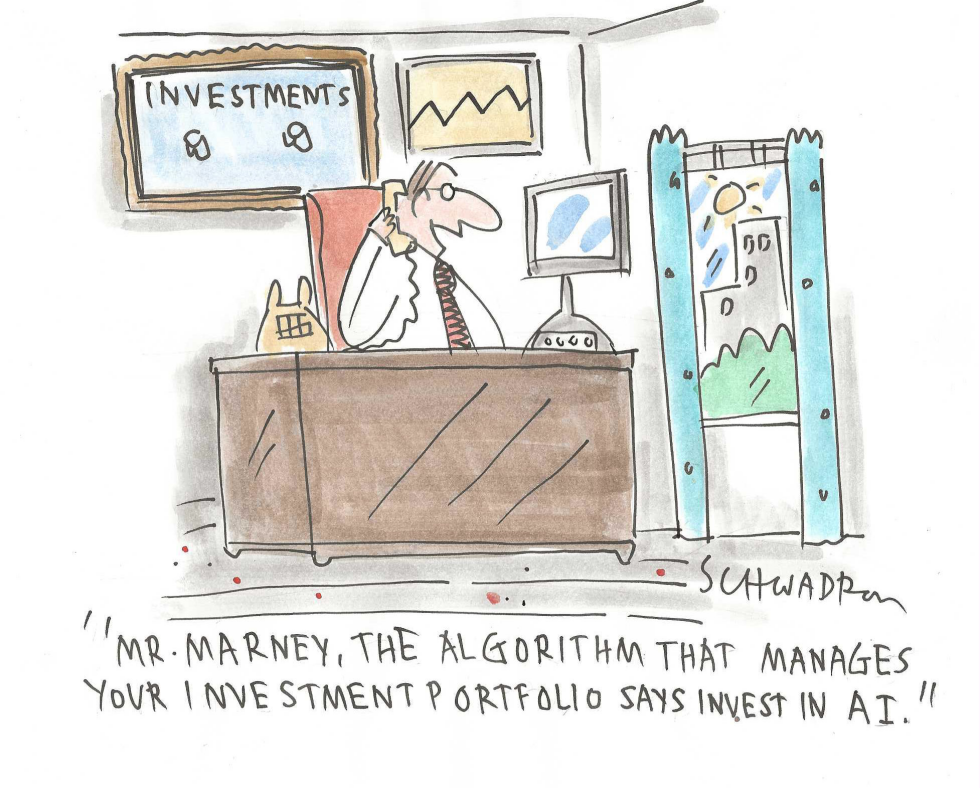
Financial institutions have expanded use of algorithmic systems to oversee client portfolios, with many such tools now directing capital toward artificial intelligence companies. The trend raises questions about self-reinforcing investment cycles where the managing software favors its own sector. The cartoon highlights the circular logic of automated recommendations that benefit AI developers and related stocks.
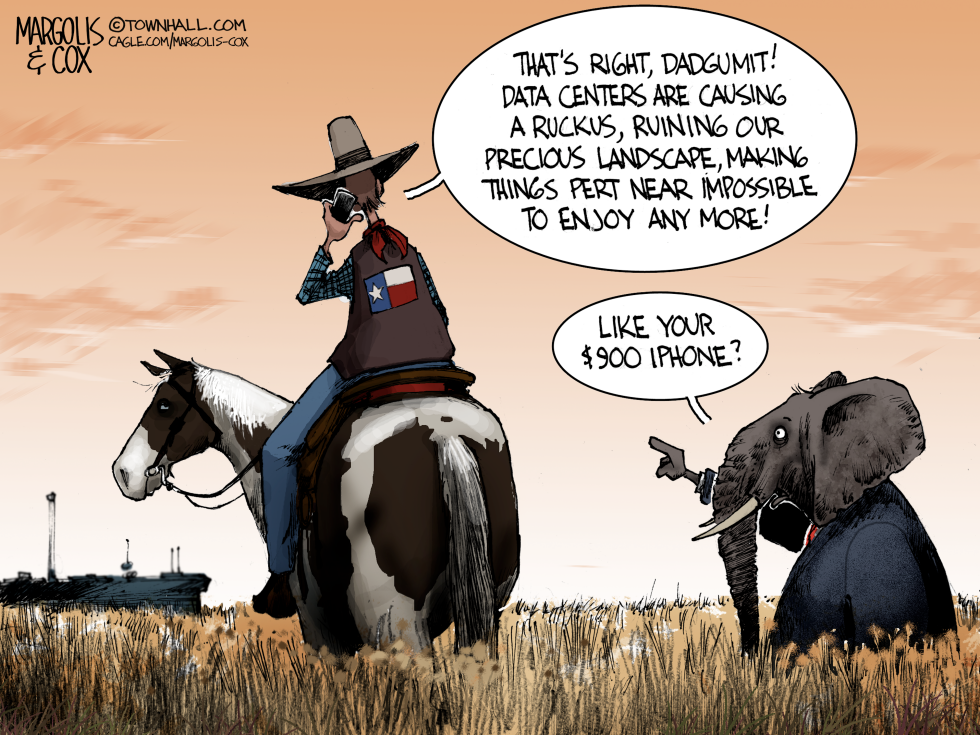
Data centers are expanding rapidly across Texas to support growing digital demands, drawing complaints from local residents and officials over land use and visual impact. Republicans in the state have voiced concerns about the facilities altering rural scenery and affecting quality of life. The cartoon highlights the inconsistency in such criticism given widespread reliance on smartphones and other tech products that necessitate these centers.
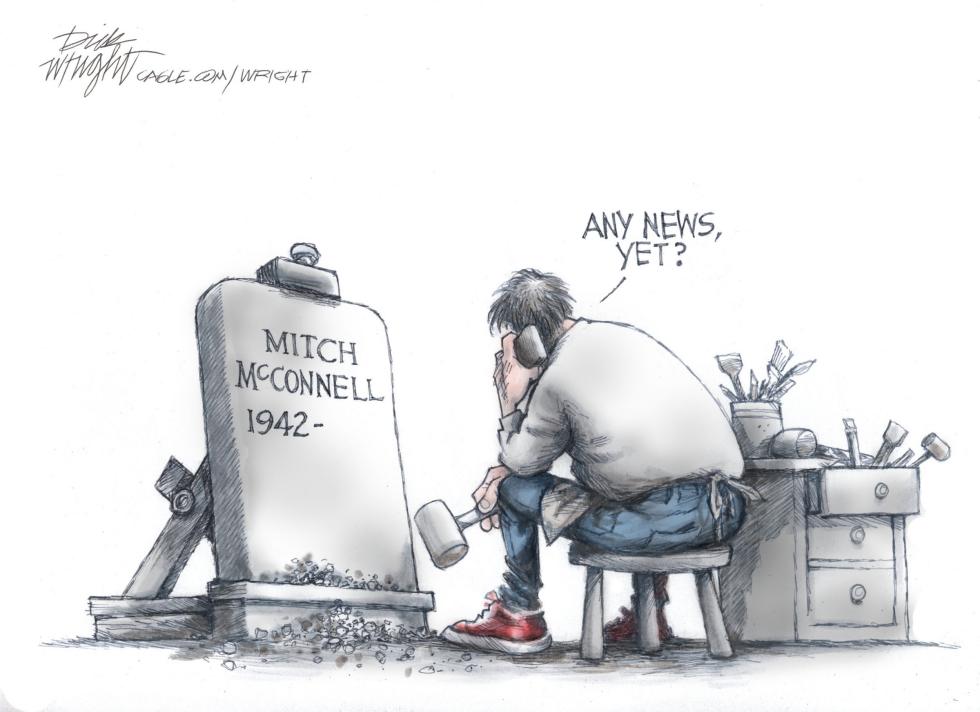
Mitch McConnell's prolonged absence from the Senate in 2026 has prompted questions about his future and the chamber's direction. The cartoon captures the uncertainty surrounding the veteran Kentucky Republican's role and whether his departure is imminent.
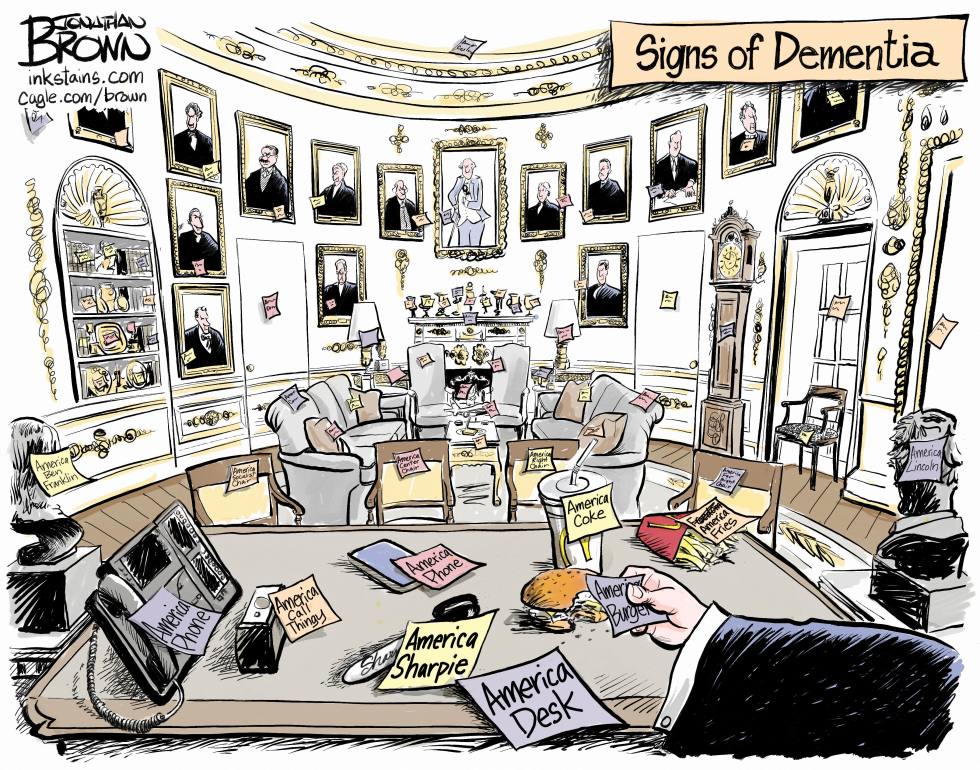
A new editorial cartoon depicts the Oval Office overrun with sticky notes labeling everyday items as America. The scene highlights signs of dementia through repeated branding on phones, desks, food and furniture. Published on September 9, 2026, the work comments on ongoing concerns about cognitive fitness in the presidency. The visual uses the familiar setting of the White House to underscore confusion and memory issues. Observers note the cartoon captures public debate over leadership capacity without naming specific individuals.
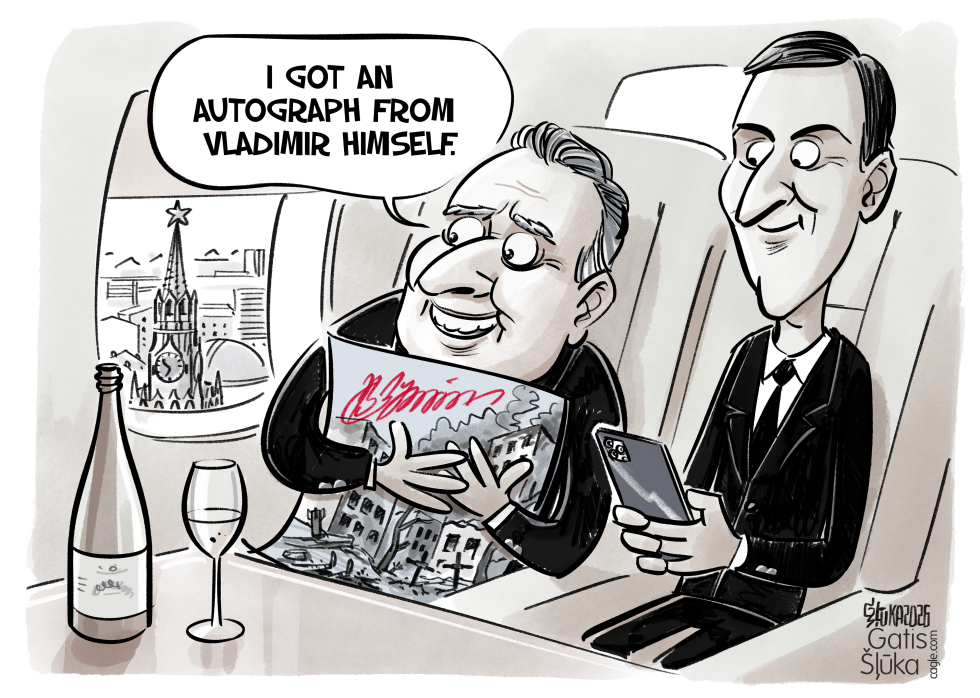
The cartoon depicts a politician on an airplane excitedly showing a colleague an autograph from Vladimir Putin on a book or document. The speech bubble reads that the autograph came from Vladimir himself. A bottle of wine and glass sit on the table, with a view of a city featuring a star-topped tower outside the window. The second man smiles while holding a phone. Published on September 7, 2026, the image comments on political figures maintaining or displaying ties to Russia despite international strains. The visual emphasizes the politician's enthusiasm for the souvenir as a point of pride.
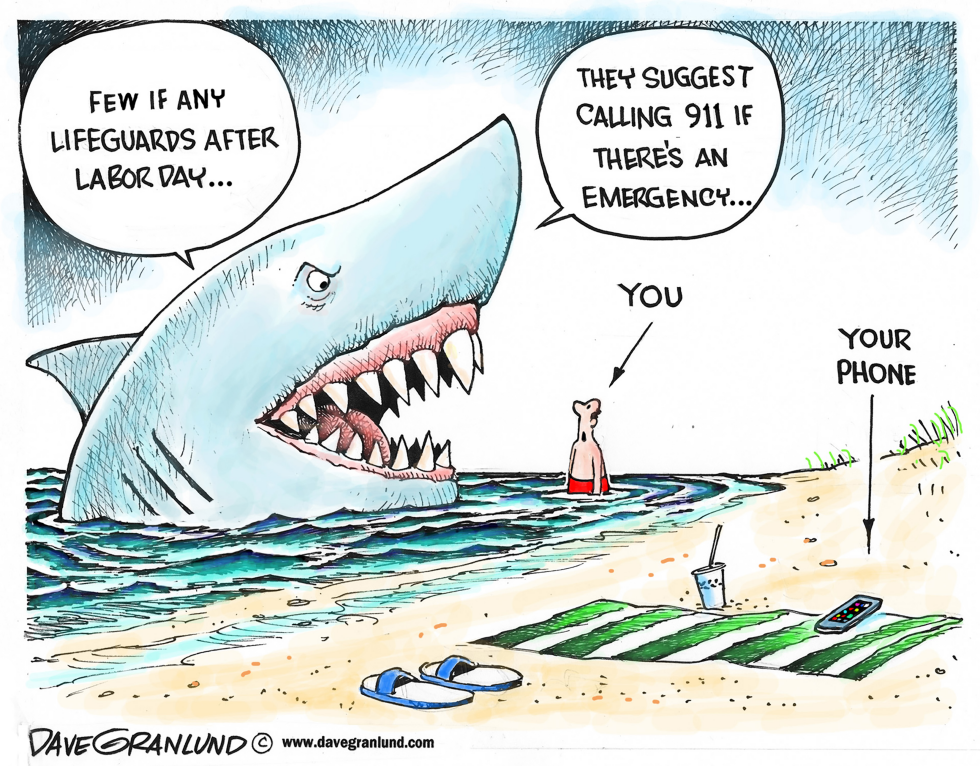
A shark in the water addresses a swimmer standing in the surf about the reduced presence of lifeguards after Labor Day. The shark notes that few if any lifeguards remain on duty following the holiday and suggests calling 911 in case of an emergency. The swimmer stands near a beach towel holding a mobile phone. Labels identify the swimmer and the device. The scene plays on the common end of summer staffing changes at beaches.
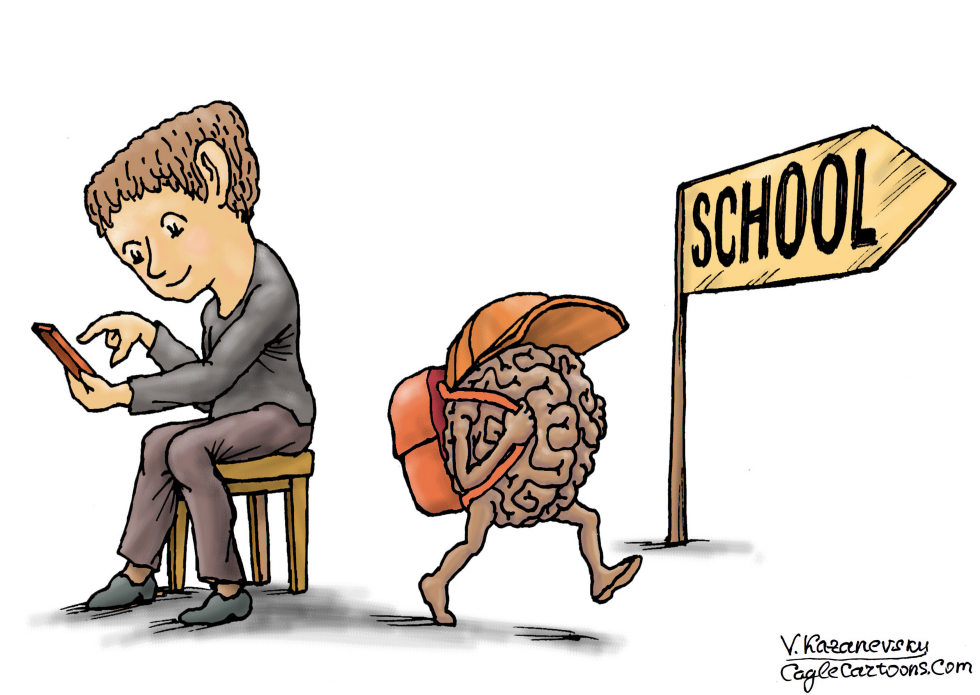
Schools continue to grapple with widespread smartphone use among students that diverts attention from classroom learning. The issue matters because constant device access fragments focus and reduces academic engagement at a critical developmental stage. The piece argues that the brain itself must literally head to school while the distracted student remains behind.
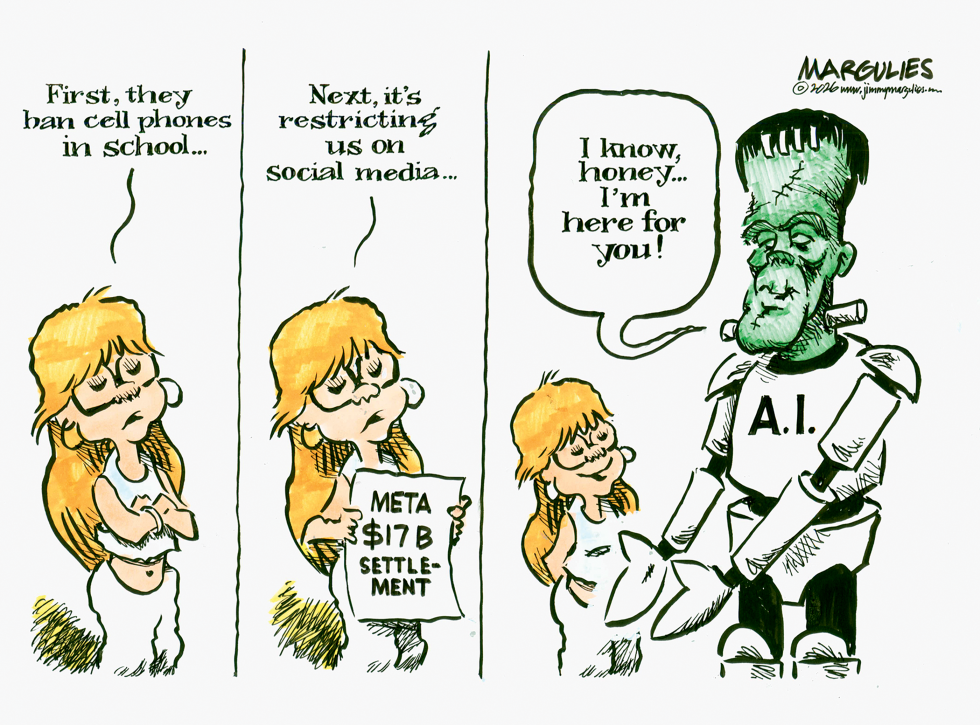
A $17 billion Meta settlement and expanding school cell phone bans have accelerated restrictions on teen social media use. The developments raise questions about how young users will fill the gap left by reduced platform access. The cartoon frames artificial intelligence as the unexpected beneficiary, positioning an AI Frankenstein figure as a comforting presence for a disappointed girl. This visual argument suggests that limits on social media may simply shift reliance toward unregulated AI tools rather than solving underlying concerns about youth screen time.
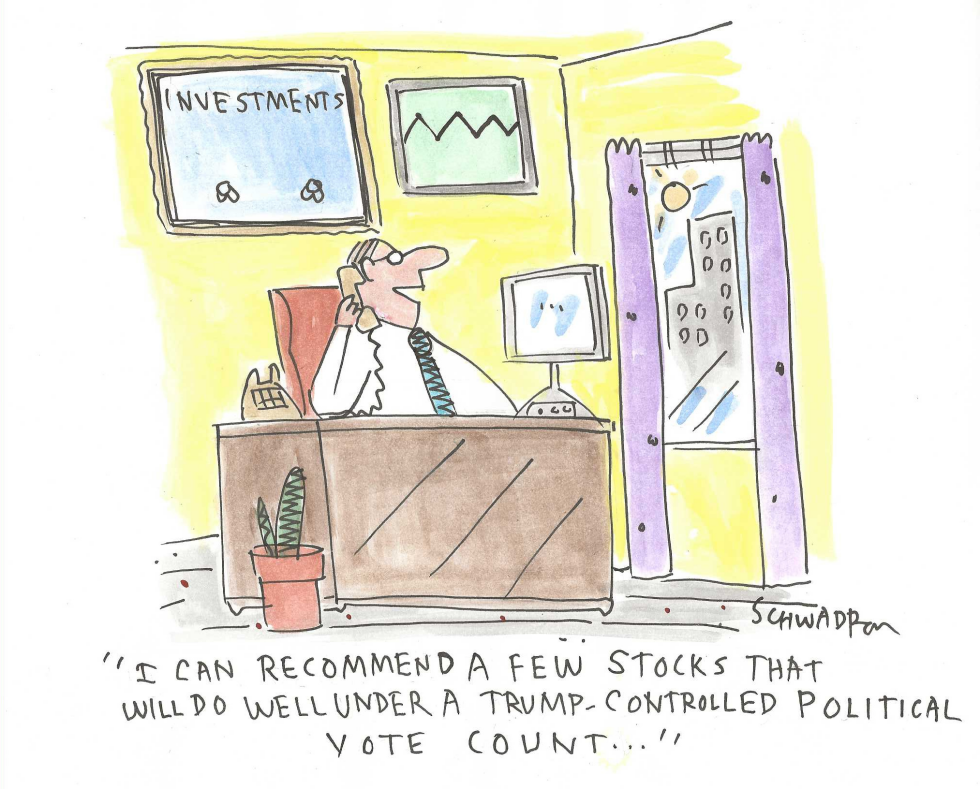
A stockbroker on the phone recommends investments expected to perform under a Trump-controlled political vote count. The scene occurs amid visible symbols of restraint including handcuffs on an investments sign and a barred door resembling a prison cell. The piece responds to ongoing concerns about election integrity and potential political interference in vote tabulation processes. It takes the position that such influence creates opportunities for financial gain tied directly to control over electoral outcomes.
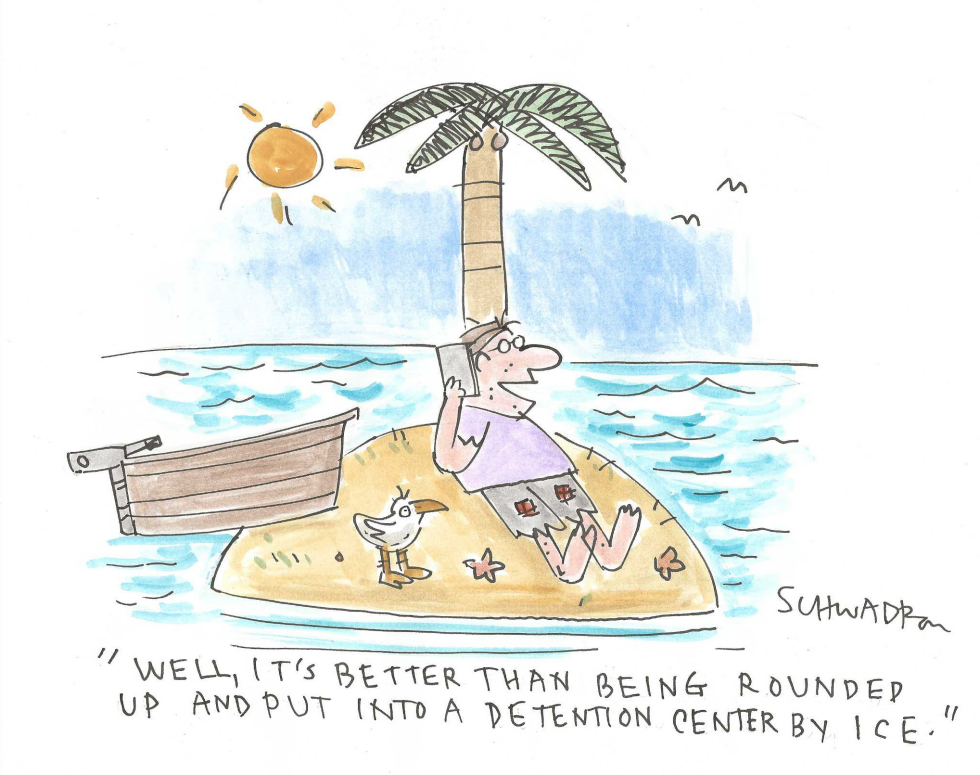
Immigration enforcement through ICE detention centers continues as a central policy tool amid ongoing border security debates. The approach draws criticism for its impact on individuals facing removal proceedings. The piece presents the view that extreme isolation can appear preferable to such facilities.
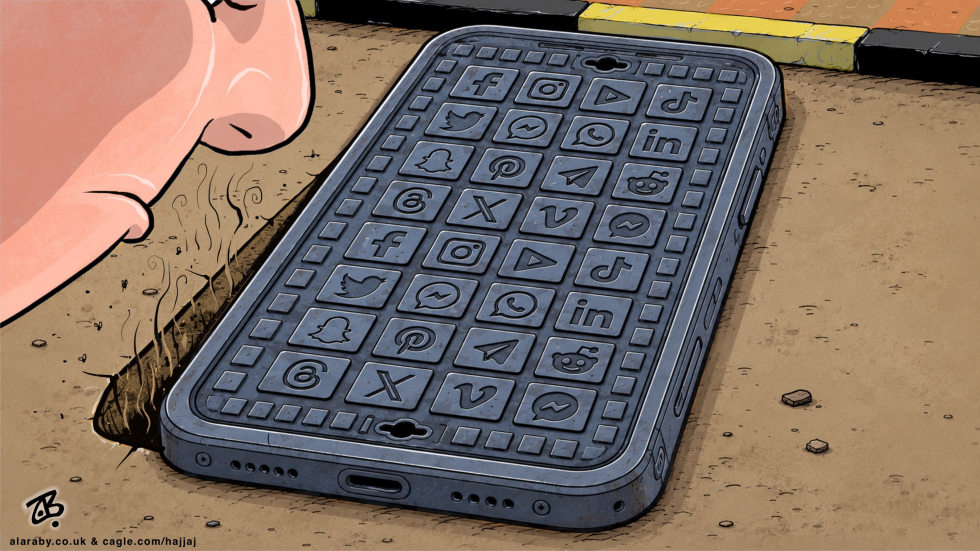
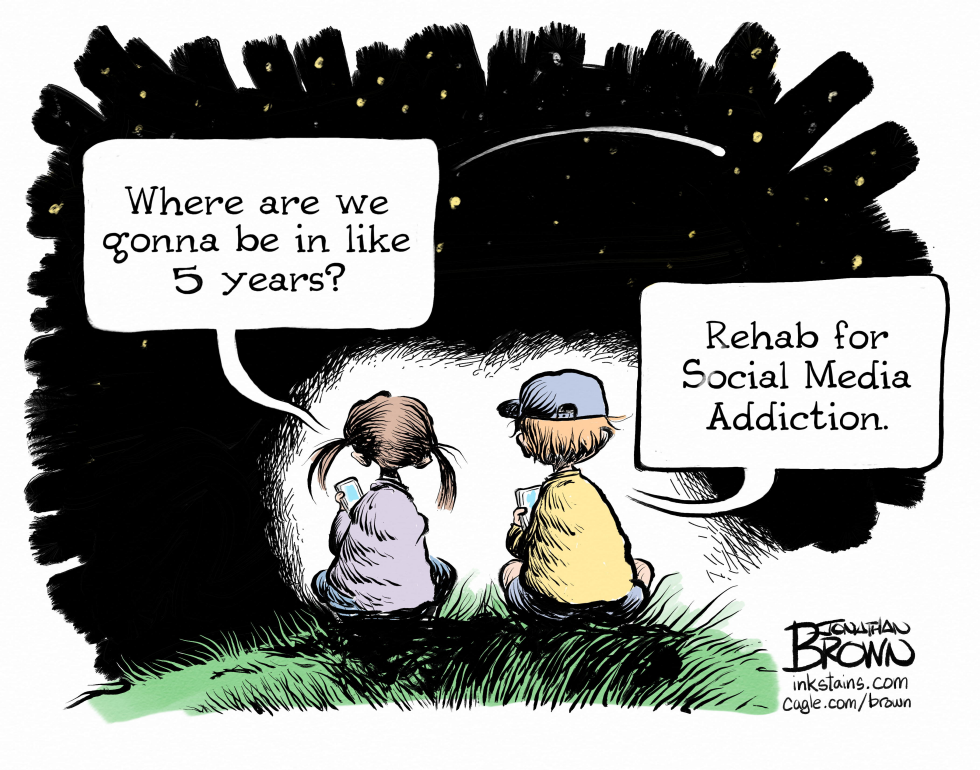
Social media platforms continue to dominate daily life through smartphones, prompting calls for users to disconnect from constant notifications and scrolling. The image depicts a hand actively burying such a device in dirt, underscoring the desire to escape digital overload. The editorial position favors deliberate disconnection from these apps as a necessary step toward healthier routines.
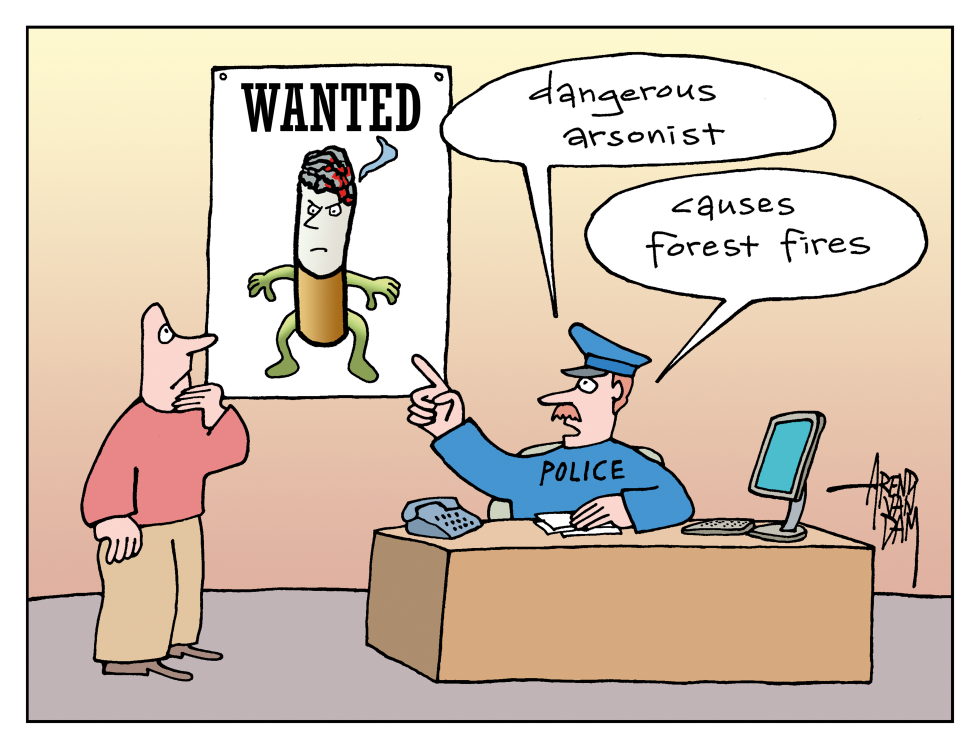
Police have issued a wanted poster naming a cigarette as the dangerous arsonist responsible for forest fires. The move highlights ongoing efforts to curb wildfire ignition sources amid dry conditions. The editorial takes the position that such enforcement targets everyday habits to reduce preventable blazes.
Donald Trump faces ongoing scrutiny over expanding allegations of misconduct and deception in public office. Recent developments have heightened concerns among associates about the accumulating impact. The editorial takes the position that these issues are intensifying and demand accountability.