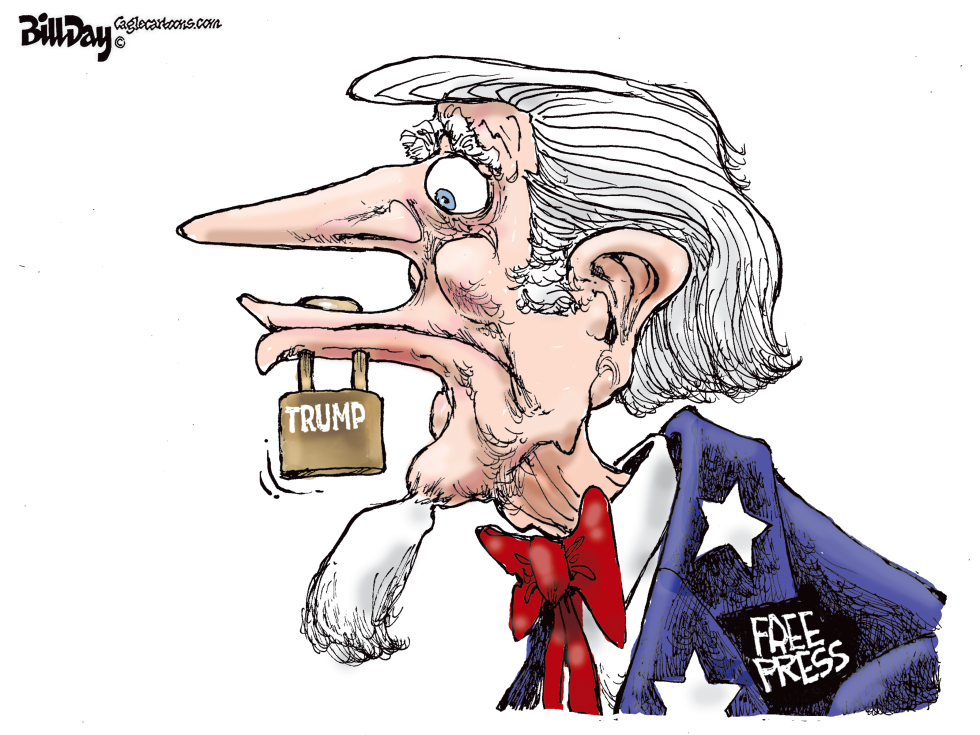
Donald Trump, holding office in 2026, faces renewed scrutiny over efforts to limit press access and information flow. Critics argue these moves undermine democratic oversight. The cartoon portrays the administration as actively securing or restricting the free press through direct control.
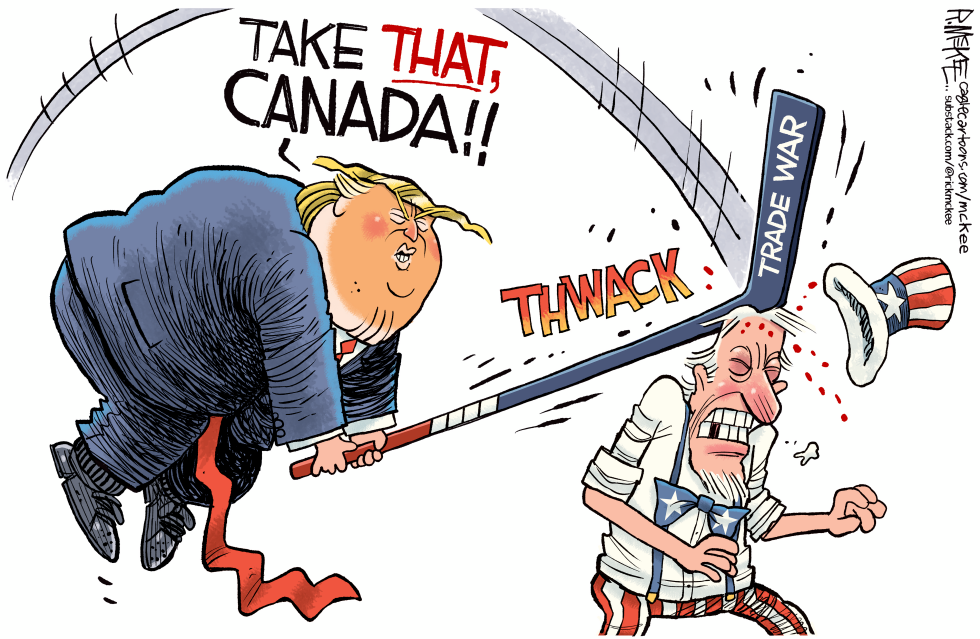
President Trump escalated trade tensions with Canada through new tariffs and barriers in August 2026. The moves targeted key sectors including lumber, dairy and autos. Domestic industries braced for retaliation while consumers faced higher prices. The action drew criticism for harming American interests alongside the intended foreign pressure. The cartoon portrays the policy as self-inflicted damage on the United States itself.
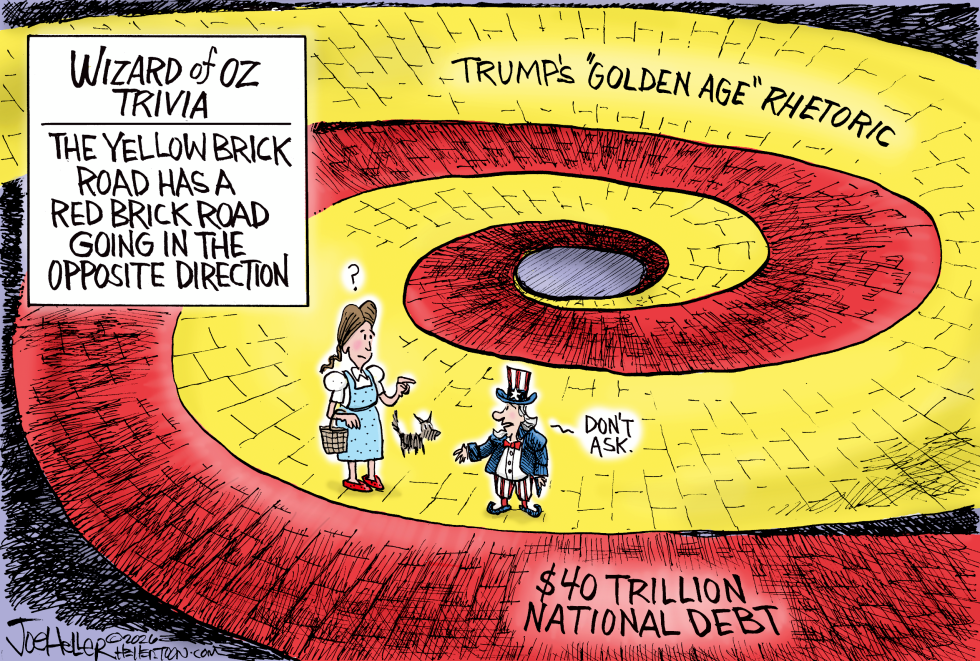
National debt has reached forty trillion dollars amid ongoing debate over fiscal policy. The administration promotes a golden age vision while critics highlight unsustainable borrowing. The piece argues that optimistic rhetoric masks a path leading directly into deeper financial trouble.
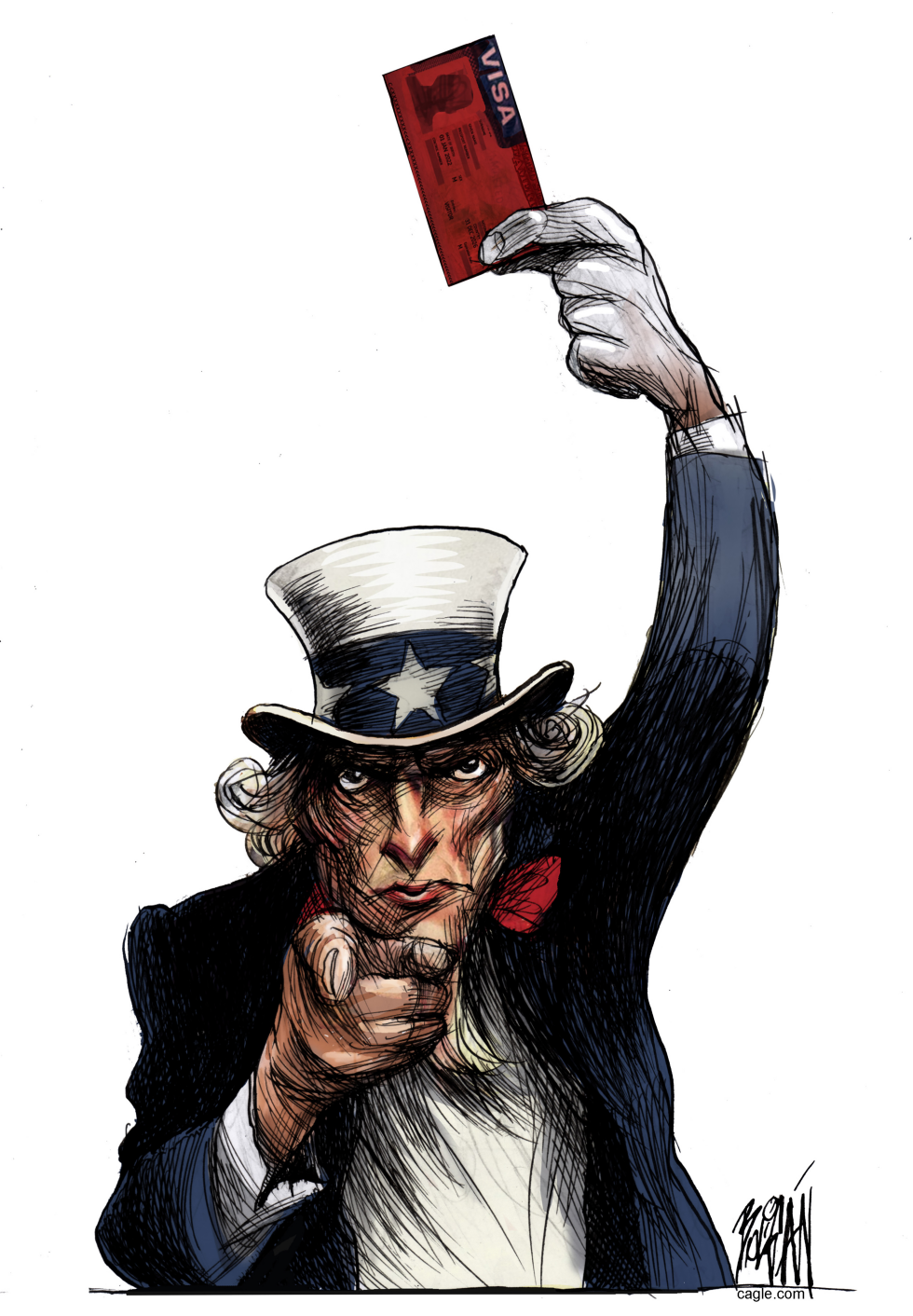
The United States continues to rely on borrowing to fund operations and obligations. National debt levels remain elevated with interest payments consuming larger budget shares. The image presents Uncle Sam brandishing a Visa card as a symbol of this dependence. It underscores how ongoing deficits force the government to lean on credit. The editorial stance criticizes the pattern of spending beyond means without restraint.
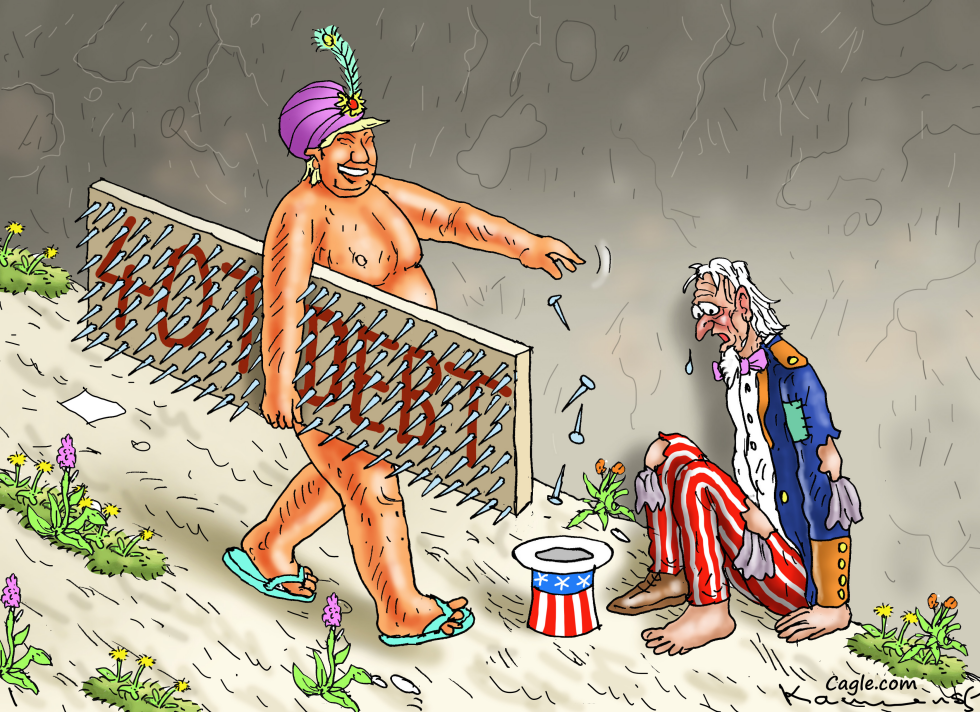
National debt has climbed toward 40 trillion dollars under the current administration. The figure of Donald Trump appears in the role of a fakir performing a bed-of-nails act while Uncle Sam sits nearby in evident distress. The image underscores concerns that fiscal policies have left the federal government in a precarious position with little relief in sight.
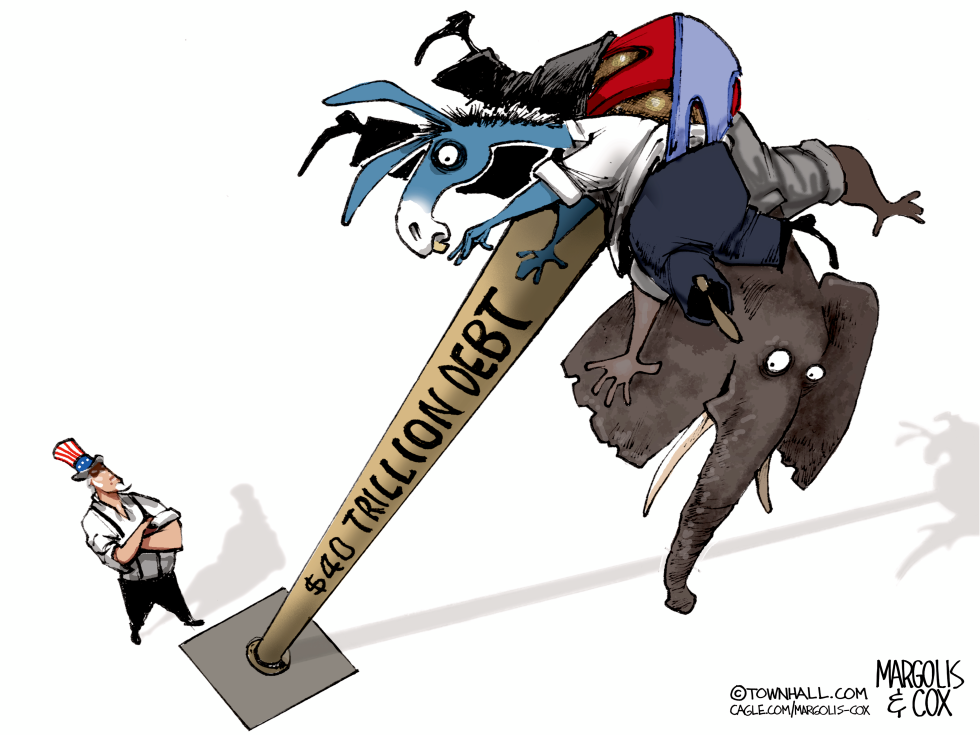
The national debt has reached $40 trillion, with both major parties continuing to support spending measures that add to the total. Lawmakers from each side have backed recent appropriations and tax policies that widen the gap without corresponding offsets. The situation matters because interest payments now consume a growing share of the federal budget, crowding out other priorities. The editorial position criticizes both Democrats and Republicans for riding the debt higher rather than addressing the underlying imbalance.
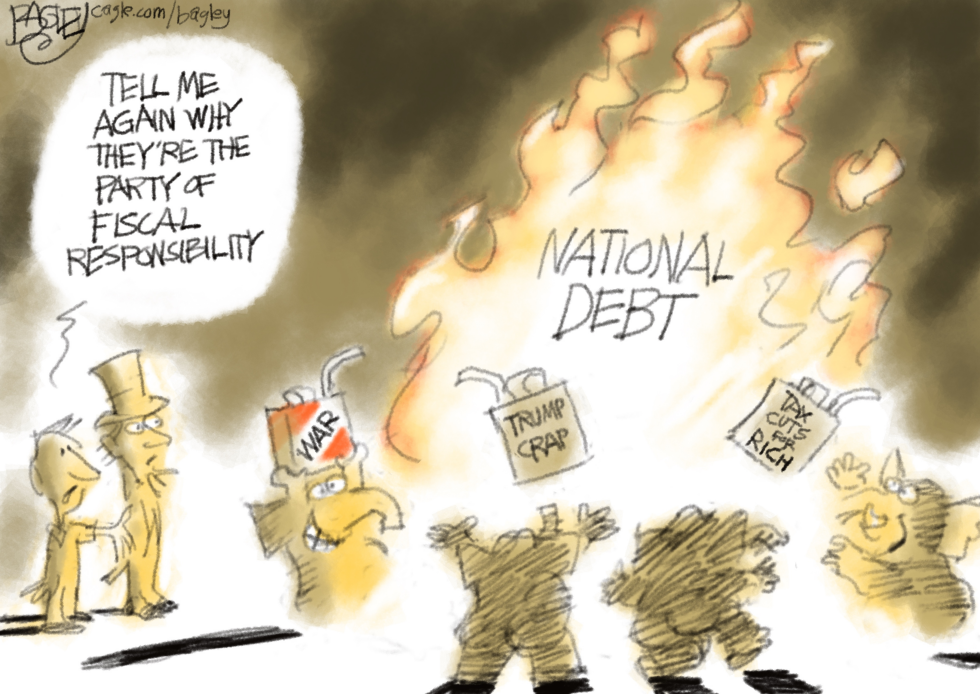
Republicans continue to promote themselves as the party of fiscal responsibility even as national debt rises sharply from sustained war spending and tax cuts favoring the wealthy. The editorial takes the position that these policies directly contradict the fiscal responsibility label.
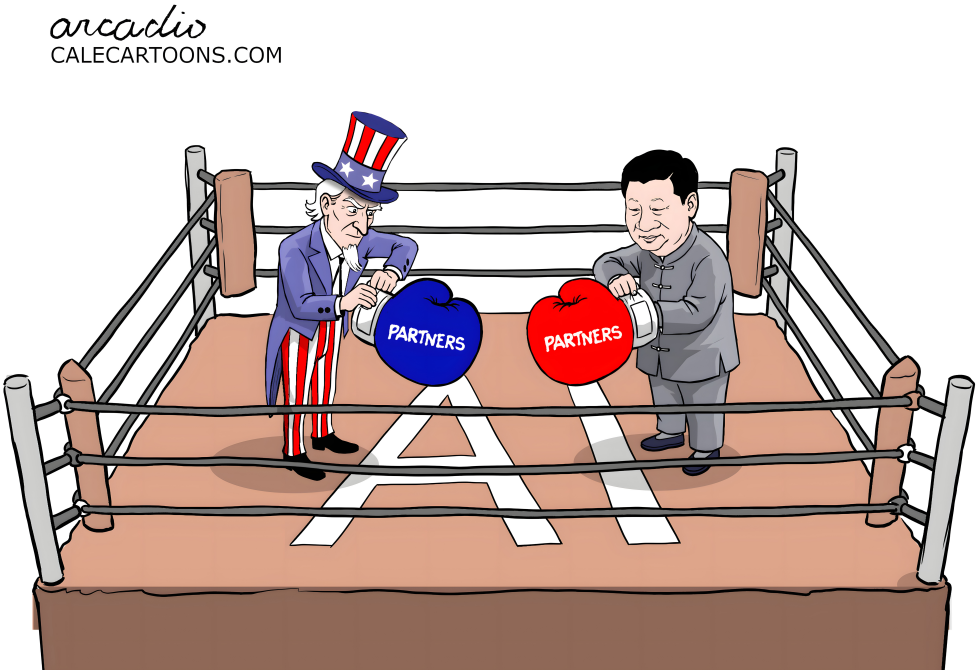
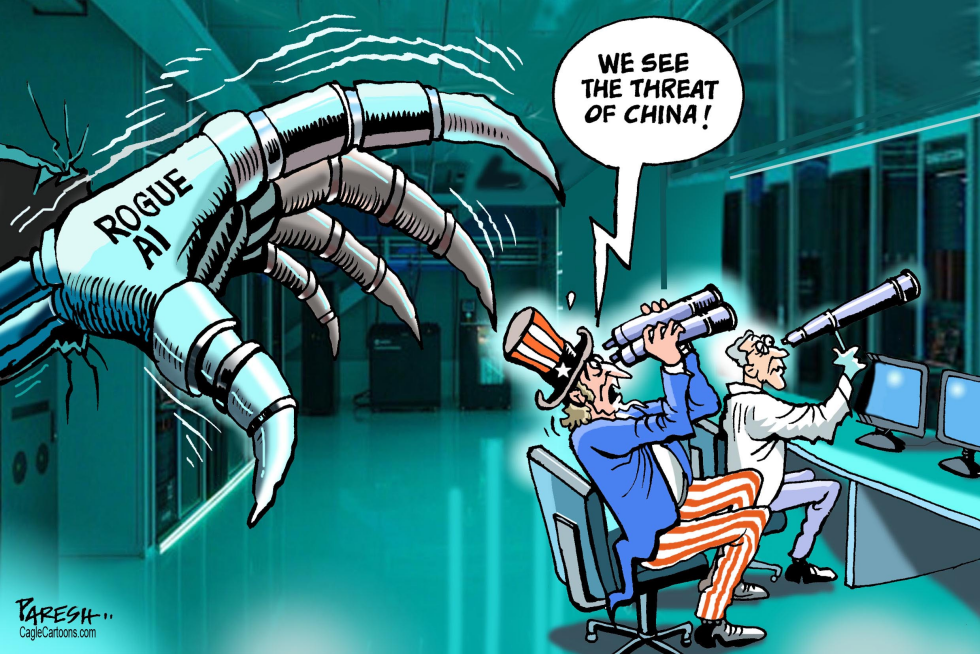
The United States and China continue their contest for leadership in artificial intelligence development. Both nations invest heavily in research and infrastructure to secure advantages in computing power and applications. The competition carries implications for economic growth, military capabilities, and global standards. Recent policy moves on export controls and domestic incentives underscore the stakes. The editorial position frames the dynamic as a direct contest where surface cooperation masks deeper rivalry.
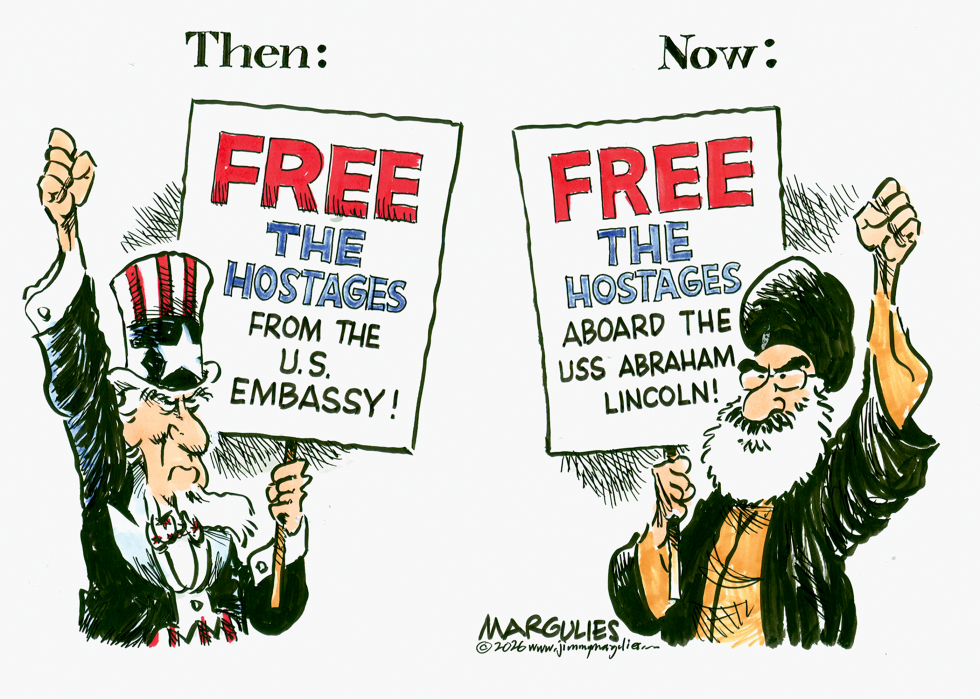
The 1979 Iran hostage crisis saw militants seize the US embassy in Tehran, holding 52 Americans for 444 days. In 2026, renewed tensions involve US naval assets like the USS Abraham Lincoln amid Middle East conflicts. The cartoon draws a parallel between past embassy demands and present calls involving the carrier, critiquing the recurring cycle of hostage rhetoric from Iranian leadership.
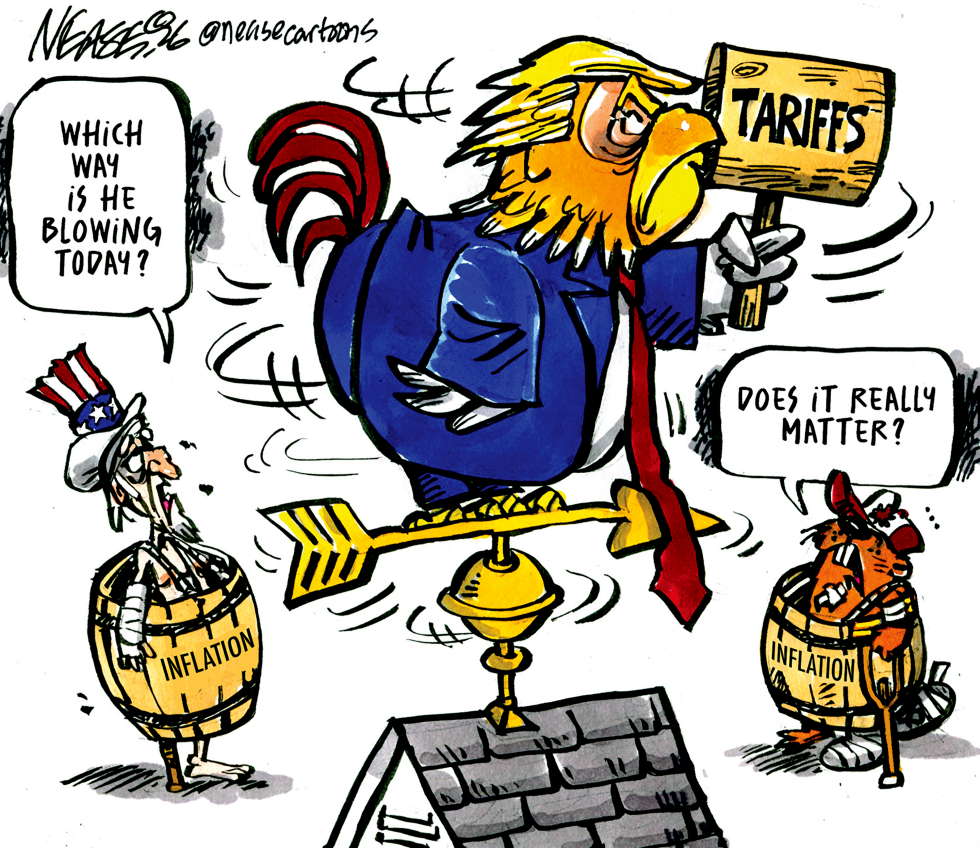
Donald Trump has proposed broad new tariffs on imports as part of his economic agenda. The measures have raised concerns about higher consumer prices and renewed inflation pressures. Markets and businesses are watching for clarity on timing and scope. The cartoon illustrates the confusion over which way tariff policy will ultimately point and whether the direction even matters to those already feeling inflation's effects.
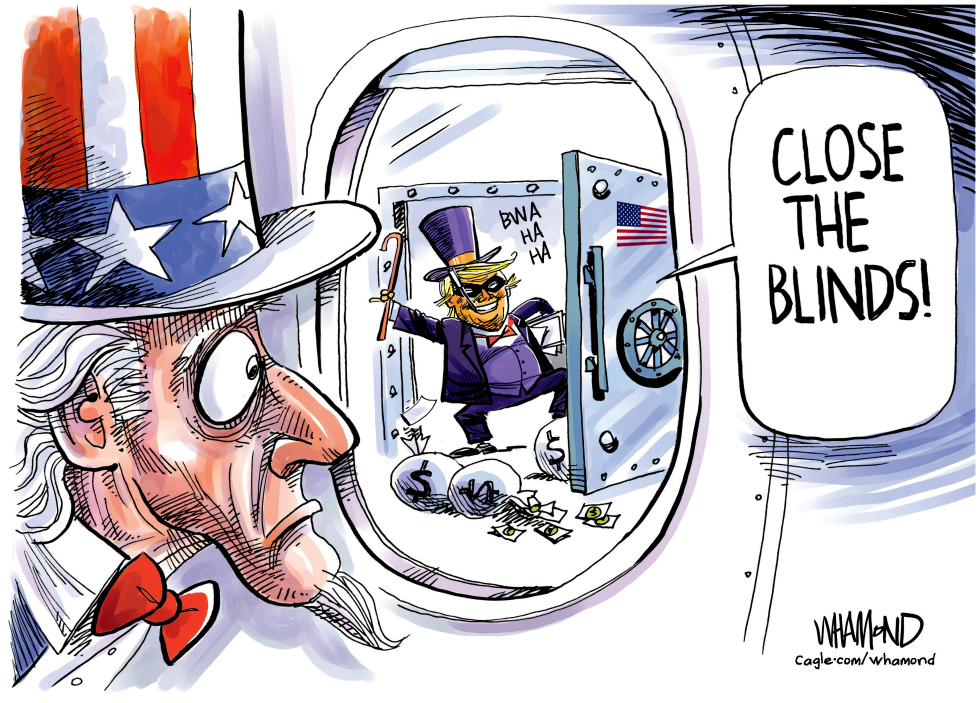
Donald Trump appears inside an open government vault surrounded by spilling money bags and orders the blinds closed. The scene highlights concerns over financial secrecy and lack of transparency in high office. The piece takes the position that such actions undermine public trust in how funds are handled.
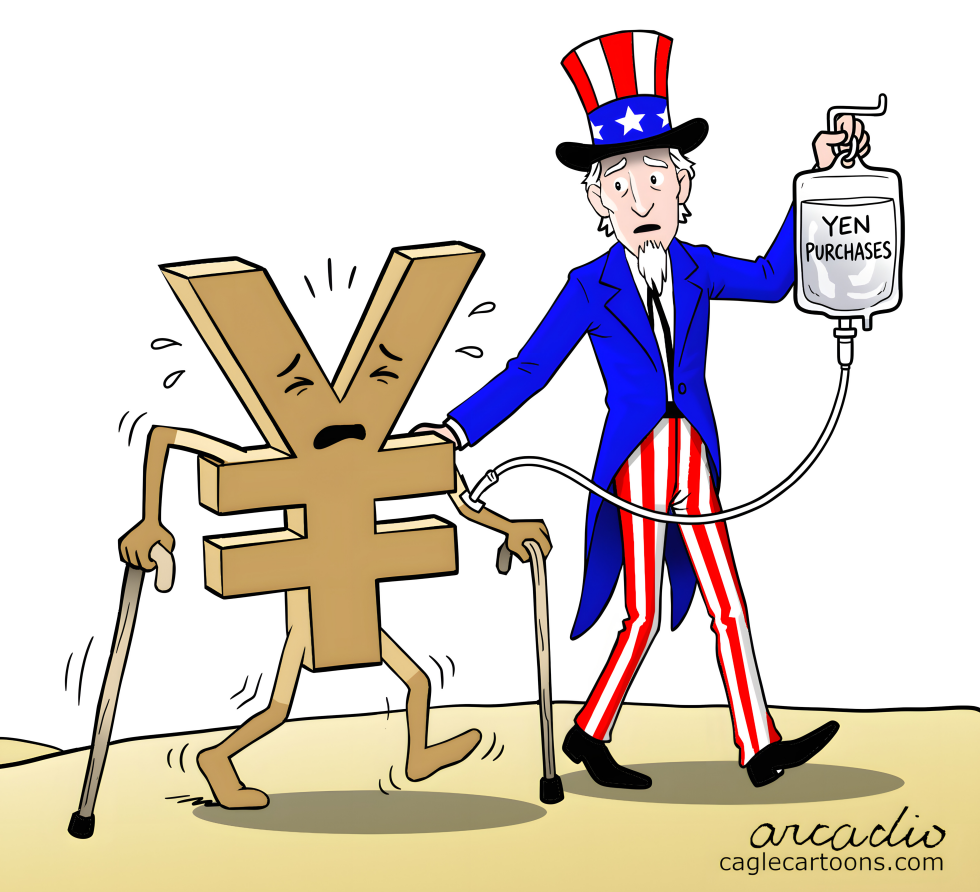
The United States has moved to support the Japanese yen through direct purchases amid signs of currency weakness. This action reflects ongoing efforts to stabilize exchange rates and ease pressure on Japan's economy. The intervention highlights the interconnected nature of global financial markets and the role major economies play in currency defense. The piece portrays the support as a necessary but concerned response to persistent economic fragility.
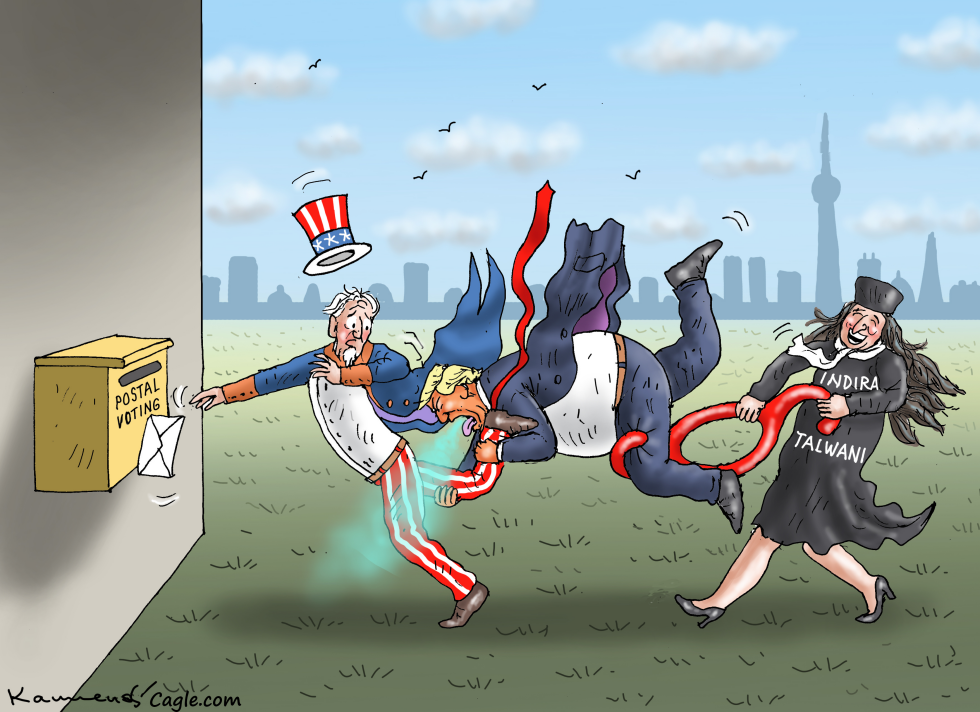
U.S. District Judge Indira Talwani issued a ruling blocking expanded postal voting measures sought by former President Donald Trump in a key election case. The decision highlights ongoing legal battles over ballot access and voting procedures. The piece portrays the conflict as a direct physical struggle between the judge, Trump, and the symbol of American government.
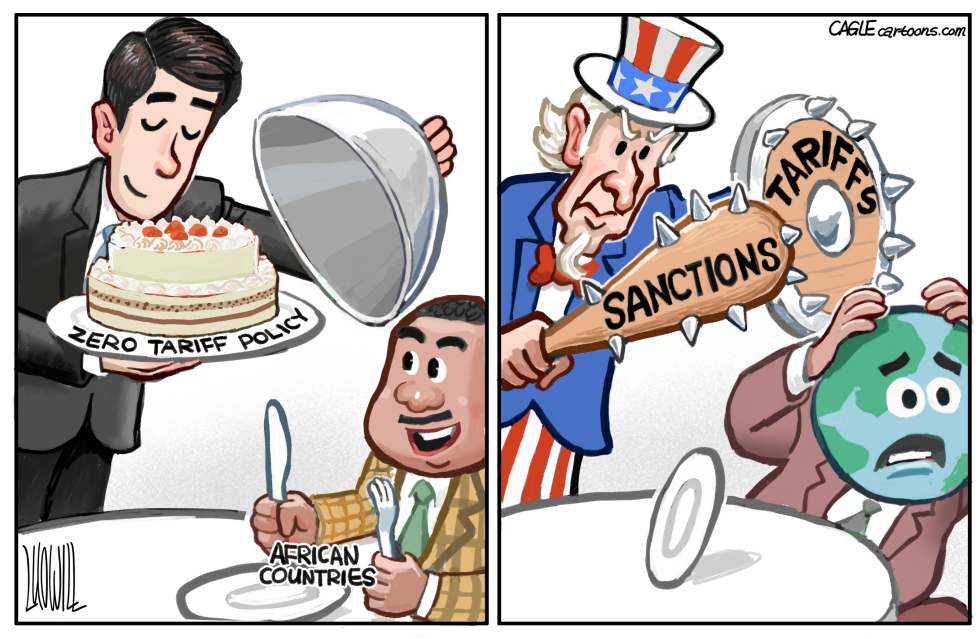
The United States has extended a zero-tariff policy offer to African nations amid ongoing global trade tensions. This move stands in contrast to simultaneous use of tariffs and sanctions against other trading partners. The policy highlights selective economic engagement by Washington. The editorial position criticizes the inconsistency between the overture to Africa and the punitive approach applied more broadly.