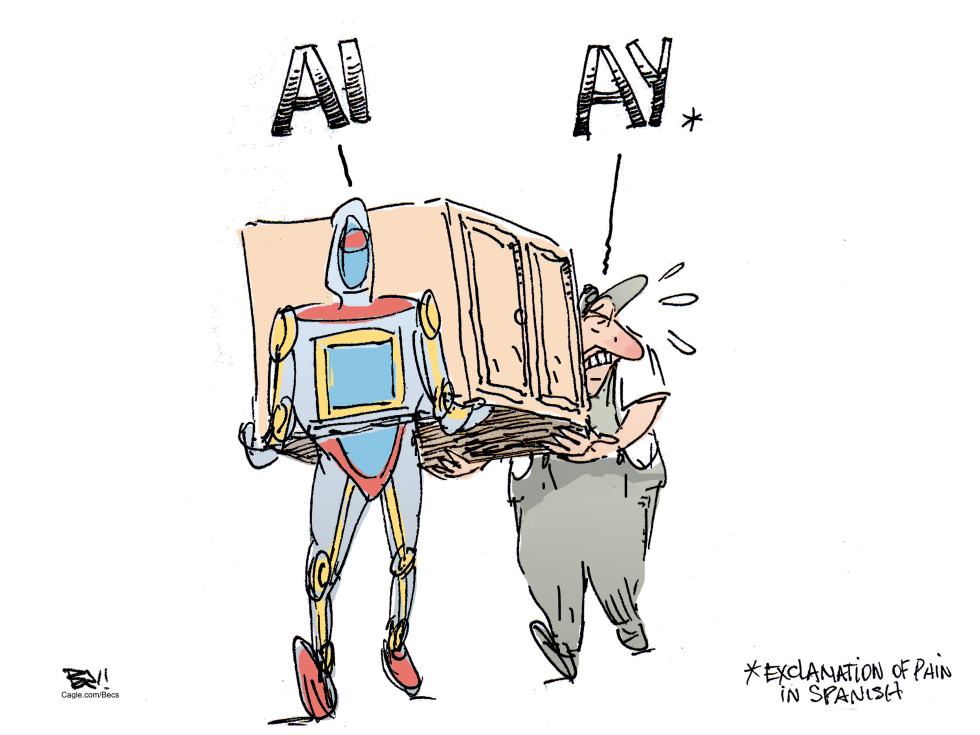
Workplaces are rapidly adopting artificial intelligence systems to boost output. The integration often shifts more tasks onto remaining human workers rather than reducing their load. The piece contends that AI is compounding physical and mental strain on labor instead of delivering promised relief.
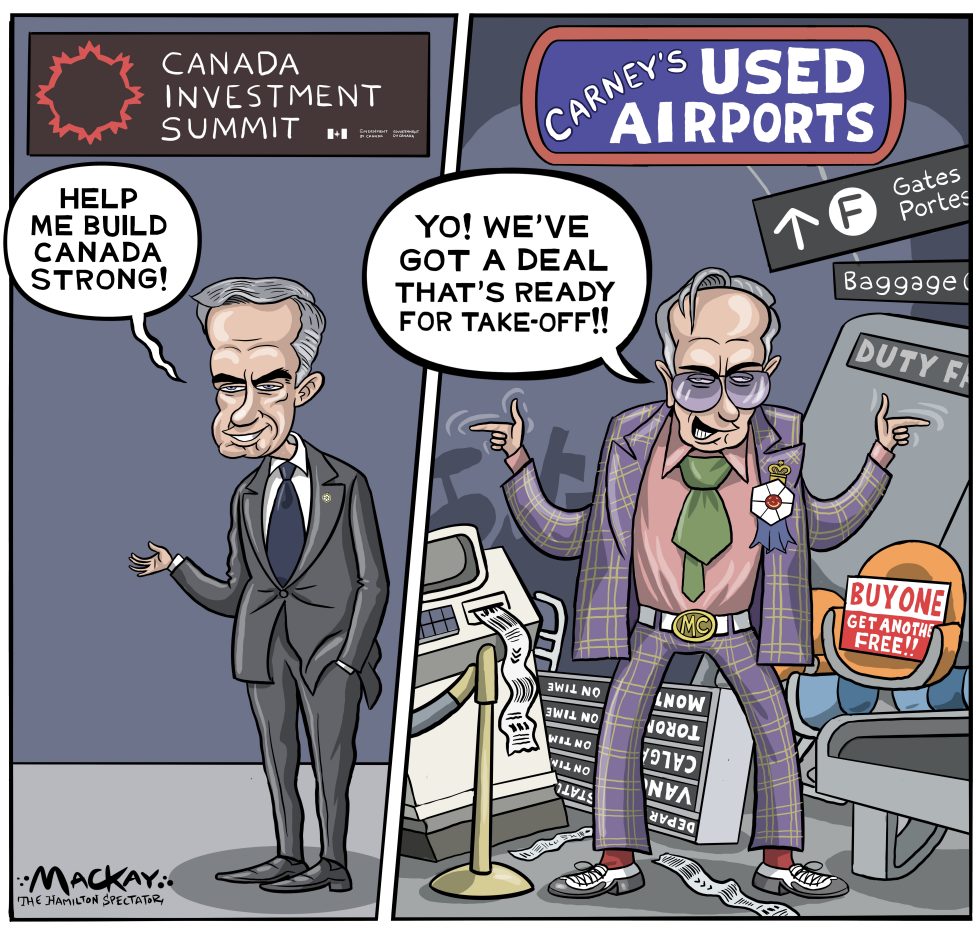
The cartoon depicts Justin Trudeau at a Canada Investment Summit appealing for help to build the country strong. In the adjacent panel, Mark Carney appears as a used-car-style salesman hawking airports with a buy-one-get-one-free offer and a ready-for-takeoff deal pitch, highlighting a satirical take on airport privatization efforts.
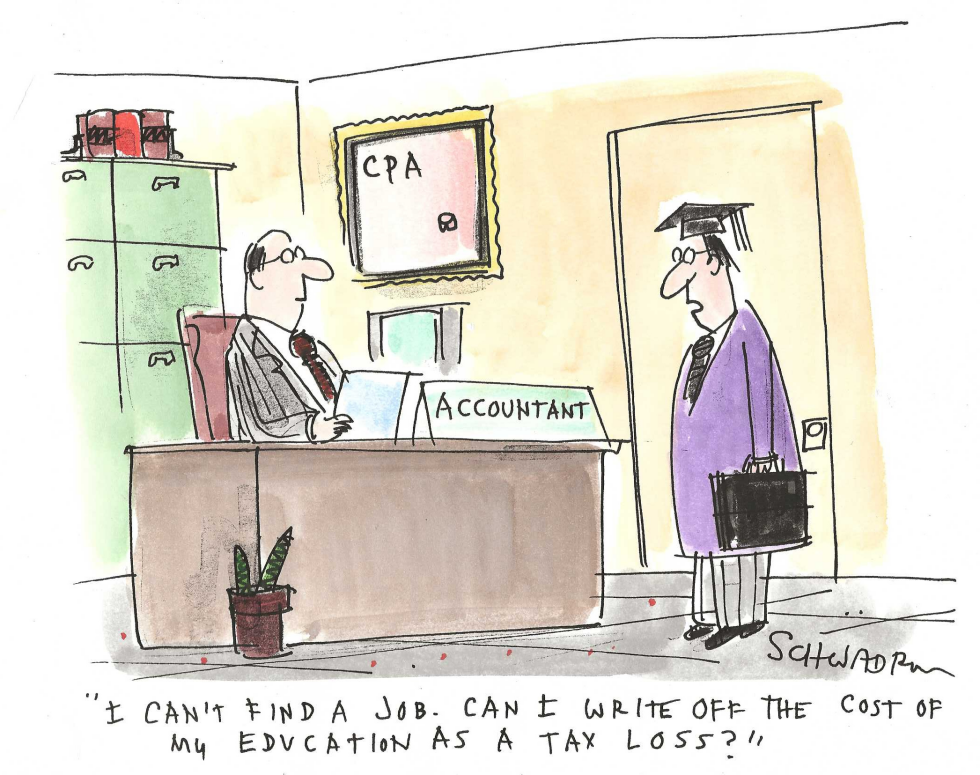
Recent college graduates facing extended unemployment have begun inquiring whether the cost of their degrees can be treated as a tax-deductible loss. Accountants report fielding more such questions as hiring in some sectors remains slow. The inquiry reflects broader frustration with the return on investment for higher education when entry-level positions are scarce. The cartoon captures this practical, if unconventional, approach to offsetting student debt through the tax code. It underscores ongoing debates about the value of degrees and the limits of existing tax relief for education expenses.
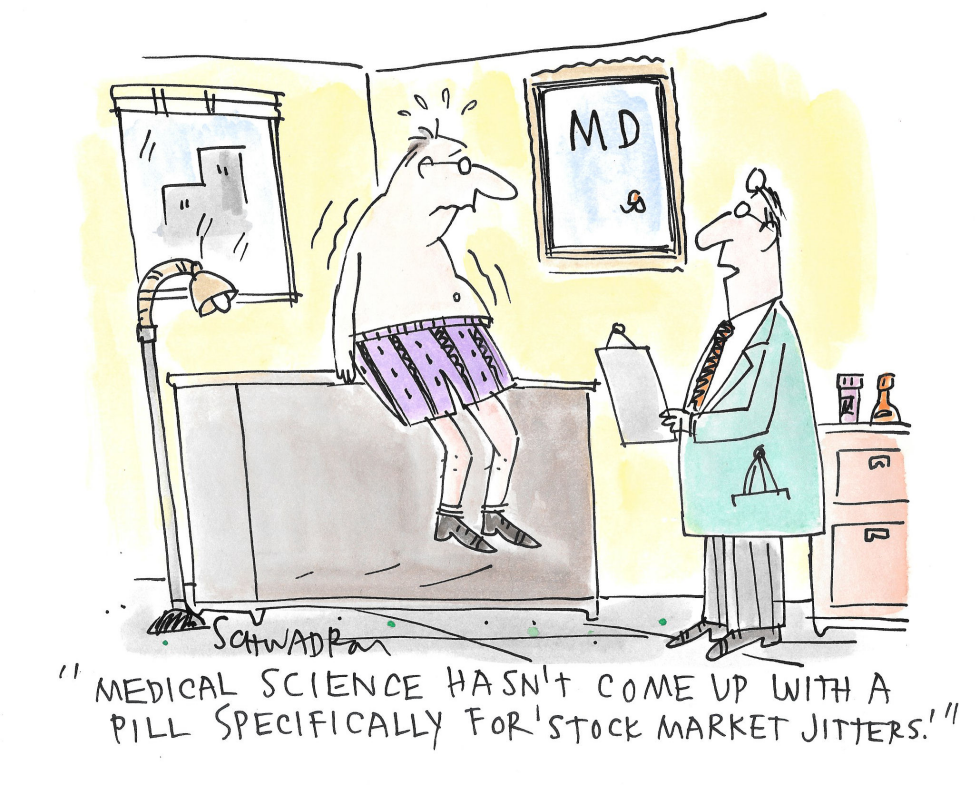
Stock market fluctuations continue to generate widespread investor anxiety amid ongoing economic uncertainty. Market swings tied to interest rates, trade policy, and corporate earnings have left many without clear remedies. The cartoon highlights that medical science offers no specific treatment for this form of financial stress, underscoring the limits of medicine when confronting market-driven worries.
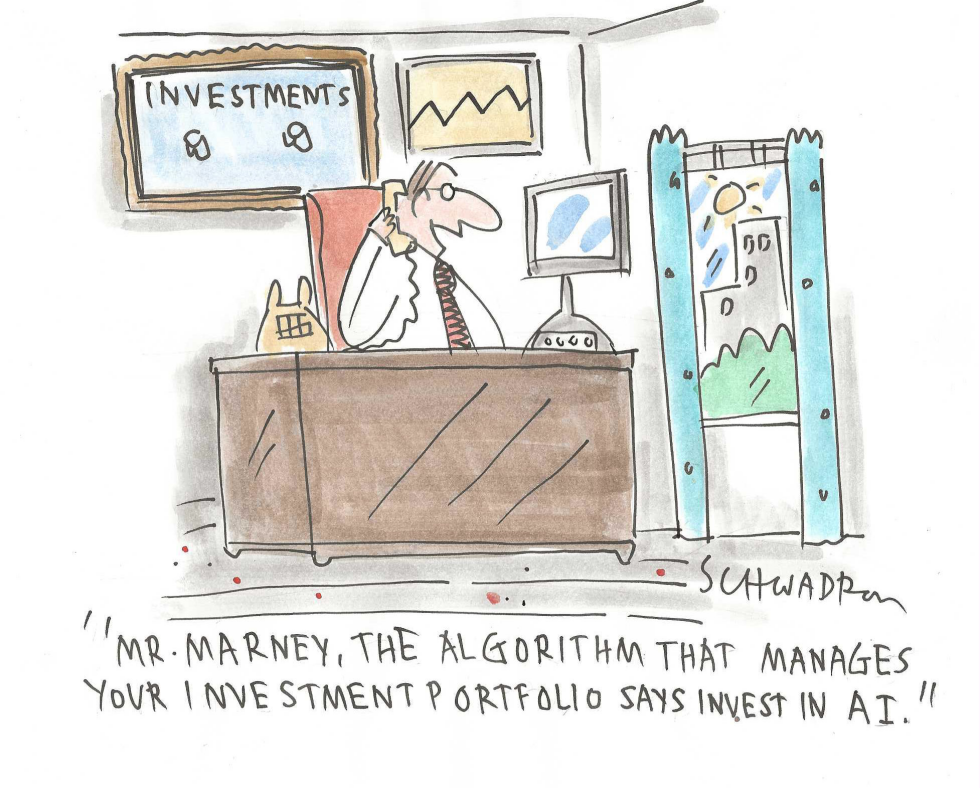
Financial institutions have expanded use of algorithmic systems to oversee client portfolios, with many such tools now directing capital toward artificial intelligence companies. The trend raises questions about self-reinforcing investment cycles where the managing software favors its own sector. The cartoon highlights the circular logic of automated recommendations that benefit AI developers and related stocks.
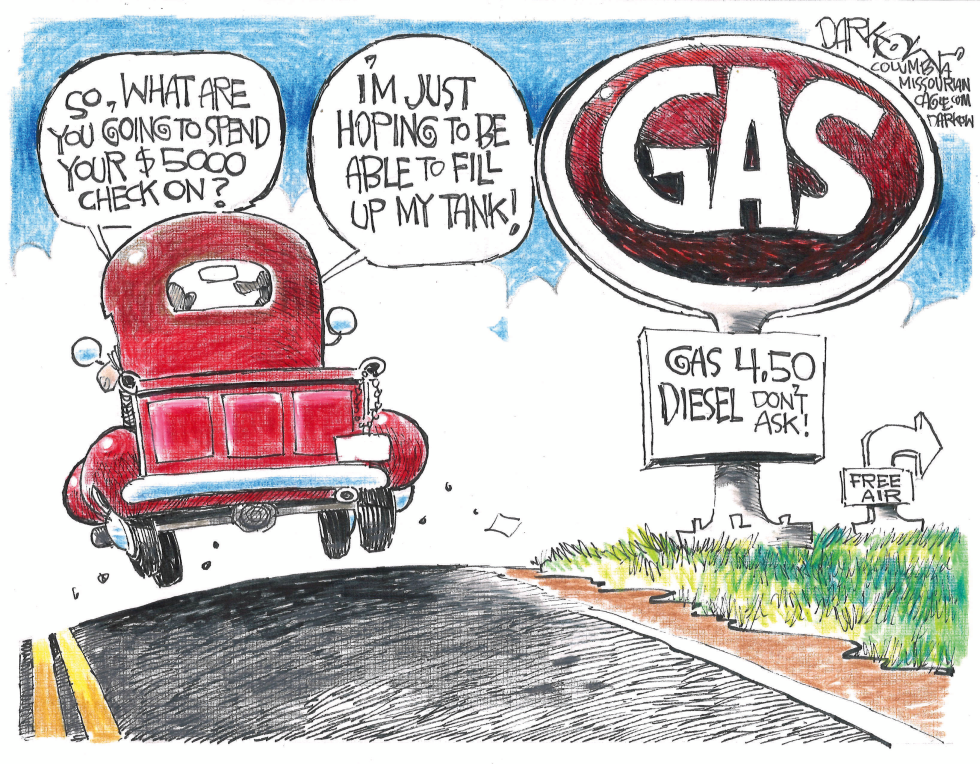
Proposed dividend checks of five thousand dollars are being discussed as economic relief measures. High gas prices at four dollars and fifty cents per gallon mean the payments would cover little more than a single fill up for many drivers. The situation underscores how energy costs continue to outpace targeted relief efforts. The cartoon argues that such checks provide minimal practical benefit when fuel expenses remain elevated. It highlights the disconnect between announced payments and real world household burdens from inflation in the energy sector.
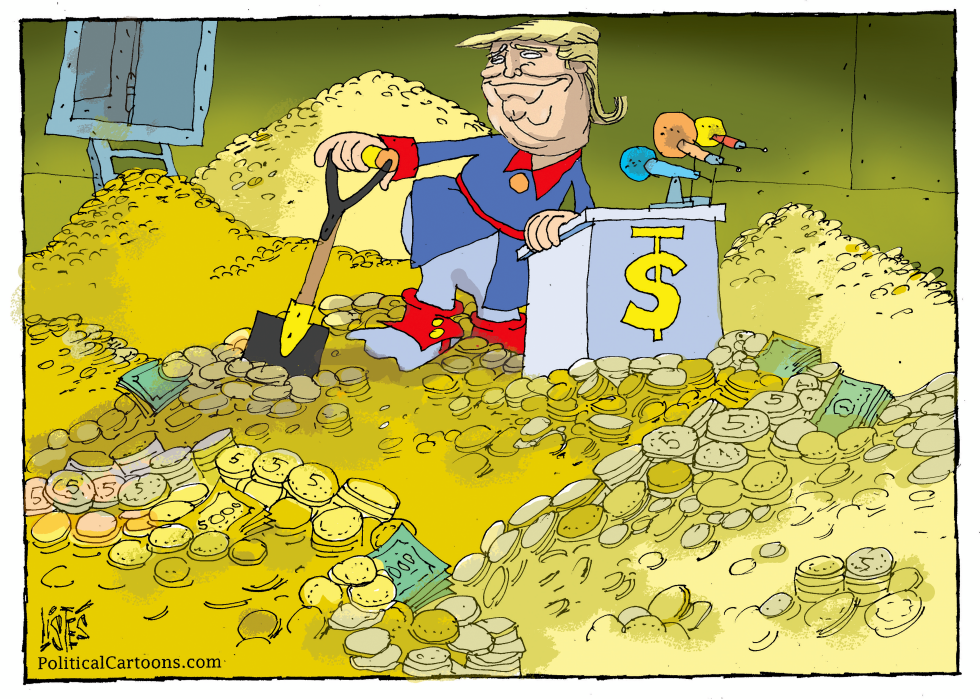
Donald Trump remains a central figure in debates over wealth and political power as of September 2026. The cartoon responds to ongoing scrutiny of how personal fortune intersects with public life and policy influence. It portrays the former president amid symbols of money to critique that dynamic. The editorial position frames Trump's association with wealth as a defining and problematic feature of his political presence.
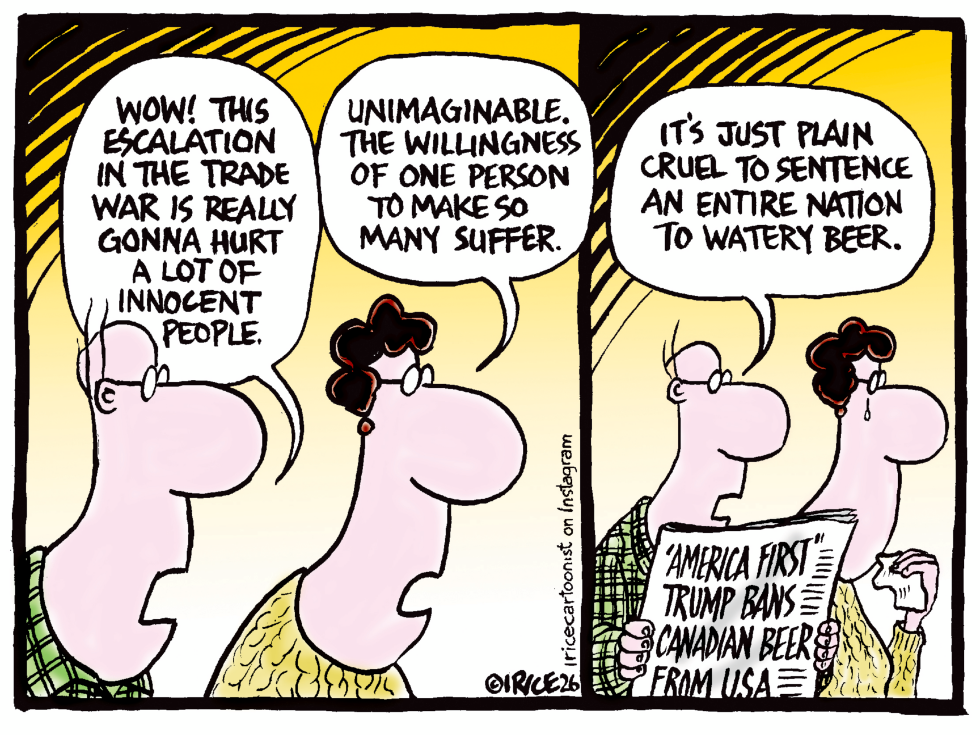
President Trump announced a ban on Canadian beer imports as part of an escalating trade dispute with Canada. The move, framed under the America First banner, immediately drew criticism for punishing ordinary citizens on both sides of the border. The policy extends earlier tariff threats into consumer goods, raising prices and limiting choices for American drinkers. Canadian exporters face sudden market loss while U.S. retailers scramble for alternatives. The editorial cartoon portrays the decision as petty and disproportionate, arguing that one leader's willingness to inflict broad pain reveals the human cost of personal political theater.
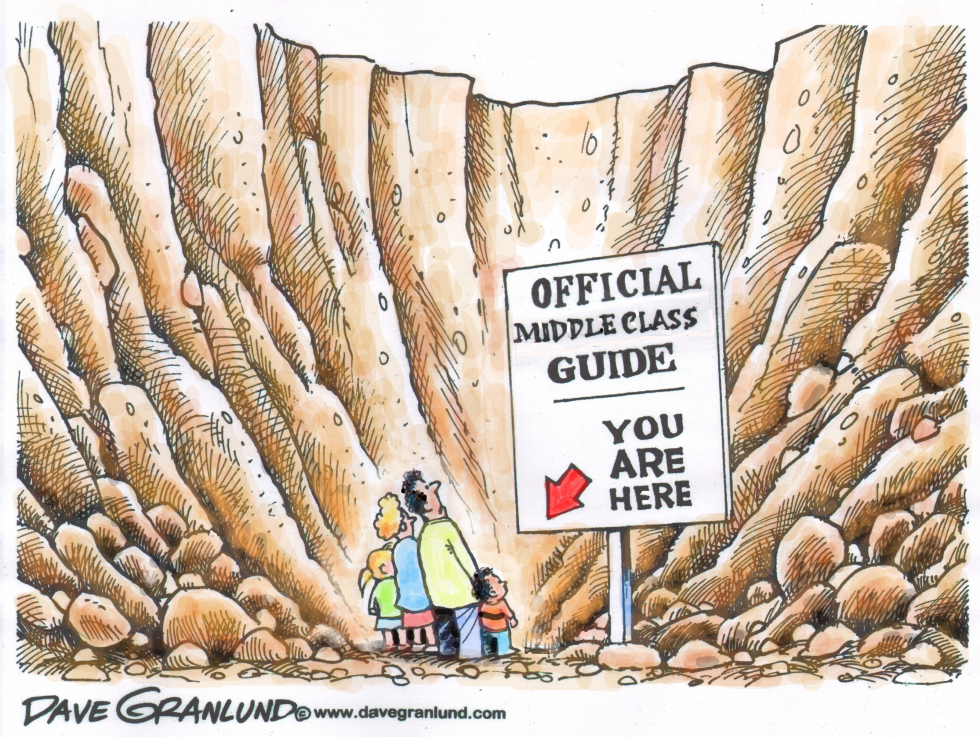
The cartoon shows a family of four standing at the base of a steep rocky canyon while viewing a large sign labeled Official Middle Class Guide with an arrow stating You Are Here. The image captures the sense of being trapped or positioned within a deep economic divide. Published on September 13 2026 the work addresses the ongoing pressures on middle class households including stagnant wages rising costs and limited upward mobility. The visual metaphor of the canyon emphasizes how many families feel stuck between higher and lower economic strata without clear paths forward. The artist's signature appears at the bottom left confirming the creator as Dave Granlund.
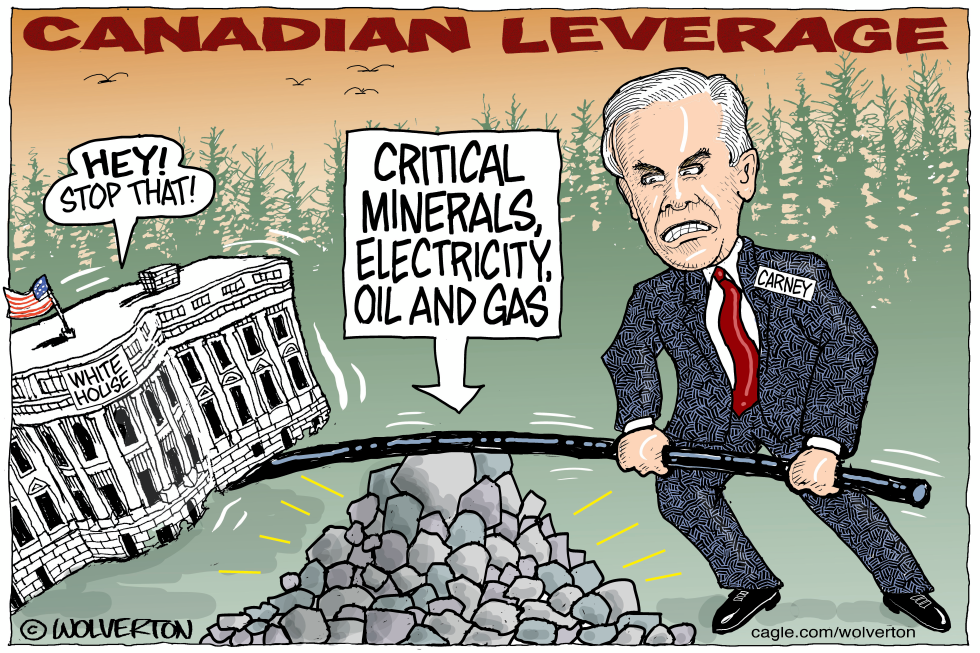
The cartoon depicts former Bank of Canada governor Mark Carney using a pipe labeled critical minerals, electricity, oil and gas as a lever to damage the White House. A speech bubble from the building protests the action. Published on September 12, 2026, the image comments on ongoing Canada-US tensions over resource exports and trade policy. Carney is shown in a suit with a determined expression, standing on rubble. The visual underscores Canada's potential to restrict supplies vital to the American economy. It reflects real-world discussions about critical minerals and energy interdependence between the two nations.
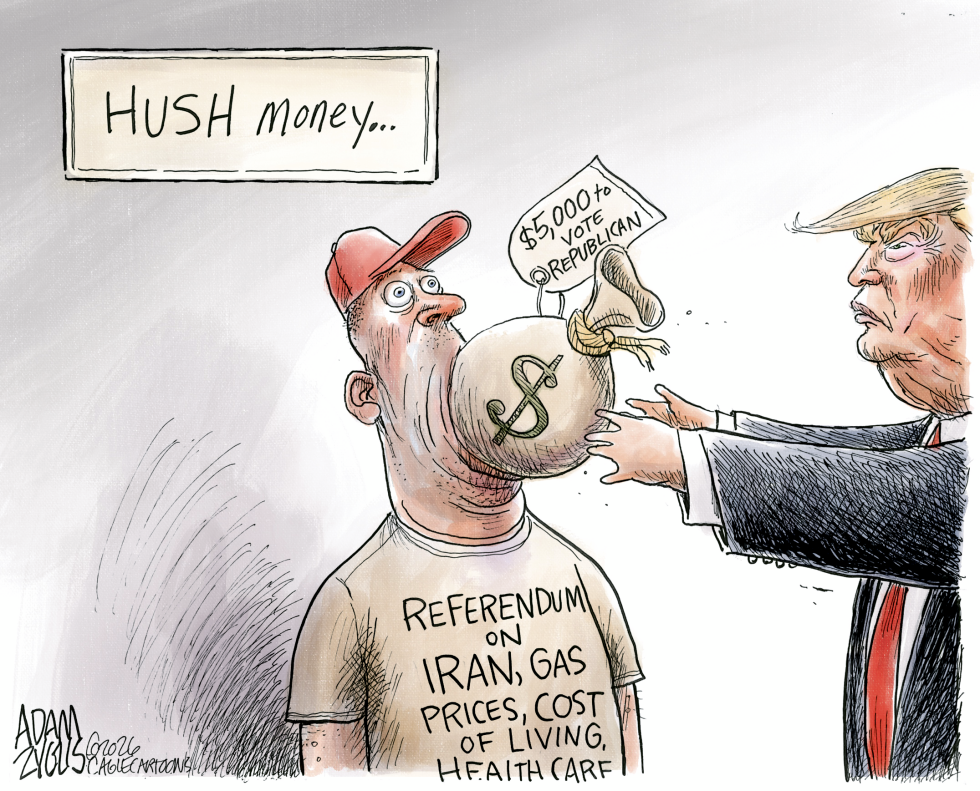
The cartoon shows Donald Trump handing a large bag of cash labeled as hush money to a man in a referendum shirt covering Iran, gas prices, cost of living and health care. A tag on the bag promises $5,000 to vote Republican. The scene responds to ongoing debates over election integrity and foreign policy issues involving Iran as of September 2026. It uses the visual metaphor of a bribe to comment on alleged attempts to influence voter priorities through financial incentives.
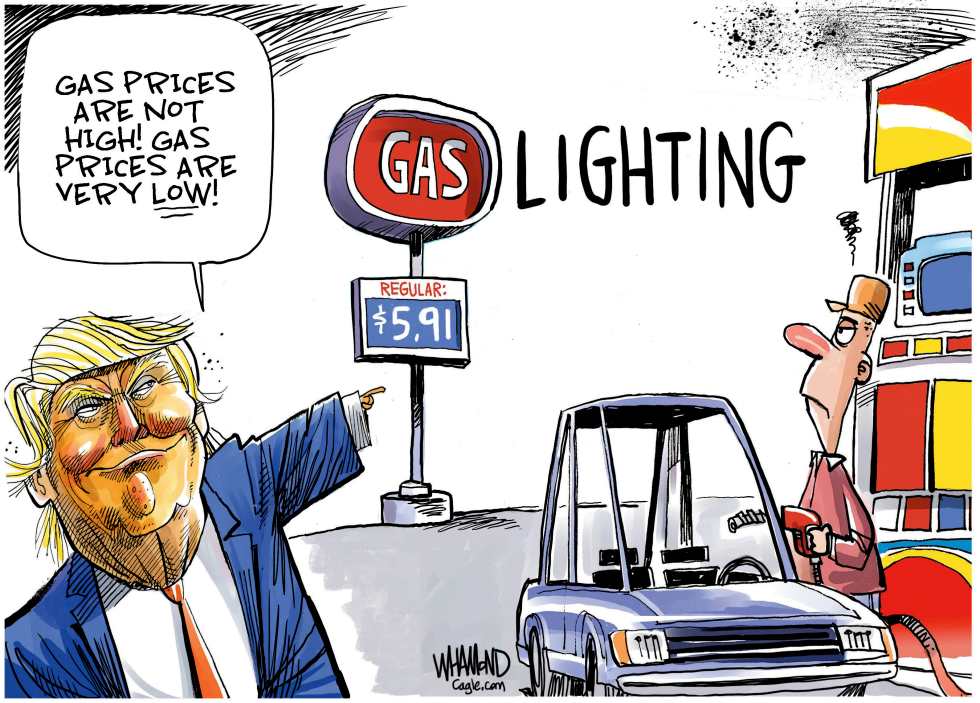
Donald Trump has repeatedly asserted that gas prices are very low even as national averages hover near record territory. The statement comes amid ongoing public frustration with energy costs that have remained elevated for months. The editorial takes the position that such denials amount to deliberate misdirection rather than engagement with economic data.
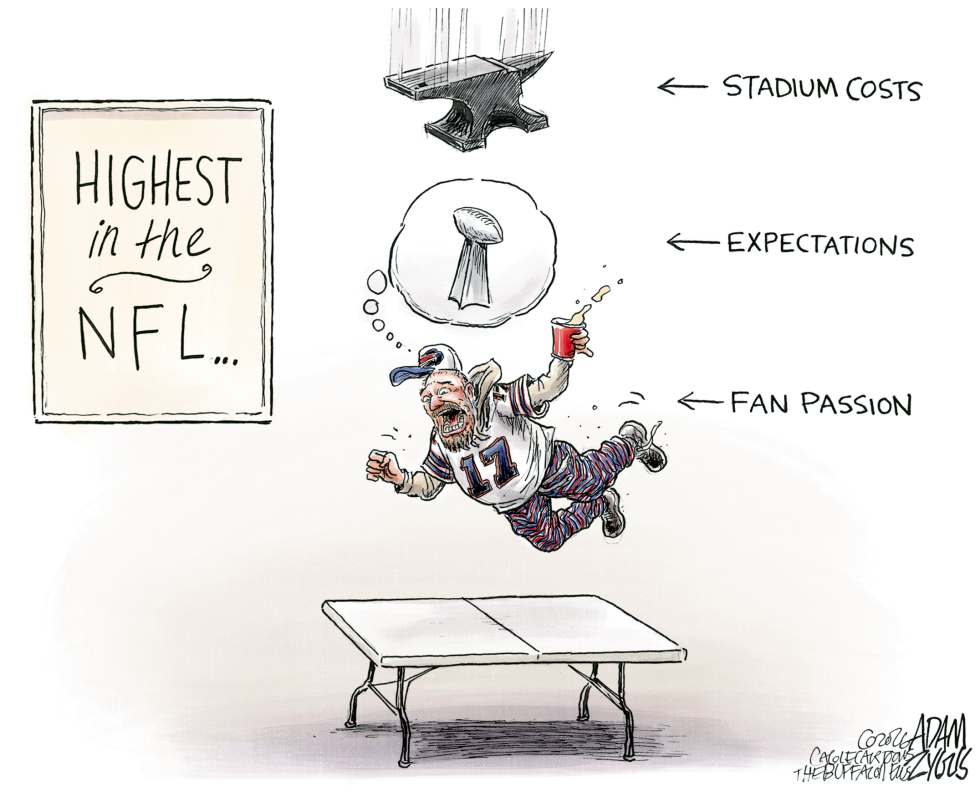
The cartoon illustrates a Buffalo Bills fan tumbling through the air after being struck by an anvil labeled stadium costs. A thought bubble shows a Super Bowl trophy while labels point to expectations and fan passion. A sign on the left declares the team highest in the NFL. The scene comments on the team's new stadium project carrying the highest costs in the league. Fans remain enthusiastic despite the financial weight. The ping pong table below suggests a precarious landing. The work responds to ongoing discussions about public funding for the Bills stadium.
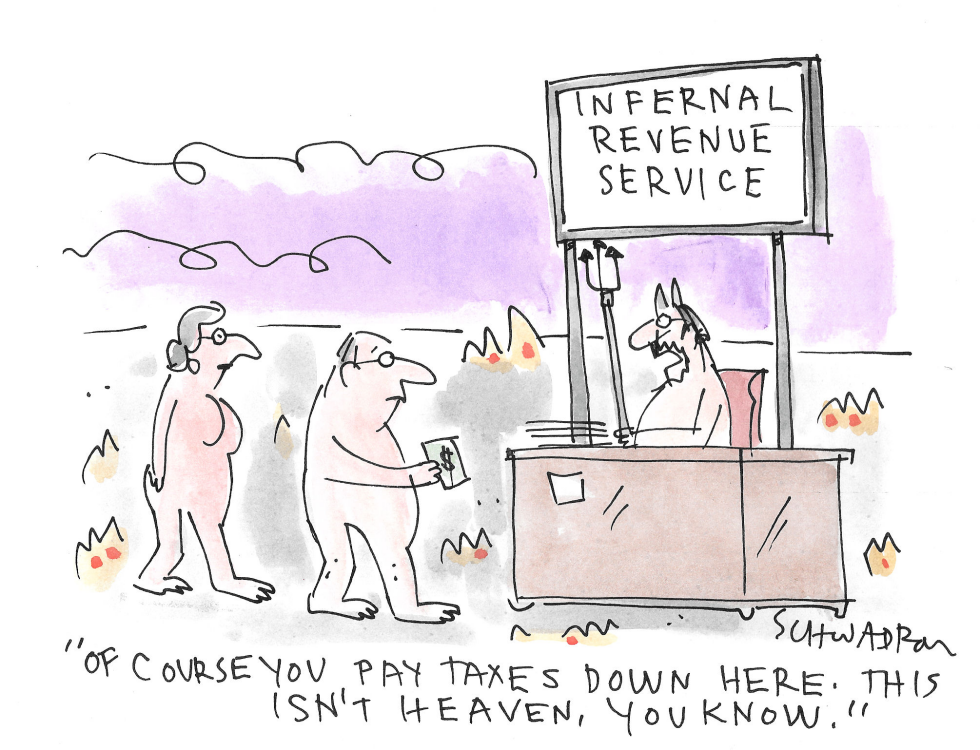
The long-standing adage that only death and taxes are certain receives fresh treatment in a cartoon depicting an IRS outpost operating in hell. No specific policy change or ruling prompted the piece, which instead plays on the enduring public frustration with tax collection as an inescapable force. The editorial stance pokes at bureaucratic persistence, suggesting the tax man follows citizens beyond the grave with the same relentless efficiency seen in life.
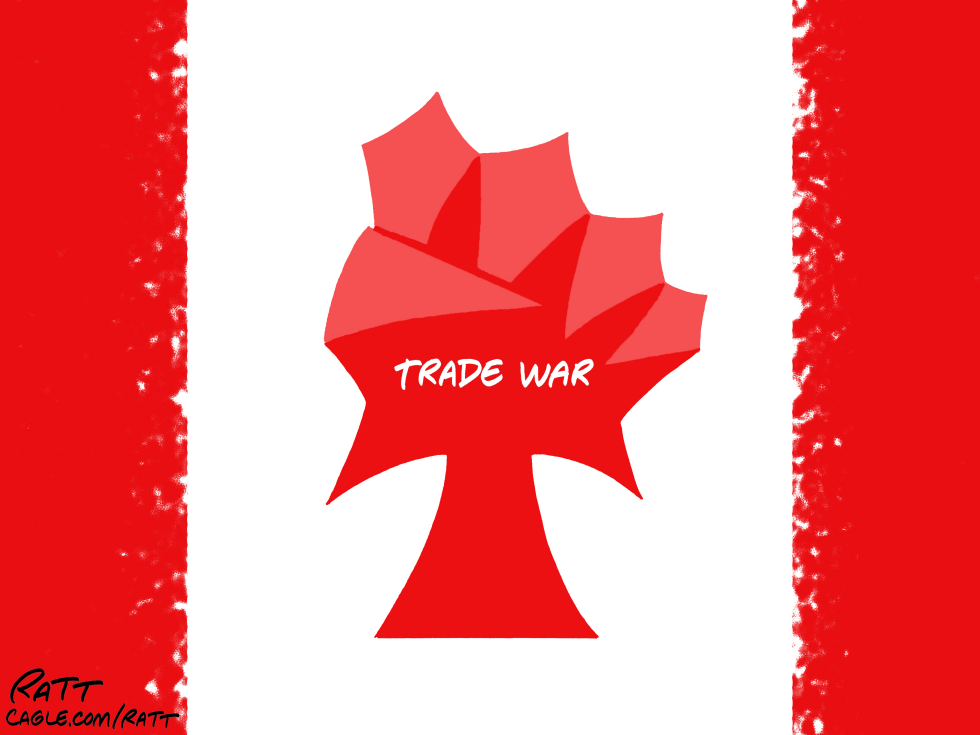
Ongoing US-Canada trade tensions escalated in 2026 with new tariff threats targeting Canadian exports. The dispute threatens key sectors including autos, lumber and agriculture, raising costs for consumers on both sides of the border. Canada has signaled plans to diversify markets and strengthen domestic industry. The cartoon frames the conflict as a direct assault on Canadian sovereignty and economic stability. It portrays the trade war as fracturing national symbols while urging a stronger northern response.