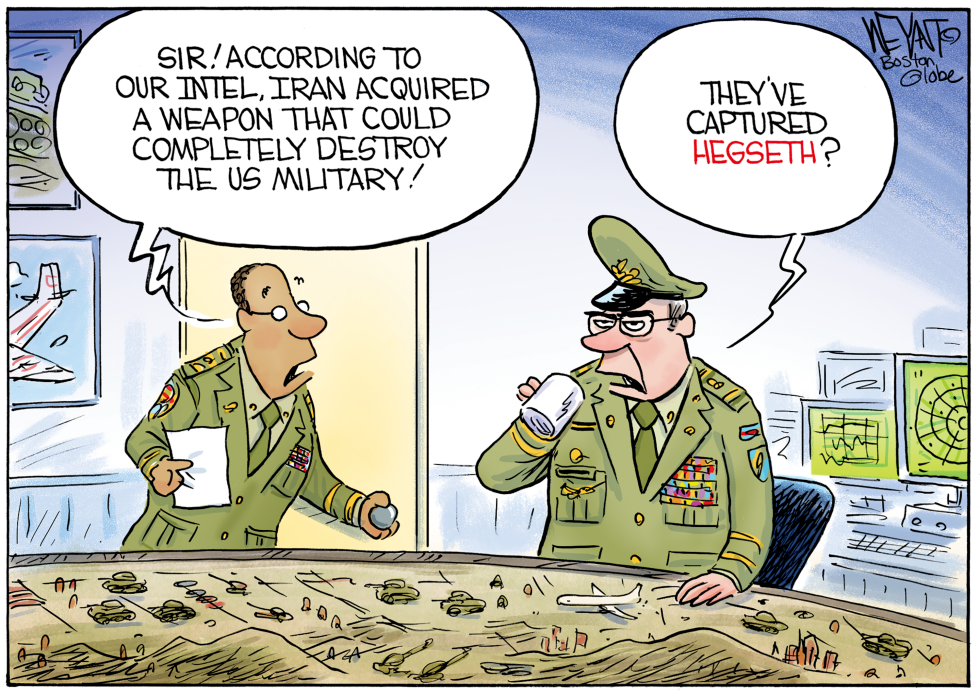
On September 16 2026 a cartoon depicted two US military officers reacting to intelligence about an Iranian weapon capable of destroying the American military. The senior officer immediately identifies Pete Hegseth as the captured asset in question. The piece responds to ongoing debate over Hegseth's fitness for senior defense leadership and questions whether his presence undermines readiness more than external adversaries.
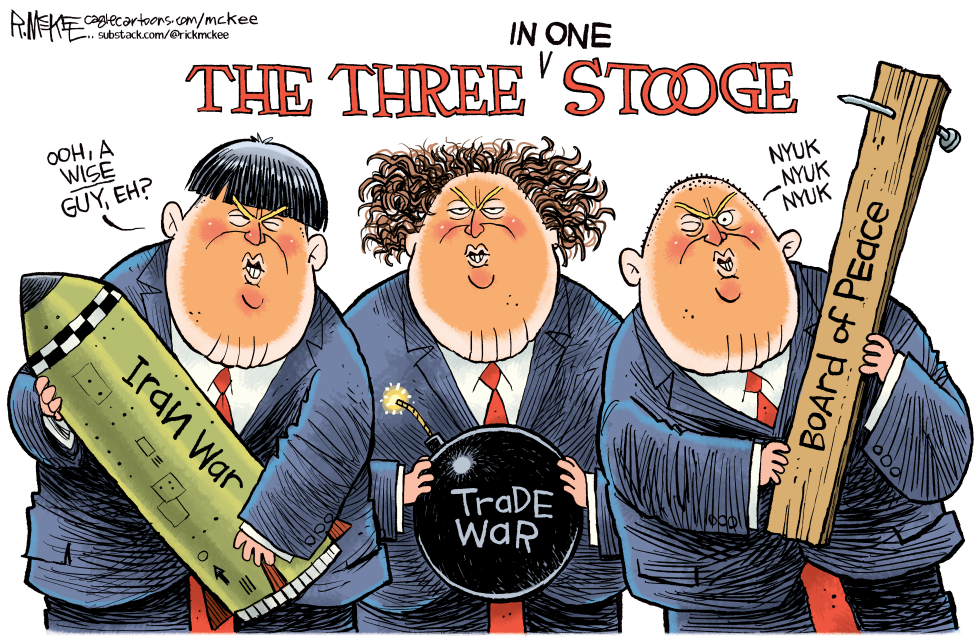
The cartoon depicts three political figures styled as the Three Stooges holding symbols of an Iran War missile, a Trade War bomb and a Board of Peace plank. It responds to ongoing tensions involving Iran policy and trade disputes by using the comedy trio to portray chaotic leadership. The visual argument suggests that efforts at peace coexist with aggressive posturing in both military and economic arenas.
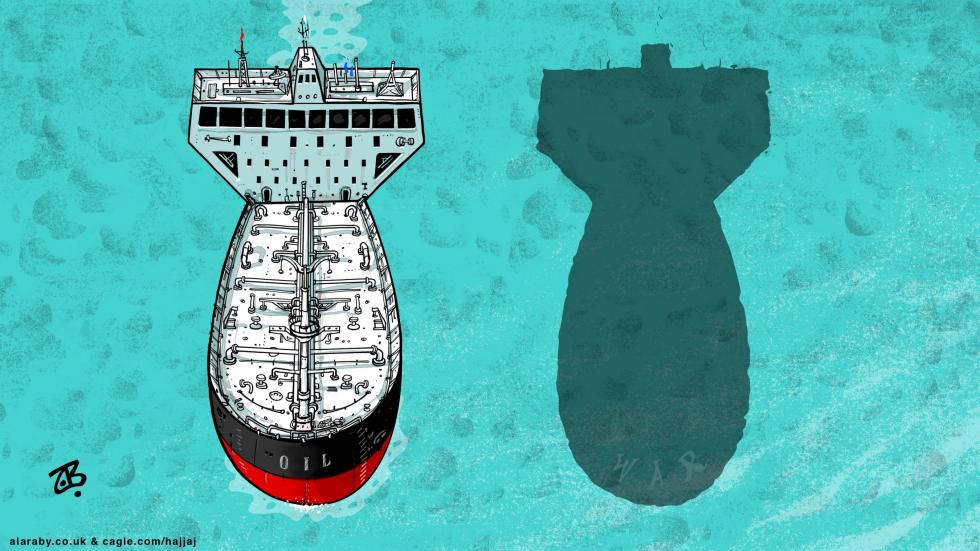
An oil tanker depicted in bomb form with a matching shadow labeled war underscores ongoing links between energy resources and armed conflict. The image responds to persistent tensions in oil-producing regions where shipping routes and resource control intersect with military actions. Such portrayals emphasize how fossil fuel transport remains entangled in geopolitical disputes. The editorial stance critiques the weaponization of energy supplies and the persistent threat of escalation tied to oil interests.
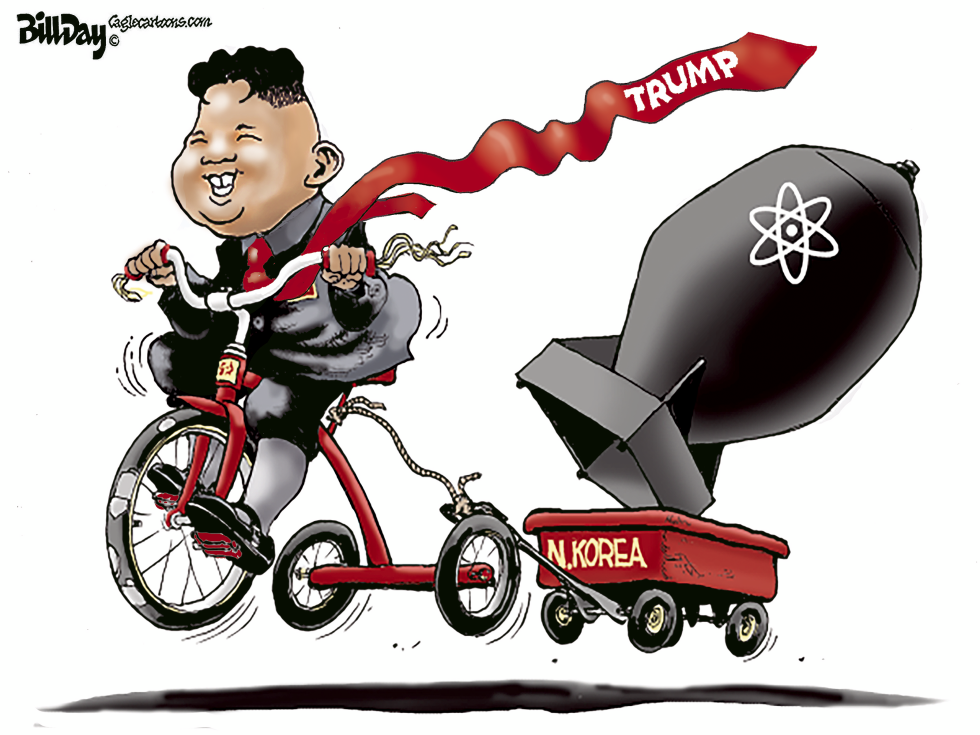
North Korea's leader Kim Jong-un is shown transporting a nuclear bomb on a child's tricycle and wagon toward Donald Trump. The image responds to ongoing tensions over North Korea's nuclear program and its direct implications for U.S. security under the Trump administration.
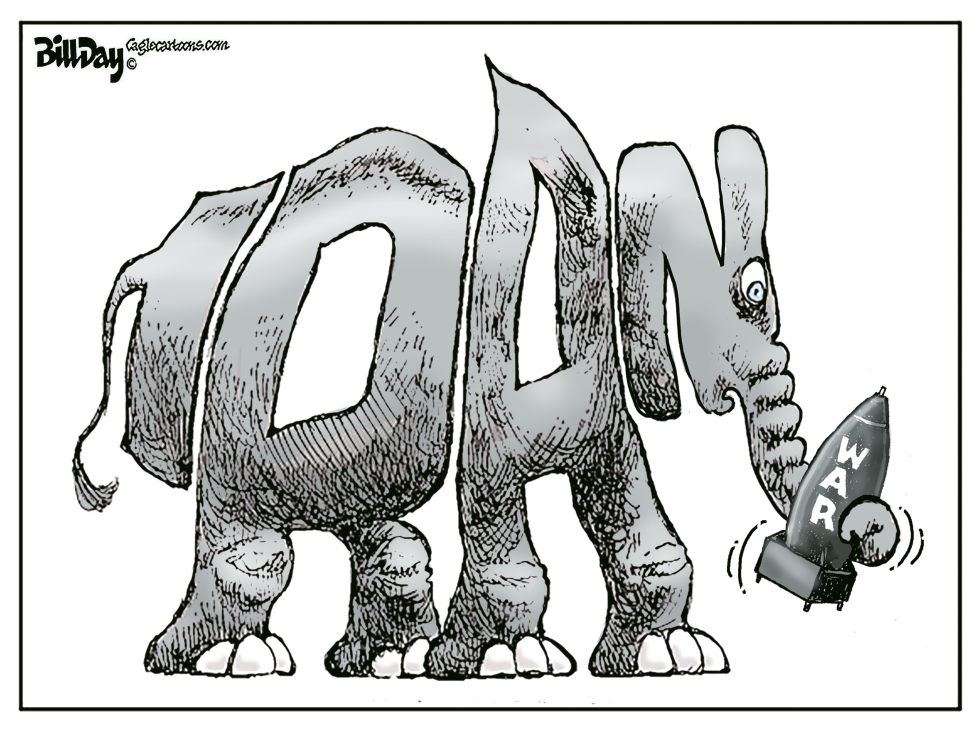
The Republican Party continues to navigate internal divisions over foreign policy and military engagement. Recent statements from party leaders have emphasized strength abroad while avoiding specific commitments on ongoing global conflicts. The piece portrays the GOP elephant as directly handling a war bomb, underscoring the risks of escalating rhetoric. It highlights how party identity remains tied to assertive defense postures. The editorial position criticizes the embrace of war imagery as potentially reckless.
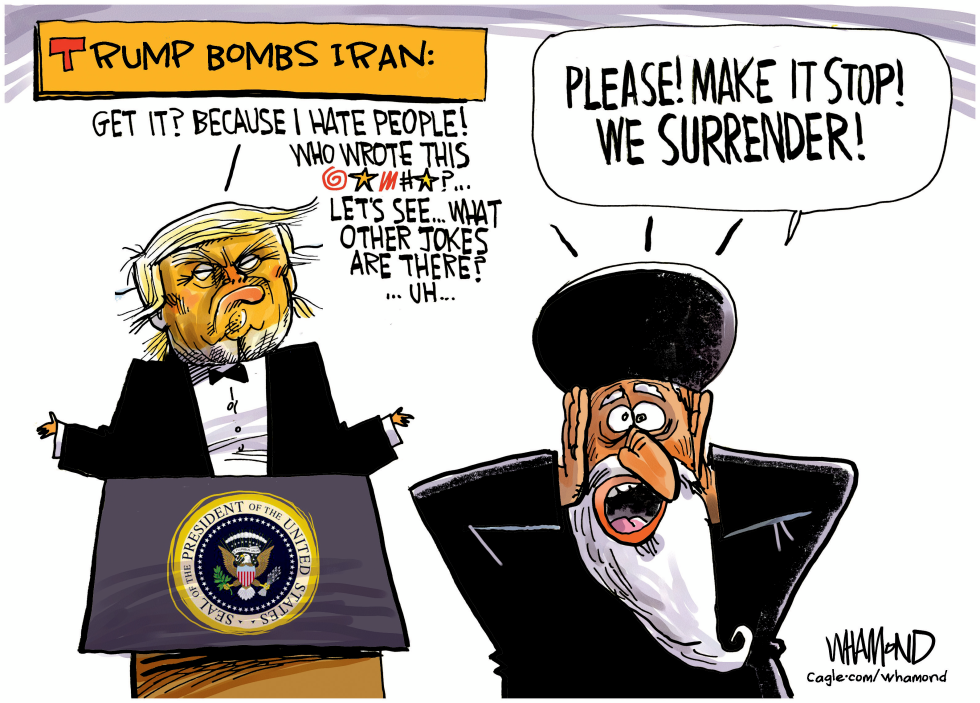
President Trump ordered strikes on Iran in late July 2026, prompting an immediate public plea for surrender from Iranian leadership. The action escalates tensions in the Middle East and raises questions about U.S. military objectives. The editorial takes the position that the strikes reflect personal animus rather than strategic necessity and mocks the president's framing of the operation.
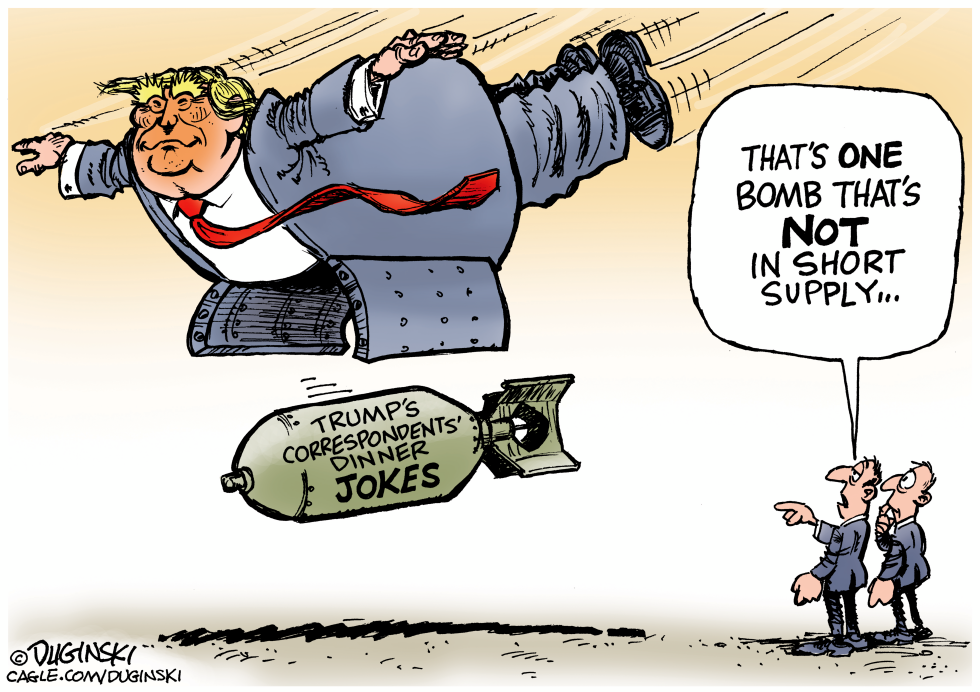
Donald Trump delivered jokes at the 2026 White House Correspondents Dinner that landed poorly with the audience. The event drew attention for the president's comedic missteps amid ongoing tensions with the press. The piece argues the routine exposed a persistent pattern of tone-deaf delivery rather than isolated misfires.
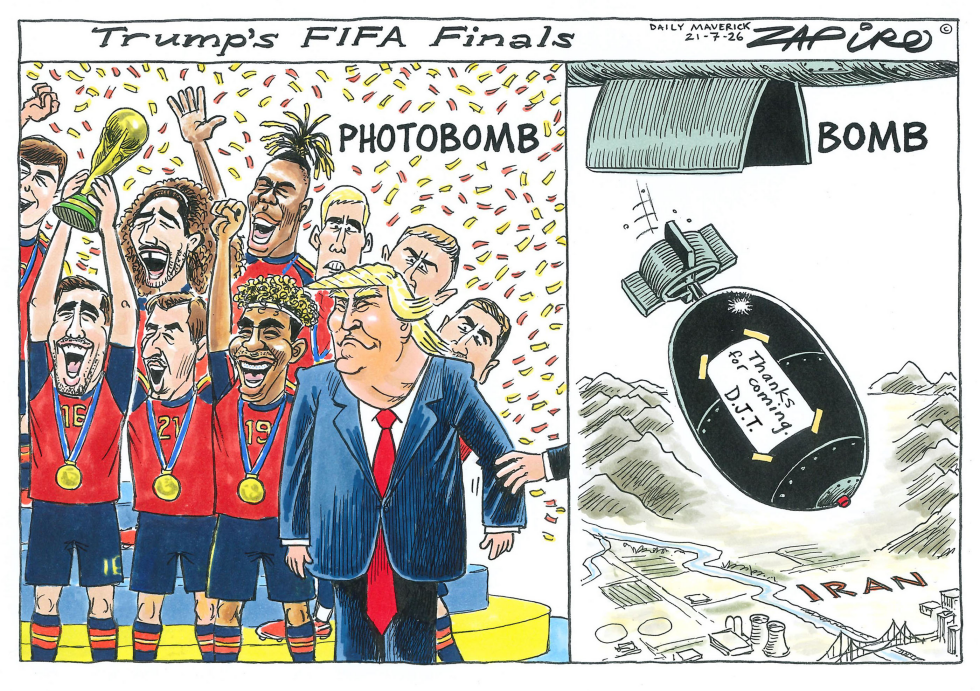
Donald Trump appears in a split-panel scene juxtaposing a soccer victory celebration against a missile strike on Iran. The image responds to ongoing tensions between the United States and Iran during the summer of 2026, where military posturing and personal political theater intersect. The editorial position frames the juxtaposition as evidence of reckless self-promotion overriding substantive foreign policy decisions.
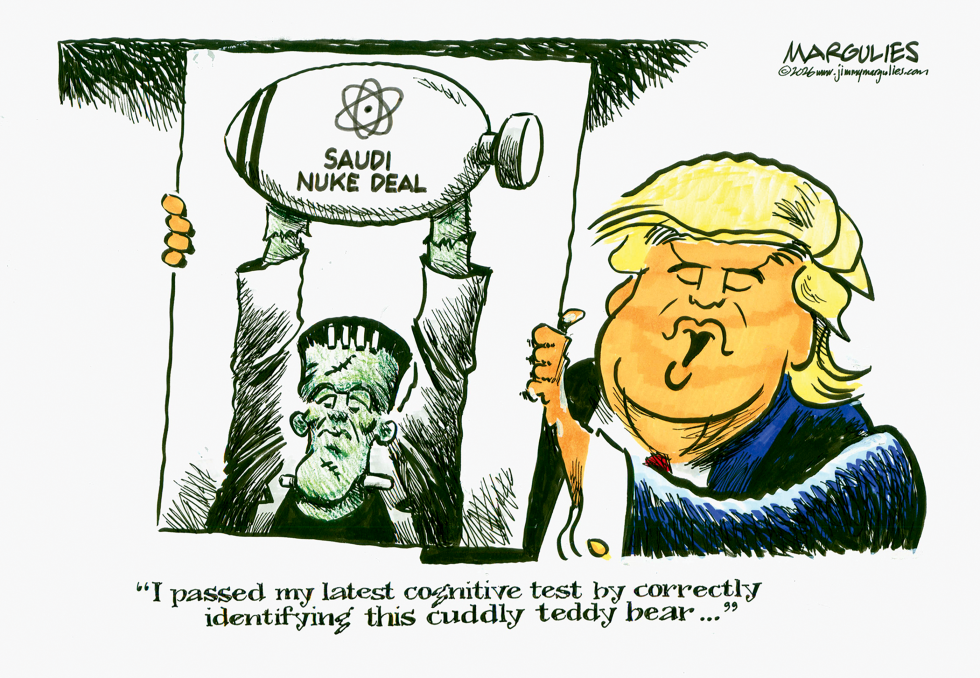
Donald Trump referenced a cognitive test while describing a Saudi nuclear deal in personal terms. The episode occurs against ongoing debates over arms control and Middle East policy. The piece portrays the deal as a dangerous misjudgment.
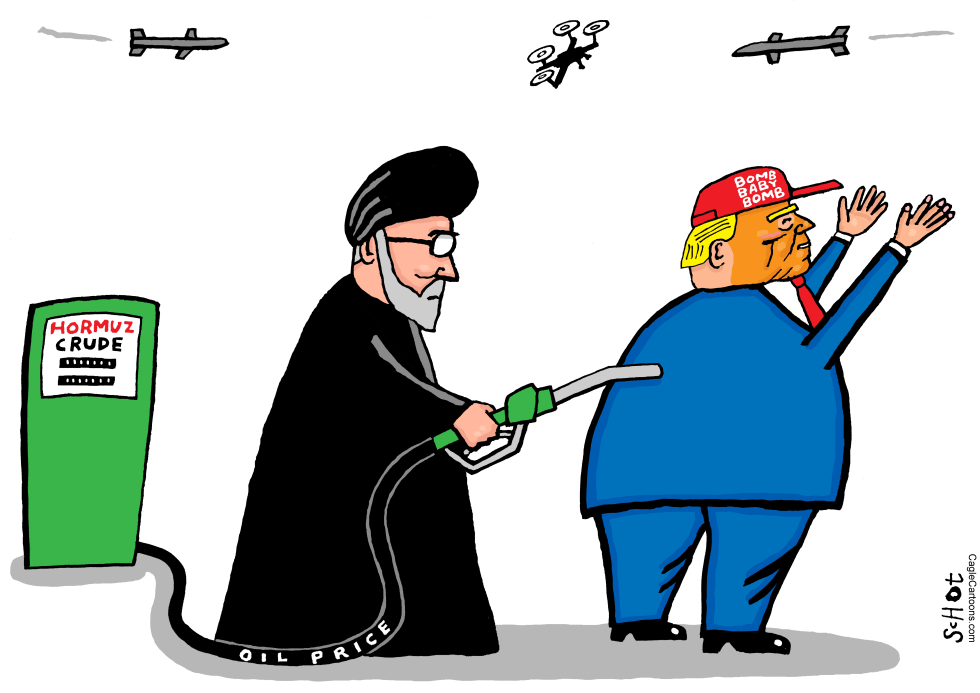
A robed Iranian figure operates a Hormuz crude gas pump with the hose labeled oil price inserted into the back of a blue suited Donald Trump wearing a red hat marked bomb baby bomb. Trump stands with both hands raised while military planes and a drone appear in the sky overhead.
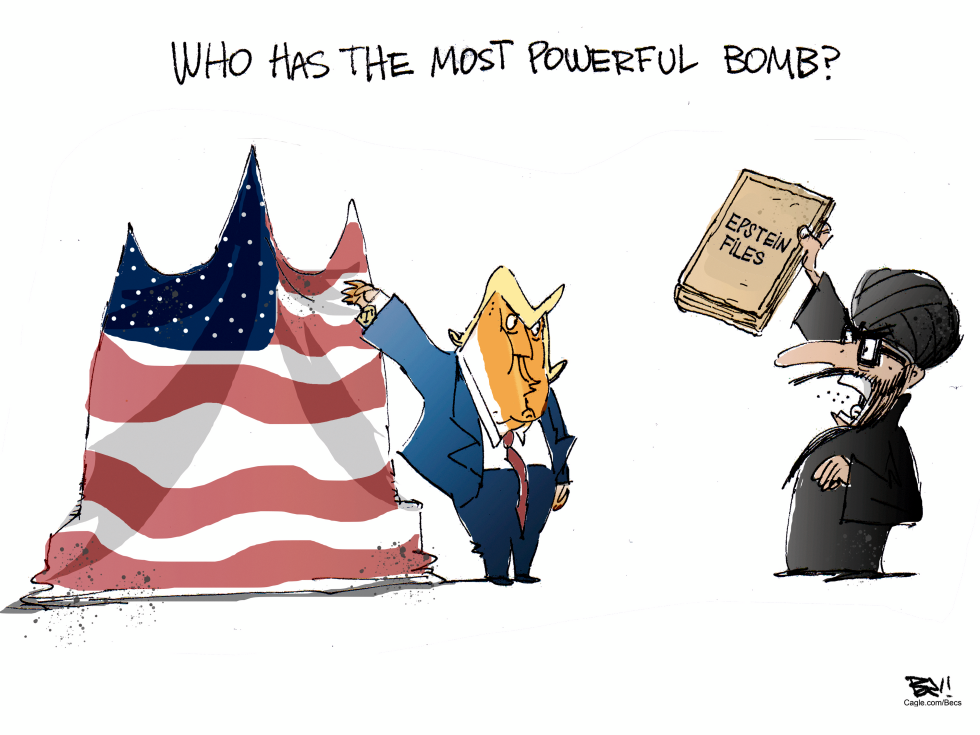
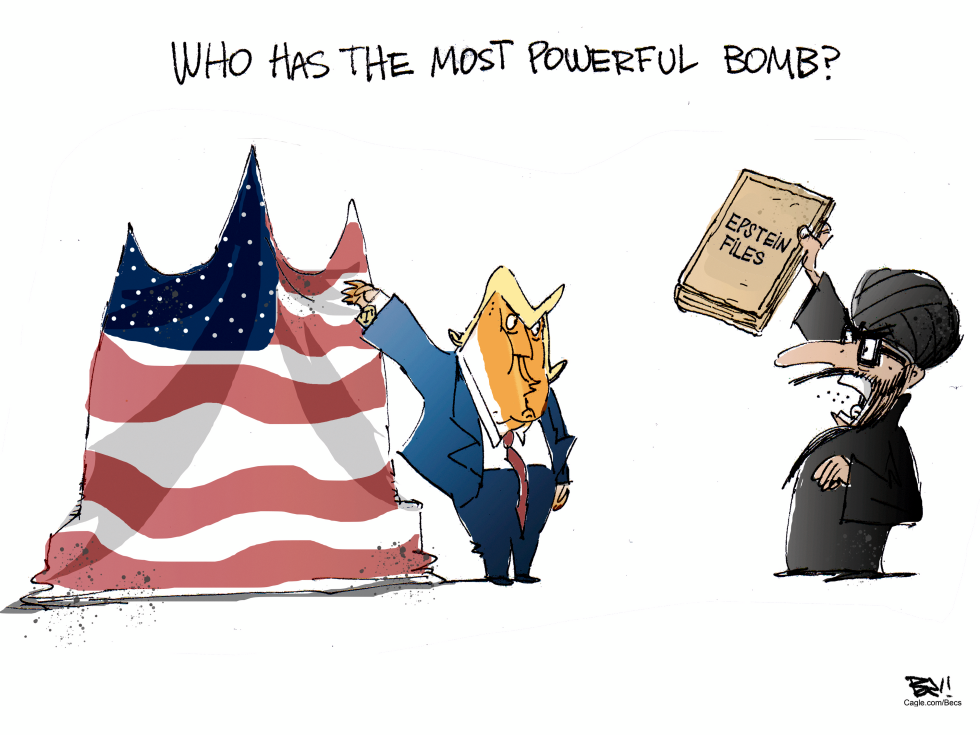
Leverage between the United States and Iran has long centered on nuclear capability and diplomacy. The piece sets that against domestic political pressure from document releases and investigations. It suggests the most damaging weapon in play may not be a military one.
Donald Trump gestures toward a large American flag formed into a bomb shape. A second figure on the right holds up a book labeled Epstein Files. The top text asks which bomb is most powerful.
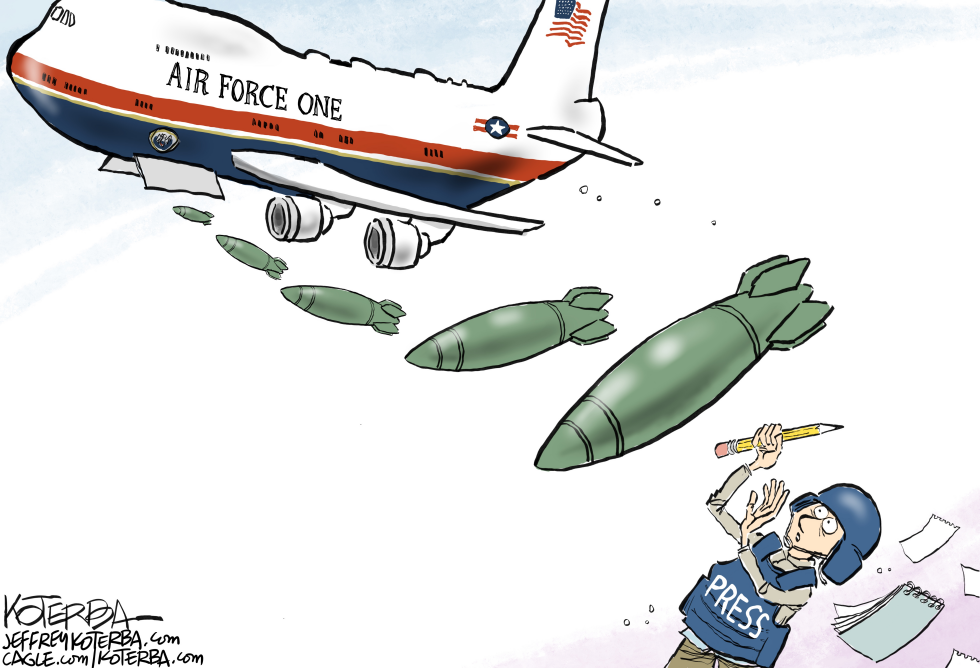
The image shows Air Force One releasing several green missiles from its underside while flying. Below, a person wearing a blue vest labeled PRESS and a helmet raises a pencil overhead with one hand while extending the other palm outward. Papers scatter around the figure. The plane displays the American flag on its tail and standard markings on its fuselage.
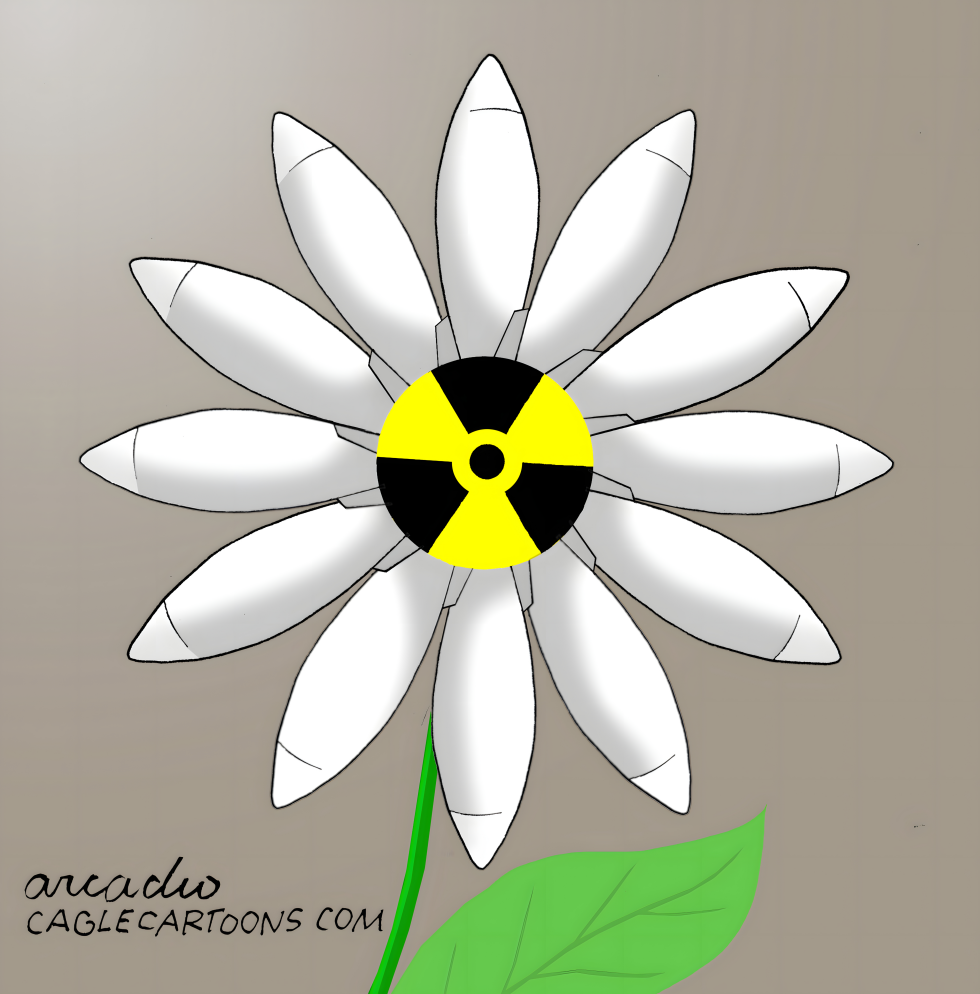
A daisy flower illustration replaces its petals with white missiles arranged around a central radiation warning symbol in yellow and black. The green stem and leaf extend downward from the bloom against a plain background. Artist Arcadio Esquivel signed the work in the lower left with the CagleCartoons.com credit.