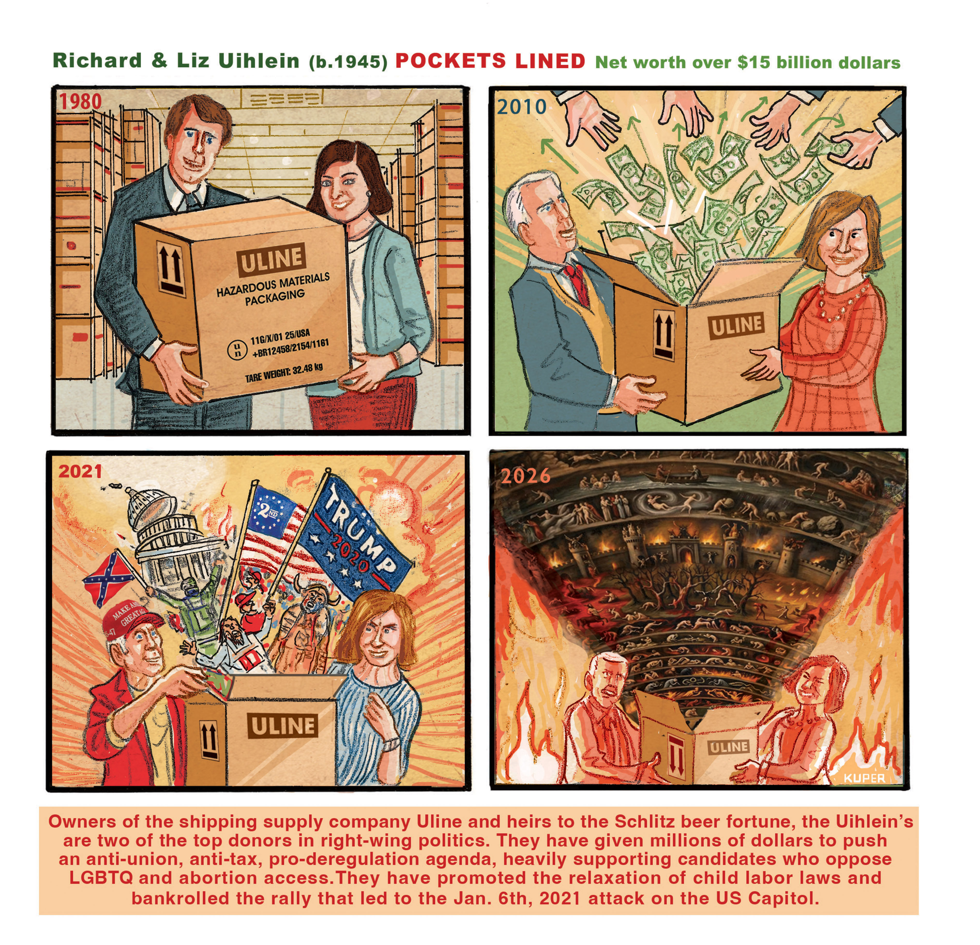
Richard and Liz Uihlein, heirs to the Schlitz beer fortune and owners of Uline shipping supplies, have directed millions into right-wing political causes. Their donations back anti-union, anti-tax and deregulation candidates while opposing LGBTQ rights and abortion access. They also promoted relaxed child labor laws and helped fund the January 6, 2021 Capitol rally. The cartoon frames their rising wealth and influence as fueling political division and institutional damage.
capitol gm
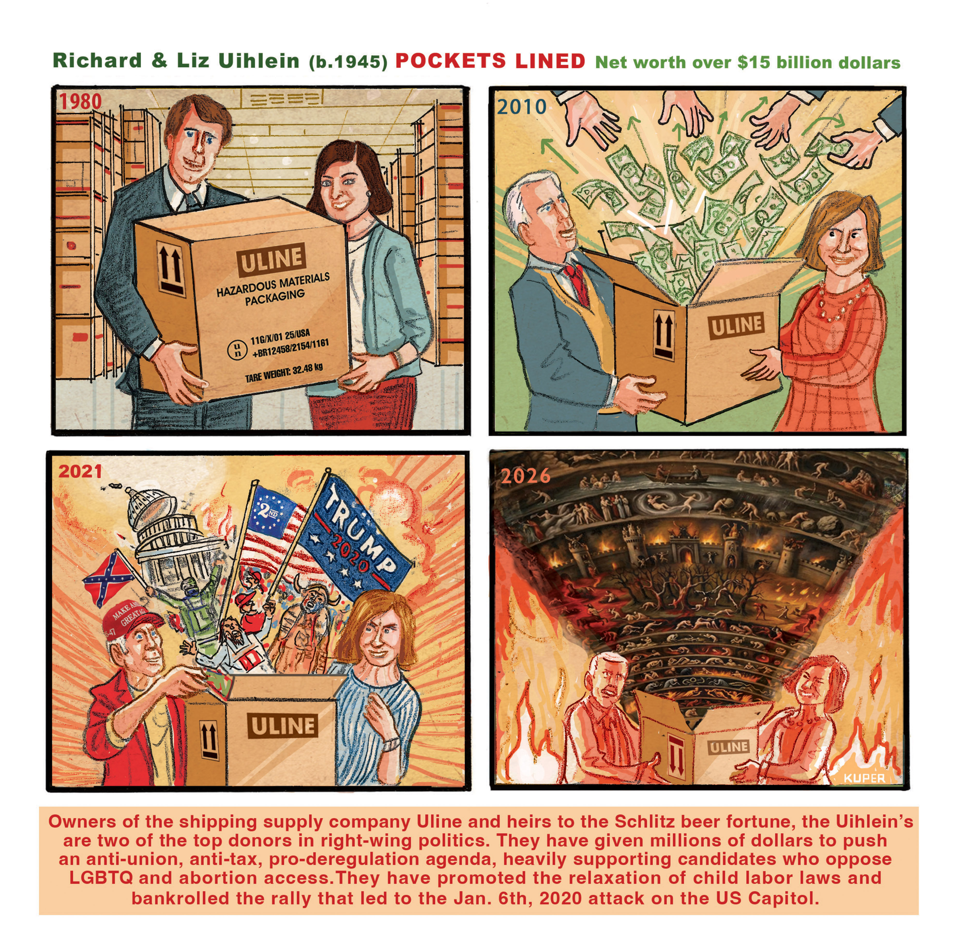
Richard and Liz Uihlein, heirs to the Schlitz fortune and owners of Uline, have donated millions to right-wing candidates and causes. Their support helped organize the January 6 rally and advanced anti-union, anti-tax, and anti-LGBTQ policies. The cartoon portrays their growing influence as corrosive to democratic norms.
Sep
10
2026
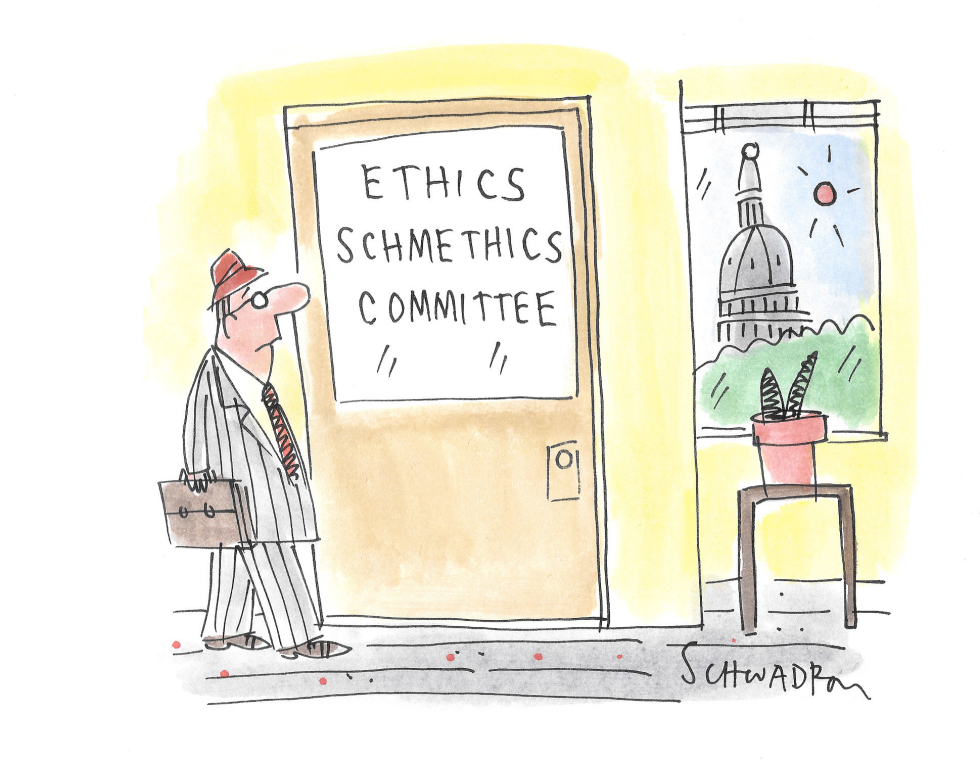
Congress continues to sideline meaningful ethics oversight, with lawmakers showing little interest in strengthening or even respecting the chamber's ethics committee. The panel exists on paper but carries little practical weight in daily operations. This dynamic matters because weak internal standards erode public trust in legislative institutions and invite outside influence. The cartoon captures the prevailing attitude that ethics rules are an afterthought rather than a core responsibility.
Sep
9
2026
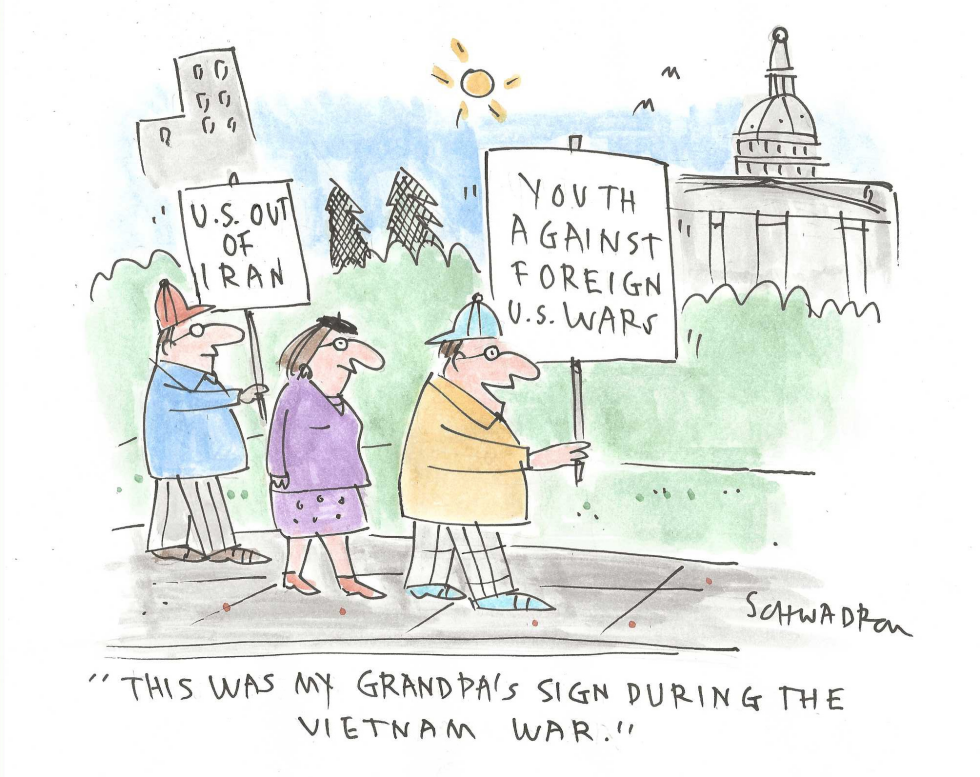
Anti-war demonstrators gather near the Capitol with signs calling for an end to US involvement in Iran and broader foreign conflicts. One protester notes that his sign originated during the Vietnam War, underscoring continuity across generations. The piece highlights persistent public opposition to military engagements abroad and questions the repetition of past policy mistakes.
Sep
4
2026
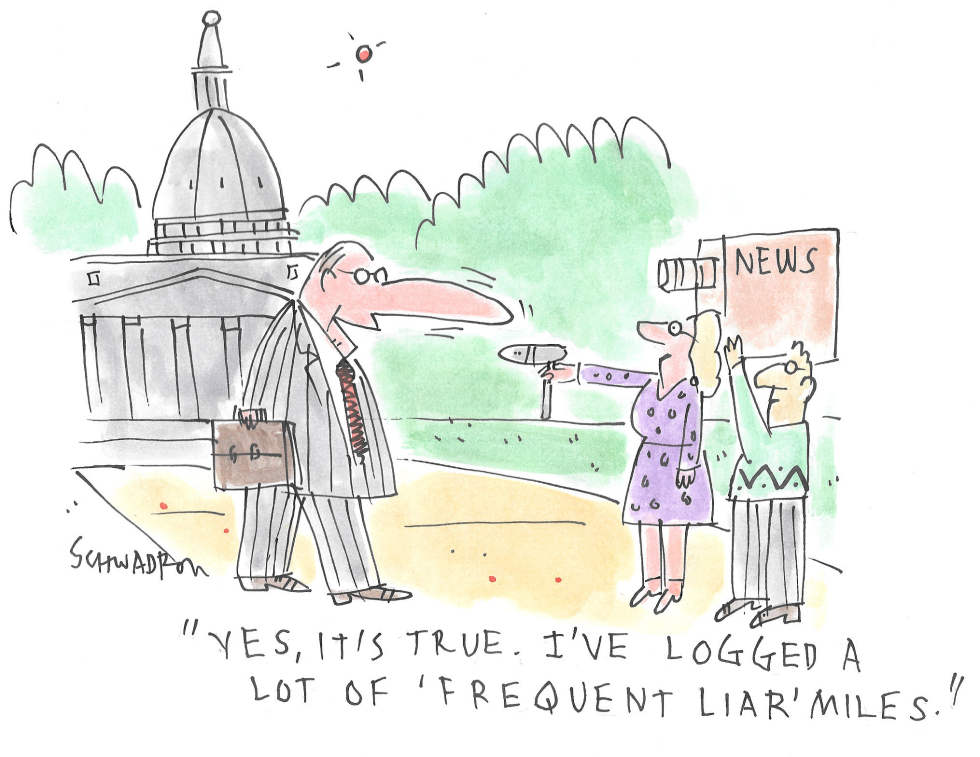
A Capitol politician carrying a briefcase marked GB faces a news interview outside the building and openly acknowledges logging many frequent liar miles. The exchange highlights routine political deception as a normalized practice rather than an exception. The cartoon frames the admission as unremarkable business for those in government.
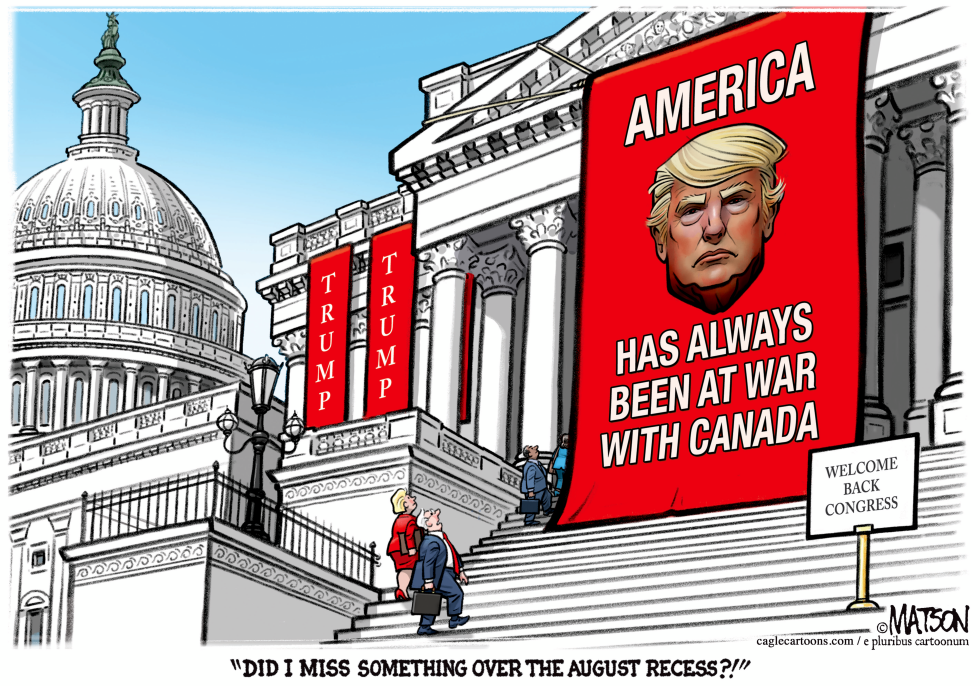
President Trump has intensified trade measures against Canada, prompting comparisons to classic dystopian rhetoric as lawmakers reconvene after the August recess. The move revives long-standing bilateral tensions over tariffs and economic policy. The cartoon frames the development as an attempt to normalize conflict through repeated messaging, underscoring concerns that familiar disputes are being recast as perpetual struggle.
Sep
1
2026
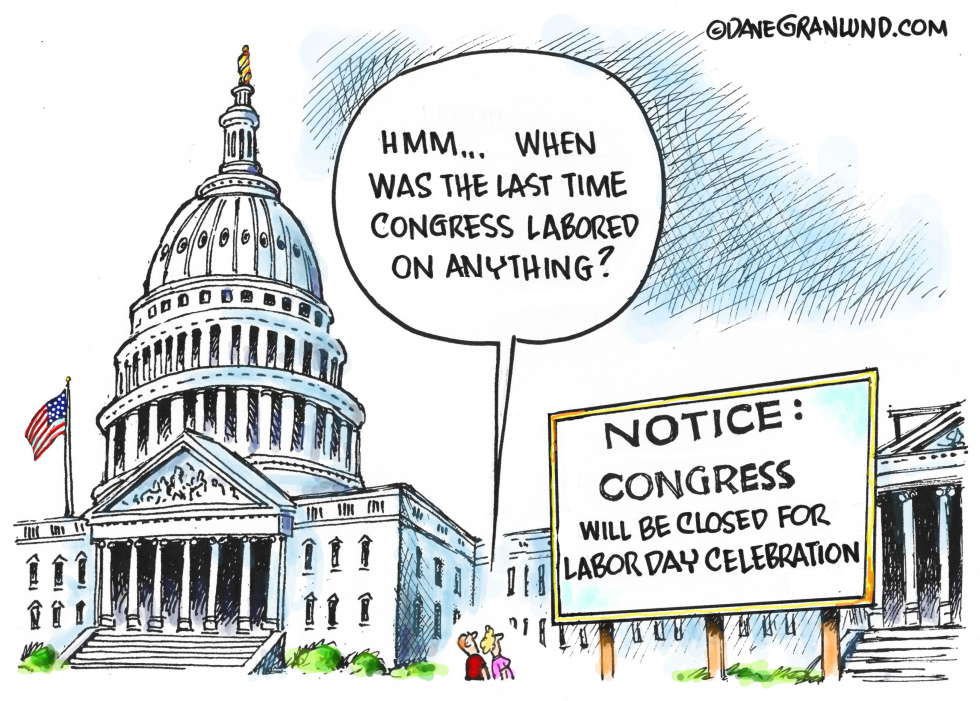
A political cartoon depicts the US Capitol Building with a prominent notice announcing Congress will be closed for Labor Day celebration. A speech bubble from onlookers asks when Congress last labored on anything. The image, dated September 1, 2026, comments on legislative inactivity during a federal holiday. It reflects common public frustration with congressional productivity and frequent recesses. The cartoon uses the holiday to underscore perceptions of limited legislative output in recent sessions.
Aug
31
2026
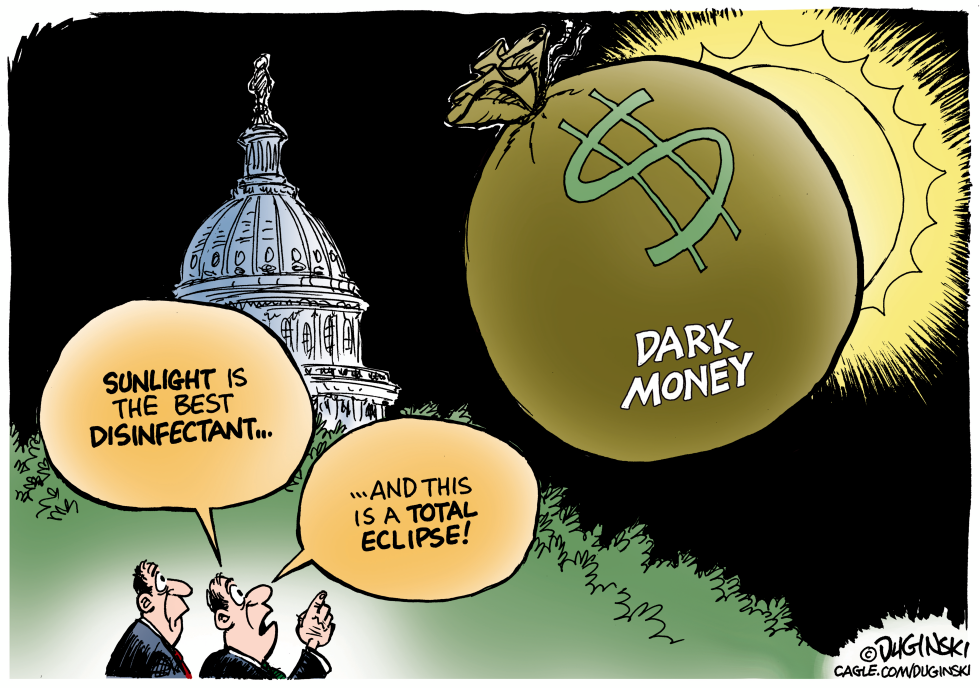
Dark money continues to shape congressional races and policy debates through undisclosed channels. Lawmakers face pressure to address donor secrecy amid calls for stronger disclosure rules. The cartoon argues that such funds directly undermine public oversight of government actions.
Aug
21
2026
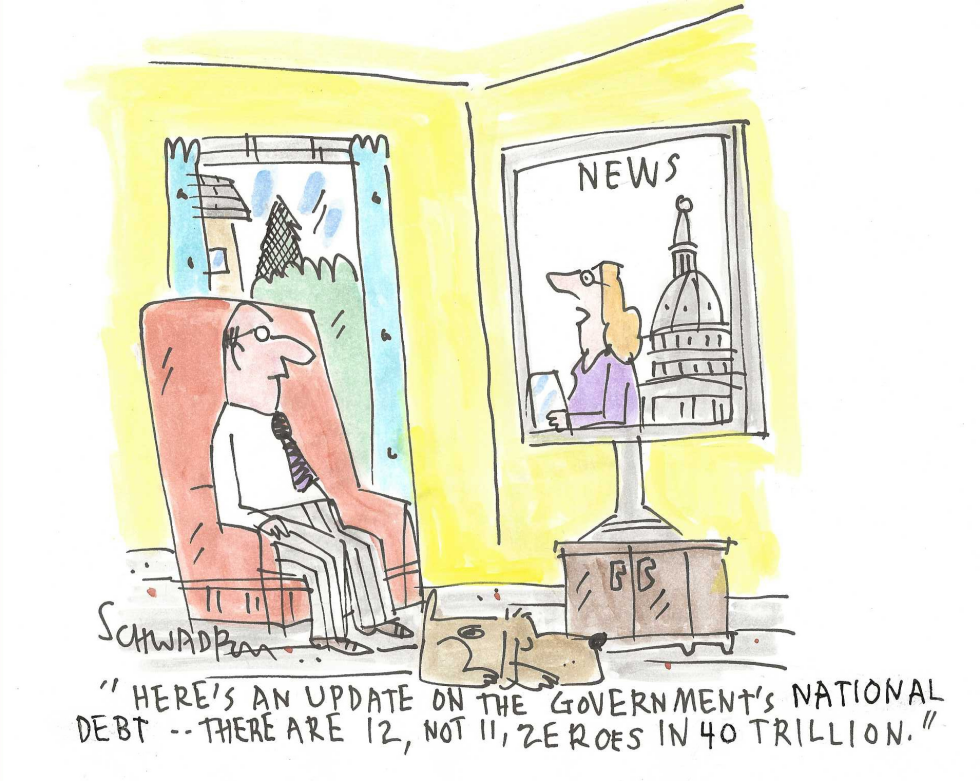
A television news report updates the national debt figure to 40 trillion dollars. The anchor emphasizes that the amount contains twelve zeros rather than eleven. The development underscores ongoing fiscal pressures on federal budgets and public attention to spending totals. The piece presents the correction as a straightforward broadcast detail delivered to a home audience.
Aug
18
2026
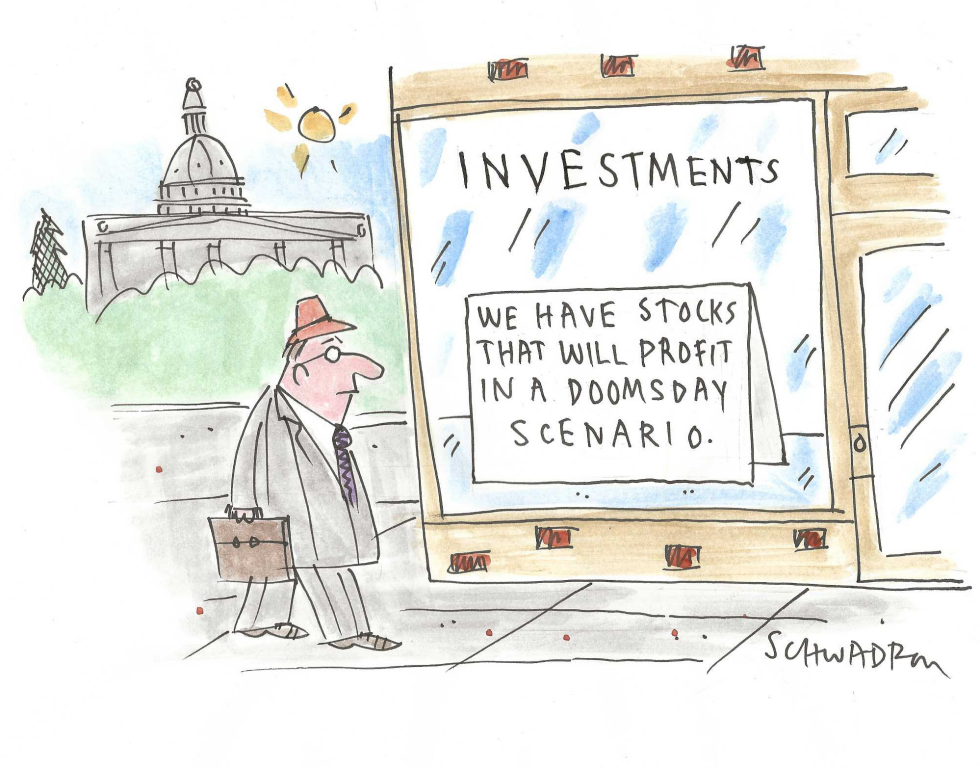
Investment firms continue to market specialized stock offerings designed to gain value during periods of widespread economic or geopolitical turmoil. Such products attract attention from clients seeking protection against market downturns or global instability. The cartoon highlights the persistent appeal of these instruments even as broader uncertainty lingers around policy and international developments.
Aug
18
2026
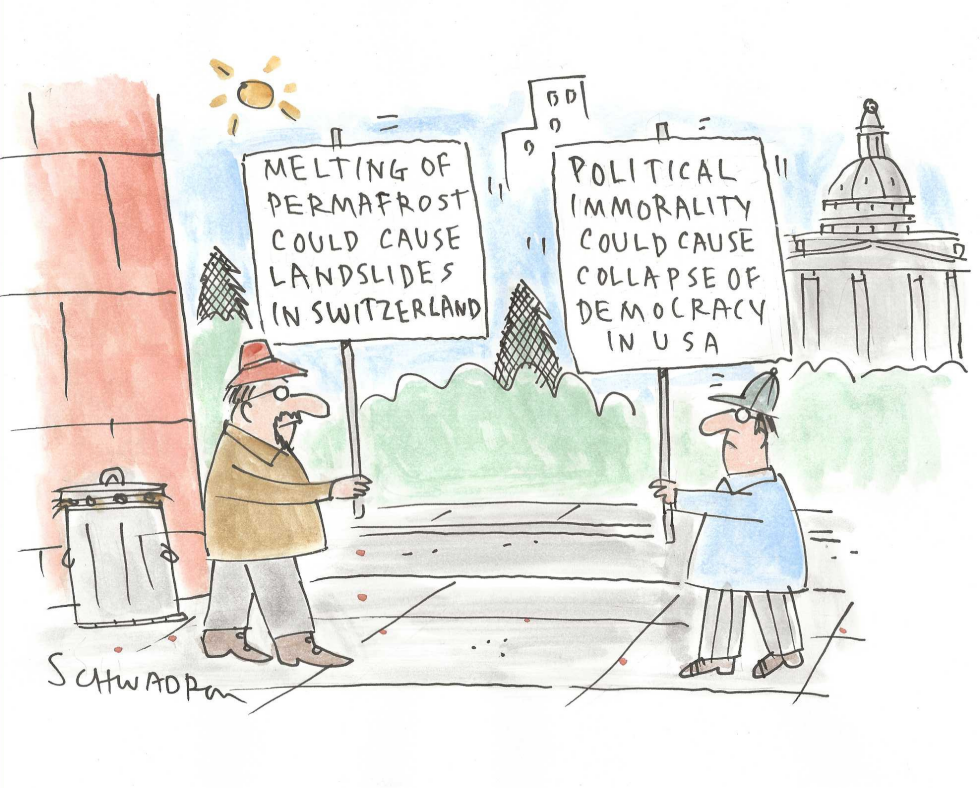
Activists in public spaces continue to draw parallels between accelerating climate impacts such as thawing permafrost and landslides in Switzerland and warnings about political conduct undermining democratic institutions in the United States. The signs highlight how environmental changes and governance failures each carry risks of sudden structural breakdown. The editorial stance underscores that both threats deserve equal public attention as visible warning indicators.
Aug
12
2026
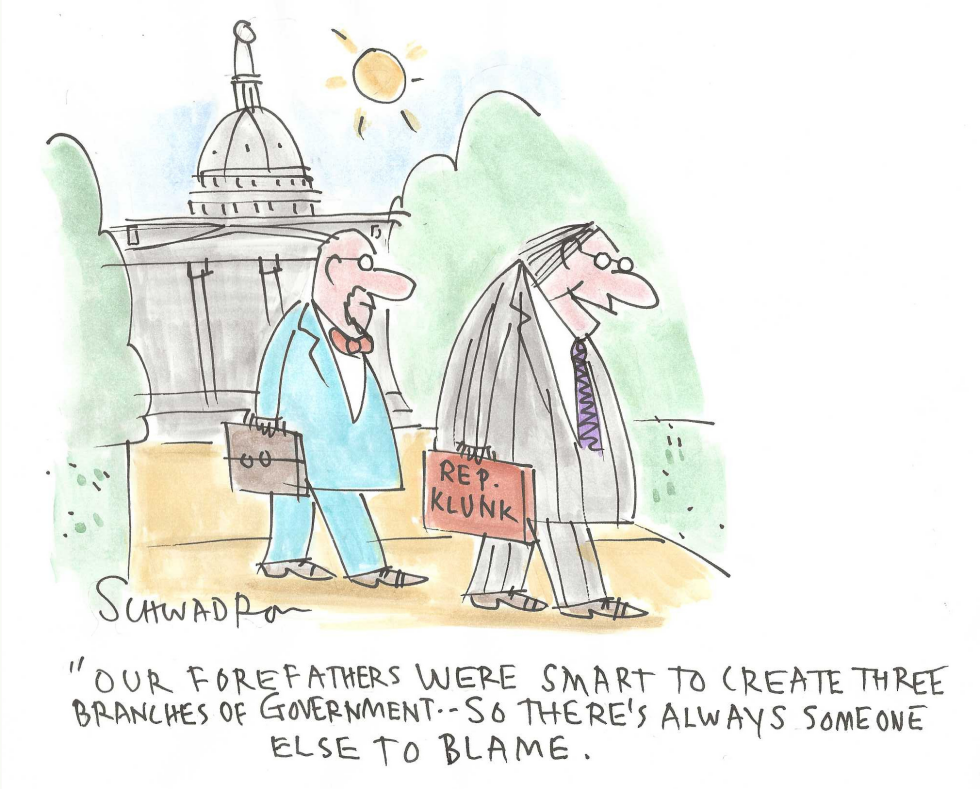
Members of Congress continue to deflect responsibility for legislative inaction by pointing to other branches of government. The dynamic persists amid ongoing budget disputes and stalled priorities on Capitol Hill. The editorial argues that the constitutional design intended to prevent tyranny now serves mainly as an excuse for avoiding accountability.
Aug
11
2026
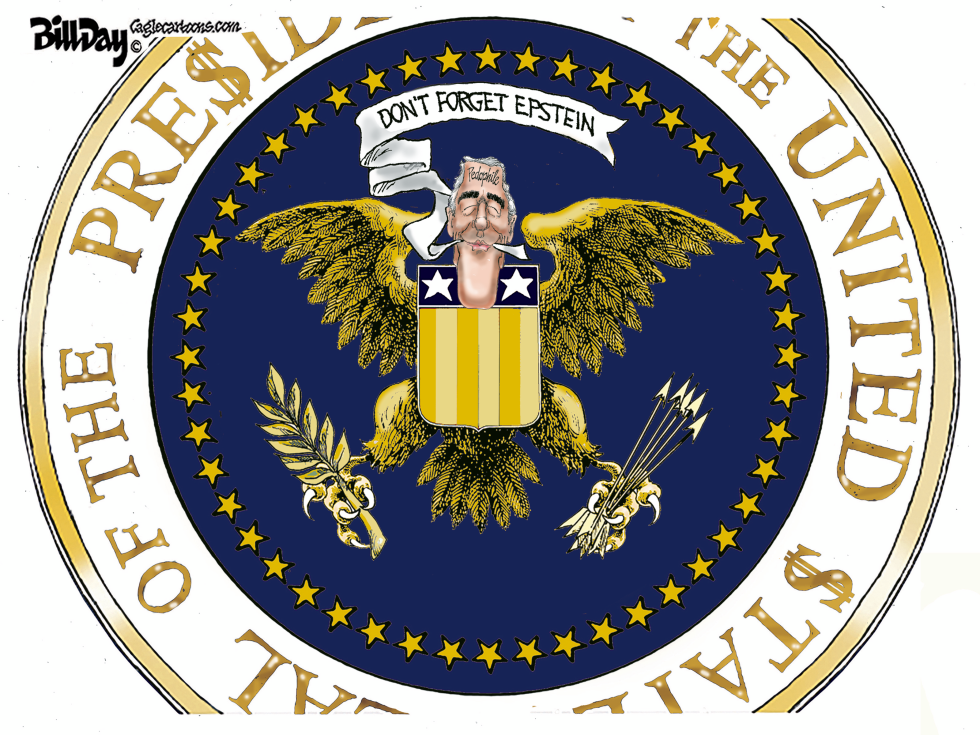
The Epstein scandal continues to generate political scrutiny years after the financier's death. Recent developments keep the case in public view through references to past associations. The piece argues that such connections deserve ongoing attention rather than dismissal.
Aug
5
2026
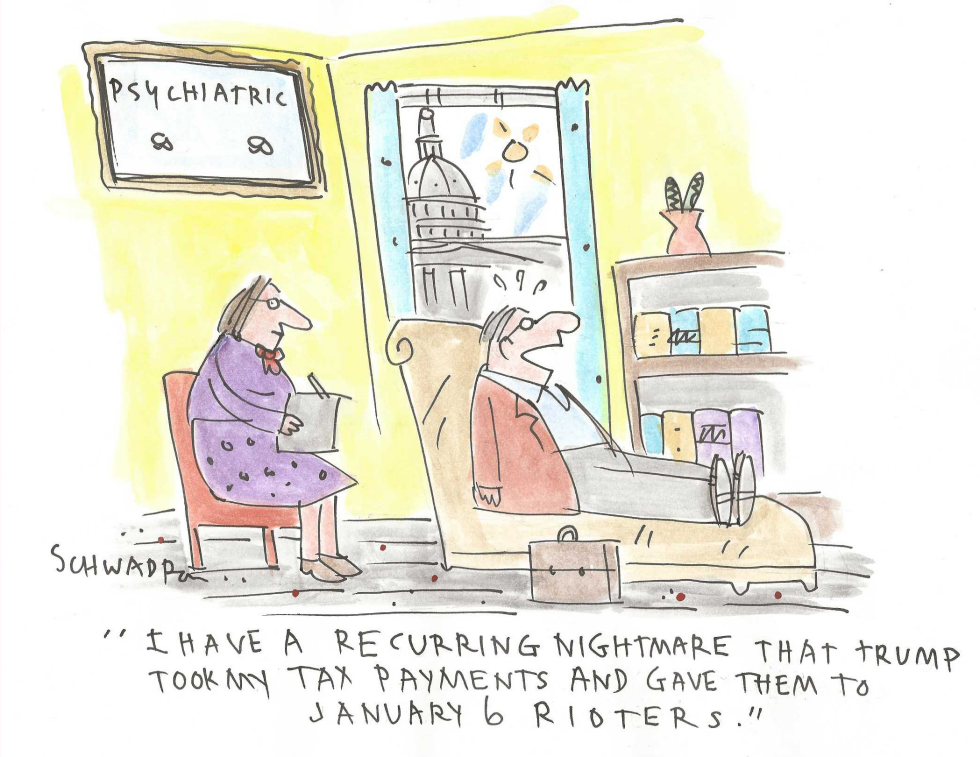
A patient describes a recurring nightmare in which former President Trump diverts tax payments to January 6 rioters. The session reflects persistent public concerns over accountability for the Capitol events and use of public funds. The piece portrays these fears as a continuing source of political unease.
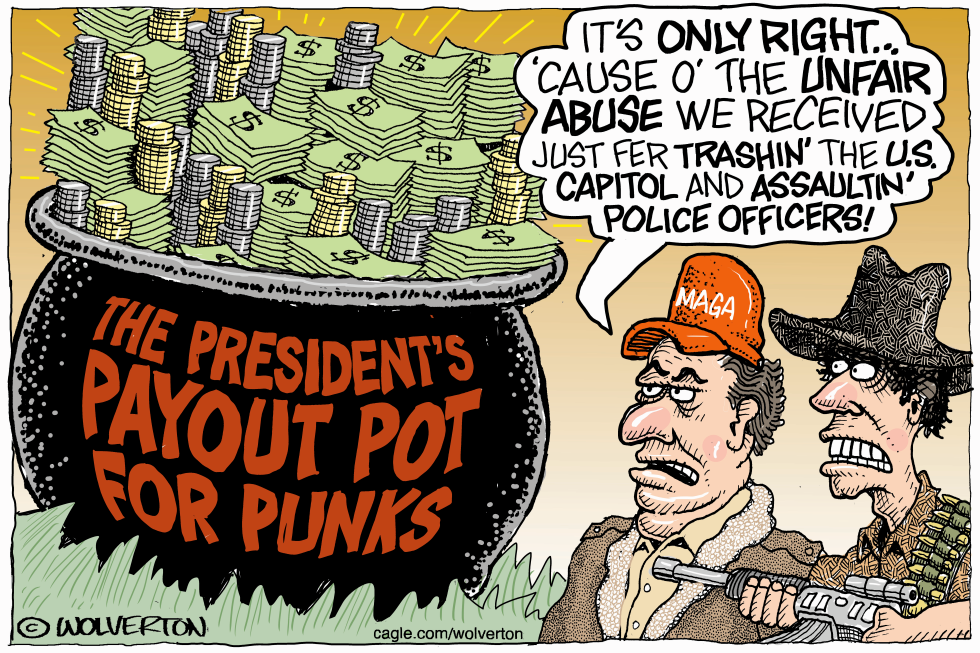
A proposal for compensation to January 6 defendants has drawn sharp criticism from opponents who view it as rewarding those convicted of attacking the Capitol and police. The editorial cartoon portrays the idea as a presidential slush fund for rioters, highlighting the perceived absurdity of compensating participants in the 2021 events.