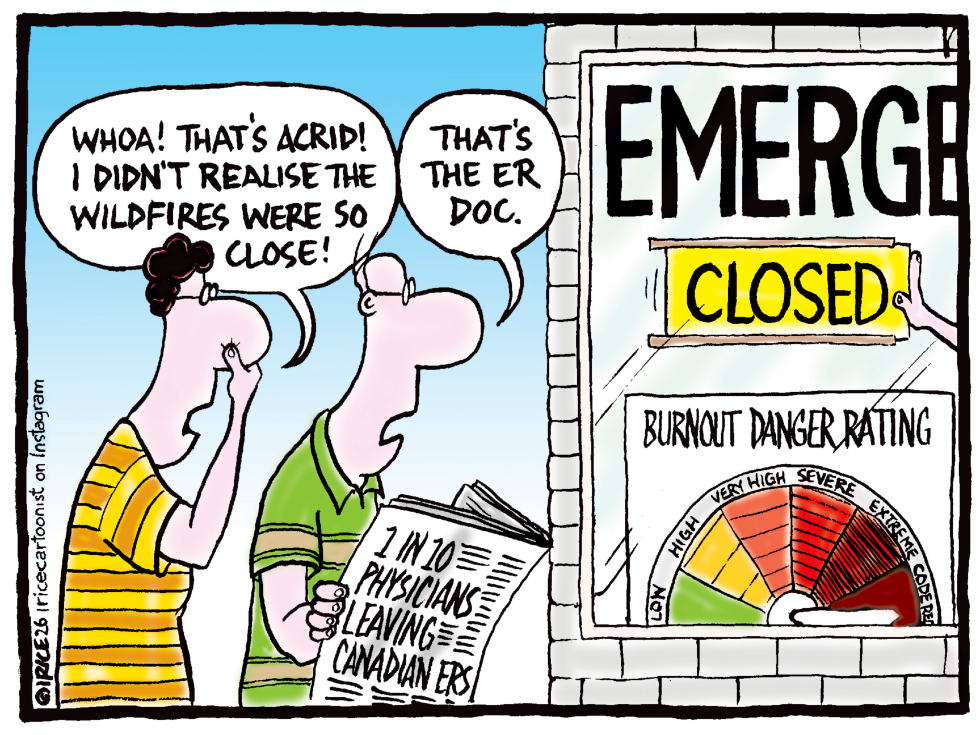
Canadian emergency rooms face mounting closures as one in ten physicians depart amid rising burnout, compounded by wildfire smoke exposure. The staffing crisis leaves communities without timely care during peak summer health threats. The editorial highlights how environmental pressures accelerate an already fragile healthcare system, urging immediate policy intervention to retain medical staff.
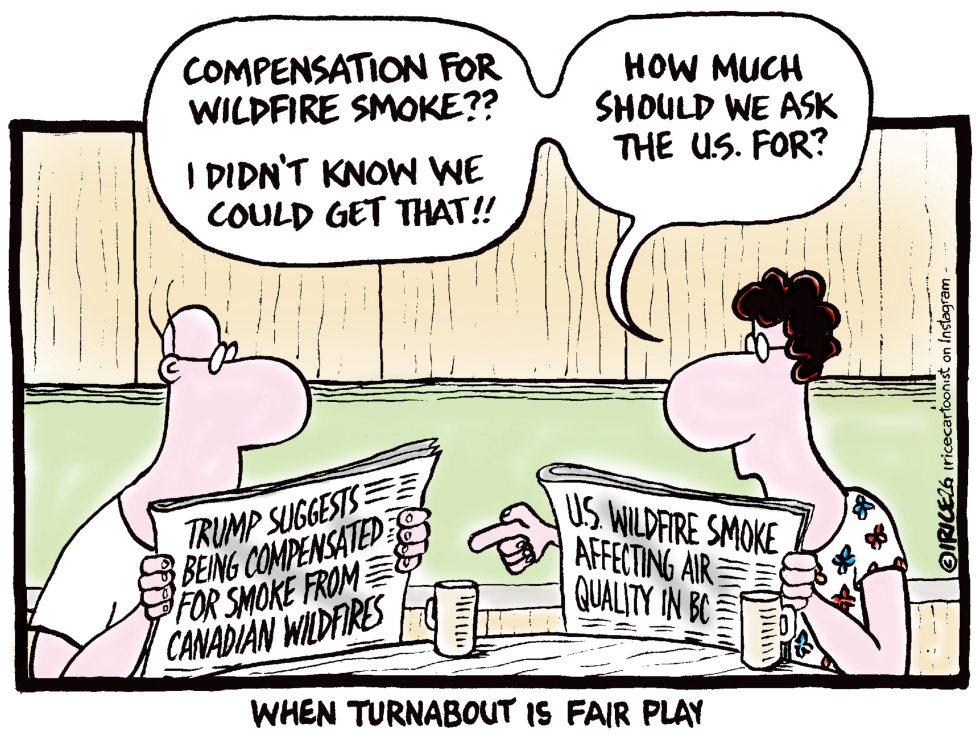
Donald Trump suggested the U.S. should receive compensation for smoke from Canadian wildfires. The cartoon responds by showing Canadians considering a reciprocal claim for smoke from U.S. wildfires affecting British Columbia air quality. It underscores the political dynamic of mutual environmental grievances between the two nations.
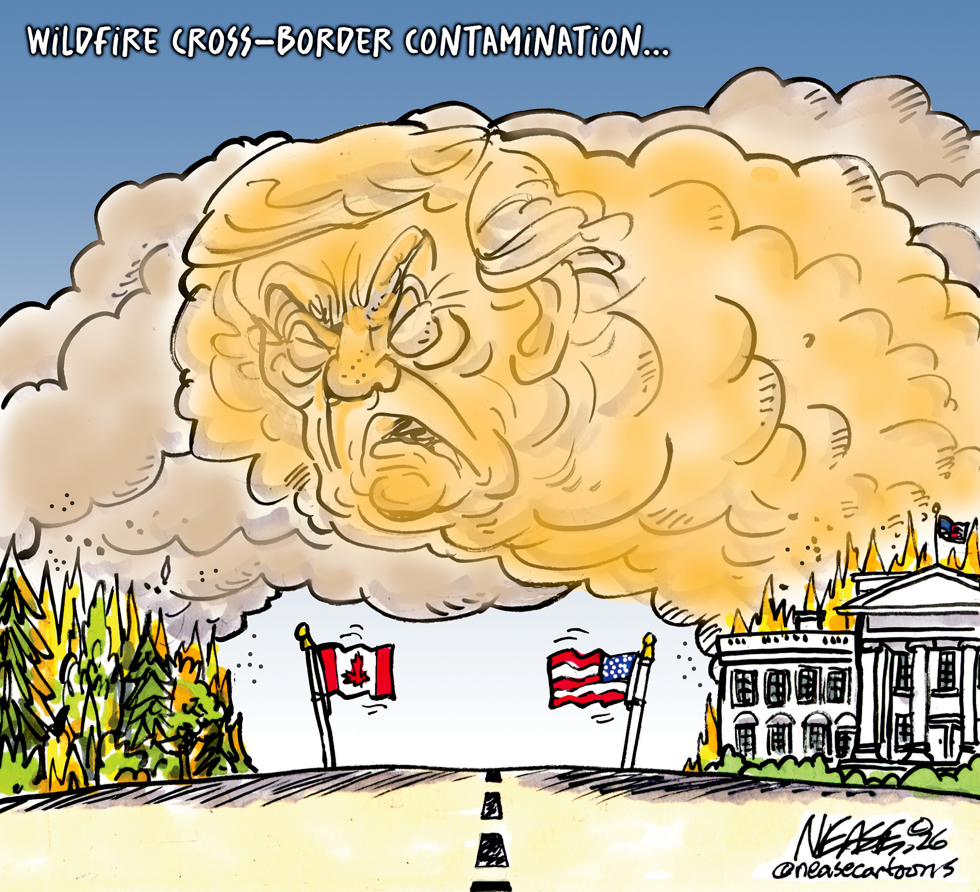
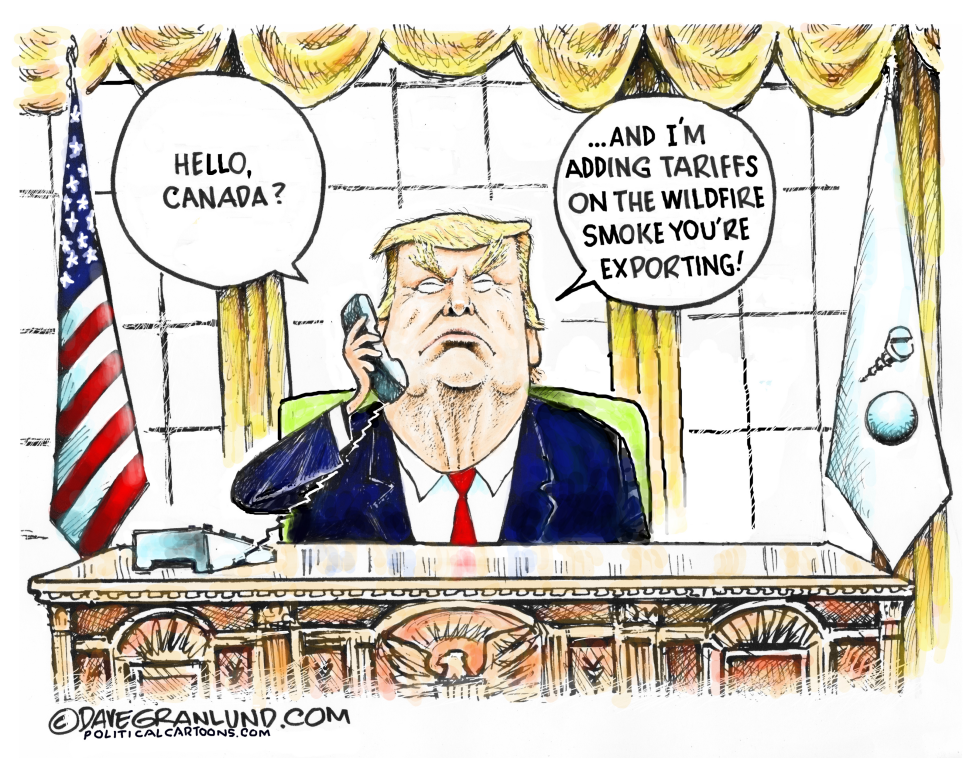
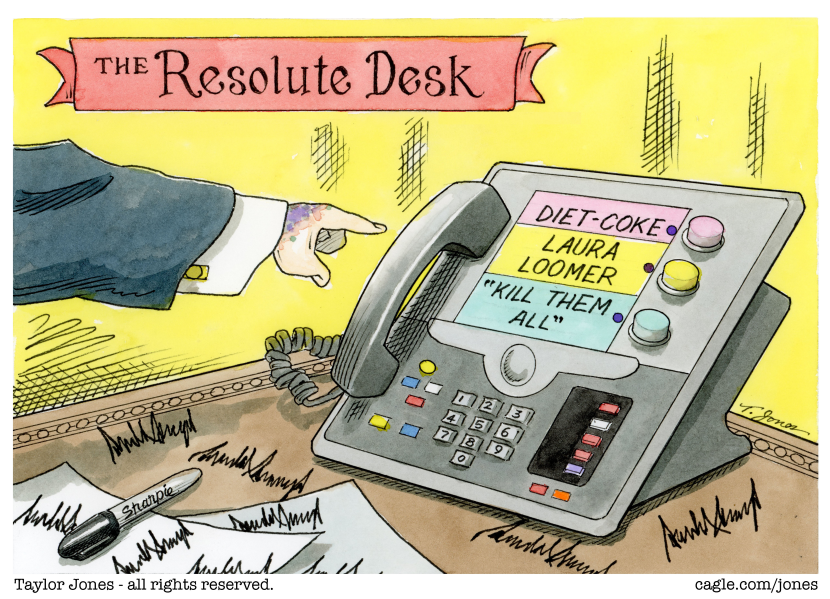
Wildfires in Canada have periodically sent smoke into the United States, creating air quality issues and diplomatic friction over environmental management. On the 2026 publication date the cartoon frames Donald Trump as the source of the drifting smoke that reaches the White House. The piece presents the former president as an ongoing source of political contamination that crosses borders and affects American institutions.
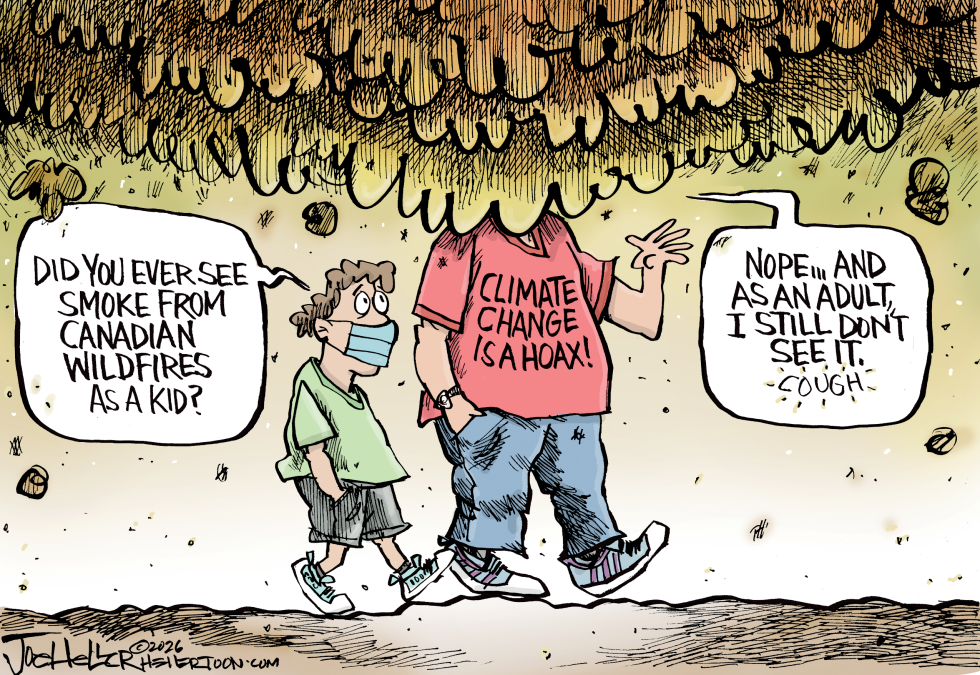
Canadian wildfire smoke blanketed parts of the northern U.S. in mid-July 2026, prompting renewed public discussion of climate impacts. An adult figure dismisses the connection outright while visibly affected by the air quality. The piece highlights the disconnect between personal experience and continued denial of the underlying cause.
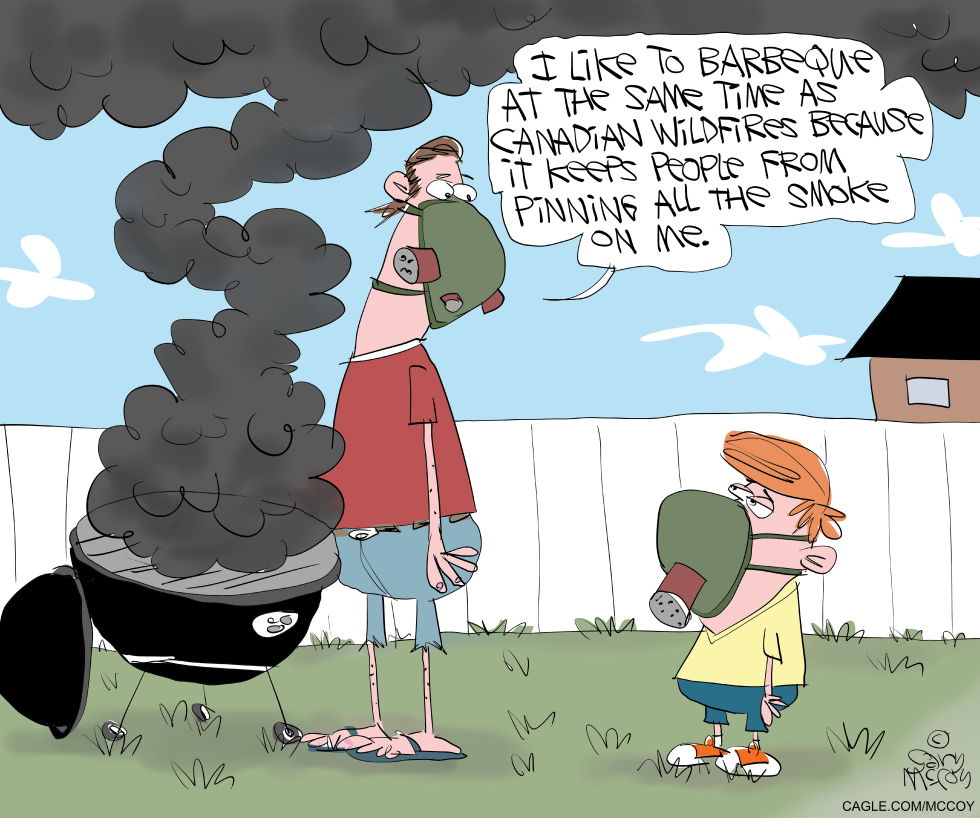
Canadian wildfires in mid-2026 sent thick smoke plumes across the northern United States, prompting air-quality alerts and health warnings in multiple states. Residents already dealing with regional haze faced additional backyard smoke from summer grilling. The cartoon depicts two figures wearing gas masks beside an active barbecue, with the adult figure claiming the wildfires conveniently deflect attention from personal smoke contributions. The piece highlights how individuals exploit larger environmental events to minimize accountability for smaller-scale pollution during the same period.
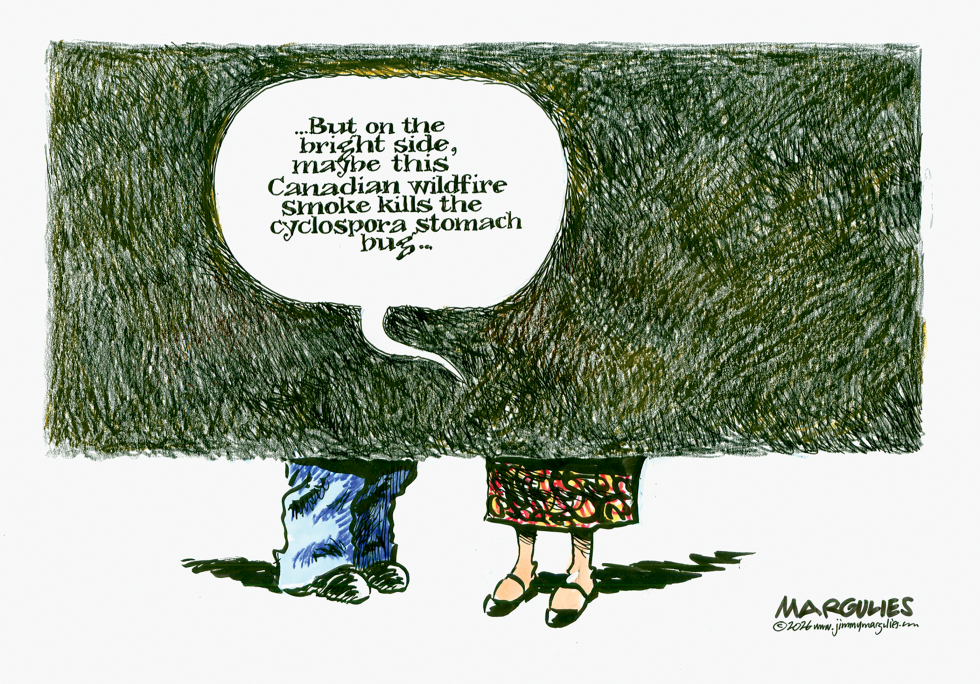
Canadian wildfire smoke continues drifting south while a cyclospora outbreak raises separate public health alarms. The overlapping crises prompt discussion of unintended consequences from environmental events. The piece presents a grimly optimistic take on the smoke's possible effect on the stomach bug.
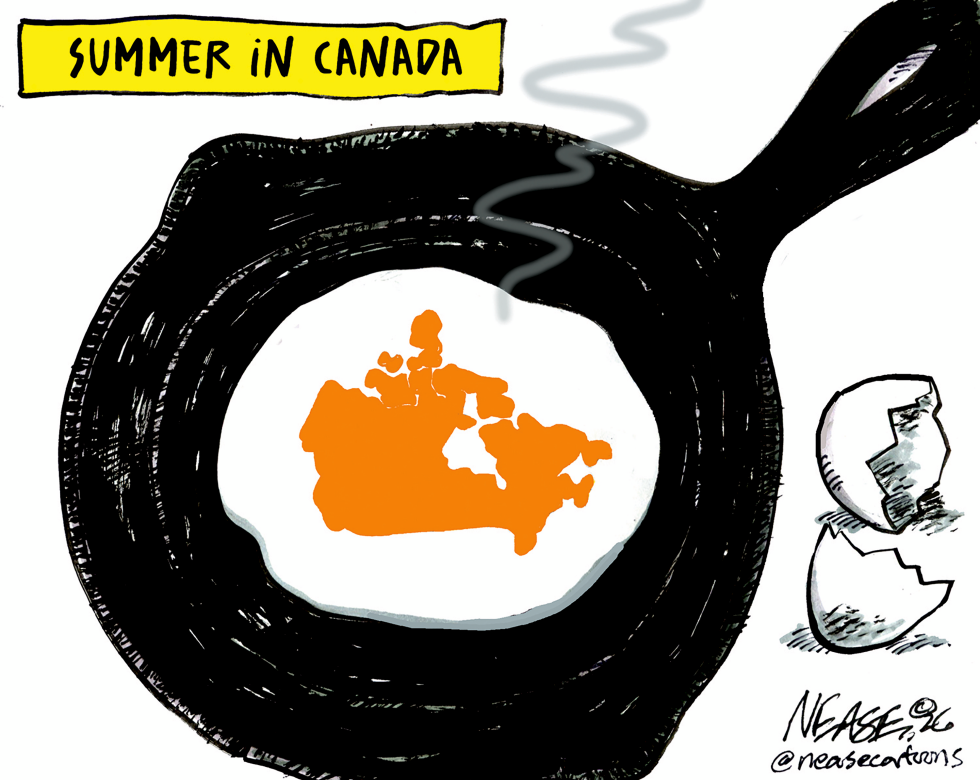
Canada has faced repeated extreme heat and wildfire seasons in recent years. The piece responds to summers that now bring health advisories and air quality warnings rather than mild weather. It renders the country as an egg frying in a skillet.
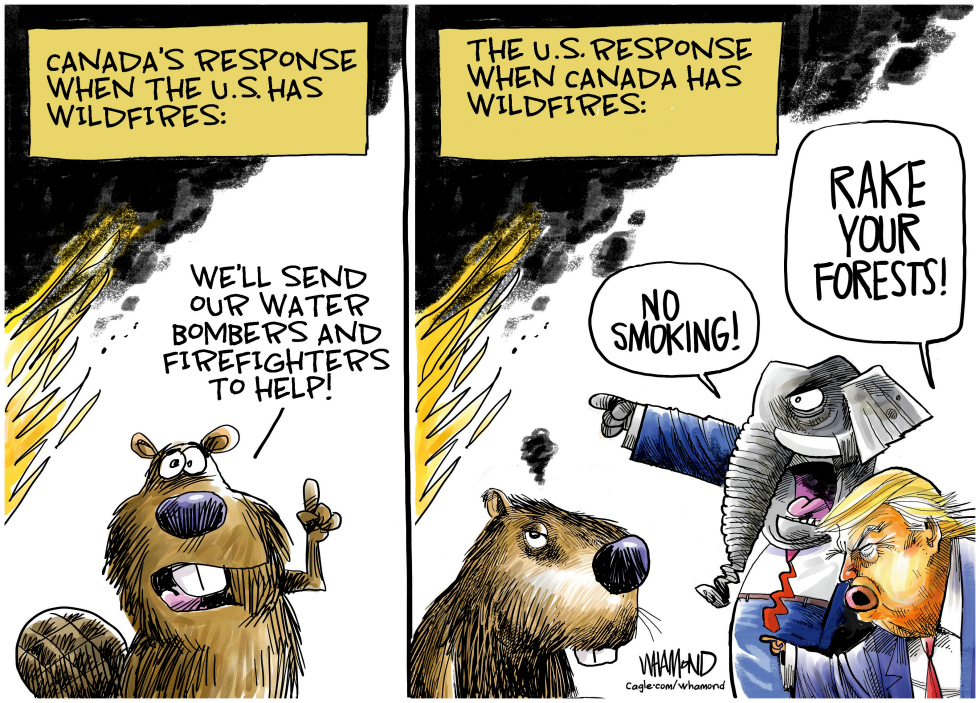
The image splits into two panels contrasting responses to wildfires. On the left a beaver representing Canada pledges water bombers and firefighters when the US faces fires. On the right an elephant and a figure resembling Trump tell Canada to stop smoking and rake forests. The composition uses smoke and flames to frame each side. Publication occurs amid ongoing summer wildfire activity affecting air quality in both nations.
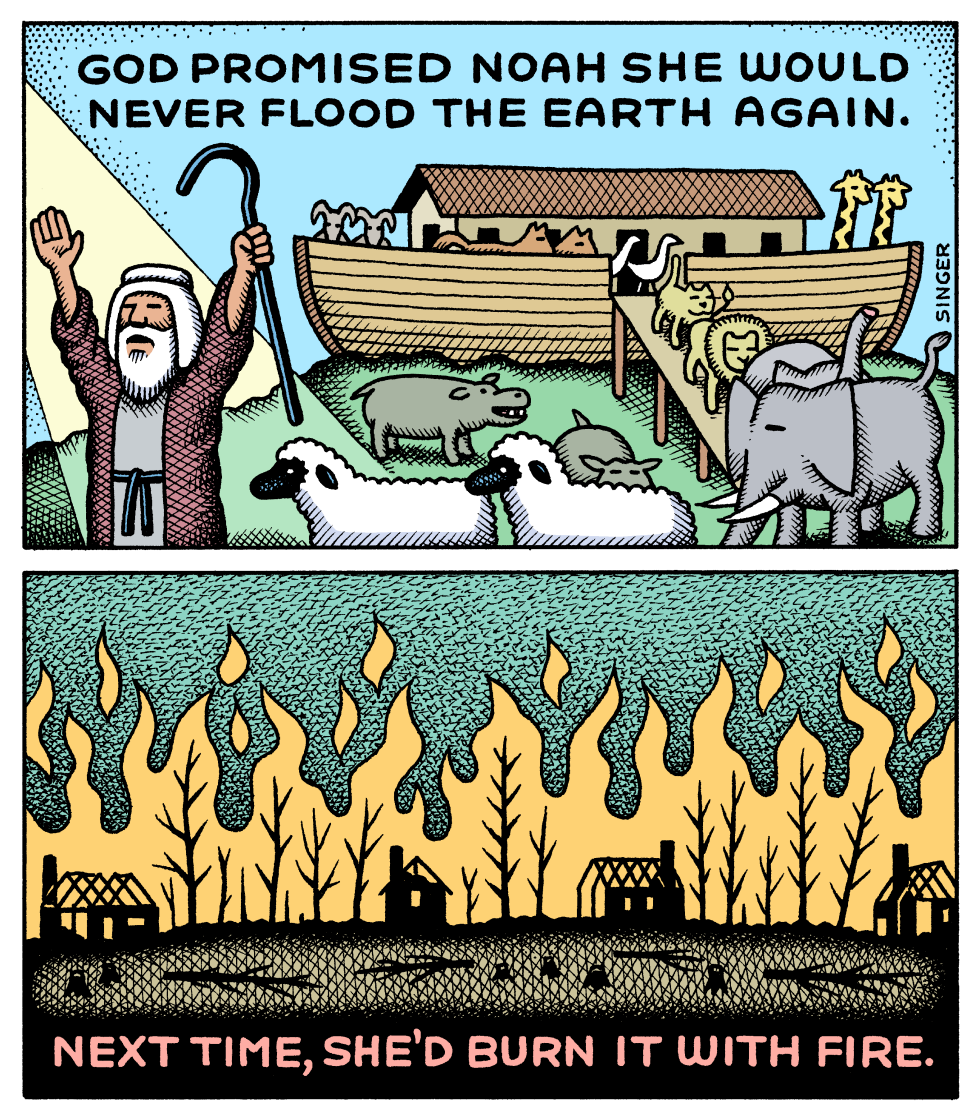
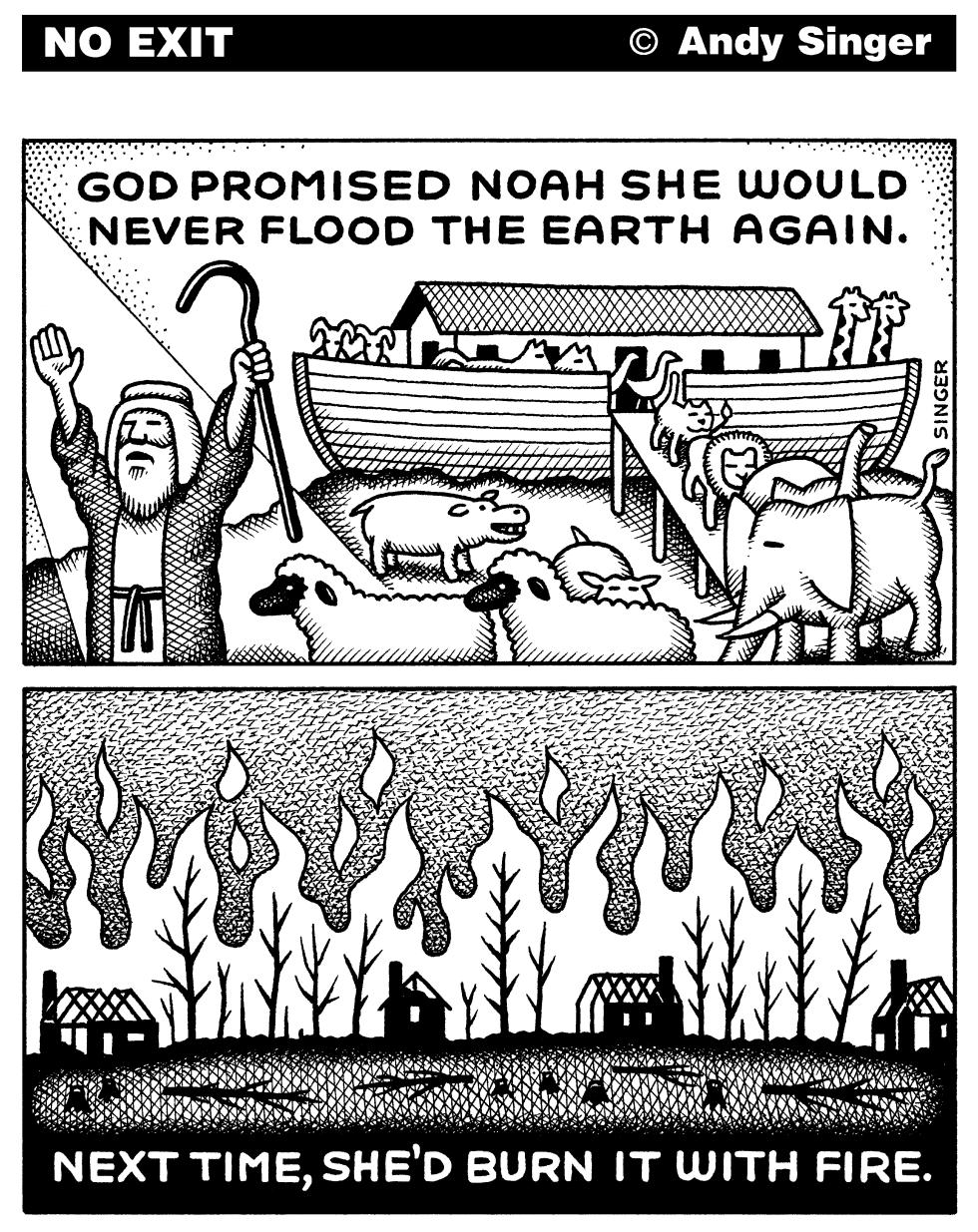
A two-panel composition presents a robed biblical figure raising a staff beside an ark filled with animals under a caption stating a divine promise against future floods. The lower section depicts a landscape of flames consuming trees and structures beneath text declaring fire as the next method of destruction. The work responds to active wildfire events in California and surrounding regions during early 2025 by reworking the Noah narrative to address drought and temperature driven blazes rather than water. Publication timing aligns with ongoing recovery discussions in Los Angeles, Napa and Paradise areas affected by recent burns.
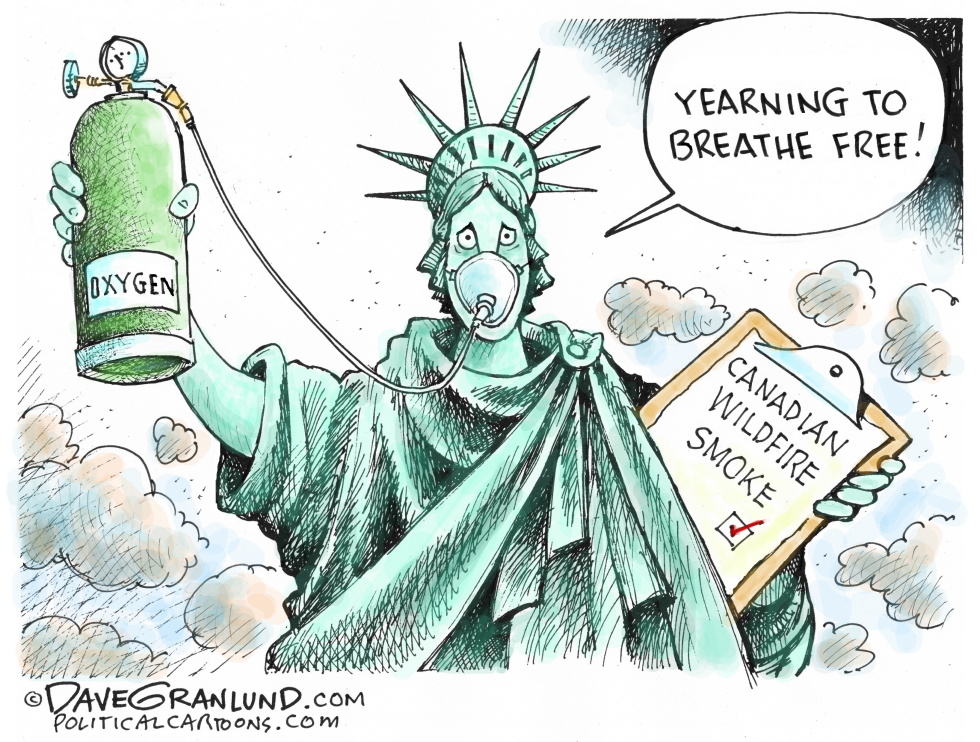
The Statue of Liberty stands holding a green oxygen tank in one hand and a clipboard marked Canadian Wildfire Smoke in the other. A mask covers the face with a tube connected to the tank. A speech bubble states Yearning to Breathe Free. Smoke clouds fill the background. The scene shows the figure equipped for breathing in poor air conditions linked to fires north of the border.