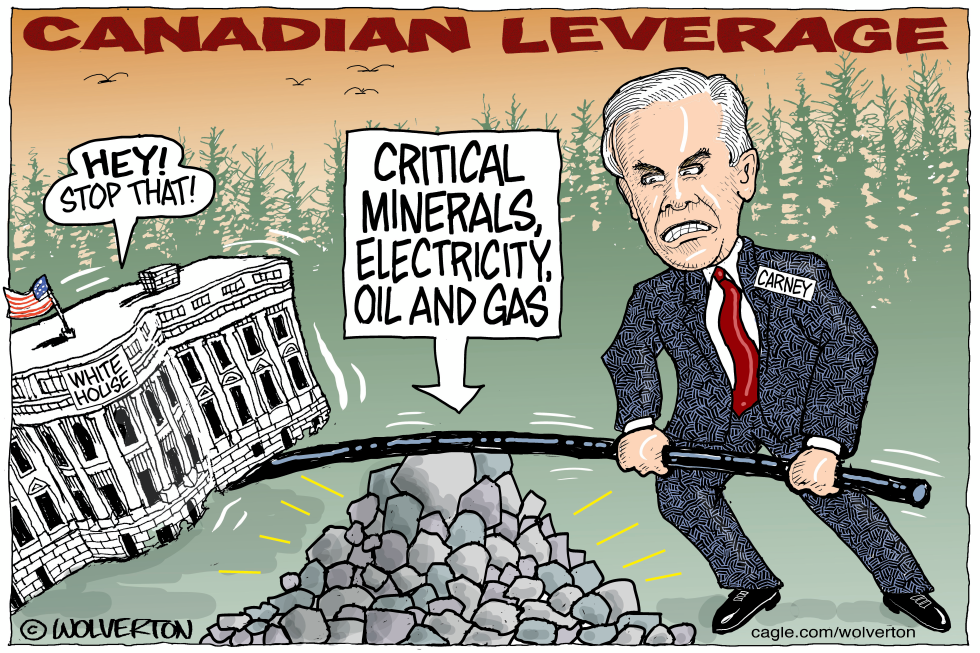
The cartoon depicts former Bank of Canada governor Mark Carney using a pipe labeled critical minerals, electricity, oil and gas as a lever to damage the White House. A speech bubble from the building protests the action. Published on September 12, 2026, the image comments on ongoing Canada-US tensions over resource exports and trade policy. Carney is shown in a suit with a determined expression, standing on rubble. The visual underscores Canada's potential to restrict supplies vital to the American economy. It reflects real-world discussions about critical minerals and energy interdependence between the two nations.
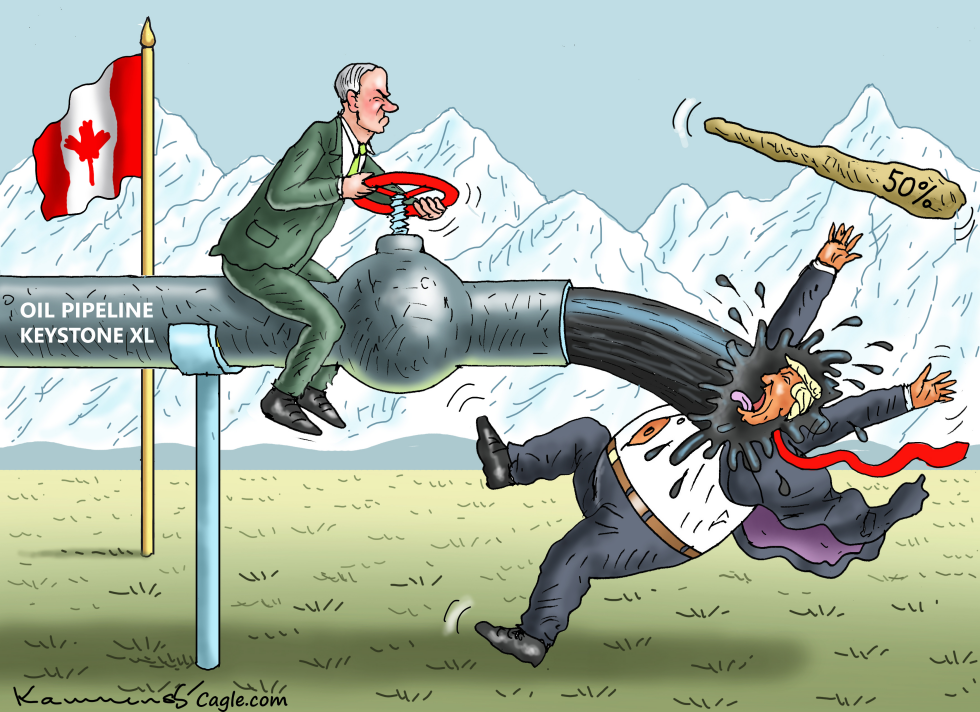
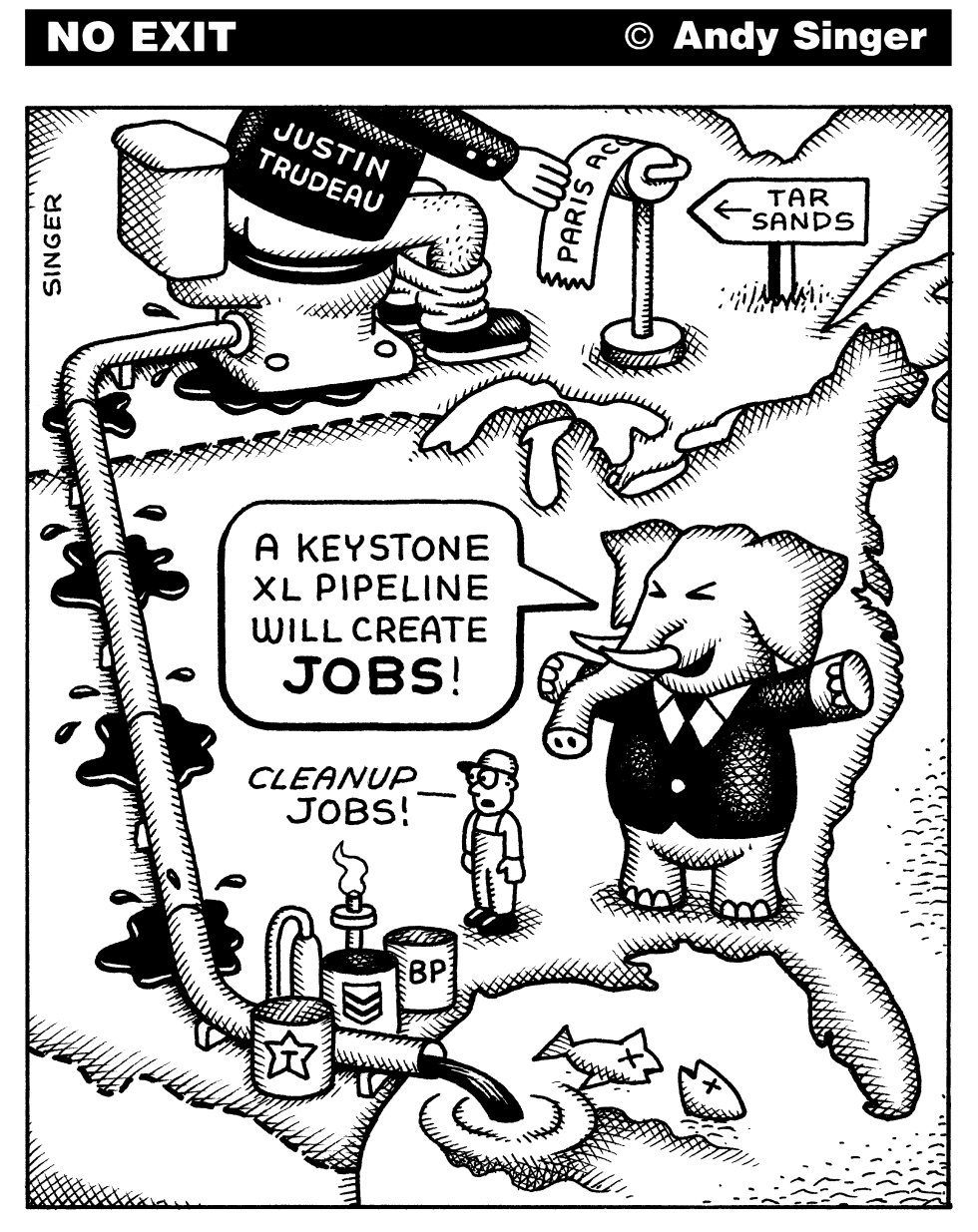
Canadian Prime Minister Mark Carney moves to restrict the Keystone XL pipeline in a direct action affecting U.S. interests tied to Donald Trump. The decision carries implications for cross-border energy flows and bilateral relations. The piece portrays the move as a targeted setback delivered through the pipeline controls.
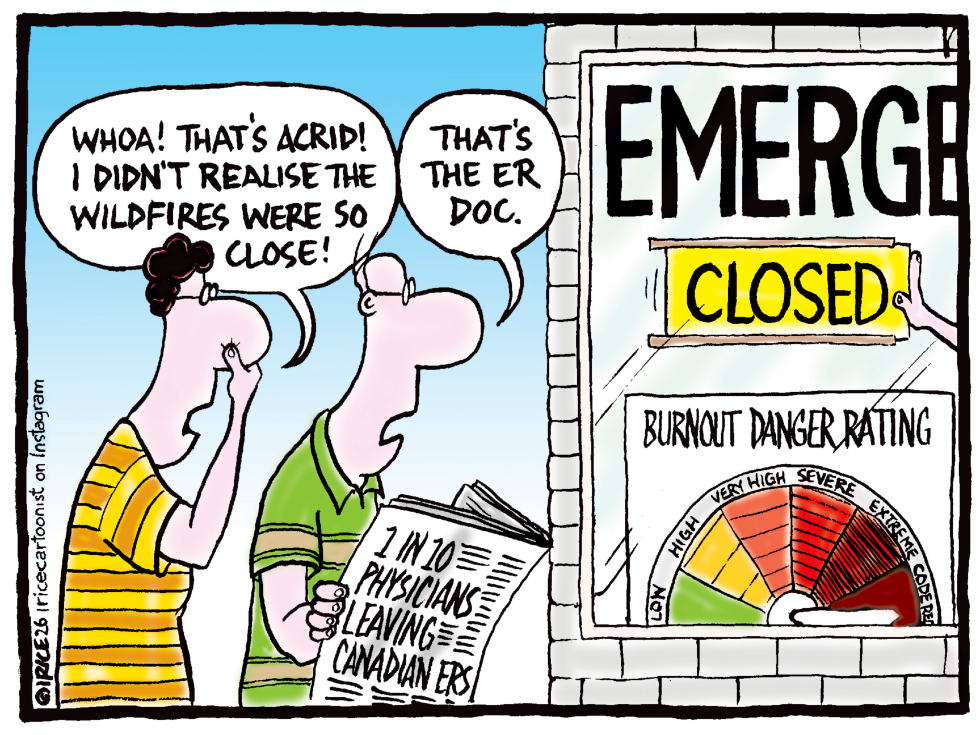
Canadian emergency rooms face mounting closures as one in ten physicians depart amid rising burnout, compounded by wildfire smoke exposure. The staffing crisis leaves communities without timely care during peak summer health threats. The editorial highlights how environmental pressures accelerate an already fragile healthcare system, urging immediate policy intervention to retain medical staff.
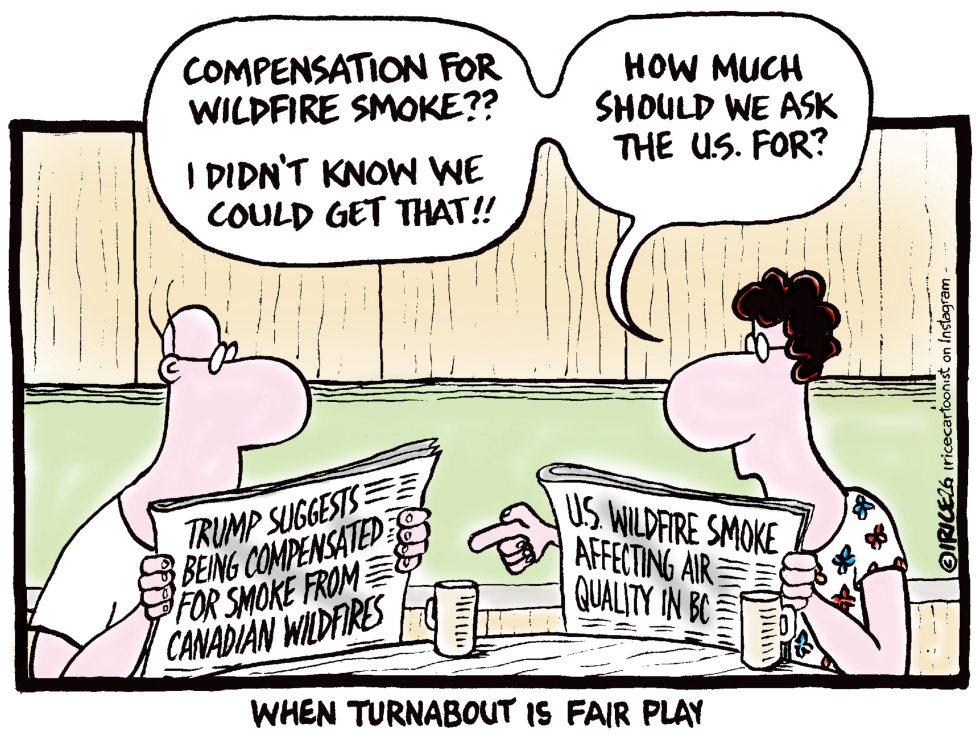
Donald Trump suggested the U.S. should receive compensation for smoke from Canadian wildfires. The cartoon responds by showing Canadians considering a reciprocal claim for smoke from U.S. wildfires affecting British Columbia air quality. It underscores the political dynamic of mutual environmental grievances between the two nations.
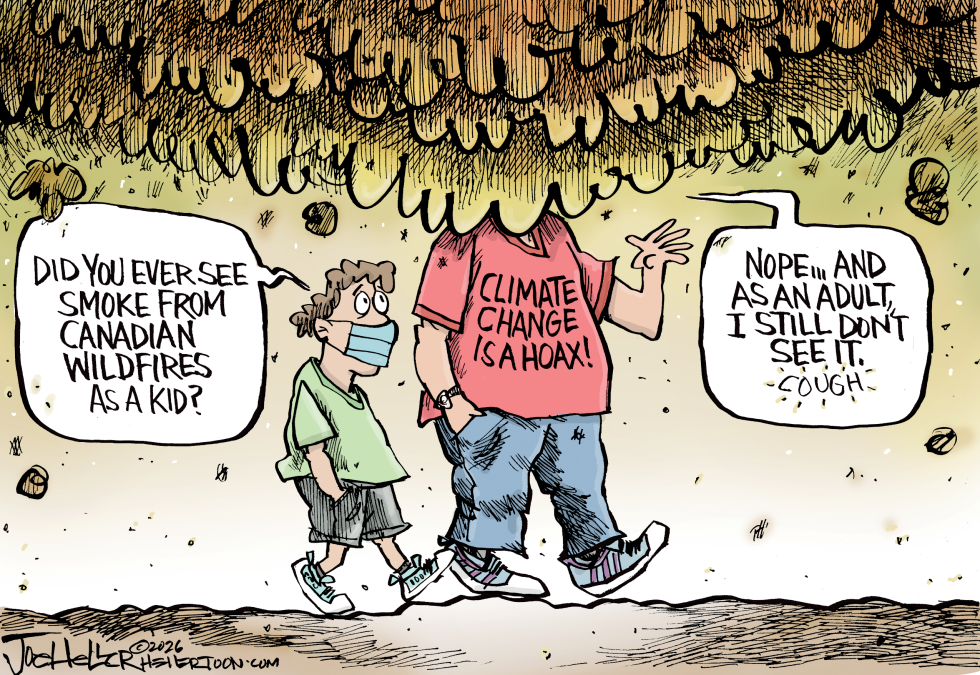
Canadian wildfire smoke blanketed parts of the northern U.S. in mid-July 2026, prompting renewed public discussion of climate impacts. An adult figure dismisses the connection outright while visibly affected by the air quality. The piece highlights the disconnect between personal experience and continued denial of the underlying cause.
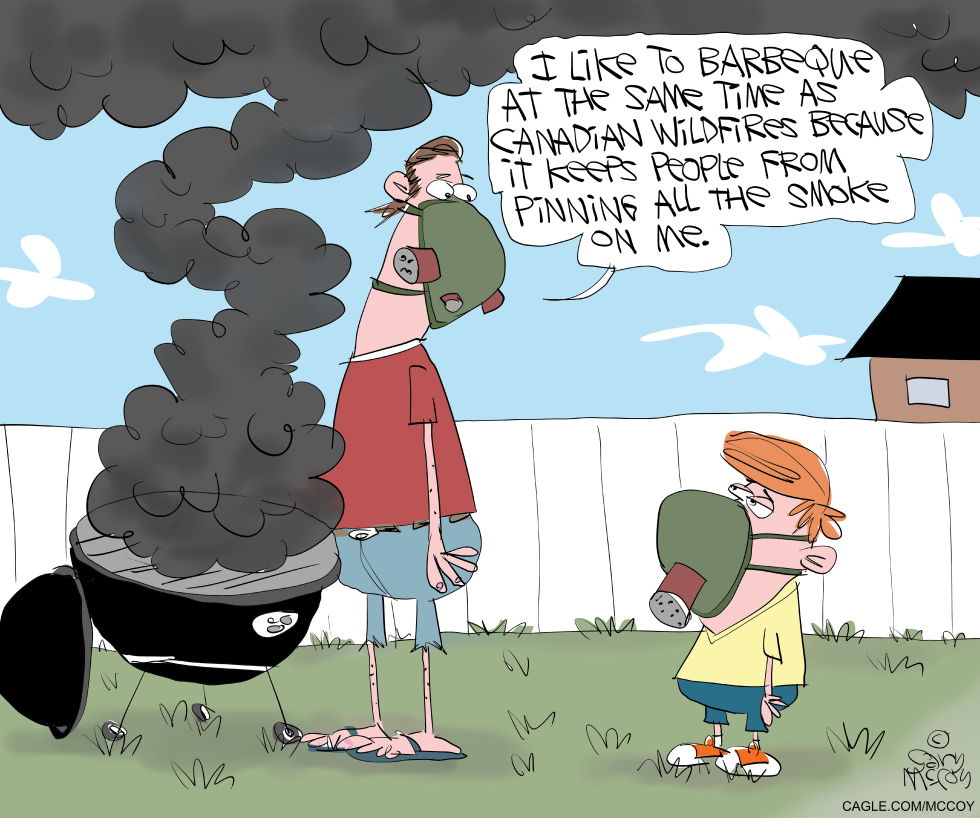
Canadian wildfires in mid-2026 sent thick smoke plumes across the northern United States, prompting air-quality alerts and health warnings in multiple states. Residents already dealing with regional haze faced additional backyard smoke from summer grilling. The cartoon depicts two figures wearing gas masks beside an active barbecue, with the adult figure claiming the wildfires conveniently deflect attention from personal smoke contributions. The piece highlights how individuals exploit larger environmental events to minimize accountability for smaller-scale pollution during the same period.
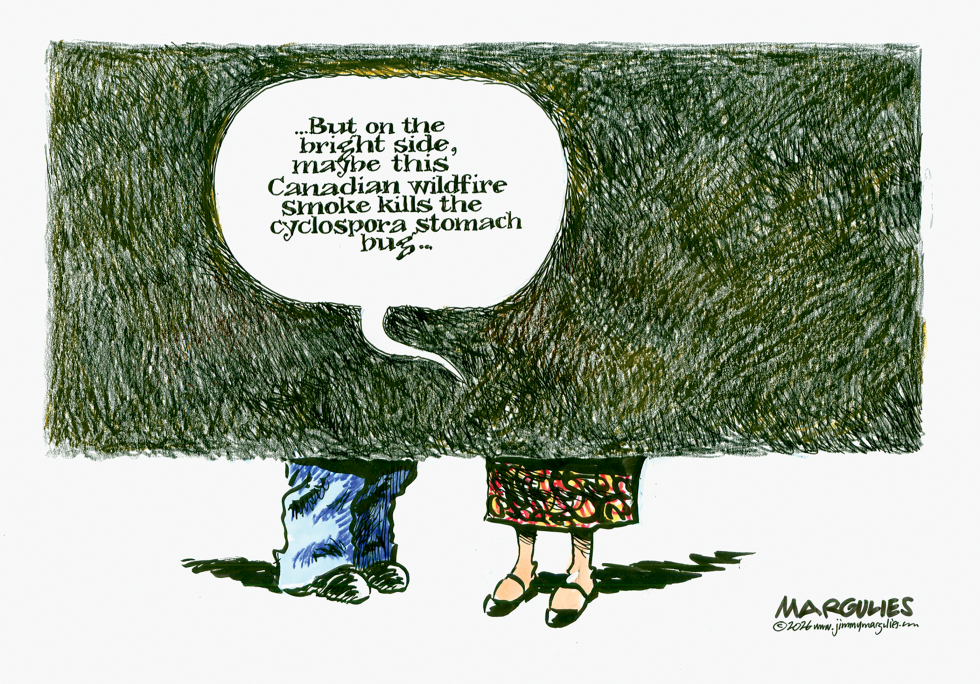
Canadian wildfire smoke continues drifting south while a cyclospora outbreak raises separate public health alarms. The overlapping crises prompt discussion of unintended consequences from environmental events. The piece presents a grimly optimistic take on the smoke's possible effect on the stomach bug.
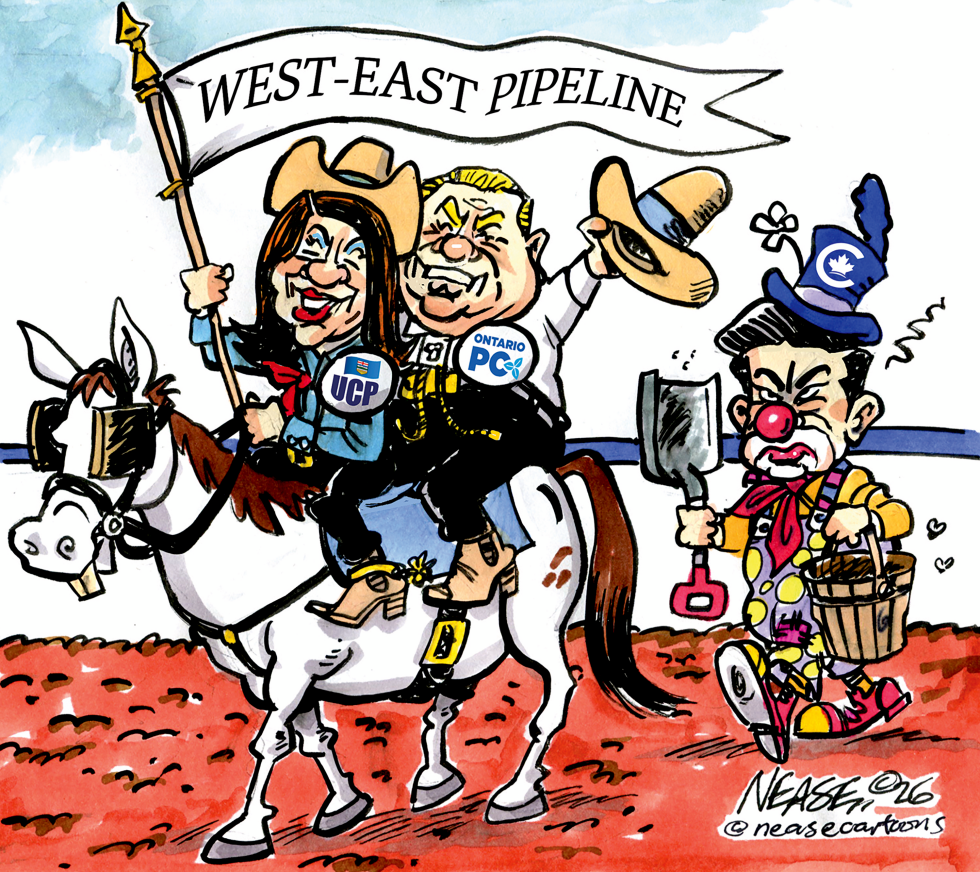
Alberta UCP Premier Danielle Smith and Ontario PC Premier Doug Ford appear side by side on a white horse, holding a large banner reading West-East Pipeline. A clown figure wearing a Canadian maple leaf hat follows on foot carrying a shovel and bucket. The scene is set on red dirt under a blue sky. The cartoon was published July 8, 2026.
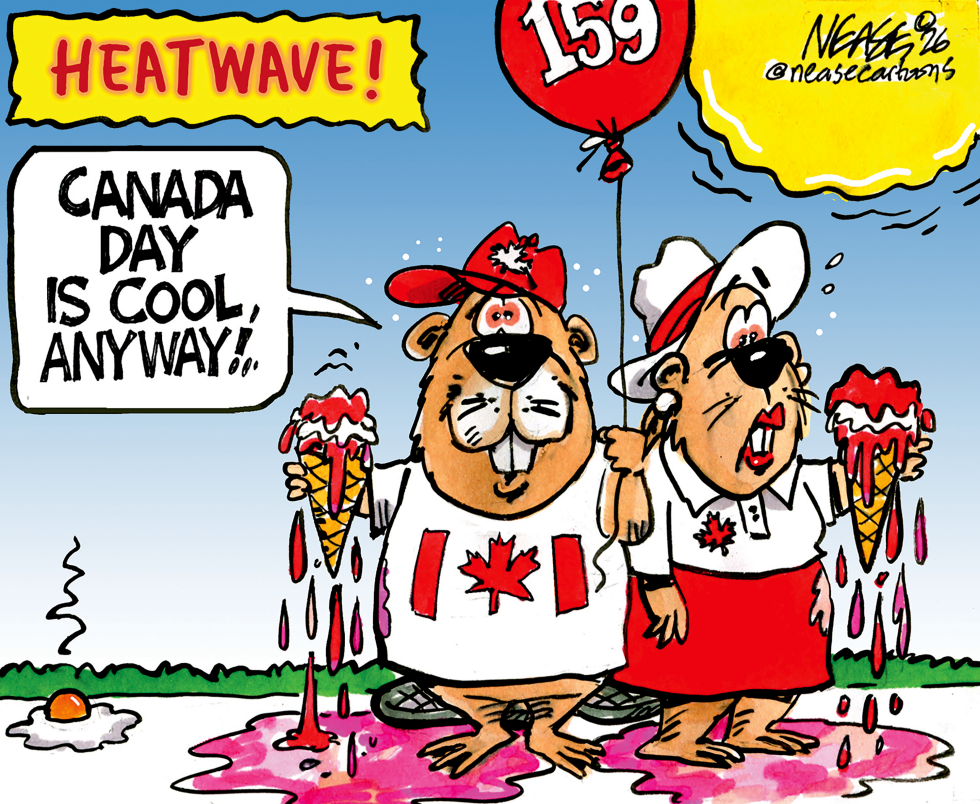
On June 30 2026 two cartoon beavers dressed in Canadian flag attire stand on melting pavement holding ice cream cones that drip heavily during an intense heatwave. A red balloon marked 159 floats above while a speech bubble declares Canada Day cool anyway. A fried egg lies on the ground near the pink puddle formed by the melting treats.