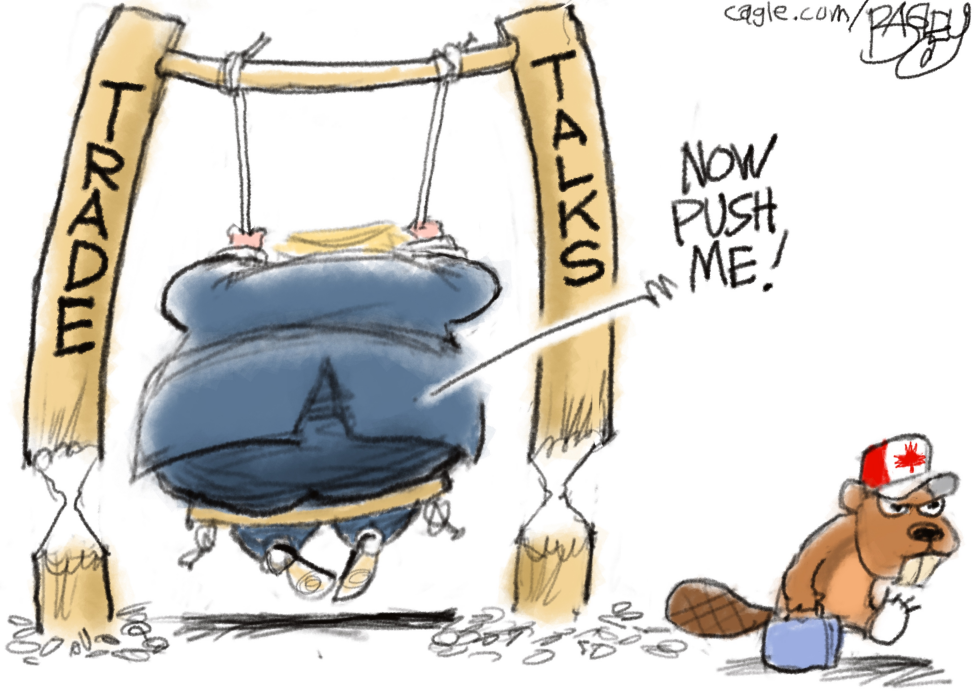
Canada signals intent to advance trade tax measures involving the United States. The move comes amid ongoing bilateral economic friction over tariffs and duties. The development carries weight for cross-border commerce and supply chains. The piece frames the Canadian position as actively pressing the United States forward on the issue.
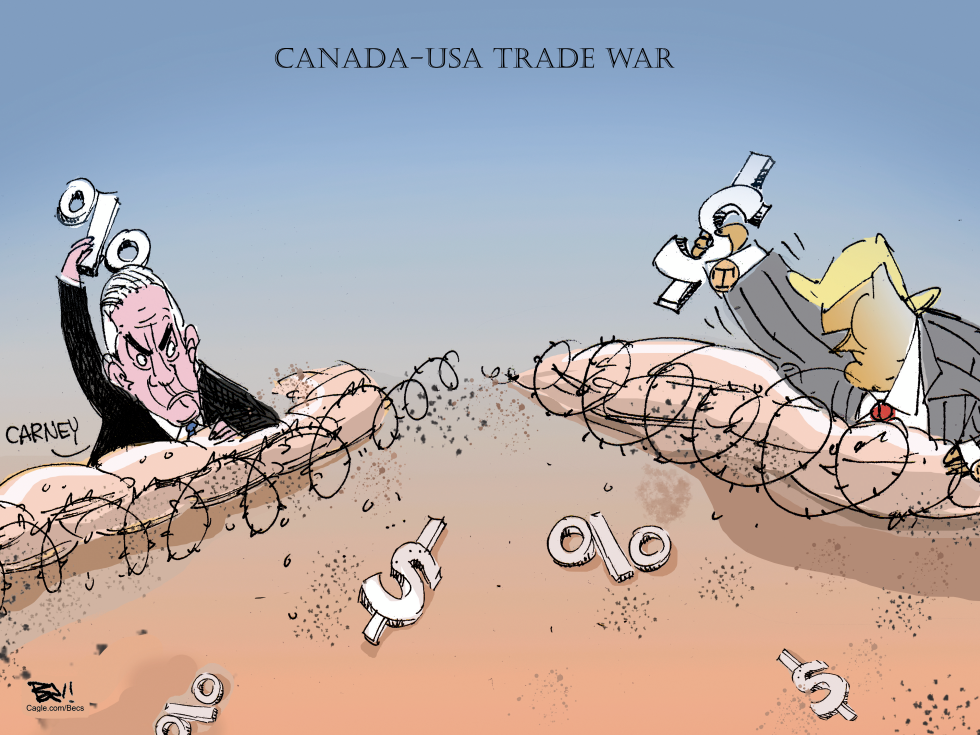
Mark Carney and President Trump clashed over Canada-U.S. trade policies in August 2026, with both sides imposing tariffs and barriers that disrupted cross-border commerce. The dispute centers on economic protections and retaliatory measures affecting businesses and consumers in both countries. The editorial highlights the mutual damage from escalating trade hostilities between the two nations.
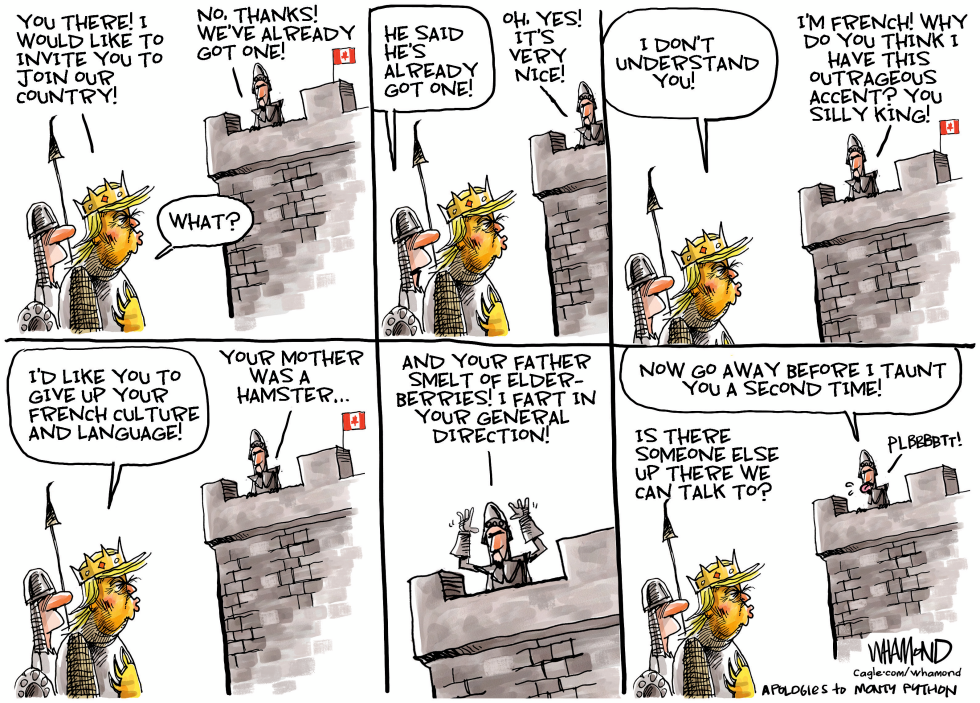
A US leader extends an invitation for Canada to join the country, prompting a firm rejection from the Canadian side. The exchange escalates into cultural demands and classic insults. The piece portrays the overture as unwelcome and doomed to failure through persistent refusal.
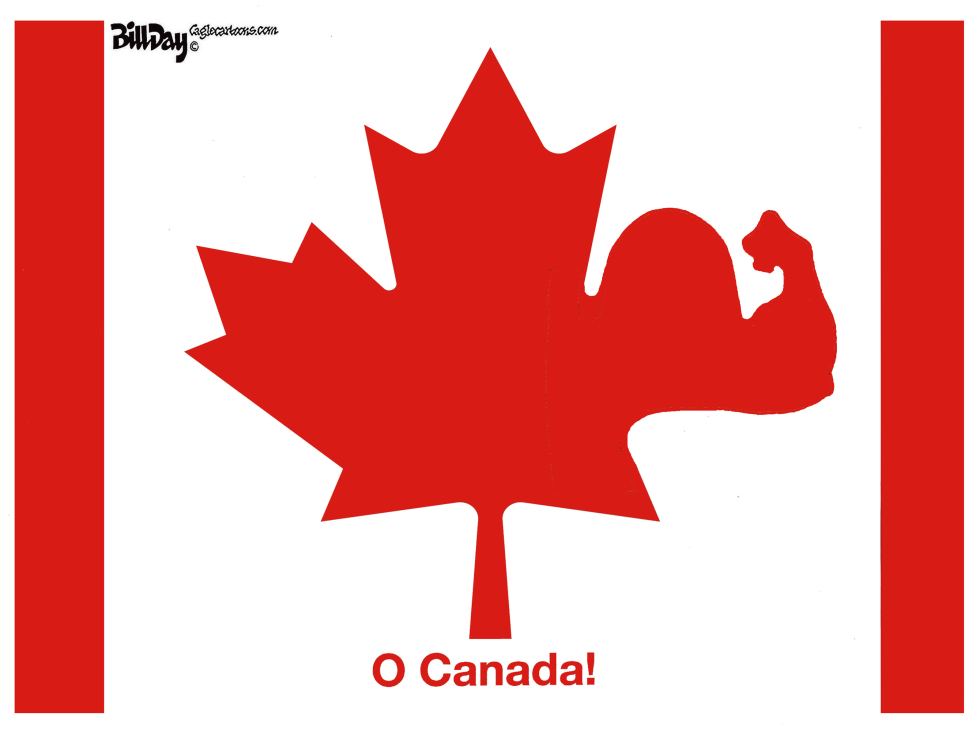
The Canadian flag appears with its central maple leaf altered to show a flexed bicep. No specific news event ties directly to the image on the publication date. The ongoing dynamic involves expressions of national pride and identity in Canada. The piece presents a straightforward visual of strength through the modified emblem paired with the national anthem phrase. It takes the position that Canada stands ready and capable on the world stage.
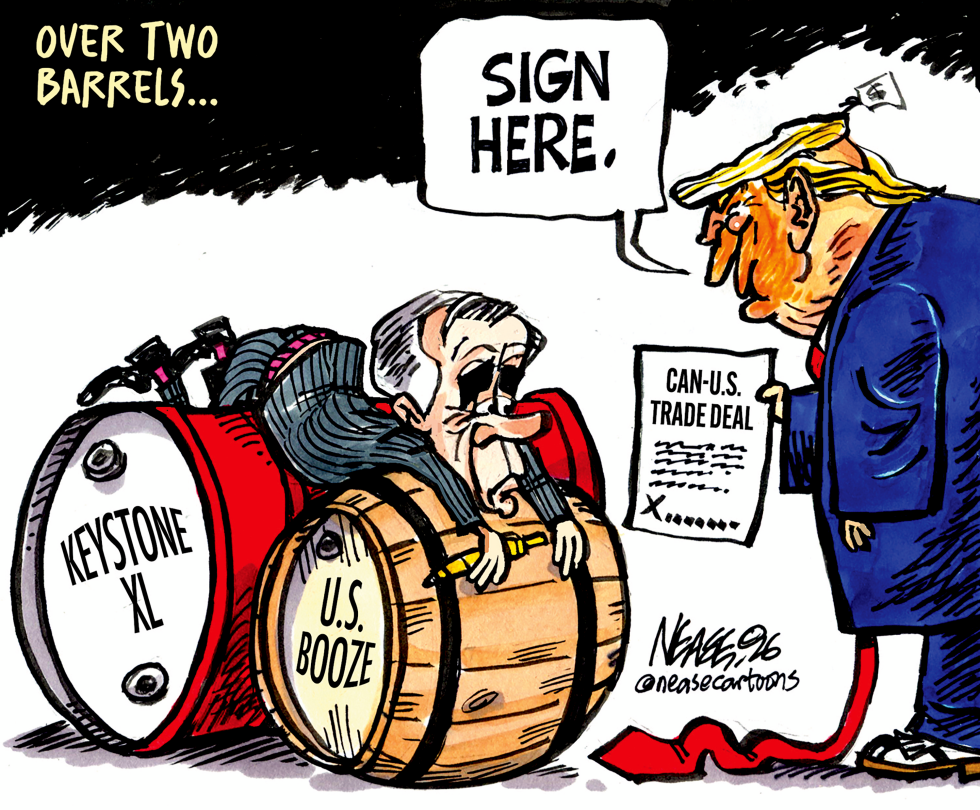
Donald Trump is pressing Canada to finalize a bilateral trade agreement by positioning the Canadian leader between a Keystone XL pipeline barrel and a U.S. booze barrel. The move ties energy infrastructure approval to broader trade concessions including alcohol exports. The editorial takes the position that such barrel-based pressure tactics risk undermining stable Canada-U.S. economic relations.
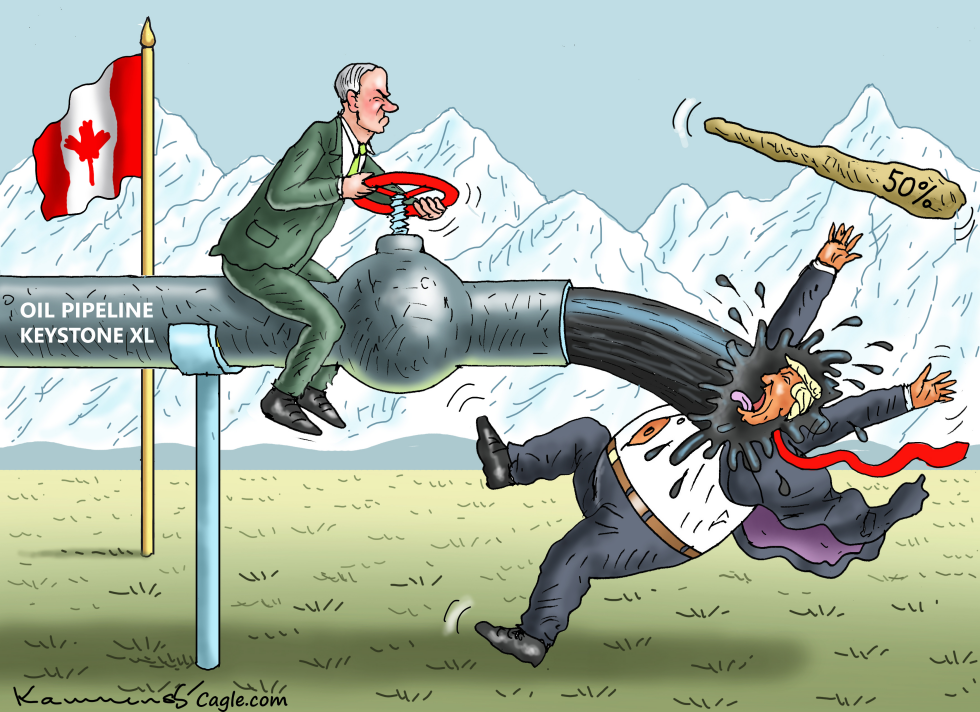
Canadian Prime Minister Mark Carney moves to restrict the Keystone XL pipeline in a direct action affecting U.S. interests tied to Donald Trump. The decision carries implications for cross-border energy flows and bilateral relations. The piece portrays the move as a targeted setback delivered through the pipeline controls.
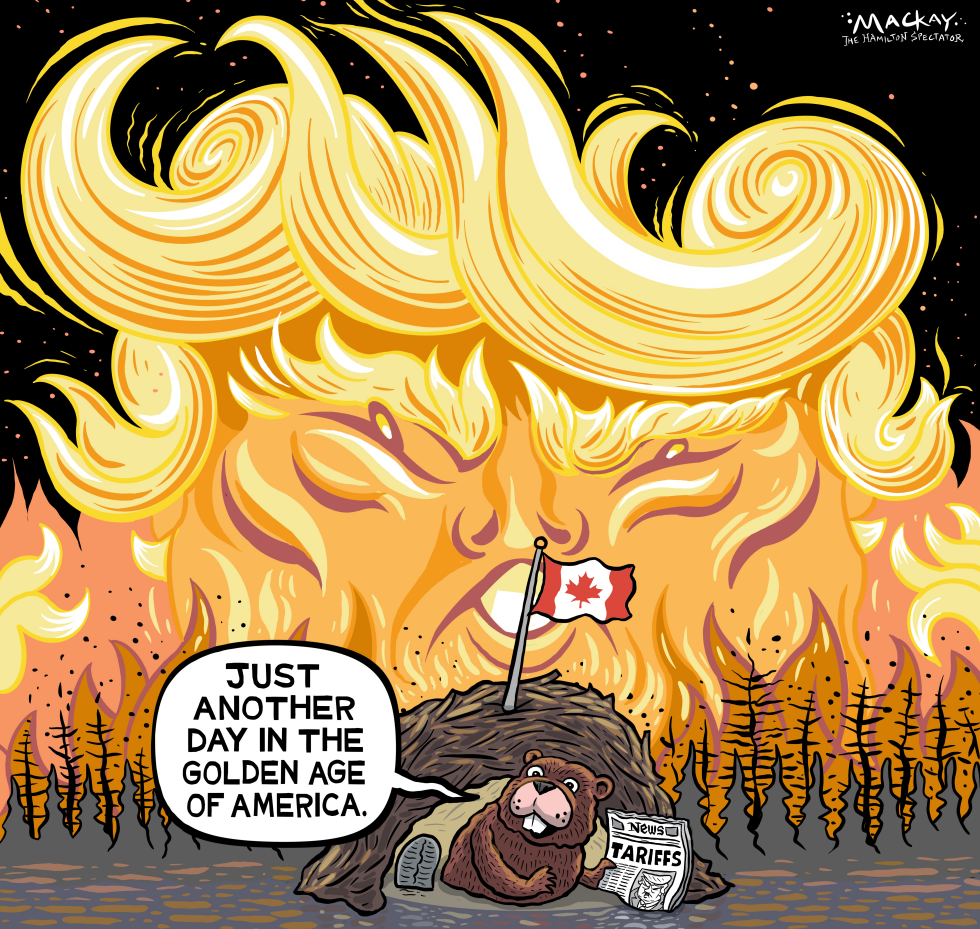
President Trump escalated tariff threats against Canada in mid-August 2026, targeting key exports and prompting Ottawa to brace for economic pressure. The move reignites bilateral trade tensions that have simmered since earlier rounds of duties. The cartoon portrays Canada hunkering down while dismissing the disruption as routine under the current administration.
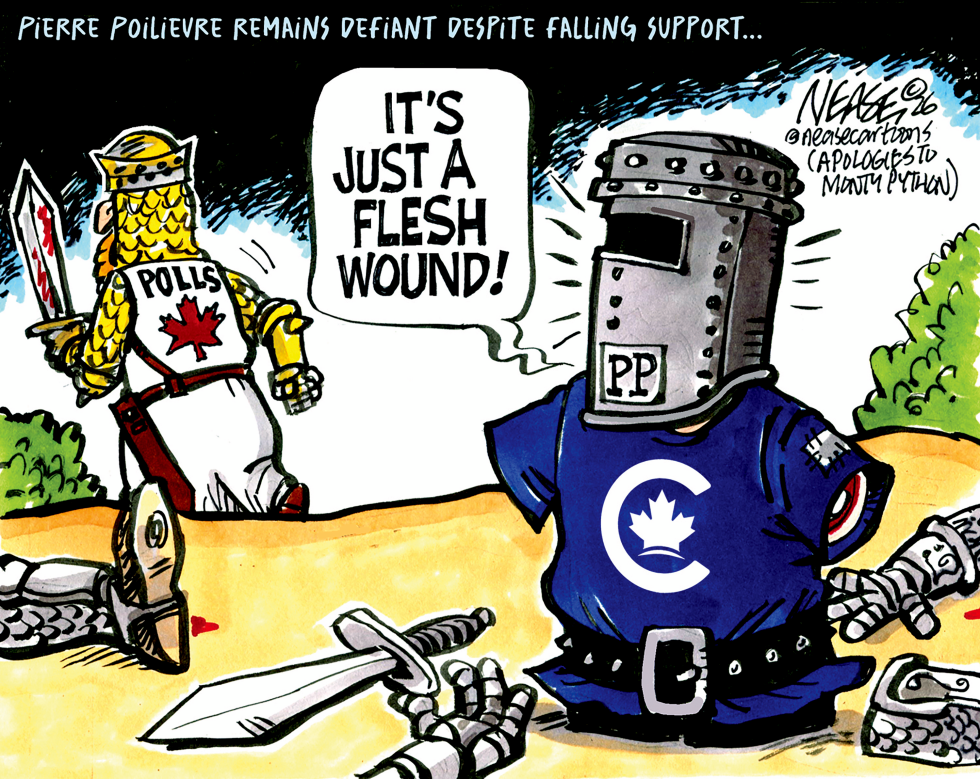
Pierre Poilievre faces declining poll numbers for the Conservative Party of Canada ahead of the next federal election. The situation highlights internal party pressure and opposition momentum. The piece portrays his refusal to acknowledge setbacks as a key leadership trait.
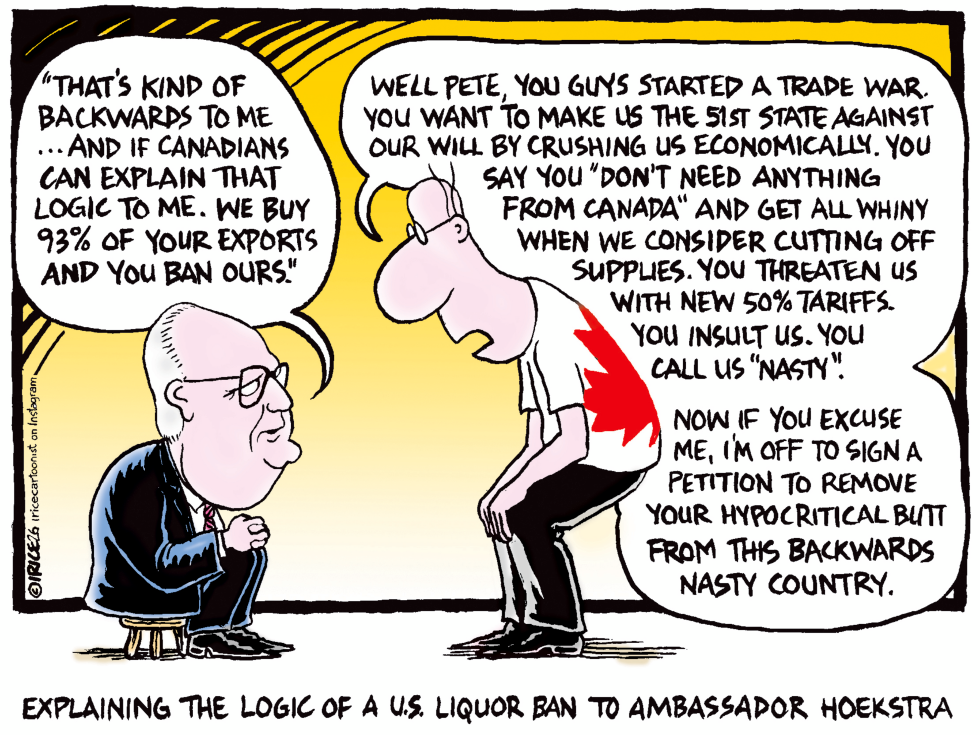
The United States has enacted a liquor ban targeting Canadian products as part of broader trade measures. Ambassador Hoekstra receives direct criticism over the policy's economic impact and perceived hypocrisy. The response underscores Canada's role as a major buyer of U.S. exports and its readiness to retaliate with supply cuts and petitions.
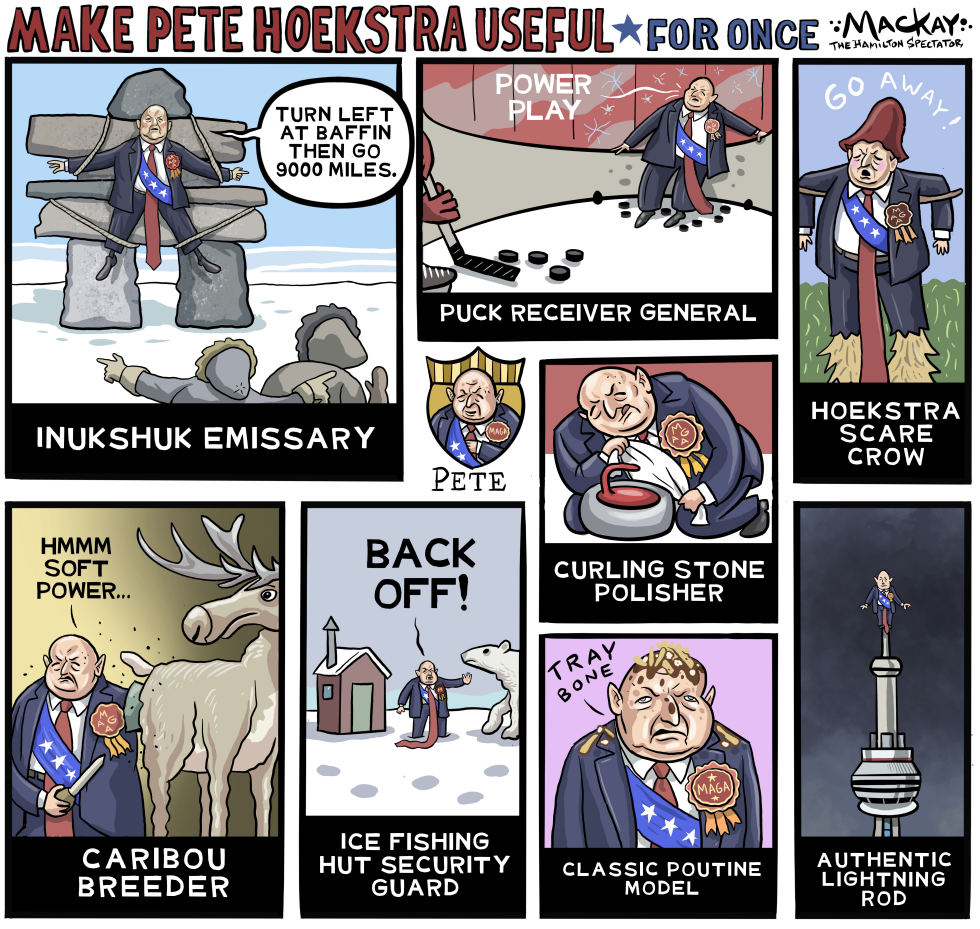
Pete Hoekstra faces scrutiny over a prospective diplomatic posting tied to Canada amid ongoing US trade and Arctic policy tensions. The appointment draws criticism from those who view the nominee as unprepared for cross-border diplomacy. The cartoon argues the selection adds little practical value and leans on outdated cultural clichés instead.
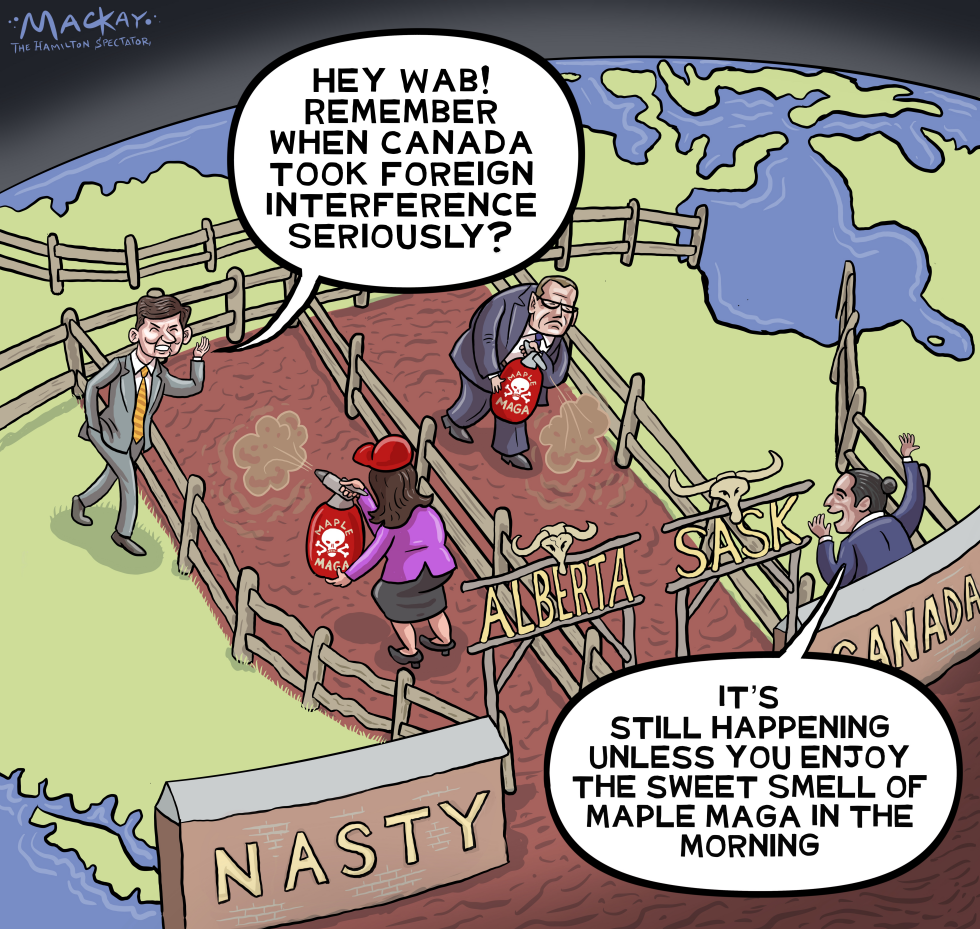
On August 13 2026 Canadian premiers face renewed scrutiny over foreign interference as Maple MAGA messaging spreads into Alberta and Saskatchewan. The editorial argues that Canada has not maintained its earlier vigilance against outside influence in provincial politics.
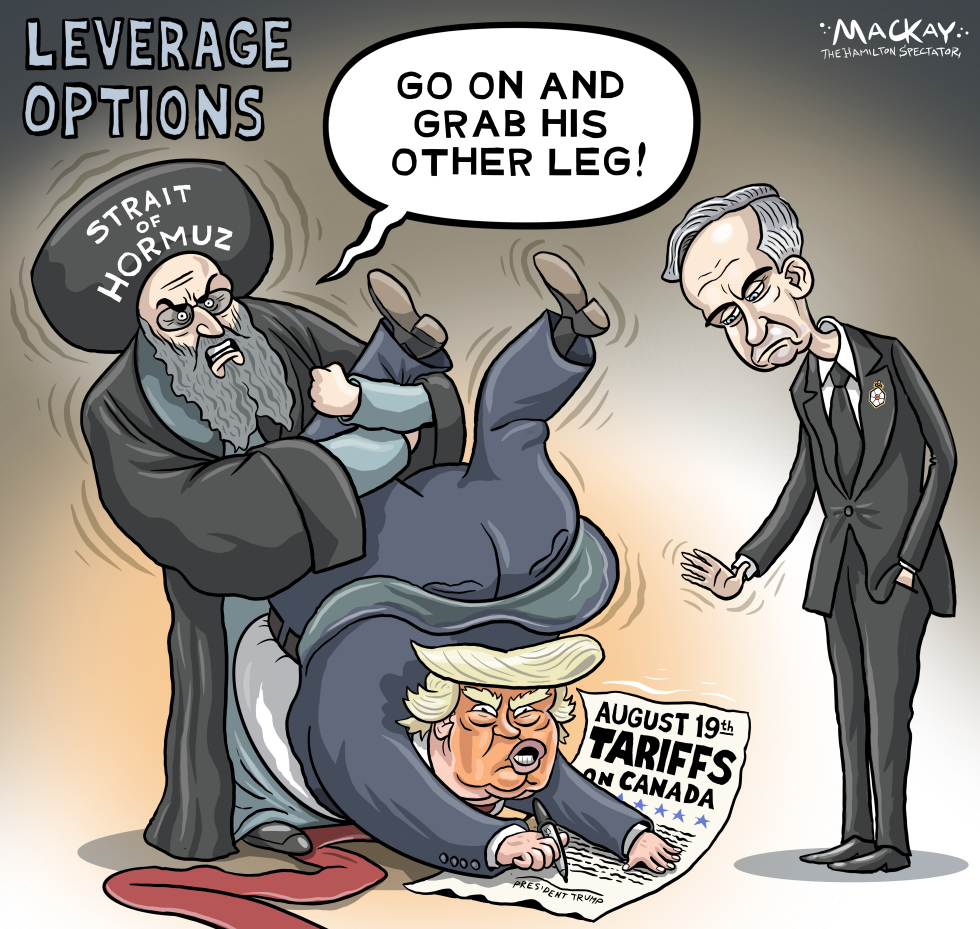
On August 12 2026 President Trump prepares to impose tariffs on Canada amid tensions involving the Strait of Hormuz. The move draws immediate pushback from Iran-linked actors seeking leverage. The piece argues that tariff policy invites risky entanglements that weaken U.S. position.
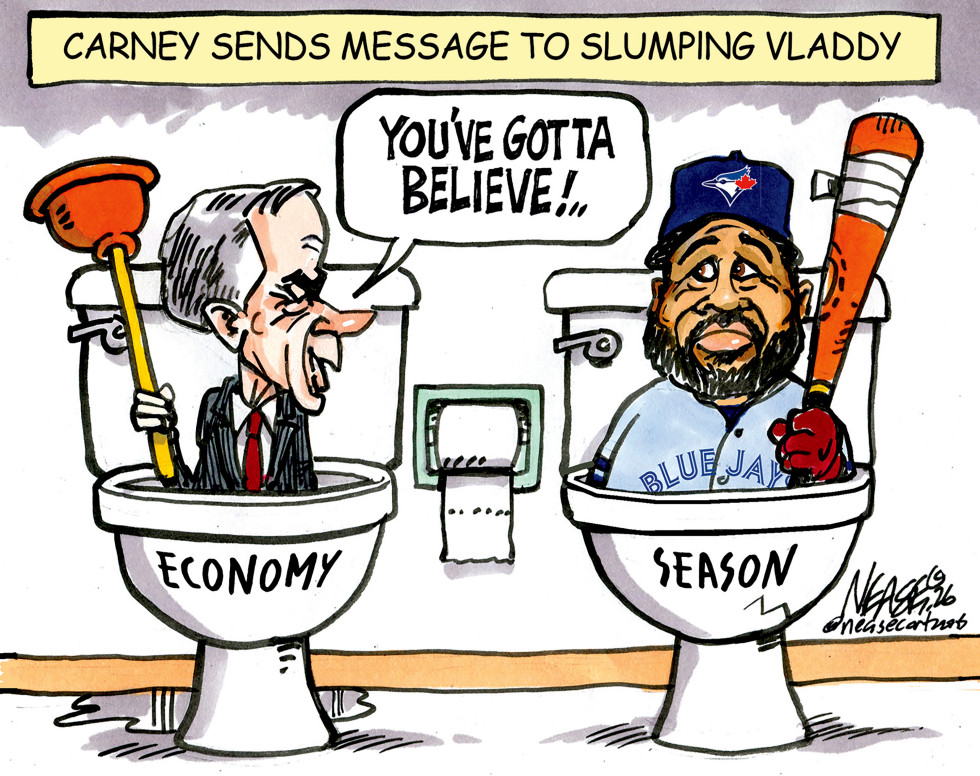
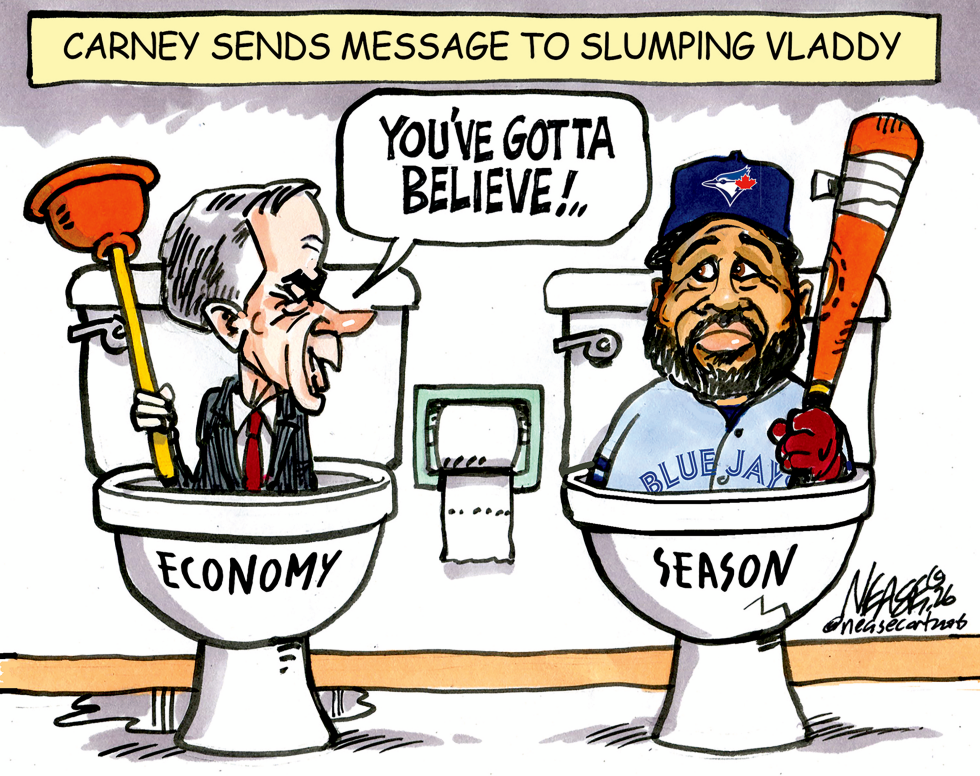
On August 12 2026 Mark Carney addressed Vladimir Guerrero Jr. during simultaneous downturns for the Canadian economy and the Toronto Blue Jays season. The exchange highlights ongoing pressures on both fronts with Carney positioned as a voice of encouragement. The piece frames the interaction as a direct motivational message from the political sphere to the sports world.
Mark Carney addressed Canada's economic challenges and the Toronto Blue Jays' poor performance in August 2026. The leader's public message emphasized resilience amid dual slumps. The cartoon portrays this encouragement as coming from an awkward position, highlighting the difficulty of inspiring confidence in both areas.
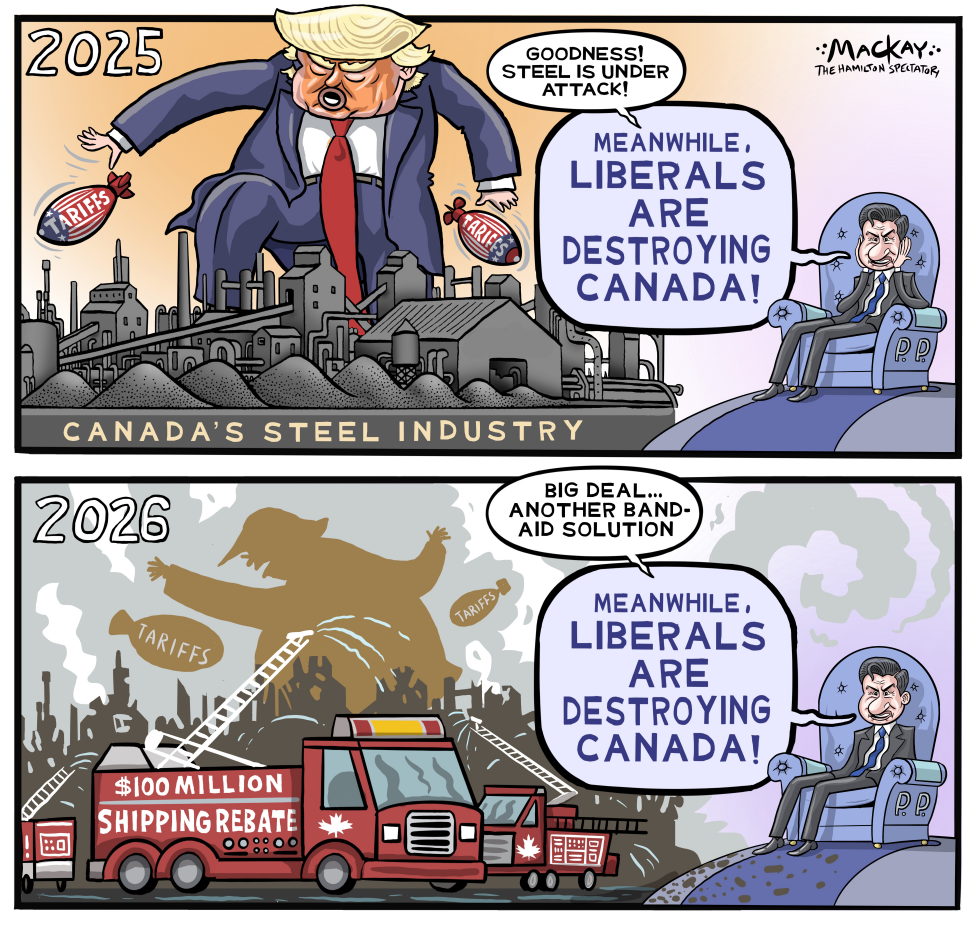
U.S. tariffs imposed on Canadian steel in 2025 triggered sharp declines in the domestic industry by 2026. The federal government responded with a $100 million shipping rebate. Conservative Leader Pierre Poilievre continued to focus attacks on the Liberal government rather than the trade shock. The cartoon argues this stance amounts to a repeated distraction from the core economic damage.