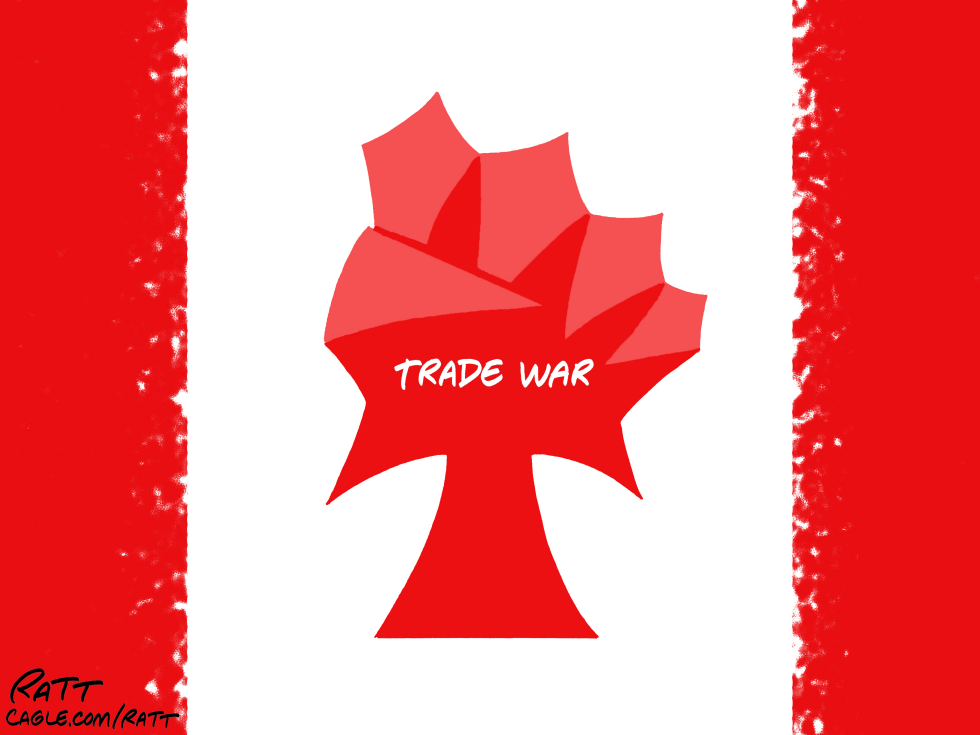
Ongoing US-Canada trade tensions escalated in 2026 with new tariff threats targeting Canadian exports. The dispute threatens key sectors including autos, lumber and agriculture, raising costs for consumers on both sides of the border. Canada has signaled plans to diversify markets and strengthen domestic industry. The cartoon frames the conflict as a direct assault on Canadian sovereignty and economic stability. It portrays the trade war as fracturing national symbols while urging a stronger northern response.
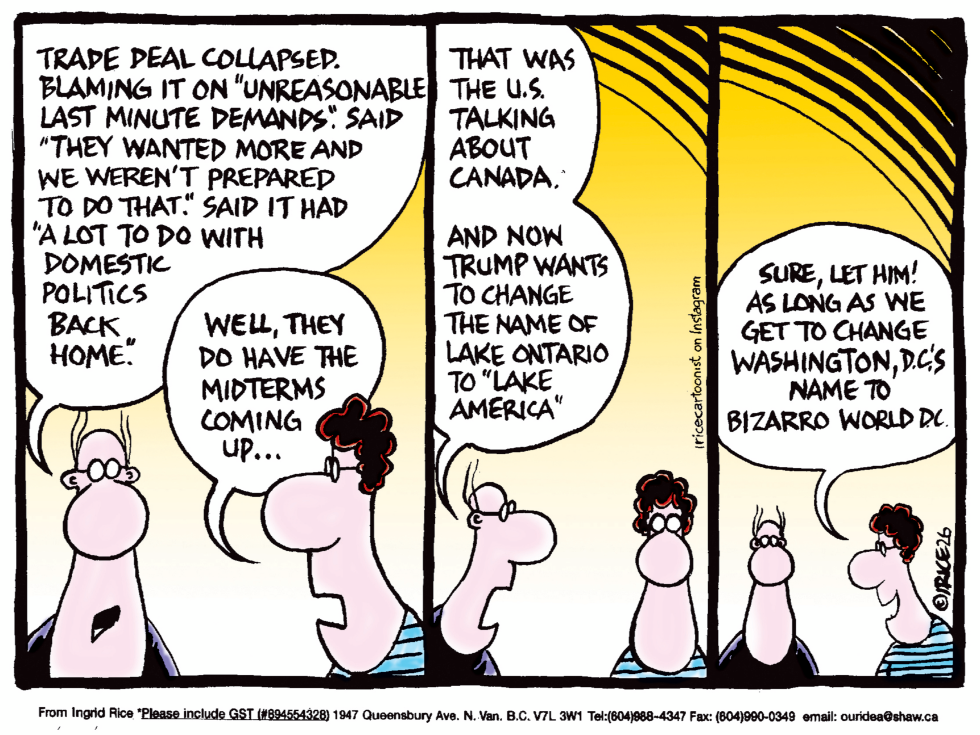
A Canada-U.S. trade deal collapsed after U.S. negotiators cited unreasonable last-minute demands and linked the failure to domestic politics ahead of midterms. President Trump then proposed renaming Lake Ontario to Lake America. Canadian officials responded by offering to rename Washington D.C. to Bizarro World DC if the change proceeds. The exchange highlights how trade tensions and political posturing are escalating between the two countries. The cartoon mocks the name-change idea as emblematic of broader dysfunction in bilateral relations.
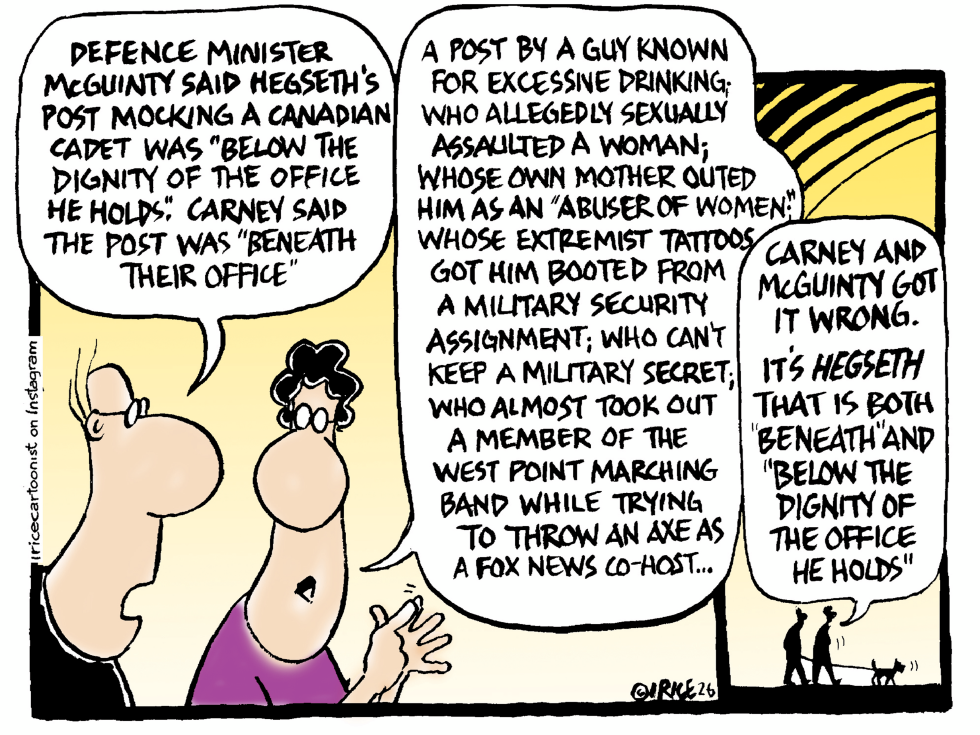
Canadian Defence Minister David McGuinty and Mark Carney publicly condemned a social media post by Pete Hegseth mocking a Canadian cadet, calling it beneath the dignity of the office. The remarks came amid Hegseth's nomination process for a senior U.S. defense position. The cartoon argues the ministers have the assessment backward, pointing instead to Hegseth's history of alleged misconduct, security clearance problems, and public incidents as the true disqualifiers. This reflects ongoing debate over nominee vetting standards and cross-border political commentary on U.S. appointments.
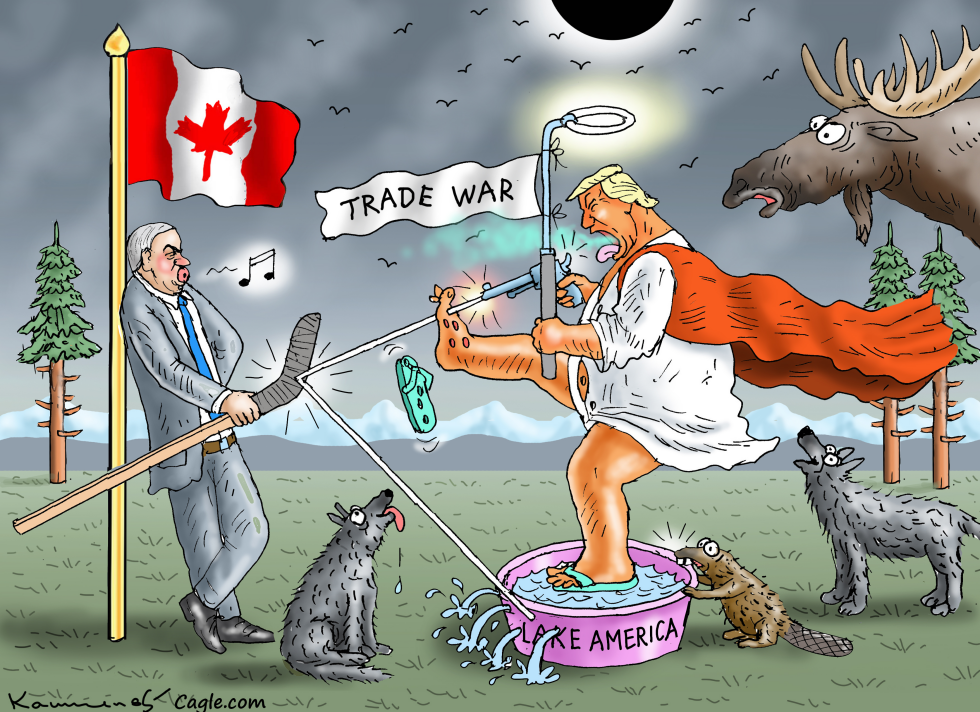
President Trump launched new tariffs on Canadian goods in early September 2026, citing trade imbalances and border issues. The move immediately prompted Canadian countermeasures including duties on US exports. The policy shift disrupts integrated supply chains in autos, energy and agriculture that support millions of jobs on both sides of the border. Markets reacted with volatility as investors weighed the costs of renewed protectionism. The cartoon portrays the tariff campaign as self-inflicted harm that leaves the US exposed to swift Canadian pushback.
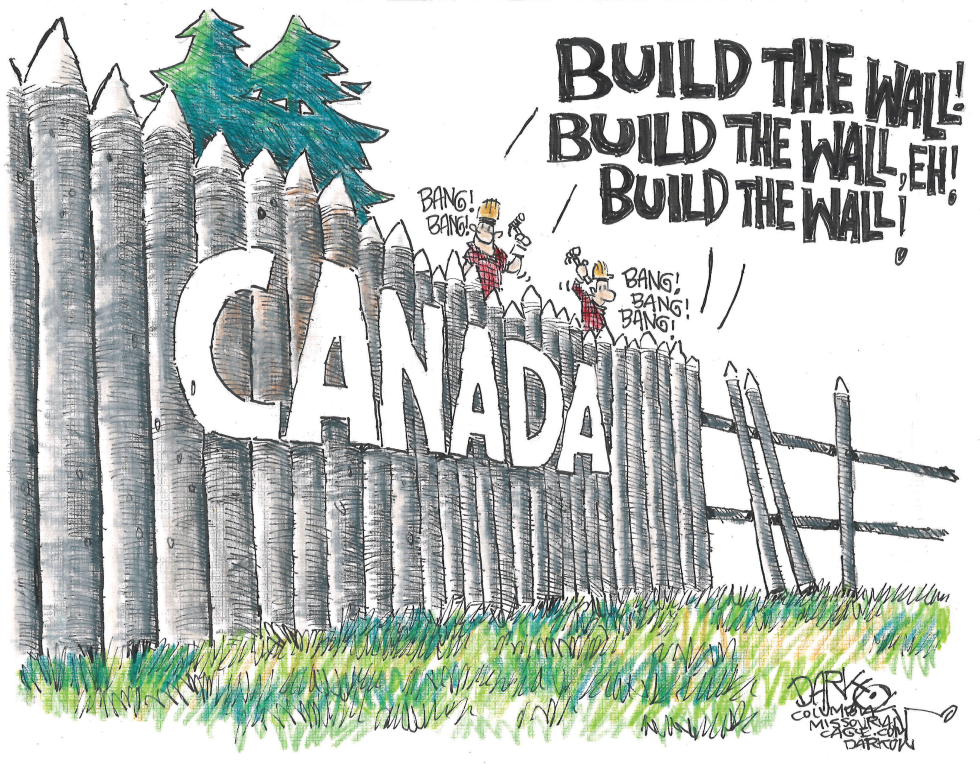
Canada has begun construction of a substantial border barrier along its southern frontier, echoing long-standing calls for stricter immigration controls. Officials cite rising cross-border movements and security concerns as justification for the project. The move marks a notable policy shift for a country historically open to migration. The cartoon portrays this development with pointed irony, highlighting the adoption of aggressive enforcement tactics previously associated with other nations.
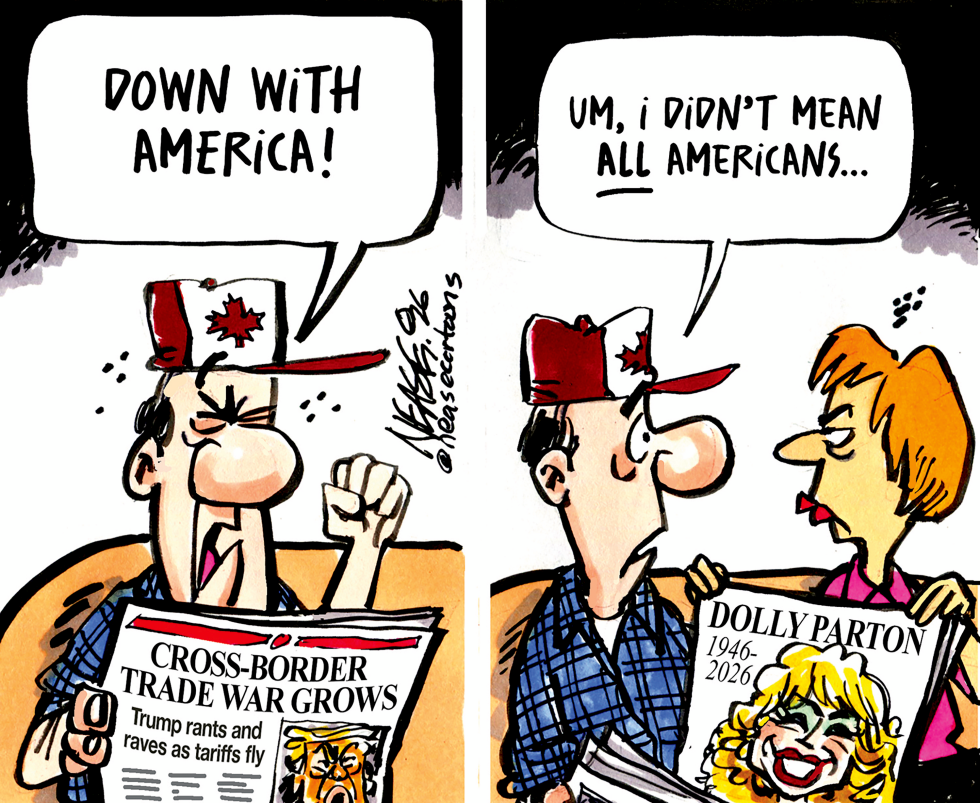
US-Canada trade tensions intensified in August 2026 as tariffs mounted amid heated rhetoric from President Trump. The dispute drew sharp reactions north of the border. The cartoon takes the position that even vocal critics of America make exceptions for beloved figures like Dolly Parton.
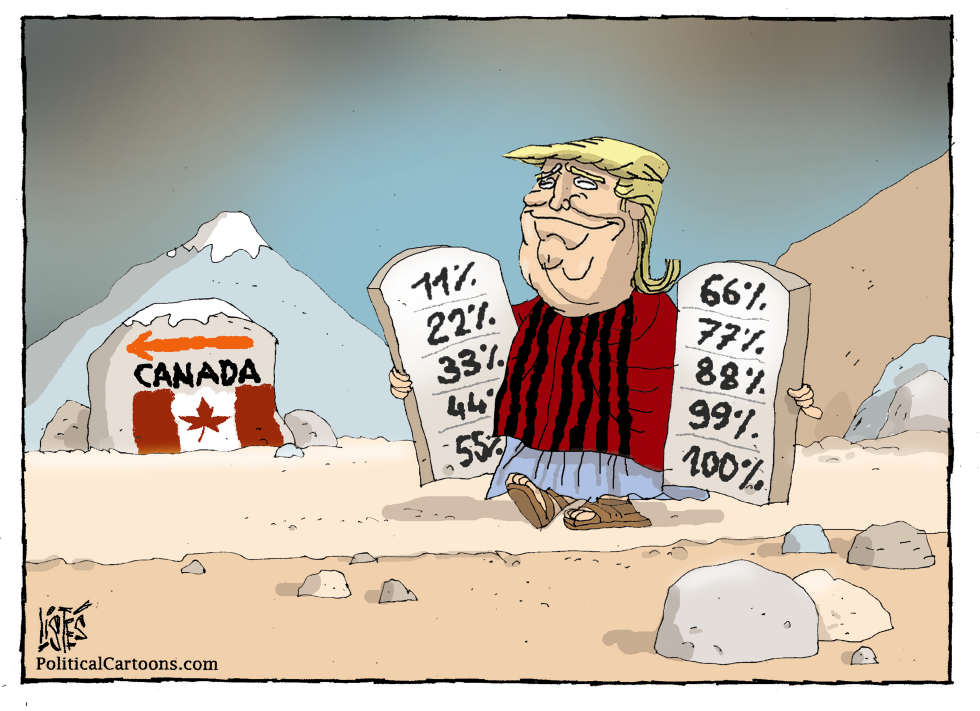
Donald Trump appears in a desert scene holding stone tablets inscribed with rows of percentages while standing near a rock labeled Canada. The image responds to ongoing trade and tariff discussions between the United States and Canada. The editorial position frames the percentages as commandments Trump is delivering in the border region.
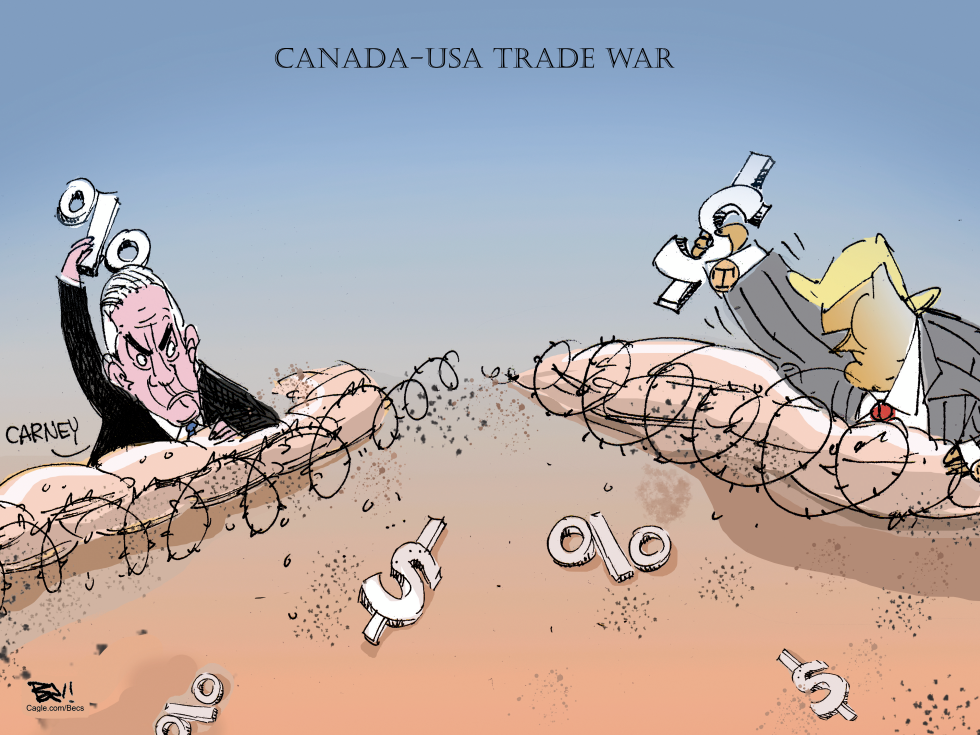
Mark Carney and President Trump clashed over Canada-U.S. trade policies in August 2026, with both sides imposing tariffs and barriers that disrupted cross-border commerce. The dispute centers on economic protections and retaliatory measures affecting businesses and consumers in both countries. The editorial highlights the mutual damage from escalating trade hostilities between the two nations.
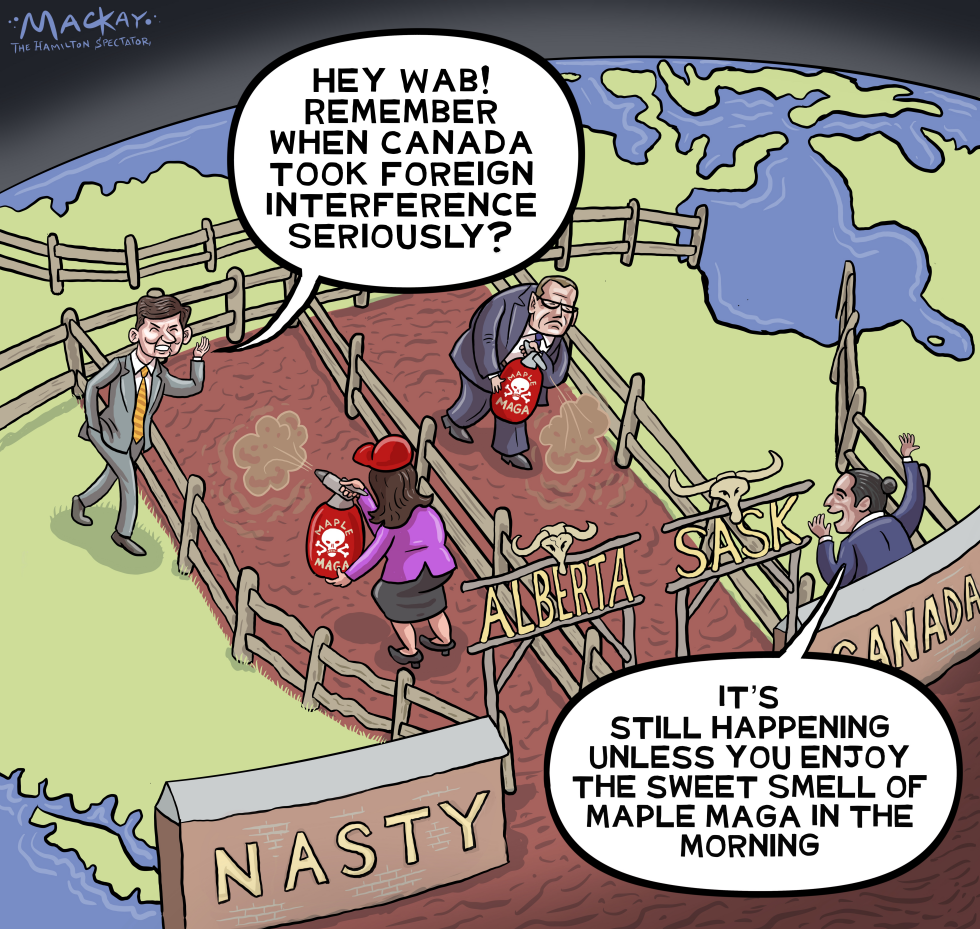
On August 13 2026 Canadian premiers face renewed scrutiny over foreign interference as Maple MAGA messaging spreads into Alberta and Saskatchewan. The editorial argues that Canada has not maintained its earlier vigilance against outside influence in provincial politics.
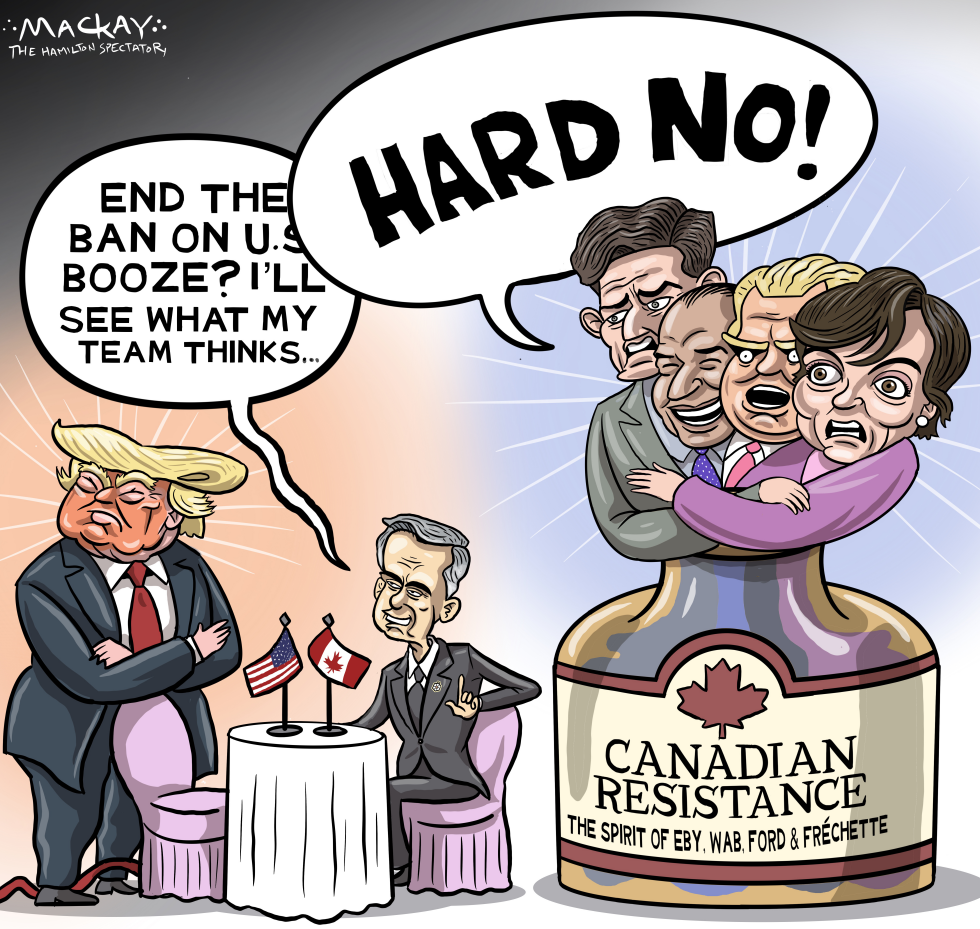
Donald Trump signaled openness to ending a ban on US alcohol imports into Canada during a meeting with Canadian officials. Provincial leaders including David Eby and Doug Ford responded with unified opposition. The cartoon portrays the premiers as a collective force of resistance and shows Trump deferring the decision to his team.
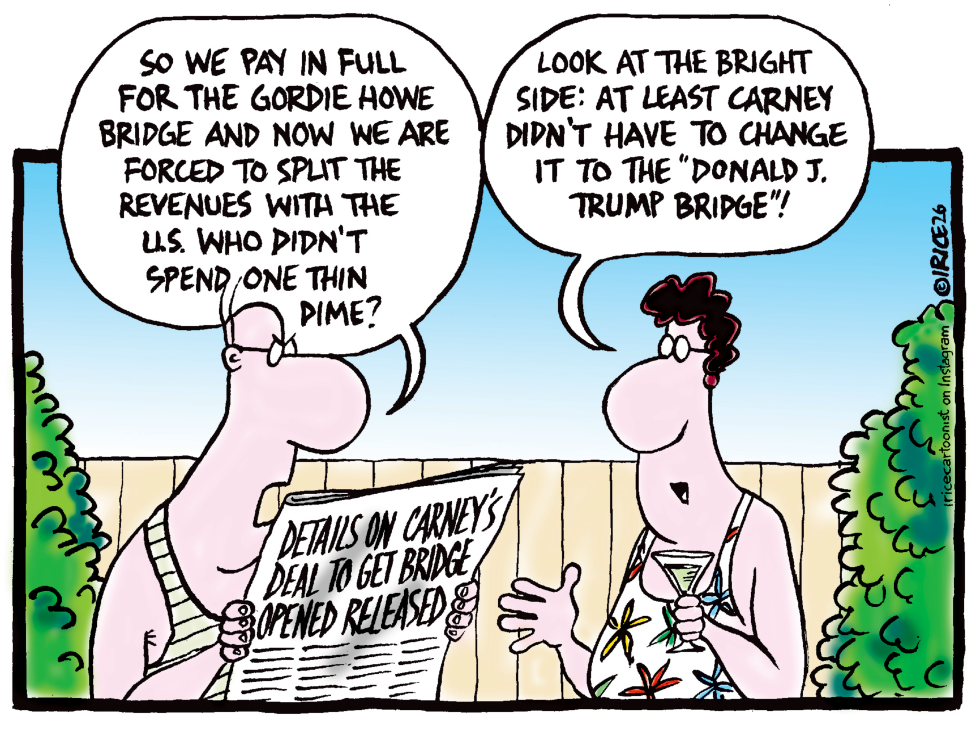
Details of a revenue-sharing agreement for the Gordie Howe Bridge between Canada and the United States have been released. The arrangement requires Canada to split toll revenues despite covering full construction costs. The editorial highlights public frustration with the terms and uses a reference to a potential Trump naming to underscore political sensitivities around the project.
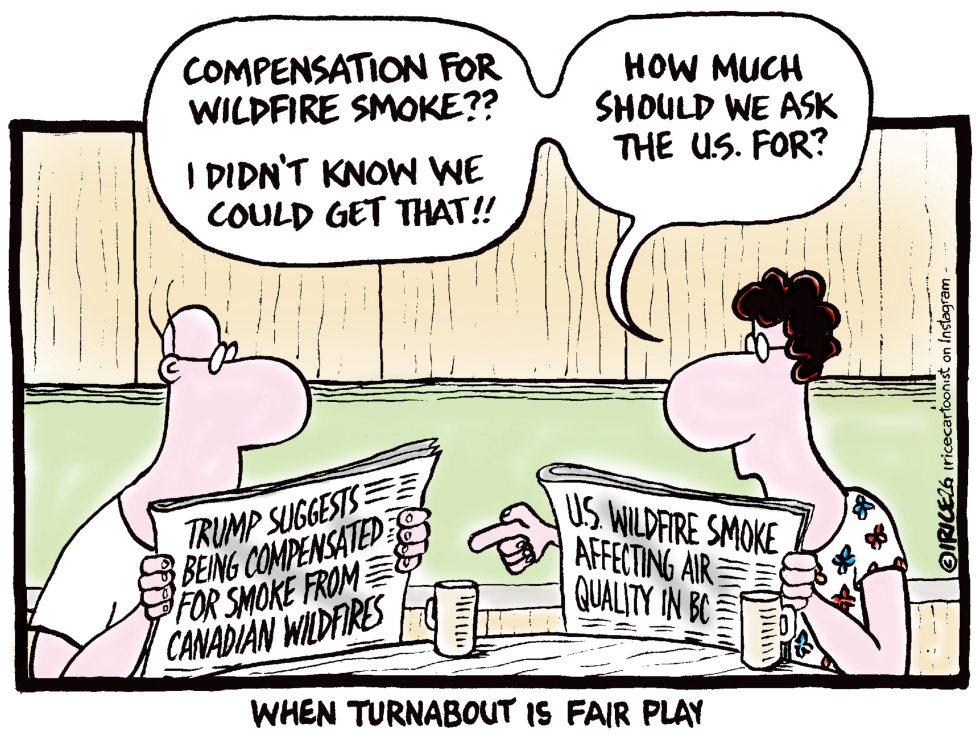
Donald Trump suggested the U.S. should receive compensation for smoke from Canadian wildfires. The cartoon responds by showing Canadians considering a reciprocal claim for smoke from U.S. wildfires affecting British Columbia air quality. It underscores the political dynamic of mutual environmental grievances between the two nations.
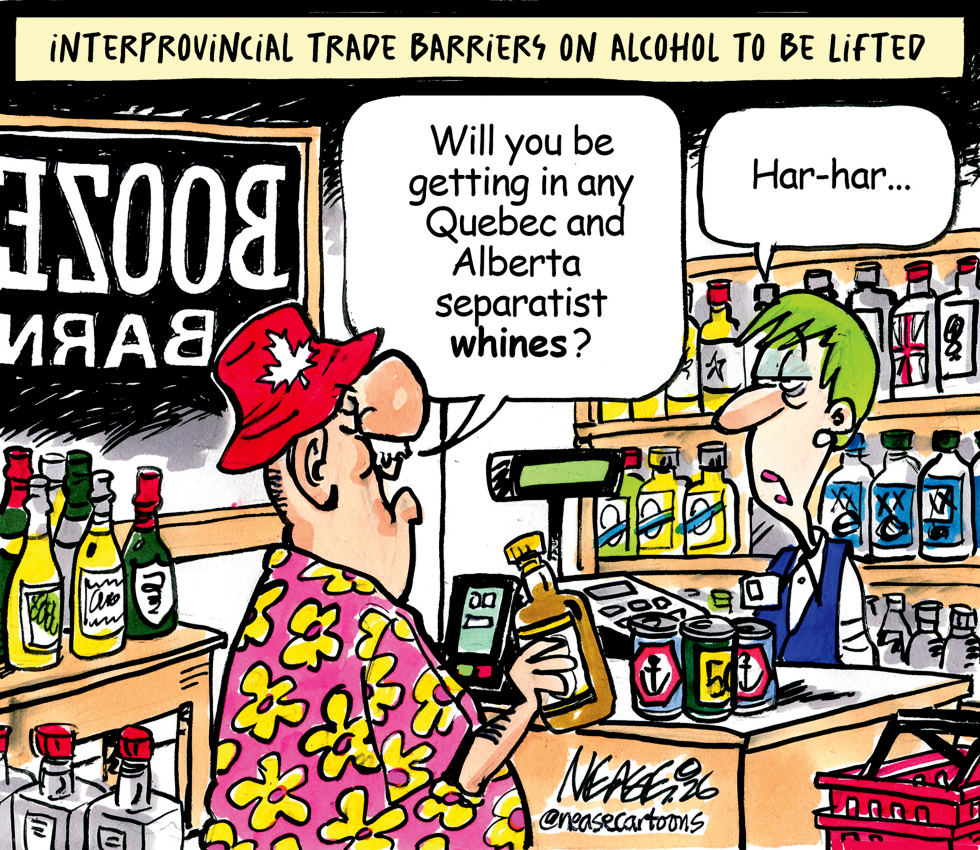
Canada announced it will lift interprovincial trade barriers on alcohol sales. The change opens cross-border provincial liquor markets and prompts complaints from Quebec and Alberta separatists. The cartoon mocks those complaints as mere whines while a clerk offers a dismissive laugh.
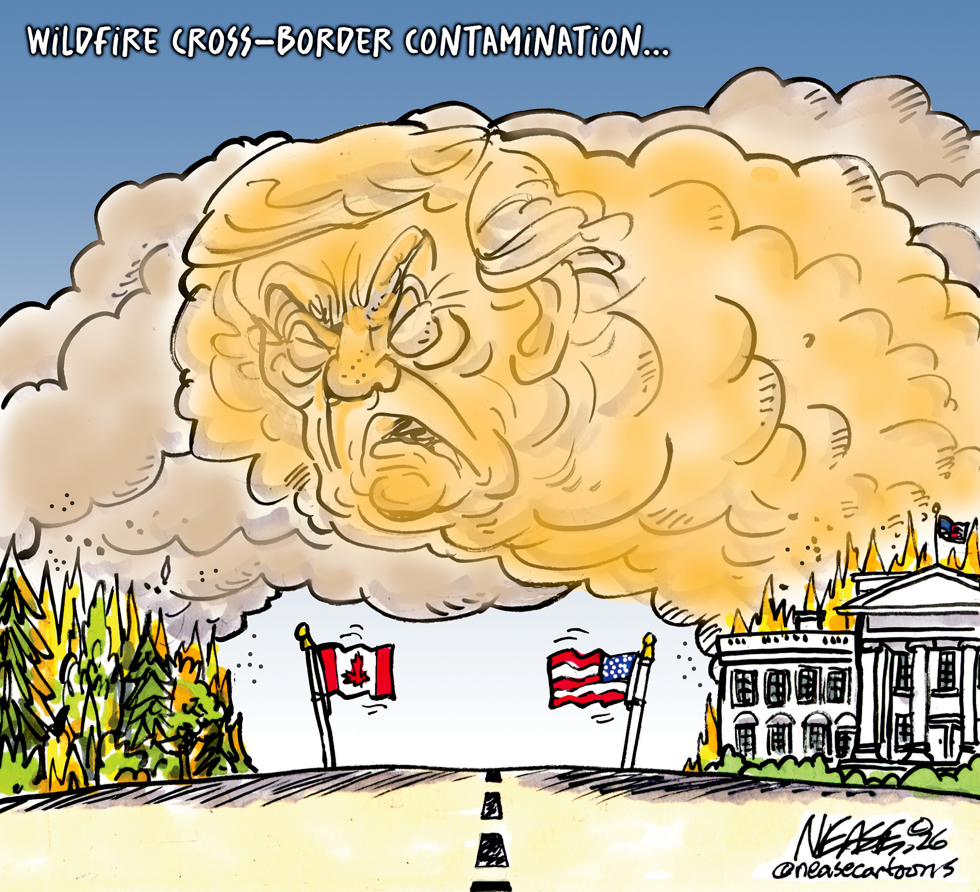
Wildfires in Canada have periodically sent smoke into the United States, creating air quality issues and diplomatic friction over environmental management. On the 2026 publication date the cartoon frames Donald Trump as the source of the drifting smoke that reaches the White House. The piece presents the former president as an ongoing source of political contamination that crosses borders and affects American institutions.
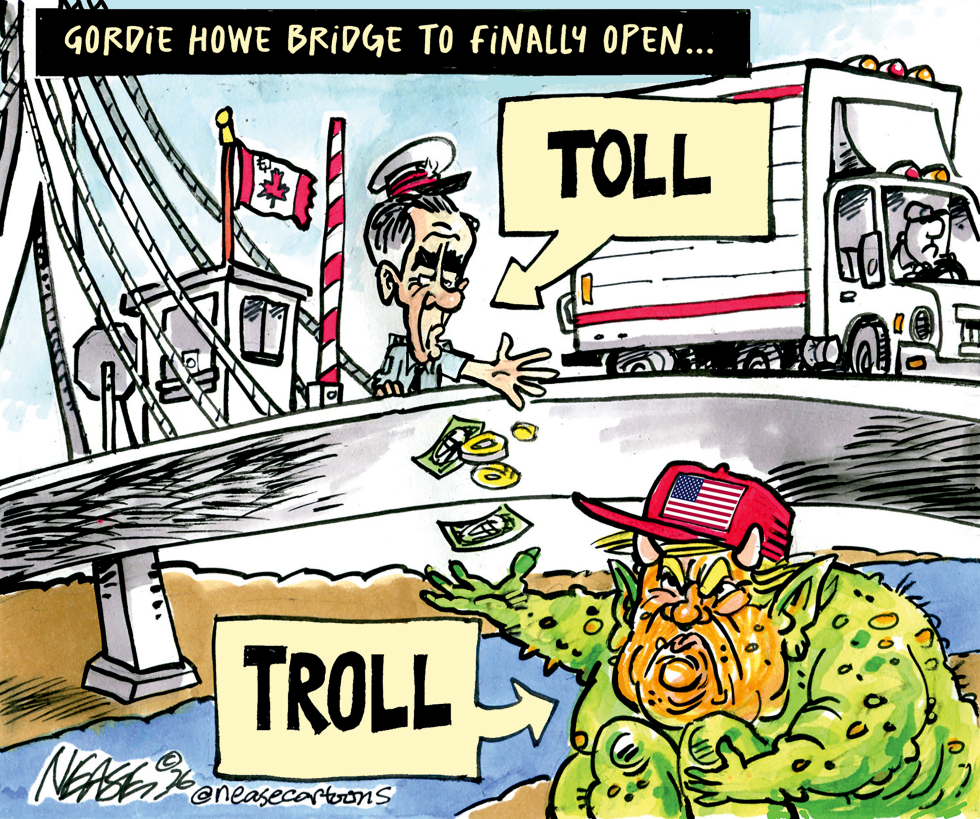
The Gordie Howe Bridge between Canada and the United States is set to open, allowing truck traffic across the border. The cartoon shows a toll booth attendant calling out to a large green troll figure positioned beneath the structure, with dollar bills and coins scattered on the ground. The troll wears a red cap with an American flag emblem and extends a clawed hand toward the money. A speech bubble from the booth reads TOLL while a label points to the creature as TROLL. The scene plays on the classic fairy tale motif of a troll under a bridge collecting payment from those who cross.