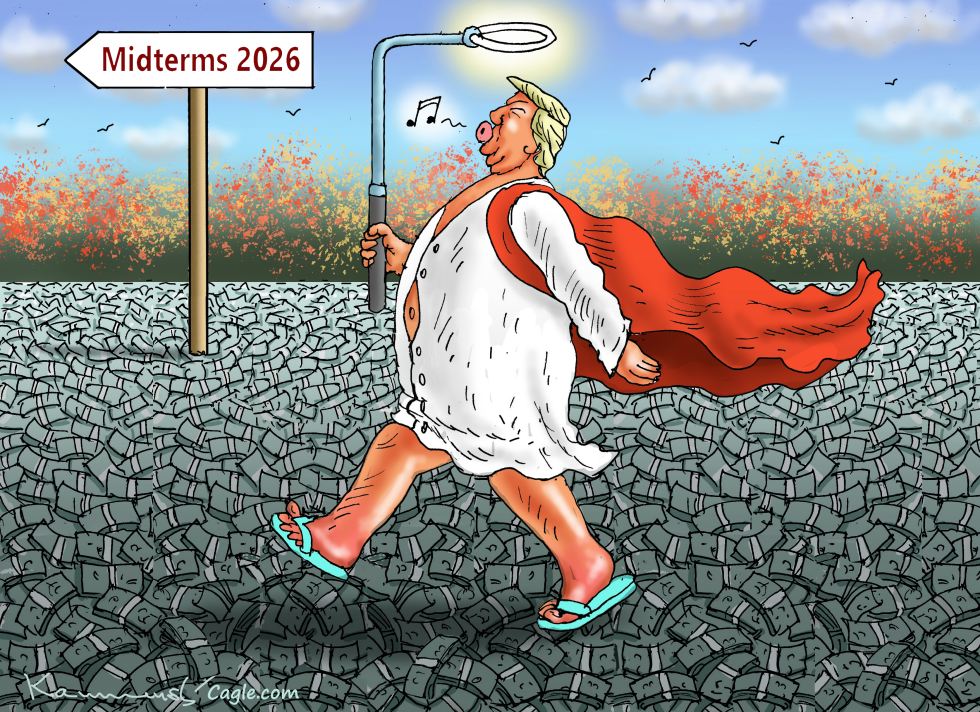
As the 2026 midterm cycle heats up, Donald Trump has positioned himself at the center of Republican fundraising efforts. Large donor contributions and party infrastructure have given GOP candidates a financial edge in key races. The cartoon portrays this advantage as a decisive factor heading into November. Critics argue the focus on money risks overshadowing policy substance. Supporters see the resources as essential to counter Democratic spending. The piece frames the cash flow as a clear path to victory for the MAGA-aligned slate.
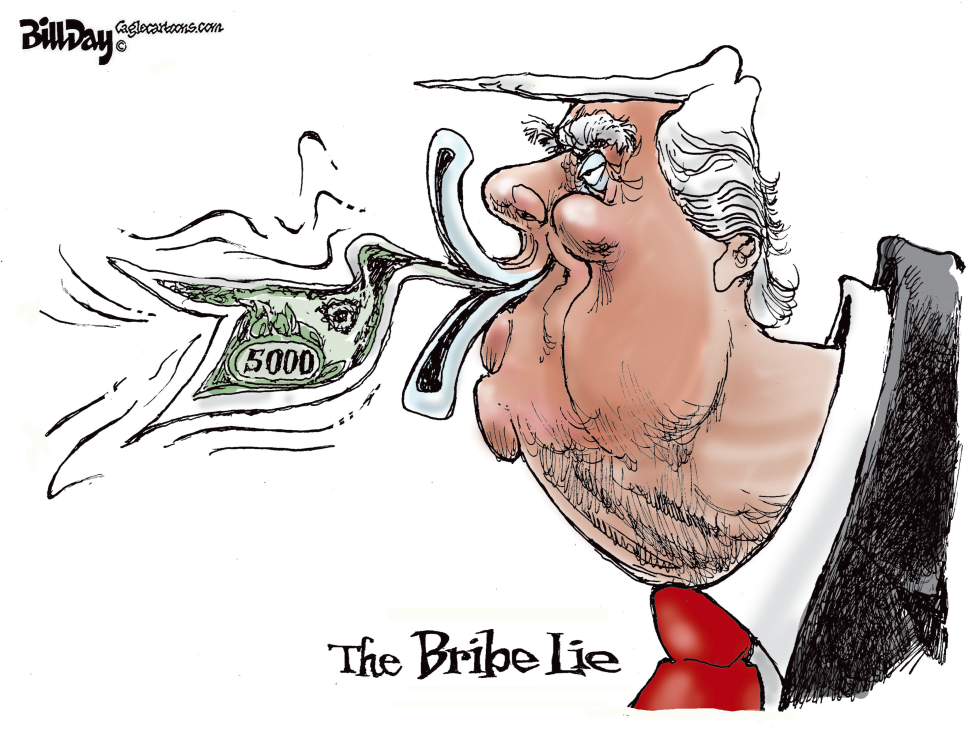
Donald Trump has repeatedly denied receiving improper payments or bribes tied to official actions. Recent reports have raised questions about large cash transfers and their origins. The cartoon argues that these denials amount to a lie, with the money trail contradicting public statements. It positions the issue as a test of accountability for the former president and his circle. The piece suggests the public should view such explanations with skepticism given the visible evidence of financial gain.
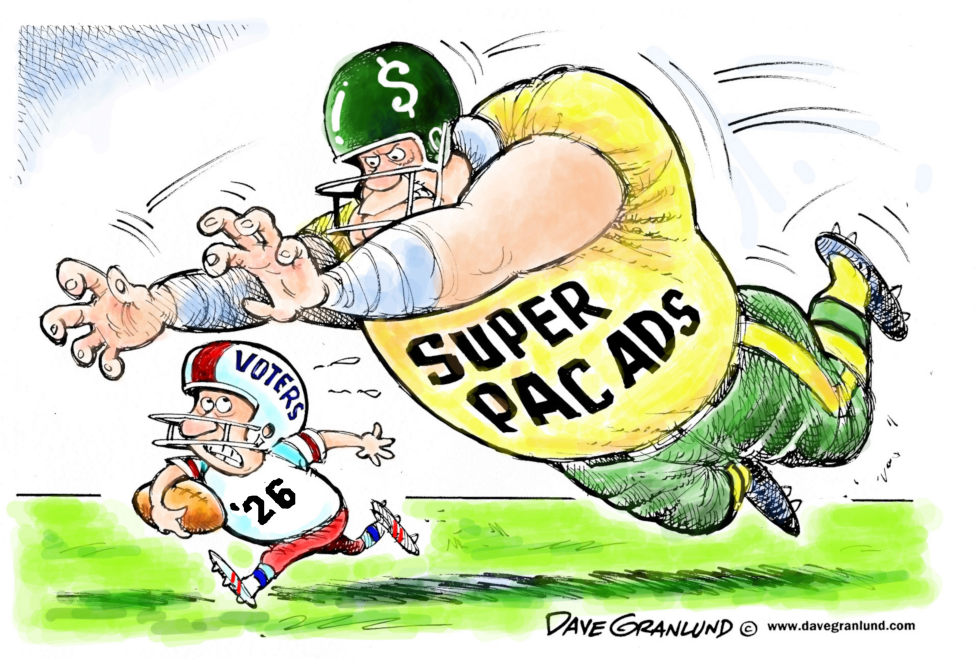
The cartoon depicts a large football player representing Super PAC ads pursuing a much smaller voter figure on a football field. Published on September 11, 2026, the image comments on the growing influence of Super PAC spending in U.S. elections. The oversized player wears a helmet marked with a dollar sign and a jersey labeled Super PAC Ads, while the smaller figure wears a helmet reading Voters and a jersey with the number 26. The visual emphasizes the imbalance between well-funded political advertising and ordinary voters. This reflects ongoing debates about campaign finance and the role of independent expenditure groups following recent election cycles.
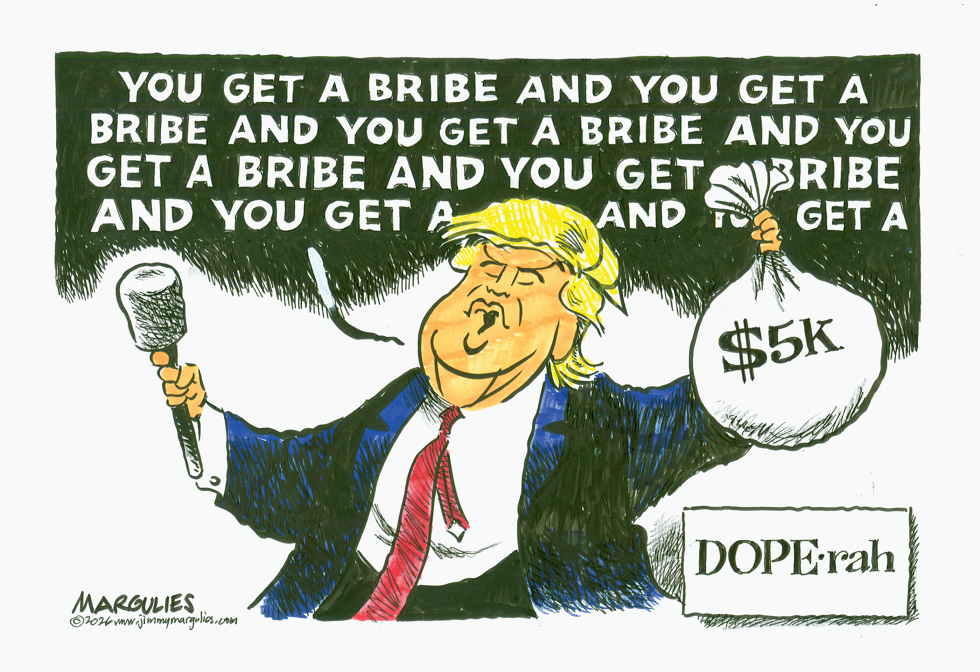
Donald Trump has faced renewed scrutiny over allegations of using official authority to distribute favors and payments. The pattern involves judicial and executive actions that critics say cross into bribery. Such conduct raises questions about accountability in high office. The cartoon frames the behavior as a deliberate, widespread distribution of bribes to allies and supporters. It argues that this approach undermines public trust and normalizes corruption at the highest levels.
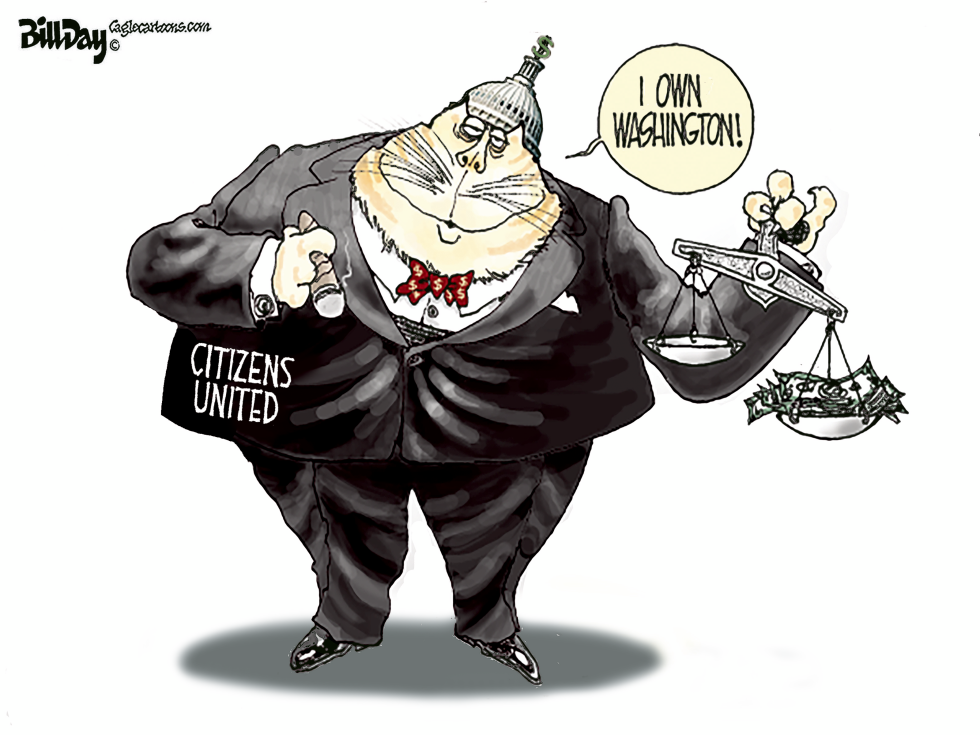
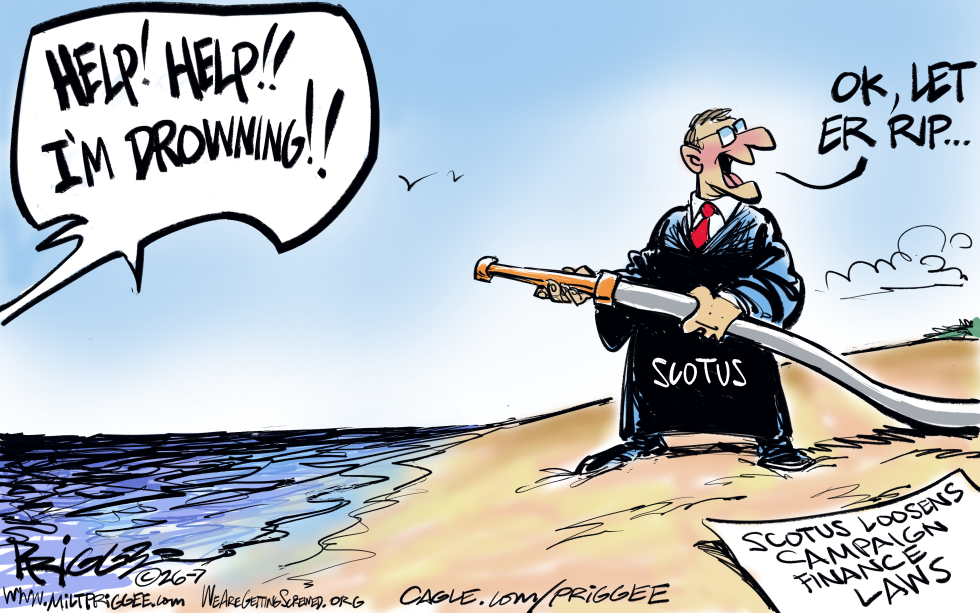
The 2010 Citizens United Supreme Court ruling opened the door to unlimited independent expenditures by corporations and unions in elections. Critics argue the decision amplified the voice of wealthy donors and special interests over average voters. The cartoon responds to the ongoing effects of that precedent by depicting a powerful corporate figure claiming control of the capital. It highlights how the ruling has reshaped campaign finance and public trust in government institutions.
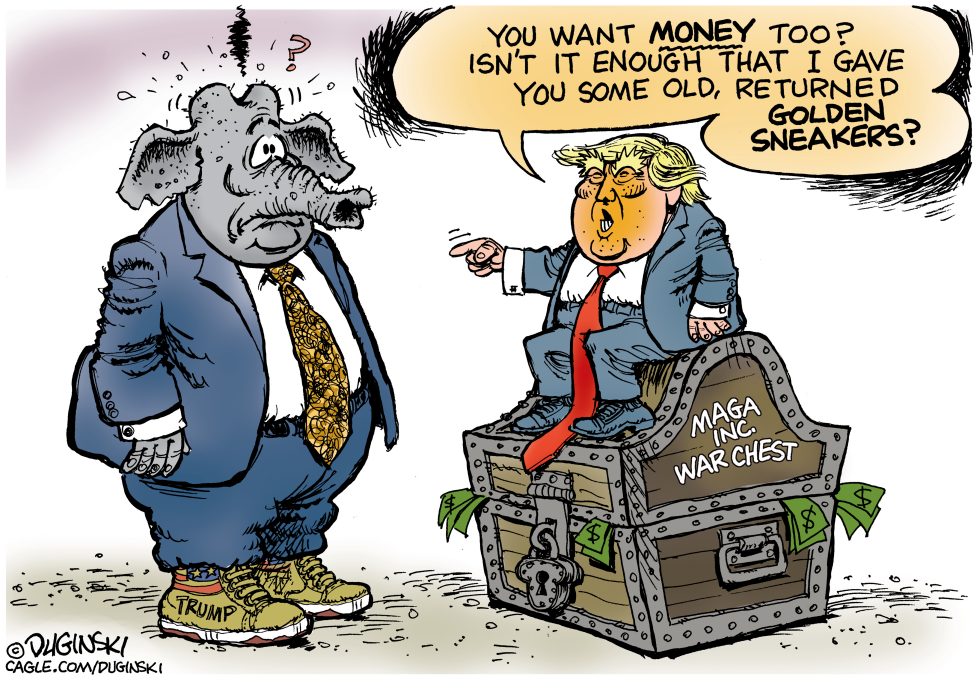
Donald Trump maintains tight control over his substantial campaign funds in the lead-up to the 2026 elections. Fellow Republicans have expressed frustration that he is unwilling to distribute resources from his war chest to support their races. The dynamic highlights ongoing tensions within the party over access to donor money. Trump has instead pointed to past gestures such as distributing returned merchandise. The cartoon criticizes this reluctance as self-serving and detrimental to broader Republican efforts.
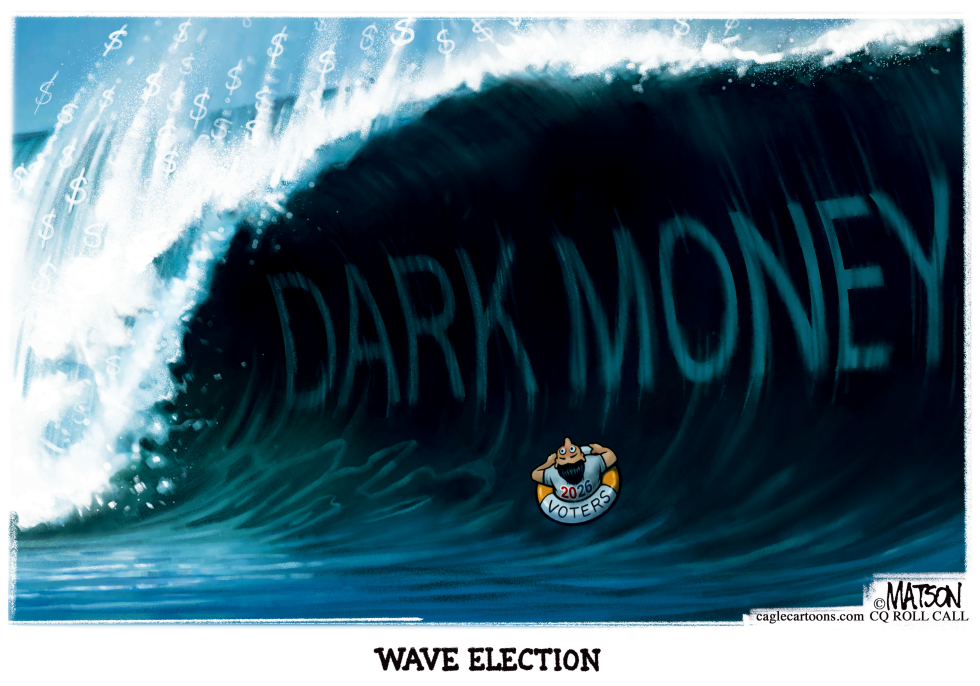
Unregulated dark money continues to pour into the 2026 election cycle, raising concerns that voters will be sidelined by massive undisclosed spending. The influx comes as candidates and outside groups prepare for midterm contests across the country. Critics argue the surge distorts democratic participation and drowns out ordinary voices. The editorial cartoon depicts this dynamic as an overwhelming wave labeled dark money bearing down on a lone voter buoy. It takes the position that such spending poses a direct threat to fair elections and calls for stronger safeguards.
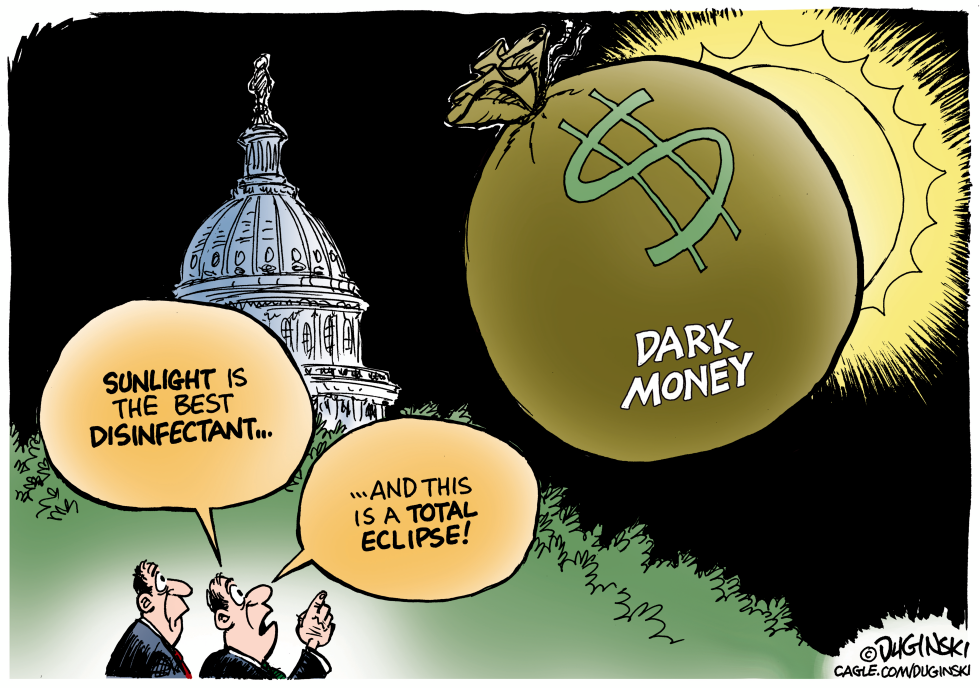
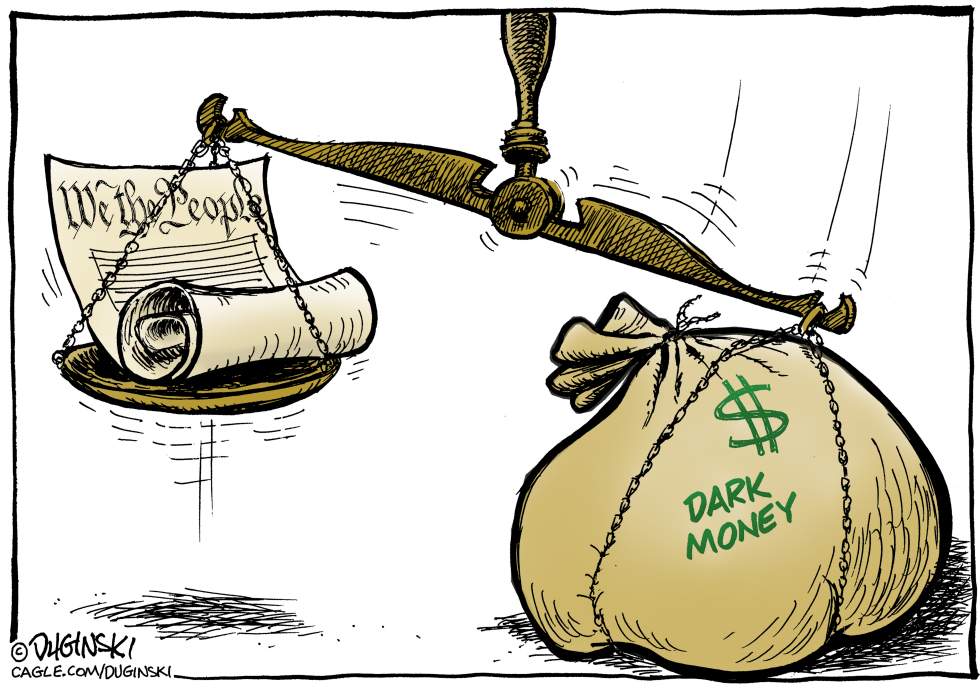
Dark money continues to shape congressional races and policy debates through undisclosed channels. Lawmakers face pressure to address donor secrecy amid calls for stronger disclosure rules. The cartoon argues that such funds directly undermine public oversight of government actions.
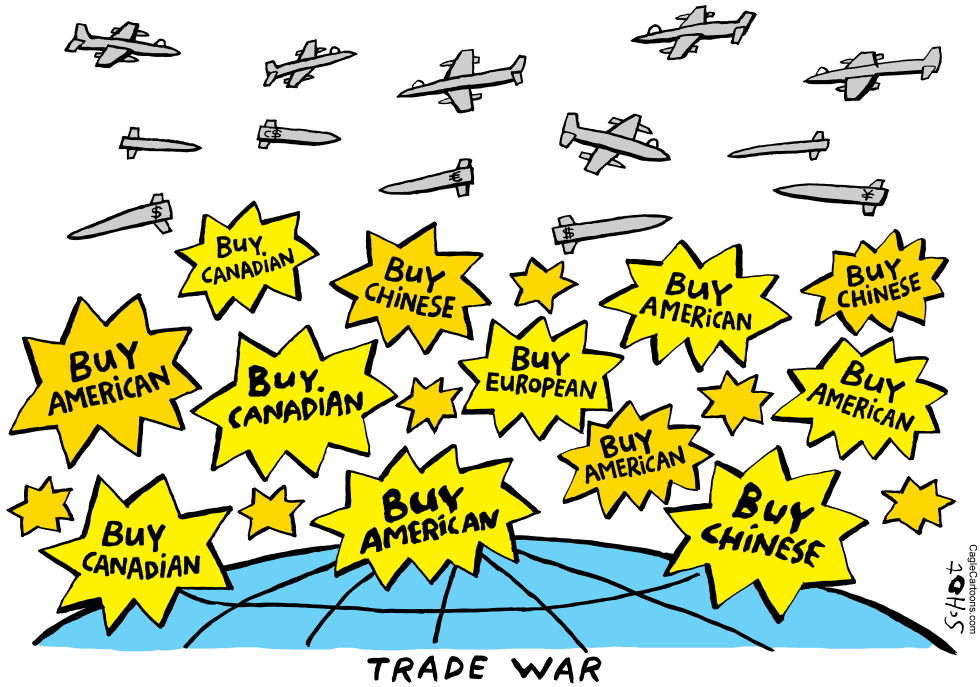
Competing buy national campaigns from multiple countries have intensified trade disputes, raising concerns over economic retaliation and supply chain disruptions. The piece argues these appeals are directly contributing to broader conflict.
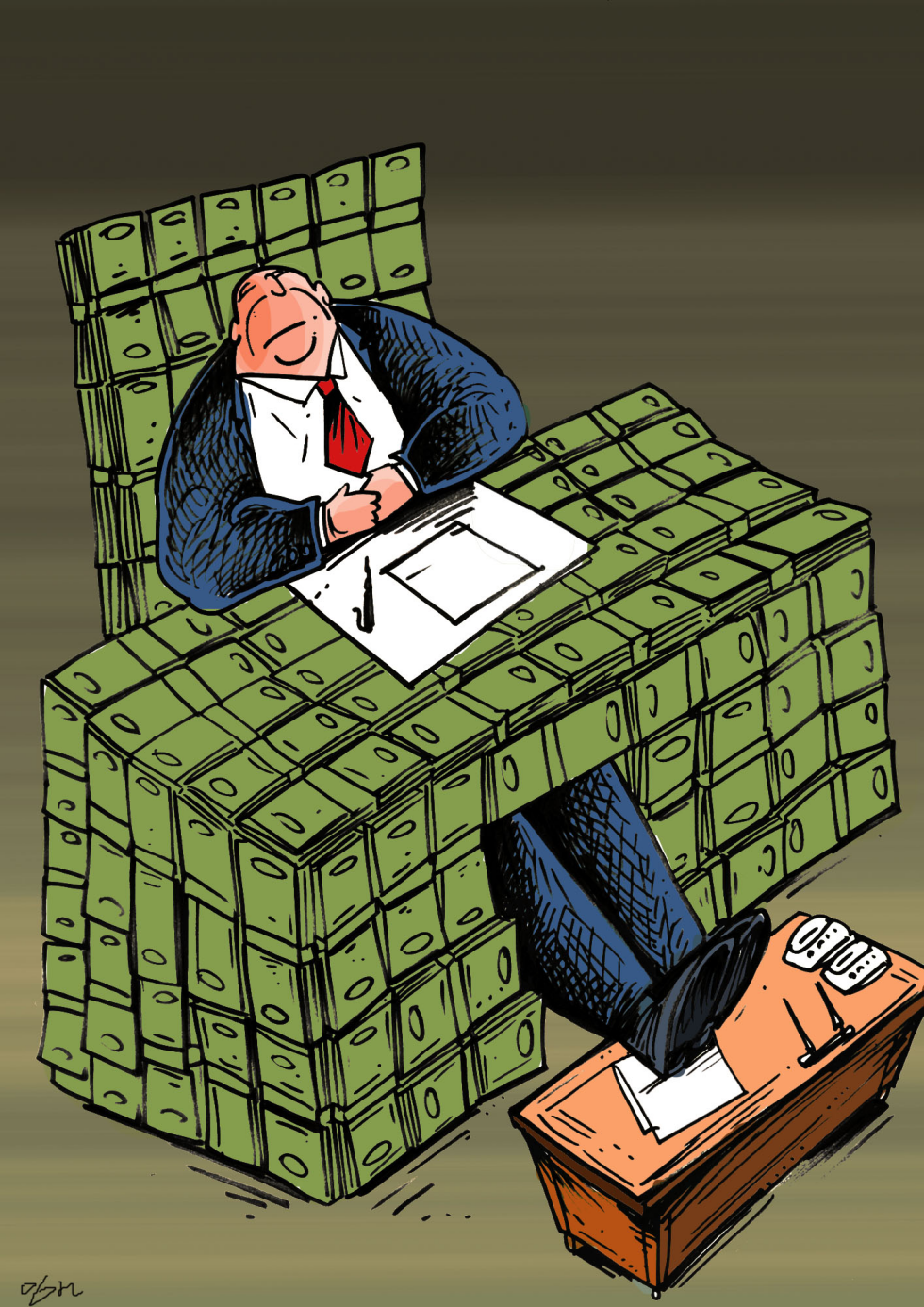
Public officials and business leaders often operate amid substantial financial resources that shape their daily environments and decisions. Recent developments in campaign finance and corporate influence have kept scrutiny on how wealth intersects with governance. The piece portrays an executive fully at ease within a setting constructed entirely from currency, underscoring the normalization of money's central role in positions of authority.