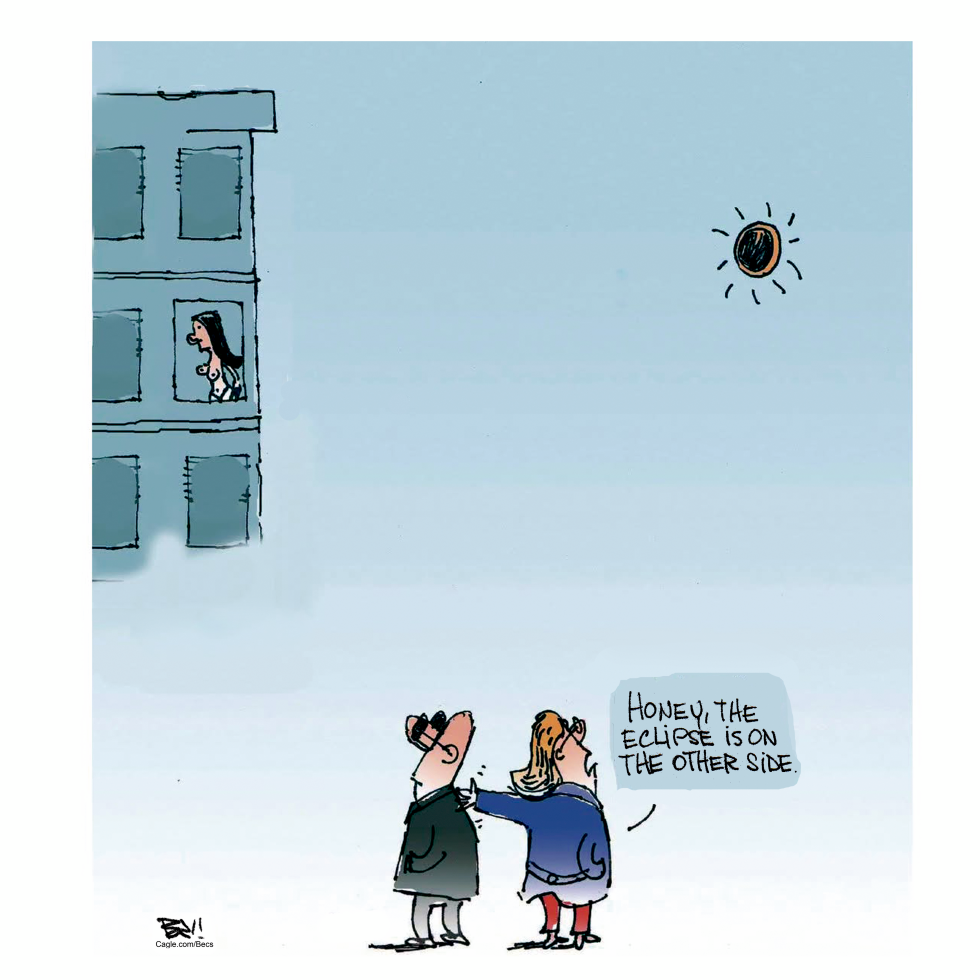
A domestic scene plays out around a simple pun on eclipses and visible marks. The exchange highlights everyday relationship dynamics where one party redirects attention from an apparent injury. The piece presents the interaction without broader political framing.
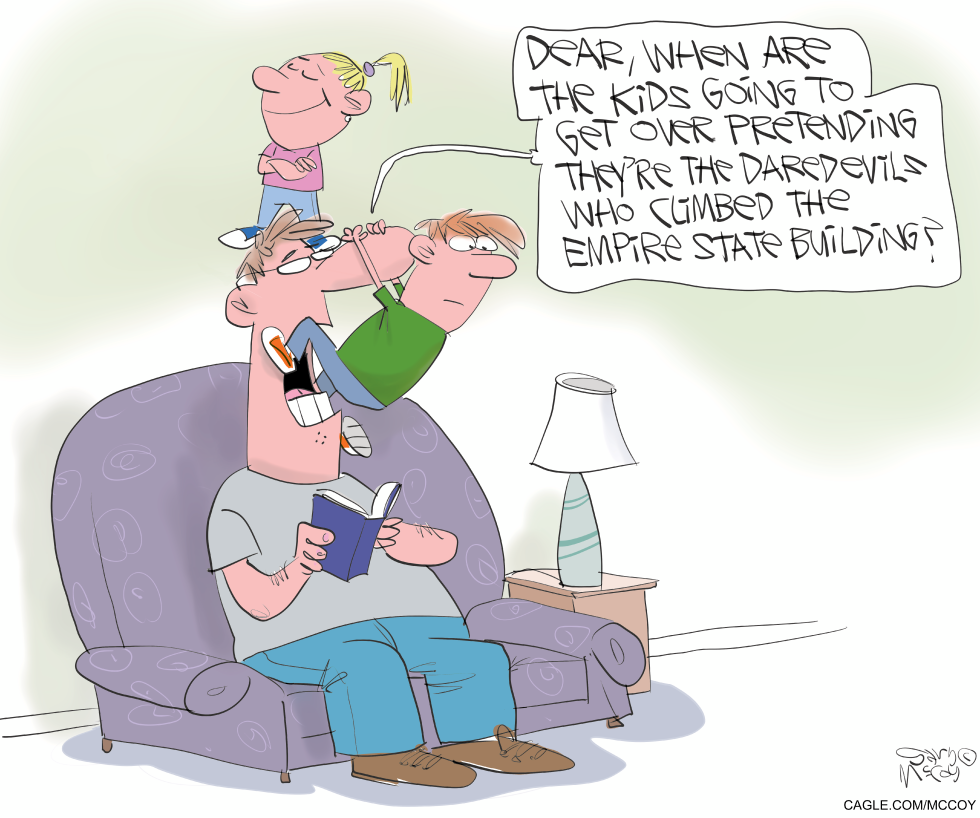
A father attempts to read in a living room chair while his son climbs over him and daughter stands atop his head in a game of pretend Empire State Building climb. An offscreen mother asks when the children will stop pretending to be the daredevils who scaled the building. The scene captures typical family play and parental patience during imaginative activities at home.
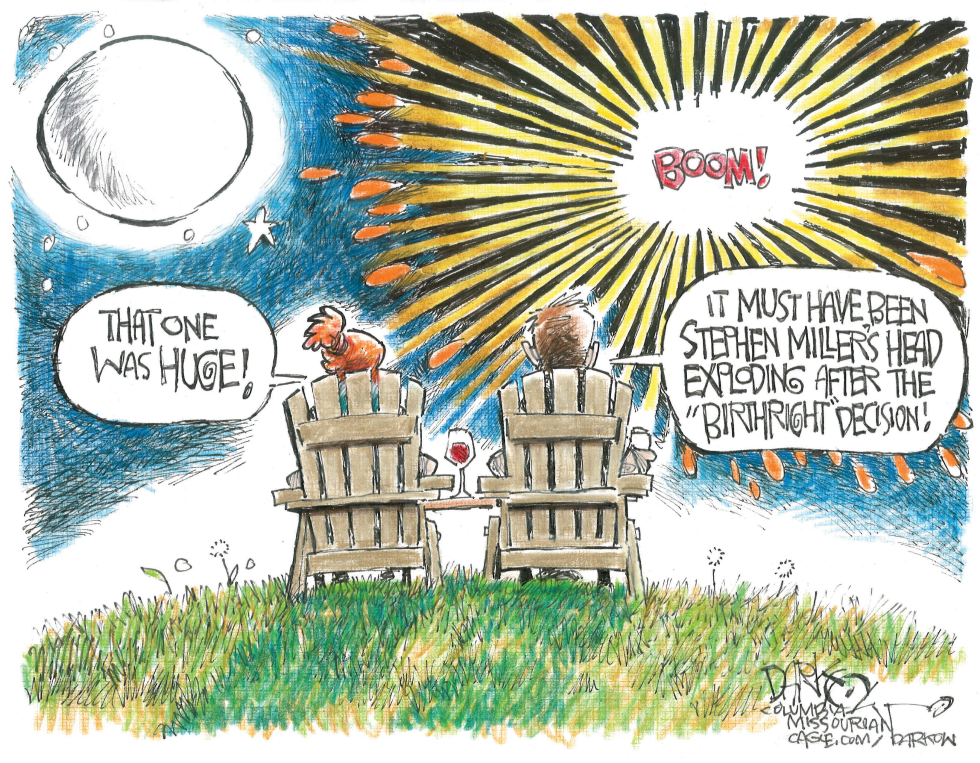
John Darkow's cartoon depicts two people in lawn chairs under a starry sky reacting to a massive explosion labeled as Stephen Miller's head after a birthright citizenship decision. The drawing uses fireworks and dialogue to highlight the intensity of the reaction to the ruling on the 14th Amendment.
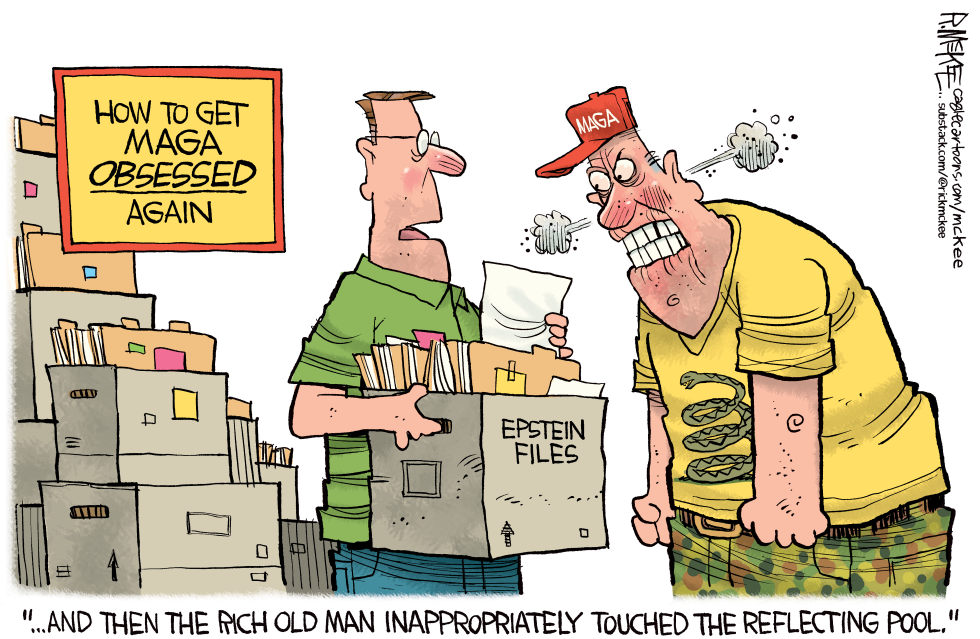
A man in a MAGA hat and yellow shirt shows visible anger with steam lines near his head while facing another man holding an Epstein files box. A yellow sign reading how to get MAGA obsessed again stands amid stacks of boxes. The bottom caption references a rich old man touching the reflecting pool.
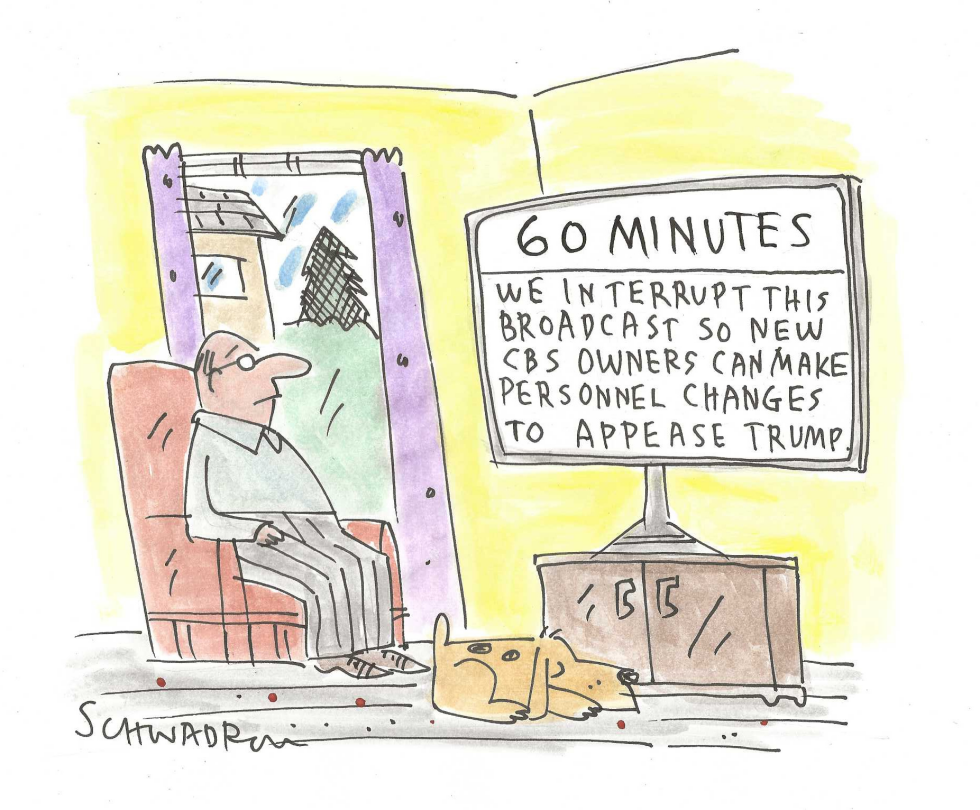
The cartoon depicts a viewer watching an on-screen announcement from 60 Minutes that interrupts the broadcast for personnel changes at CBS to appease Trump. The scene shows the television set displaying the message while the viewer remains seated and a dog lies on the floor. The date of June 2026 places the image in a period of ongoing discussion about media ownership and external political pressure on news outlets.
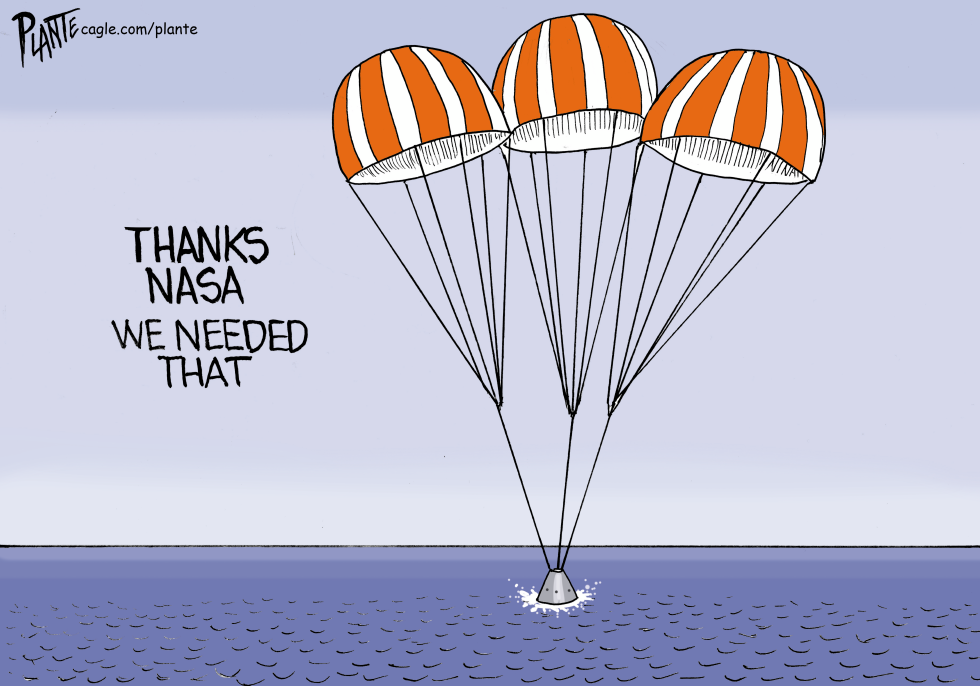
Bruce Plante\'s cartoon captures a space capsule\'s splashdown, complete with three orange and white striped parachutes guiding it to a blue ocean teeming with black fish-like forms. The prominent text \'Thanks NASA We Needed That\' adds a layer of sarcasm, typical in editorial illustrations commenting on high-profile events like the Artemis II mission. The simple composition, with a light blue sky and wavy ocean surface, emphasizes the moment of impact, shown by a small splash at the capsule\'s base. This piece fits into the tradition of political cartoons that highlight public sentiments toward government projects, using minimal elements for maximum impact. The artist\'s signature and website appear in the top left, grounding it in syndicated cartoon style.
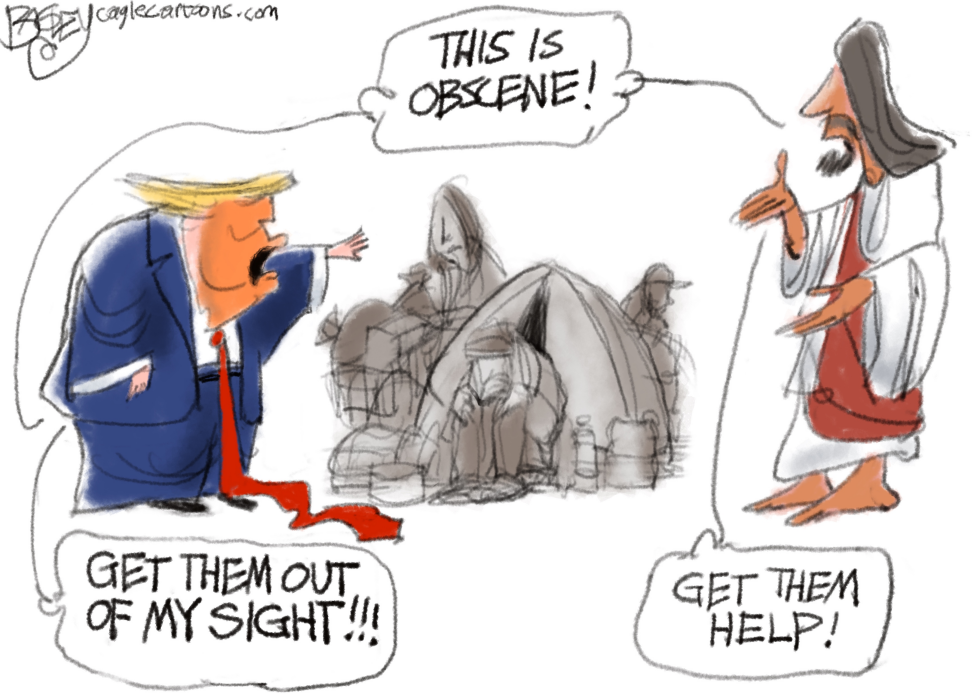
Pat Bagley's latest piece captures a stark contrast in this Trump homelessness cartoon, where a caricature in a blue suit and red tie gestures furiously at a cluster of makeshift tents and huddled figures, declaring the scene obscene and demanding their removal. On the right, a long-haired, bearded man in a white robe and red sash extends a hand, advocating to get them help instead. The homeless crisis political humor underscores differing approaches to urban plight, with the Trump Jesus contrast cartoon highlighting themes of expulsion versus empathy. Such editorial cartoon homelessness policy works often spark debate on societal responses, blending sharp lines and simple composition for maximum impact in satirical take Trump compassion.
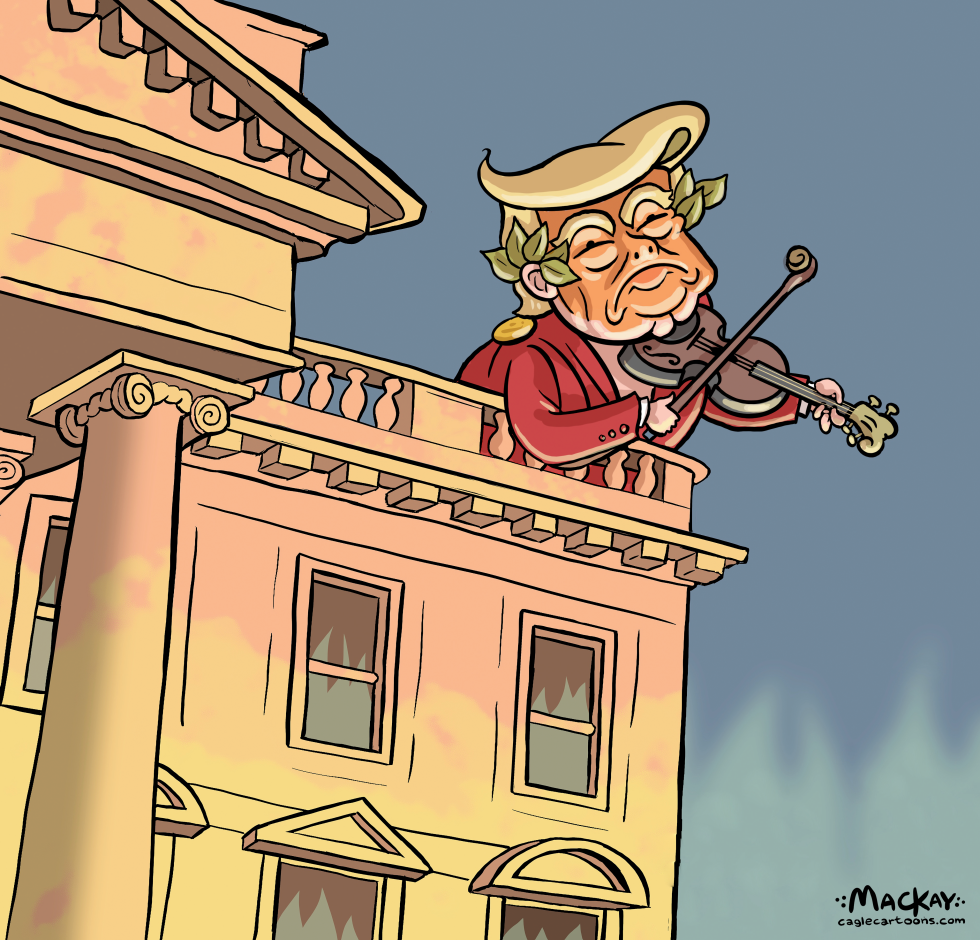
On June 9, 2025, artist Graeme MacKay portrays President Donald Trump as the Roman emperor Nero, standing on a White House balcony and playing a violin while flames rise from the building's windows. The image draws on the historical tale of Nero fiddling during the Great Fire of Rome. Trump wears a red jacket and laurel wreath, eyes closed in concentration as smoke fills the background. The cartoon references ongoing national tensions including border issues and civil unrest mentioned in related tags.
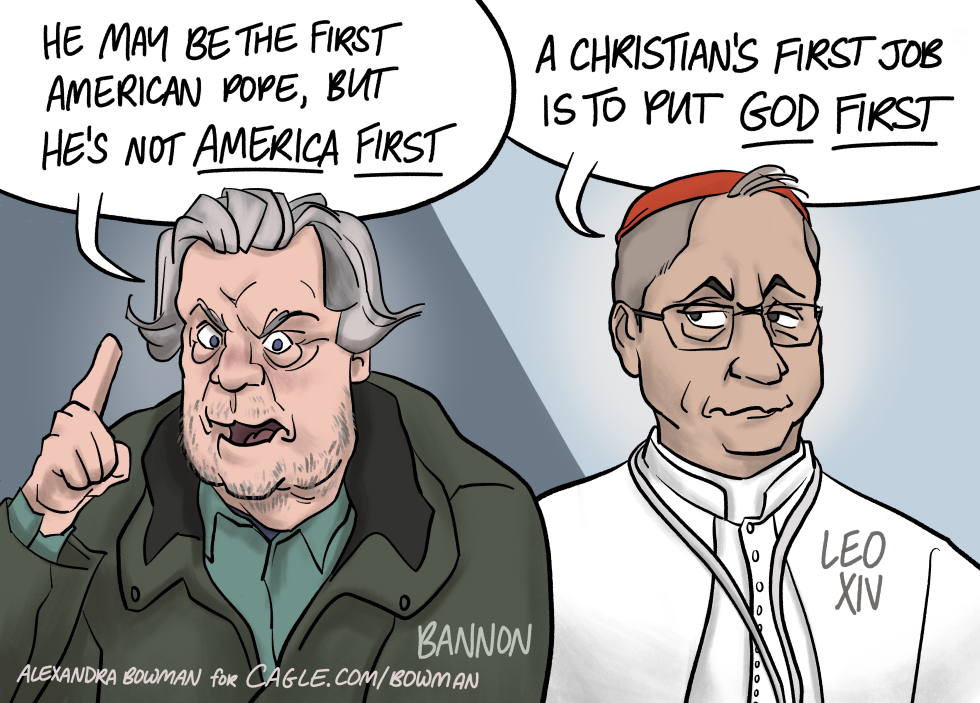
The cartoon shows Steve Bannon, labeled clearly, gesturing emphatically while decrying Pope Leo XIV as the first American pope but not America First. The pope, in white robes and red cap, responds that a Christian's job is to put God first. Tags such as Vatican, conclave, Catholics, Christianity, Jesus Christ, and border underscore the satire on blending partisan politics with faith. The drawing captures a stark divide, with Bannon's angry expression contrasting the pope's stern look. Alexandra Bowman's style brings dry humor to the clash between nationalism and religious priorities.
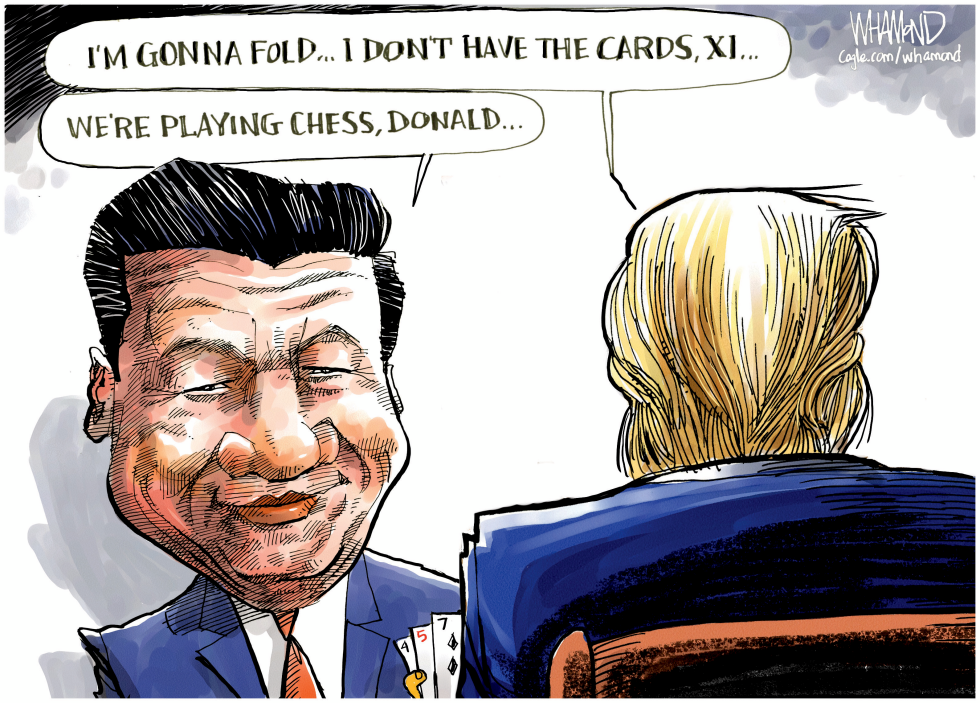
On April 15 2025 cartoonist Dave Whamond shows Chinese leader Xi Jinping facing US President Donald Trump across a card table. Trump declares he will fold because he lacks the cards. Xi responds that the contest is actually chess. The image references the continuing US China trade conflict including tariffs and critical mineral exports. Xi appears confident while Trump looks defeated from behind.
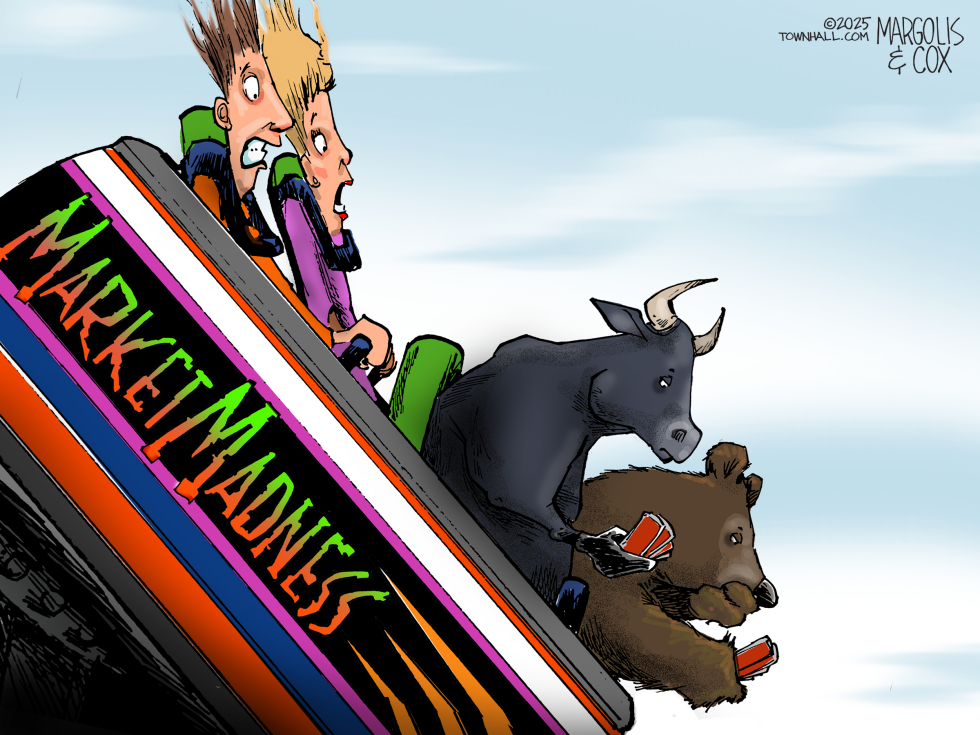
The cartoon shows a rollercoaster car marked 'Market Madness' diving steeply, carrying two human figures with wild hair and open mouths, a black bull with horns looking concerned, and a brown bear clutching red tickets. This setup captures stock market volatility, with the bull and bear as classic symbols of rising and falling markets. Tags such as tariff, economy, Dow Jones, rollercoaster, and turbulence underscore the wild ride of financial ups and downs. The image keeps it simple, focusing on the immediate thrill and fear without deeper layers. Artistic style is bold and cartoonish, emphasizing the chaos in a clear, unambiguous way. No hidden meanings jump out; it's all about that market madness feel.
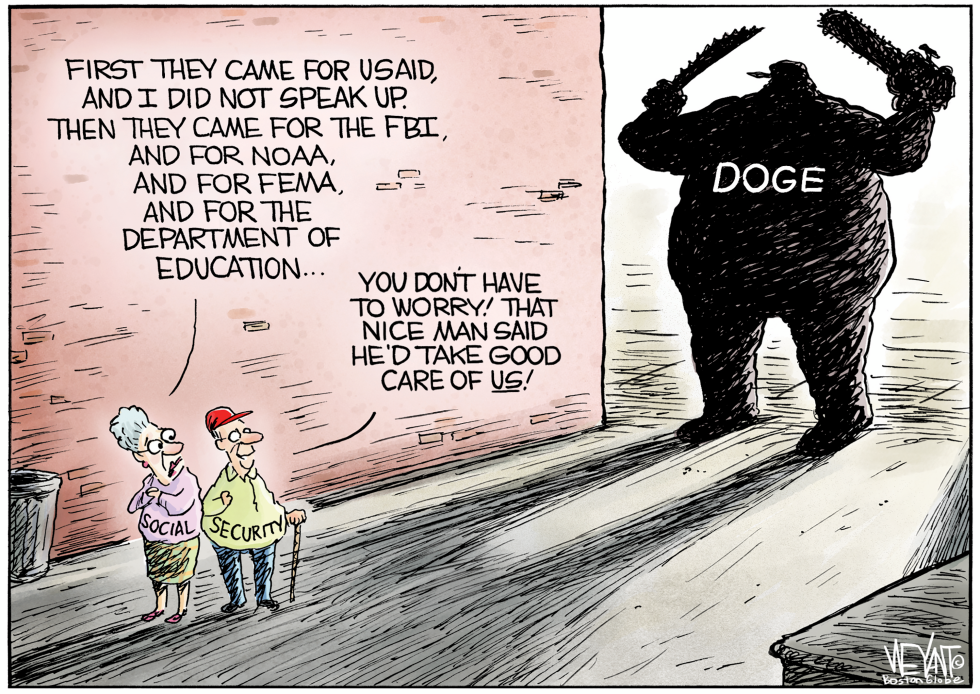
The cartoon depicts a massive DOGE figure wielding chainsaws while two seniors labeled Social and Security express concern on a sidewalk. Text on the wall recites an updated version of the 'First they came' poem listing USAID, FBI, NOAA, FEMA and the Department of Education. The seniors reply that a nice man promised to care for them. The image responds to 2025 efforts by the Department of Government Efficiency to reduce federal agencies and spending.