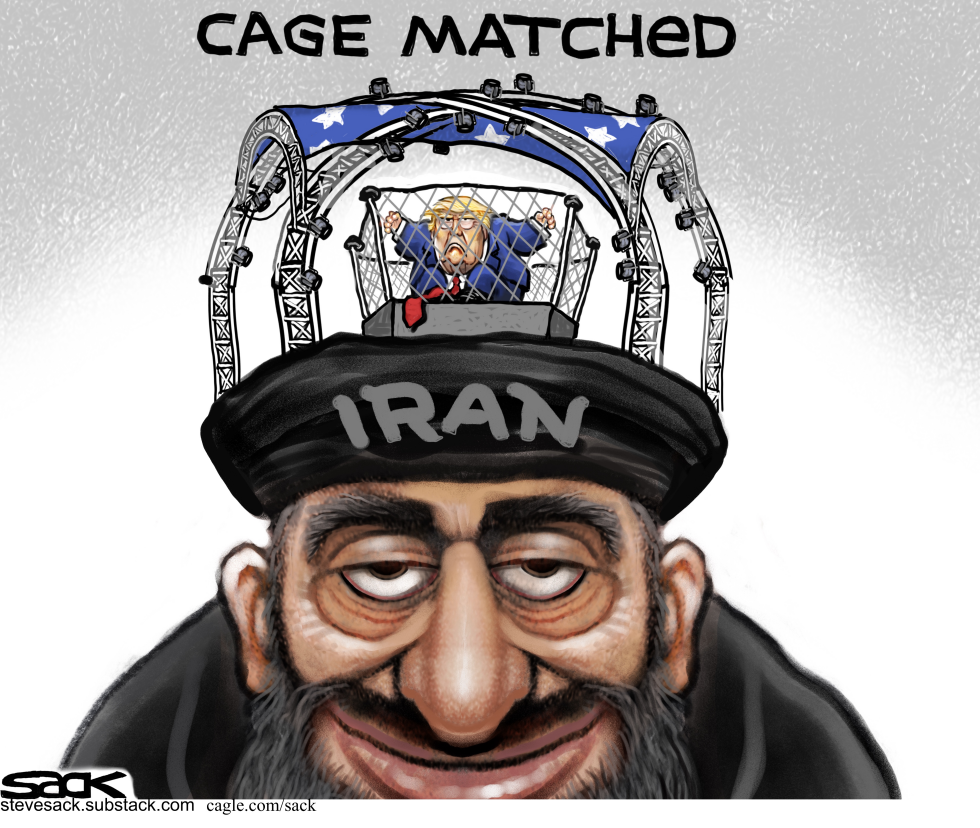
Steve Sack's cartoon depicts Ayatollah Khamenei wearing a black hat labeled Iran with a UFC-style cage on top containing Donald Trump. Trump grips the bars with an agitated expression. The image responds to ongoing US Iran tensions in 2026. Khamenei appears calm and slightly smiling beneath the structure. The visual uses the cage match metaphor to illustrate diplomatic entrapment.
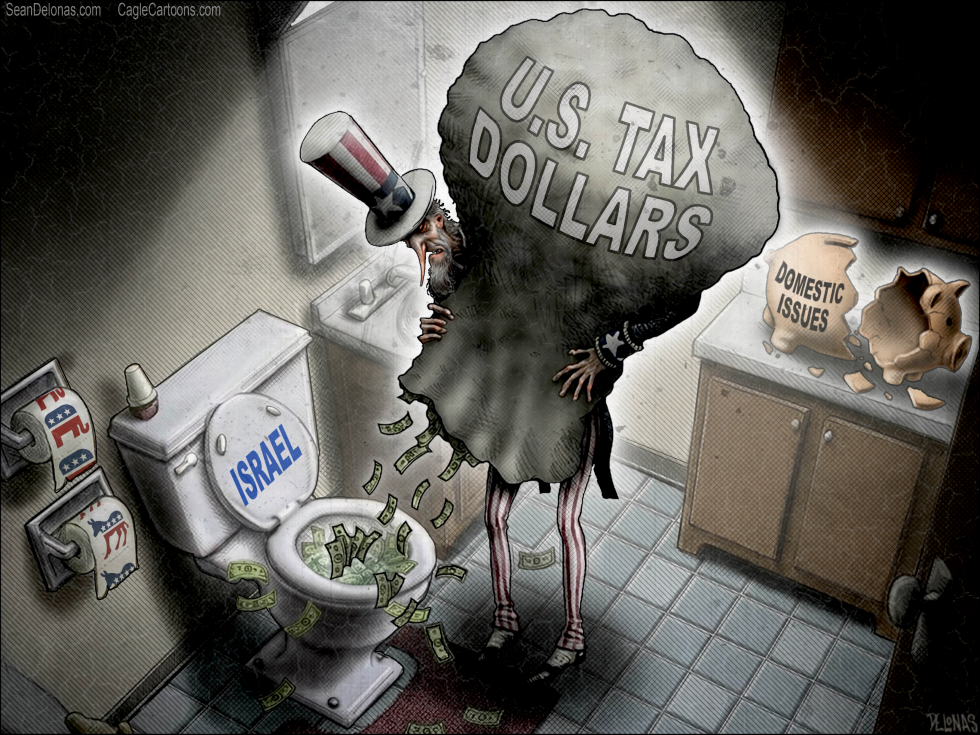
On June 8 2026 Sean Delonas depicts Uncle Sam struggling under a boulder marked U.S. Tax Dollars. The figure pours cash into a toilet labeled Israel while a broken piggy bank marked Domestic Issues sits nearby. Republican elephant logos appear on the toilet paper roll. The scene highlights ongoing debates over foreign aid versus domestic spending priorities.
A man and woman sit at a checkered table, each holding a smartphone. The man asks ChatGPT for something real good while the woman prompts Grok with a vague request. The AIs respond with direct declarations of love in starburst bubbles. Pink hearts float around the pair as they remain focused on their devices rather than each other. The image captures a light take on reliance on artificial intelligence for personal moments.
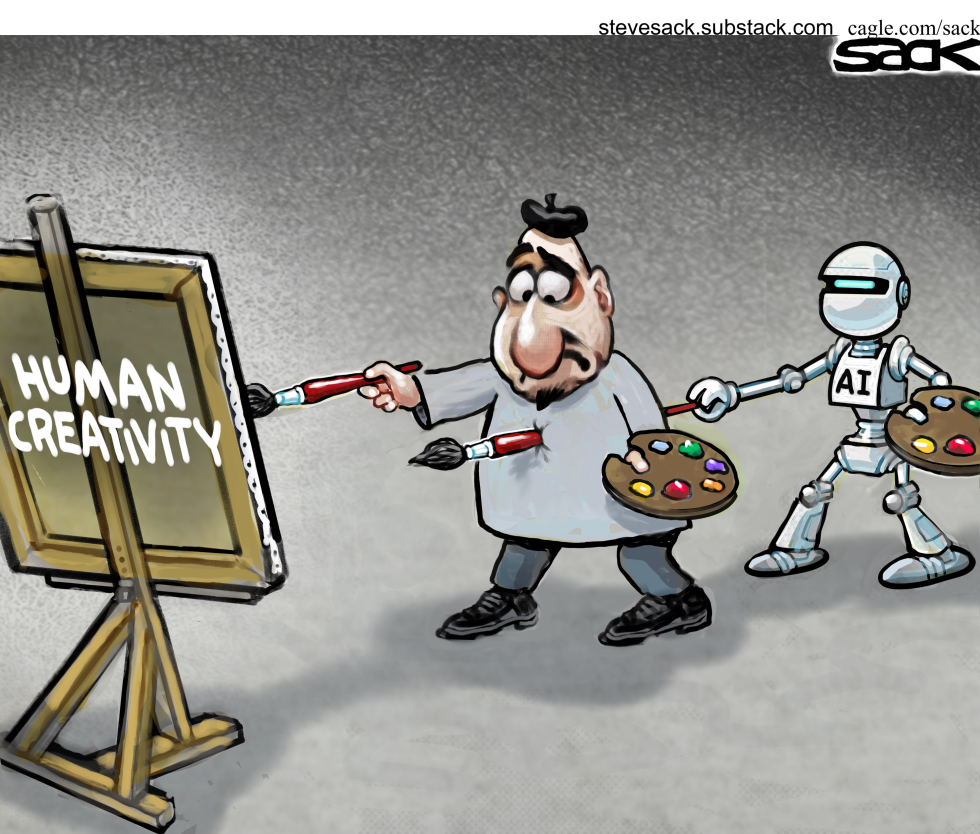
The cartoon depicts a human artist in a beret being attacked by a robot marked AI while painting the words HUMAN CREATIVITY on an easel. The robot holds a palette and extends a brush toward the artist in a stabbing motion. This visual responds to ongoing discussions about artificial intelligence tools generating images and displacing traditional artists. The scene uses the easel text and the robot label to frame the conflict between human work and machine output. Publication occurred on June 2, 2026, during continued public debate on AI capabilities in creative fields.
The image presents a coach figure positioned in front of a green chalkboard filled with a dense collection of white lines boxes arrows circles and x marks beneath the heading Iran Plan. The figure wears a red shirt with a whistle and the word Coach visible on the chest. Two speech bubbles contain the phrases That's the play and Now could someone explain it to me. A signature reading sack appears at the lower left along with website text at the bottom edge.
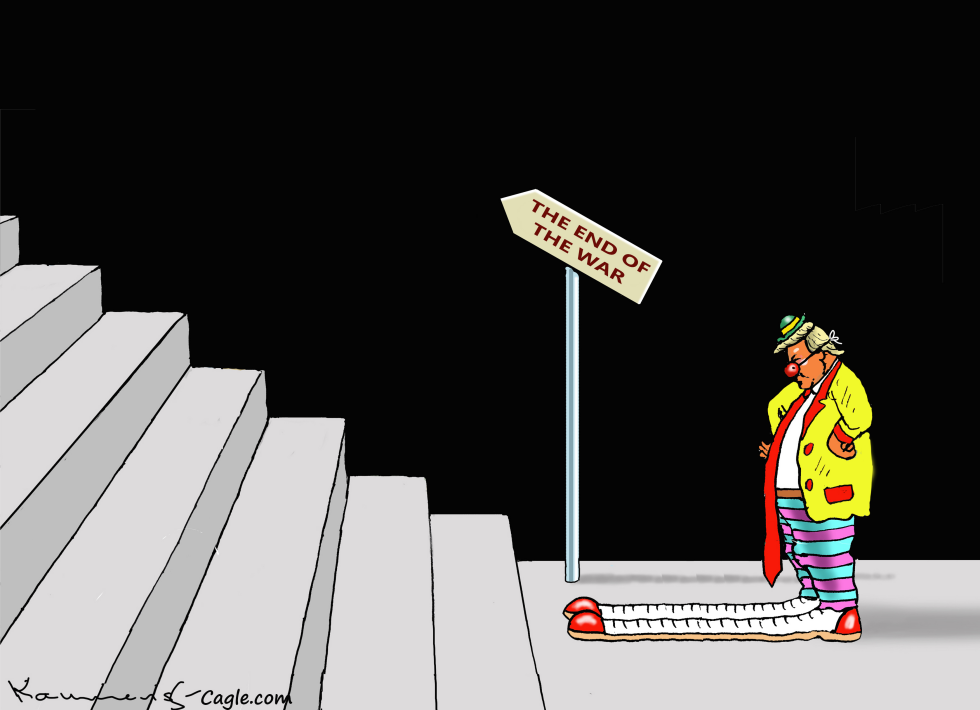
The image features a signpost with the text the end of the war. A figure wearing a yellow jacket, red tie, striped pants and red shoes stands on a white path. Stairs appear on the left against a black background. The cartoon includes a signature from Kamensky at cagle.com. The composition places the sign in the upper center and the figure to the right.
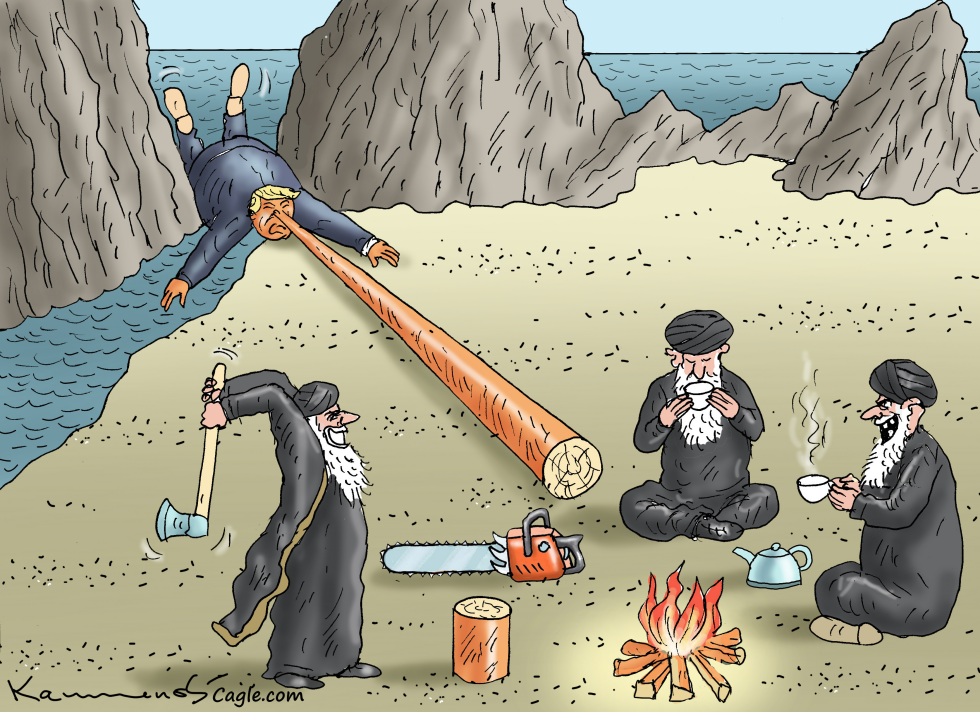
Visible elements include a suited figure extended by an orange log from a rocky cliff into water. Three bearded figures in dark robes appear: one swings an axe, two sit with cups by a fire and teapot. A chainsaw and cut log section rest on the ground. Rocky mountains and sea form the background with signature at lower left.
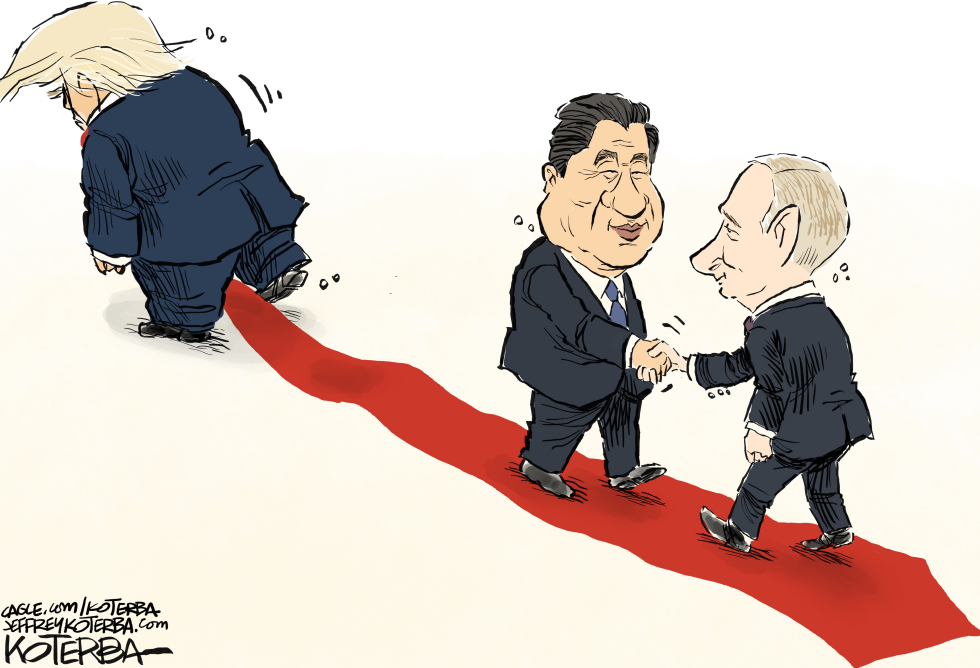
The image presents a simple cartoon scene with three figures in dark suits positioned along a red carpet. One figure with blonde hair is shown walking away toward the left edge. The remaining two figures face each other and clasp hands while standing on the carpet that stretches diagonally across the frame. Small motion lines and dots add basic movement details around the figures. The background remains plain and white with a signature block in the lower left corner.
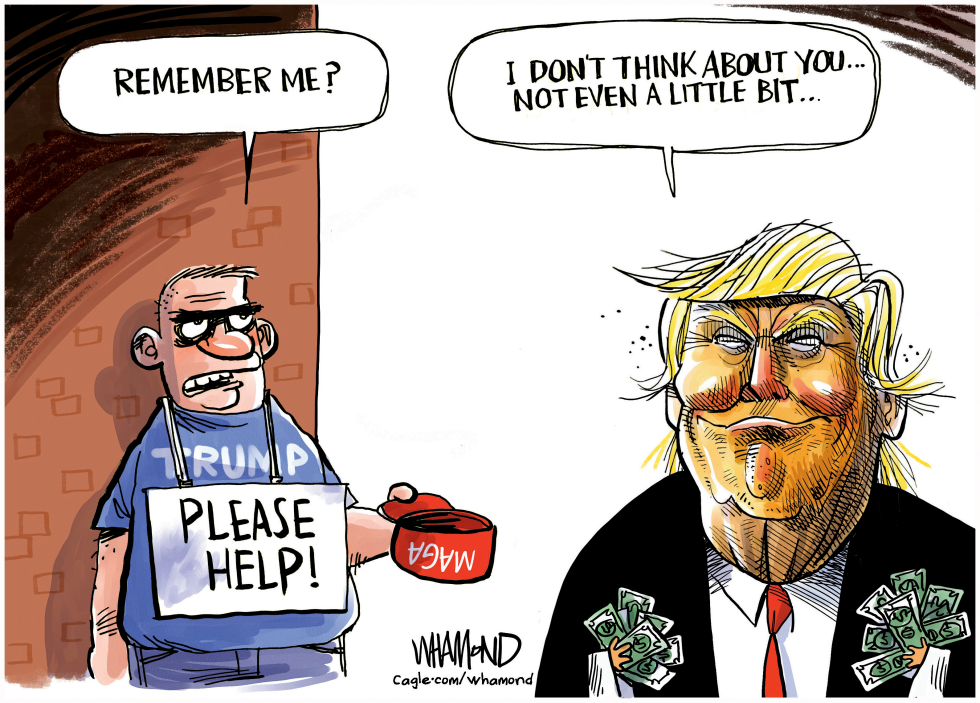
Visible in the cartoon are two figures facing each other. The left figure wears a blue shirt labeled trump, holds a white sign reading please help, and carries a red hat marked maga. The right figure has yellow hair, a black jacket with green bills protruding from pockets, and a red tie. Two speech bubbles display the phrases remember me and i dont think about you not even a little bit. The artist signature whamond and cagle.com/whamond appear at the bottom.
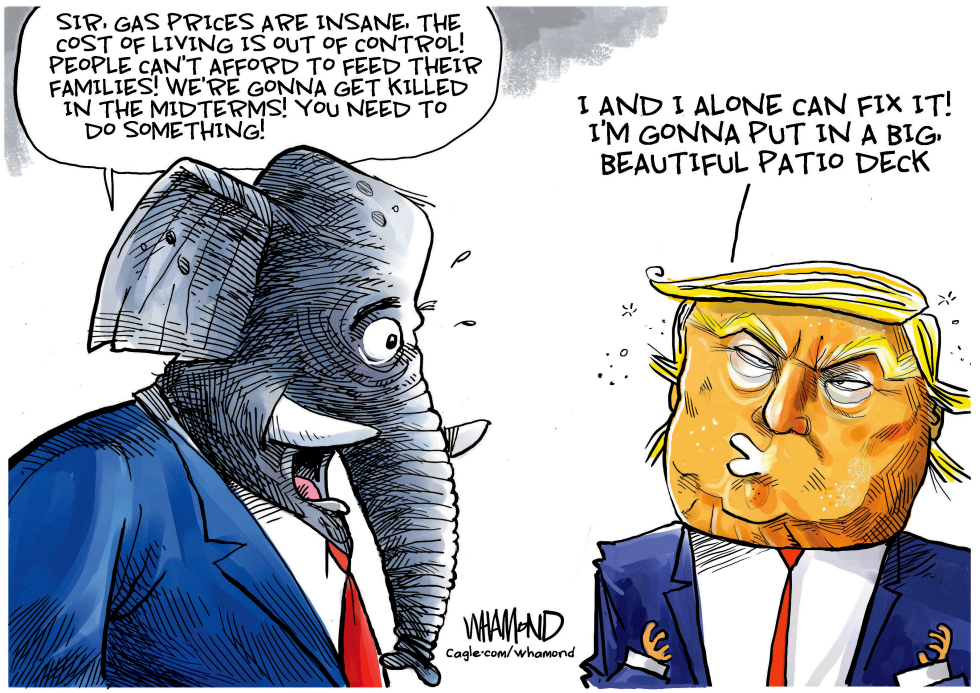
The image depicts an elephant character in a blue suit and red tie facing a caricature figure with yellow hair. The elephant's speech bubble lists concerns about gas prices, cost of living, and midterms. The other figure's speech bubble mentions fixing issues with a patio deck. The drawing includes the artist signature WHAMOND and Cagle.com/whamond credit line.
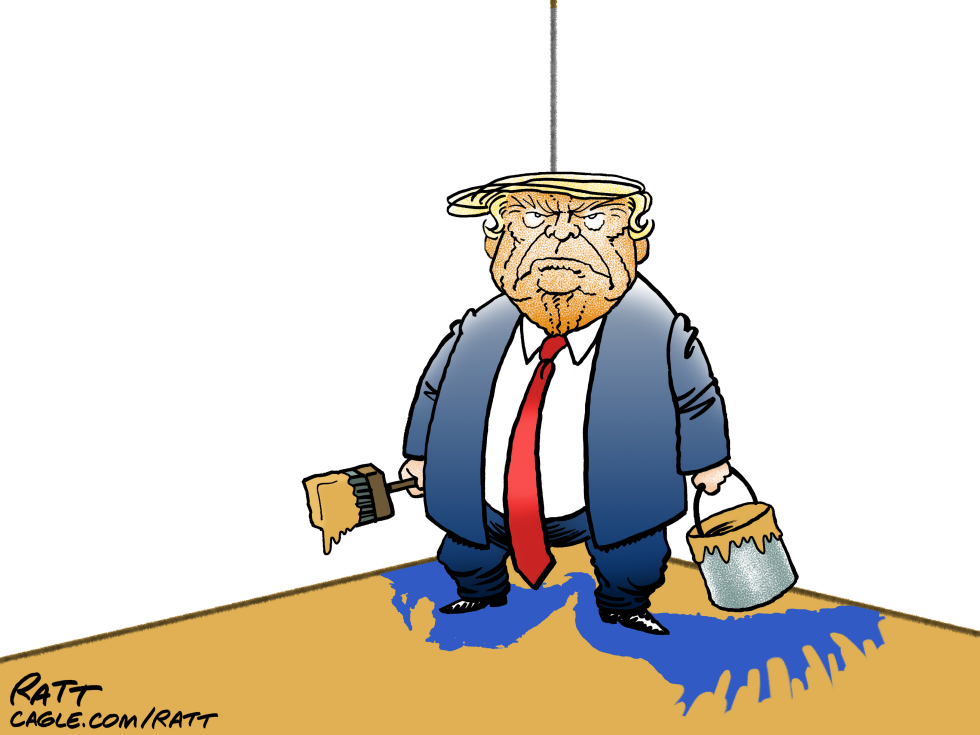
Donald Trump appears in a 2026 editorial image holding a paintbrush and bucket while standing on a blue painted area resembling the Strait of Hormuz. The scene responds to ongoing concerns over Iranian oil routes, potential conflict, and resulting effects on global oil and gas prices. The visual shows the figure applying paint that creates a path leading to restricted movement.
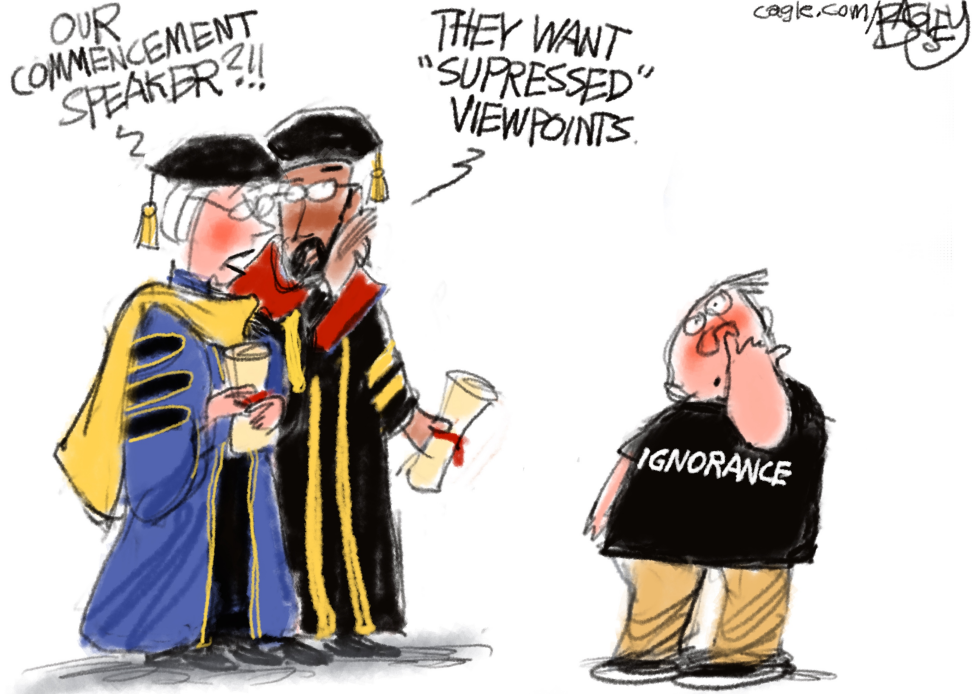
The image shows two academics in graduation gowns and caps standing close together. One holds a cup and the other a rolled diploma. Speech bubbles read our commencement speaker and they want suppressed viewpoints. A separate figure on the right wears a black shirt labeled ignorance and stands with hand near face. The drawing includes the cagle.com signature in the corner.
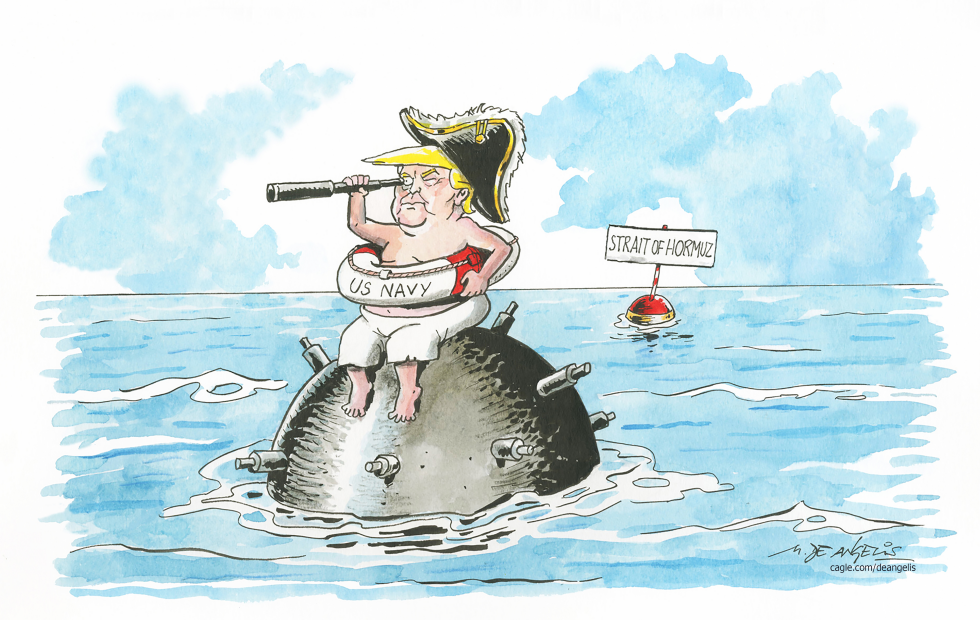
Marco De Angelis draws a caricature resembling Donald Trump, shirtless with a US NAVY life preserver, white shorts, and pirate hat, sitting on a large mine bobbing in blue waters. He holds a telescope to his eye, gazing out, while a small buoy nearby bears a Strait of Hormuz sign. The scene tags USA, IRAN, HORMUZ, NAVY, MINES, OIL, NEGOTIATIONS, FLEET, ALONE, ADMIRAL, MIDDLE EAST, WAR, capturing a sense of solitary watch in troubled seas. The dry humor underscores the absurdity of one man embodying an entire fleet, floating precariously on explosive hardware. Cartoons like this thrive on exaggeration, turning geopolitical standoffs into visual punchlines that newspapers love for their sharability.
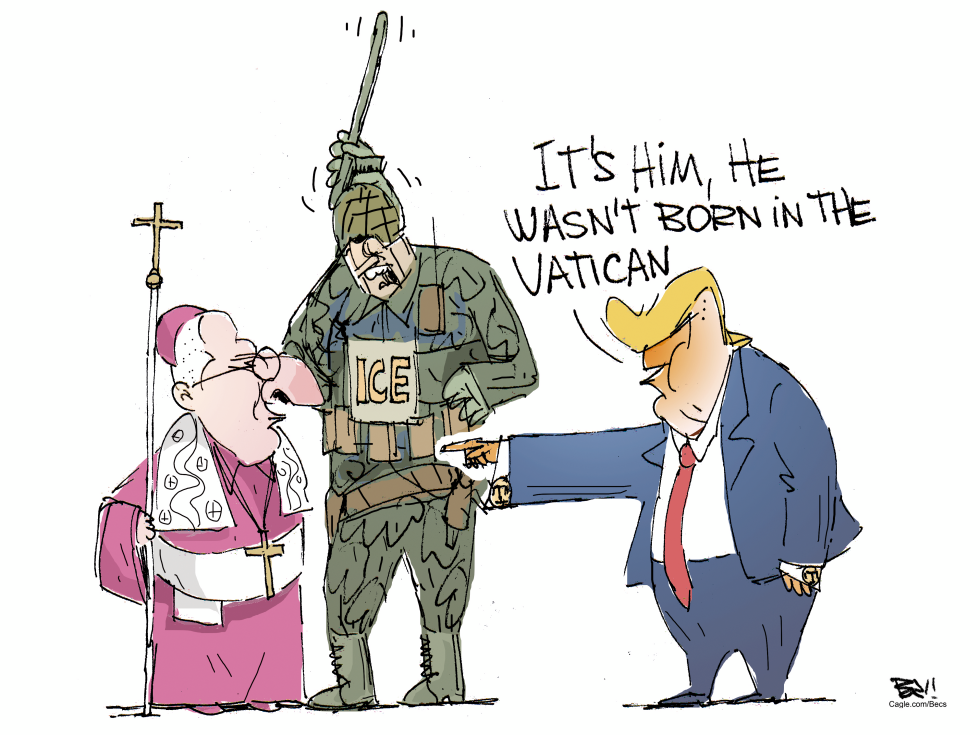
This cartoon shows Donald Trump accusing the Pope of not being born in the Vatican, with an ICE agent poised for action. The tags highlight themes of incompetent narcissistic leadership in US politics, blending Vatican imagery with immigration enforcement. Trump's pointing finger and the Pope's surprised expression drive the satire, while the ICE label on the agent's vest ties into border control debates. Such cartoons often poke at figures like Trump and the Pope to underscore absurdities in power dynamics. With elements of humor targeting narcissism and incompetence, it fits broader discussions on US-Vatican relations and policy follies.
Taylor Jones draws a sharp contrast in this cartoon, with a pope-like figure in white robes and glasses, hands clasped, delivering the Sermon on the Mount line from Matthew 5:9 about blessed peacemakers being children of God. Beside him stands a blonde-haired man in a suit, halo above, mouth open in response, twisting John 3:16 to claim the Strait of Hormuz as a divine gift, or soon to be, labeled Don 3:16. The piece nods to Catholic Church teachings against a backdrop of Persian Gulf tensions, war in Iran, and oil exports disruptions. It's a dry poke at how leaders bend scripture for geopolitical gains, like controlling the Strait of Hormuz to spike crude prices. Vatican serenity meets brash claims, all in watercolor style on purple background.