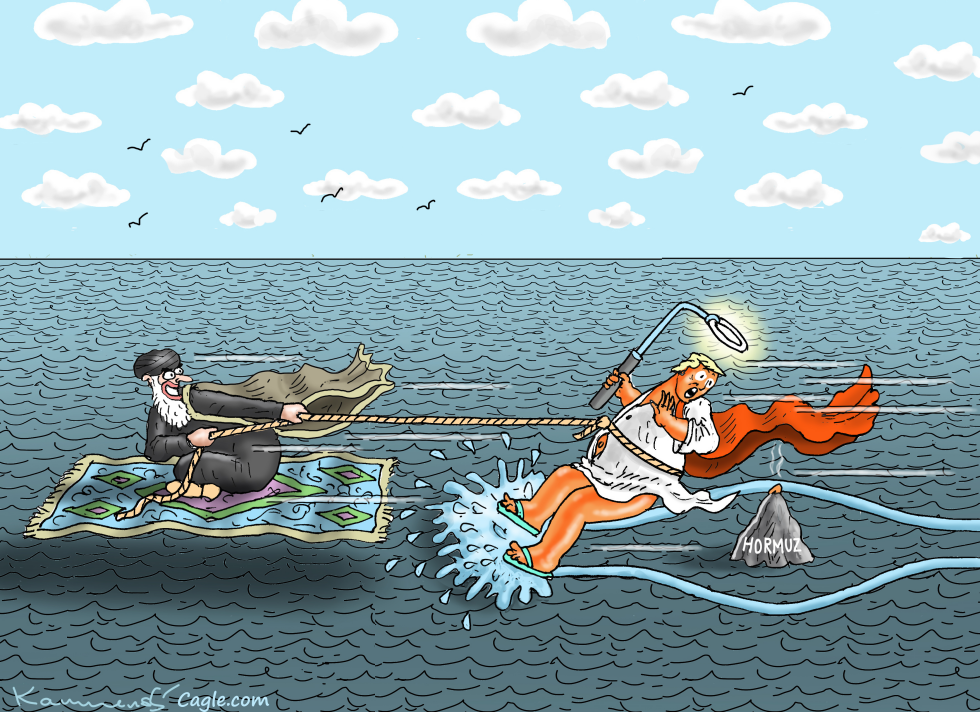
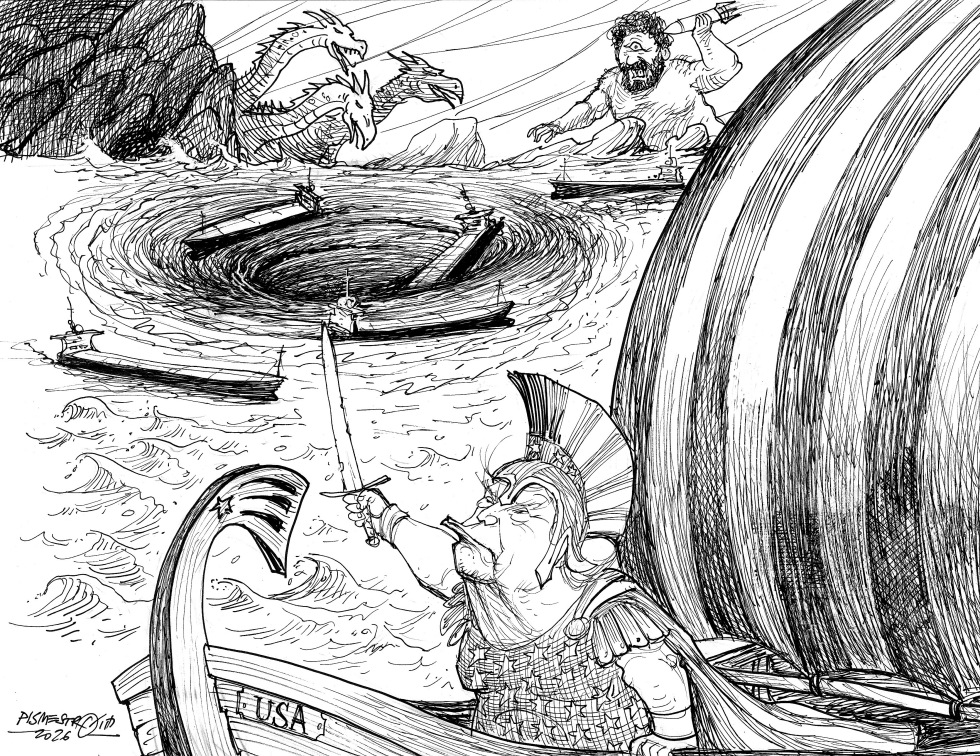
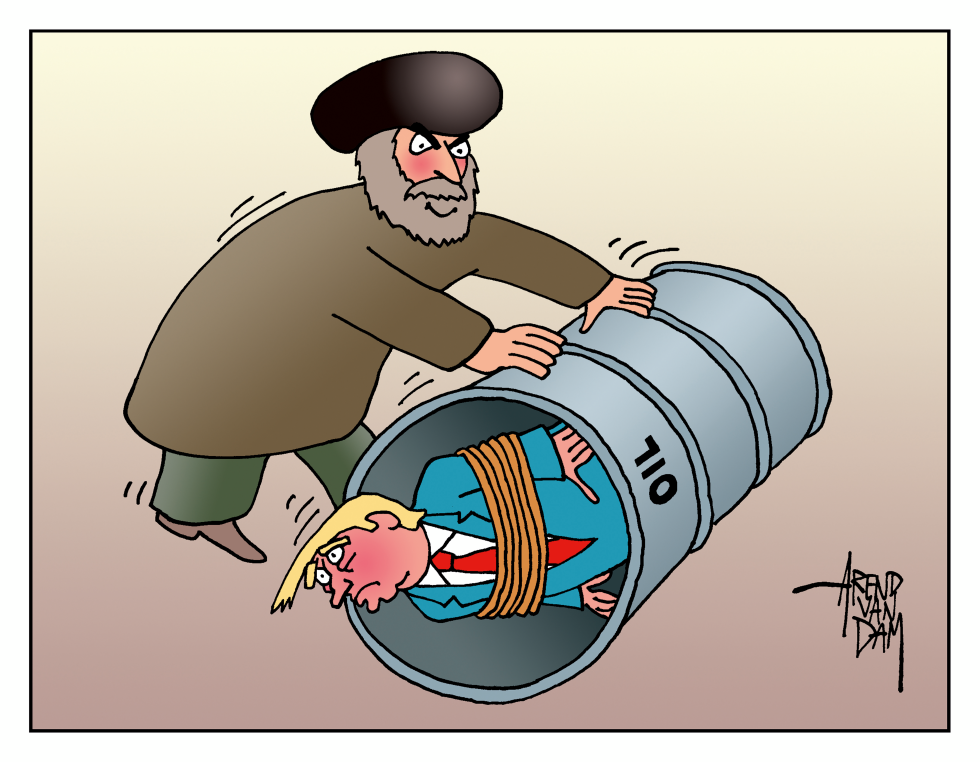
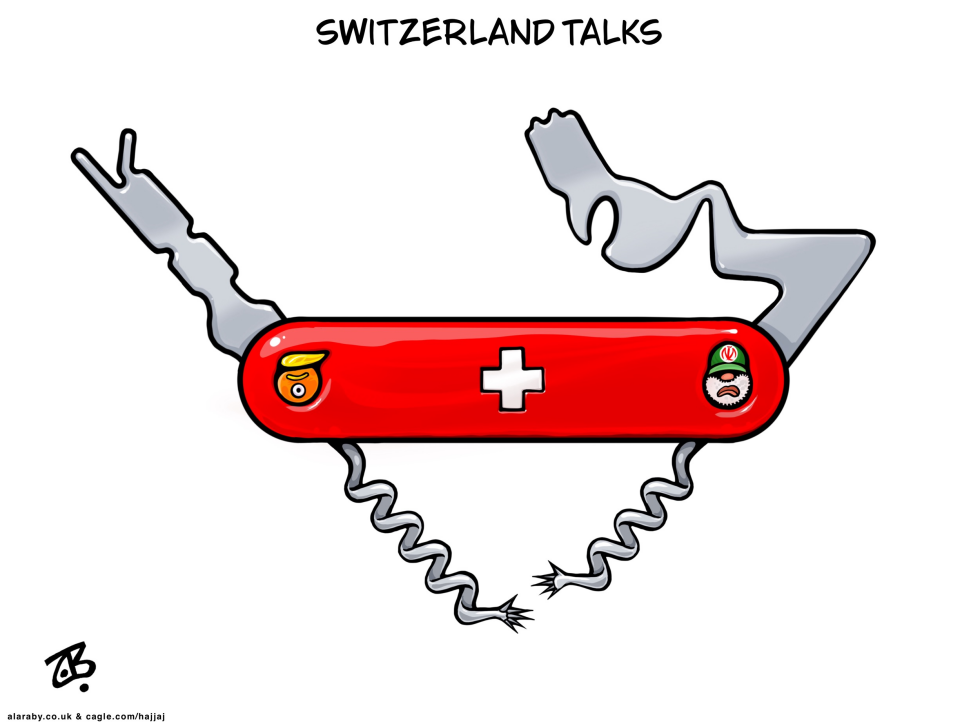
Tensions in the Strait of Hormuz have escalated with threats to shipping lanes critical for global oil supplies. Israeli and U.S. leaders face mounting losses from disruptions. The cartoon argues that involvement risks dragging both into deeper conflict without clear gains.
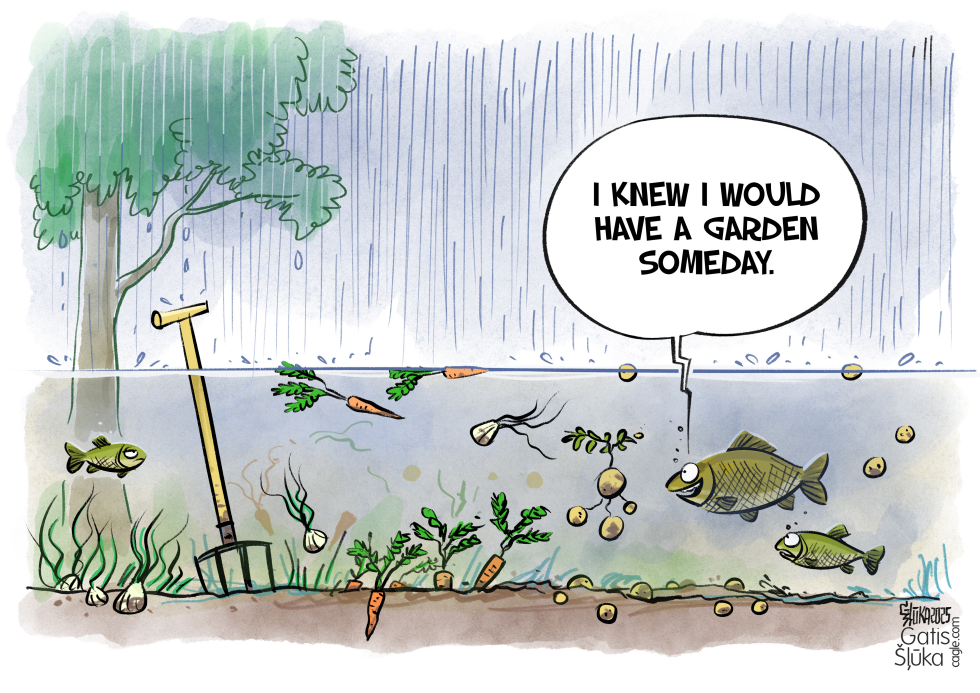
The cartoon shows fish swimming among carrots and other vegetables in a garden submerged by floodwaters, with one fish stating it always knew it would have a garden someday. A shovel stands upright in the soil below the waterline while rain pours down. The image responds to ongoing concerns about extreme weather events and their effects on farming. Heavy rainfall has become more frequent in many regions, turning fields into temporary ponds. The visual uses the fish's unexpected claim to underscore how flooding alters traditional land use and creates new, if temporary, aquatic environments.
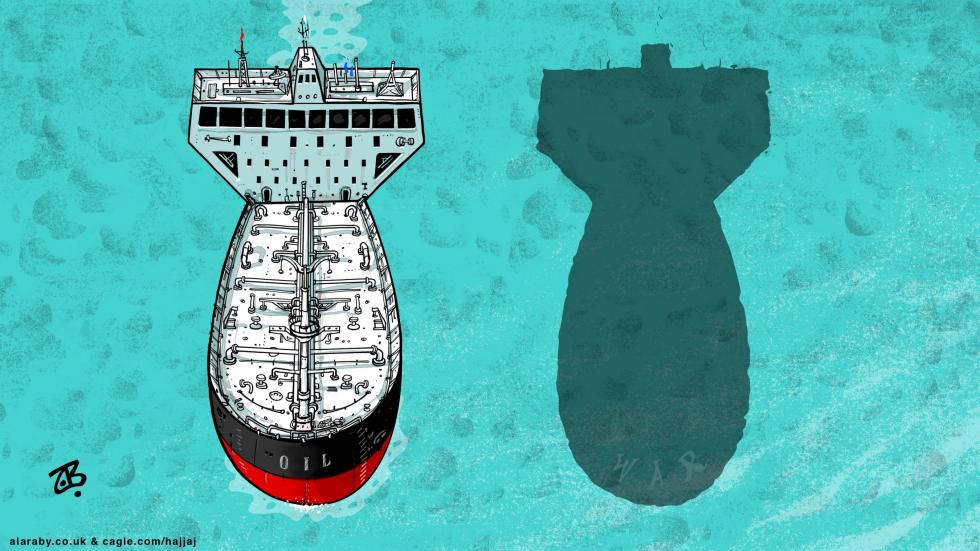
An oil tanker depicted in bomb form with a matching shadow labeled war underscores ongoing links between energy resources and armed conflict. The image responds to persistent tensions in oil-producing regions where shipping routes and resource control intersect with military actions. Such portrayals emphasize how fossil fuel transport remains entangled in geopolitical disputes. The editorial stance critiques the weaponization of energy supplies and the persistent threat of escalation tied to oil interests.
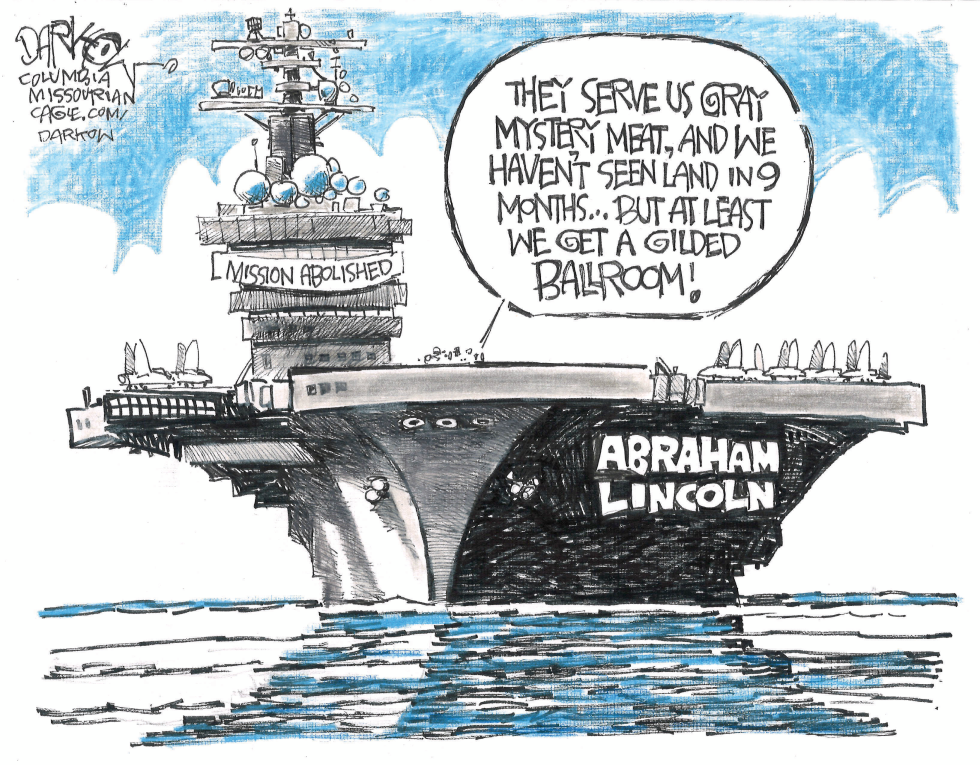
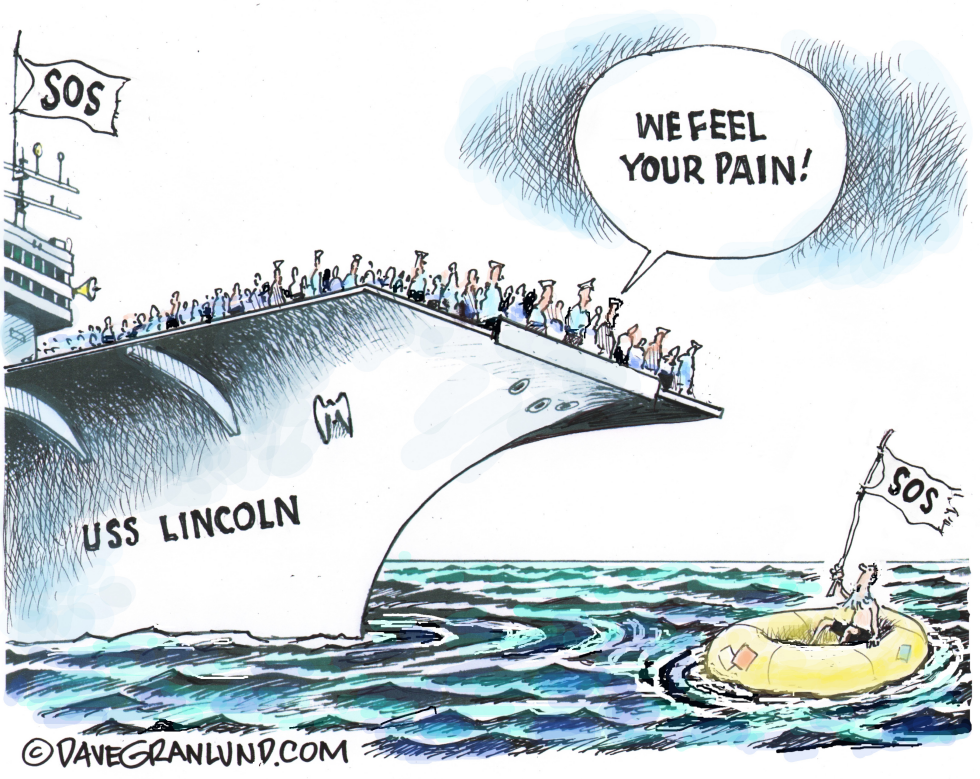
The USS Abraham Lincoln remains on extended deployment with sailors citing ongoing issues with food quality and time at sea. The addition of a gilded ballroom has drawn attention to priorities in naval operations. The piece highlights crew discontent with conditions despite the upgrade.
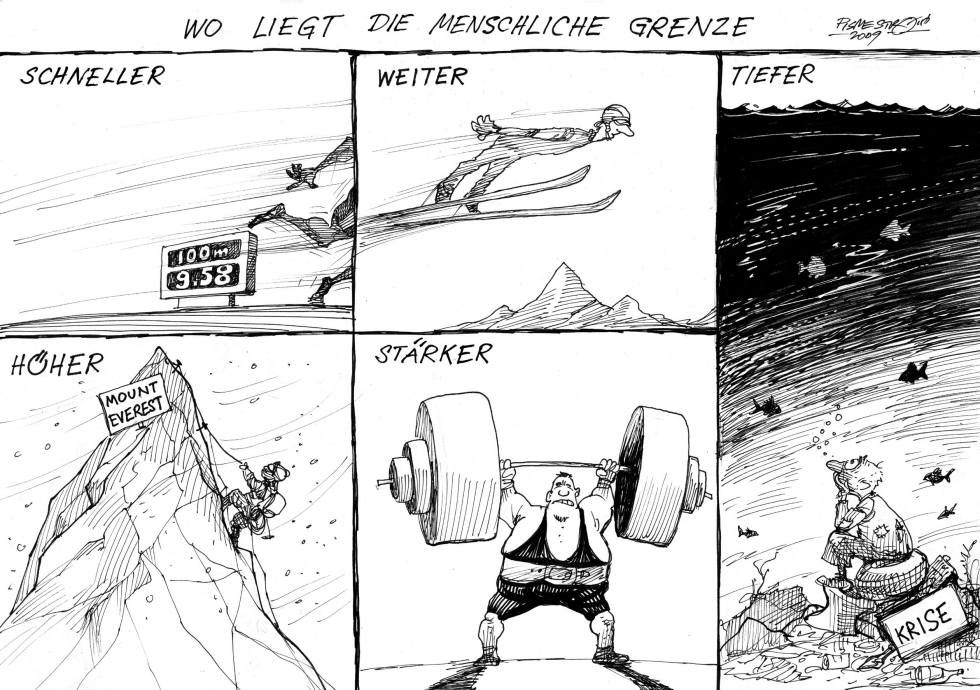
The cartoon responds to ongoing human pursuit of physical and exploratory records across multiple domains. Athletes and adventurers test speed, distance, depth, altitude and strength. The piece positions these efforts as leading toward an eventual crisis represented by the bear figure.
Global leaders continue to dismiss repeated scientific warnings about accelerating climate impacts even as extreme weather events intensify worldwide. The ongoing failure to curb emissions and adopt binding reductions leaves future generations exposed to rising temperatures, sea levels, and resource conflicts. The editorial argues that such willful disregard of clear danger signs amounts to reckless endangerment of the planet itself.
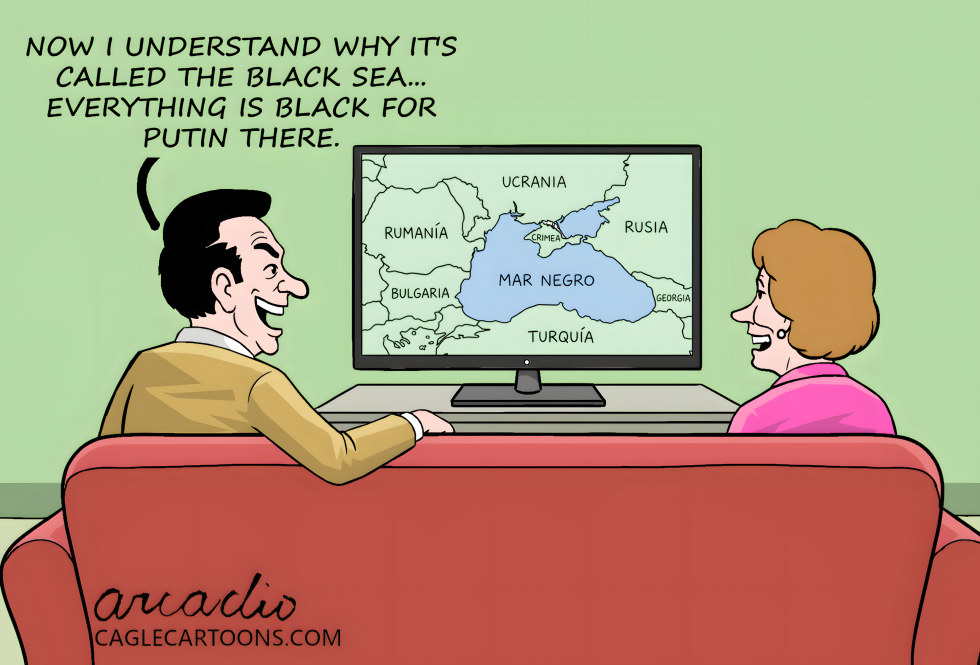
A couple watching television commentary on the Russia-Ukraine war notes the Black Sea's name in a pun about Vladimir Putin's difficulties. The piece highlights persistent Russian setbacks around Crimea and neighboring states as of late July 2026. It frames the conflict's geography as a source of frustration for Moscow.
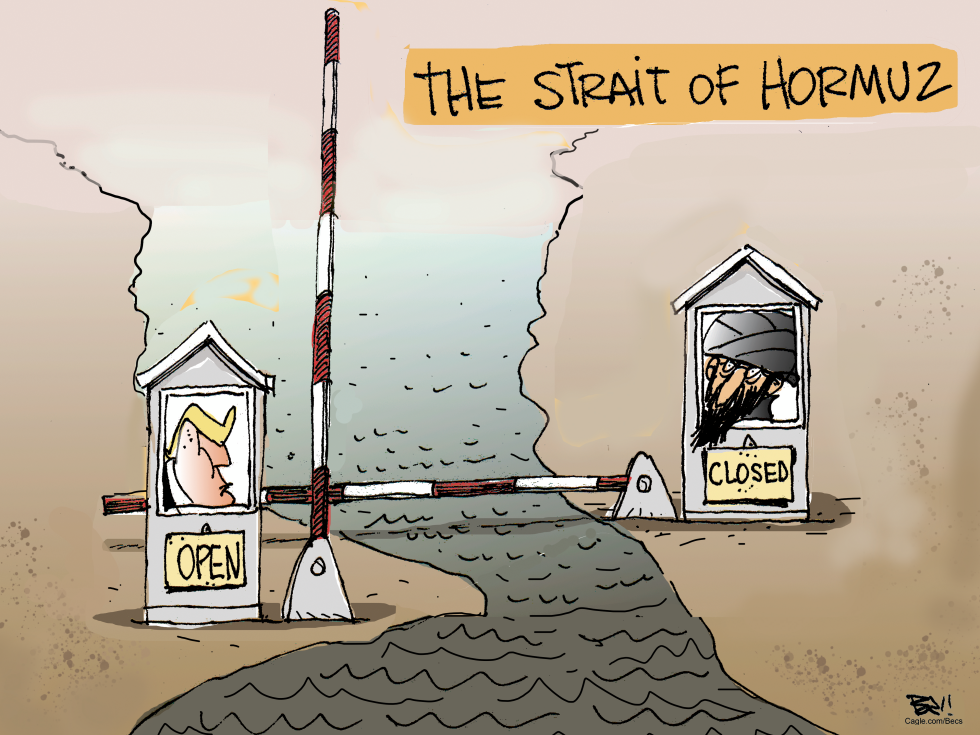
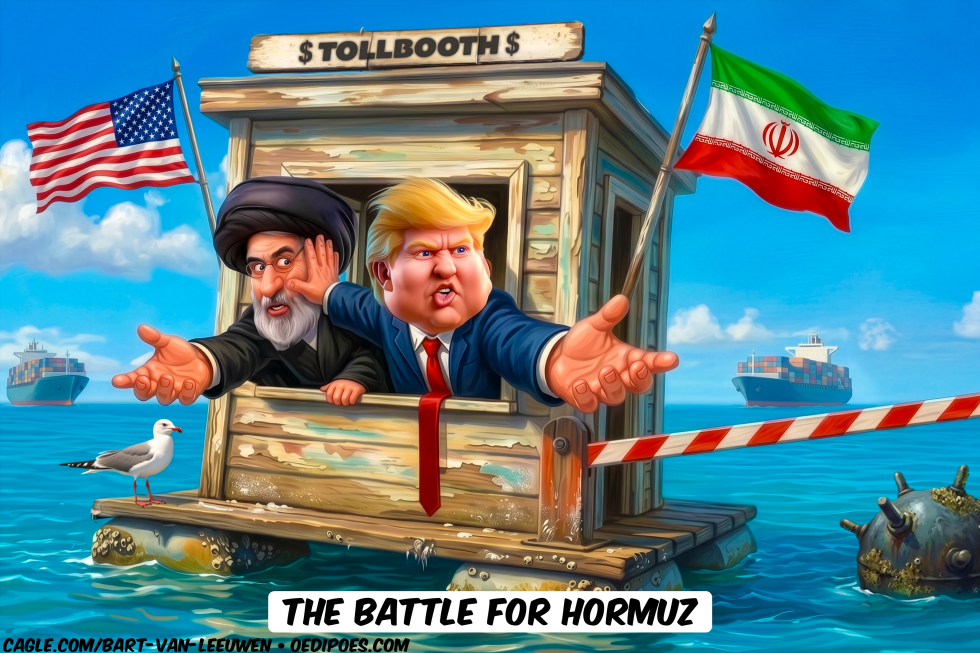
The Strait of Hormuz remains a flashpoint for global oil transit as the United States and Iran maintain opposing stances on access. Donald Trump positions an open checkpoint while an Iranian official signals closure. The editorial highlights the standoff's direct impact on energy markets and shipping security.
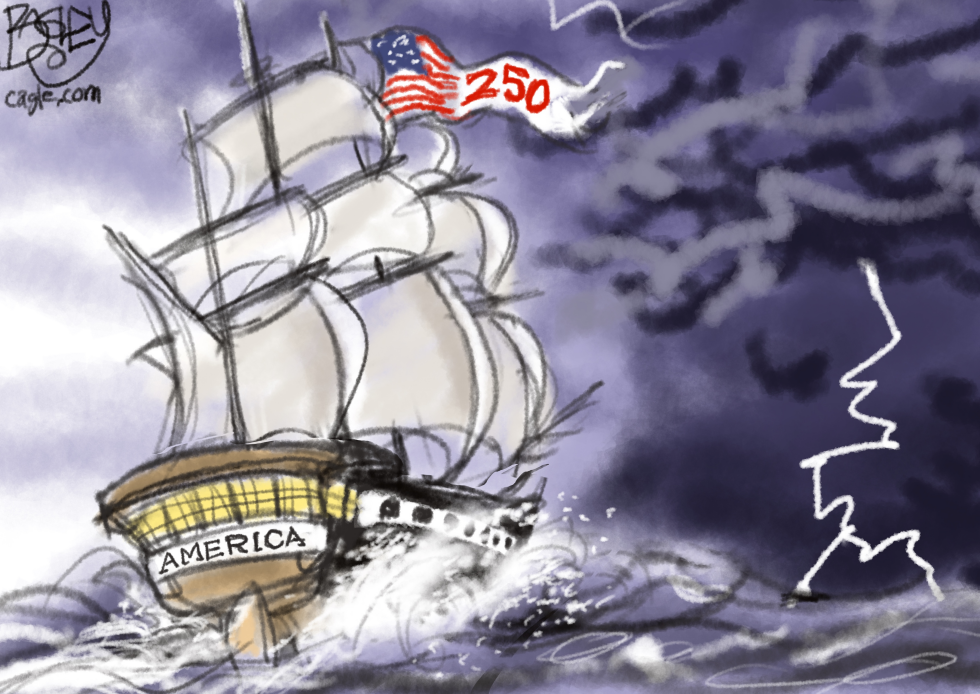
A sailing vessel named America appears on rough waters beneath stormy skies. The American flag flies from the mast with the number 250 added in red. Waves crash against the hull while lightning streaks through purple clouds on the right side of the scene.
A new political cartoon shows President Trump and Iran's supreme leader sharing a tollbooth positioned across the Strait of Hormuz. Both figures extend their hands toward passing cargo ships while American and Iranian flags fly from the structure. The image comments on ongoing disputes over control of the vital oil shipping route.