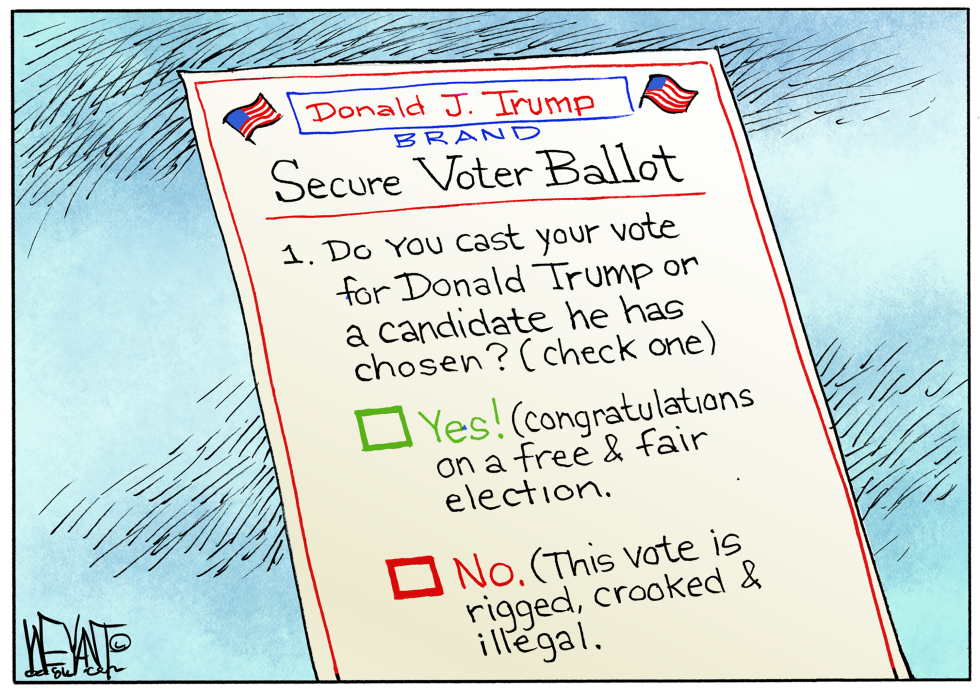
A ballot labeled with Donald J. Trump's brand presents voters with a binary choice between supporting him or his selected candidates. The design labels one option as confirming a free and fair election while marking the other as rigged and illegal. The piece highlights ongoing debates over election processes and candidate influence.
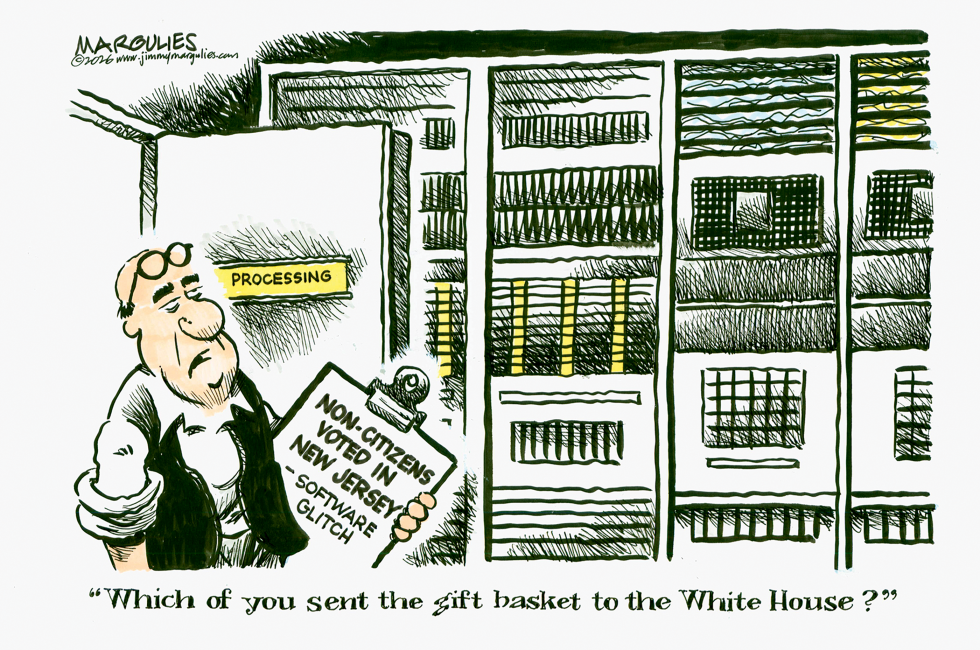
A software glitch in New Jersey allowed non-citizen votes to be counted during recent election processing. Officials are now under scrutiny after the error surfaced. The incident raises concerns about election integrity and data handling systems. The cartoon depicts a processing center where staff receive pointed questions about a gift sent to the White House. It highlights accountability issues in managing voting technology.
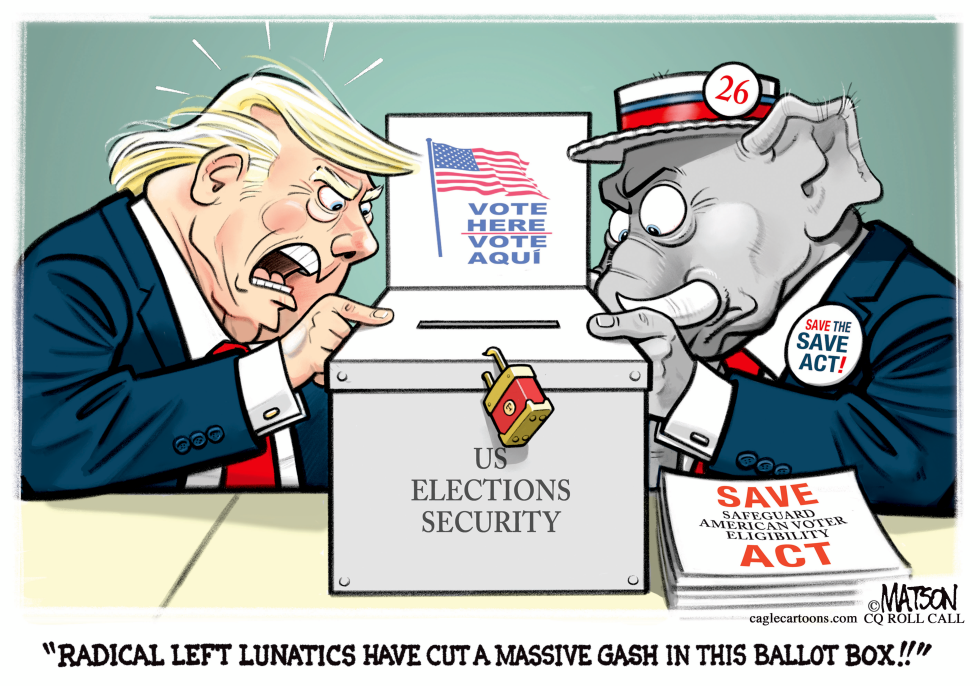
Donald Trump publicly blamed radical left activists for damaging a U.S. elections security ballot box days before key votes on the SAVE Act. The legislation aims to require proof of citizenship for federal voting. Republicans argue the measure prevents fraud while Democrats call it voter suppression. The cartoon frames the debate as partisan finger-pointing over basic safeguards.
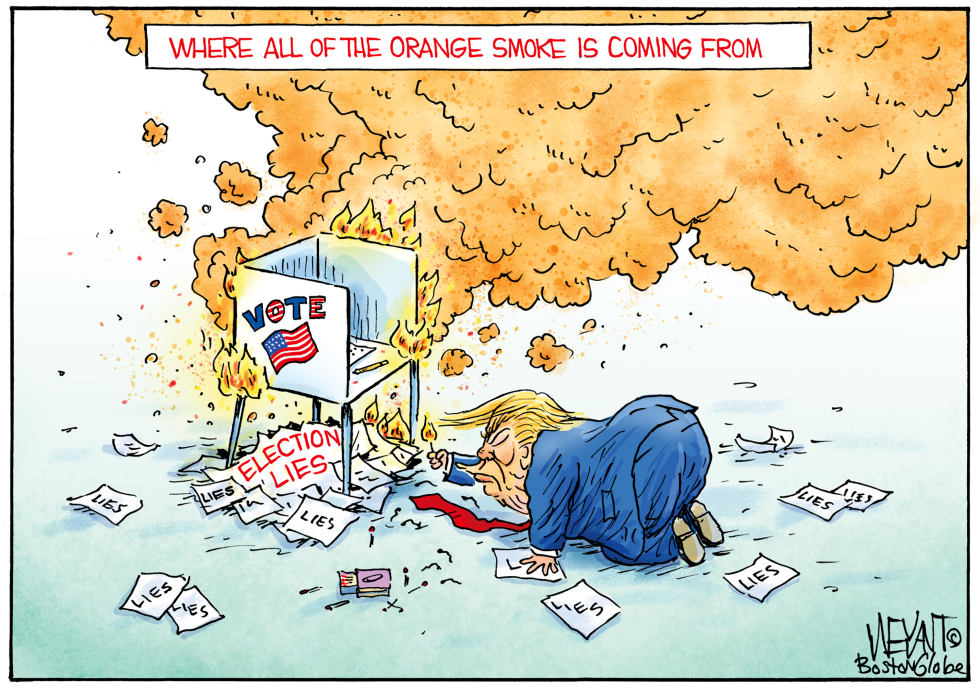
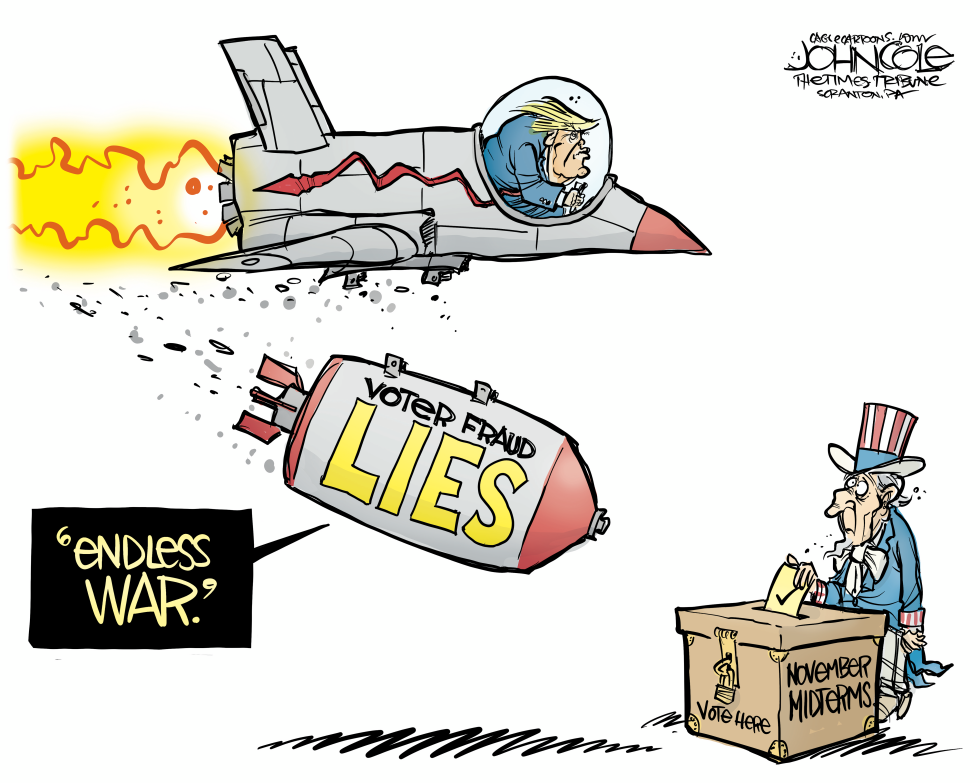
Donald Trump has continued to promote claims about the integrity of U.S. elections. The ongoing assertions have kept questions about voting processes in public view well after prior contests. These statements matter because they shape public trust in democratic institutions and influence how future elections are administered. The piece presents the claims as the direct source of resulting political heat and disruption.
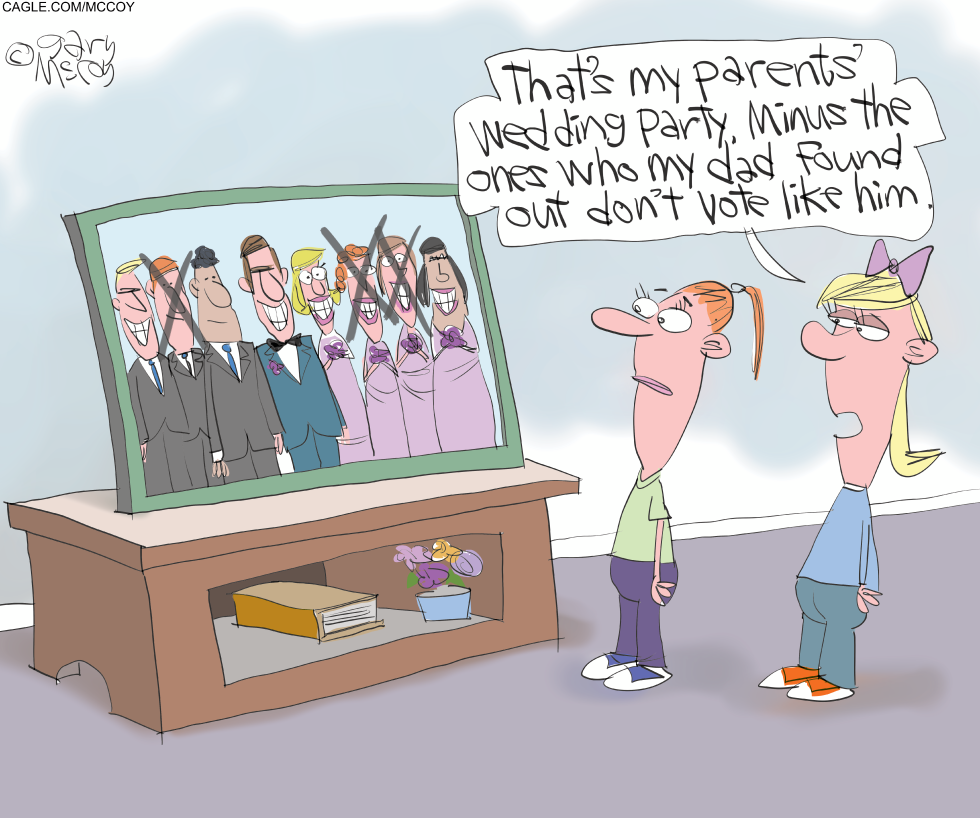
A television displays a wedding party photo with multiple guests marked out by large X's. Two children stand in front of the screen. The girl with the ponytail explains that her father removed family members from the wedding party after discovering they do not vote the same way he does. The scene highlights how political disagreements can fracture family events and relationships.
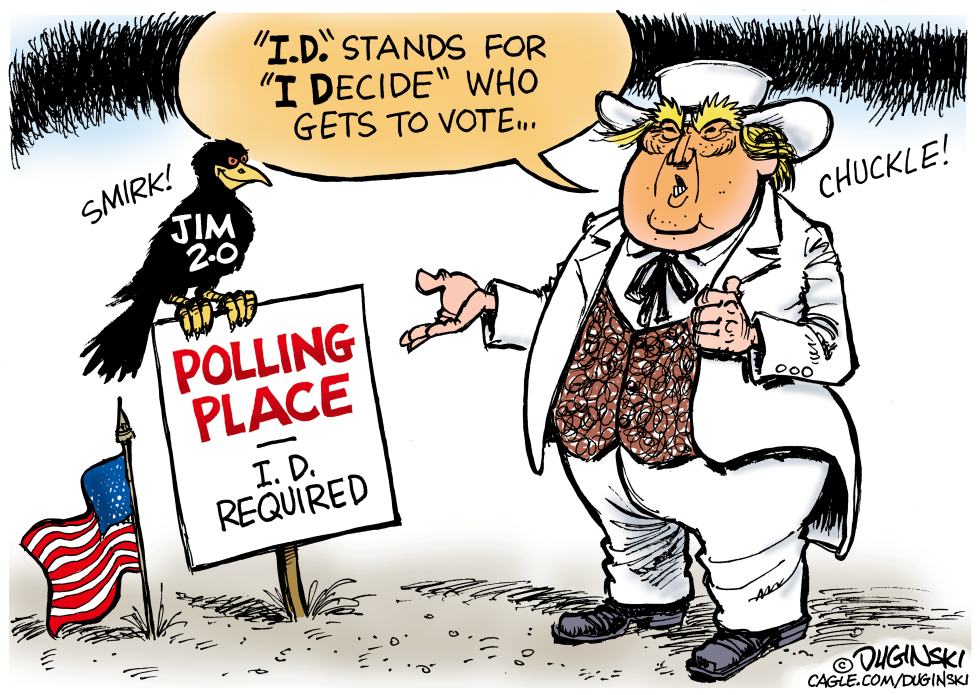
A new political cartoon depicts Donald Trump redefining voter ID requirements at a polling place. The former president, shown in a white suit and hat, gestures toward a sign stating I.D. REQUIRED while a bird labeled JIM 2.0 smirks nearby. The bird's speech bubble states that I.D. stands for I DECIDE who gets to vote. Trump chuckles at the line. The image, published July 8, 2026, uses the Jim Crow reference to comment on ongoing debates over voter identification laws and access to the ballot. The cartoon ties the visual to concerns that such rules could limit participation in elections.
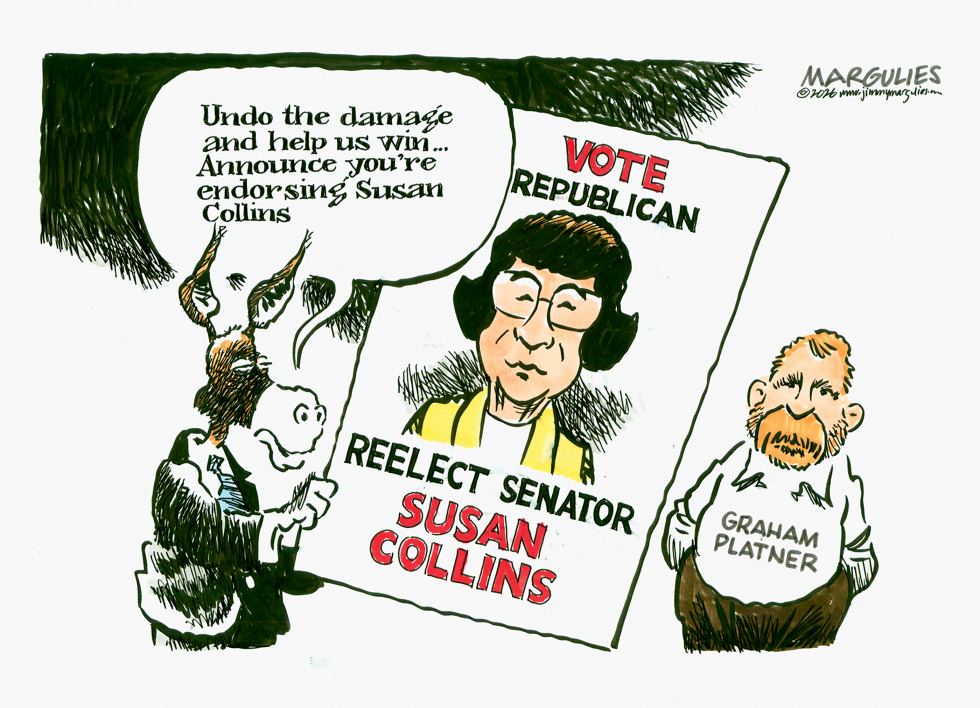
A cartoon depicts a Democratic donkey urging Graham Platner to announce an endorsement of Republican Senator Susan Collins. The donkey holds a large sign reading 'Reelect Senator Susan Collins' and 'Vote Republican.' Platner stands nearby wearing a shirt with his name. The speech bubble from the donkey calls for undoing damage and helping win by backing Collins. The image is dated July 2026 and signed by Jimmy Margulies.
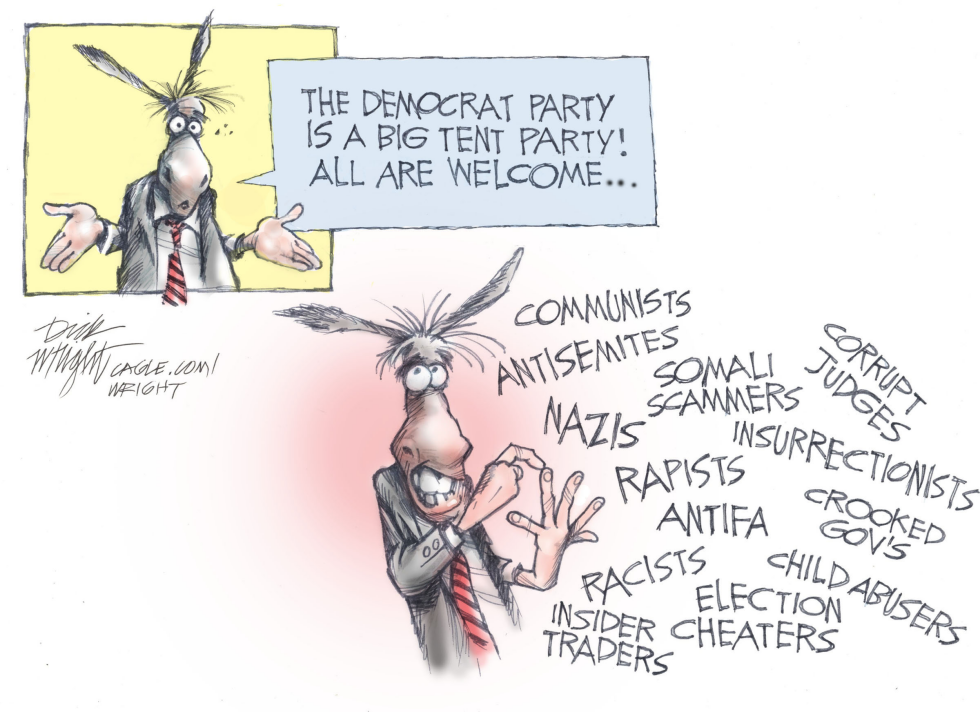
A July 2026 cartoon by Dick Wright depicts the Democrat Party's big tent claim through an inset donkey figure. The main character, also a donkey in a suit, gestures amid a cloud of labels naming groups such as communists, antisemites, Nazis, rapists, Antifa, racists, and election cheaters. The image critiques the party's inclusivity rhetoric by associating it with these categories. Publication occurs amid ongoing partisan debates over party platforms and voter bases.
A large commercial jet labeled Trump Family Grift and marked with a billions seal carries figures in its windows while a small biplane labeled Hunter Biden crashes into its nose. Debris flies as the biplane breaks apart. A speech bubble from the jet asks if anyone heard something. The July 2026 cartoon by Rick McKee uses the collision to contrast family business dealings and past scrutiny on the Biden family.
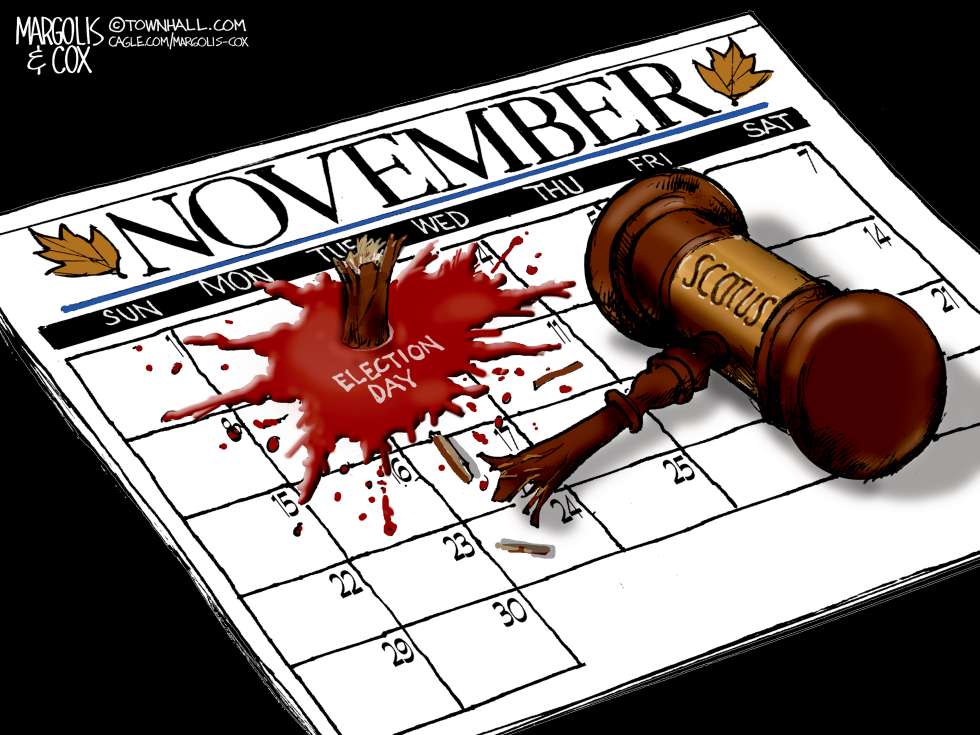
A large wooden gavel marked SCOTUS smashes into a November calendar page, obliterating the square labeled Election Day with a red splatter resembling blood and scattering fragments across surrounding dates.
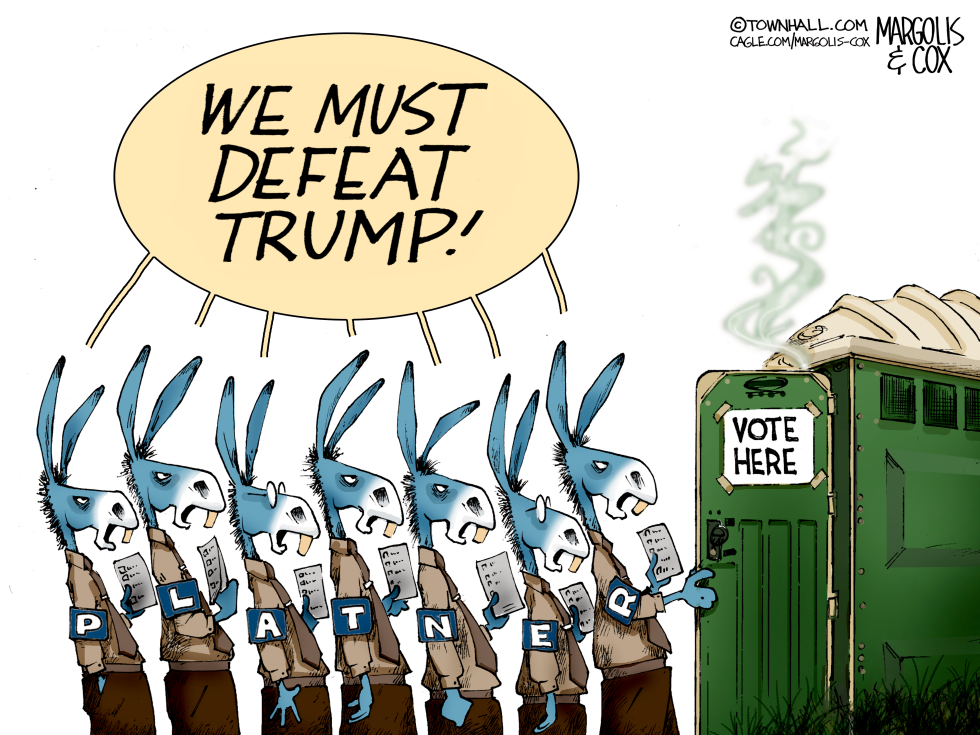
On June 11 2026 a political cartoon shows a line of Democratic donkeys holding signs that spell out letters while one declares we must defeat Trump before entering a vote here booth.
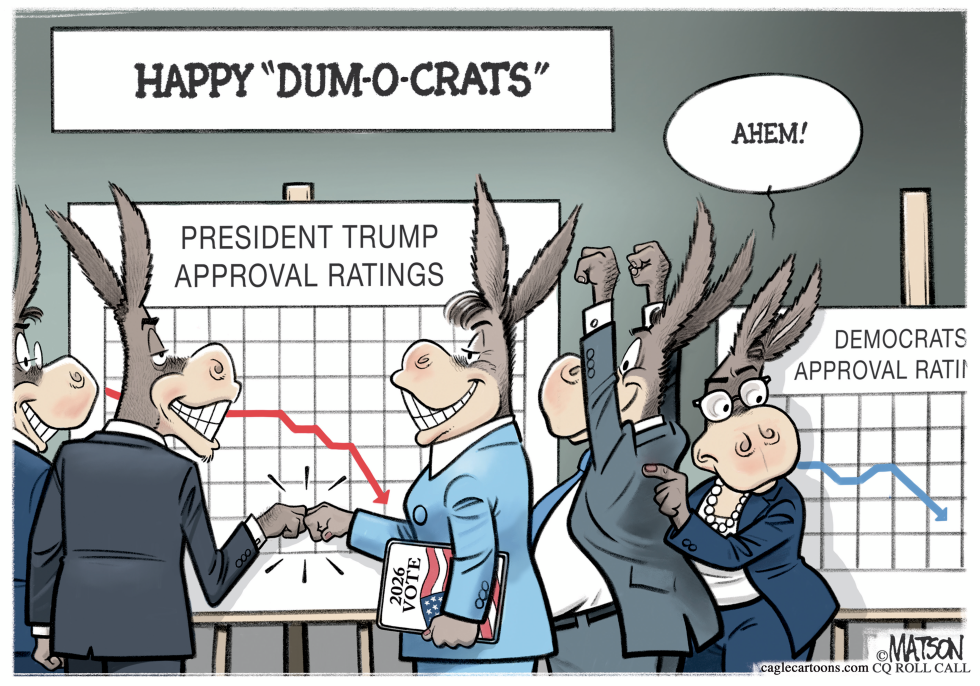
The cartoon depicts Democratic lawmakers depicted as donkeys celebrating a sharp drop in President Trump's approval ratings on a large chart. One figure holds a notebook labeled 2026 VOTE while others raise fists in triumph. A second chart on the right shows Democratic approval ratings also declining. A speech bubble with the word AHEM interrupts the celebration. The image highlights the party's focus on opposition polling rather than its own standing with voters ahead of the midterm elections.
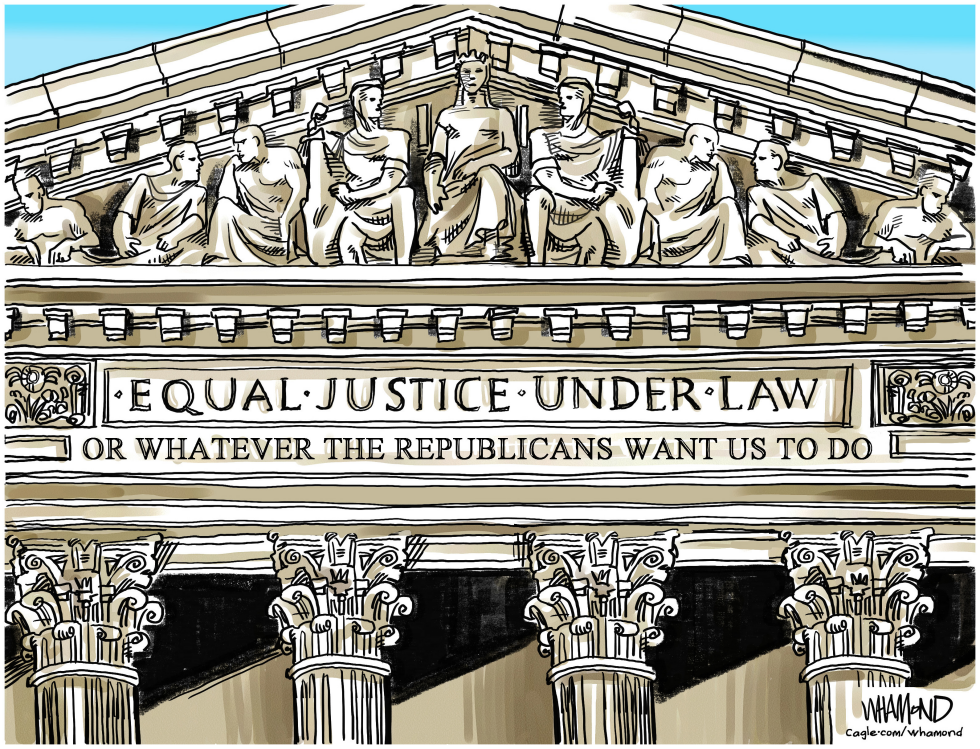
The cartoon depicts the U.S. Supreme Court building with its famous frieze inscription altered from Equal Justice Under Law to Or Whatever the Republicans Want Us to Do. This visual responds to recent rulings including the Alabama voting map decision that permitted GOP-drawn districts accused of diluting Black voter power. The image critiques the court's use of the shadow docket and perceived ideological alignment with Republican priorities on voting rights and gerrymandering.
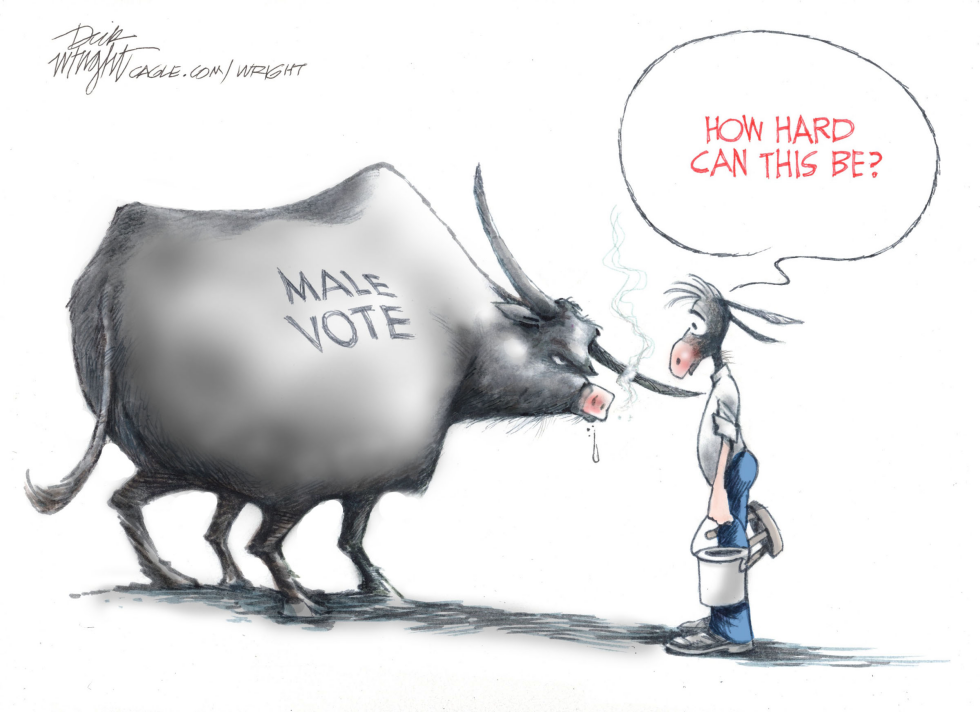
The cartoon depicts a Democratic donkey holding a bucket and gripping the nose ring of a large bull marked male vote. The donkey asks how hard the task can be while the bull resists. This visual reflects Democratic efforts to regain support among men who have trended away from the party in recent elections. The image uses the classic donkey and bull symbols to illustrate outreach difficulties. Publication occurs during a period of party reflection on voter demographics and messaging strategies.