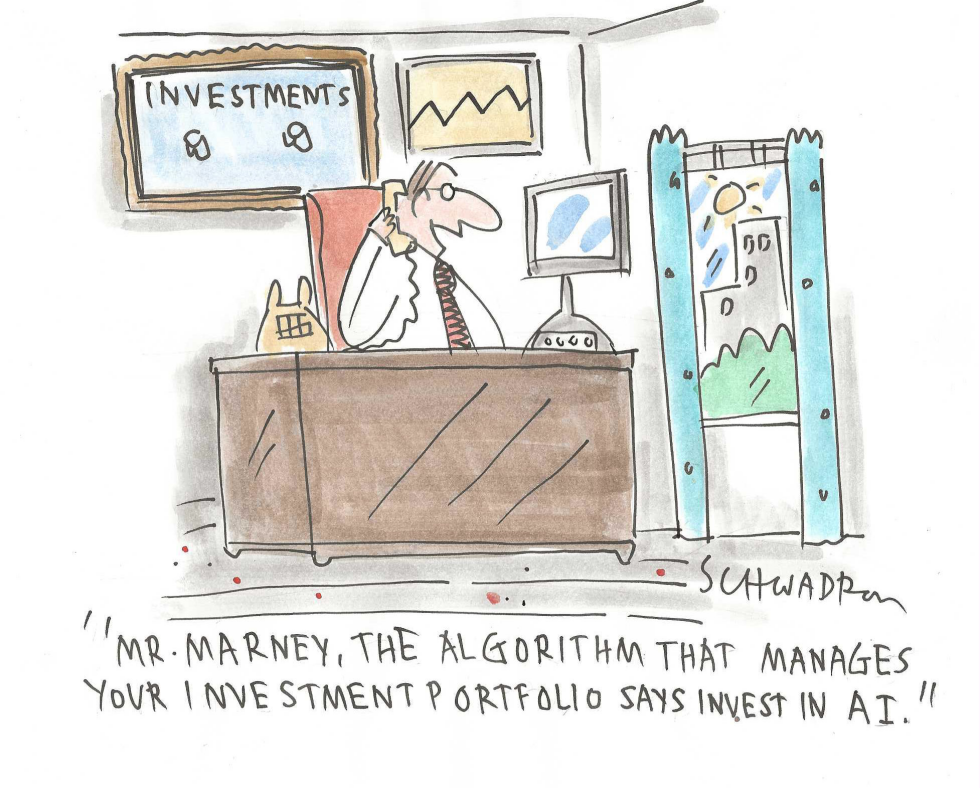
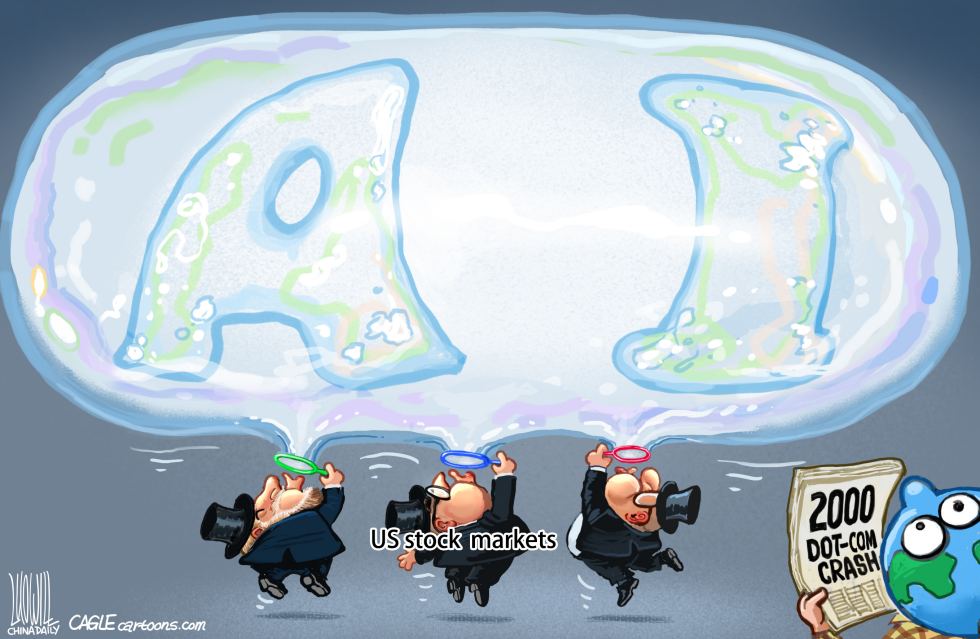
Financial institutions have expanded use of algorithmic systems to oversee client portfolios, with many such tools now directing capital toward artificial intelligence companies. The trend raises questions about self-reinforcing investment cycles where the managing software favors its own sector. The cartoon highlights the circular logic of automated recommendations that benefit AI developers and related stocks.
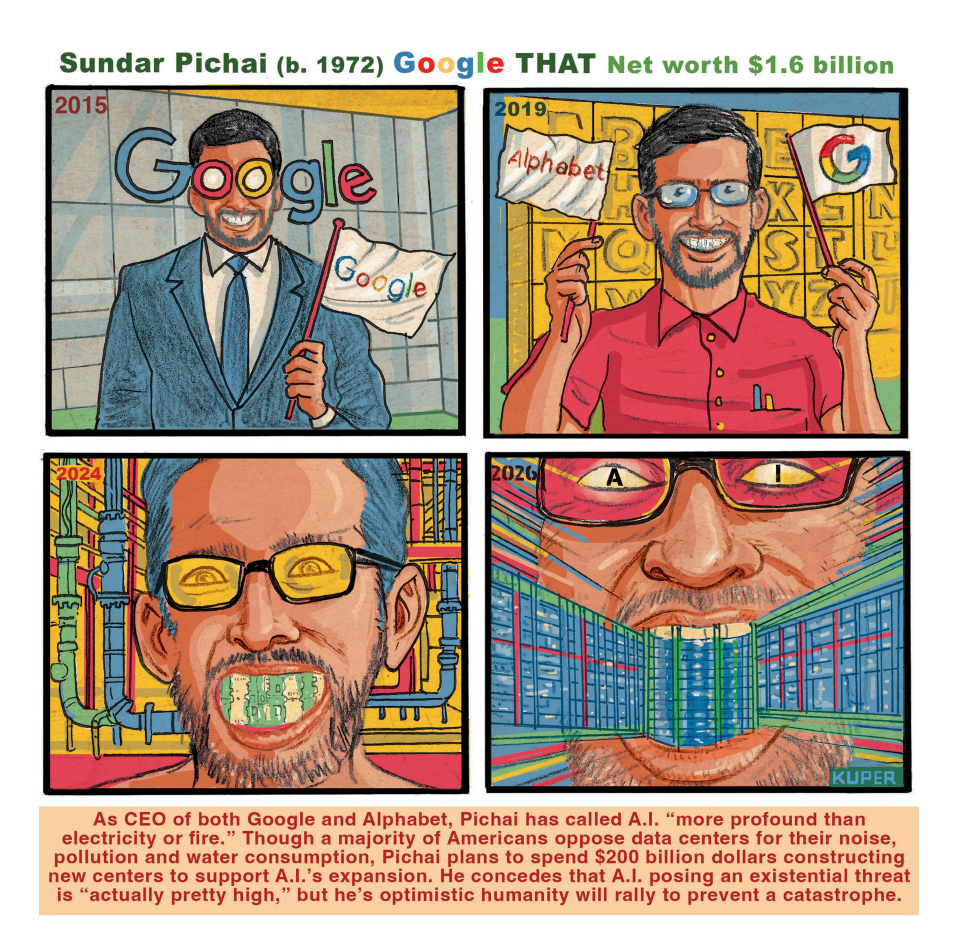
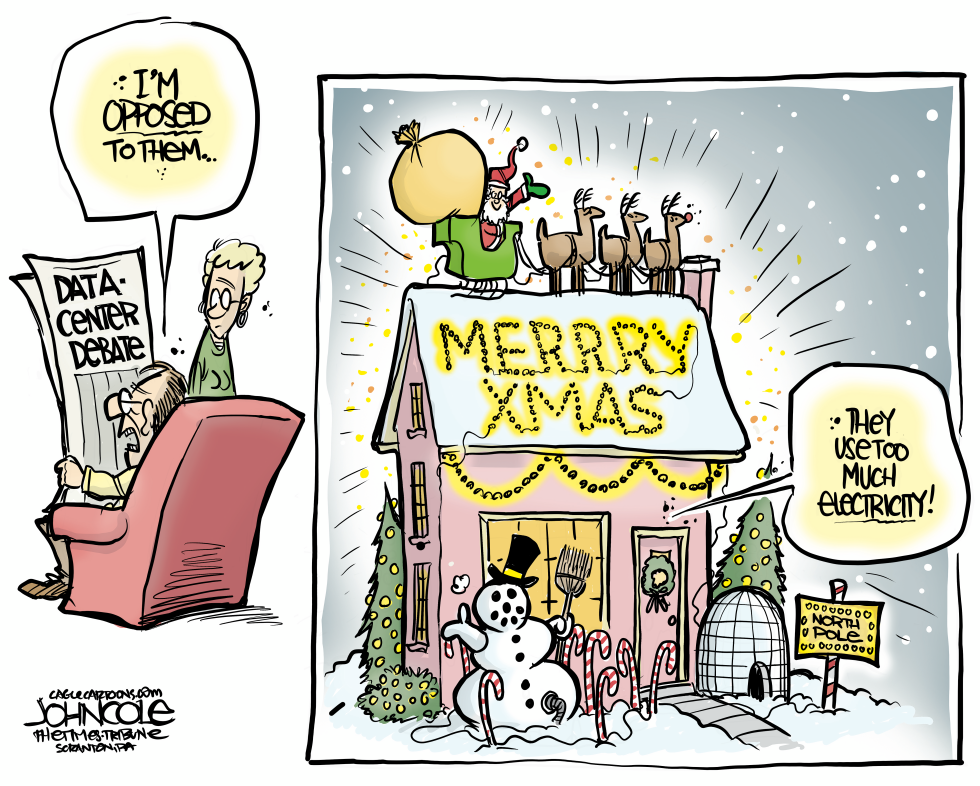
Sundar Pichai, CEO of Google and Alphabet, announced plans to invest $200 billion in new AI data centers to support rapid expansion of artificial intelligence systems. The move comes as polls show most Americans oppose such facilities due to noise, pollution, and heavy water consumption. Pichai has described AI as more transformative than electricity or fire and has acknowledged a high risk of existential threats from the technology, while expressing confidence that humanity can avoid catastrophe. The editorial cartoon frames this corporate push as aggressive and tone-deaf to local opposition and environmental limits.
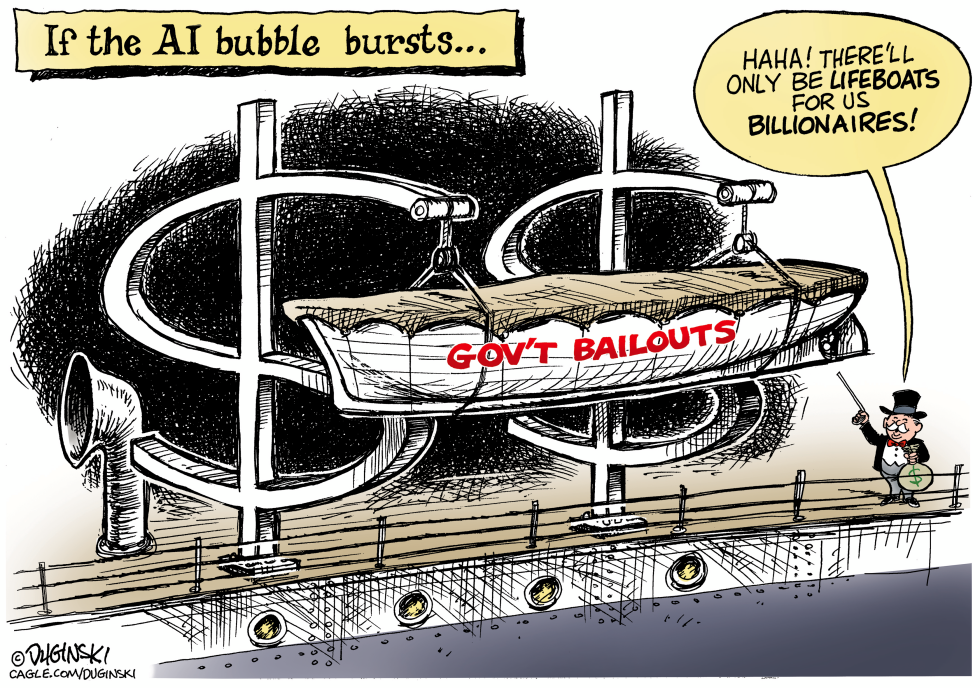
Speculation grows over potential government intervention if the artificial intelligence sector experiences a sharp downturn. Industry leaders and investors face questions about whether public funds would support failing companies. The editorial argues that any such support would primarily protect billionaires rather than address wider economic fallout from overvalued tech assets.
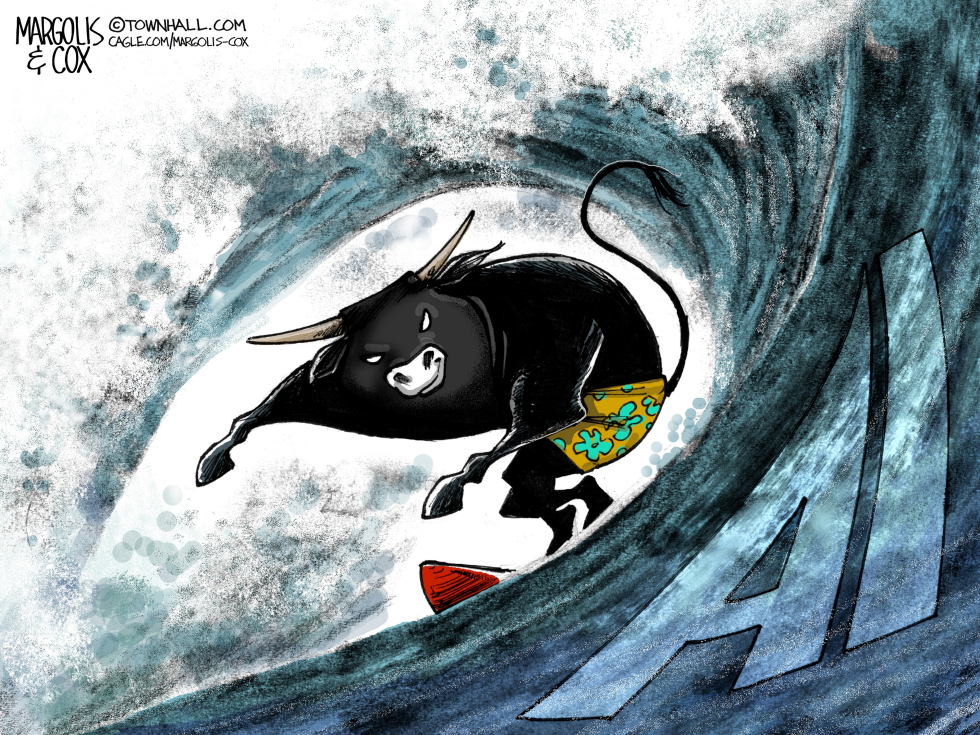
A black bull wearing patterned swim trunks rides inside a massive curling wave labeled AI. The animal balances on a surfboard fin while the wave towers overhead. The image captures the stock market bull navigating rapid advances in artificial intelligence. No specific policy or event is referenced beyond the visual metaphor of market momentum.
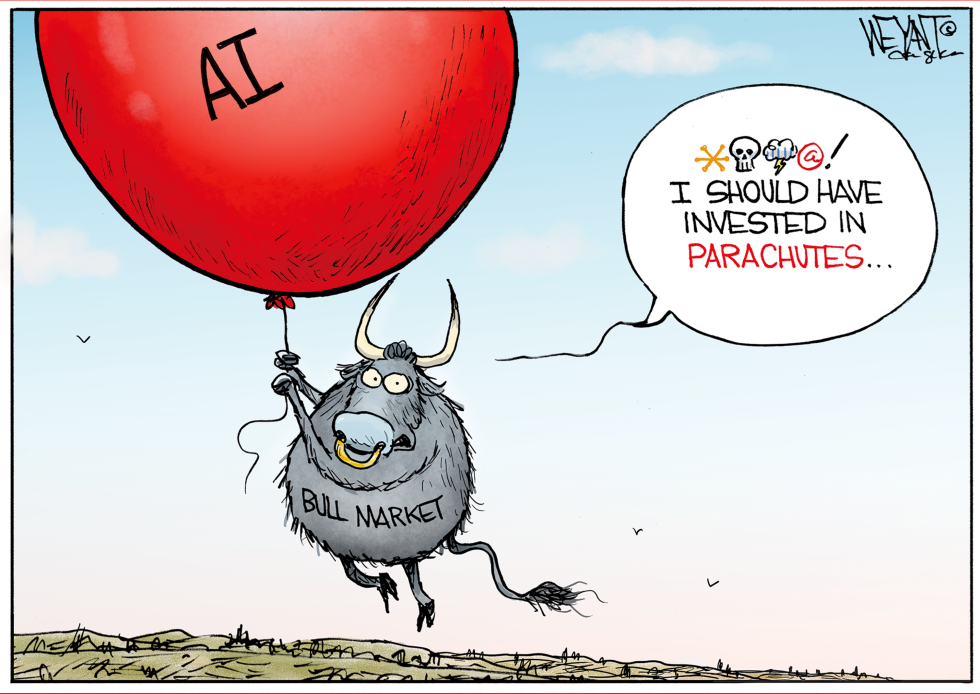
A bull labeled as the market hangs from a large red balloon marked AI. The figure speaks of wishing for parachutes instead. The scene appears on June 30 2026 and shows the bull suspended high with symbols of trouble in the speech area.
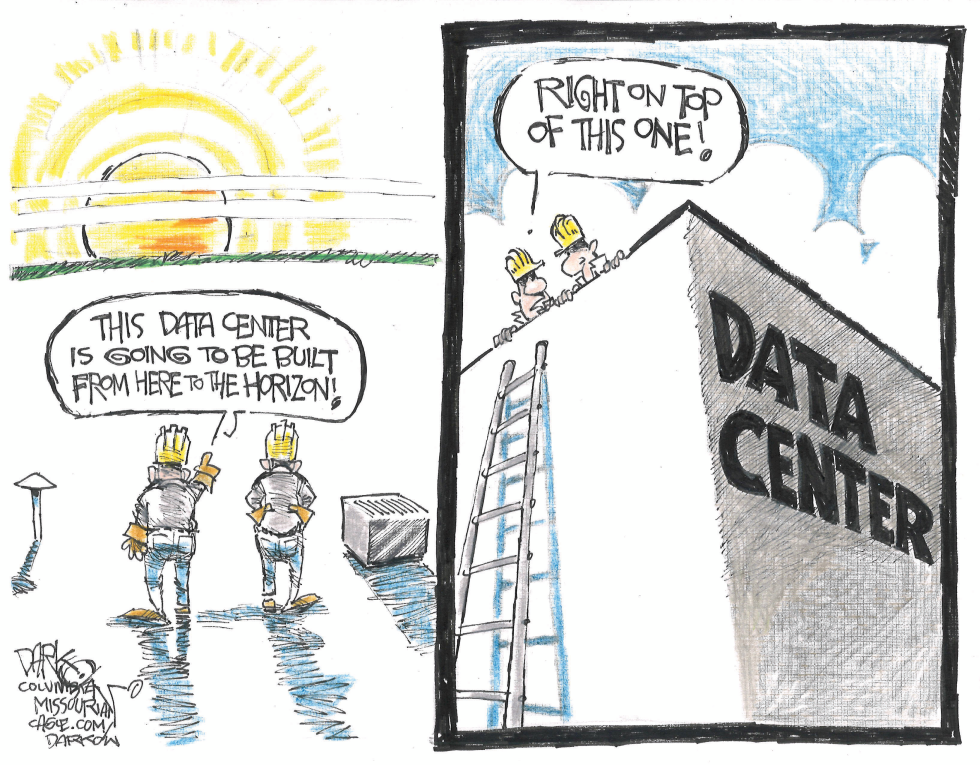
The cartoon by John Darkow depicts construction workers surveying expansive sites for new data centers, with one declaring plans to build from the current location to the horizon. In the adjacent panel, workers on a ladder atop a massive data center building announce plans to place another facility directly on top. The image responds to the ongoing surge in data center development fueled by artificial intelligence demands. As of mid-2026, tech companies continue rapid expansion of facilities that require significant land, electricity and water resources. Local governments face increasing pressure to manage zoning, infrastructure strain and environmental impacts from these projects.
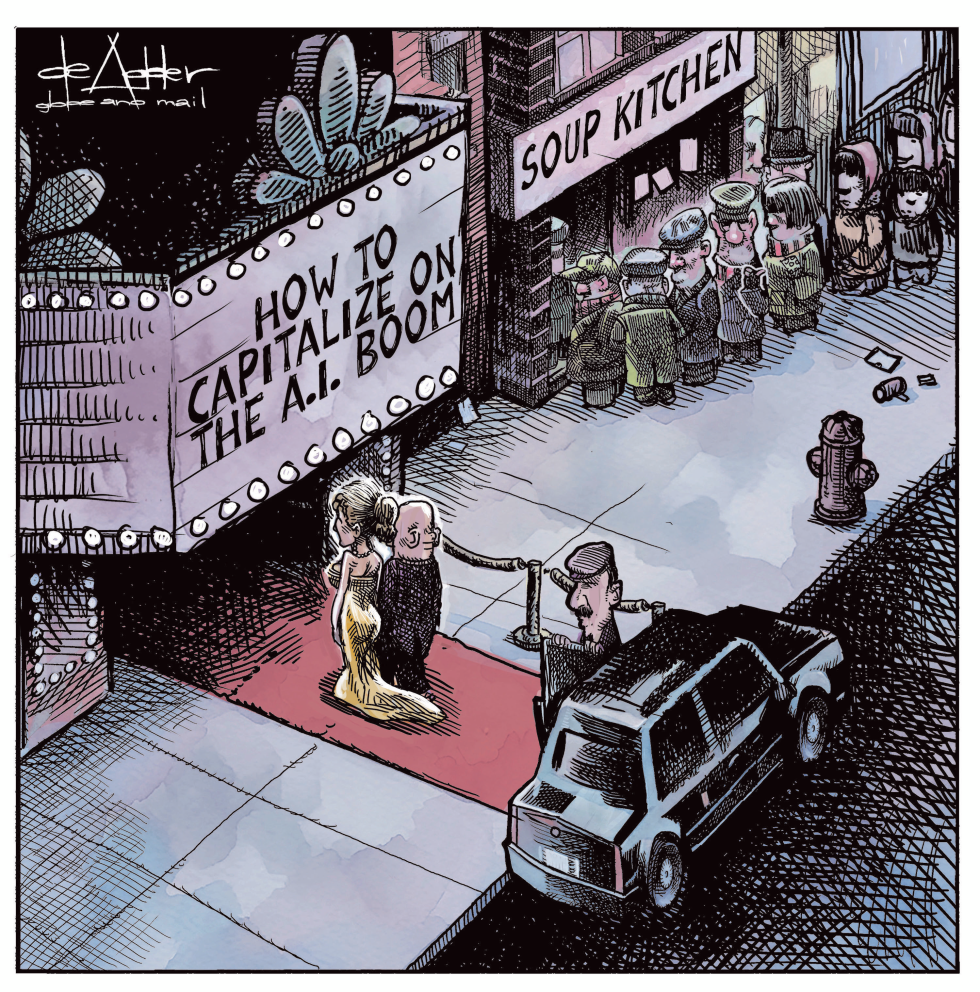
A political cartoon depicts a wealthy couple arriving at a theater hosting an event titled 'How to Capitalize on the A.I. Boom.' A red carpet and limousine service the entrance. Across the street a long line of people waits outside a soup kitchen. The image contrasts the gains from artificial intelligence for some with ongoing needs for others in 2026.
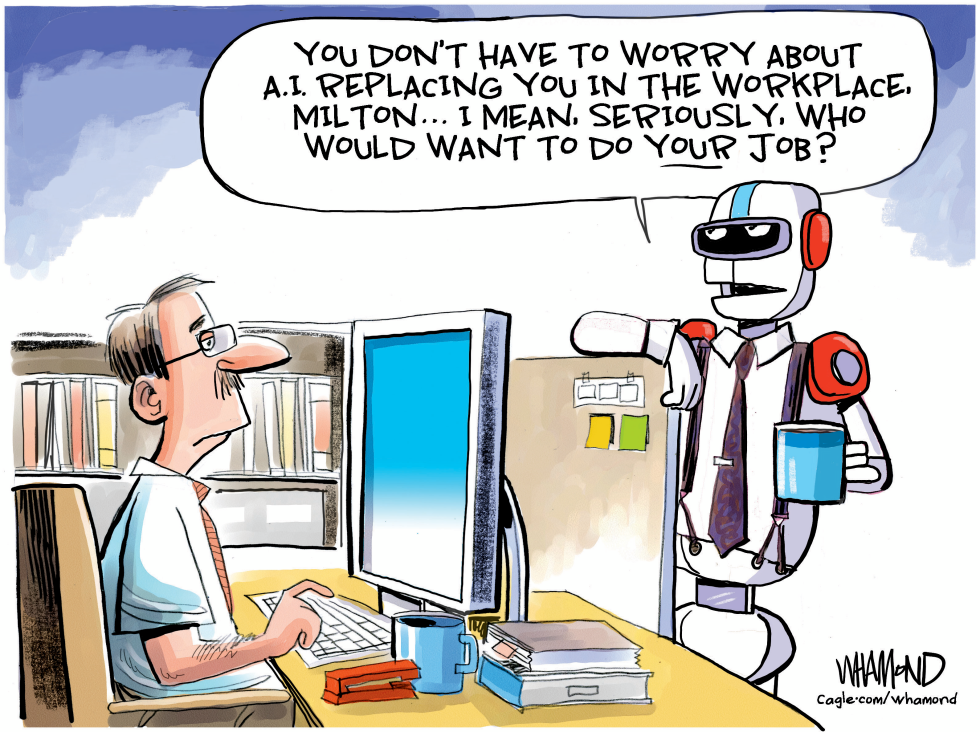
The cartoon depicts an office worker seated at a computer while a robot stands nearby holding a mug. The robot delivers a speech bubble message to the man identified as Milton, stating that AI will not replace him because no one would want to do his job. The scene illustrates ongoing workplace concerns about automation and artificial intelligence displacing human roles. The visual uses the robot's backhanded reassurance to highlight how some positions may remain unattractive even to machines. This reflects broader discussions on how AI affects job markets without specifying any single recent event.
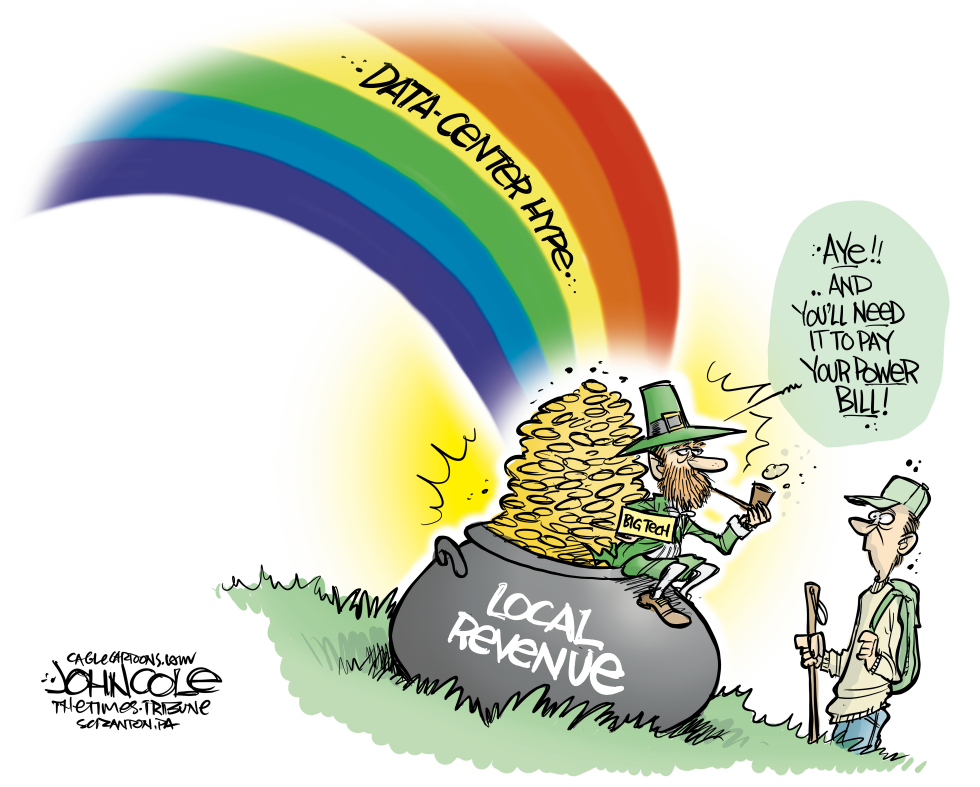
A cartoon depicts a big tech leprechaun atop a pot labeled local revenue under a rainbow of data center hype. The figure tells a resident that the promised funds will be needed to cover higher power bills driven by data center electricity demand.
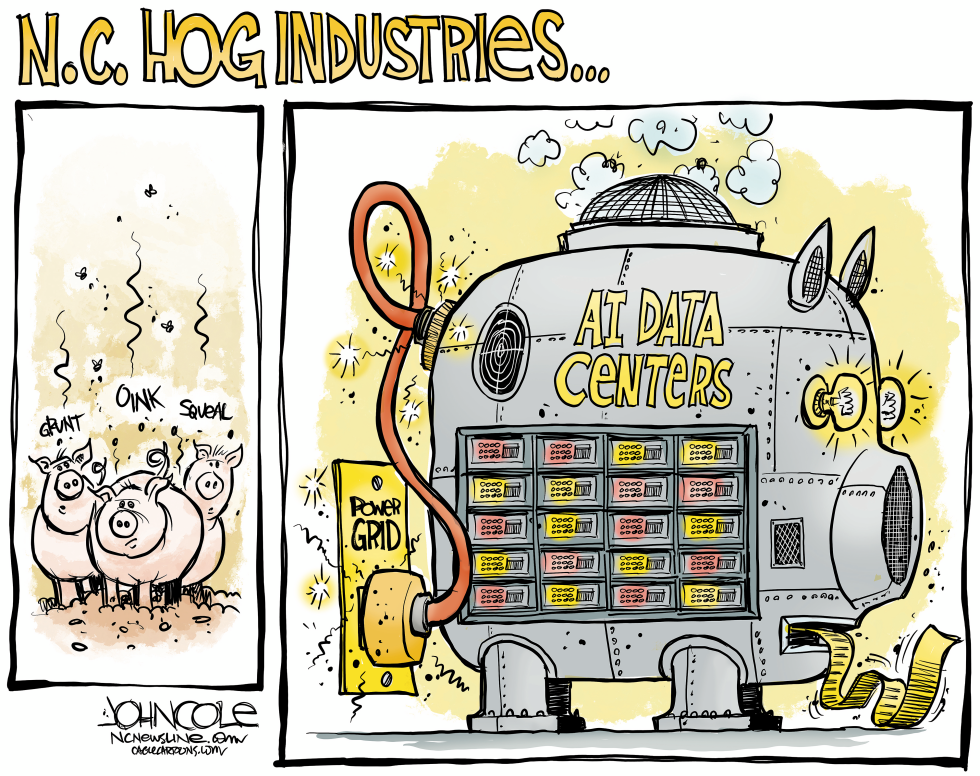
The cartoon depicts North Carolina's traditional hog industry alongside a massive AI data center facility shaped like a hog and plugged directly into the power grid. It highlights how the rapid expansion of data centers for artificial intelligence is creating enormous electricity demands similar to the state's established agricultural sector. The visual draws a parallel between the environmental and infrastructure pressures from both industries.
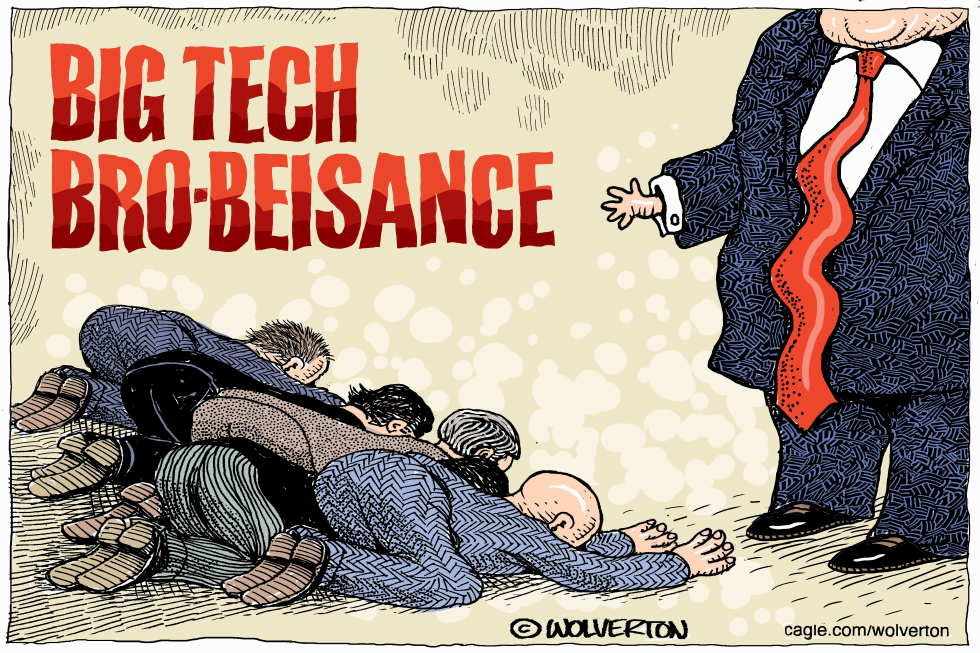
Monte Wolverton's cartoon depicts several suited men from the technology sector lying face down on the ground before a towering figure of President Donald Trump. The large title reads Big Tech Bro-Beisance. The scene illustrates executives from major Silicon Valley firms in postures of extreme deference. Wolverton places the president in a dominant stance with one hand extended. The work responds to ongoing discussions about the relationship between the administration and leading technology companies as of early October 2025.