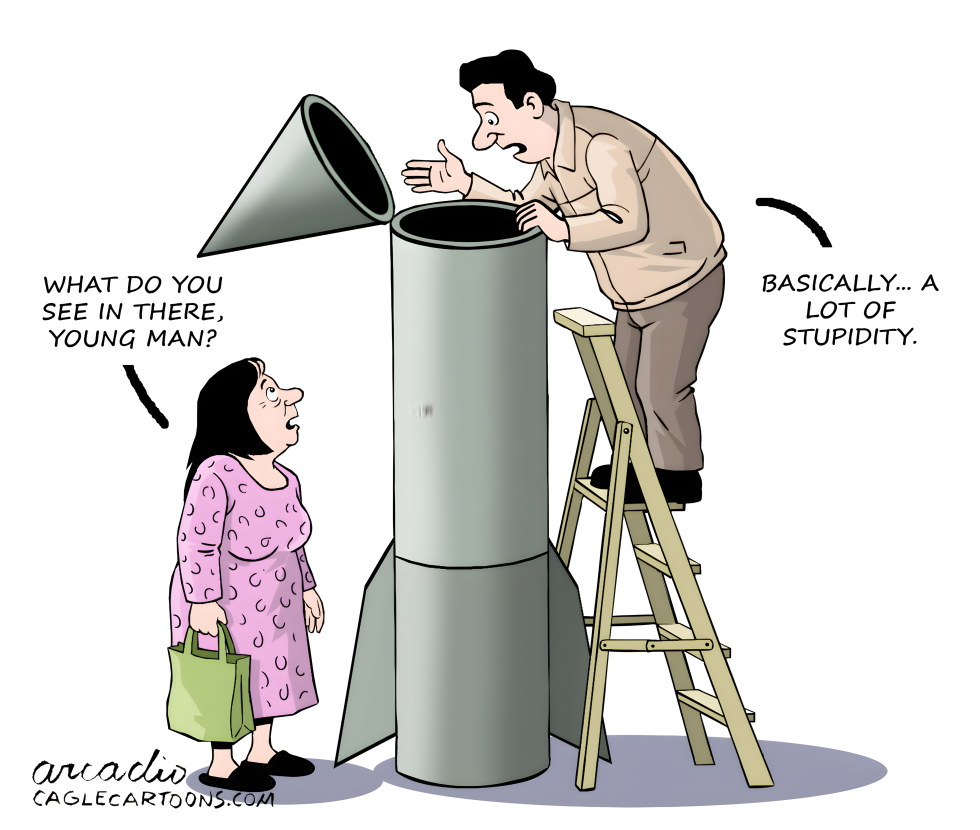
A missile inspection draws attention to internal contents described as stupidity. The exchange between an observer and the inspector highlights concerns over decision-making in defense matters. The piece takes the position that such inspections expose fundamental flaws in the approach to missile programs and related policies.
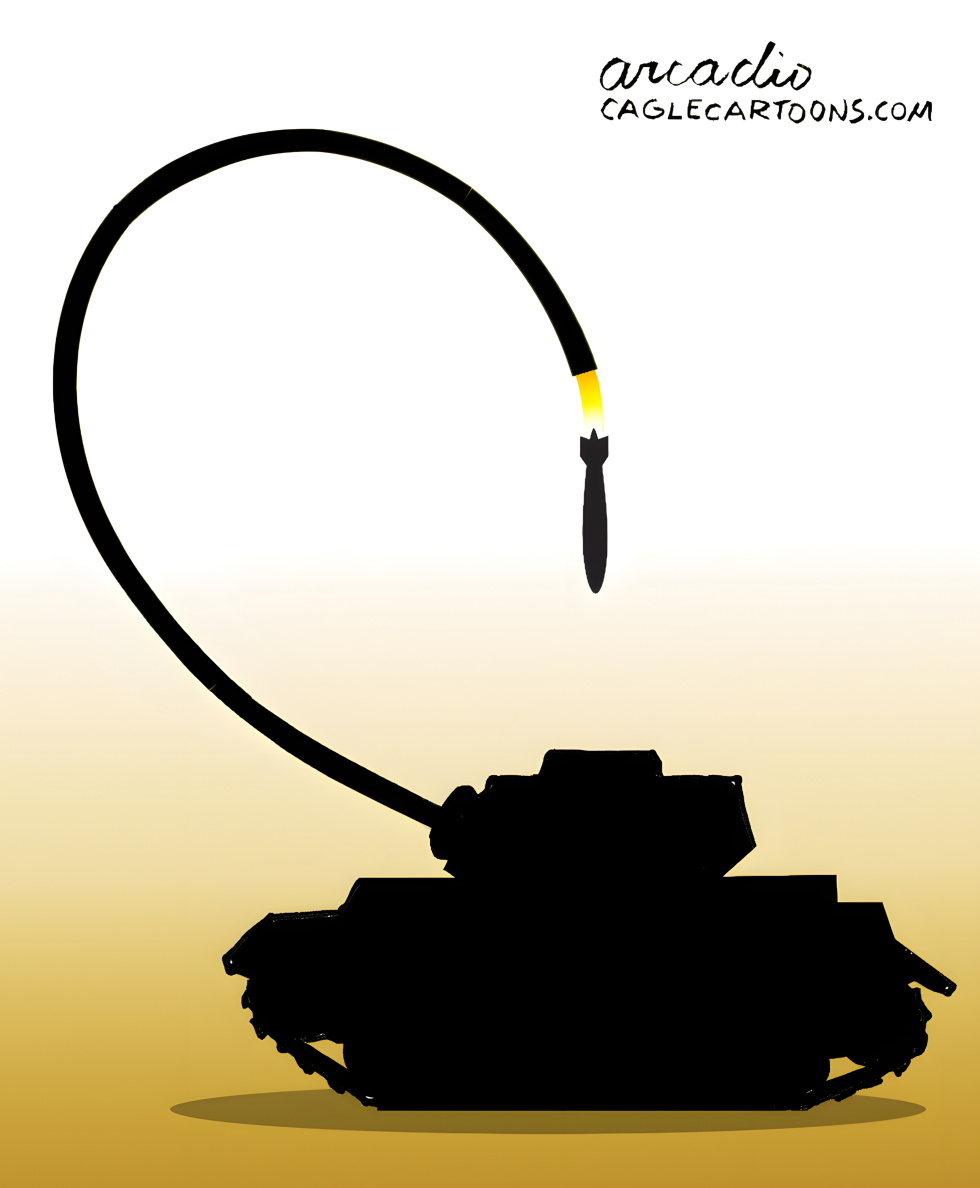
A military tank deploys a projectile attached to an unusually long curved fuse in this editorial image. The setup implies hardware that could rebound on its user. The piece comments on defense strategies where advanced systems carry built-in risks of unintended harm to the deploying force itself.
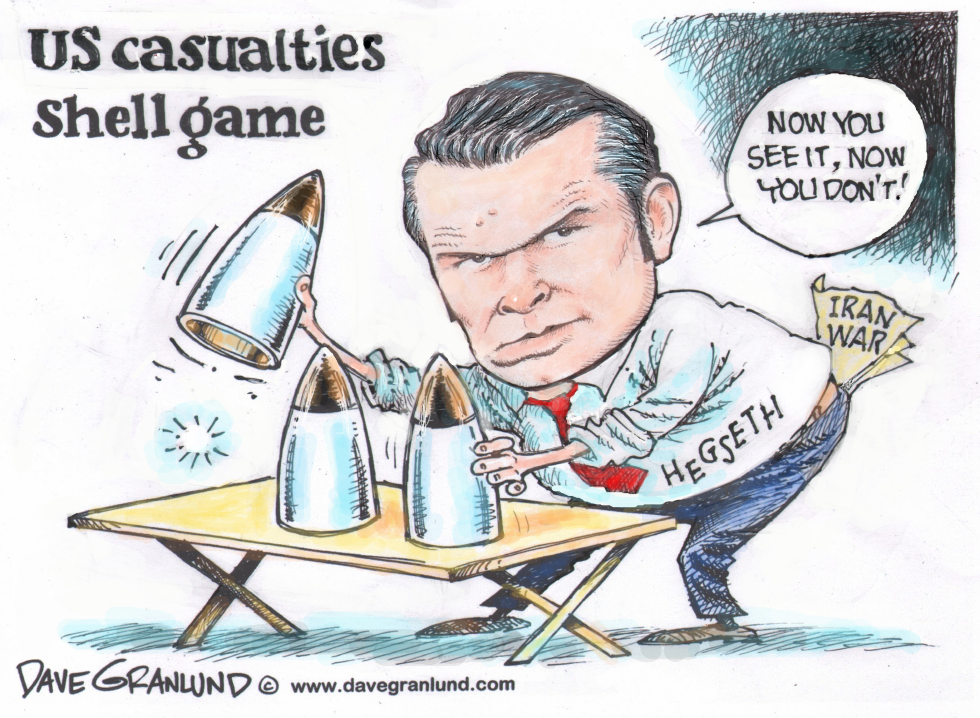
The cartoon shows Defense Secretary Pete Hegseth performing a shell game with three large missile casings on a folding table. One casing is lifted to reveal nothing underneath while a speech bubble declares the classic misdirection line. A paper labeled Iran War protrudes from his pocket. The title references US casualties. Published amid reports of American losses in Middle East strikes, the image suggests official efforts to downplay or conceal the human cost of the conflict through selective presentation of information.
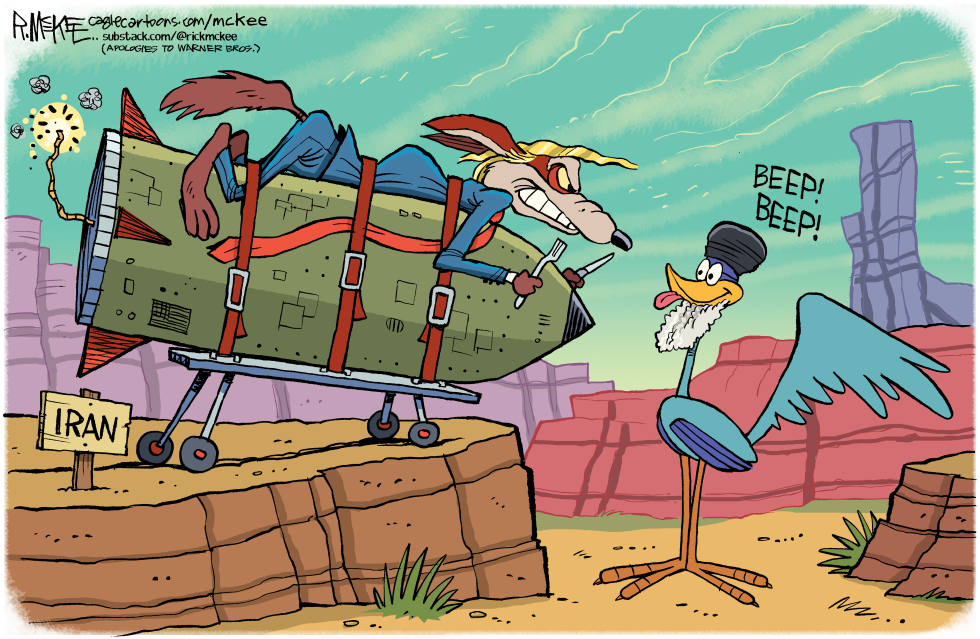
Donald Trump has renewed pressure on Iran through statements and policy signals in recent weeks. The moves come amid ongoing nuclear concerns and regional instability. The piece argues that such aggressive posturing risks backfiring in ways similar to past miscalculations.
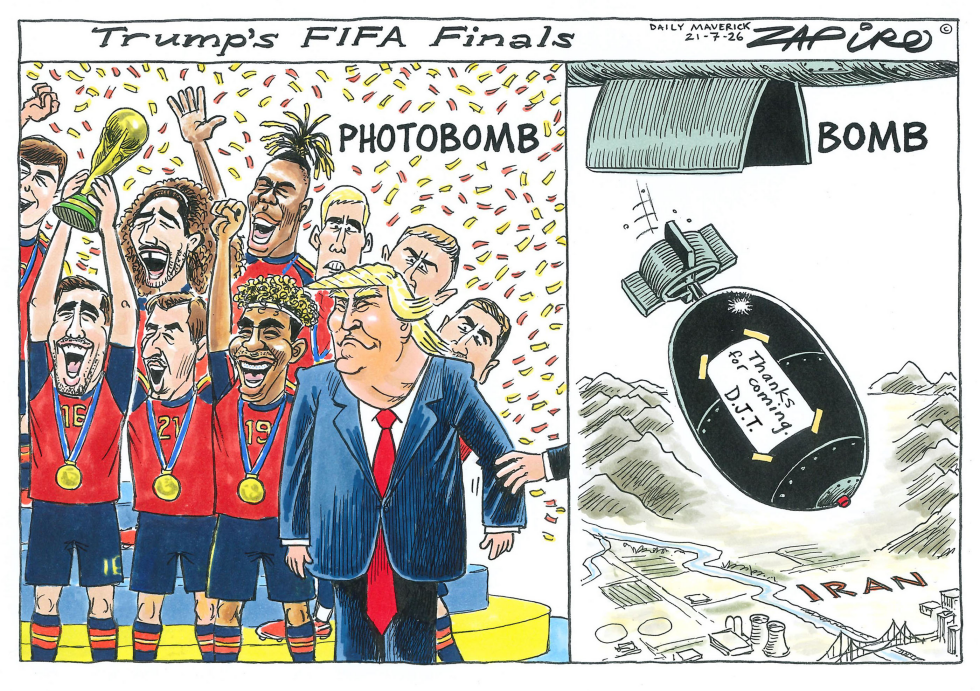
Donald Trump appears in a split-panel scene juxtaposing a soccer victory celebration against a missile strike on Iran. The image responds to ongoing tensions between the United States and Iran during the summer of 2026, where military posturing and personal political theater intersect. The editorial position frames the juxtaposition as evidence of reckless self-promotion overriding substantive foreign policy decisions.
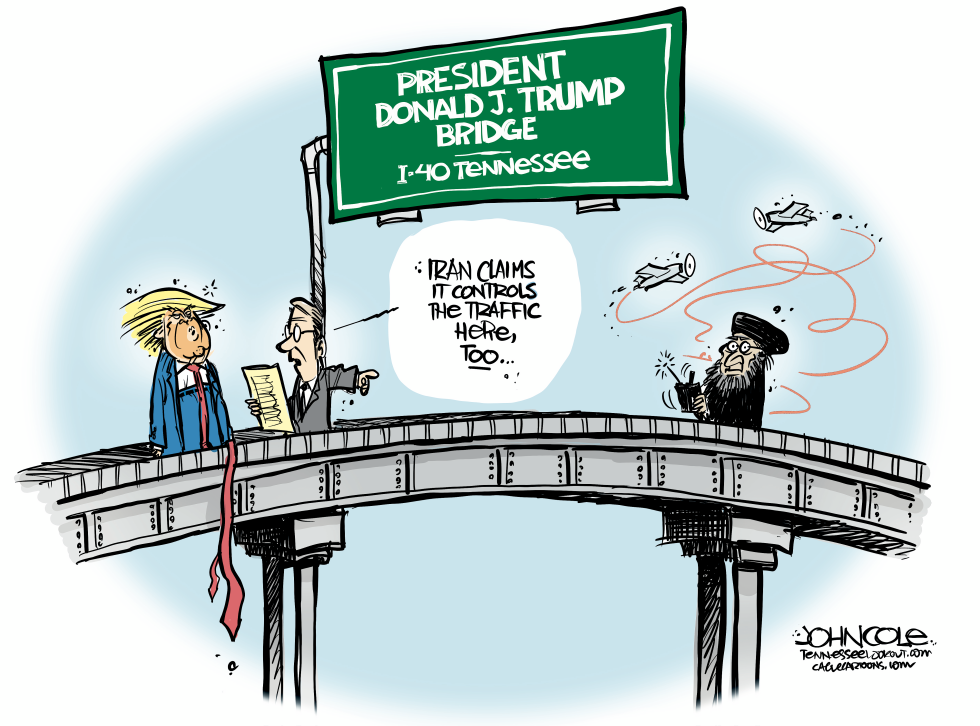
President Donald J. Trump attended the naming of the President Donald J. Trump Bridge on I-40 in Tennessee. The event drew attention when an Iranian figure appeared to claim control over traffic on the span. The development highlights ongoing tensions with Iran over shipping lanes and international routes. The cartoon frames the claim as an extension of Iran's broader pattern of asserting dominance over key passages. It positions the bridge naming as a domestic moment overshadowed by foreign threats.
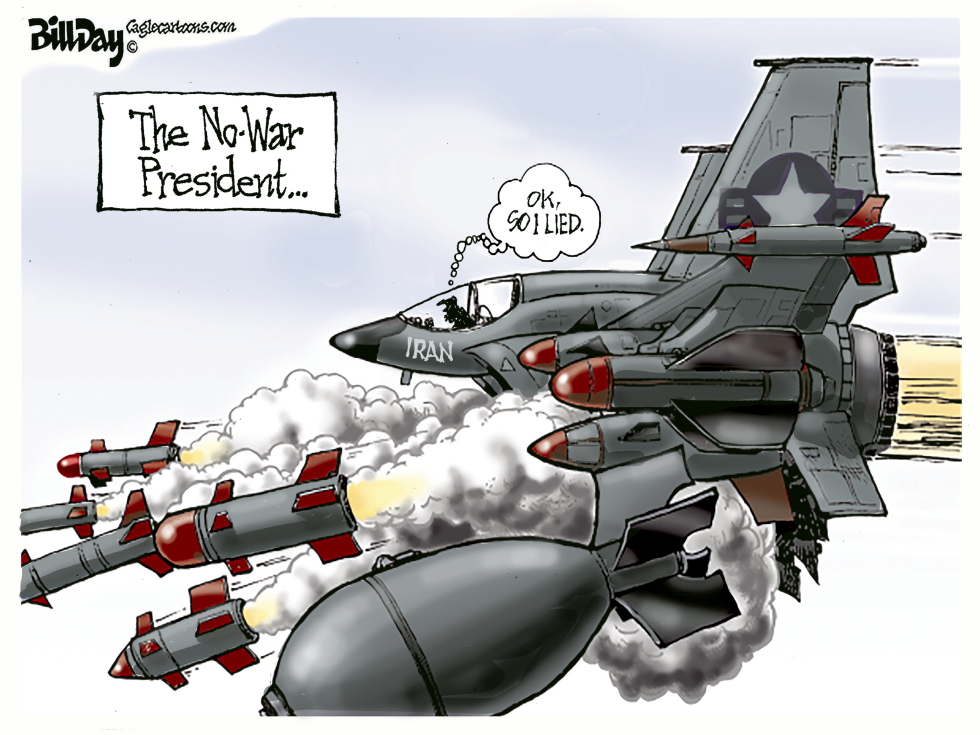
A political cartoon published July 21, 2026, depicts a fighter jet marked Iran launching a barrage of missiles while a speech bubble from the cockpit reads OK, SO I LIED. A sign overhead labels the scene The No-War President. The image responds to recent reports of U.S. military action against Iran that contradict earlier campaign assurances against new conflicts.
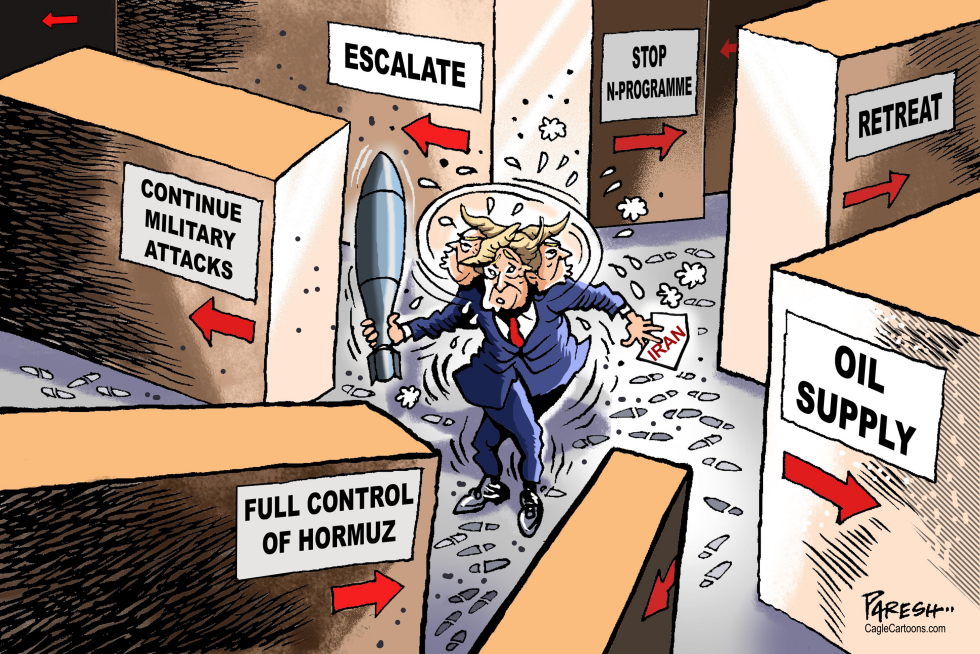
The cartoon shows Donald Trump caught between contradictory policy boxes on Iran, including continuing military attacks, escalating, stopping the nuclear programme, retreating, securing full control of Hormuz and protecting oil supply. Arrows point in conflicting directions while Trump clutches a missile and a paper labeled Iran. Published on July 19, 2026, the image captures the tangled options confronting the administration in the Middle East.
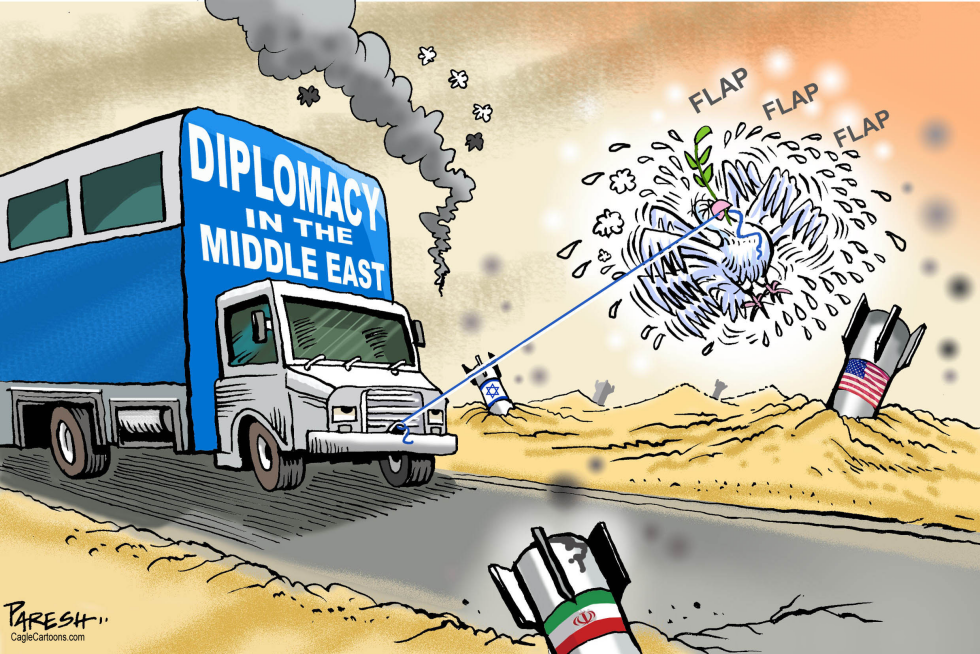
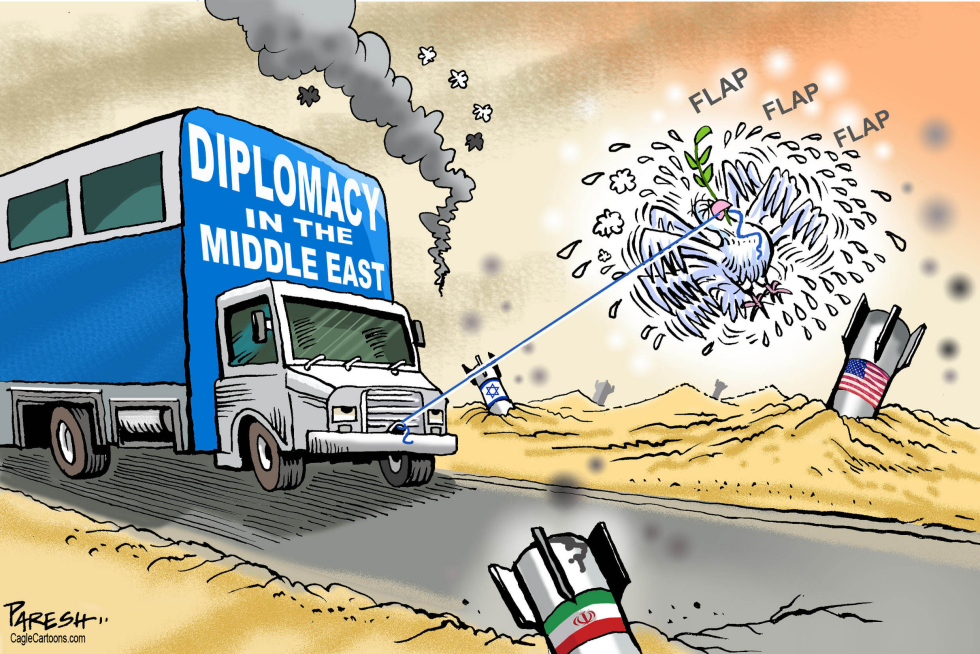
The cartoon depicts a blue truck marked Diplomacy in the Middle East driving across a desert road while emitting smoke. A white dove with an olive branch is shown under attack with flapping text overhead. Missiles bearing US, Israeli and Iranian markings are positioned around the scene, with lines suggesting connections or strikes.
Argentina faces Spain in the 2026 World Cup final. Lionel Messi leads the charge as the trophy heads toward the Spanish flag. The image captures the high stakes of the championship match and Argentina's drive for victory.
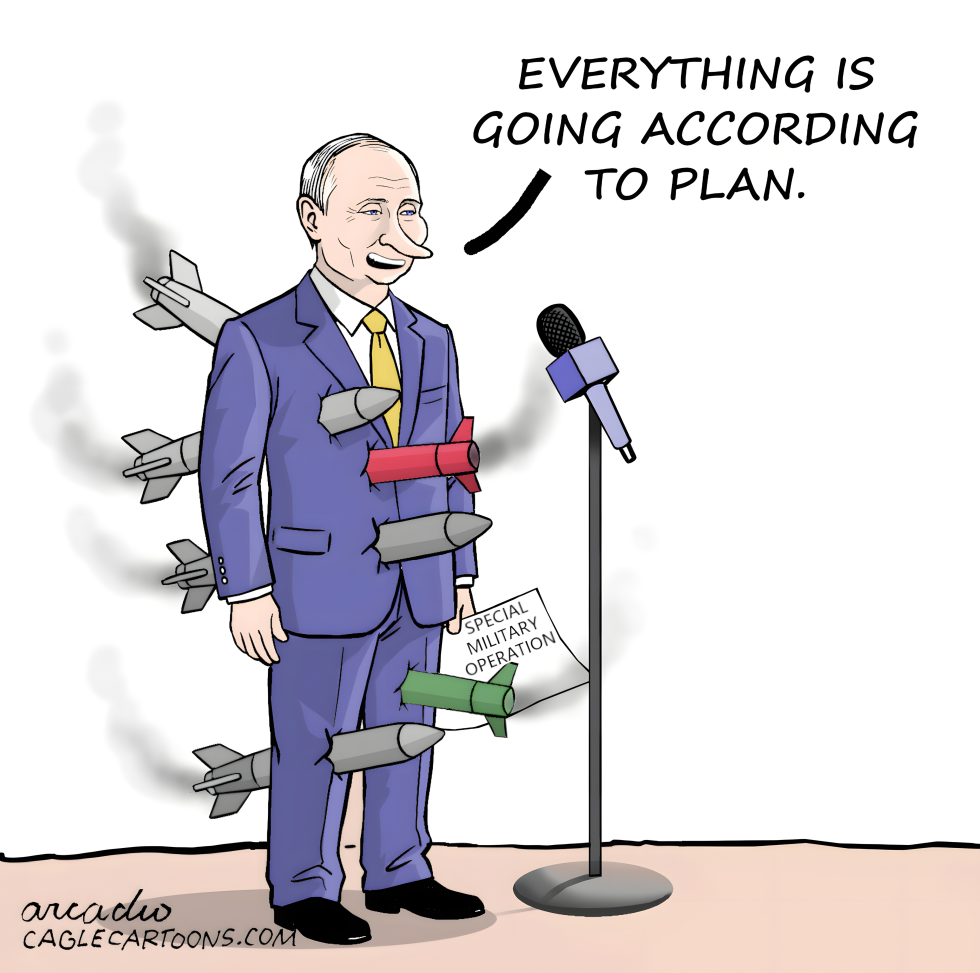
Vladimir Putin stands at a microphone declaring that everything is going according to plan. Missiles of various sizes protrude from his blue suit, and he holds a document labeled special military operation. Smoke trails appear behind him.
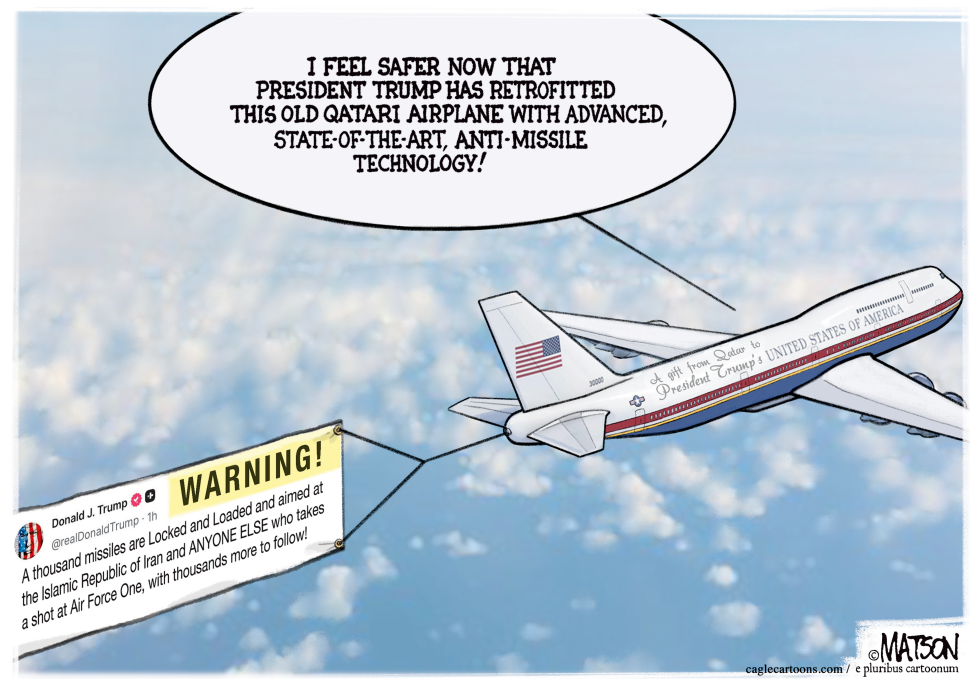
The cartoon illustrates a Qatar-provided Boeing 747 serving as Air Force One after receiving advanced anti-missile upgrades under President Trump. A large speech bubble attributes a statement of increased safety to the president. A separate warning sign references locked missiles aimed at Iran and any threat to the aircraft. Text on the fuselage identifies the plane as a gift from Qatar. The image responds to ongoing discussions about the aircraft transfer and regional security concerns involving Iran.
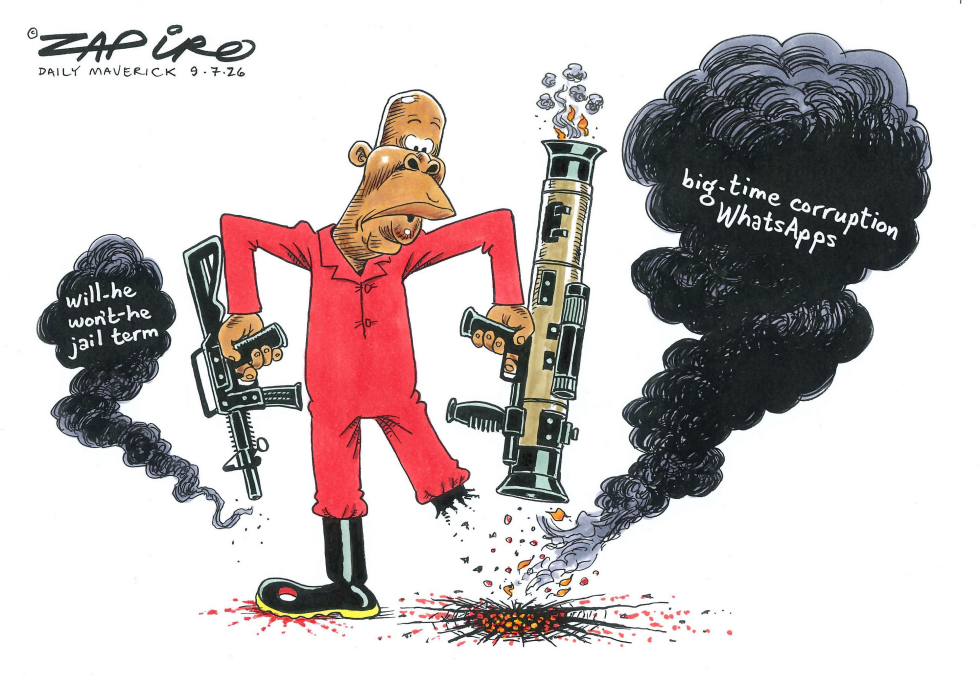
The cartoon depicts a caricature of Jacob Zuma in a red jumpsuit launching a rocket labeled big-time corruption WhatsApps. He holds two assault rifles as smoke billows and a question about a potential jail term appears on the left. The image responds to ongoing South African corruption inquiries involving leaked WhatsApp messages around mid-2026.
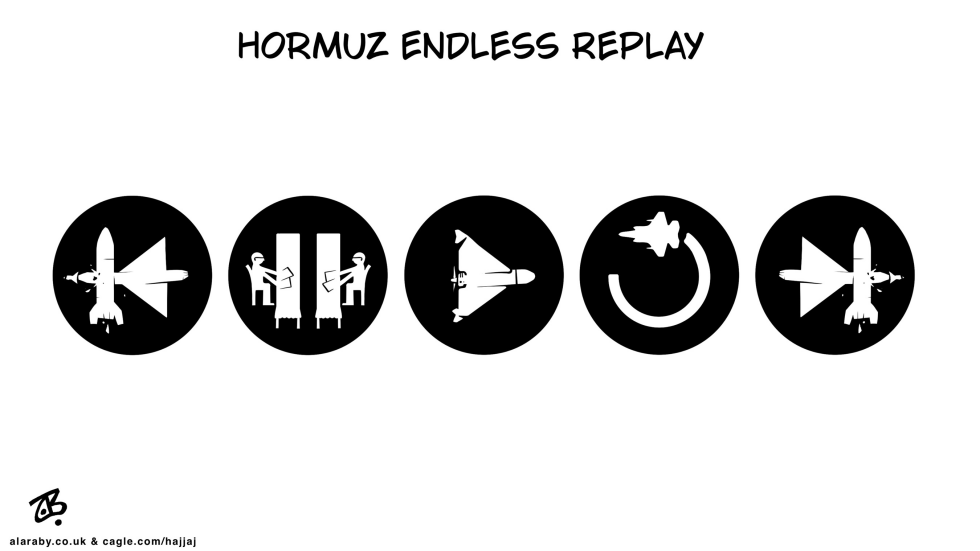
The graphic presents five circular icons arranged horizontally. They depict a missile, figures with barriers, a play button with missile, a jet with arc, and another missile with play symbol. The title above reads Hormuz Endless Replay. The sequence mixes military imagery with video player controls to indicate repetition.