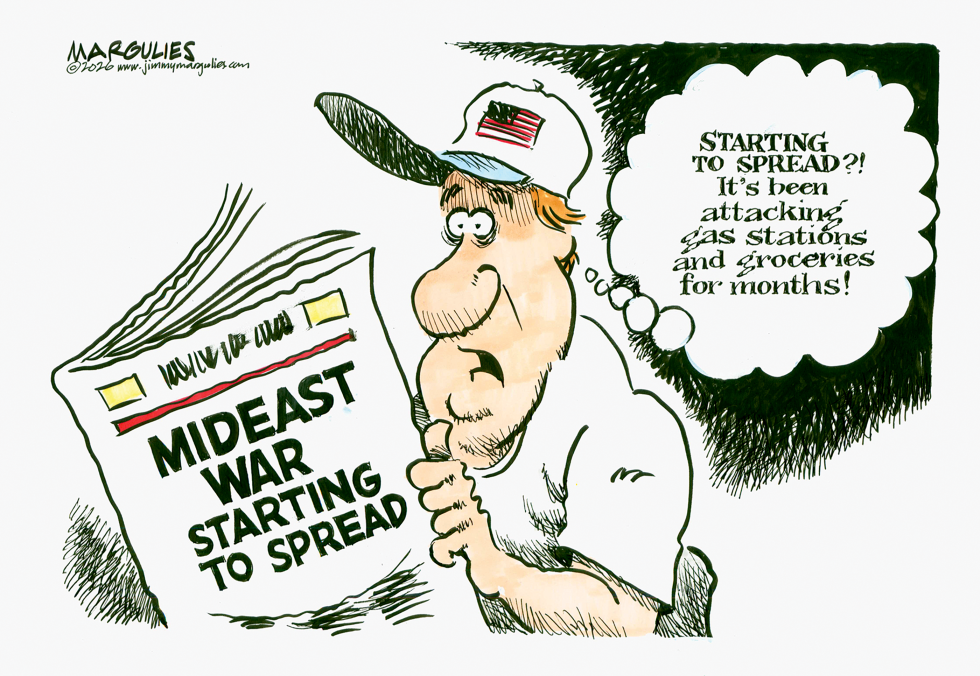
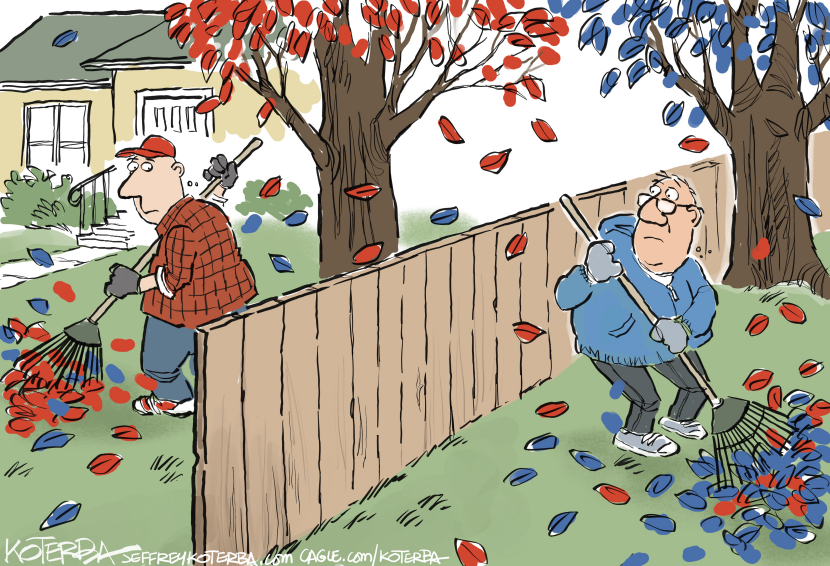
A newspaper headline declares the Mideast war starting to spread, prompting public reaction over its effects on daily costs. The piece highlights how energy and food prices have already risen due to ongoing regional conflict. It takes the position that the economic consequences for Americans have been evident long before any formal expansion of the fighting.
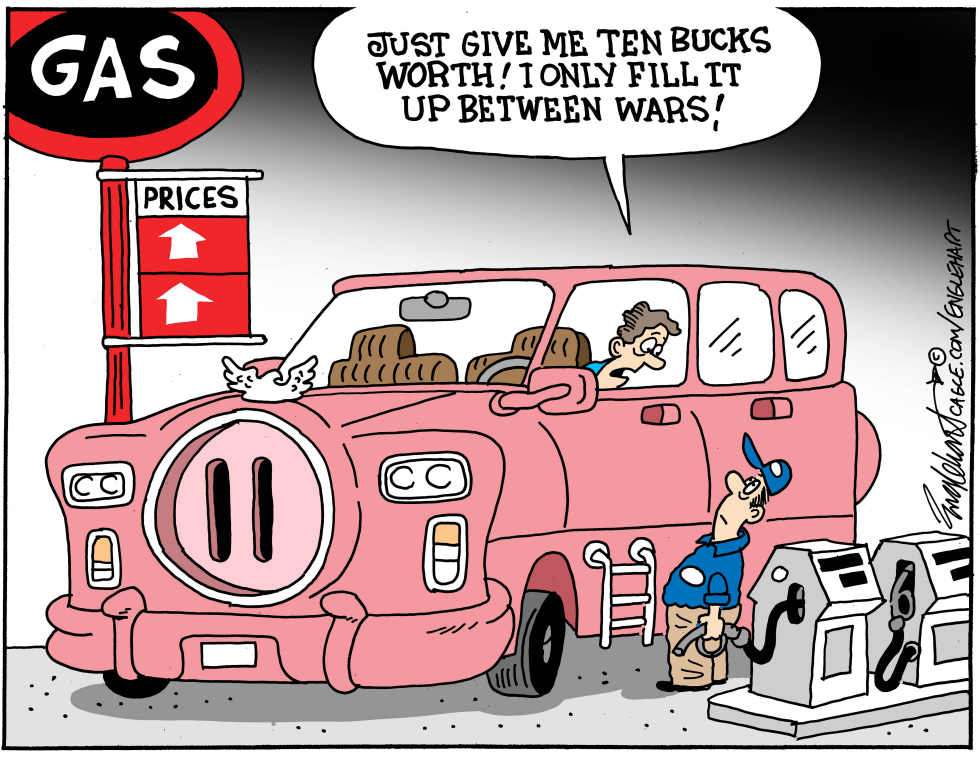
Gas prices continue climbing at stations nationwide, prompting drivers to make minimal purchases. The situation highlights ongoing pressure on household budgets from energy costs. The piece portrays the frustration with limited fills and references to external conflicts affecting supply stability.
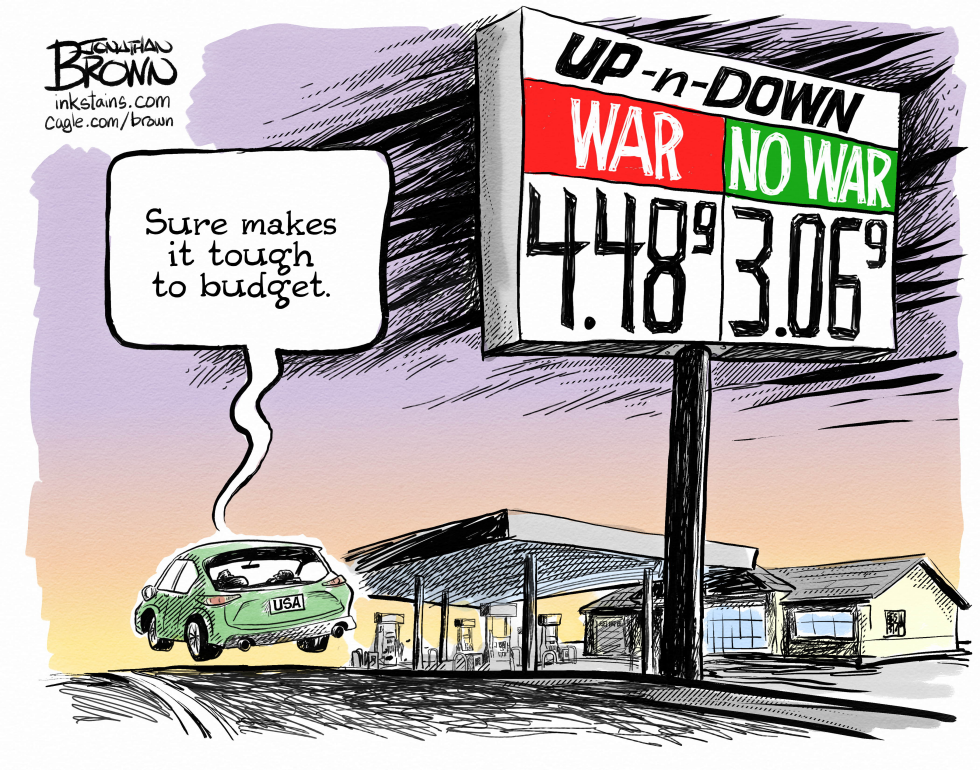
A gas station sign splits prices by war and no war labels, with the war column higher at 4.489 versus 3.069. A driver in a green car remarks on budgeting challenges while at the pumps.
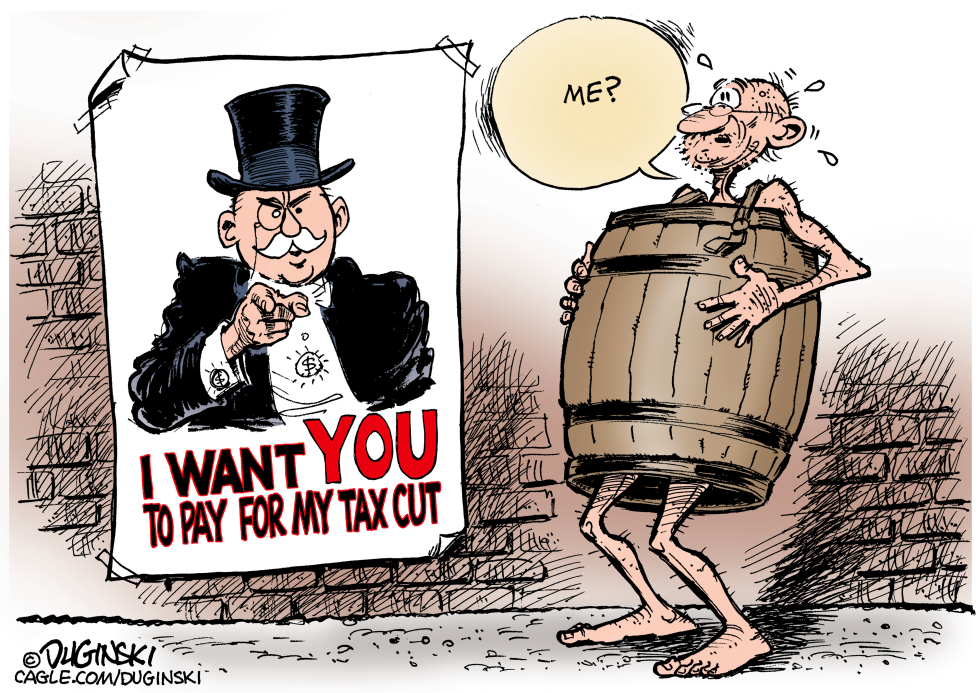
A poster of Uncle Sam points directly at a thin man trapped in a barrel, with bold text demanding that the man pay for the tax cut. The barefoot figure reacts with surprise in a speech bubble. The scene unfolds against brick walls, highlighting tension between authority and the economically disadvantaged.
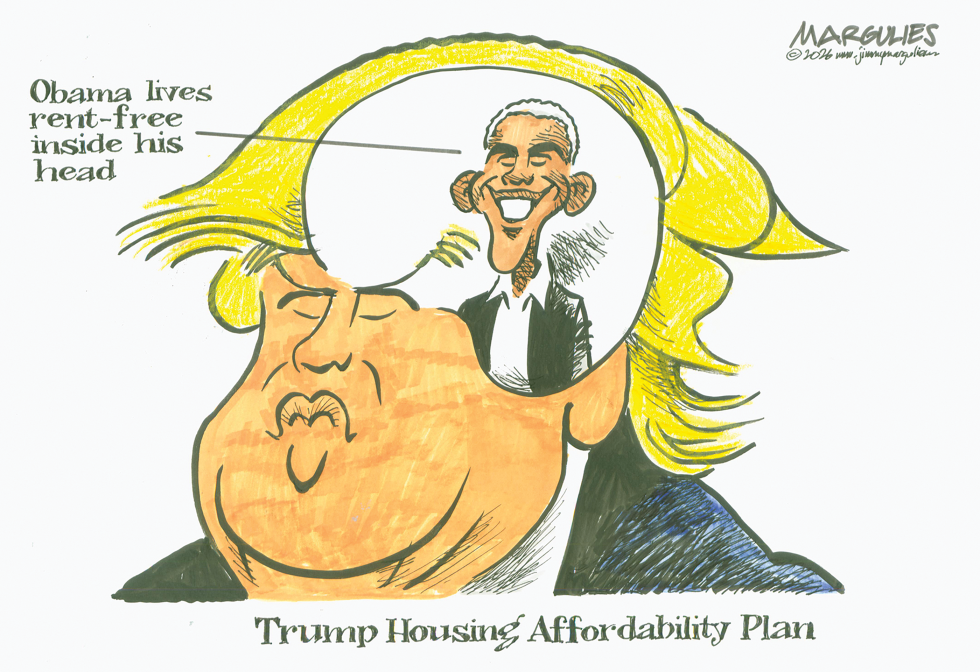
The July 2026 image depicts Donald Trump with a thought bubble containing Barack Obama, accompanied by the caption Obama lives rent-free inside his head. The bottom text labels the scene Trump Housing Affordability Plan. The visual ties the former president's presence to the current housing policy discussion.
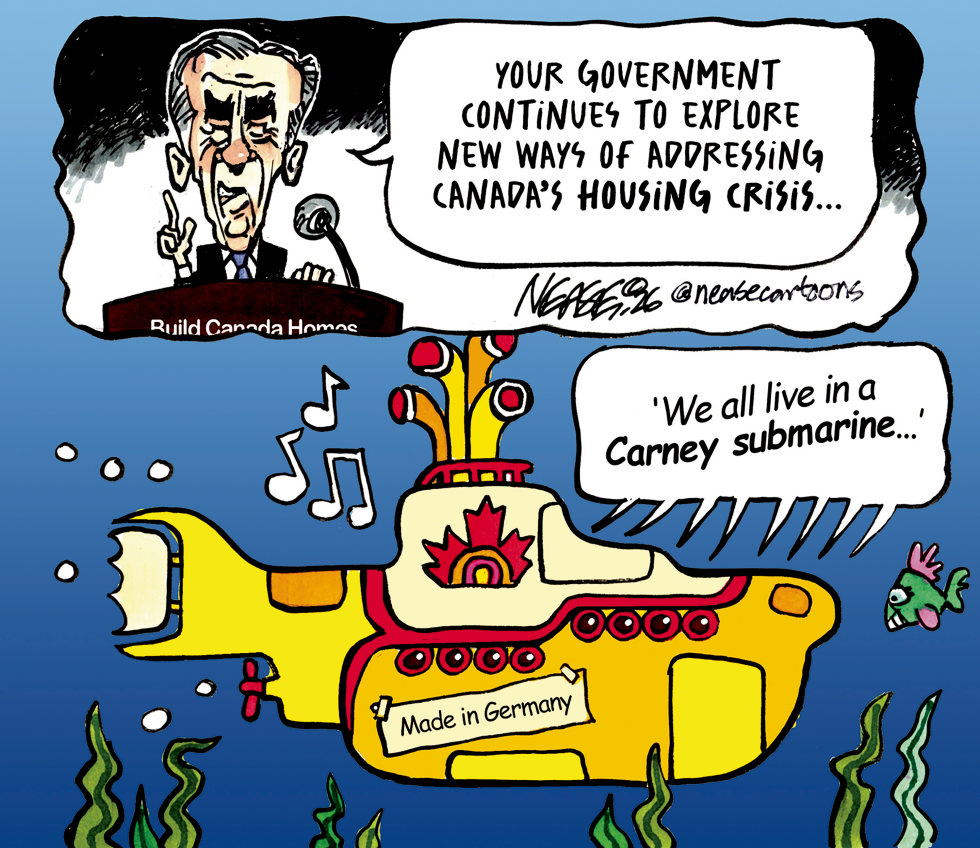
On July 7 2026 Mark Carney speaks from a Build Canada Homes podium about ongoing government efforts to address the national housing crisis. Below the surface a yellow submarine marked Made in Germany and bearing a maple leaf emblem carries the slogan We all live in a Carney submarine. The scene references the Beatles song while depicting policy exploration through underwater imagery with musical notes and a small fish observer.
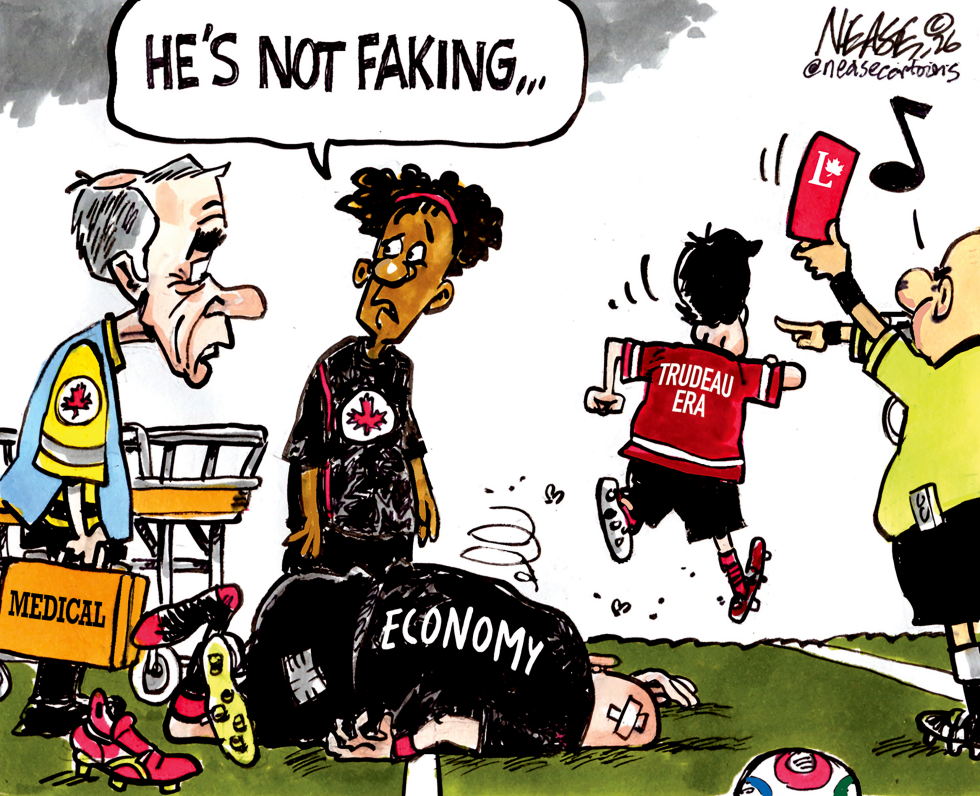
A political cartoon depicts Canadian Prime Minister Justin Trudeau being shown a red card by a referee during a soccer match. The Canadian economy appears as an injured player on the ground receiving attention from medical staff. Trudeau wears a jersey labeled TRUDEAU ERA while fleeing the scene. The referee holds up a red card marked with an L. A speech bubble states HE'S NOT FAKING. The image responds to ongoing economic challenges facing Canada in mid 2026.
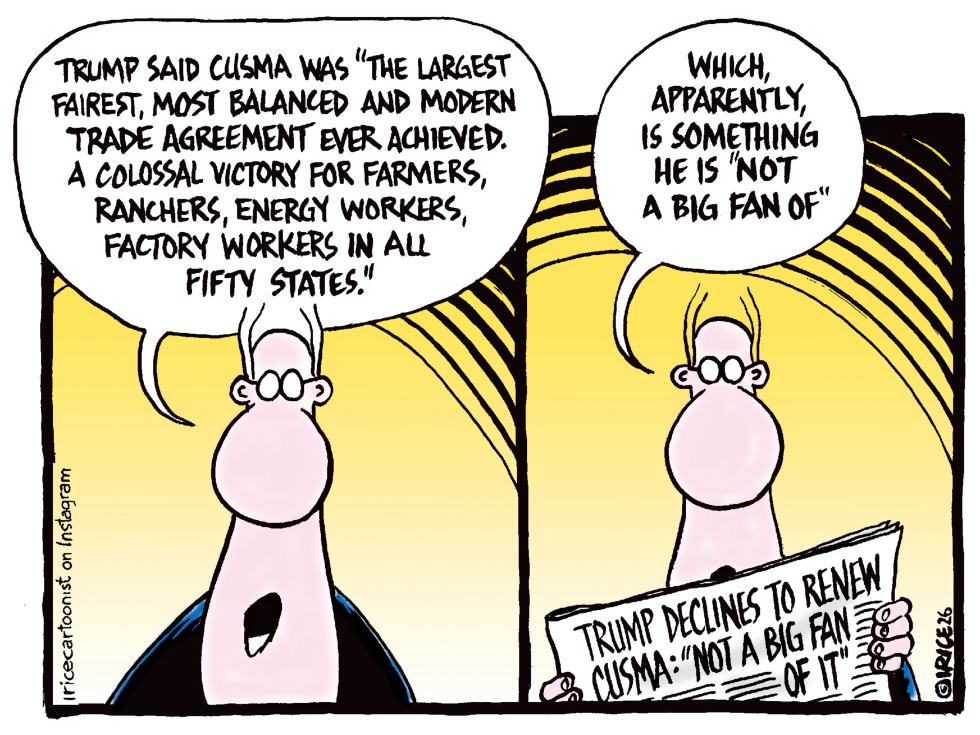
The July 2026 cartoon depicts a figure resembling President Trump in two panels. The left shows praise for CUSMA as the best trade deal. The right shows the same figure reading a newspaper headline about declining to renew it. The visual points to a shift in position on the agreement covering Canada, the US, and Mexico.
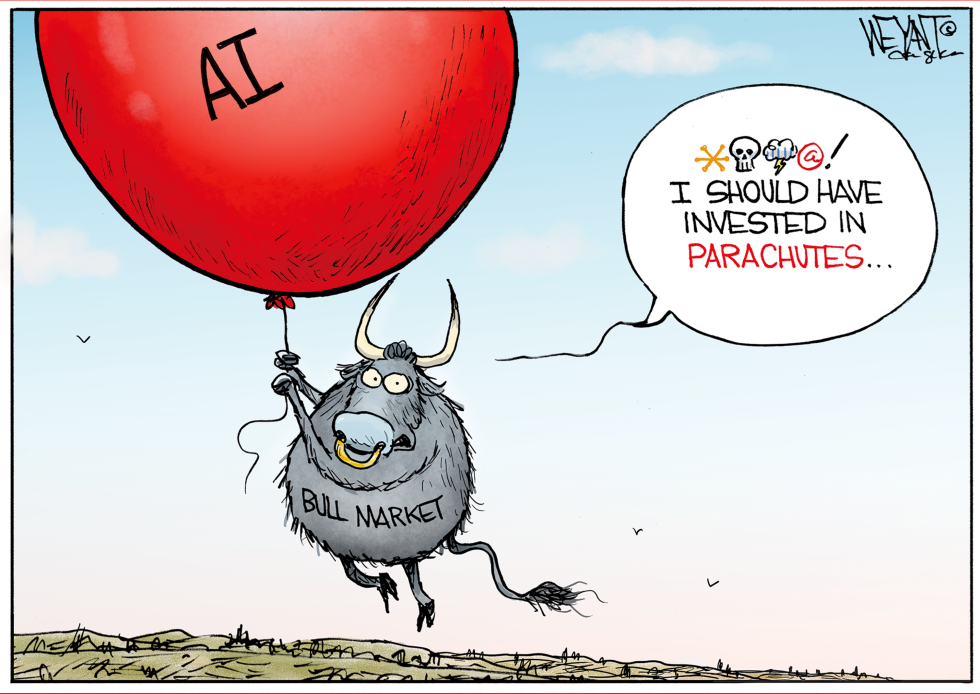
A bull labeled as the market hangs from a large red balloon marked AI. The figure speaks of wishing for parachutes instead. The scene appears on June 30 2026 and shows the bull suspended high with symbols of trouble in the speech area.
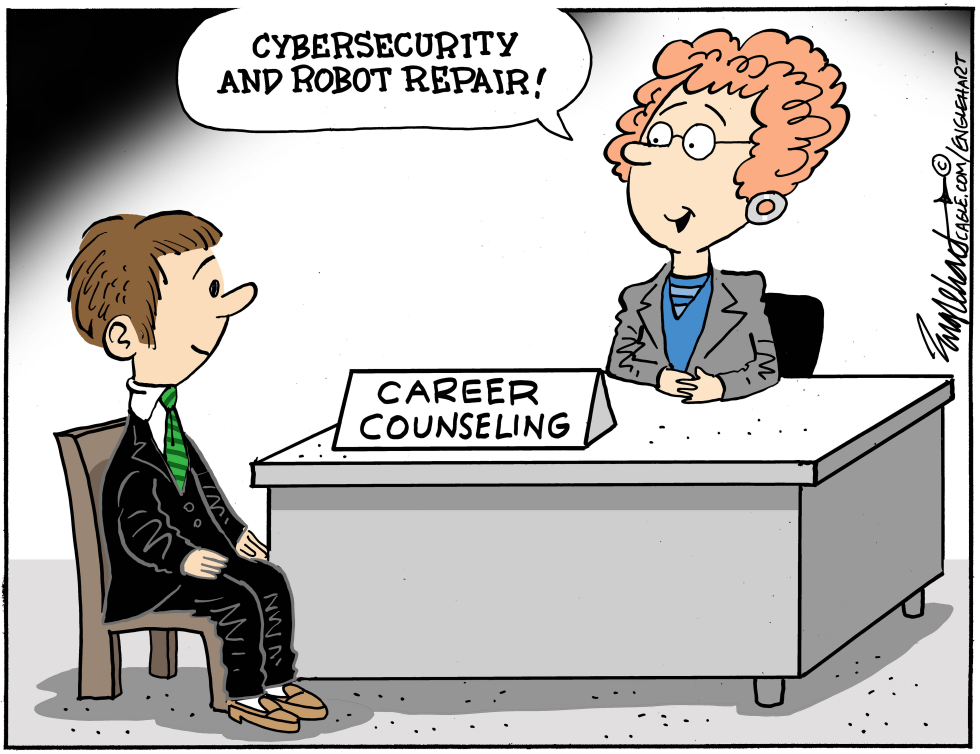
On June 8, 2026, Bob Englehart depicts a career counseling session where a professional recommends cybersecurity and robot repair to a young client. The scene reflects ongoing shifts in job markets driven by artificial intelligence and automation. The desk sign and speech bubble emphasize practical skills for future employment.
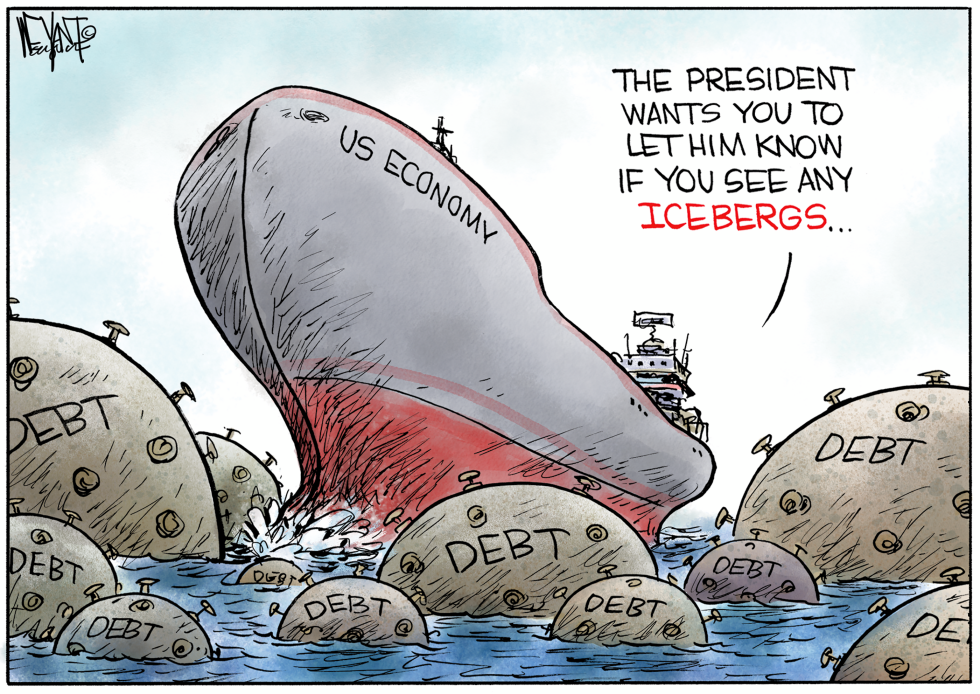
This political cartoon illustrates the US Economy as a massive ship labeled accordingly, dramatically sinking after colliding with numerous icebergs each marked 'DEBT.' A speech bubble from the ship warns to alert the president about icebergs, evoking the Titanic disaster in a clear metaphor for economic peril. Incorporating tags such as economy, debt, budget, inflation, prices, and costs, the image critiques fiscal irresponsibility. The artwork by Christopher Weyant uses simple lines and colors to emphasize the collision's impact, with water splashing and the ship's hull damaged. Such cartoons often highlight how mounting debt threatens stability, drawing parallels to historical maritime tragedies for satirical effect. The composition places the ship at an angle, surrounded by floating debt bergs, underscoring inevitable crisis if warnings go unheeded.
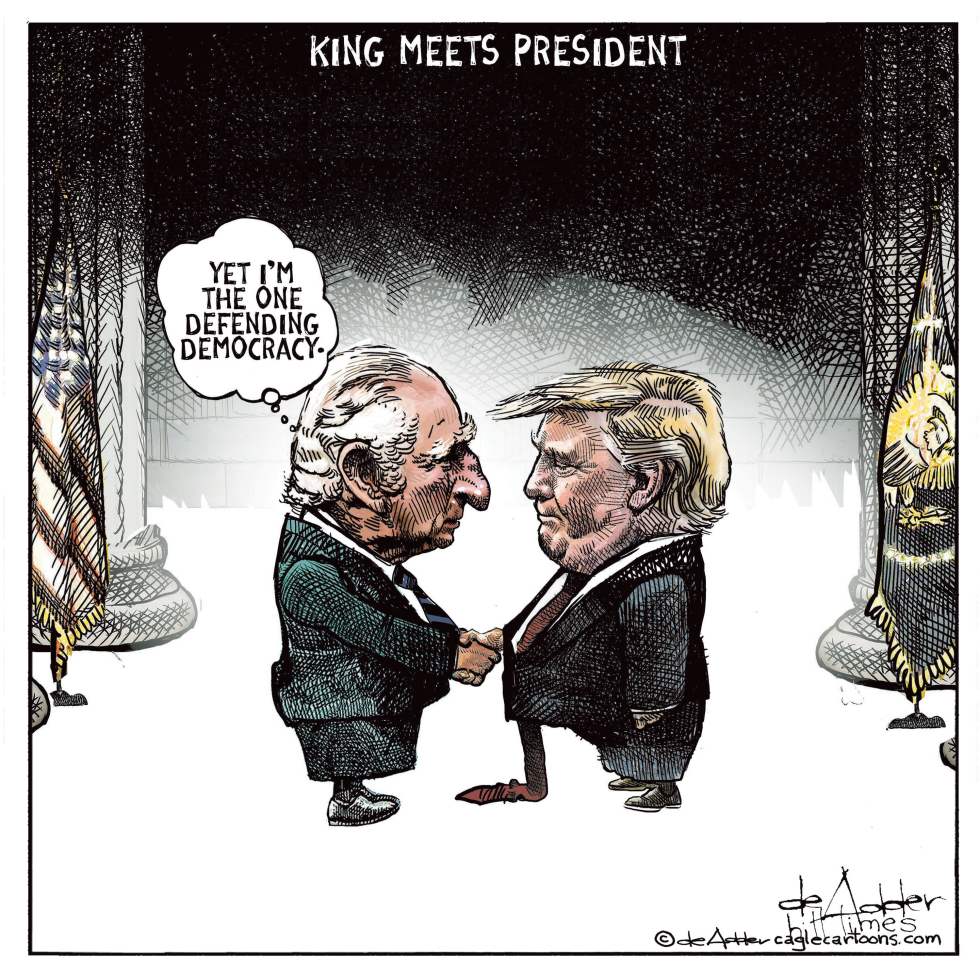
Michael de Adder's cartoon captures a handshake between King Charles and President Trump, set against American and implied British flags in a White House-like scene. The title 'KING MEETS PRESIDENT' tops the image, with Charles saying, 'Yet I'm the one defending democracy.' Tags like UK, United Kingdom, States, America, White House, Visit, State underscore the diplomatic theme. This satire touches on trade, tariffs, and economy without overreaching into unseen motives. The dry humor lies in the visual irony of two leaders in suits, one royal and one presidential, amid formal backdrops. Artistic style uses crosshatching for depth, keeping focus on the central exchange.
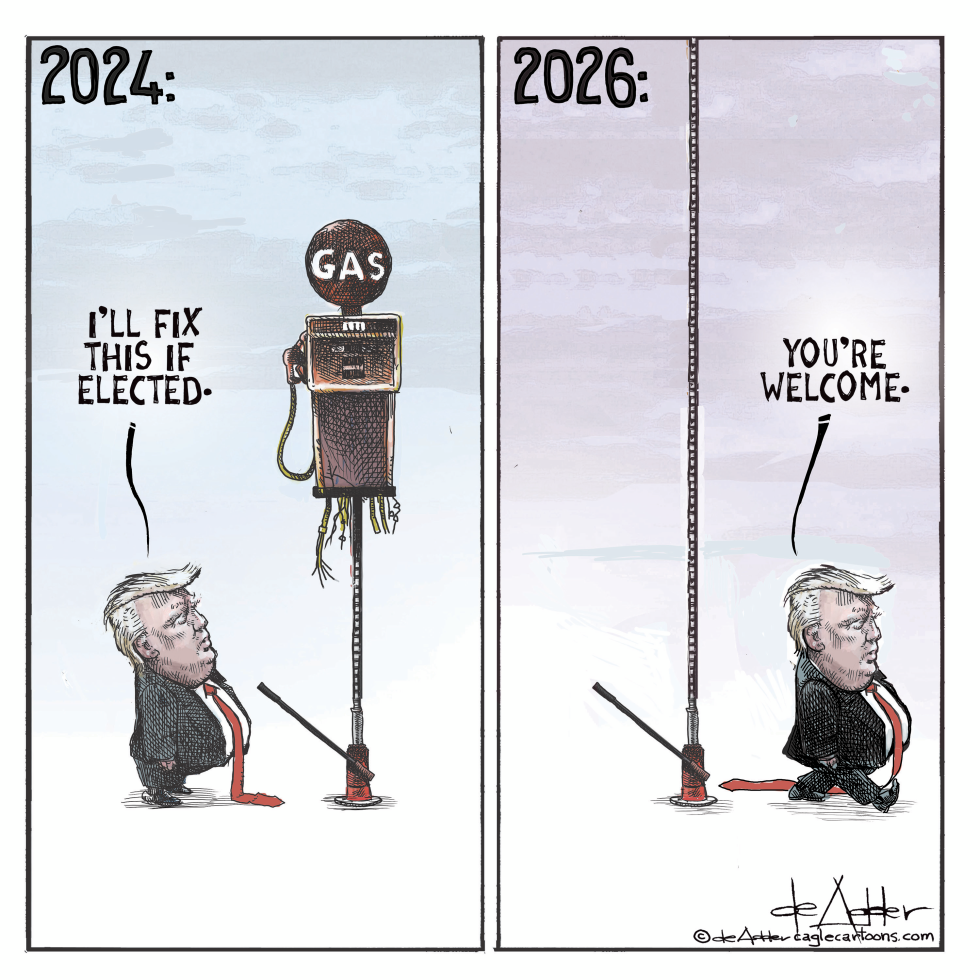
Michael de Adder's cartoon splits into 2024 and 2026 panels, showing a figure resembling Trump addressing a high gas pump with a promise to fix it if elected, tagged with Trump, gas, prices. In the later panel, the same figure pulls the pump down low, saying 'you're welcome,' tying into election, energy, Iran, war themes. The satire highlights contrasts in promise versus action on cost, economy, inflation, oil, barrel issues. This visual commentary underscores political pledges on energy costs, with the figure's actions suggesting a direct, perhaps misguided intervention. Tags like conflict and prices emphasize the economic satire at play.