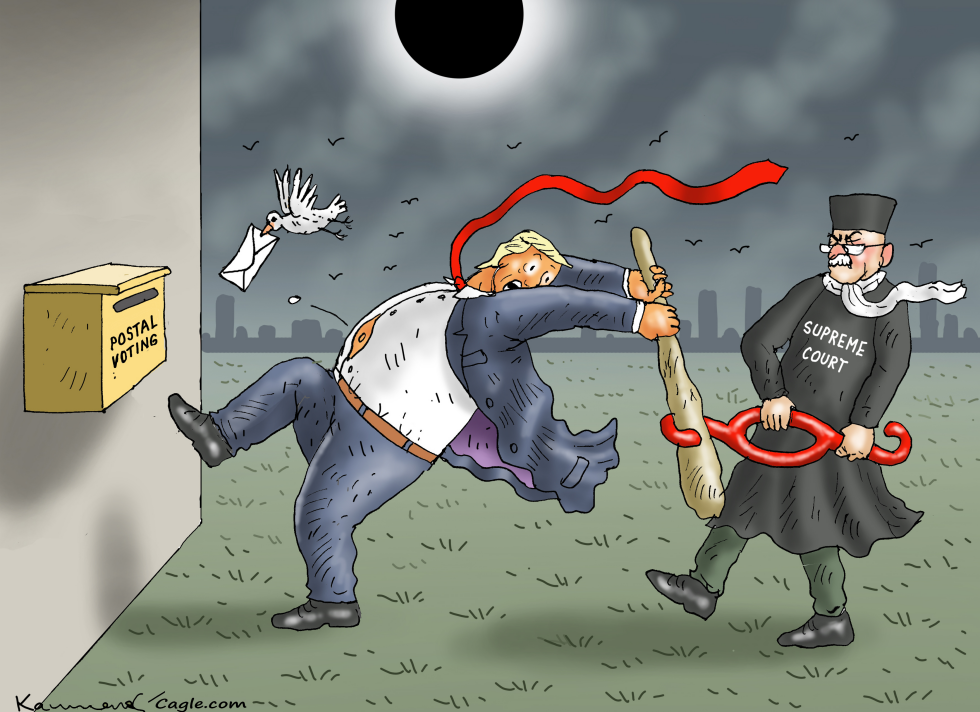
The Supreme Court has moved to restrict efforts by former President Trump to limit or challenge postal voting ahead of the 2026 midterms. The ruling comes as both parties prepare for a high-stakes contest that could determine control of Congress. Trump allies have pushed measures they say protect election integrity while critics see them as attempts to suppress turnout. The decision underscores the court's continuing role in shaping voting rules. The cartoon portrays the court as a necessary check on Trump's aggressive tactics.
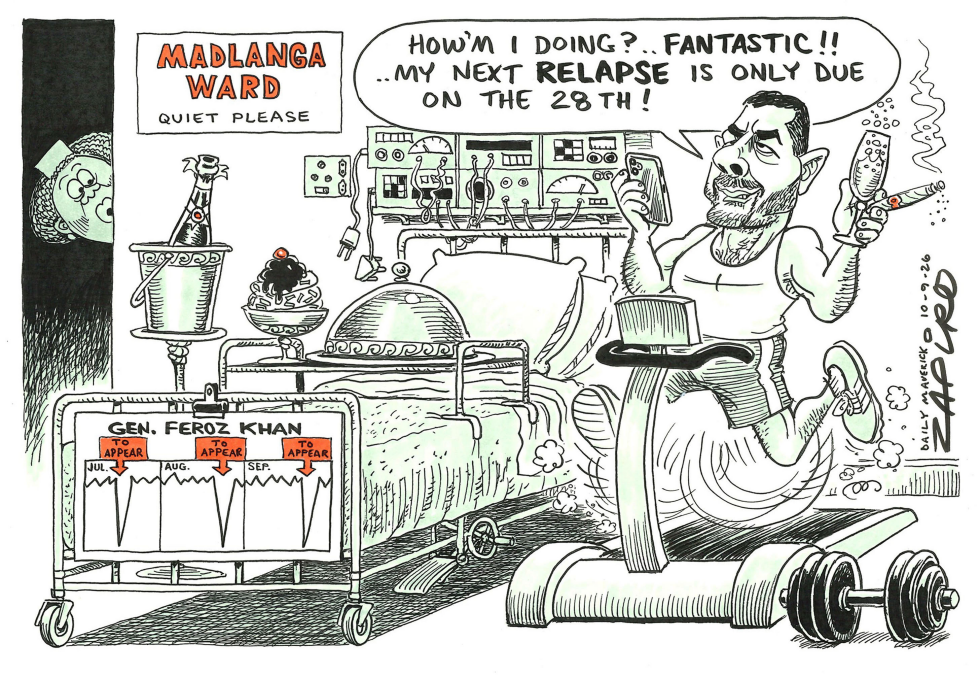
Maj-Gen Feroz Khan, suspended SAPS Crime Intelligence deputy head, was shot in an apparent assassination attempt in June 2026 days before scheduled Madlanga Commission testimony. His evidence was postponed multiple times citing recovery and medical certificates, with the next appearance set for 28 September. The cartoon mocks the pattern of delays as a convenient scheduling of relapse.
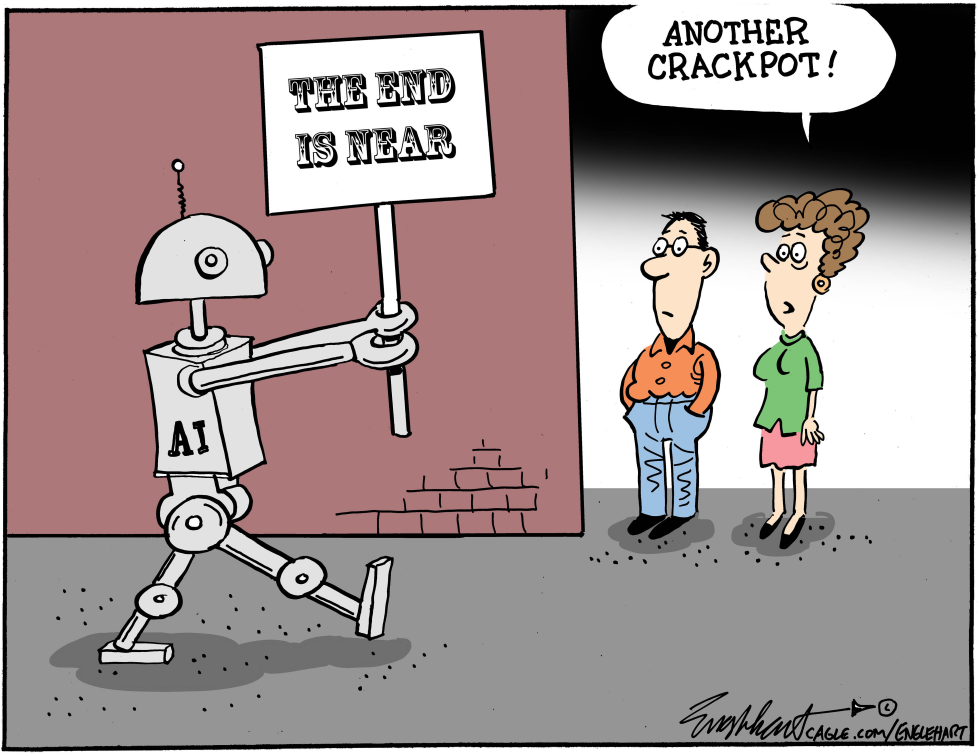
Predictions that artificial intelligence will end humanity by the end of the decade continue to circulate among technologists and futurists. These forecasts often cite rapid advances in machine learning and autonomous systems as existential risks. The cartoon responds by portraying such warnings as recycled doomsday rhetoric that the public has learned to ignore. It takes the position that AI alarmism has become indistinguishable from past failed prophecies and deserves the same skeptical reception.
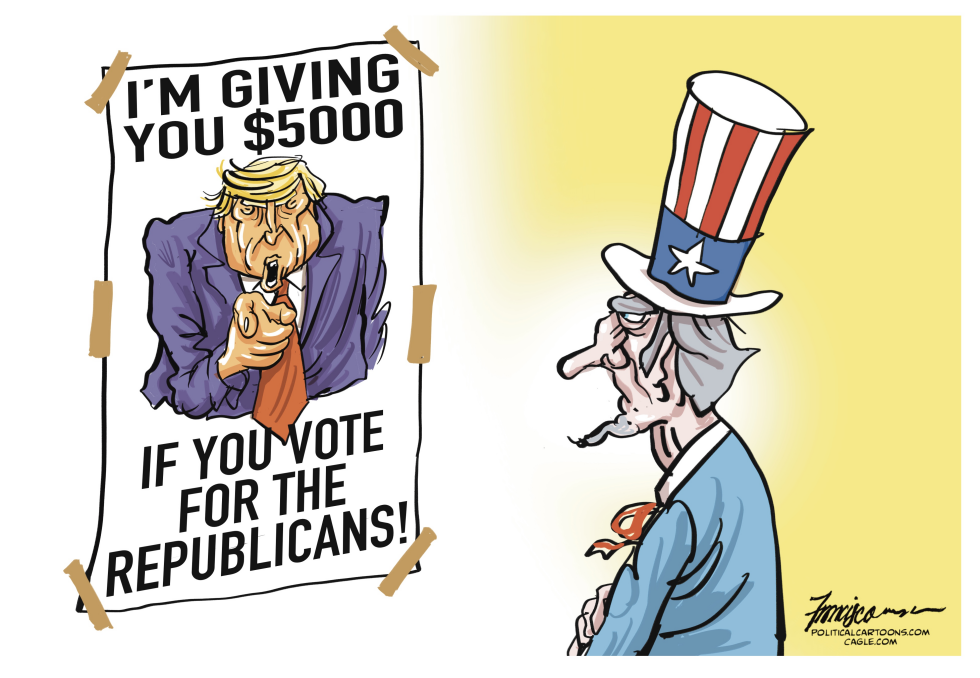
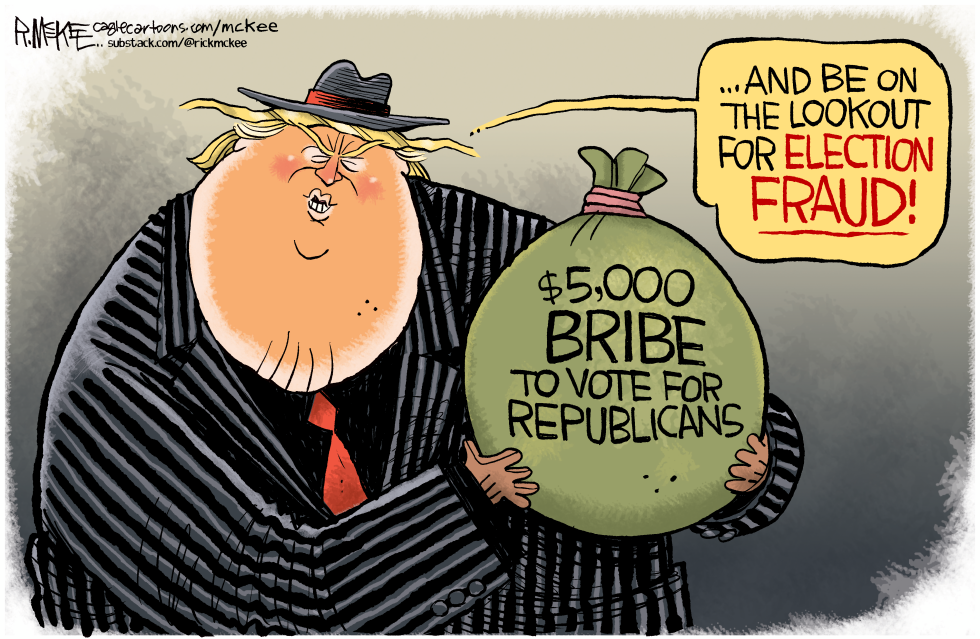
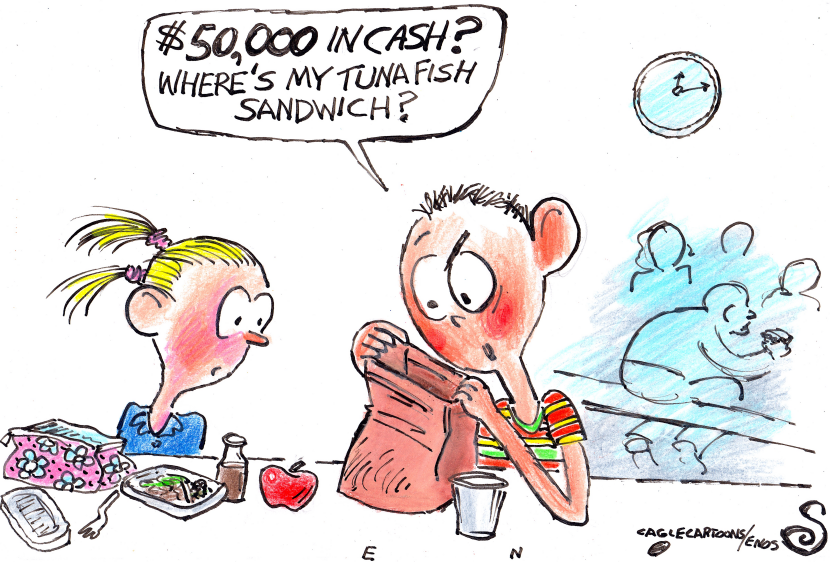
Donald Trump has floated direct cash payments to voters who support Republican candidates. The proposal surfaces weeks before the 2026 midterms and draws immediate scrutiny over its legality and intent. Critics argue the move risks turning elections into auctions. Supporters frame it as economic relief. The cartoon depicts the offer as a blunt transaction that leaves traditional symbols of American integrity uneasy.
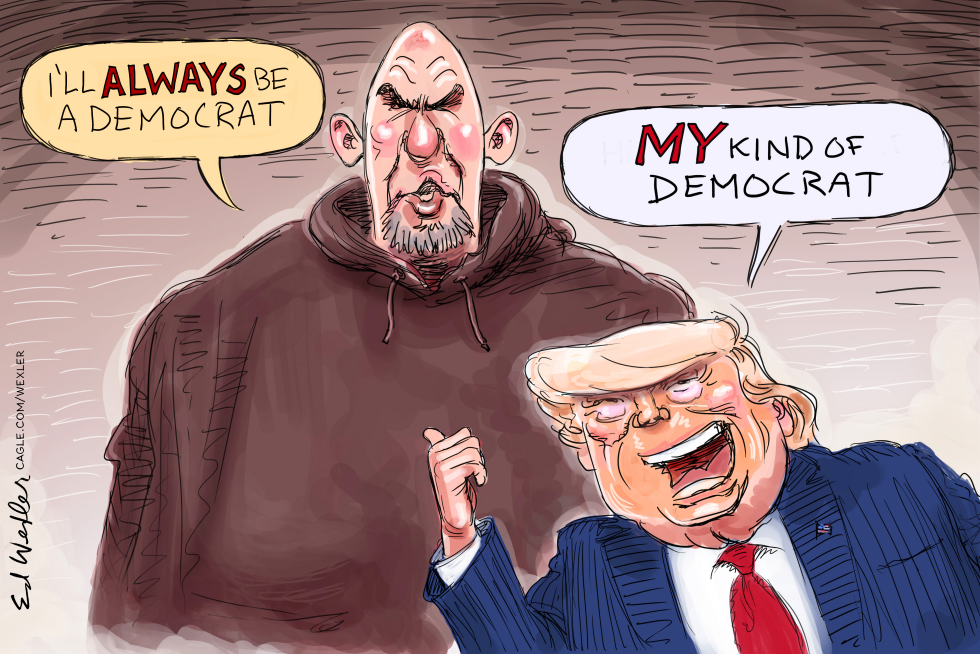
Donald Trump publicly endorsed a Democrat who declared he would always remain in the party. The statement drew attention because it came from a figure outside Trump's usual base. Observers noted the remark as part of ongoing efforts to attract voters across traditional lines. The cartoon presents the exchange as evidence that Trump sees value in Democrats who refuse to change affiliation. It frames the moment as revealing Trump's strategic tolerance for opposition loyalty when it suits his purposes.
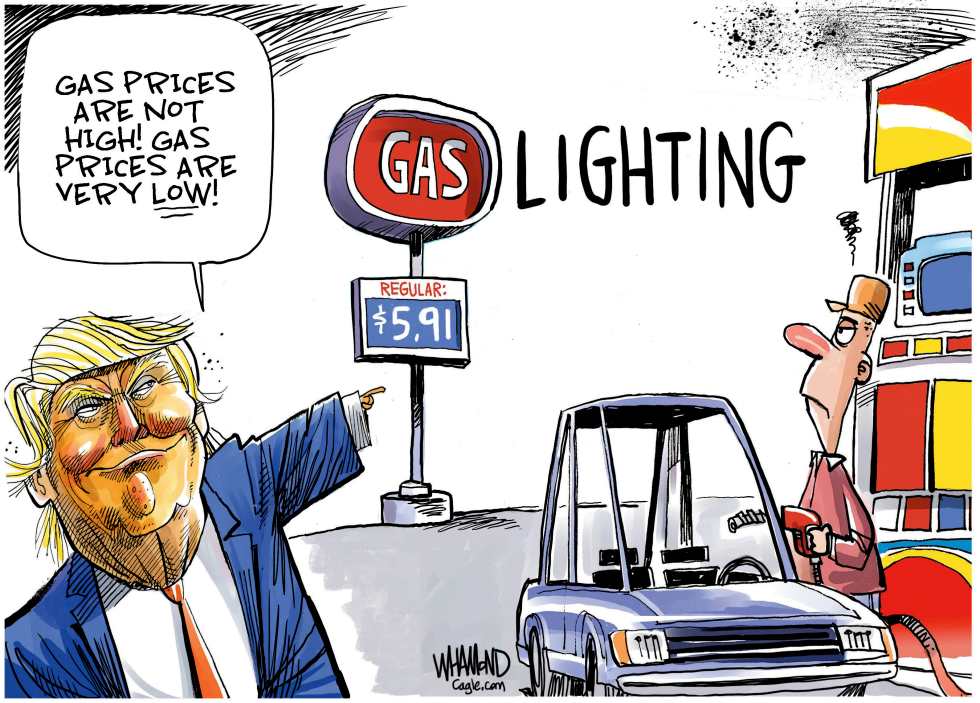
Donald Trump has repeatedly asserted that gas prices are very low even as national averages hover near record territory. The statement comes amid ongoing public frustration with energy costs that have remained elevated for months. The editorial takes the position that such denials amount to deliberate misdirection rather than engagement with economic data.
Donald Trump has repeatedly claimed that elections are rigged against Republicans and urged vigilance against fraud. The cartoon responds to this pattern by depicting him offering cash incentives to secure votes for his party. It underscores the perceived double standard in ongoing debates over voting access and integrity ahead of the 2026 midterms. The piece takes the position that such rhetoric from Trump undermines genuine concerns about election security.
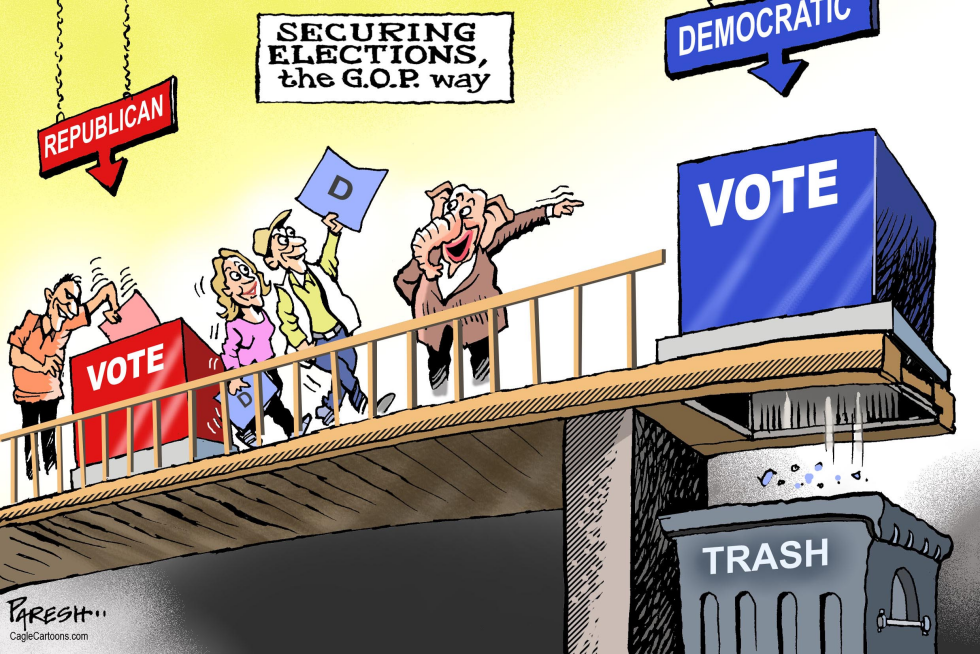
The cartoon depicts Republicans on a platform guiding a large blue vote box labeled Democratic into a trash can below while a red Republican vote box remains on the structure. A sign reads Securing Elections the G.O.P. way. The elephant symbol of the GOP points toward the action as figures including one holding a D flag stand nearby. The image comments on claims of election integrity by showing ballots from one party discarded. This reflects ongoing partisan debates over voting procedures and access as of the 2026 publication date.
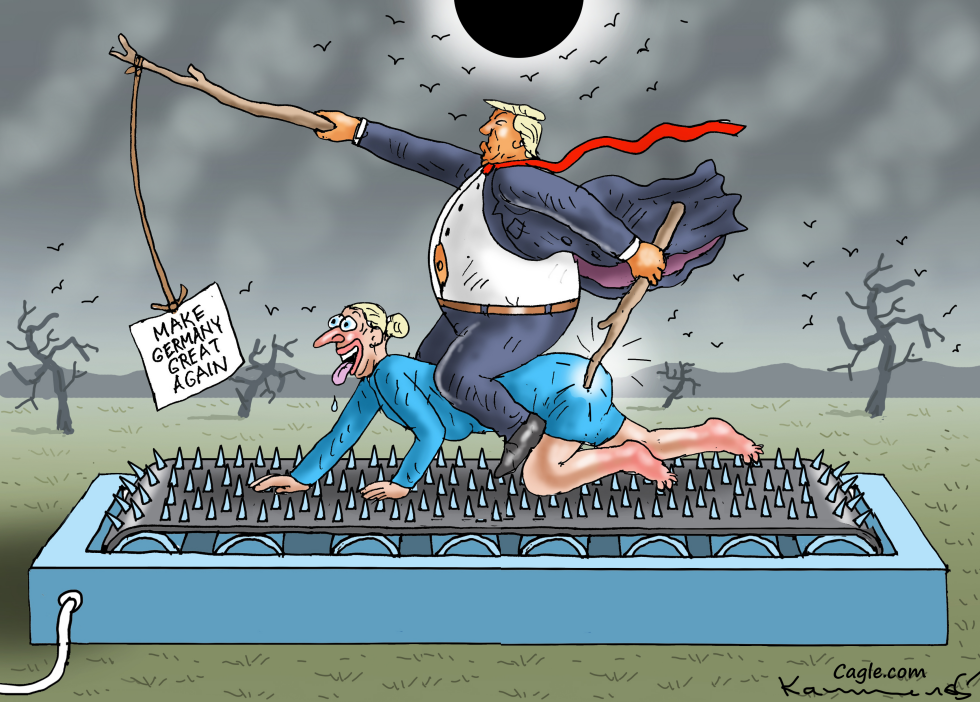
Donald Trump promotes a revival slogan aimed at Germany while Angela Merkel faces the consequences. The effort highlights ongoing tensions in transatlantic relations and questions about external influence on European domestic policy. The piece argues that such interventions impose unnecessary hardship without delivering benefits.
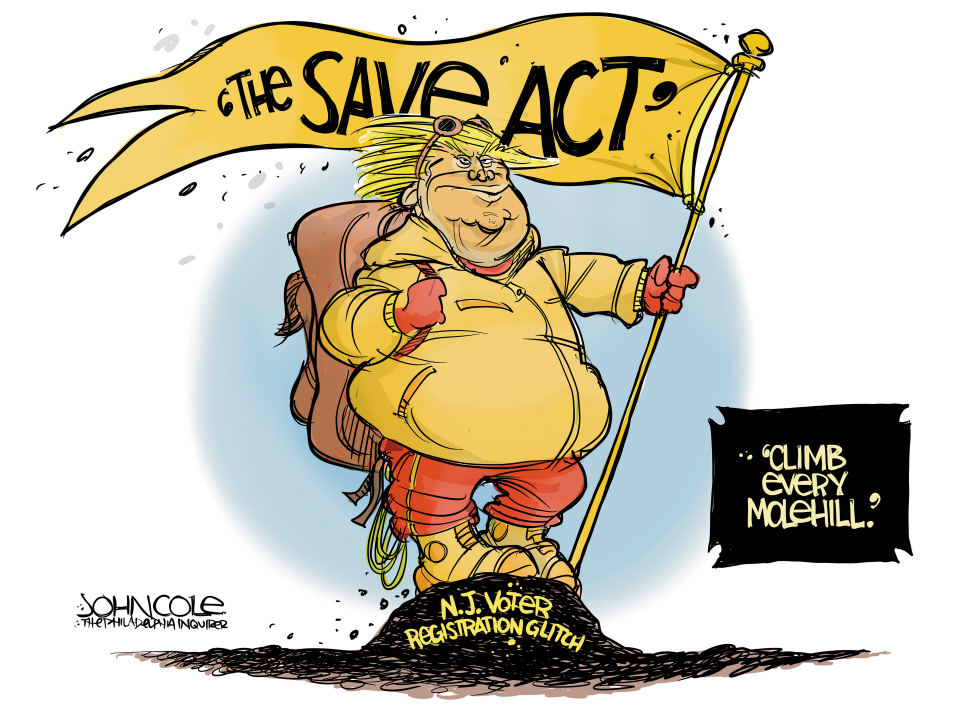
A minor voter registration glitch in New Jersey drew outsized attention from former President Trump and supporters of the SAVE Act in September 2026. The episode highlighted ongoing partisan disputes over election administration and voter ID rules. The cartoon portrays the reaction as an overreaction that turns a small problem into a symbolic crusade, arguing that such emphasis distracts from actual election security needs.
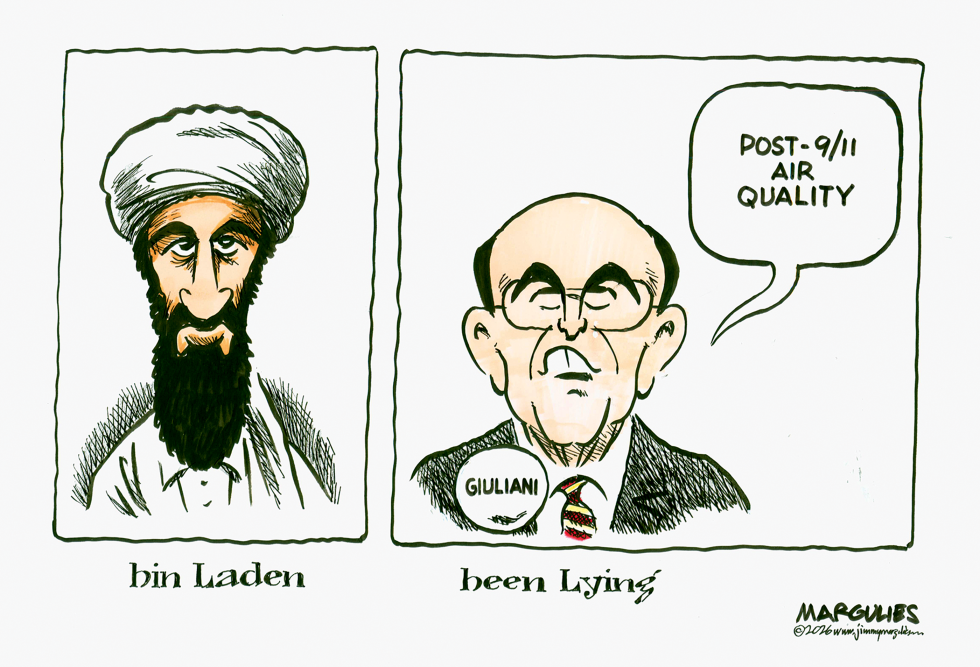
Rudy Giuliani's past assurances about air quality after the September 11 attacks face renewed criticism in 2026. The former New York mayor repeatedly told the public that downtown air was safe to breathe in the days following the attacks. Environmental tests later showed elevated toxins and health risks for responders and residents. The cartoon equates those statements with deception by placing Giuliani beside Osama bin Laden. It argues the misleading claims contributed to long-term health harm for thousands of workers and survivors.
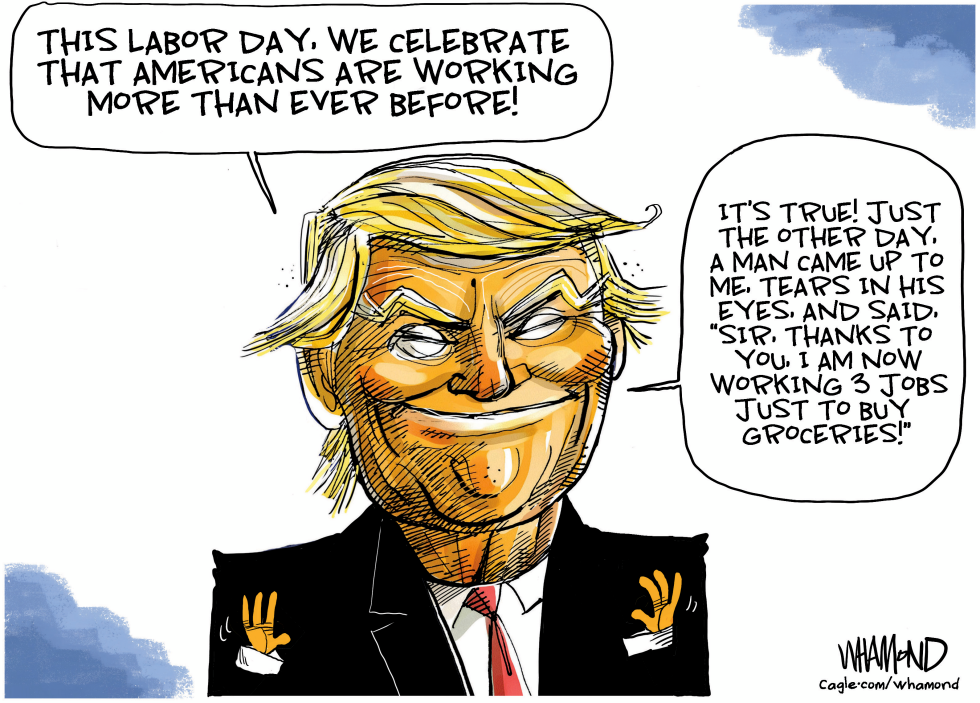
On Labor Day 2026, President Trump highlighted what he described as record employment levels in a public address. He pointed to Americans taking on more work as evidence of economic strength. The remarks come amid ongoing public concern over household costs and wage pressures. Critics argue the comments underscore the gap between official job numbers and the lived experience of workers needing multiple positions to cover basic expenses. The cartoon presents the remarks as tone-deaf to economic strain.
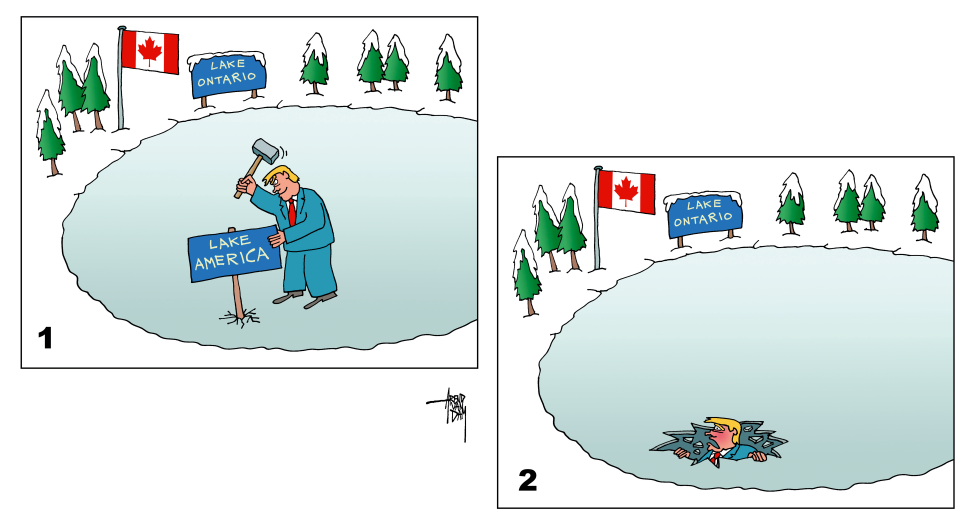
Donald Trump directed an aide to plant a Lake America sign on the frozen surface of Lake Ontario in a symbolic claim on Canadian waters. The move was part of ongoing US-Canada friction over shared resources and border definitions. The ice broke, sending the figure through the surface. The episode underscores the practical limits of unilateral US assertions against a close neighbor whose cooperation remains essential on trade, security, and environmental issues. The cartoon presents the effort as self-defeating and poorly timed.
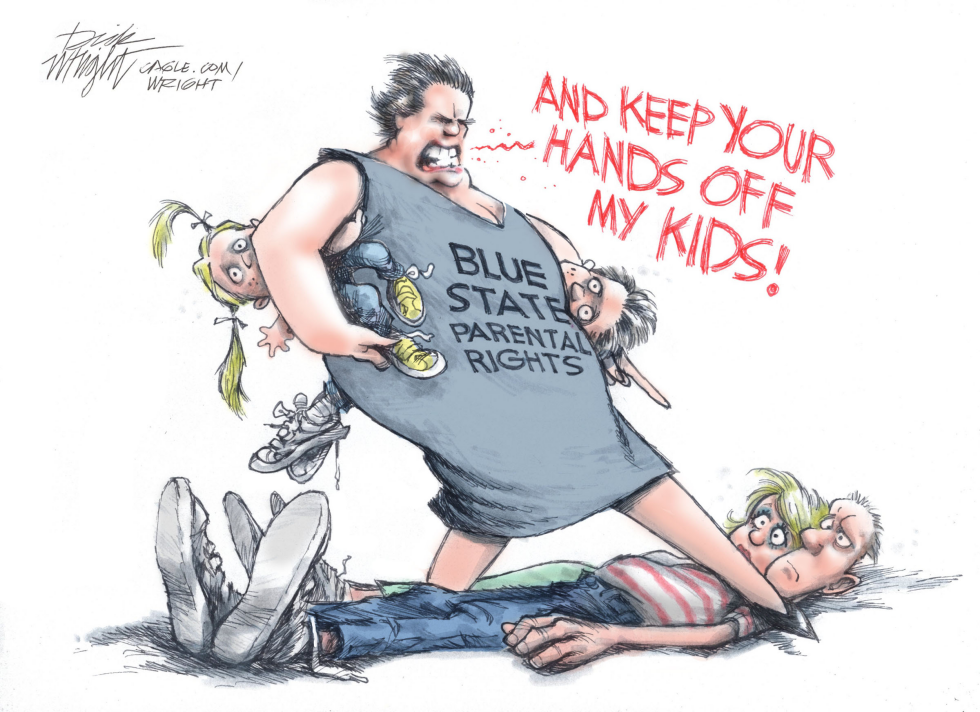
Blue state governments have expanded authority over child welfare and education decisions in recent years, often overriding parental objections on issues like curriculum and medical choices. This has sparked lawsuits and protests from families arguing loss of rights. The cartoon portrays these policies as aggressive state takeover rather than protection, criticizing the shift of power from parents to officials.
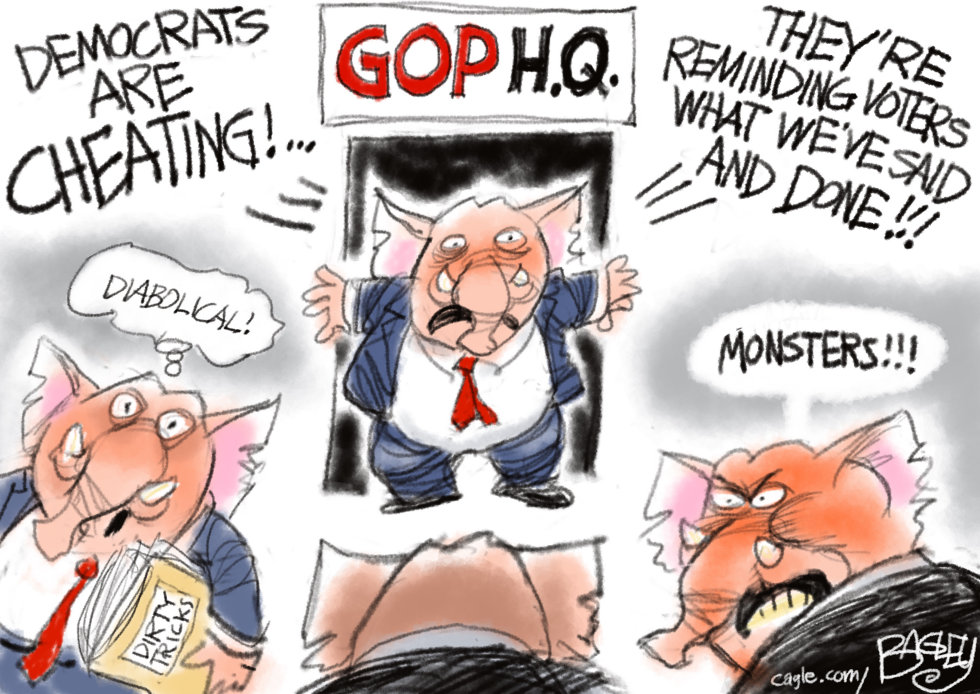
Republicans have renewed accusations that Democrats are cheating in elections, a charge that echoes long-standing GOP concerns over voter fraud. The claims come as the party faces scrutiny over its own past efforts to influence outcomes through restrictive laws and legal challenges. The cartoon argues that these accusations serve mainly to distract from the Republicans' documented history of similar or more aggressive tactics.