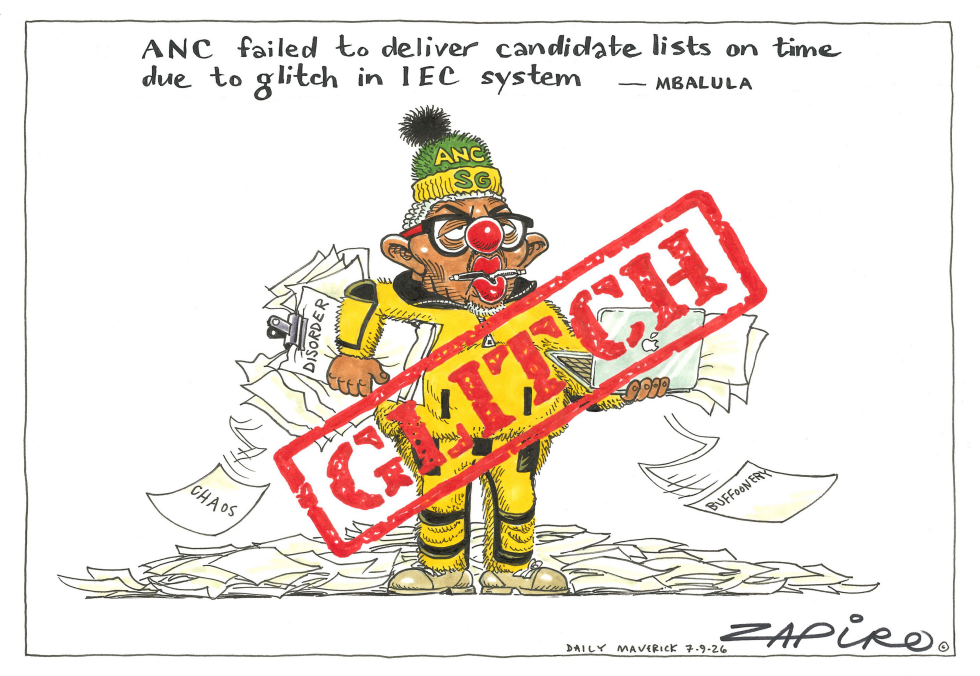
ANC secretary general Fikile Mbalula attributed the party's failure to submit candidate lists on time to a technical glitch in the Independent Electoral Commission system. The claim came as the party faced internal disarray ahead of upcoming elections. The cartoon portrays the excuse as a transparent attempt to mask organizational failure and buffoonery.
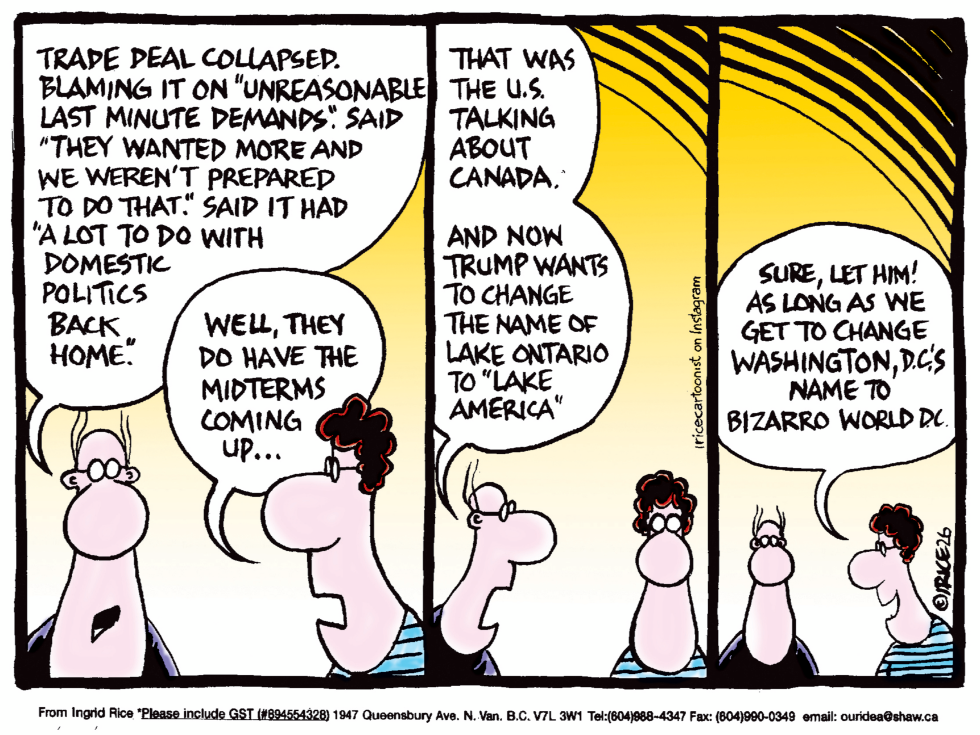
A Canada-U.S. trade deal collapsed after U.S. negotiators cited unreasonable last-minute demands and linked the failure to domestic politics ahead of midterms. President Trump then proposed renaming Lake Ontario to Lake America. Canadian officials responded by offering to rename Washington D.C. to Bizarro World DC if the change proceeds. The exchange highlights how trade tensions and political posturing are escalating between the two countries. The cartoon mocks the name-change idea as emblematic of broader dysfunction in bilateral relations.
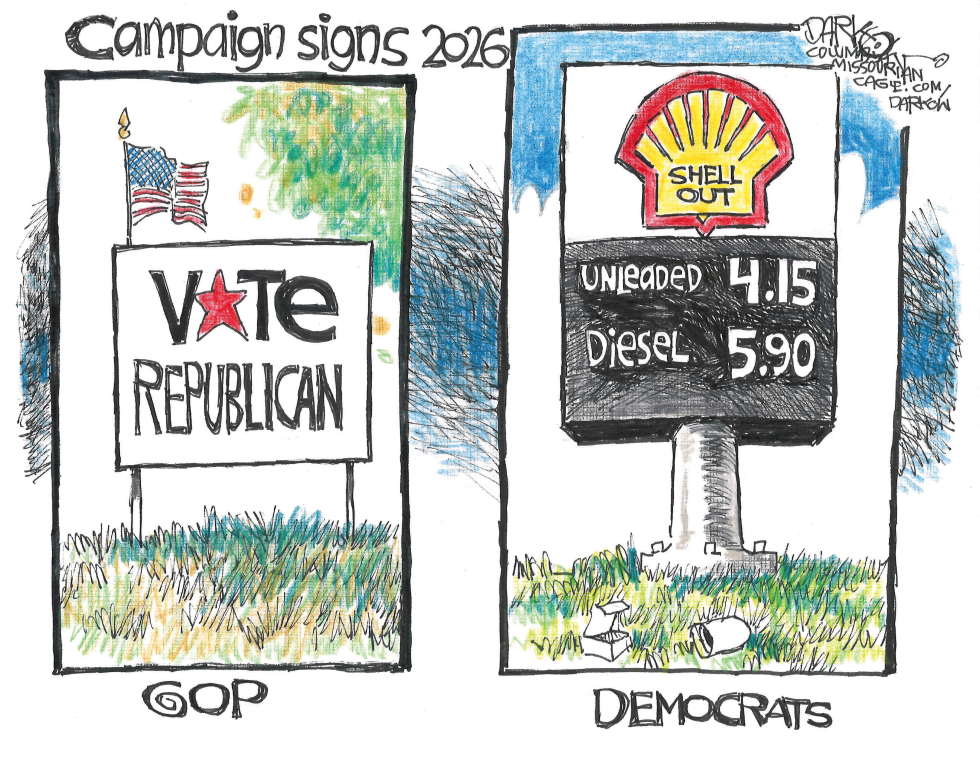
As the 2026 midterm campaigns intensify, Democrats confront voter frustration over elevated gasoline and diesel prices at the pump. The Shell station sign reading Shell Out with unleaded at $4.15 and diesel at $5.90 underscores how economic pressures can overshadow traditional political messaging. Republicans benefit from straightforward campaign signage while Democrats appear tied to the cost increases. The cartoon argues that fuel prices serve as a more potent electoral signal than yard signs for one party.
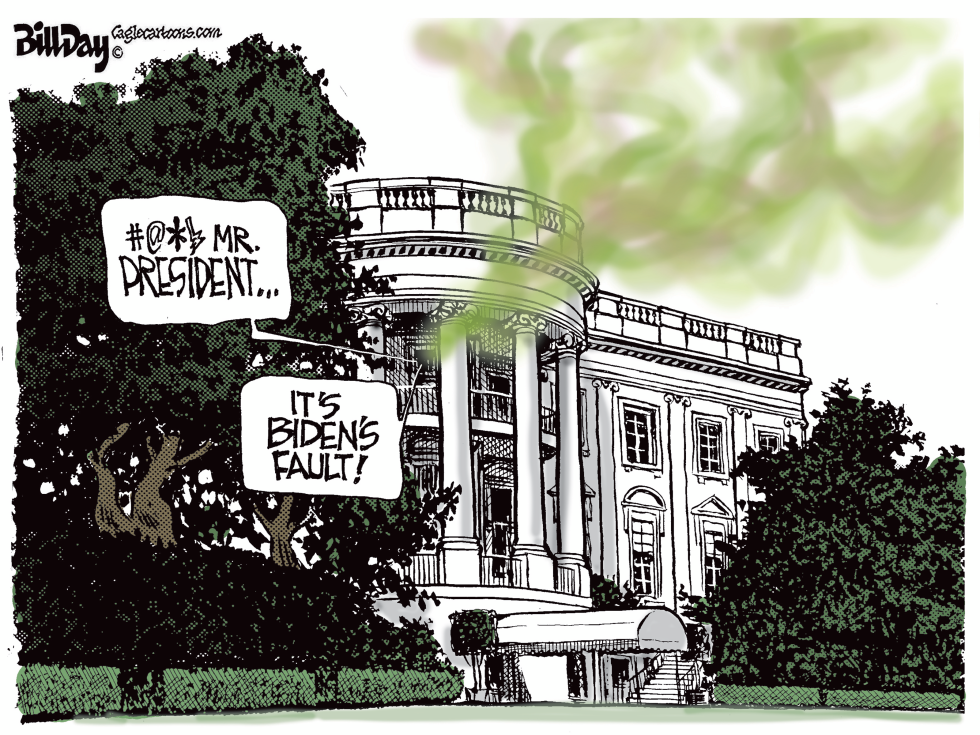
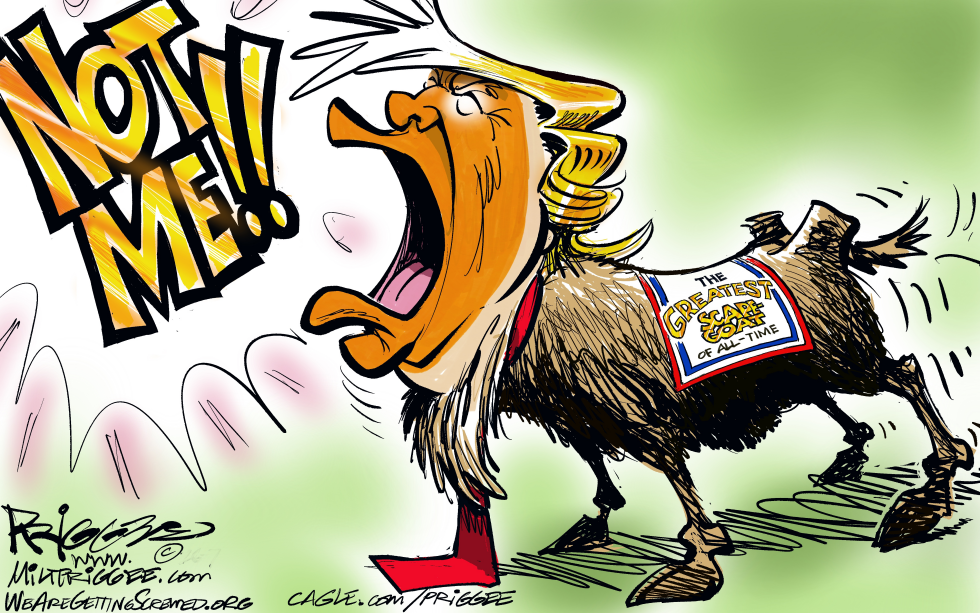
Political discourse continues to center on former President Biden even after his term, with critics attributing various problems to his leadership. The White House remains a focal point for such discussions. The piece takes the position that persistent efforts to assign fault to Biden reflect deeper partisan divisions rather than specific new developments.
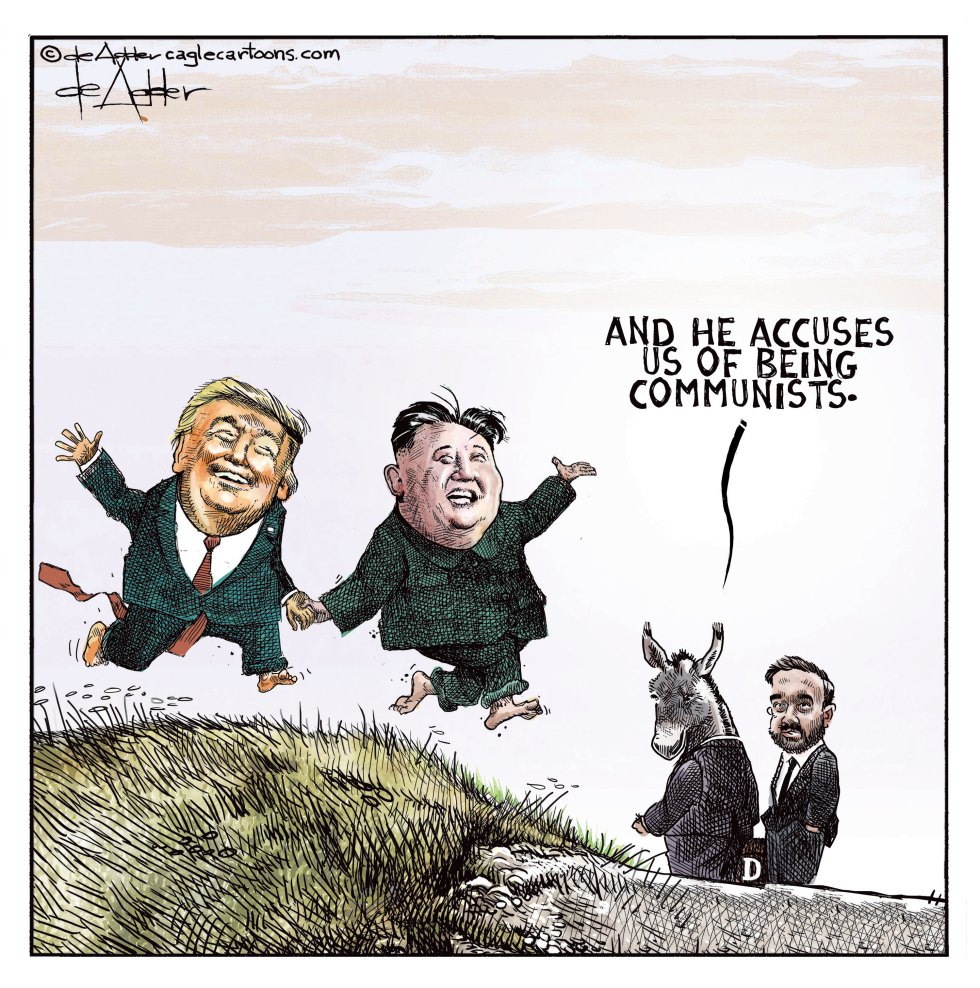
Donald Trump and Kim Jong Un appear together in a political scene accusing Democrats of communist leanings. The depiction highlights their joint action amid ongoing partisan rhetoric. The editorial position frames the accusation as inconsistent given the shared leap.
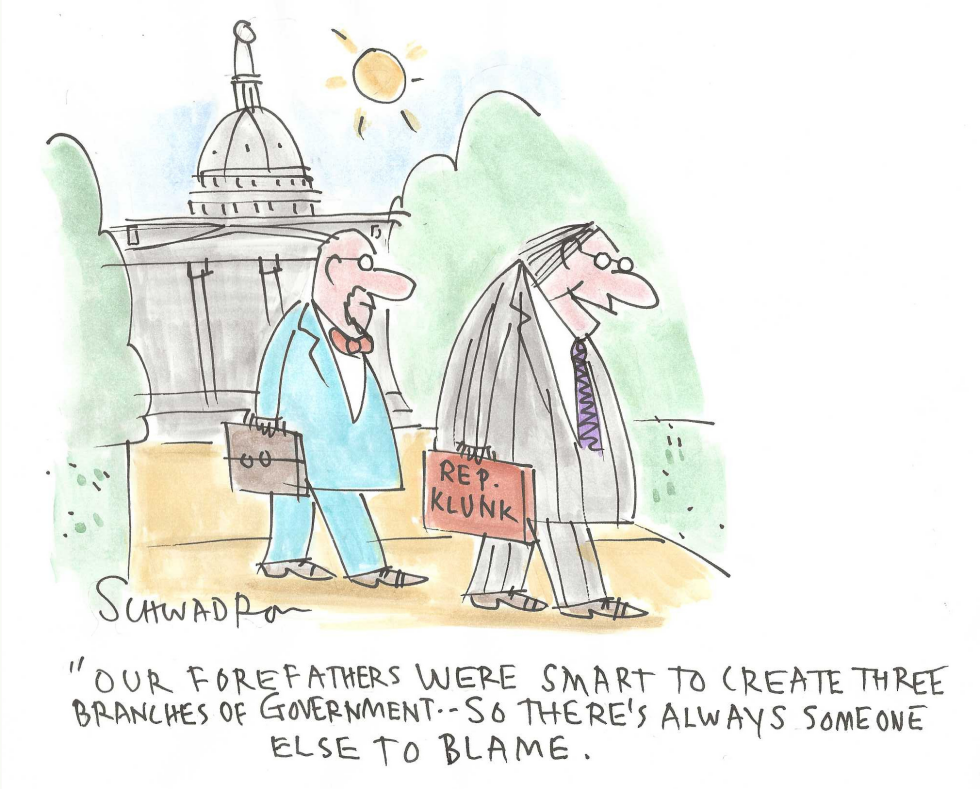
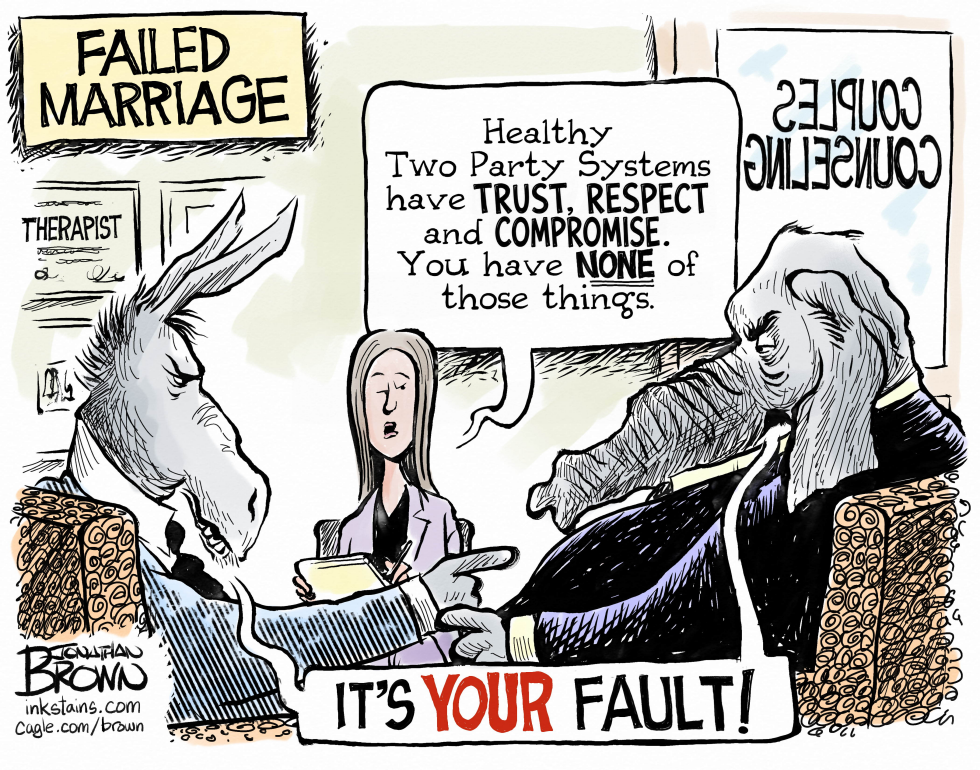
Members of Congress continue to deflect responsibility for legislative inaction by pointing to other branches of government. The dynamic persists amid ongoing budget disputes and stalled priorities on Capitol Hill. The editorial argues that the constitutional design intended to prevent tyranny now serves mainly as an excuse for avoiding accountability.
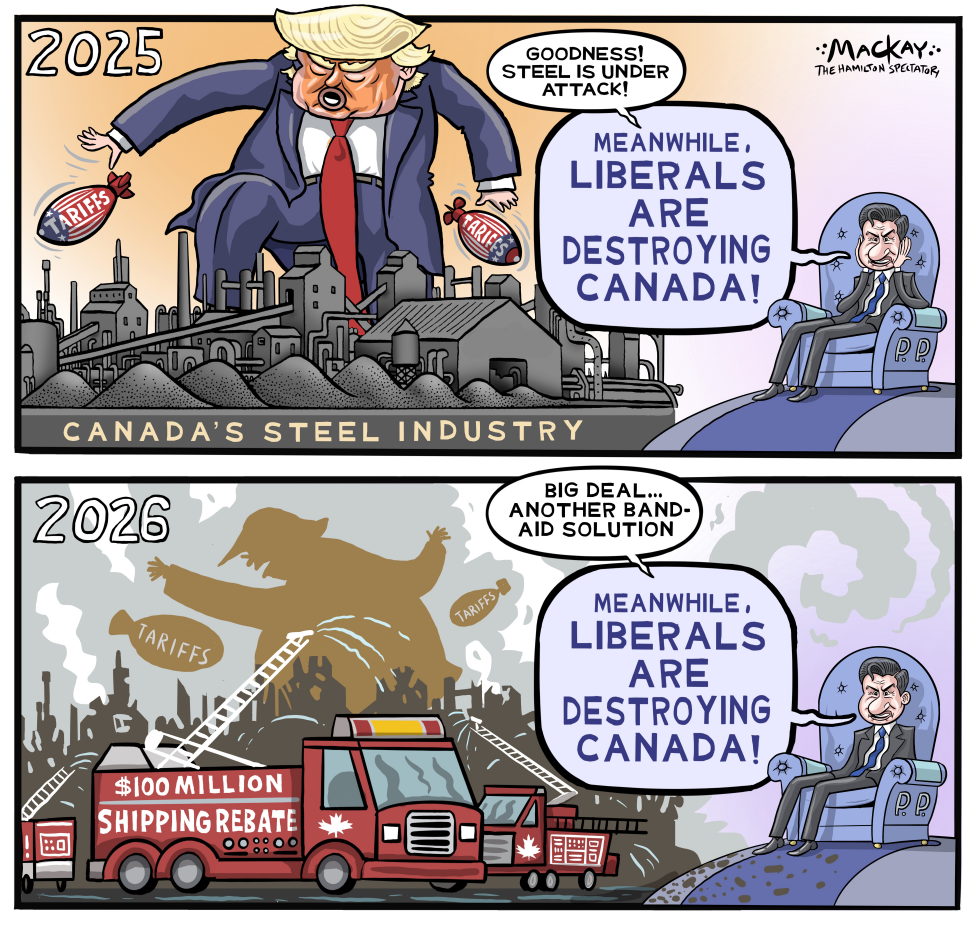
U.S. tariffs imposed on Canadian steel in 2025 triggered sharp declines in the domestic industry by 2026. The federal government responded with a $100 million shipping rebate. Conservative Leader Pierre Poilievre continued to focus attacks on the Liberal government rather than the trade shock. The cartoon argues this stance amounts to a repeated distraction from the core economic damage.
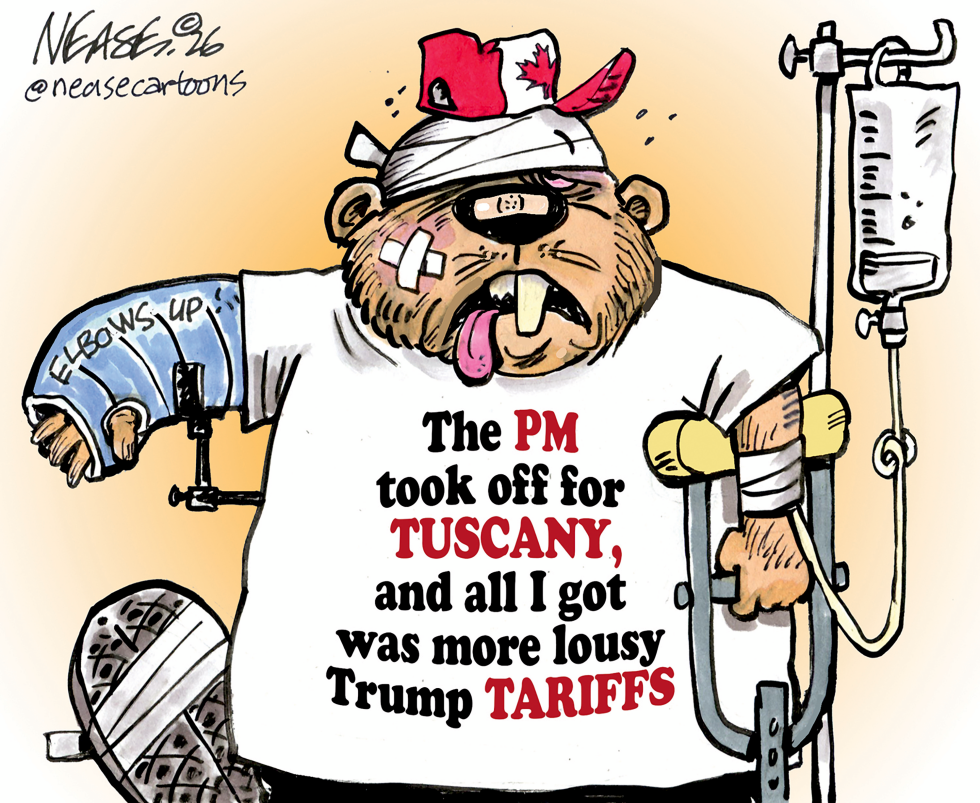
US tariffs on Canadian goods continue to strain bilateral trade relations in 2026. The Prime Minister's extended vacation in Tuscany coincides with renewed economic pressure on Canadian industries. The situation highlights tensions in North American trade policy. The piece argues that leadership absence compounds the damage from external tariffs.
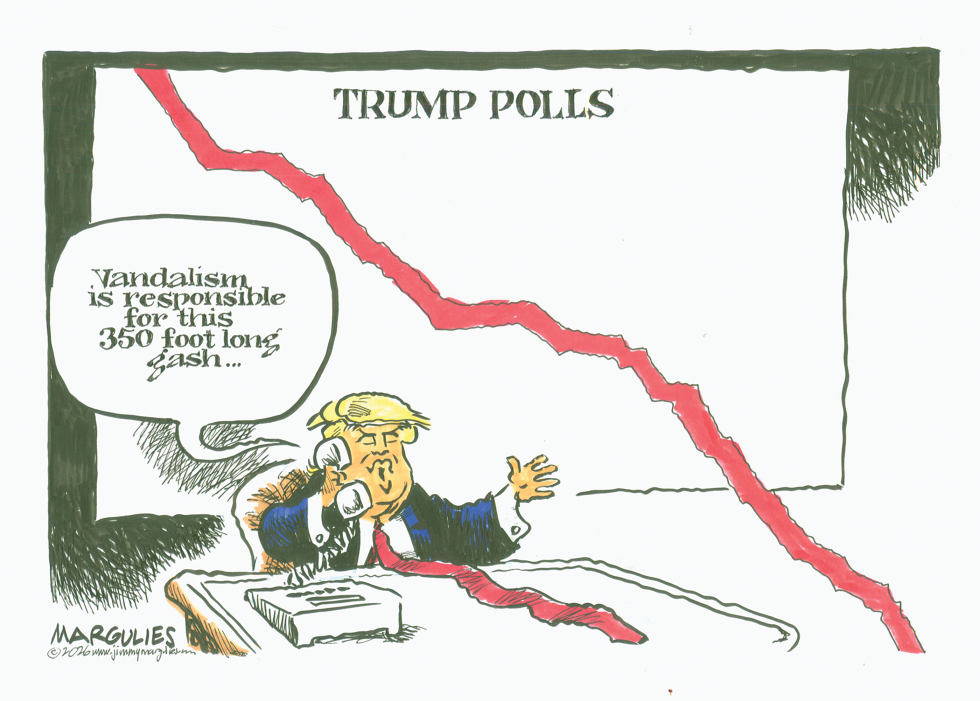
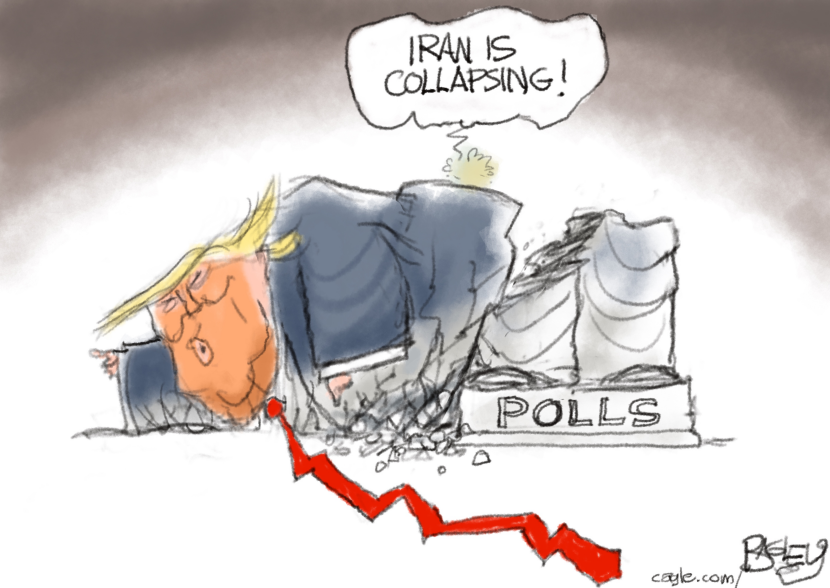
Donald Trump has attributed a steep decline in his polling numbers to alleged vandalism that created a long gash in his chart. The claim comes amid ongoing questions about his support levels ahead of future electoral tests. The piece presents the explanation as an attempt to deflect responsibility for unfavorable results rather than address underlying voter concerns.
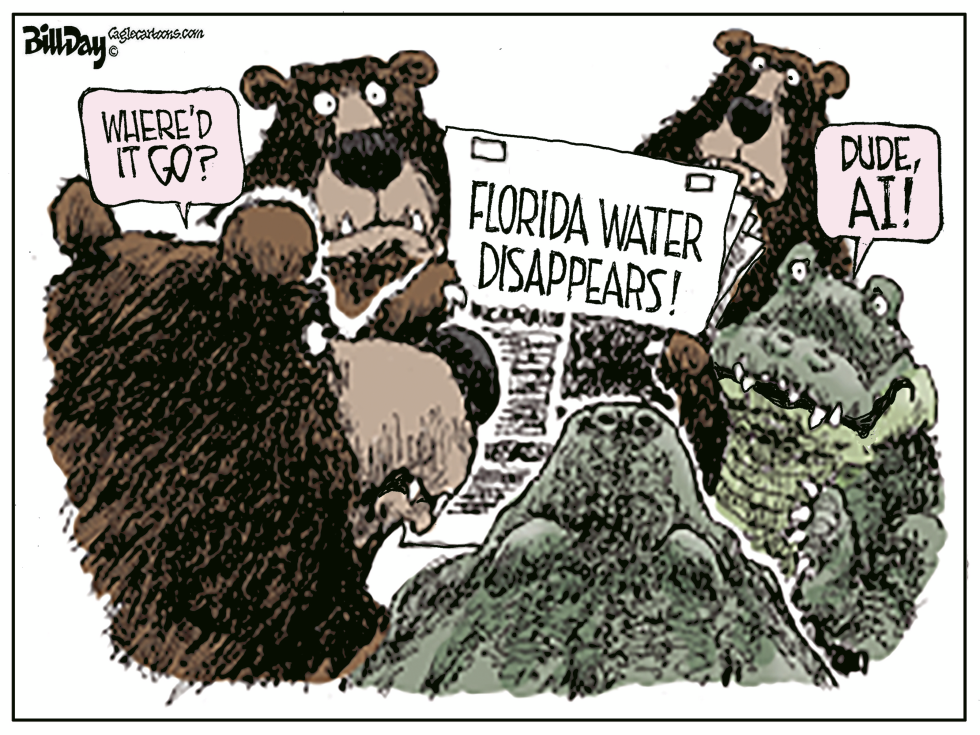
Florida faces ongoing water supply pressures amid population growth and technological expansion. Bears in the cartoon accuse artificial intelligence of causing the shortage. The piece highlights how data centers and computing demands draw scrutiny for resource consumption. The editorial position frames the blame on AI as a simplistic deflection from broader environmental and policy challenges in the state.
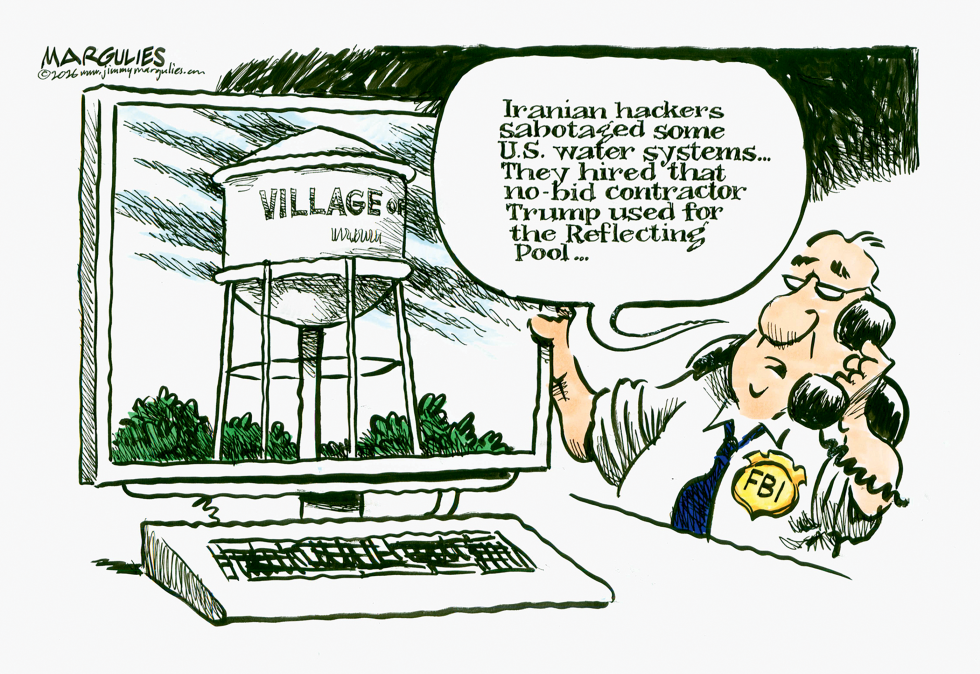
The FBI has attributed recent sabotage of U.S. water systems to Iranian hackers while highlighting their use of a no-bid contractor previously employed by Trump on the Reflecting Pool. The claim surfaces amid ongoing concerns over critical infrastructure vulnerabilities and contractor oversight. This development raises questions about procurement practices and accountability in federal responses to foreign cyber threats. The editorial position criticizes the reliance on such contractors and questions the logic of the blame assignment.
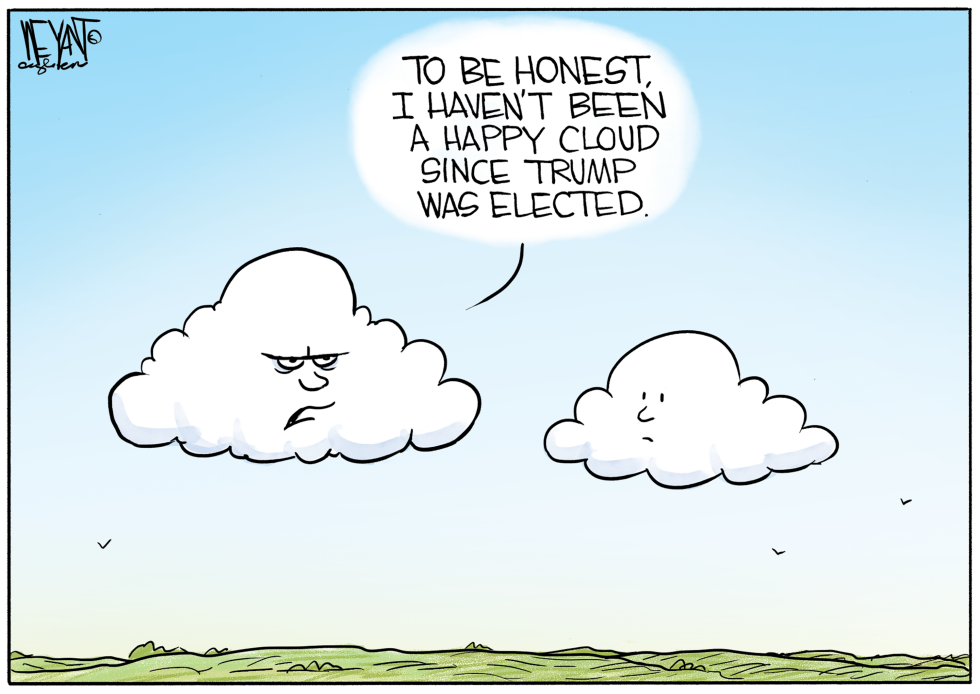
Donald Trump won the presidential election months before this July 2026 publication. The victory produced divided public reactions, with some citizens voicing ongoing dissatisfaction tied directly to the outcome. The piece uses a talking cloud to convey that sentiment. It positions the election result as the root cause of sustained personal or collective gloom. The editorial stance frames that unhappiness as a direct and lasting consequence of the vote.
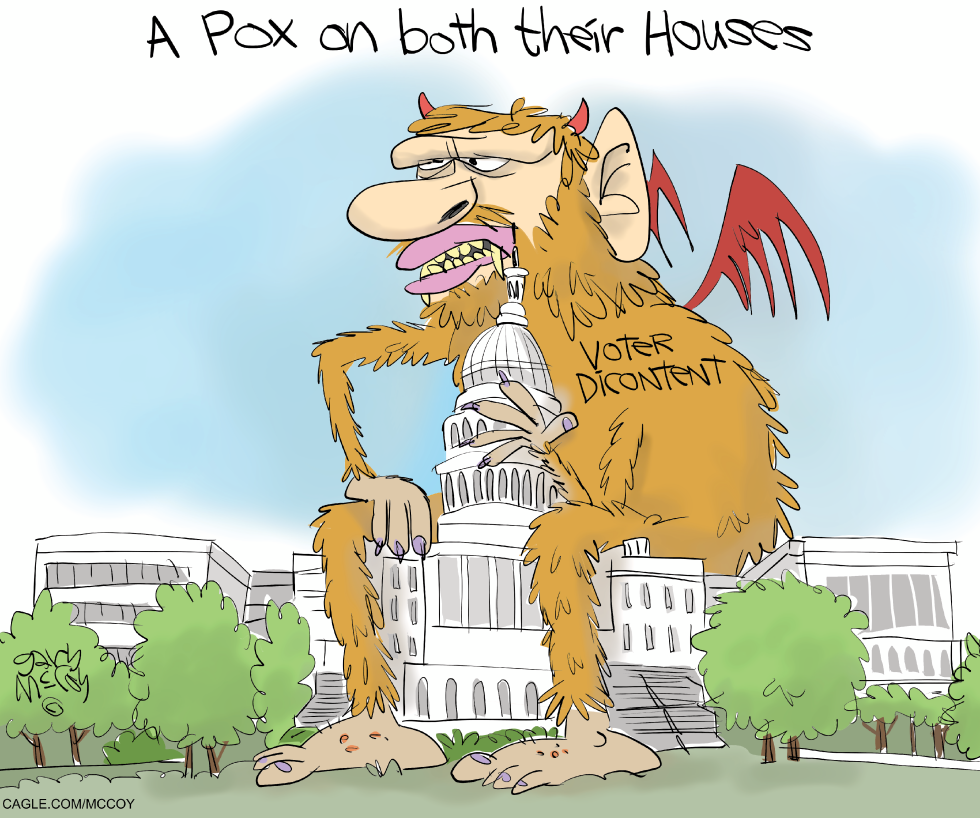
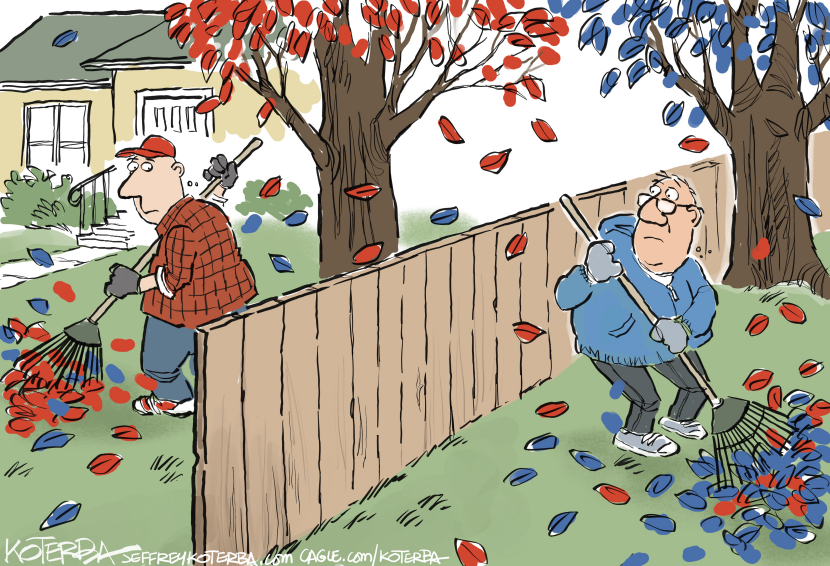
Voter frustration with Congress has grown amid stalled legislation and partisan gridlock on Capitol Hill. The piece portrays this sentiment as a towering monstrous force looming over the legislative branch. It argues that public anger targets both parties equally for failing to address key issues.