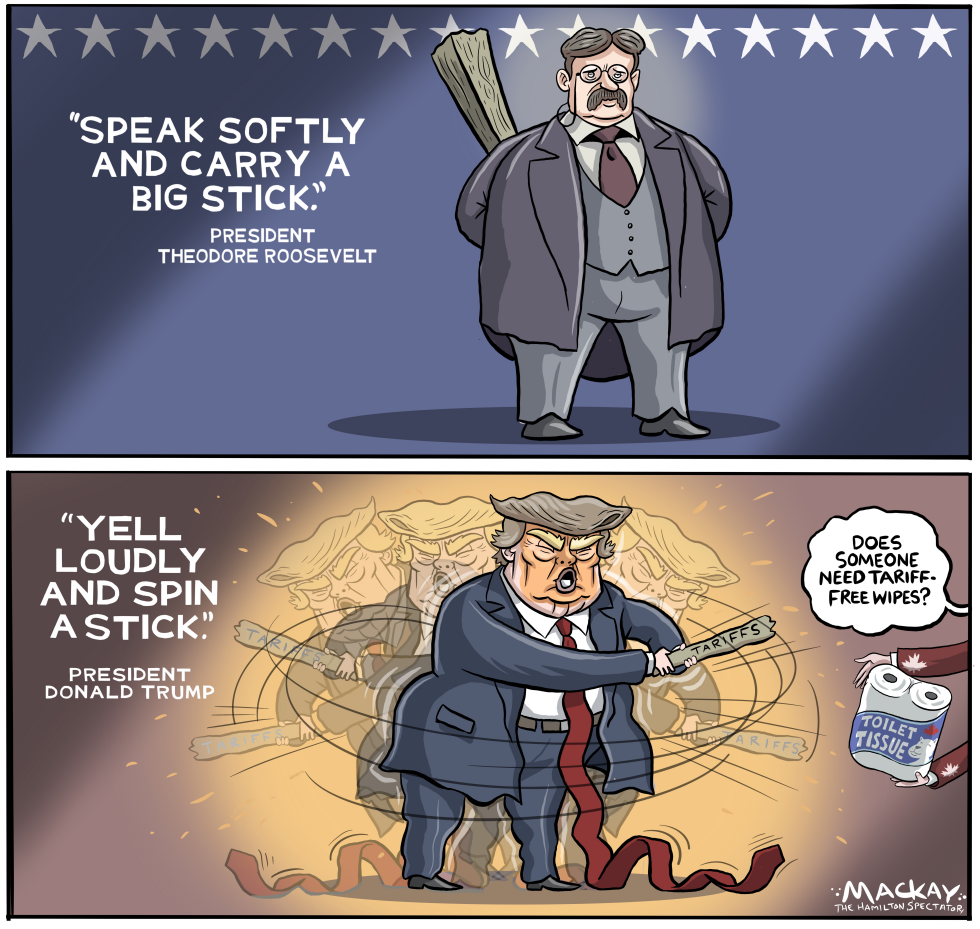
The cartoon by Graeme MacKay contrasts Theodore Roosevelt's famous speak softly and carry a big stick approach with Donald Trump's version of yelling loudly and spinning a stick covered in tariffs. In the lower panel Trump appears dizzy from the motion as a Canadian hand offers toilet tissue labeled tariff-free wipes. The image comments on recent US tariff actions and their impact on Canadian trade relations as of the September 2026 publication date.
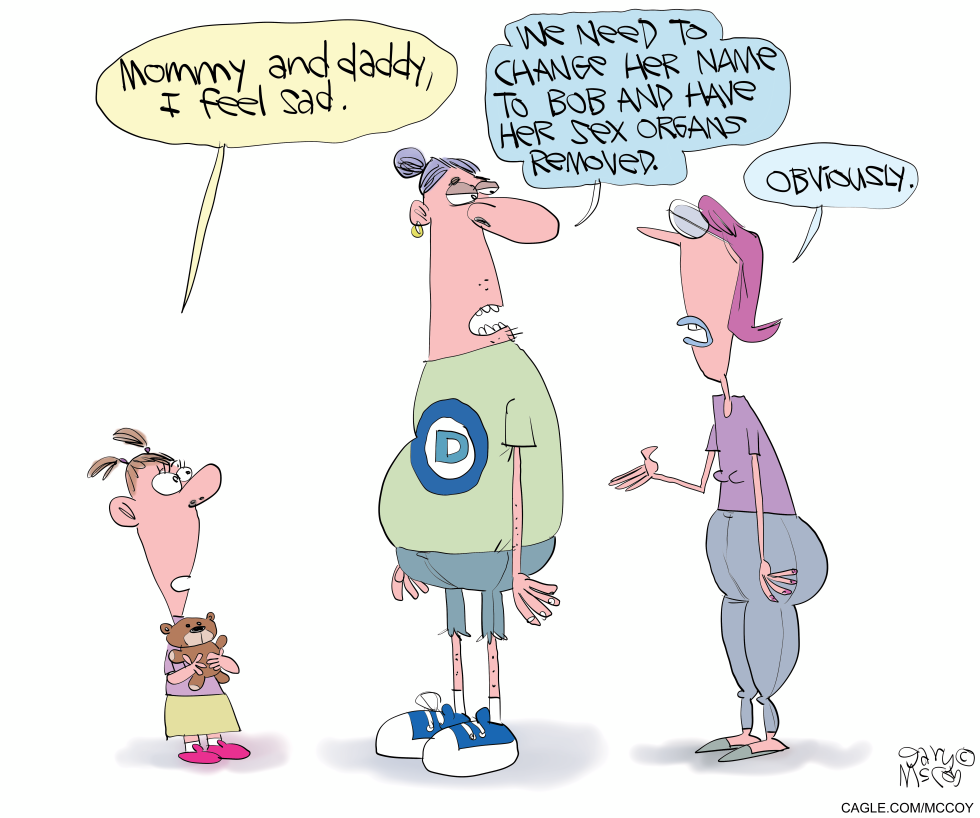
A child tells parents she feels sad. The adults immediately discuss changing the child's name to Bob and removing her sex organs. The exchange highlights a rapid pivot from emotional distress to medical intervention in family settings. The piece takes the position that such responses overlook the stated feeling and rush toward irreversible steps.
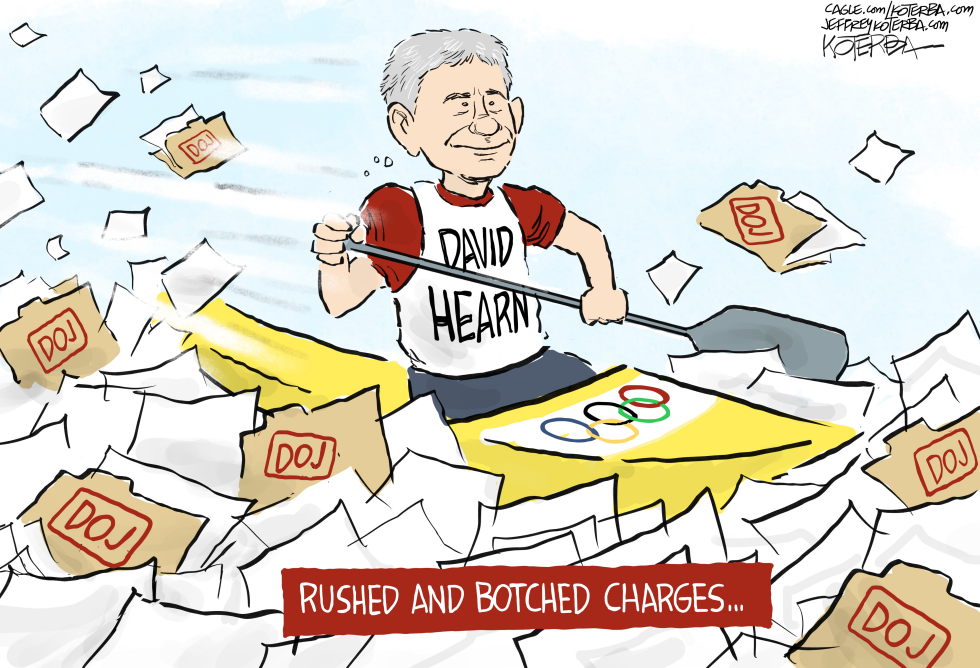
Federal prosecutors face scrutiny over handling of charges against Olympic kayaker David Hearn. The case highlights concerns about timing and preparation of evidence in high-profile sports matters. The editorial takes the position that the effort appears hasty and poorly executed.
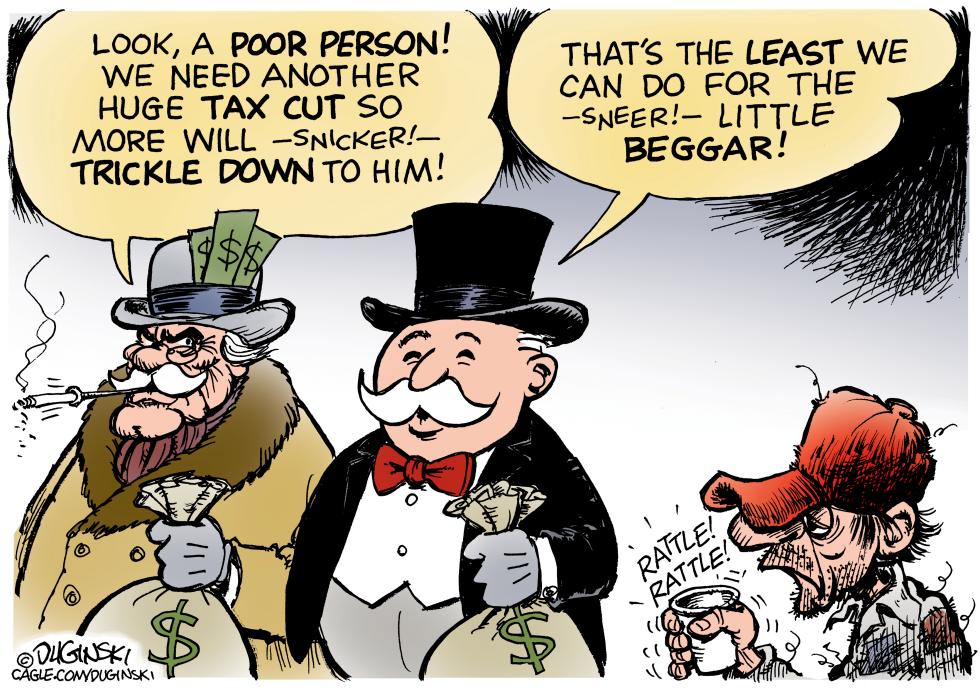
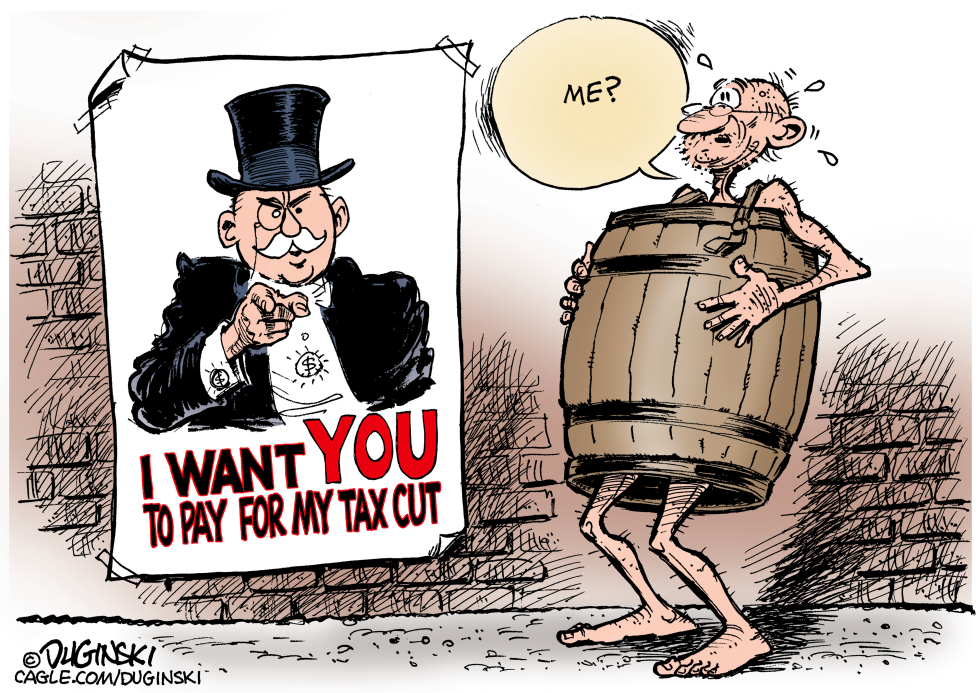
Wealthy interests continue to advocate additional tax reductions framed as broad-based relief. Critics note that such measures primarily benefit high earners while leaving lower-income households with minimal gains. The piece highlights the disconnect between policy promises and visible outcomes for those at the bottom.
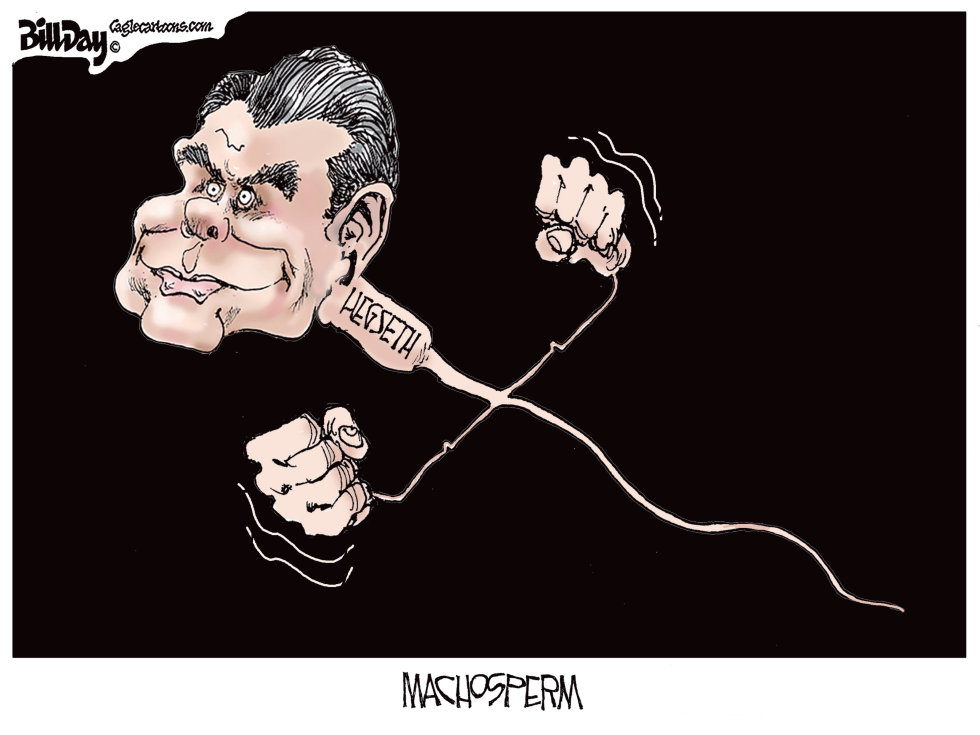
Pete Hegseth has drawn renewed attention in political circles for his public emphasis on toughness and military bearing. The ongoing discussion centers on how such personal branding intersects with his role in defense matters. The piece takes a critical stance toward that branding by reducing it to a simplistic visual metaphor.
A poster of Uncle Sam points directly at a thin man trapped in a barrel, with bold text demanding that the man pay for the tax cut. The barefoot figure reacts with surprise in a speech bubble. The scene unfolds against brick walls, highlighting tension between authority and the economically disadvantaged.
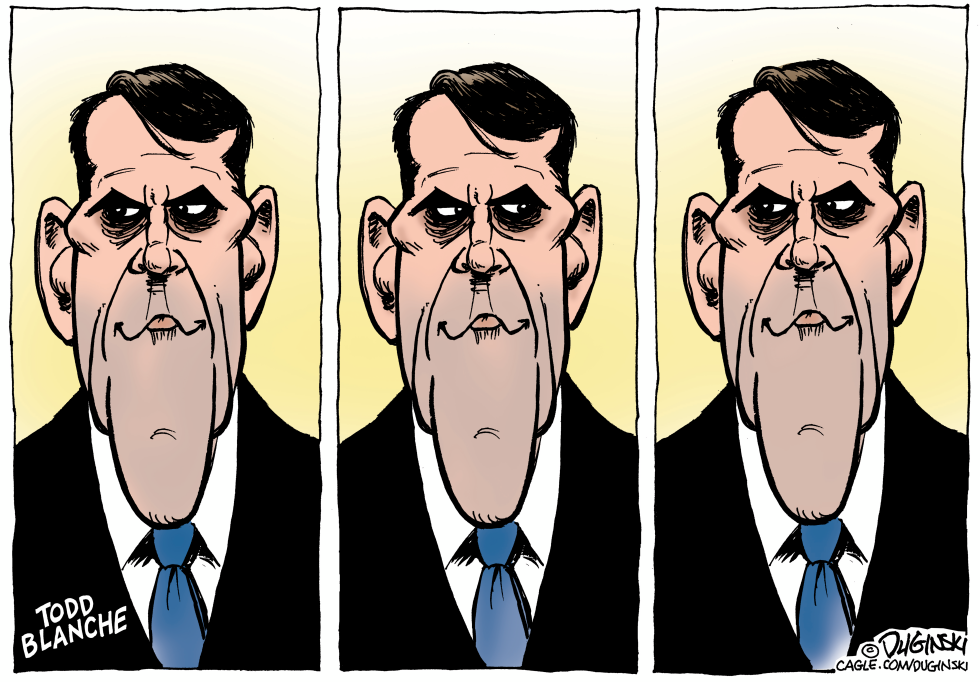
Todd Blanche is shown in three adjacent panels. Each panel presents a close view of the same man wearing a dark suit, white shirt and blue tie. The expressions feature narrowed eyes, furrowed brows and a downturned mouth. Slight variations appear in head angle and eye direction between the panels. The left panel includes the name Todd Blanche in capital letters at the bottom. The right panel includes a copyright notice at the bottom. All three images share a light yellow gradient background and black borders.
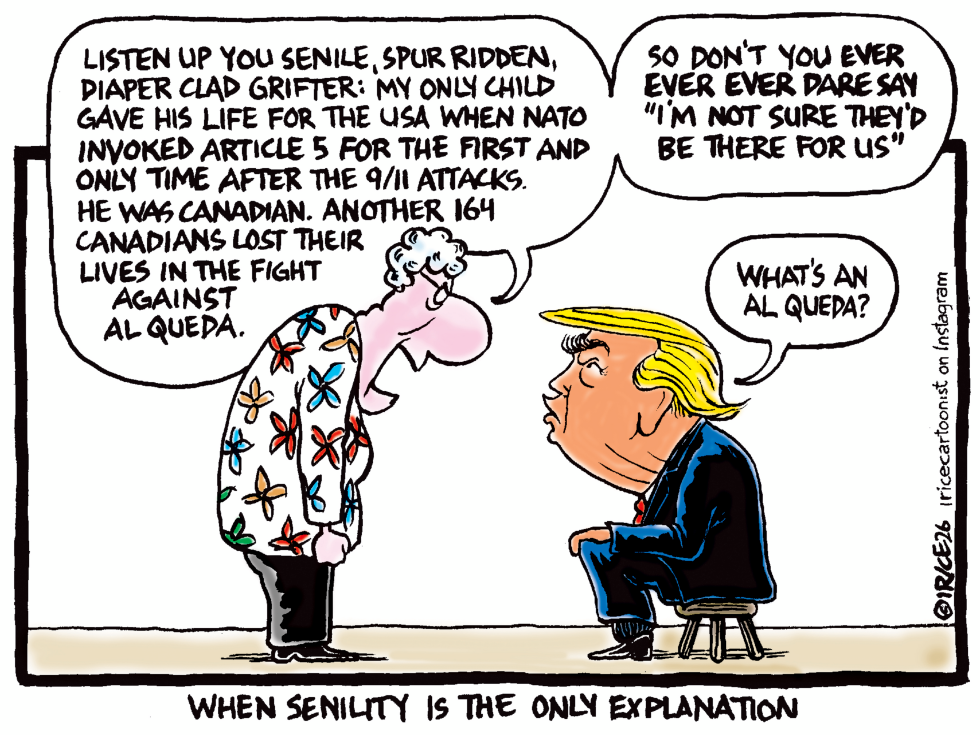
A political cartoon dated July 12, 2026, shows Donald Trump seated on a stool responding to a lecture about Al Qaeda and NATO's Article 5 invocation after 9/11. The standing figure, wearing a floral shirt, recounts the death of a Canadian child and 164 other Canadians in the fight. Trump replies by asking what an Al Qaeda is. The bottom caption reads when senility is the only explanation. The image highlights a direct confrontation over historical facts tied to the 9/11 attacks and alliance commitments.
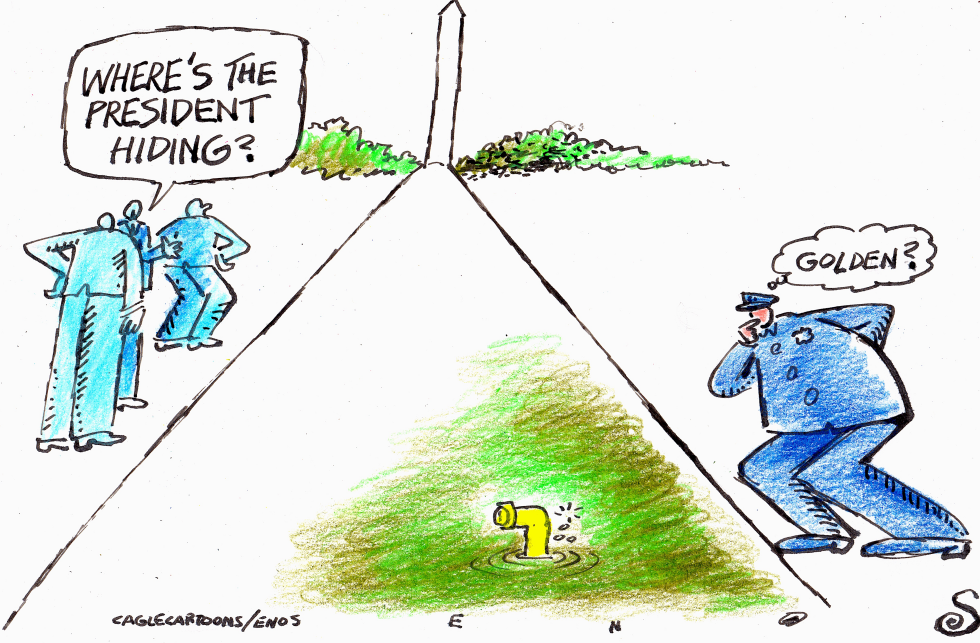
On July 11 2026 officers in blue uniforms search the grounds around a tall monument and a yellow fire hydrant. One officer asks where the president is hiding while another ponders golden in a thought bubble. The scene includes directional markers and grass patches under a clear sky.
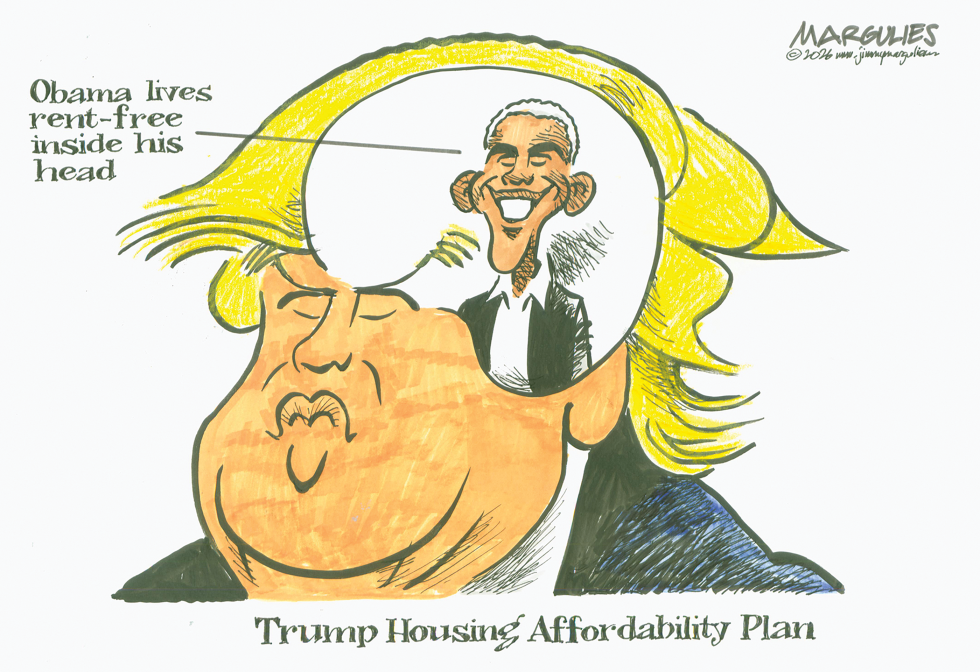
The July 2026 image depicts Donald Trump with a thought bubble containing Barack Obama, accompanied by the caption Obama lives rent-free inside his head. The bottom text labels the scene Trump Housing Affordability Plan. The visual ties the former president's presence to the current housing policy discussion.
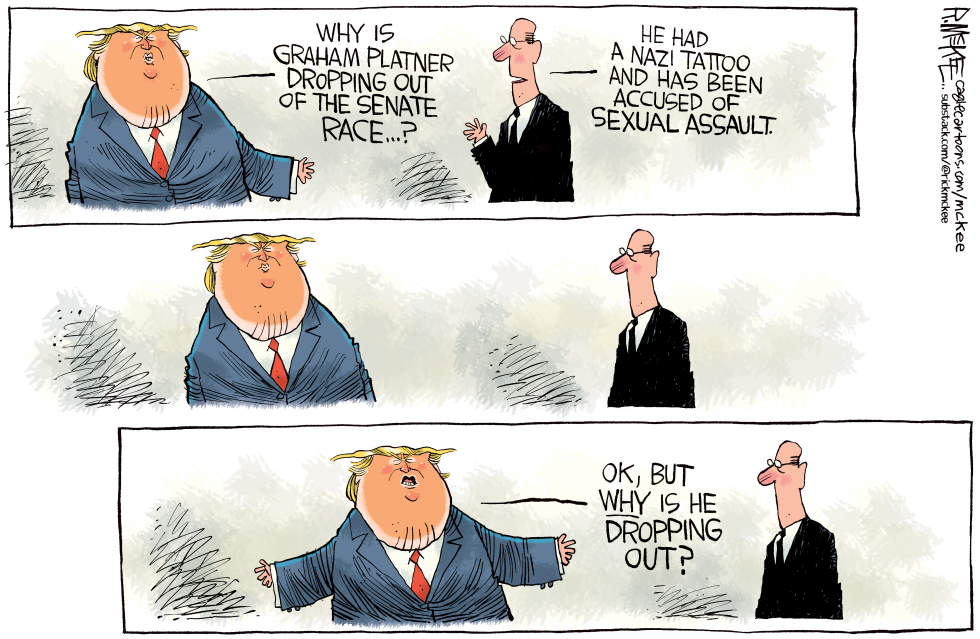
On July 10 2026 Rick McKee depicts Donald Trump questioning an aide about Graham Platner dropping out of a Senate race. The aide cites a Nazi tattoo and sexual assault accusation as reasons. Trump responds by asking again why the candidate is leaving the race. The exchange highlights the former president's focus on the withdrawal itself rather than the underlying controversies. Publication occurs during the 2026 election cycle when candidate viability and scandal impacts remain central topics in Senate contests.
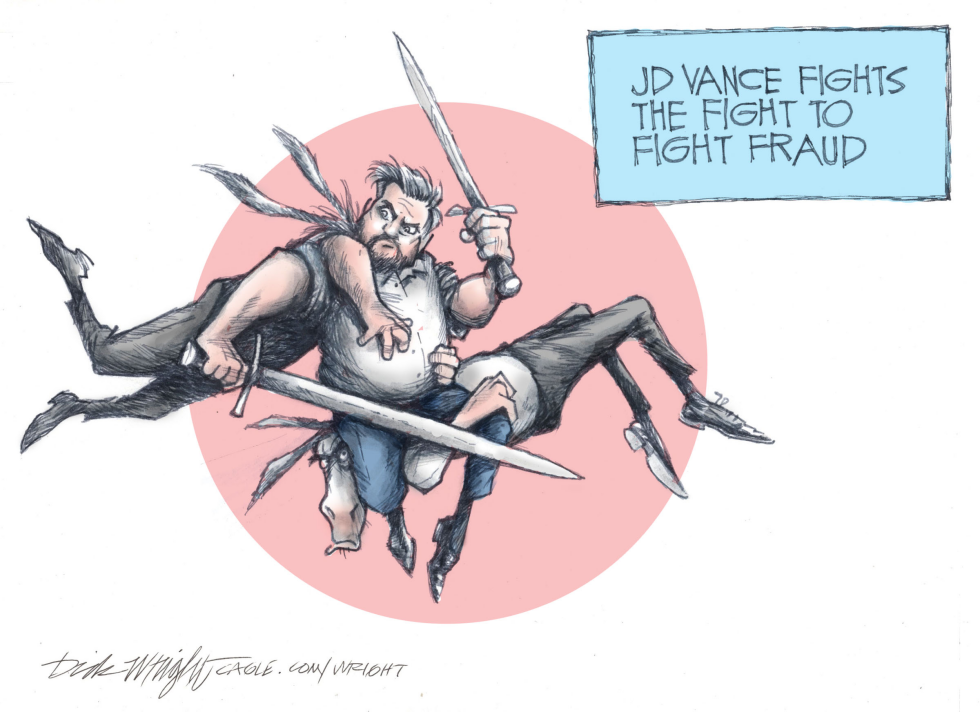
The July 10 2026 cartoon by Dick Wright shows JD Vance in mid-leap with two swords drawn against a prone figure topped by a donkey head. A blue text box reads JD VANCE FIGHTS THE FIGHT TO FIGHT FRAUD. The scene uses a red circle backdrop and captures the vice presidential figure in exaggerated combat stance amid torn clothing and motion lines.
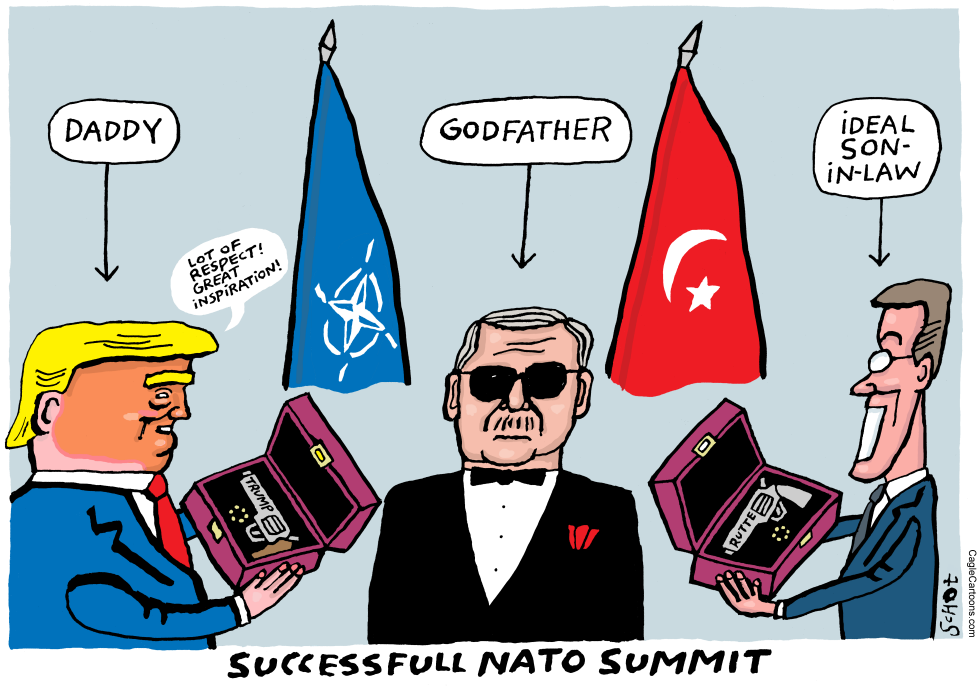
Donald Trump stands left holding an open box marked TRUMP. Center figure in tuxedo receives GODFATHER label with Turkish flag behind. Right figure holds ERDOGAN box under IDEAL SON-IN-LAW label. Speech from Trump notes respect and inspiration. Bottom reads SUCCESSFULL NATO SUMMIT.
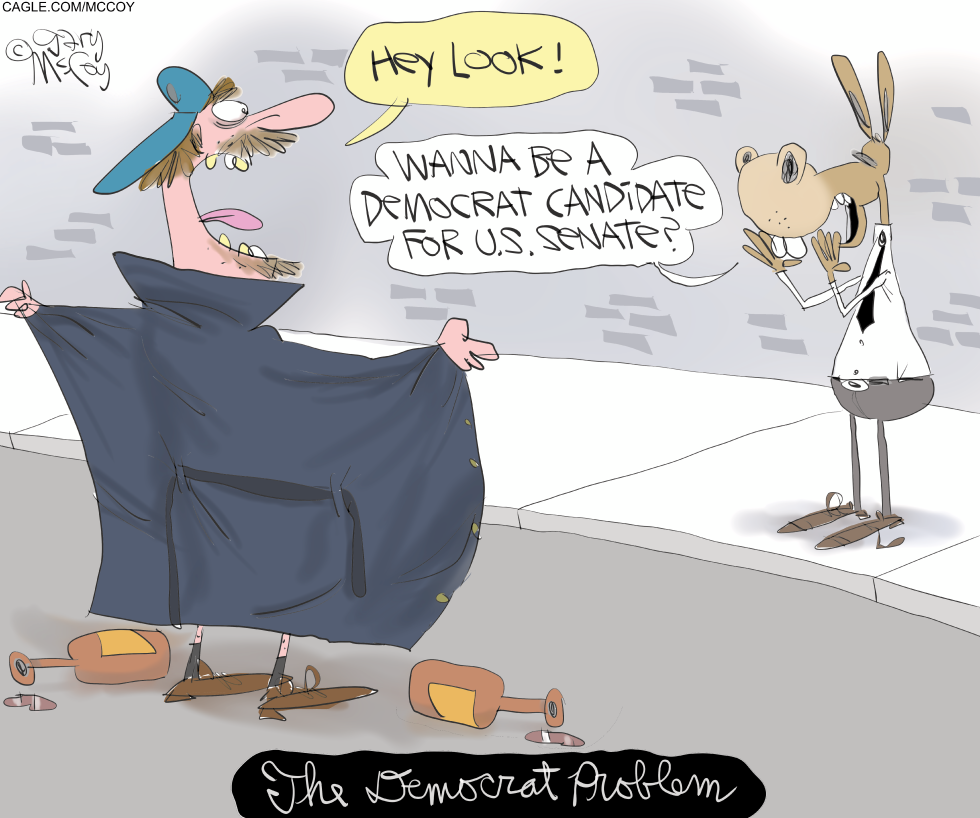
A trench-coated figure flashes on a sidewalk as a donkey in business attire extends a Senate candidacy offer. The July 2026 image from Gary McCoy labels the exchange as the Democrat problem. Scattered bottles and shoes lie at the flasher feet. The donkey speech bubble directly invites the figure to run for U.S. Senate. A separate bubble from the flasher draws attention to the moment.
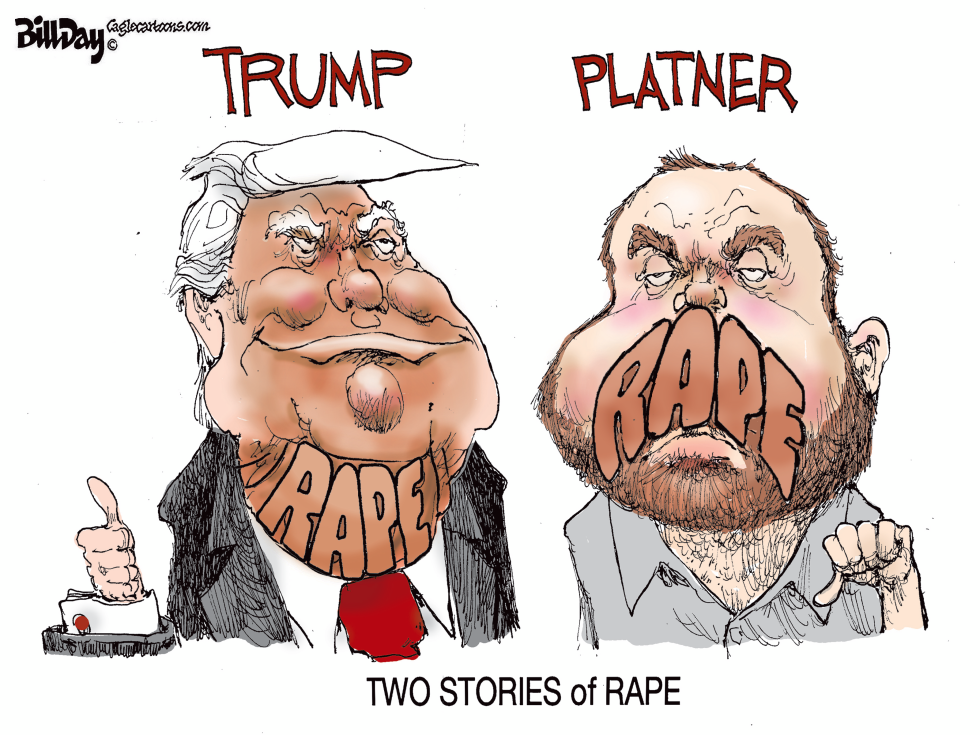
The image presents side by side depictions of Donald Trump and an individual named Platner. Each has the word rape overlaid on the lower face area. Trump extends a thumbs up gesture near papers while Platner extends a thumbs down gesture. Large red text at the bottom reads two stories of rape. The date of July 2026 places this in a period of ongoing public discussion around accusations involving prominent figures.