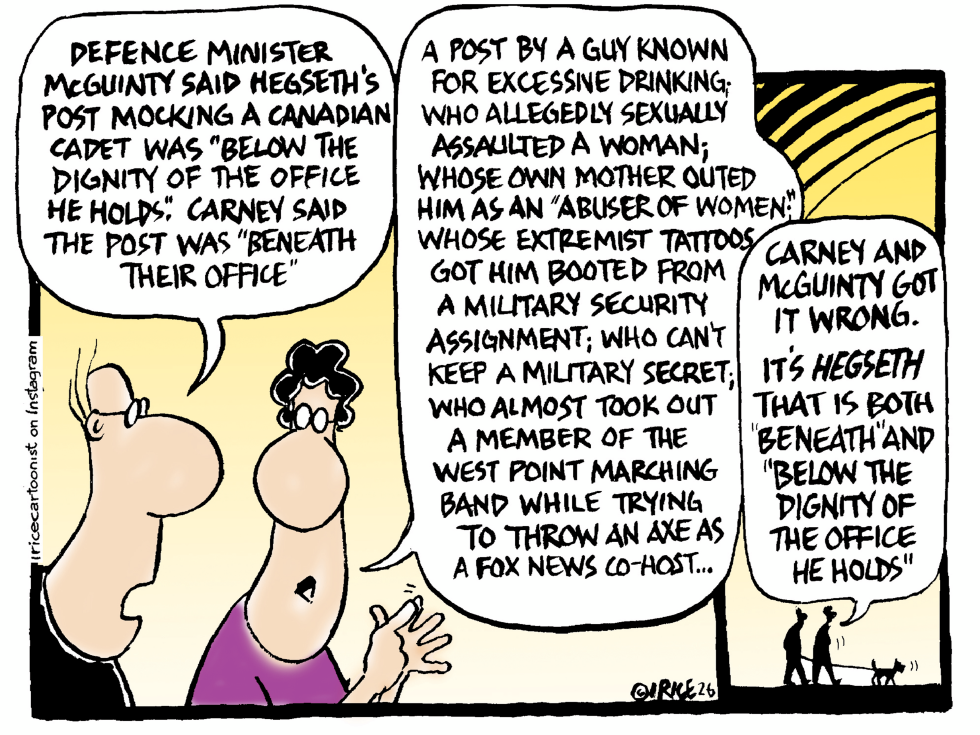
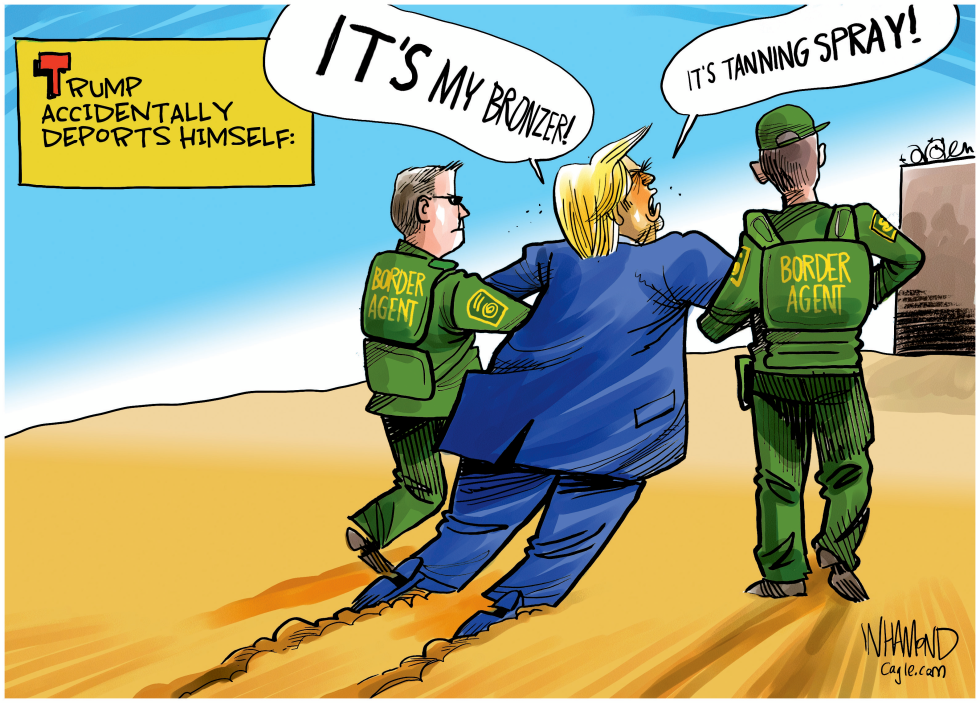
Canadian Defence Minister David McGuinty and Mark Carney publicly condemned a social media post by Pete Hegseth mocking a Canadian cadet, calling it beneath the dignity of the office. The remarks came amid Hegseth's nomination process for a senior U.S. defense position. The cartoon argues the ministers have the assessment backward, pointing instead to Hegseth's history of alleged misconduct, security clearance problems, and public incidents as the true disqualifiers. This reflects ongoing debate over nominee vetting standards and cross-border political commentary on U.S. appointments.
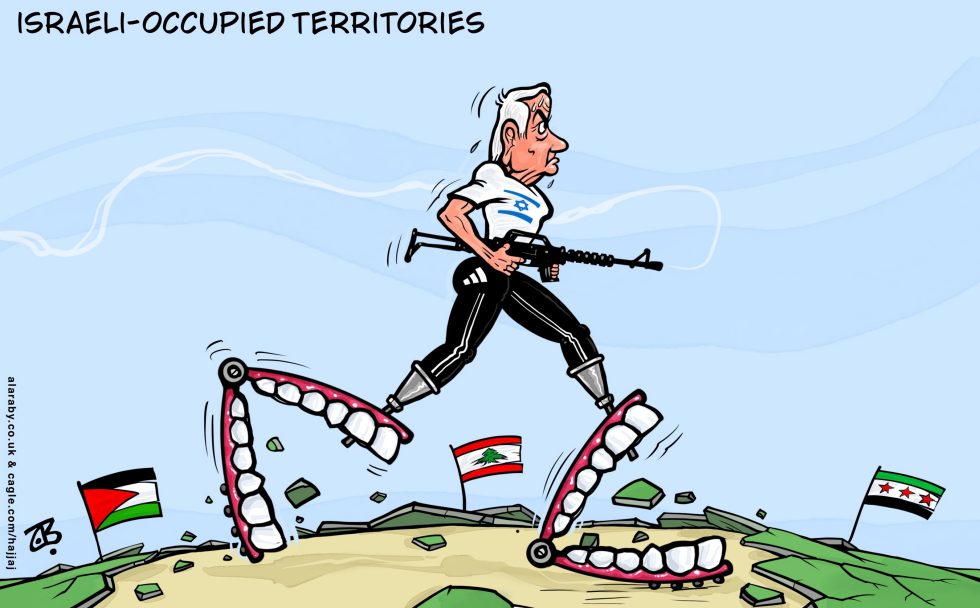
Israeli Prime Minister Benjamin Netanyahu has maintained policies of territorial control and military operations in areas bordering Israel including Gaza the West Bank southern Lebanon and parts of Syria. These actions have drawn international scrutiny over sovereignty violations and regional stability. The cartoon frames the policy as aggressive expansion that damages neighboring states.
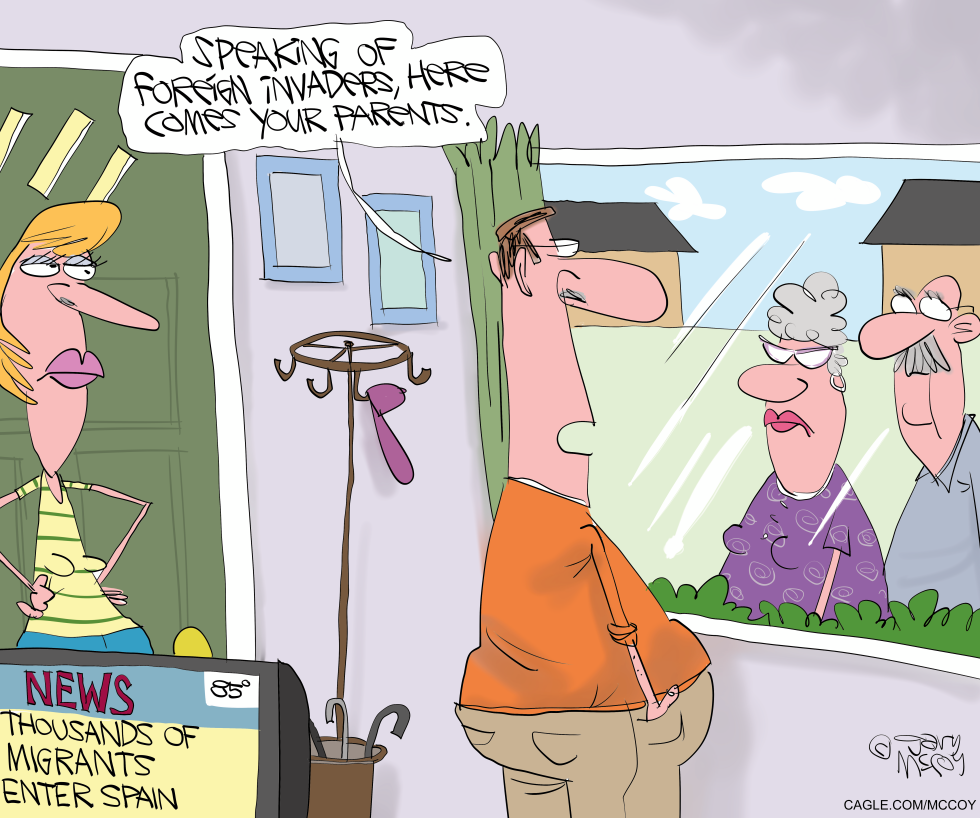
News reports show thousands of migrants entering Spain. The cartoon responds by having a man greet his in-laws with the same 'foreign invaders' label used in immigration debates. It highlights how inflammatory rhetoric can apply beyond policy to everyday family situations.
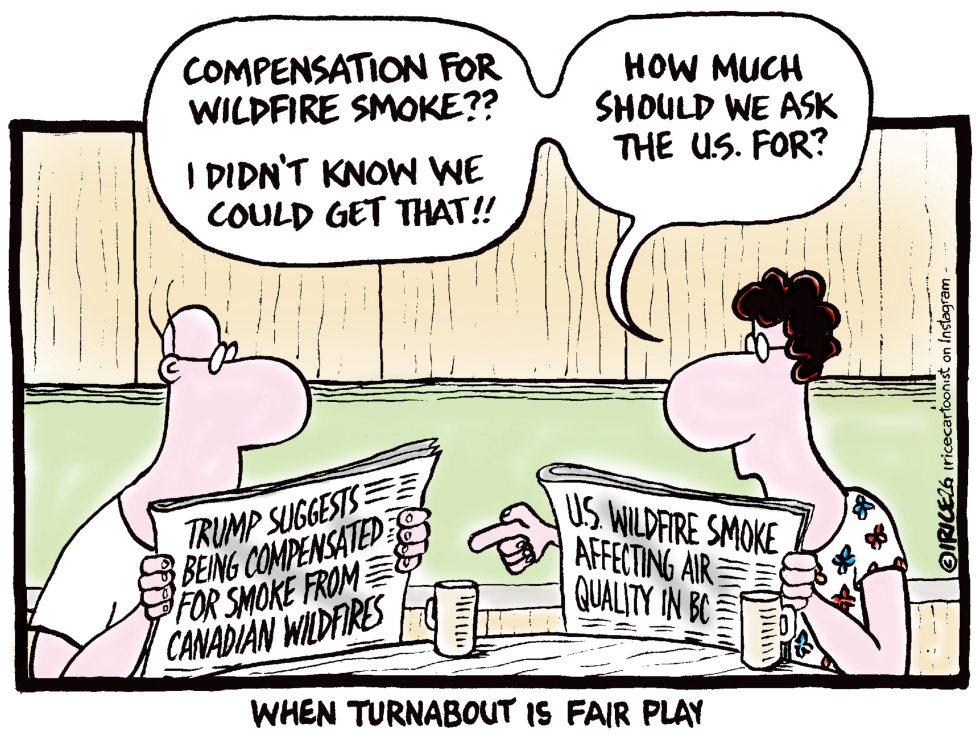
Donald Trump suggested the U.S. should receive compensation for smoke from Canadian wildfires. The cartoon responds by showing Canadians considering a reciprocal claim for smoke from U.S. wildfires affecting British Columbia air quality. It underscores the political dynamic of mutual environmental grievances between the two nations.
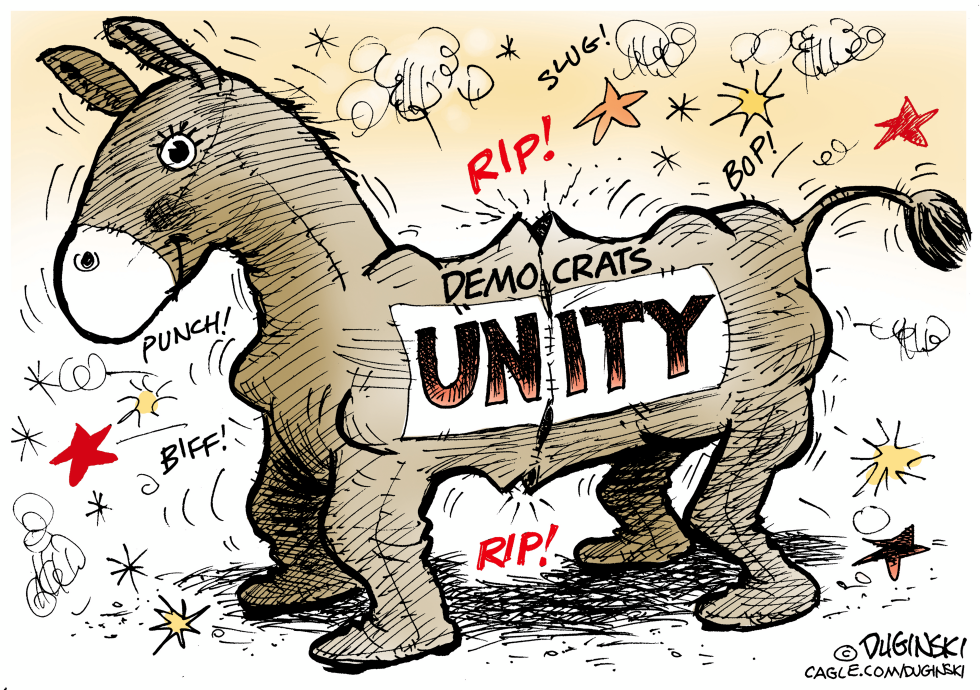
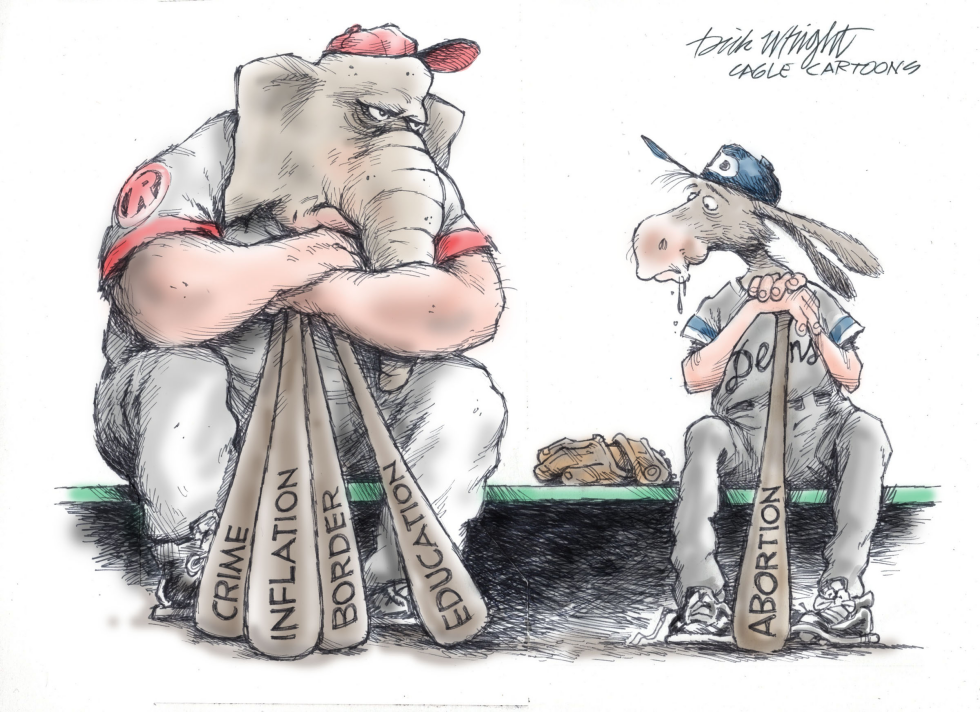
Democrats continue to display public divisions over strategy and messaging in the run-up to midterm and presidential contests. Party leaders struggle to project cohesion on issues ranging from economic policy to social priorities. The resulting perception of disarray weakens their ability to counter Republican narratives and mobilize voters. The cartoon highlights how these internal conflicts undermine the party's core message of unity.
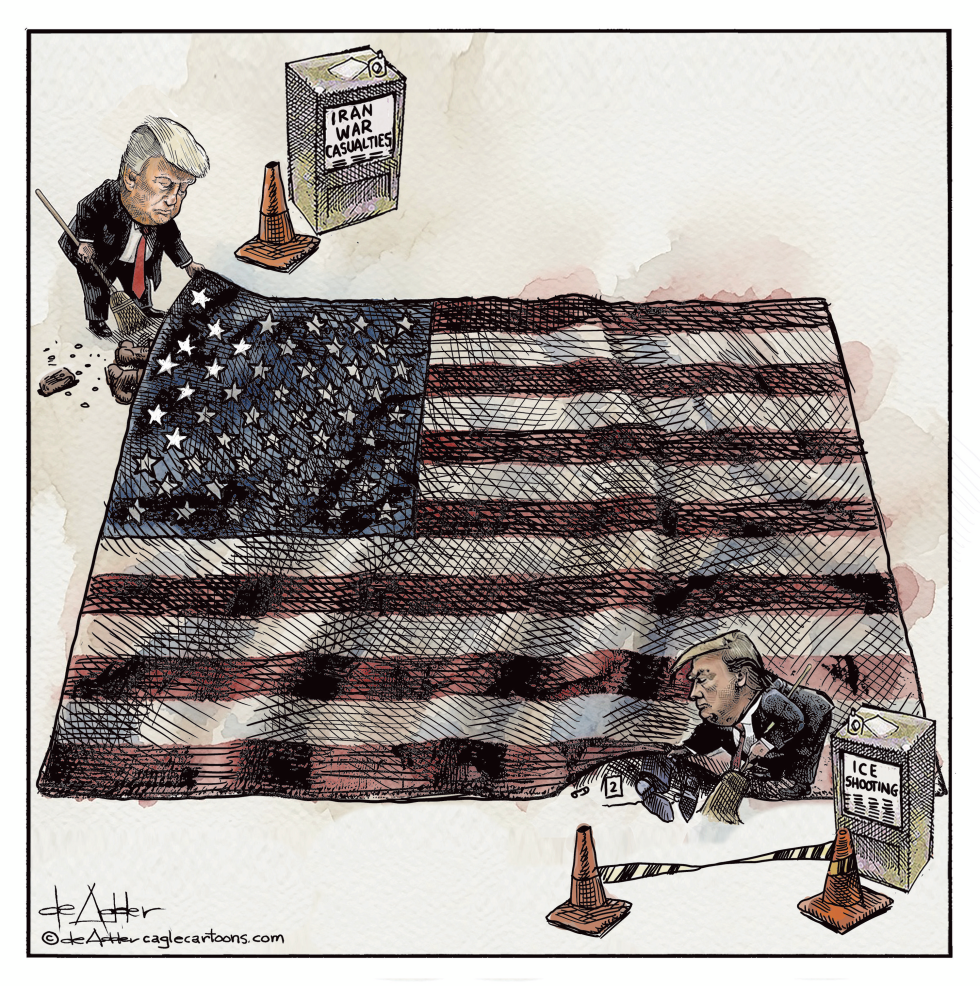
Donald Trump faces scrutiny over reported casualties from potential Iran conflict and an ICE-related shooting incident in mid-2026. The administration's handling of these events draws criticism for downplaying accountability. The piece argues that attempts to minimize these issues undermine public trust in governance.
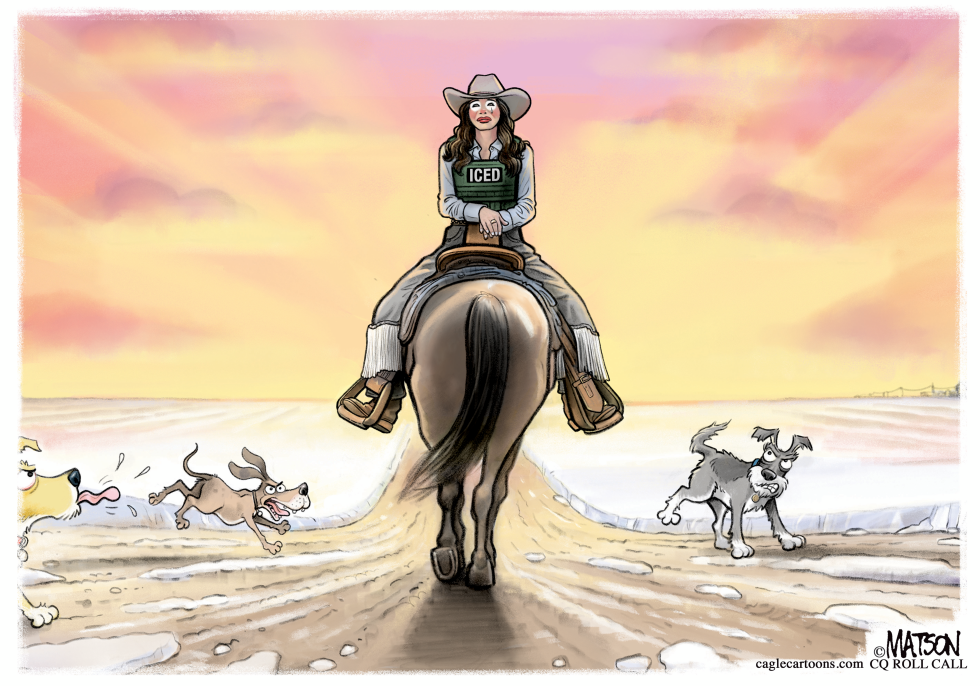
This sharp political cartoon captures an ICE agent, styled as a plucky cowgirl in a cowboy hat, galloping into a pastel sunset on her trusty horse, while a pack of frantic dogs—stand-ins for coyote smugglers—scatter in disarray. The 'ICED' vest adds a punny twist, perhaps nodding to the agency being put on ice amid heated immigration debates. With tags like political satire, border security, ICE criticism, cartoon dogs, western theme, and immigration policy, the image skewers the often chaotic world of enforcement, where even the bad guys (or dogs) get a comedic getaway. Matson's irreverent style shines through in this insightful jab at bureaucratic rodeos.
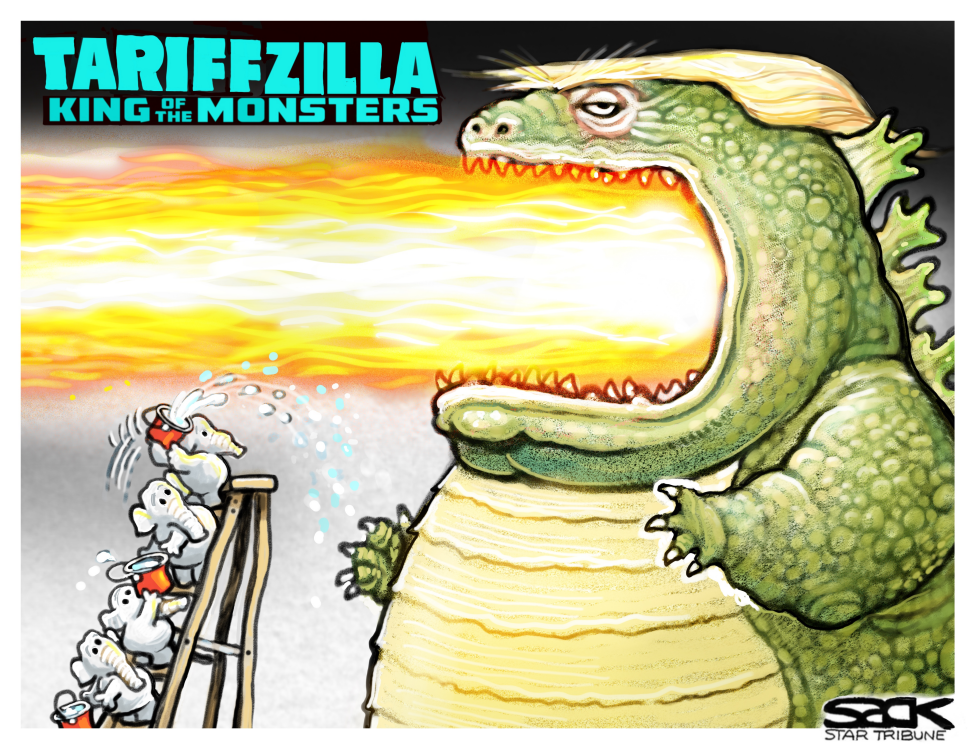
Steve Sack's 2019 cartoon portrays Trump as Tariffzilla, a Godzilla-inspired beast with the president's distinctive hair, unleashing destructive fire. Below, a chain of small white elephants, symbols of the Republican party, ascend a ladder to splash water from buckets onto the monster's foot, suggesting futile efforts against overwhelming tariff policies. The title 'Tariffzilla King of the Monsters' ties into trade war themes with Mexico over immigration and migrants. This sharp satire captures the chaos of Trump's tariff threats, blending monster movie tropes with political commentary on border issues. The image underscores how such policies loom large, dwarfing party attempts to mitigate damage.