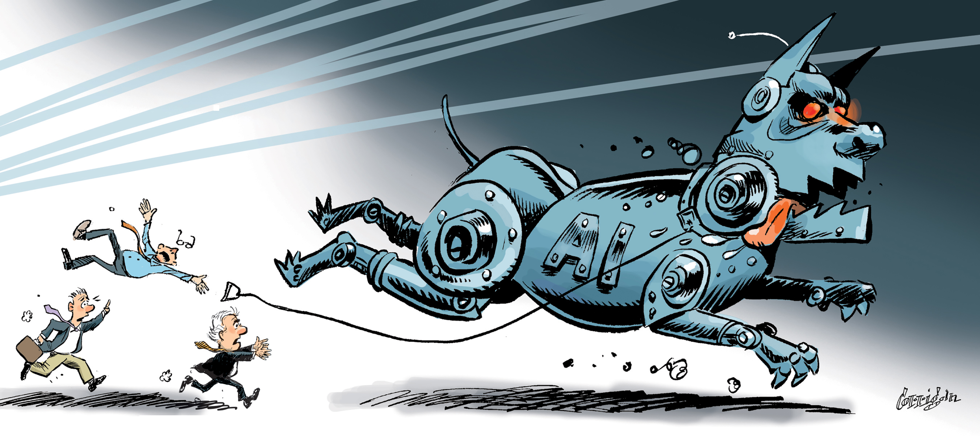
Rapid advances in artificial intelligence continue to reshape industries, prompting fresh warnings from executives about systems that may soon operate beyond direct human control. The cartoon captures this tension by depicting AI as an aggressive mechanical force pulling business figures along. It argues that unchecked development leaves leaders vulnerable rather than empowered.
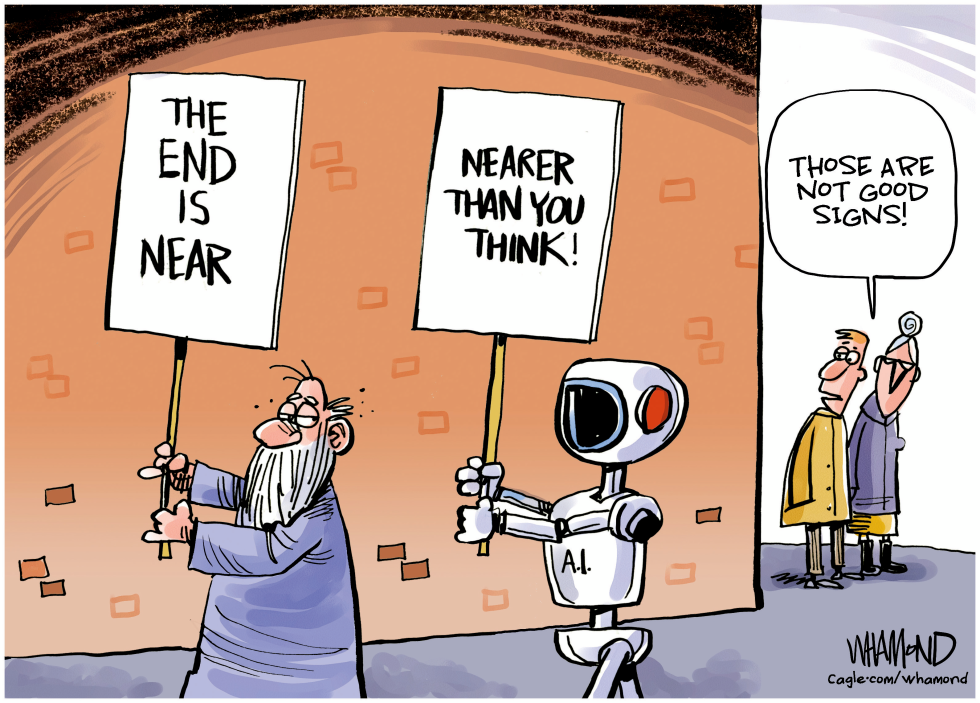
On April 29 2026 Dave Whamond depicts an elderly prophet and an A.I. robot both holding signs warning the end is near. The robot claims the end is nearer than the prophet thinks while two men react that the signs are not good. The image addresses ongoing public debate over artificial intelligence risks and workplace transformation.
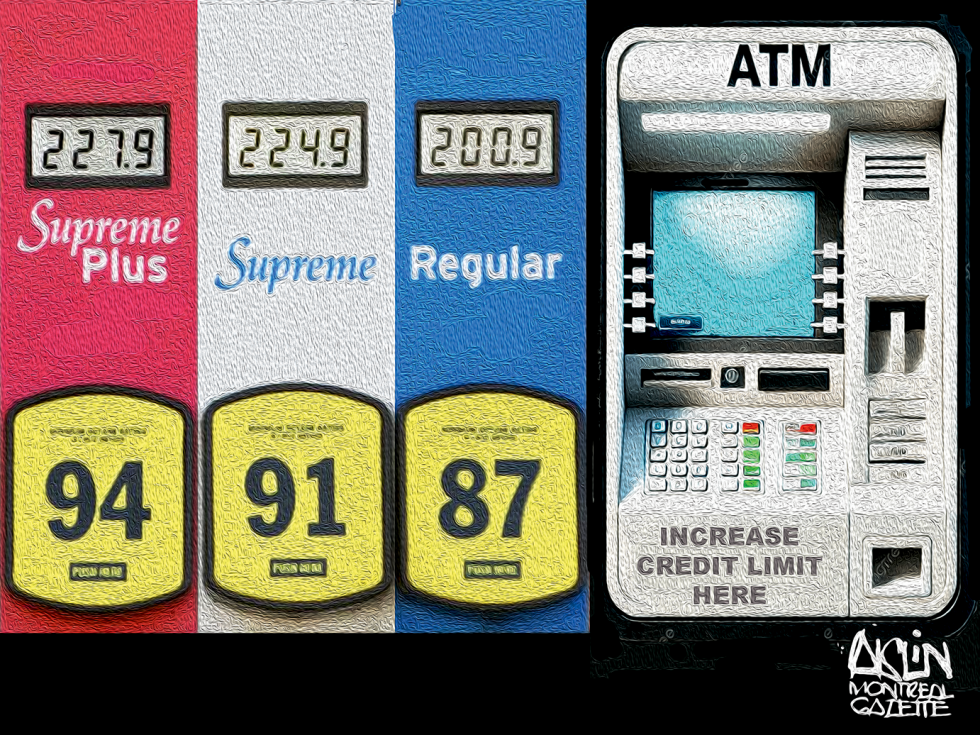
The cartoon shows a gas pump price board with supreme plus at 2.279 per gallon and 94 octane, supreme at 2.249 with 91 octane, and regular at 2.009 with 87 octane. Next to it sits an ATM labeled to increase credit limit here, poking at high gas prices and the economy's push toward more credit. Tags like gas, prices, cost, economy, credit, and pump underline the visual joke on affording fuel through debt. This setup captures the frustration with rising fuel costs without words, relying on the absurdity of blending a gas pump with credit services. Cartoonists often use such direct imagery to comment on everyday economic strains.
The image presents a drone in flight above a seated figure on a rock. A speech bubble from the drone reads to kill or not to kill. The label artificial intelligence appears at the bottom. The drone features four rotors and a central body. The figure sits with hand on chin in a thinking pose. Clear sky occupies the top portion of the frame.
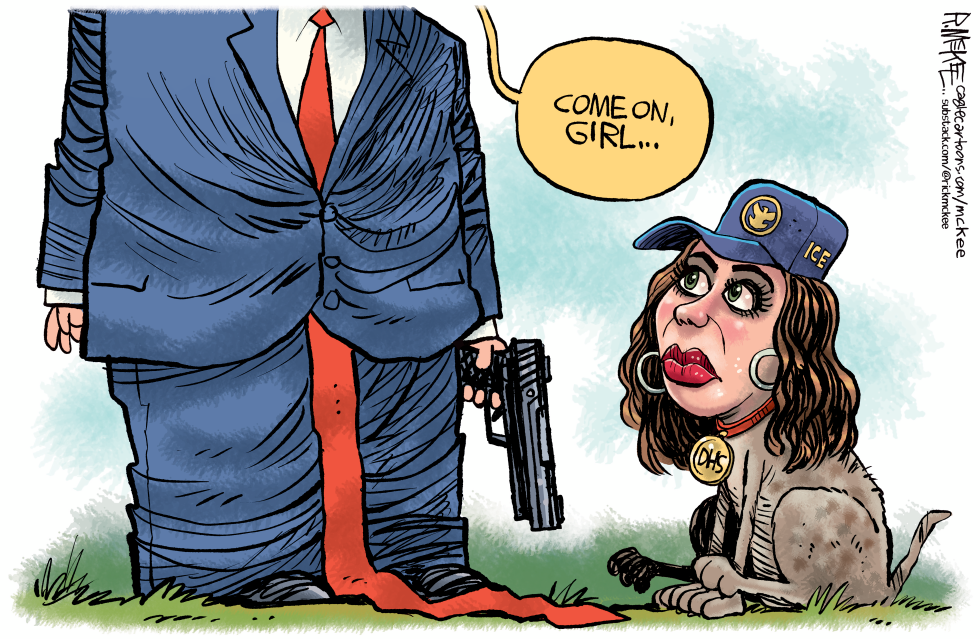
This political cartoon features Donald Trump coaxing a dog-like figure with Alexandria Ocasio-Cortez's face, donned in an ICE cap and DHS tag, gripping a gun on a leash— a sharp satire on immigration enforcement and border control. The image lampoons the Trump administration's hardline stance on deportation and US politics, using caricature to underscore the dehumanizing aspects of border patrol. With elements of political humor, it critiques how figures like AOC are portrayed in opposition, blending viral meme potential with editorial cartoon flair. The scene evokes questions about power dynamics in immigration policy, making it a timely piece for discussions on satire and governance.
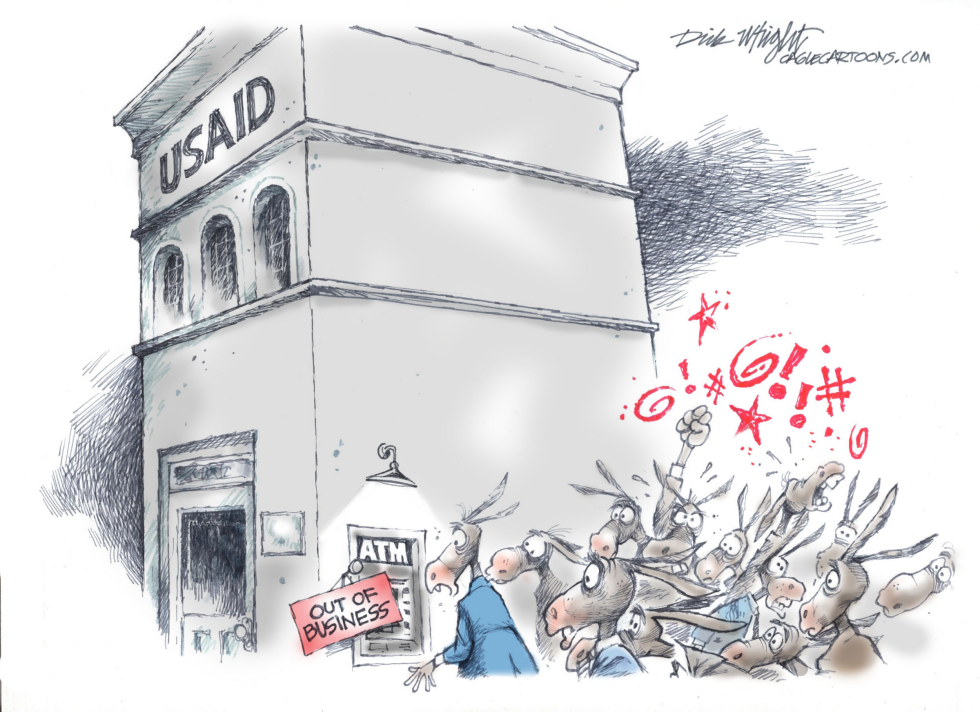
The cartoon depicts the USAID headquarters with its ATM marked out of business. A crowd of donkeys symbolizing Democrats reacts with anger and raised fists. The scene responds to the Trump administration's 2025 moves via DOGE to cut foreign aid programs viewed as wasteful or agenda-driven.
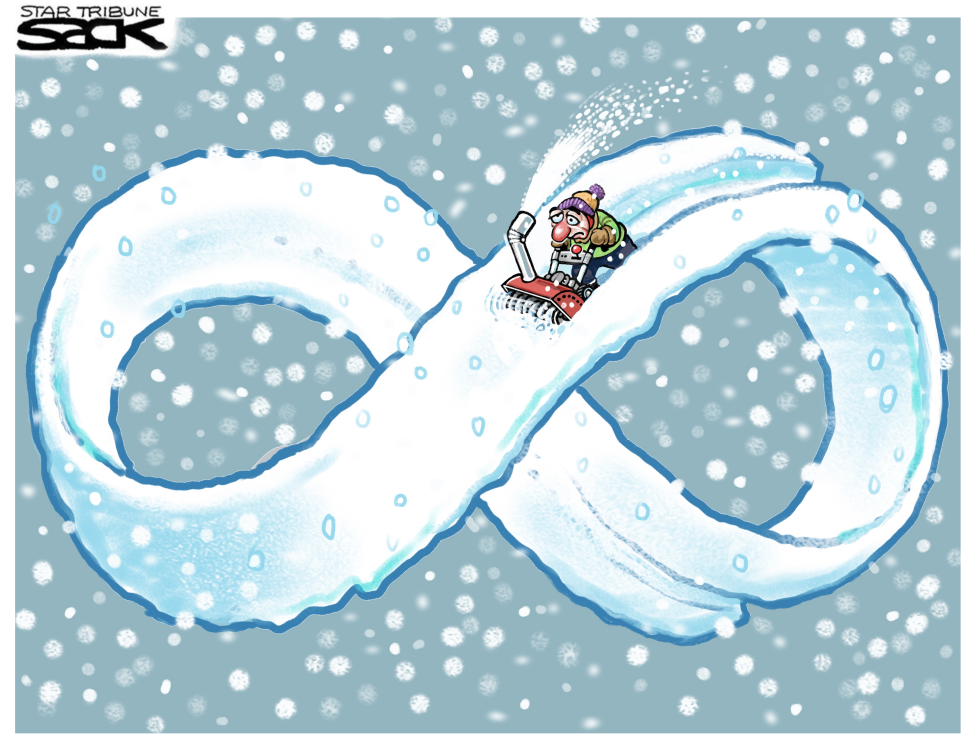
Steve Sack draws an infinity snow cartoon where a bundled-up character pilots a red snowblower along a massive infinity symbol sculpted from snow, with snowflakes dotting the blue sky. The endless snow removal setup delivers perpetual winter humor, as the figure's downcast expression underscores the futility. This Minnesota-based satire from the Star Tribune captures the relentless nature of blizzards, turning seasonal drudgery into visual wit. Infinite snowfall becomes a loop of comedy, perfect for sharing amid winter storms. Sack's clean lines and simple composition make the infinity loop a standout symbol of never-ending chores.
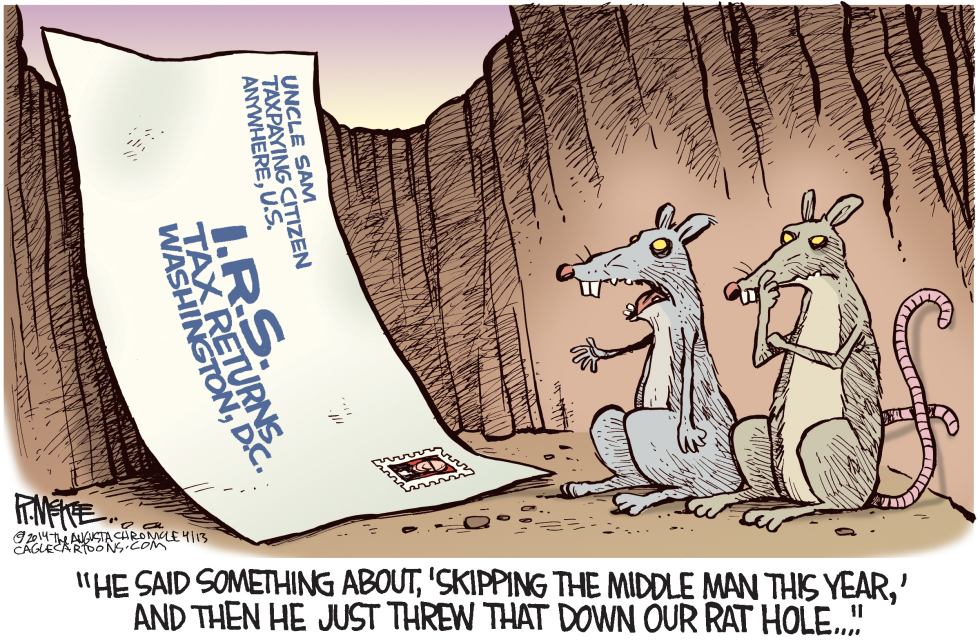
This political cartoon features two anthropomorphic rats in a rocky canyon, bewildered by a massive envelope labeled 'UNCLE SAM U.S. CITIZEN ANYWHERE TAXPAYING WASHINGTON IRS TAX RETURNS D.C.,' complete with a stamp, thrown down their rat hole. The speaking rat gestures animatedly, quoting someone mentioning 'skipping the middle man this year' before the toss. It's a sharp satire on tax season frustrations, where IRS demands feel like direct dumps on everyday folks—or in this case, rats. The imagery evokes government overreach, with Uncle Sam bypassing intermediaries to shove tax returns straight into the 'rat hole' of citizen life. Tags like political cartoon IRS taxes, rats in rat hole cartoon, and taxpaying satire underscore the irreverent poke at bureaucratic absurdities, making it relatable for anyone dodging April deadlines.