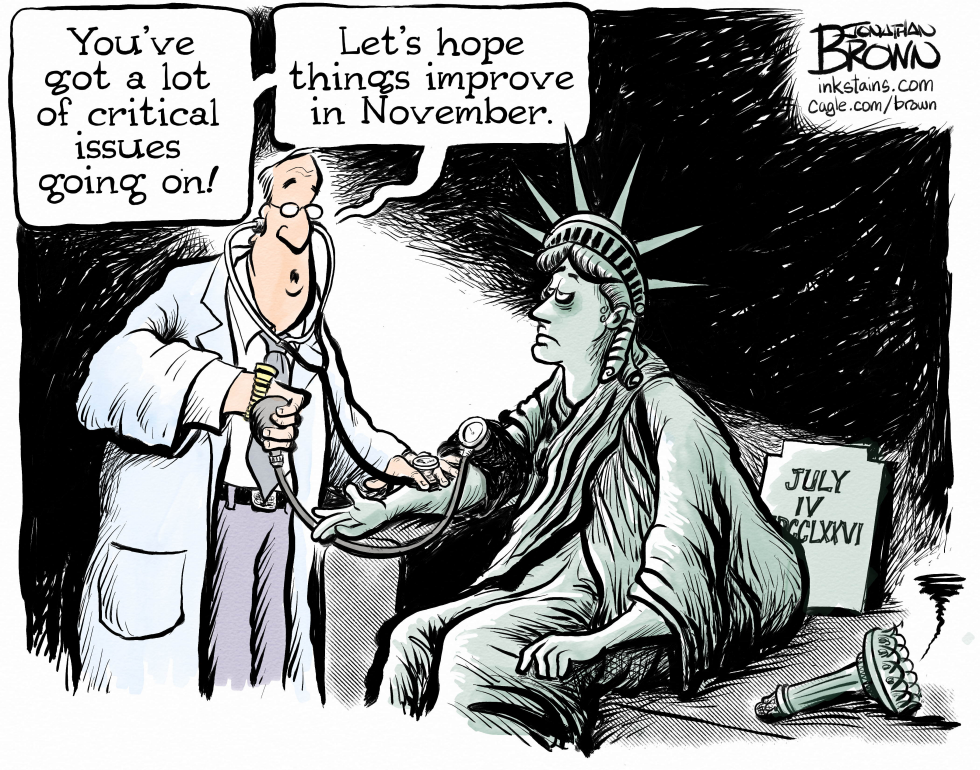
The cartoon depicts a doctor examining the Statue of Liberty's blood pressure and noting numerous critical issues. The Statue responds with hope that things will improve in November. A sign references July 4, 1776, and a broken torch rests on the ground. Published on September 15, 2026, the image uses the iconic figure to comment on the state of the nation ahead of upcoming elections. The visual metaphor highlights concerns about American institutions and public sentiment.
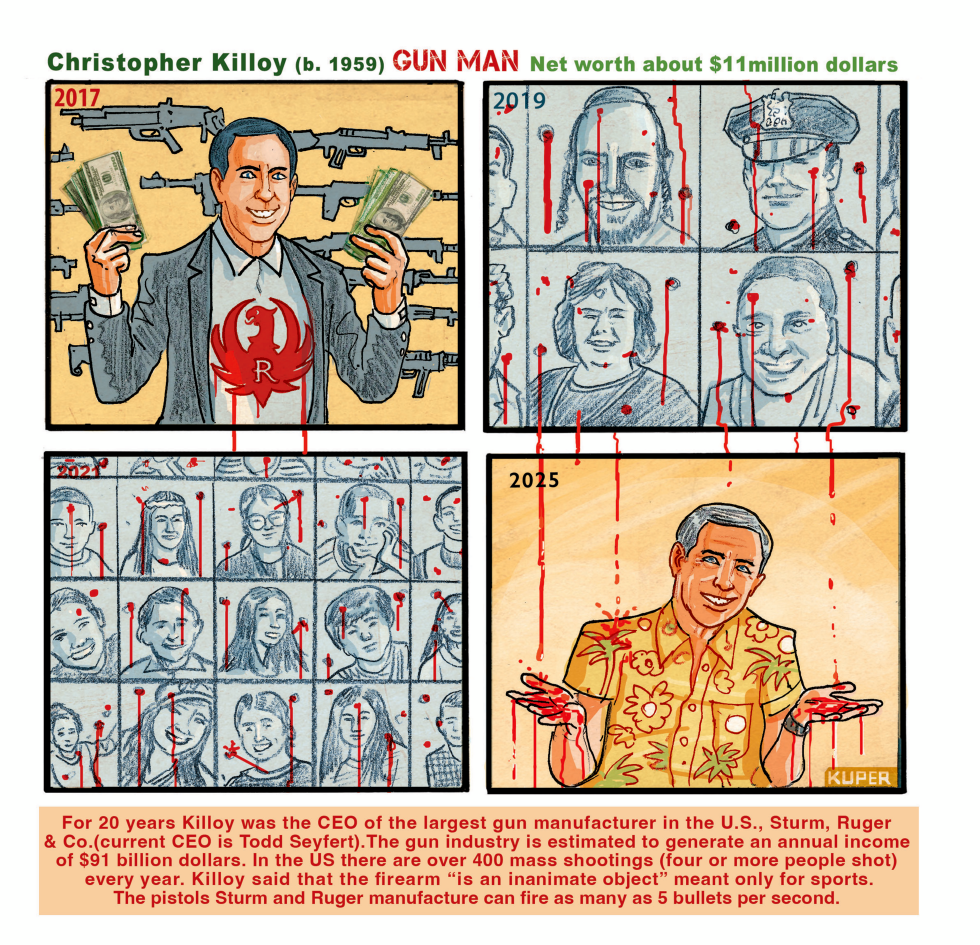
Christopher Killoy served as CEO of Sturm, Ruger & Co. from roughly 2005 to 2025, during which the company generated billions in revenue from firearms used in hundreds of U.S. mass shootings. The industry earns an estimated $91 billion annually, and more than 400 incidents occur each year. Killoy described guns as inanimate sporting objects. The cartoon criticizes the disconnect between corporate profits and the human cost shown in the accumulating portraits of victims.
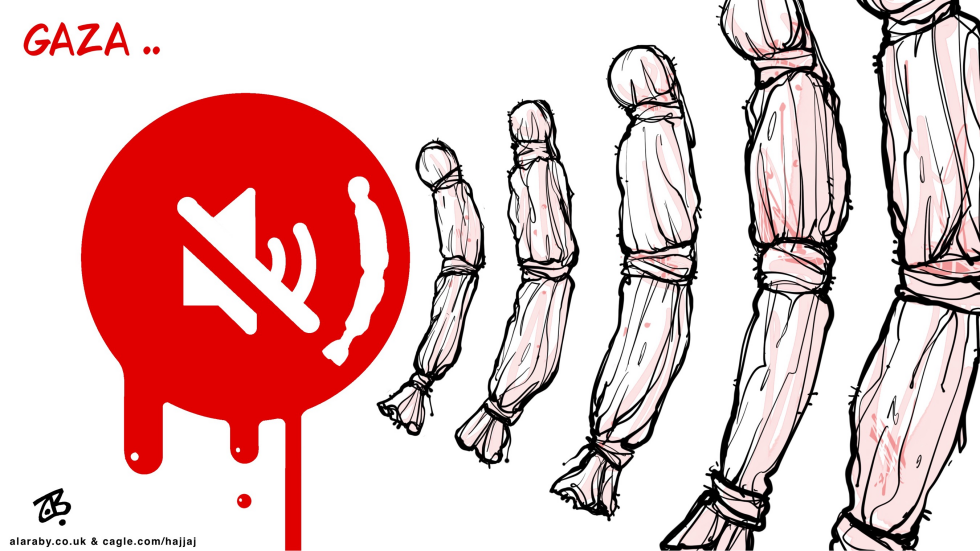
Ongoing conflict in Gaza continues to draw international attention to civilian casualties and restrictions on reporting. The piece responds to persistent calls for attention amid claims of media and global silence. It positions the mute symbol as a direct critique of inaction on reported suffering. The editorial stance emphasizes the need to break that silence and acknowledge the human cost in the region.
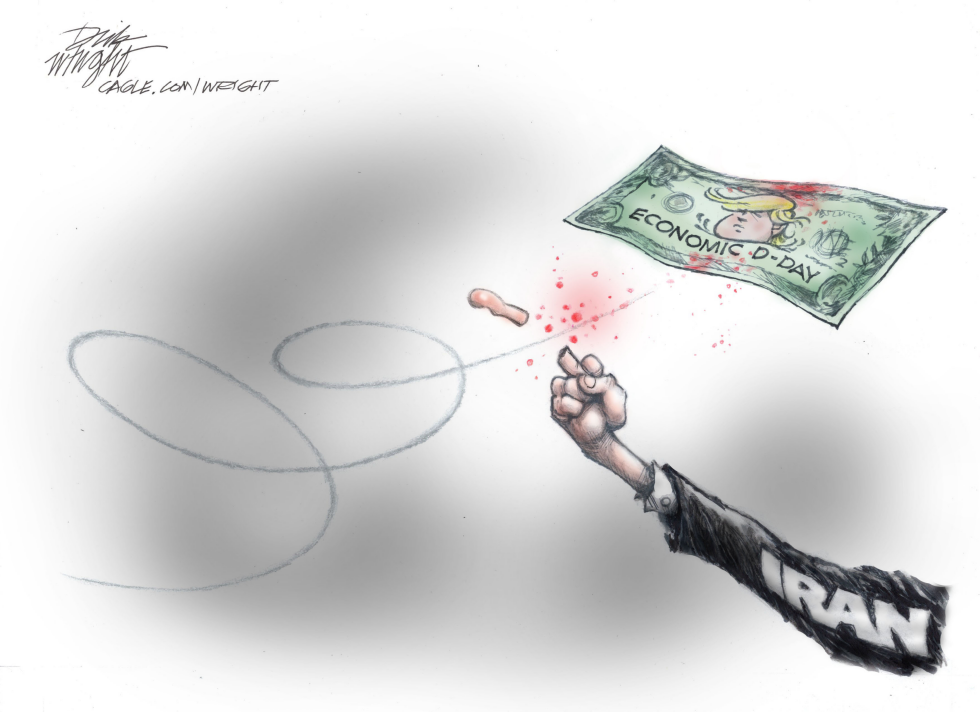
Iran has positioned itself to ignite economic pressure on the United States through direct actions targeting financial stability. The move comes amid ongoing tensions with the Trump administration over sanctions and regional influence. This development raises stakes for global markets already sensitive to Middle East volatility. The piece frames Iran as deliberately lighting a fuse aimed at an economic tipping point centered on Trump.
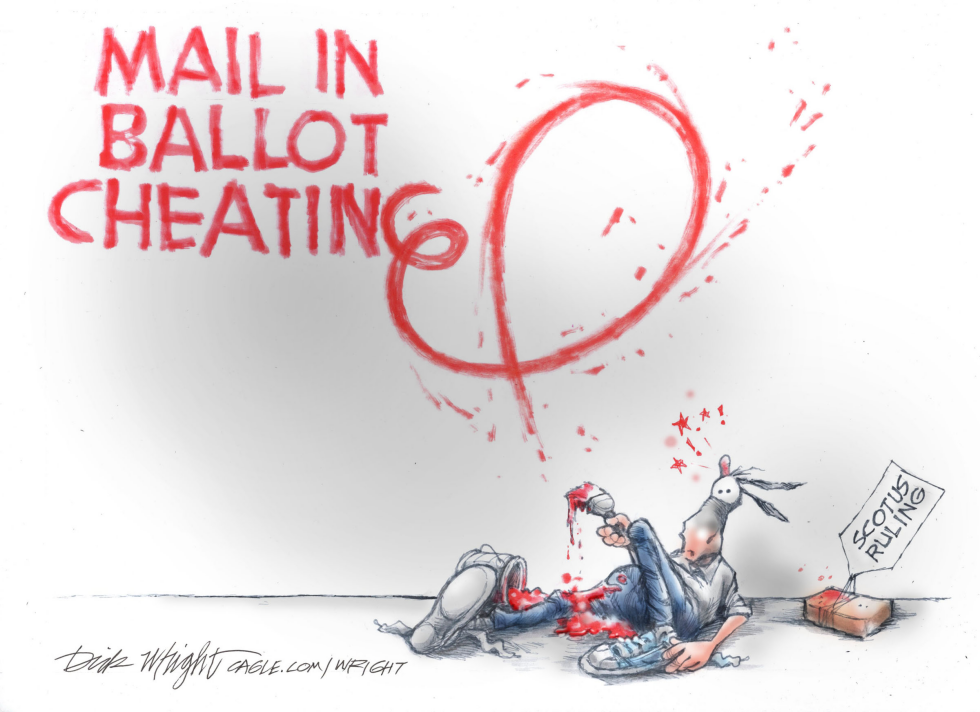
The image depicts the Democratic Party symbol as a donkey lying wounded on the ground with red liquid visible near its body. A large red prohibition symbol covers the words mail in ballot cheating at the top. A sign reading SCOTUS ruling stands nearby next to a box. The composition responds to a Supreme Court decision limiting certain mail-in ballot procedures. The visual argument centers on claims of reduced opportunities for improper voting practices. Publication occurred on August 25 2026. The work uses the party emblem to illustrate the effect of the ruling on one political side. No specific prior case details appear in the image itself.
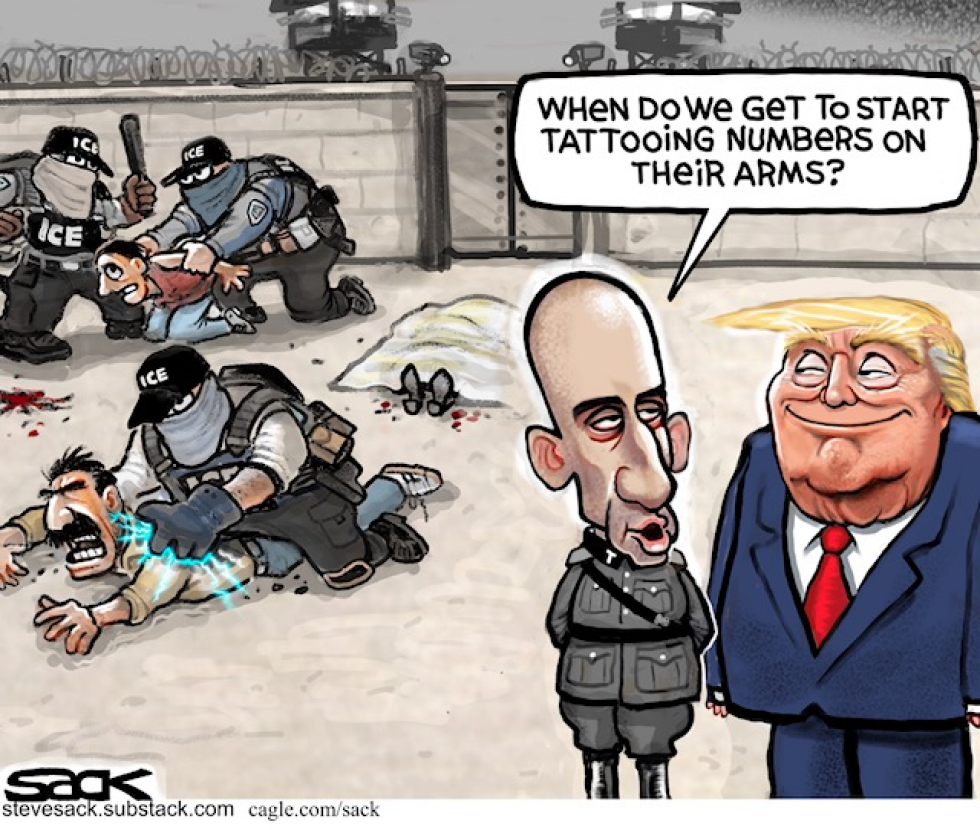
Donald Trump has publicly discussed aggressive measures in immigration detention facilities amid ongoing enforcement operations. The remarks come as ICE conducts arrests and holds individuals at secure sites. Critics argue the approach echoes past abuses. The piece portrays the comments as crossing into prohibited territory by invoking forced numbering.
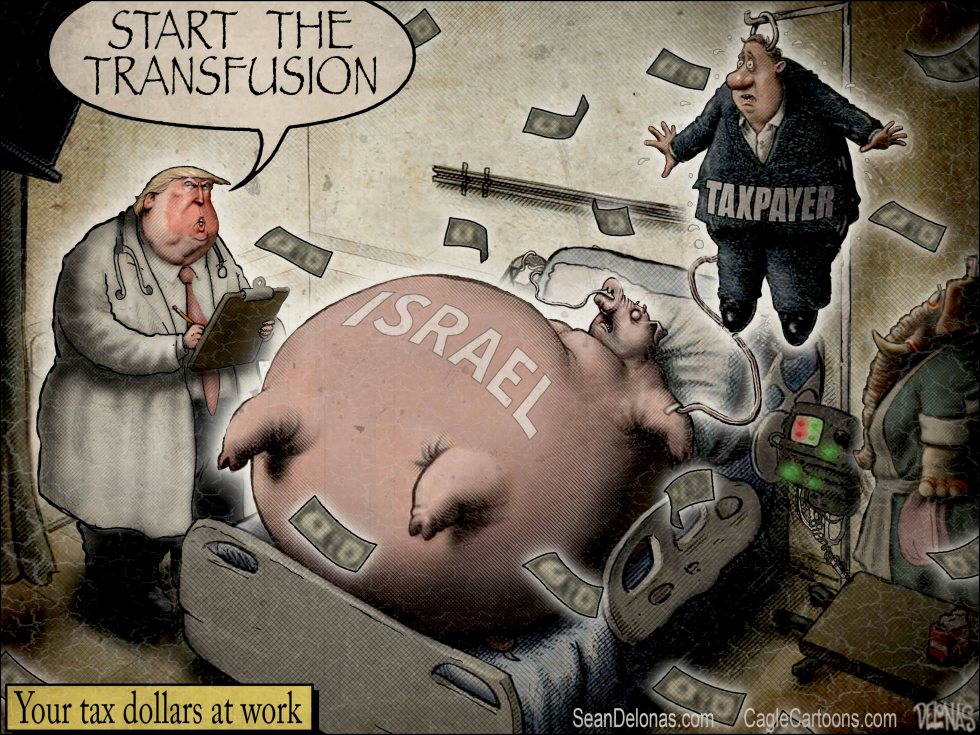
The Trump administration has directed additional US taxpayer resources toward Israel amid ongoing regional tensions. The move continues long-standing American support for the ally but draws fresh scrutiny over scale and priorities. Critics argue the assistance burdens domestic budgets without sufficient oversight. The piece portrays the transfer as an unsustainable extraction from American contributors to sustain a dependent recipient.
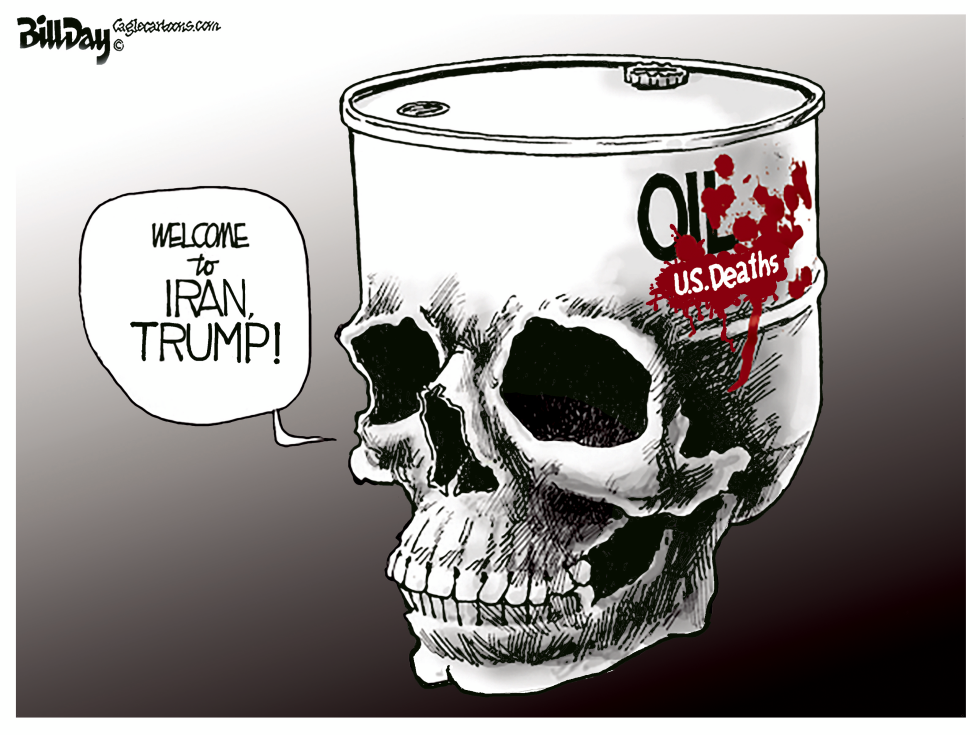
Donald Trump confronts a pointed visual rebuke linking US involvement in Iranian oil to American deaths. The image responds to persistent tensions over energy resources and foreign policy decisions in the Middle East. Critics argue such engagements carry heavy human costs without clear strategic gains. The piece takes the position that Trump's approach risks repeating costly patterns of intervention driven by oil interests rather than broader security needs.
Dr. Anthony Fauci appeared before Congress on matters tied to prior public health leadership. Lawmakers pressed for details on past decisions. The editorial takes the position that such testimony demands full transparency regardless of prior status.
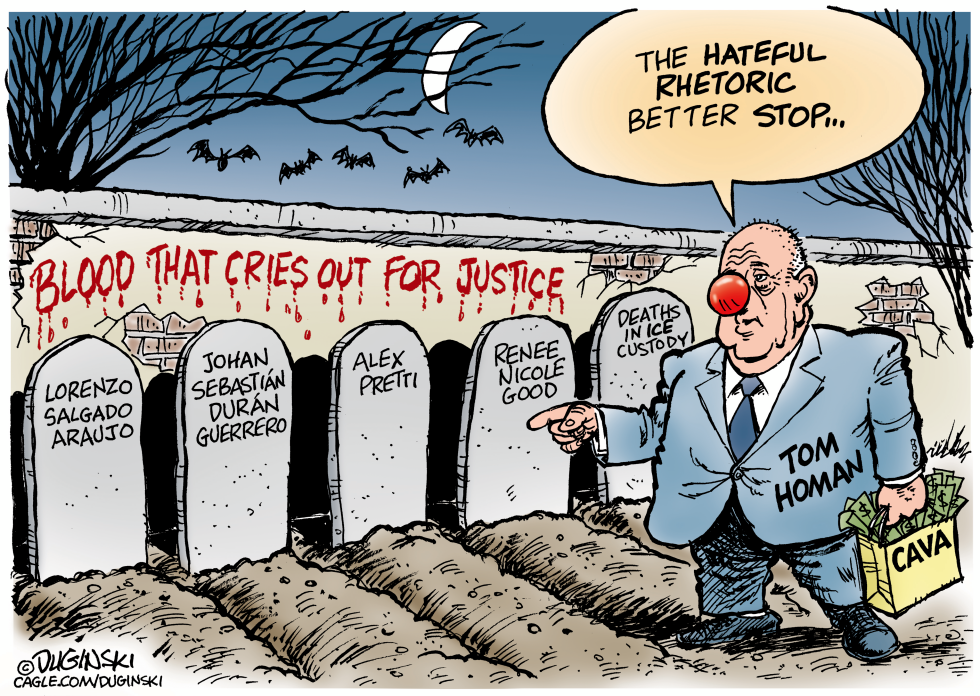
Tom Homan, a key figure in immigration enforcement, drew scrutiny in mid-2026 over inflammatory statements as reports of deaths in ICE custody continued. The piece portrays him dismissing concerns while profiting, arguing that such rhetoric must cease to address accountability in detention practices.
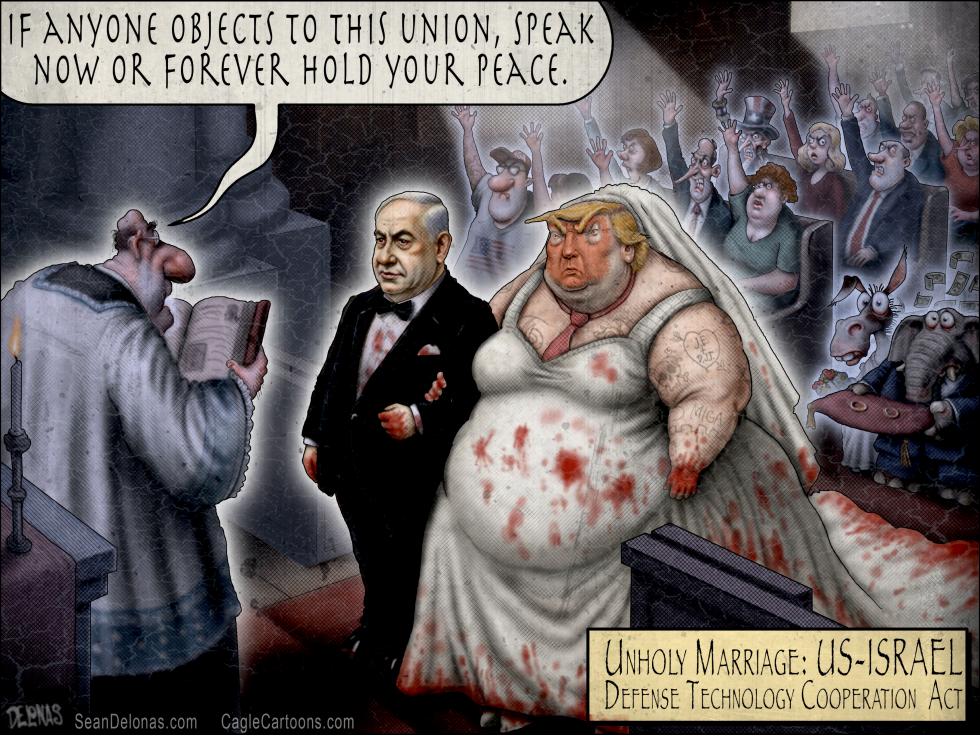
The US-Israel Defense Technology Cooperation Act advances closer military ties between Washington and Jerusalem under the Trump administration. The legislation expands joint technology development and funding streams. Critics view the strengthened partnership as overly entangled and lacking sufficient oversight. The cartoon casts the relationship as an unholy marriage marked by visible stains and public dissent.
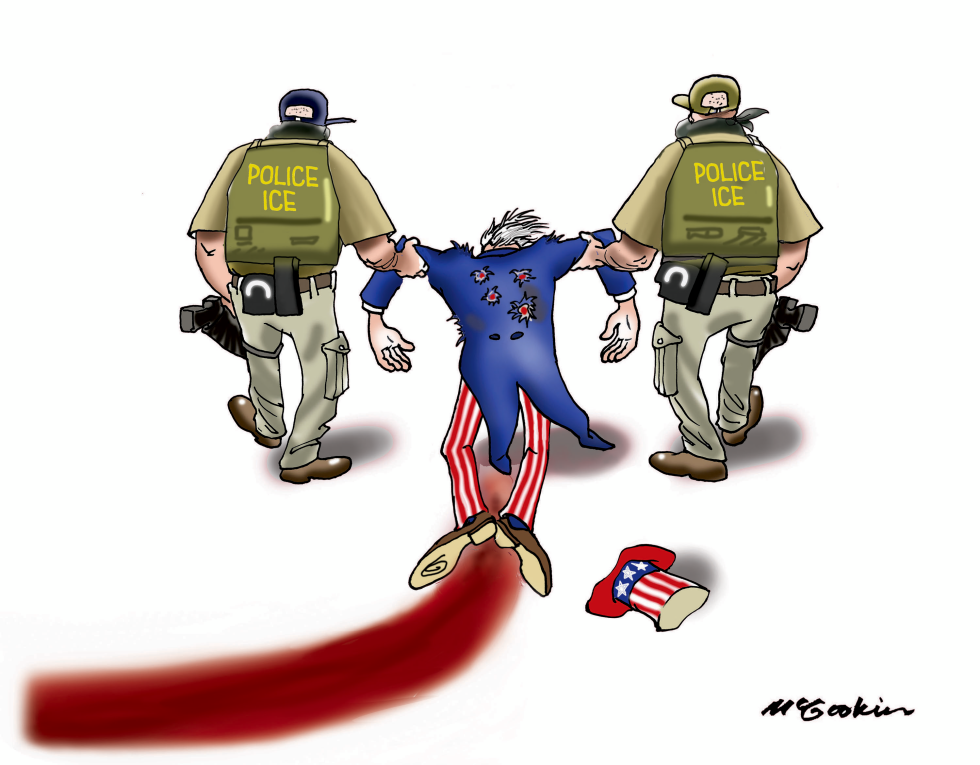
Two ICE agents in green vests marked Police ICE drag a prone Uncle Sam figure across a white background. The figure wears a blue coat marked by several bullet holes, red and white striped pants, and brown shoes. One arm hangs limp while the other is held by each officer. A red blood trail curves across the lower left. A stars-and-stripes top hat lies near the figure's feet.
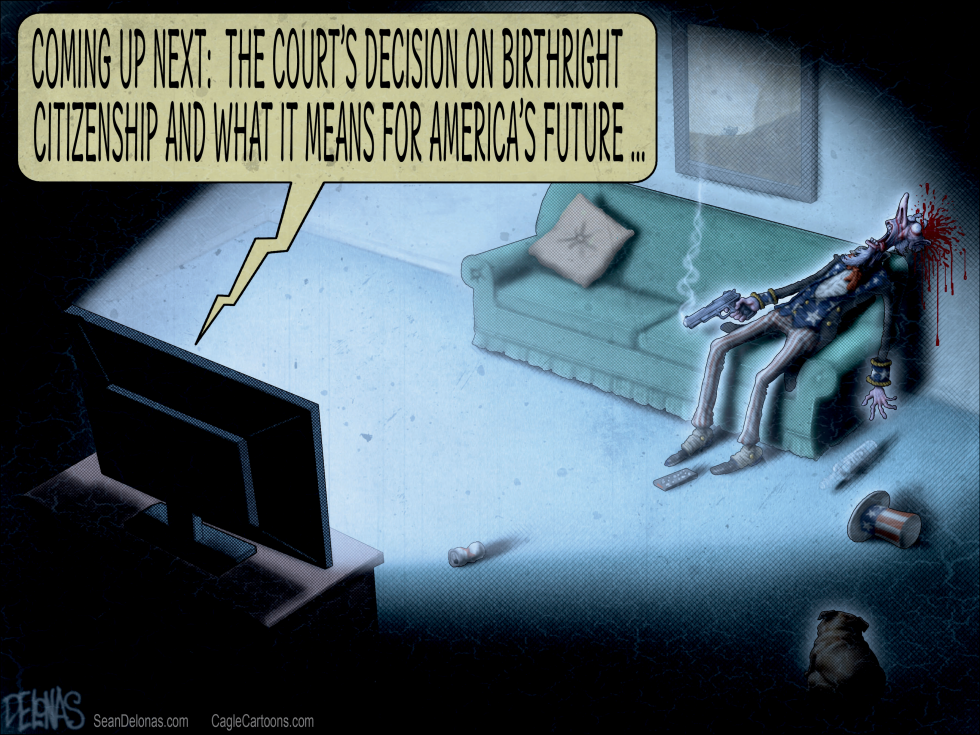
A political cartoon dated July 4, 2026, previews a Supreme Court decision on birthright citizenship. The image shows the figure of Uncle Sam slumped dead on a living room couch with a gunshot wound to the head and blood on the wall. A television in the foreground carries a news teaser about the ruling and its implications for America's future. Scattered items include a handgun, remote control, and top hat on the floor. The cartoon uses stark lighting and a speech bubble to frame the scene as an imminent broadcast segment.