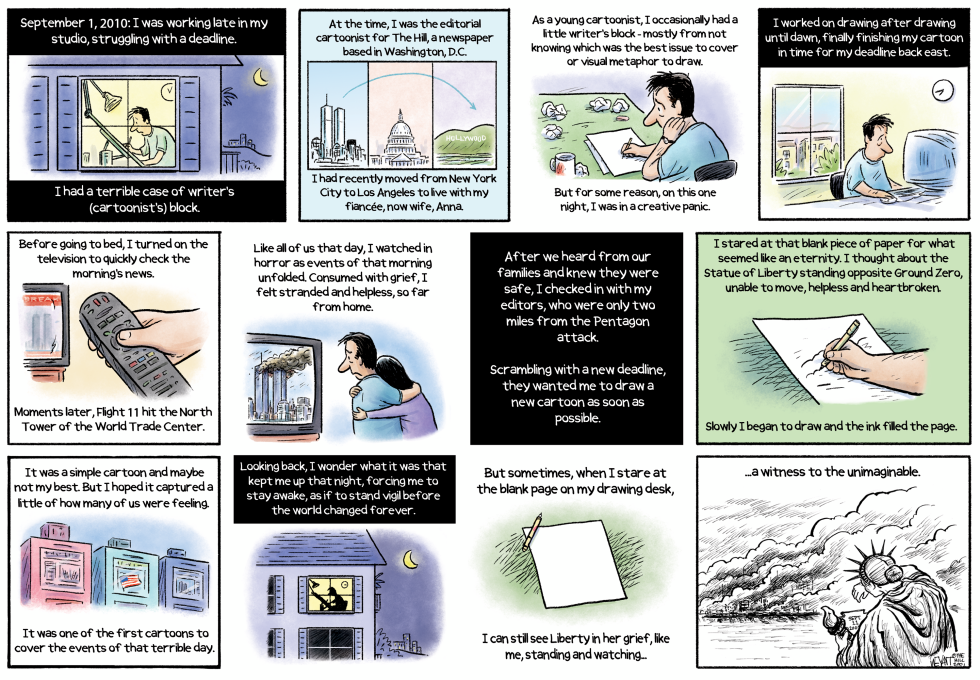
On September 11, 2001, editorial cartoonist Christopher Weyant faced a sudden deadline shift after the attacks on the World Trade Center and Pentagon. Working from Washington, D.C., he checked on family and editors before creating one of the earliest cartoons responding to the events. The piece shows his personal struggle with a blank page that night and the resulting image of the Statue of Liberty standing vigil opposite Ground Zero. The cartoon marks the 25th anniversary by revisiting how the attacks altered the nation and the artist's own sense of purpose.
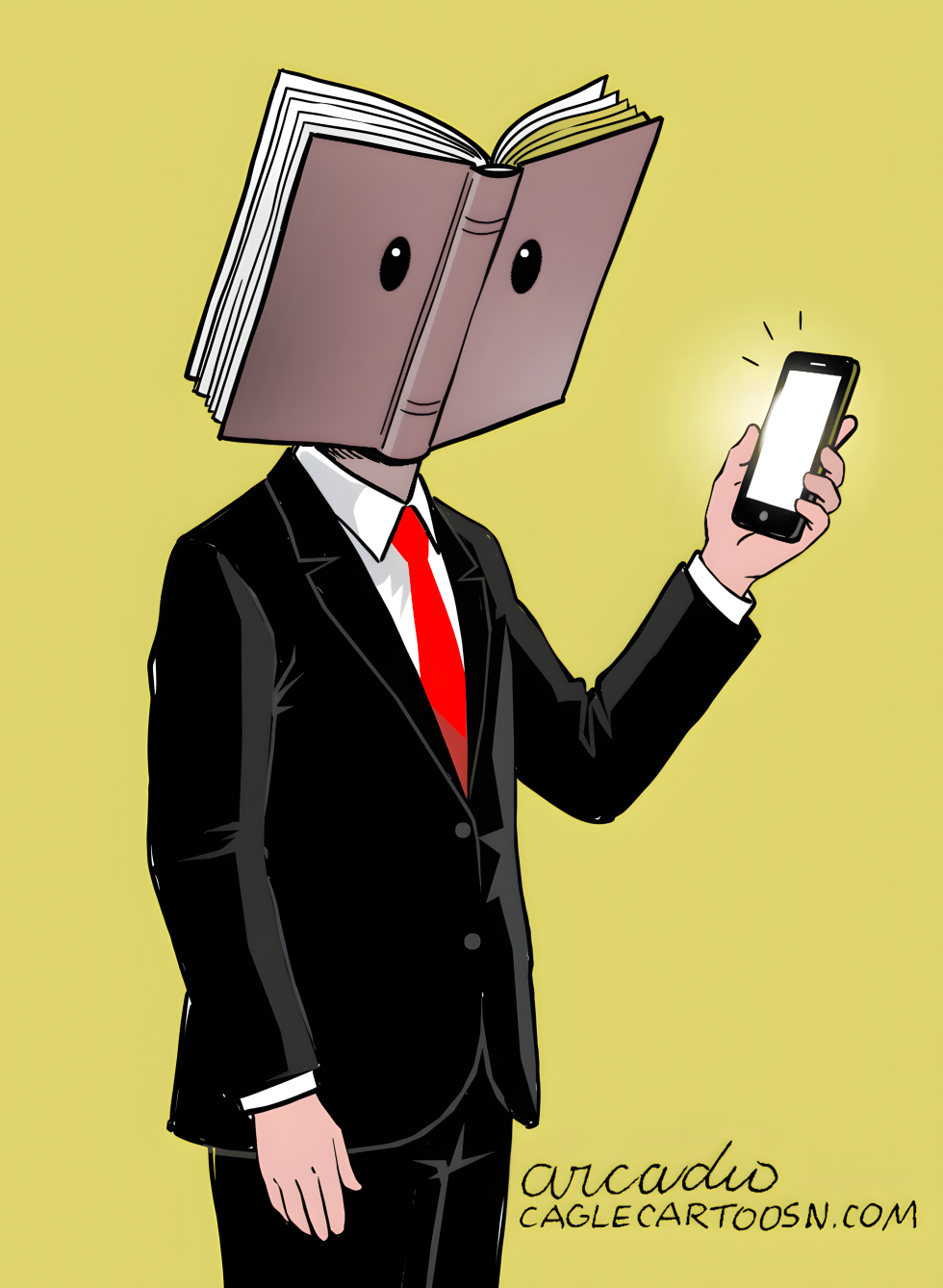
A suited figure with an open book for a head stands against a yellow background while raising a smartphone with a bright screen. The image captures the tension between traditional reading and modern device use. The book displays visible pages and eyes, while the phone emits light and small spark lines. The composition places the figure in profile view with one arm extended toward the device.
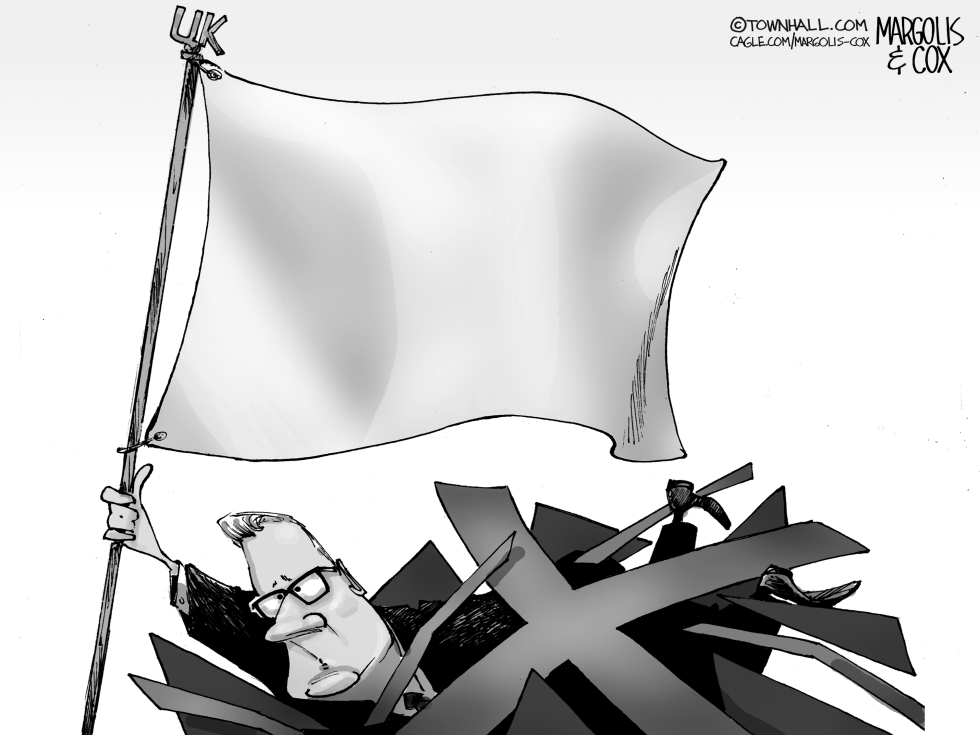
Keir Starmer appears trapped beneath fragments of a torn Union Jack while raising a blank white flag on a pole marked UK. The June 2026 image captures the moment of his resignation through visual wreckage and surrender imagery.
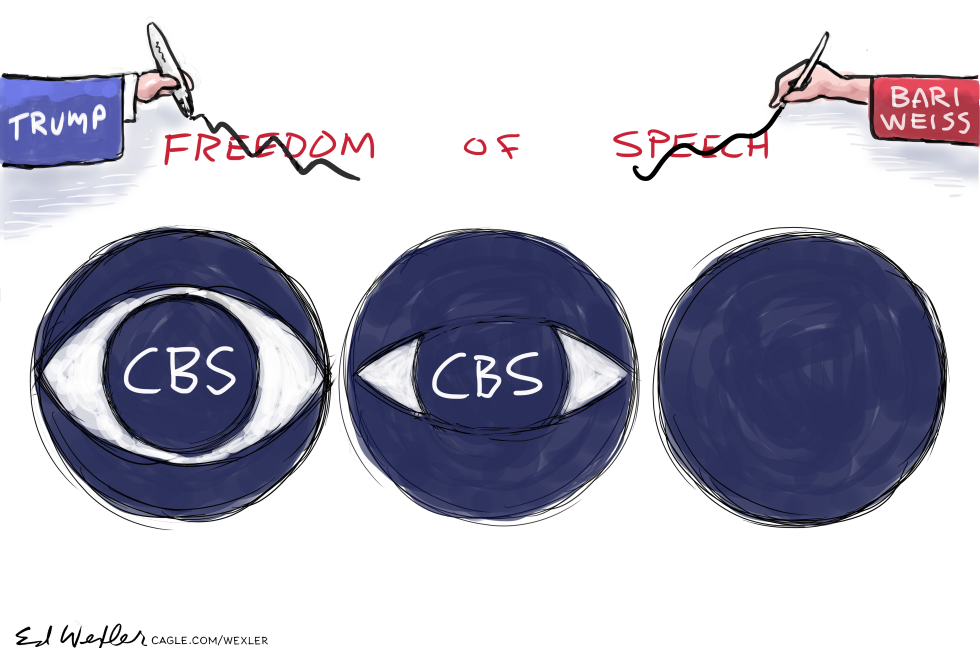
Arms from Trump and Bari Weiss cut the red words Freedom of Speech above three CBS circles with varying eye states. The left CBS eye is open, the middle is squinted, and the right is solid dark. The image responds to ongoing tensions over media coverage and press freedom involving CBS and public figures.
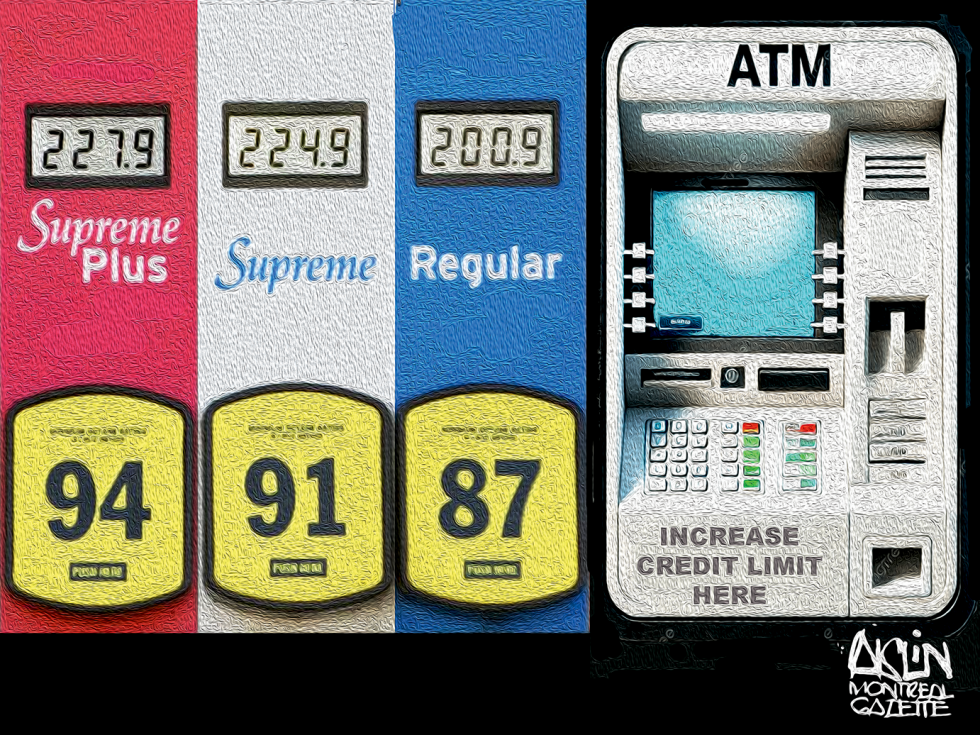
The cartoon shows a gas pump price board with supreme plus at 2.279 per gallon and 94 octane, supreme at 2.249 with 91 octane, and regular at 2.009 with 87 octane. Next to it sits an ATM labeled to increase credit limit here, poking at high gas prices and the economy's push toward more credit. Tags like gas, prices, cost, economy, credit, and pump underline the visual joke on affording fuel through debt. This setup captures the frustration with rising fuel costs without words, relying on the absurdity of blending a gas pump with credit services. Cartoonists often use such direct imagery to comment on everyday economic strains.
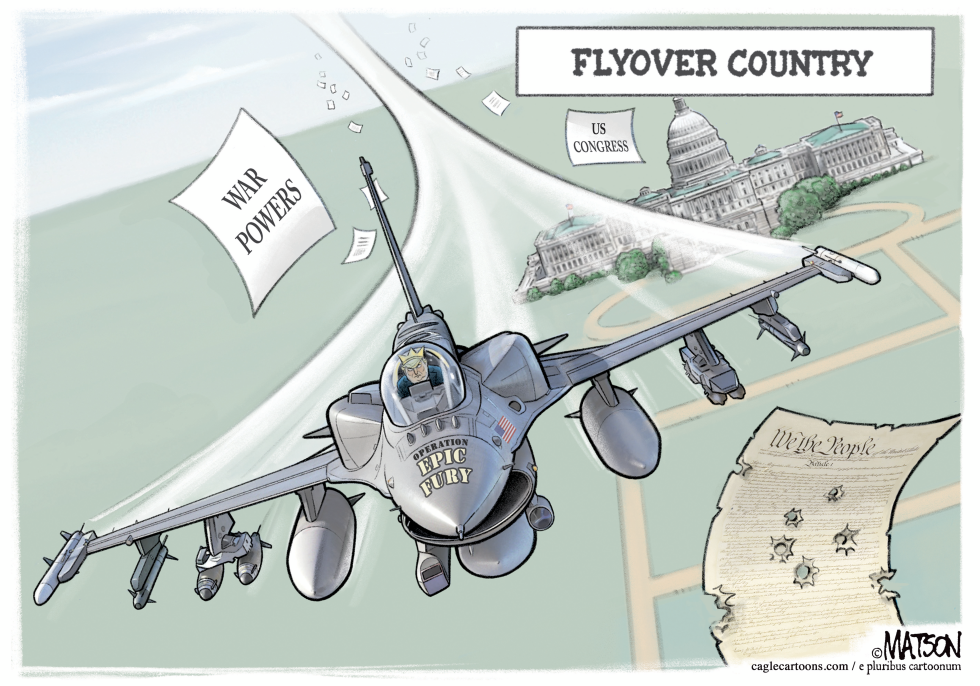
This sharp political cartoon captures the essence of executive overreach, with a fighter jet dubbed 'Epic Fury' zooming past US Congress, discarding war powers documents like confetti over flyover country. The torn US Constitution riddled with bullet holes symbolizes the erosion of constitutional principles amid unchecked military actions. Tags like political cartoon, war powers, US Congress, flyover country, US Constitution, and executive power underscore the satire on how presidents often sidestep legislative approval for wars, leaving the heartland—flyover country—to bear the brunt. It's a humorous yet insightful critique of the power imbalance in Washington, where the Capitol is just a scenic detour on the path to conflict.
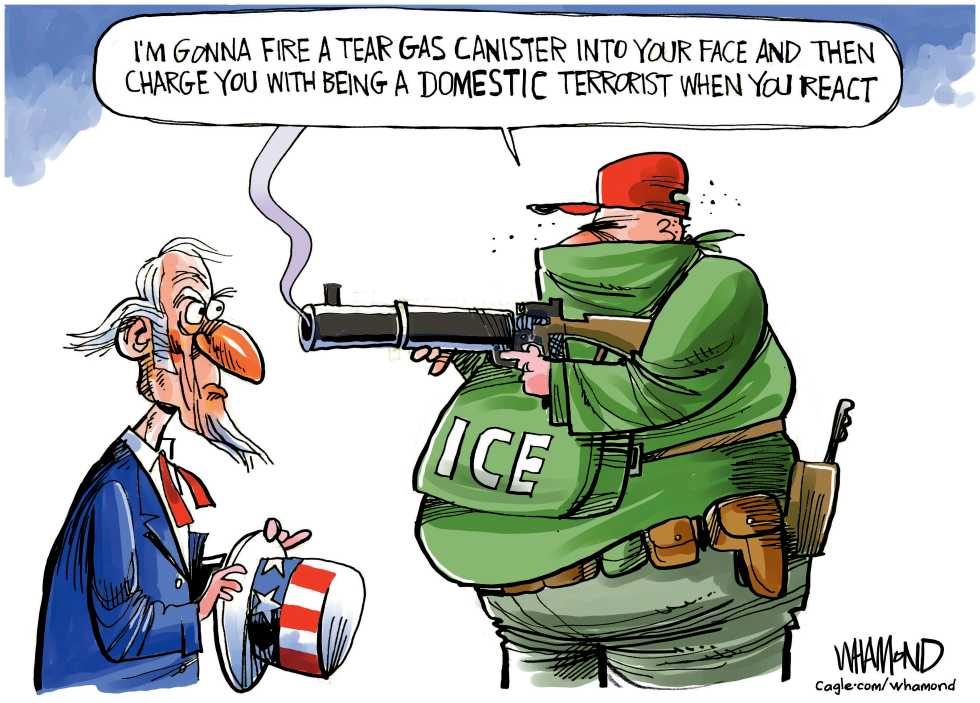
In this sharp political cartoon by Whamond, a bloated ICE agent, donning a red cap and green uniform, points a tear gas launcher directly at Uncle Sam's face, uttering a chilling threat to fire and then charge the iconic American symbol with being a domestic terrorist upon reaction. The imagery critiques government overreach, immigration enforcement tactics, and the weaponization of labels like domestic terrorism to stifle protest suppression and civil liberties. Uncle Sam, holding his stars-and-stripes top hat, represents the nation's foundational values under assault, while the ICE figure embodies authoritarian tactics in border patrol. This editorial cartoon underscores the tension between law enforcement critique and human rights, making it a timely piece on political humor amid ongoing debates on freedom of speech.
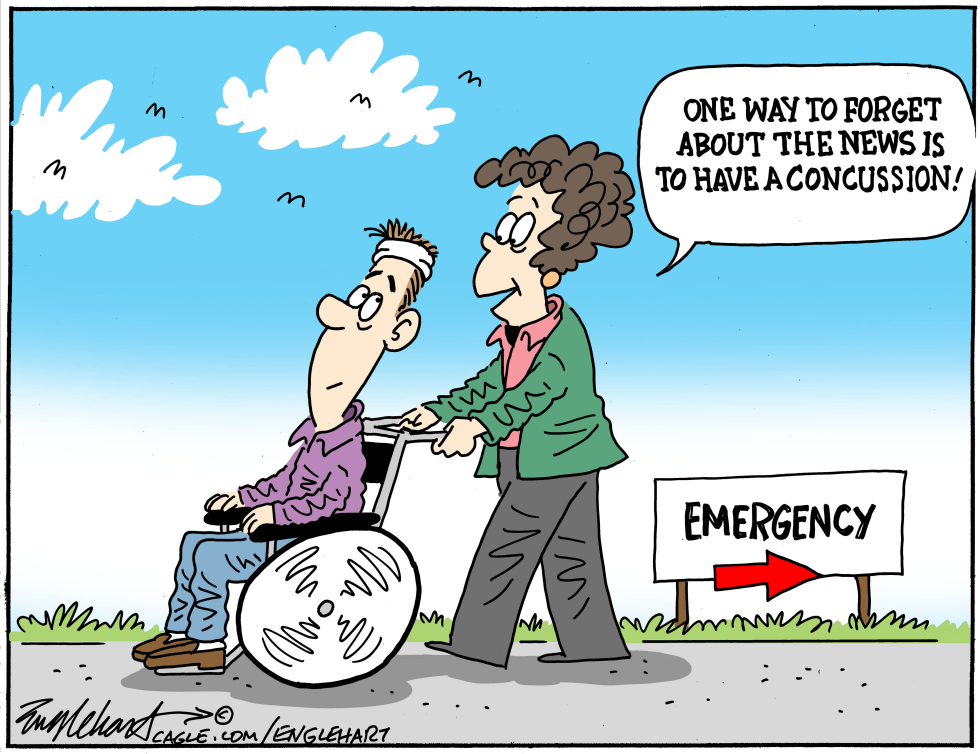
Bob Englehart's cartoon depicts one man pushing another in a wheelchair toward an emergency room. The standing figure suggests a concussion as the solution to forgetting the news. The patient wears a head bandage and appears dazed. The sign points the way with a red arrow. The image comments on media saturation through this visual gag.
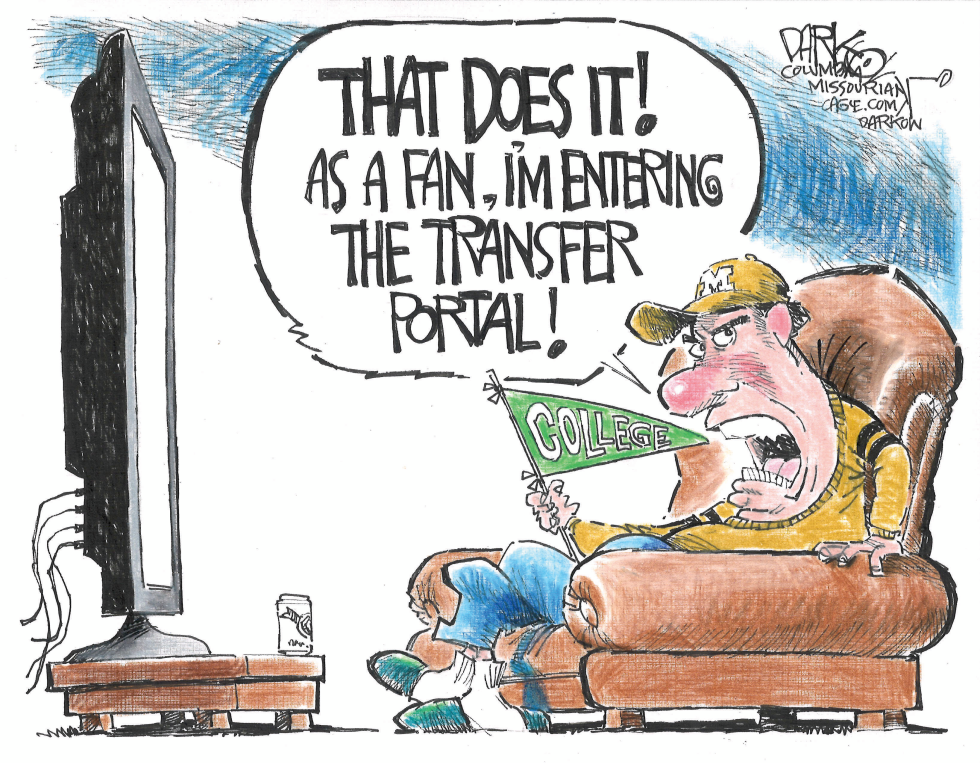
A college sports fan in a recliner erupts in anger at his television and announces he is entering the transfer portal. The scene reflects ongoing frustration with player movement, NIL compensation, and shifting team loyalties in NCAA football and basketball during the 2025 season. The cartoon highlights how these changes affect even dedicated supporters who once valued school allegiance.
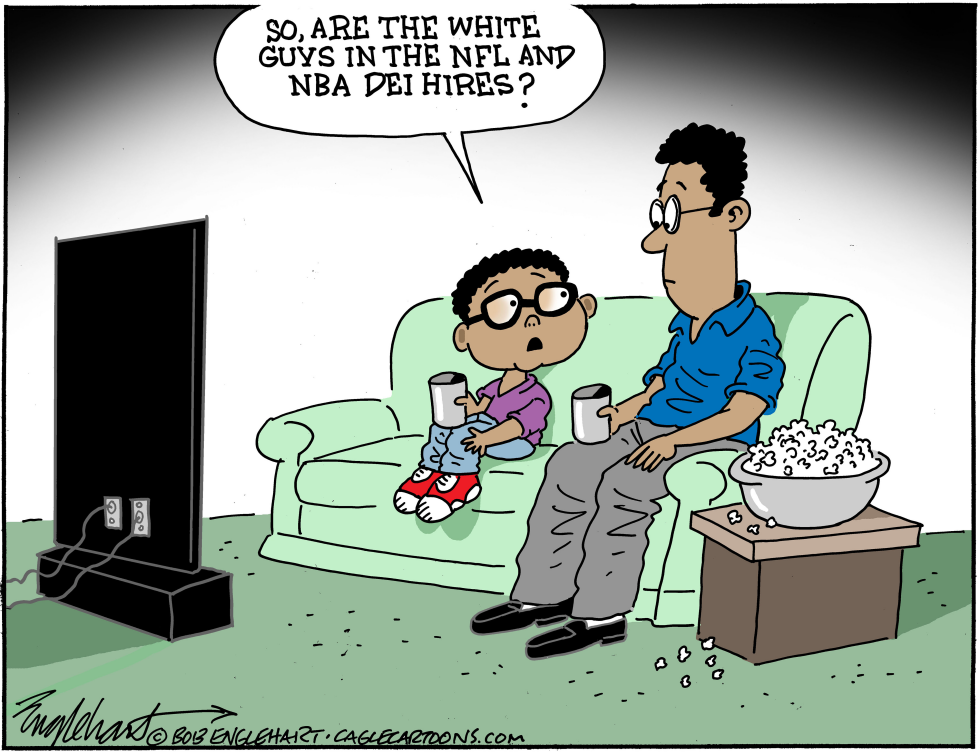
A father and son watch television together in this February 10 2025 cartoon. The boy seated on the couch asks whether white athletes in the NFL and NBA represent DEI hires. The question arises during Black History Month when discussions of diversity in professional sports often surface. The scene captures a common household exchange about league composition and hiring practices. No specific recent ruling or vote anchors the image.