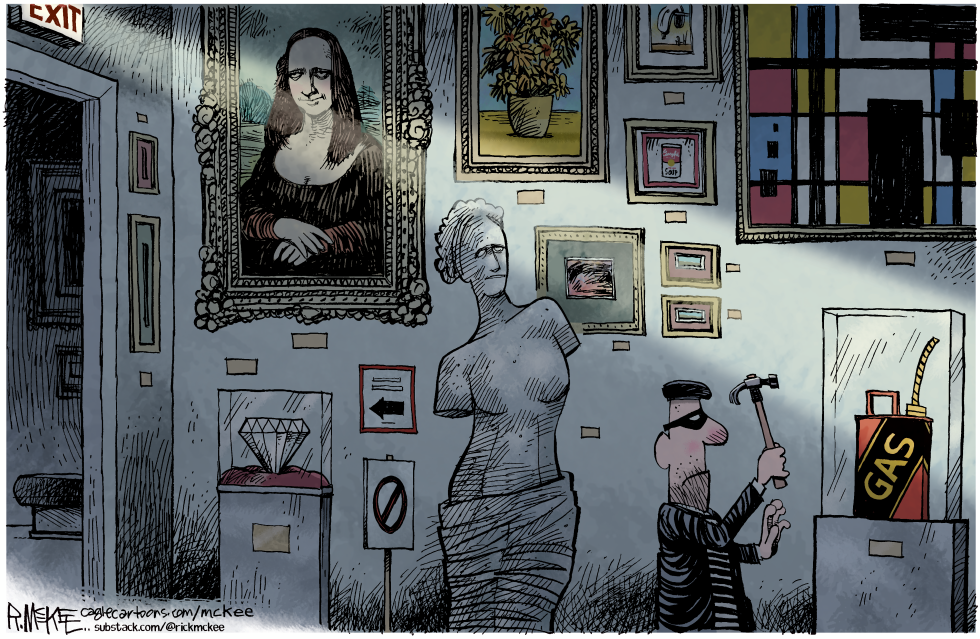
Rick McKee's cartoon depicts a dimly lit museum where a striped-shirted thief, masked and wielding a hammer, targets a display case with a red gas can marked 'GAS,' overlooking iconic pieces like the Mona Lisa portrait, Venus de Milo statue, a large diamond, Van Gogh-style sunflowers painting, abstract Mondrian-like art, and smaller framed works. An 'EXIT' sign glows above, and a 'no' symbol sign hangs nearby. The scene uses tags such as Trump, war, Iran, gas prices, oil, museum to comment on how escalating fuel costs make gasoline more valuable than cultural treasures, blending humor with commentary on energy crises.
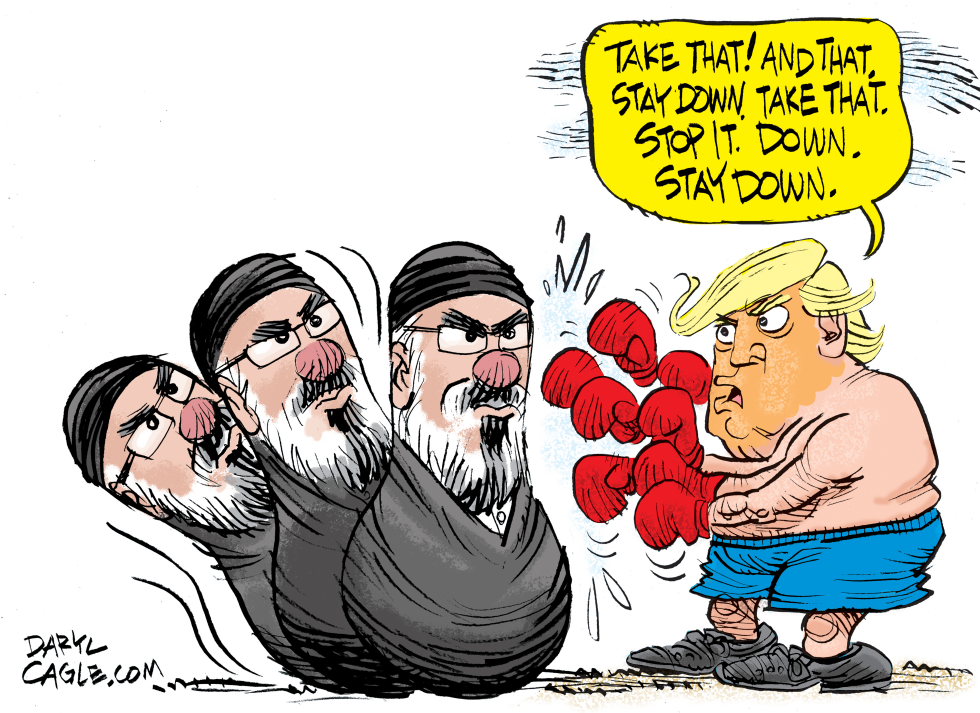
The cartoon shows Donald Trump, shirtless and wearing boxing gloves, repeatedly striking a large bop bag shaped like an Iranian cleric. Multiple faces of bearded men in turbans appear on the bag, which rebounds after each punch. A speech bubble captures Trump's frustrated commands for the figure to stay down. The image responds to reports of a new Iranian supreme leader and U.S. efforts against the regime in early 2026. It highlights the perceived futility of direct confrontations with Iran's leadership structure.
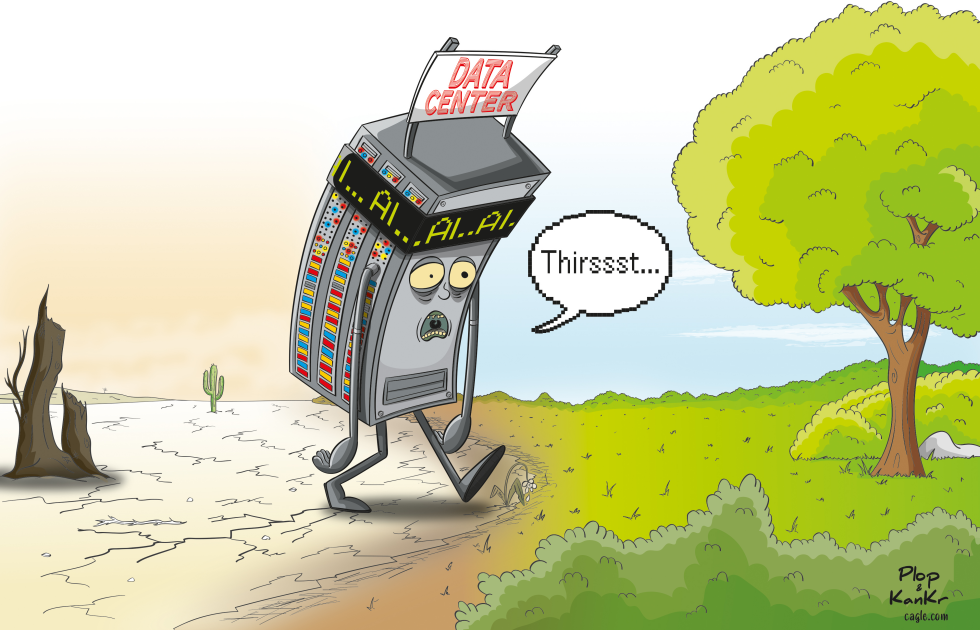
Visible cartoon depicts a walking data center structure with multiple colored server lights on side. The unit shows AI repeated on front panel. Eyes and mouth are drawn on the front. A speech bubble contains the word Thirssst. The machine stands on dry cracked soil near a path leading to grass and a large leafy tree. Artist names appear at bottom right along with cagle.com.
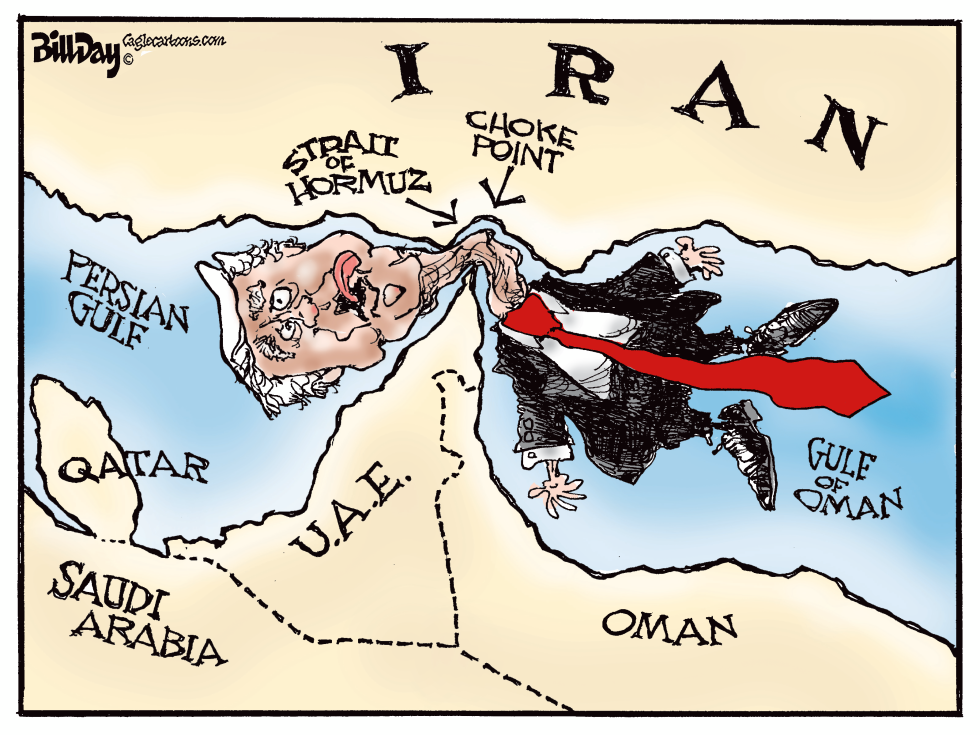
Dive into this Bill Day creation where the map of Iran morphs into a menacing hand at the Strait of Hormuz choke point, gripping a flailing figure in a suit and red tie, symbolizing tension in the Persian Gulf. Surrounding nations like Saudi Arabia, UAE, Qatar, Oman, and the Gulf of Oman frame the scene, highlighting the strategic choke point. This political cartoon Iran Strait of Hormuz captures the essence of Middle East satire, with Iran's form literally choking the strait, a nod to real-world frictions without delving into unshown depths. The irreverent style pokes fun at power plays, making the geopolitical humor both insightful and shareable in editorial circles.
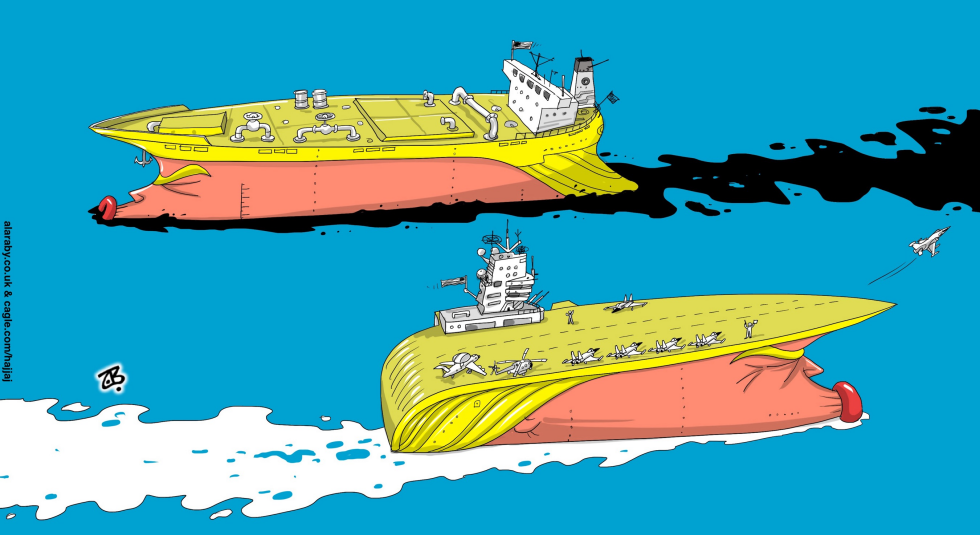
This political cartoon features two yellow vessels stylized as pigs with pink undersides. The upper one, resembling a tanker, emits a black trail from its curly tail-like rear. Below, an aircraft carrier version shows deck equipment, tiny figures, and a fighter jet flying toward it, while the vessel tilts downward into white foam. The satirical illustration employs humorous cartoon elements to depict maritime mishaps, with porcine vessels highlighting absurdity in a blue background. Insightful satire underscores the leaking pig tanker and sinking pig carrier, blending editorial art with irreverent drawing for a visually striking commentary on potential disasters.
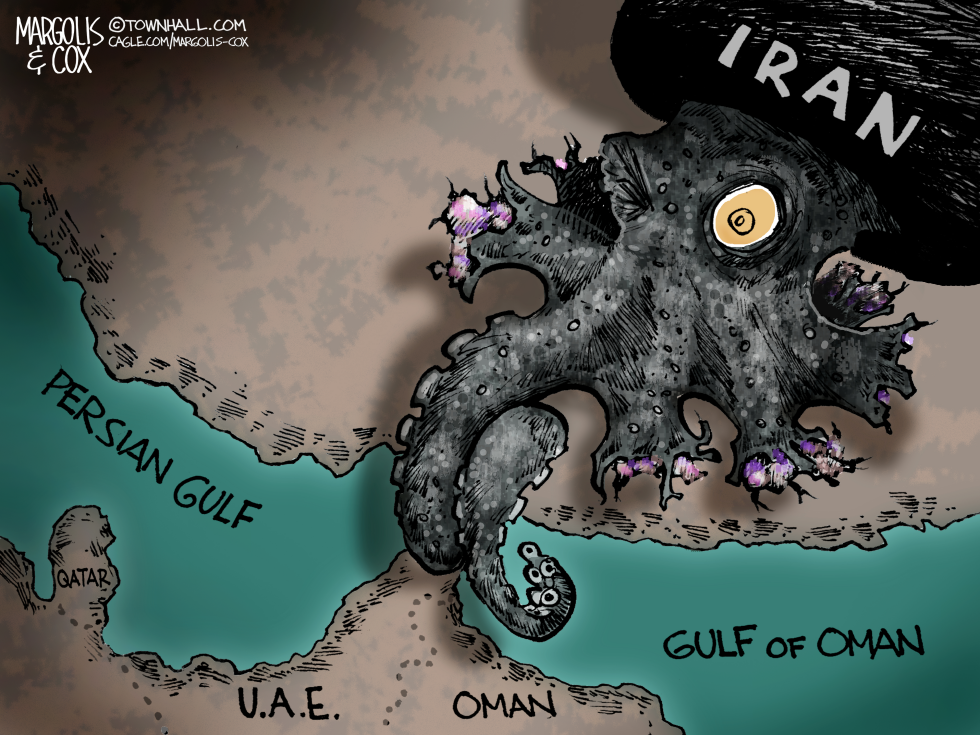
Cartoons like this one from Margolis and Cox cut straight to the absurdity of international posturing. Here, an oversized octopus labeled 'Iran' looms over a simplified map of the Persian Gulf and Gulf of Oman, its tentacles coiling tightly around the Strait of Hormuz. The creature's single eye glares out, while purple-tipped suckers grip the landmasses labeled Qatar, UAE, and Oman. It's a classic visual metaphor for control, poking at Iran's threats to block this crucial oil route. waterway. Such images remind editors how satire distills complex geopolitics into something shareable, even if the humor lands dry as desert sand. With tags like Iran Strait of Hormuz blockade, Persian Gulf tension, octopus metaphor, Middle East satire, oil route choke, and strategic dominance, the piece fits neatly into discussions of global energy security.
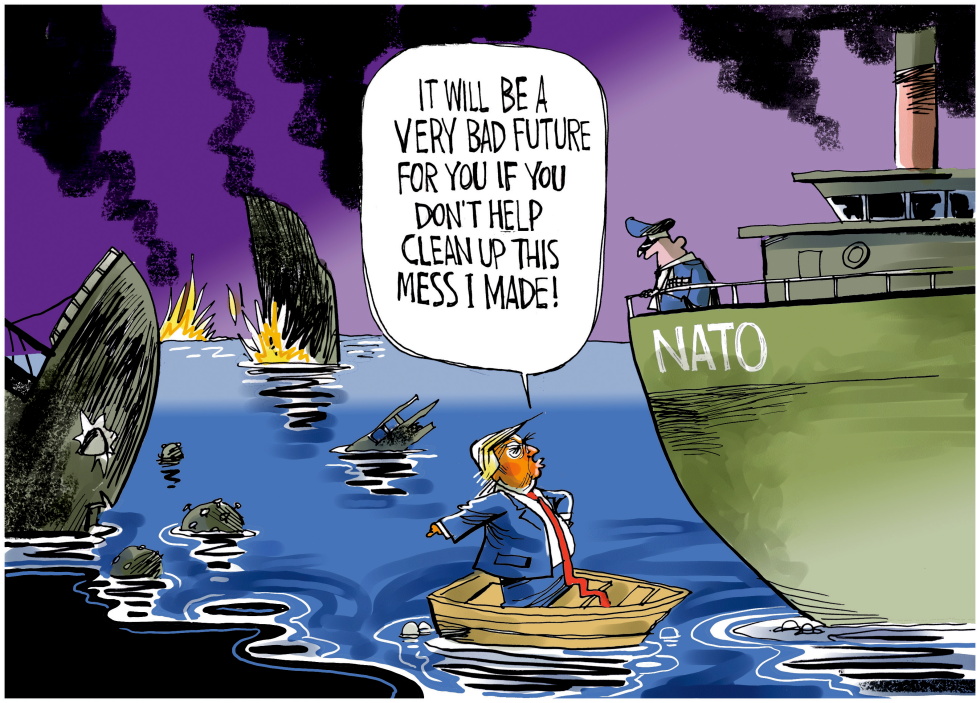
Dave Whamond's cartoon shows a caricature of Donald Trump in a small rowboat, suit and tie askew, shouting threats at a massive green ship labeled NATO. A uniformed figure leans over the railing, watching impassively. Surrounding them are sinking ships with stars, flames bursting from hulls, black smoke curling into a purple sky. The dark water is littered with debris. Trump's speech bubble warns of a bad future if allies don't clean up his mess. This setup nails trump demands, nato alliance, political satire, foreign policy mess, alliance tensions, and satirical caricature with sharp lines and exaggerated features typical of editorial cartoons.
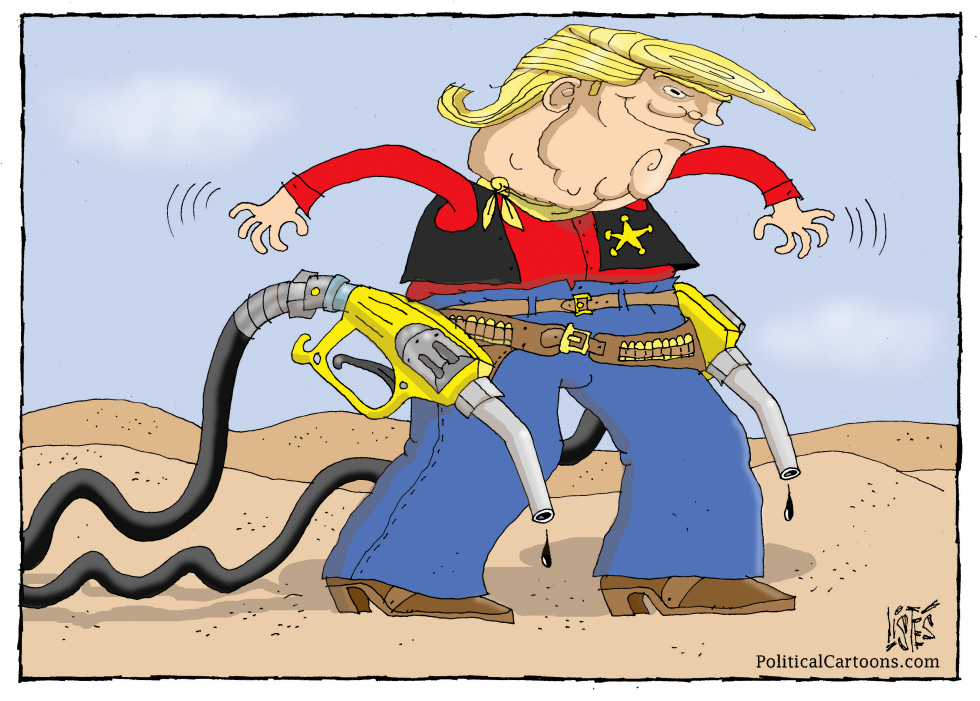
The March 2026 cartoon depicts President Trump as a sheriff in a desert landscape with a gas pump hose attached to his body. Fuel drips from the nozzle onto the sand while the long hose trails behind. The image responds to ongoing concerns over global oil supplies and potential disruptions tied to Iran. Publication occurs during heightened attention to energy markets and U.S. foreign policy in the Middle East.
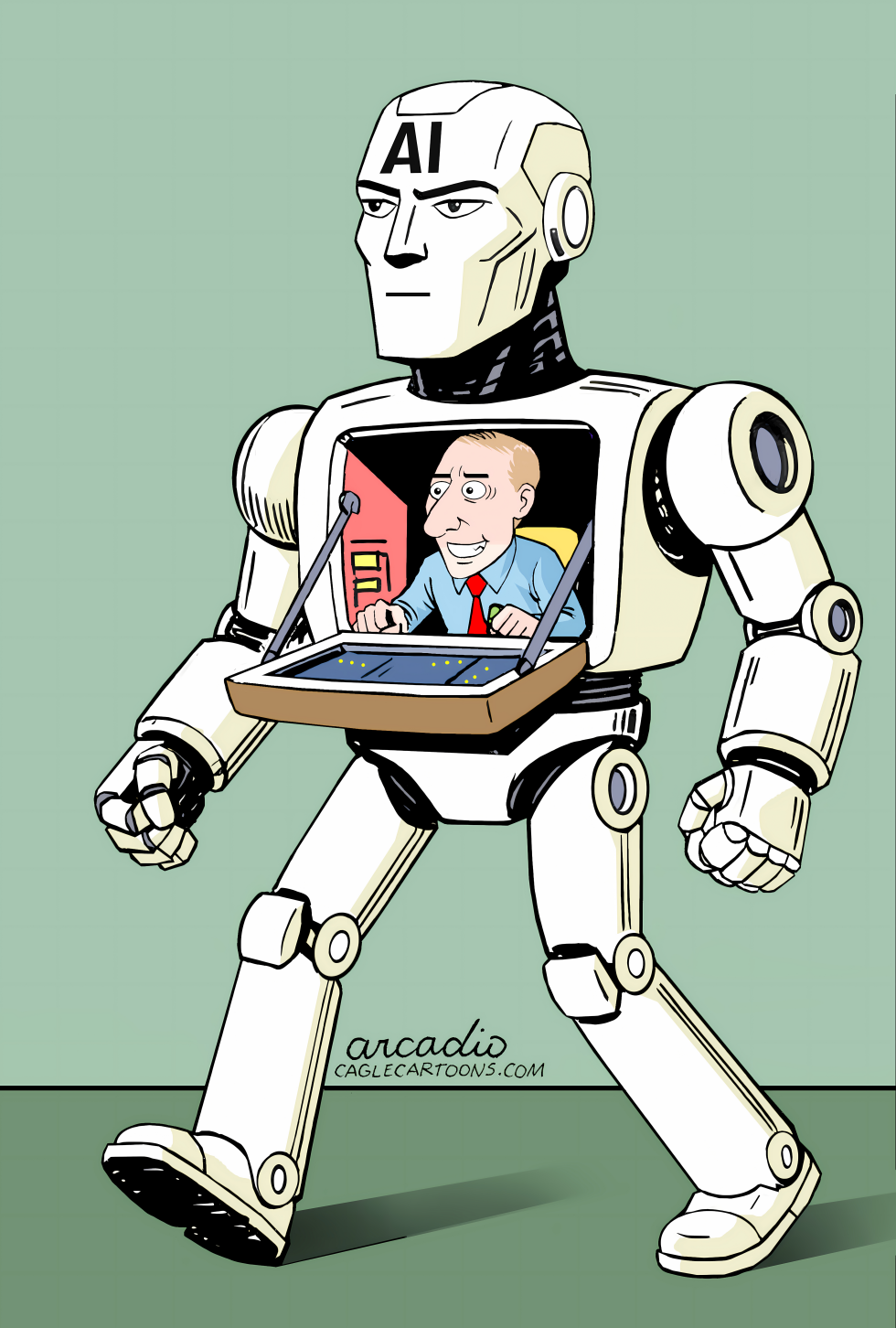
The image displays a tall white robot labeled AI on the forehead standing against a solid green background. A man wearing a blue shirt and red tie sits inside an open chest compartment smiling while using controls on a brown tray with a blue surface and scattered yellow dots. The robot has articulated arms legs and joints in a walking stance with the artist's signature visible near the bottom.
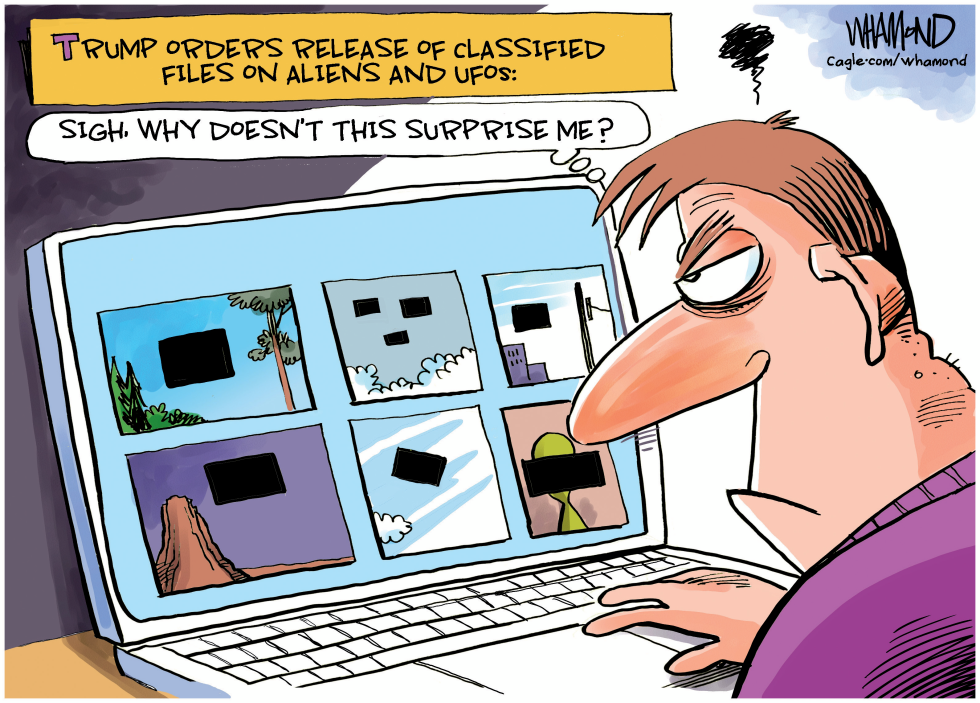
Dave Whamond draws a scene where a man views a laptop displaying Trump-ordered release of classified files on aliens and UFOs, all heavily redacted with black bars. The headline announces the declassification, but the images reveal nothing, from blurred landscapes to censored figures. The man sighs, saying it doesn't surprise him, highlighting themes of distractions and conspiracies. Tags like classified information, extraterrestrial life, UAP, flying saucers, CIA archives, and evidence of ET underscore the satire on empty revelations. The cartoon captures skepticism toward political maneuvers involving secret files.
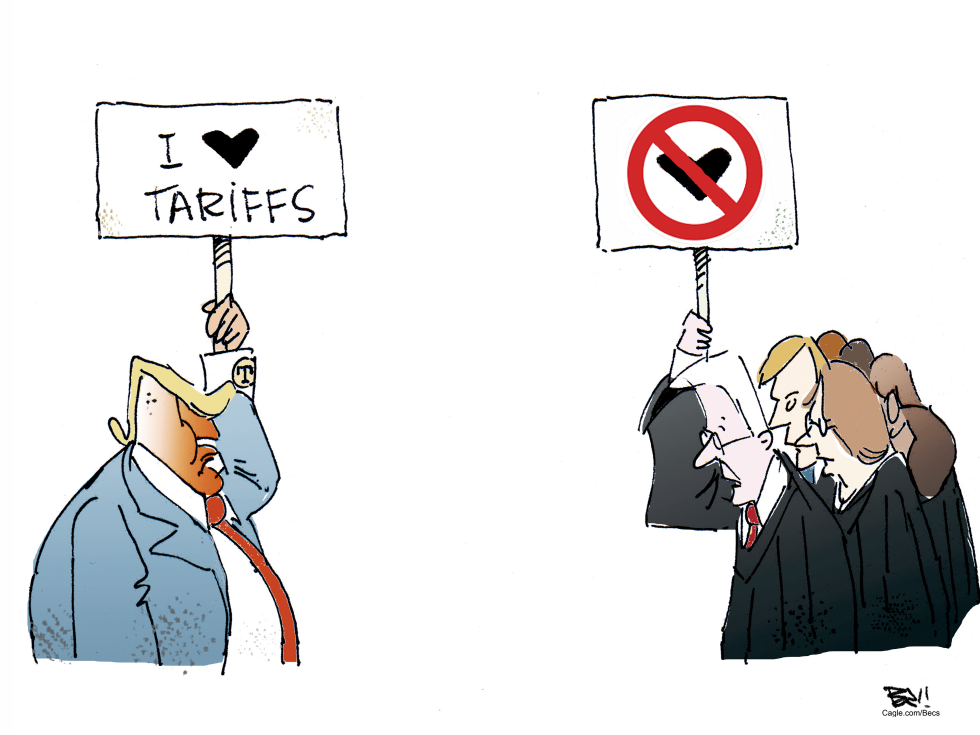
Donald Trump stands on the left holding a sign reading I love tariffs. On the right, several figures in judicial robes raise a sign showing a red prohibition circle over a heart. The scene depicts tension between executive trade actions and Supreme Court review on February 23, 2026.