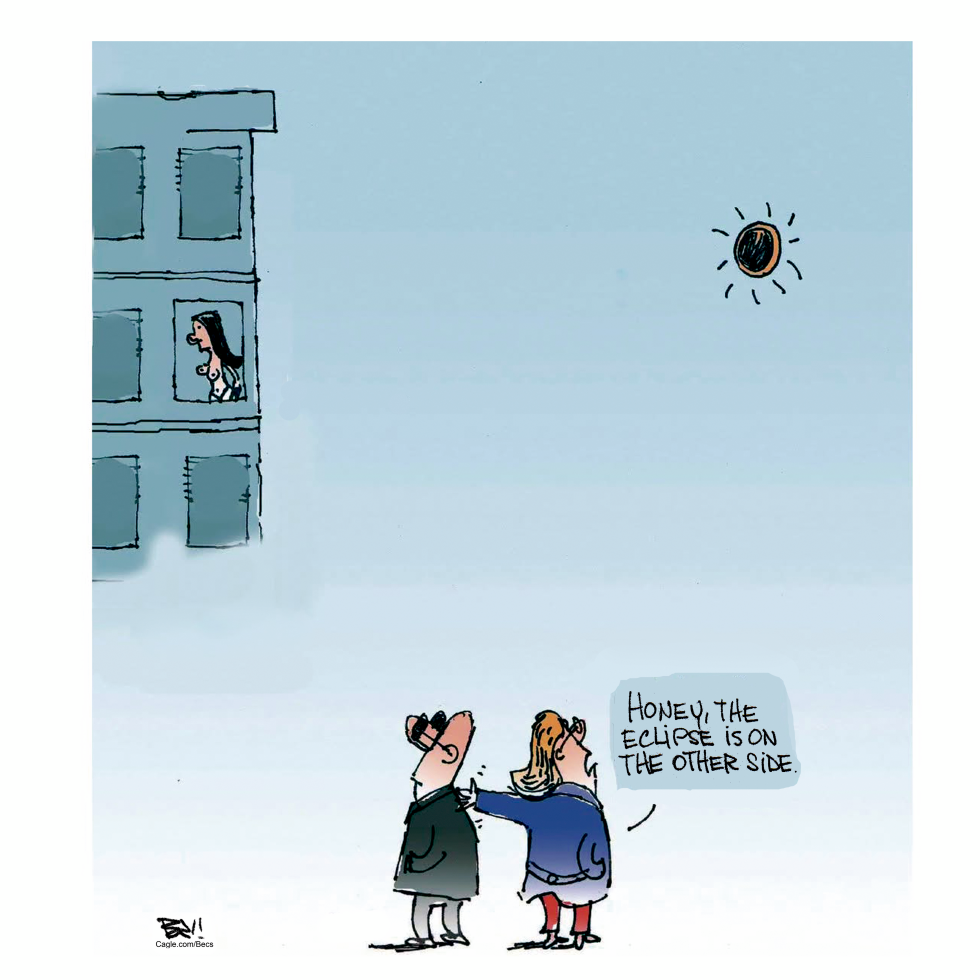
A domestic scene plays out around a simple pun on eclipses and visible marks. The exchange highlights everyday relationship dynamics where one party redirects attention from an apparent injury. The piece presents the interaction without broader political framing.
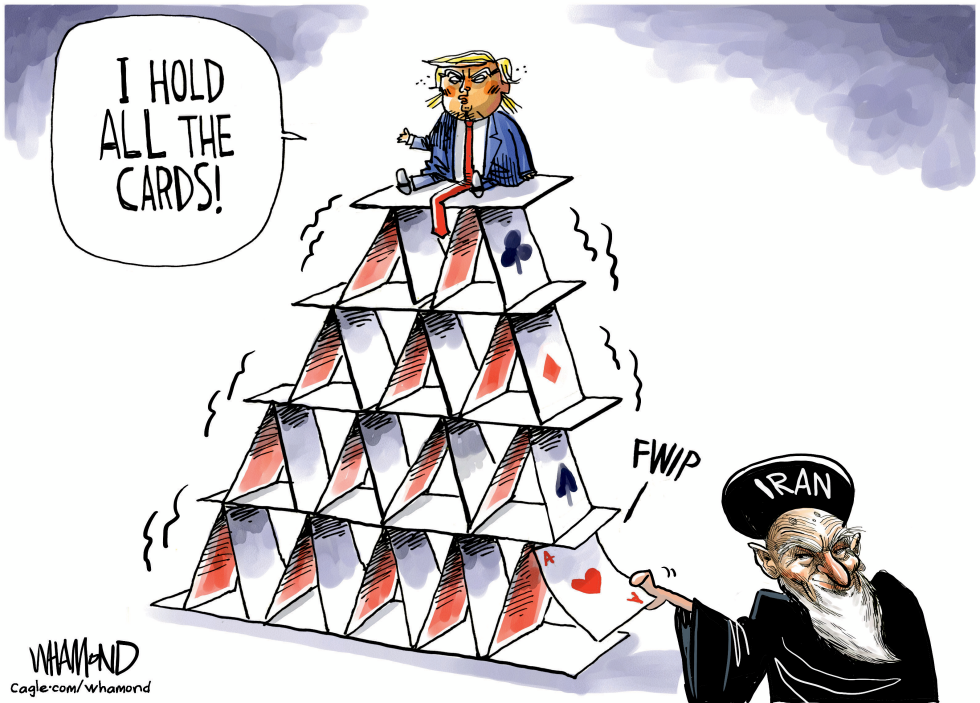
Donald Trump publicly asserted that the United States holds all leverage in dealings with Iran. The claim came amid ongoing tensions over nuclear issues and regional influence. Iran responded with actions that directly challenged that position. The editorial cartoon depicts the assertion as resting on an unstable foundation that Iran can readily disrupt. It frames the dynamic as one where bold statements outpace actual structural strength.
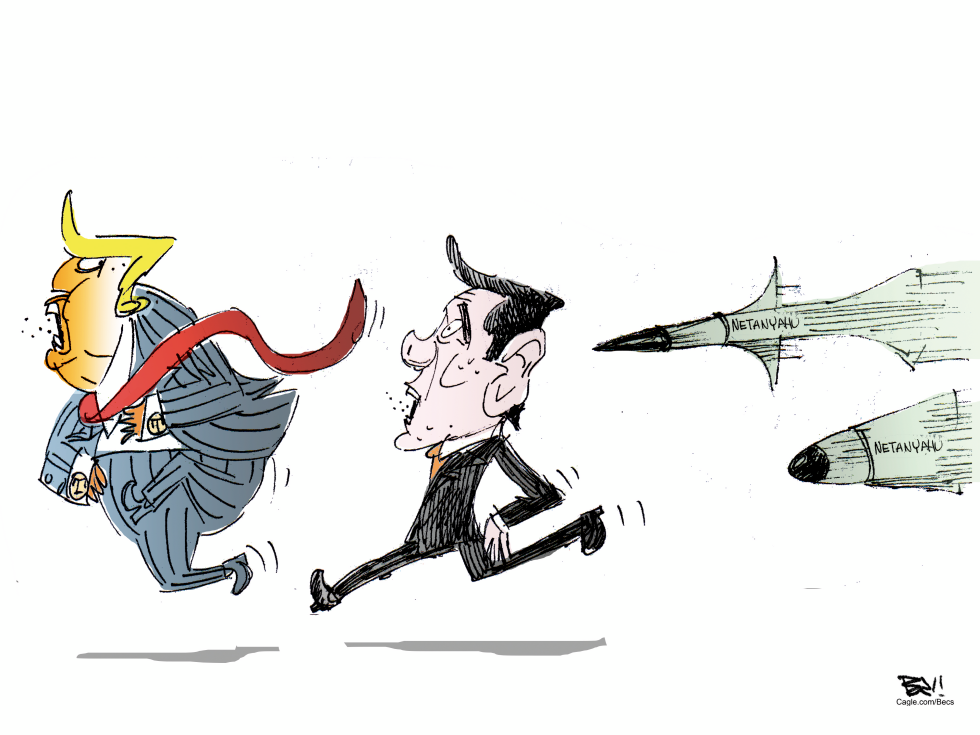
Donald Trump and Benjamin Netanyahu appear under pursuit in a scene tied to ongoing tensions in U.S.-Israel relations and regional security decisions. The image responds to the pattern of policy choices by both leaders that have drawn domestic and international criticism. It frames those choices as returning to affect the two men directly.
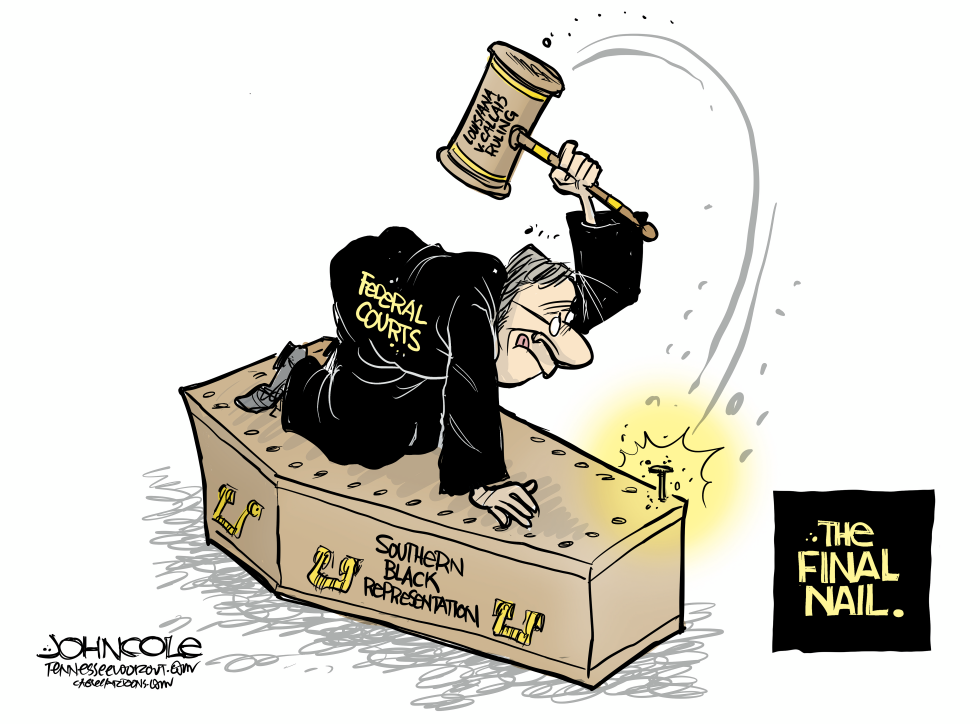
A federal court ruling on Louisiana redistricting has reduced black congressional representation across southern states. The decision follows ongoing litigation over district maps and voting access. It matters because it alters the number of majority-minority seats available in Congress. The piece argues the ruling delivers a decisive setback to those representation gains.
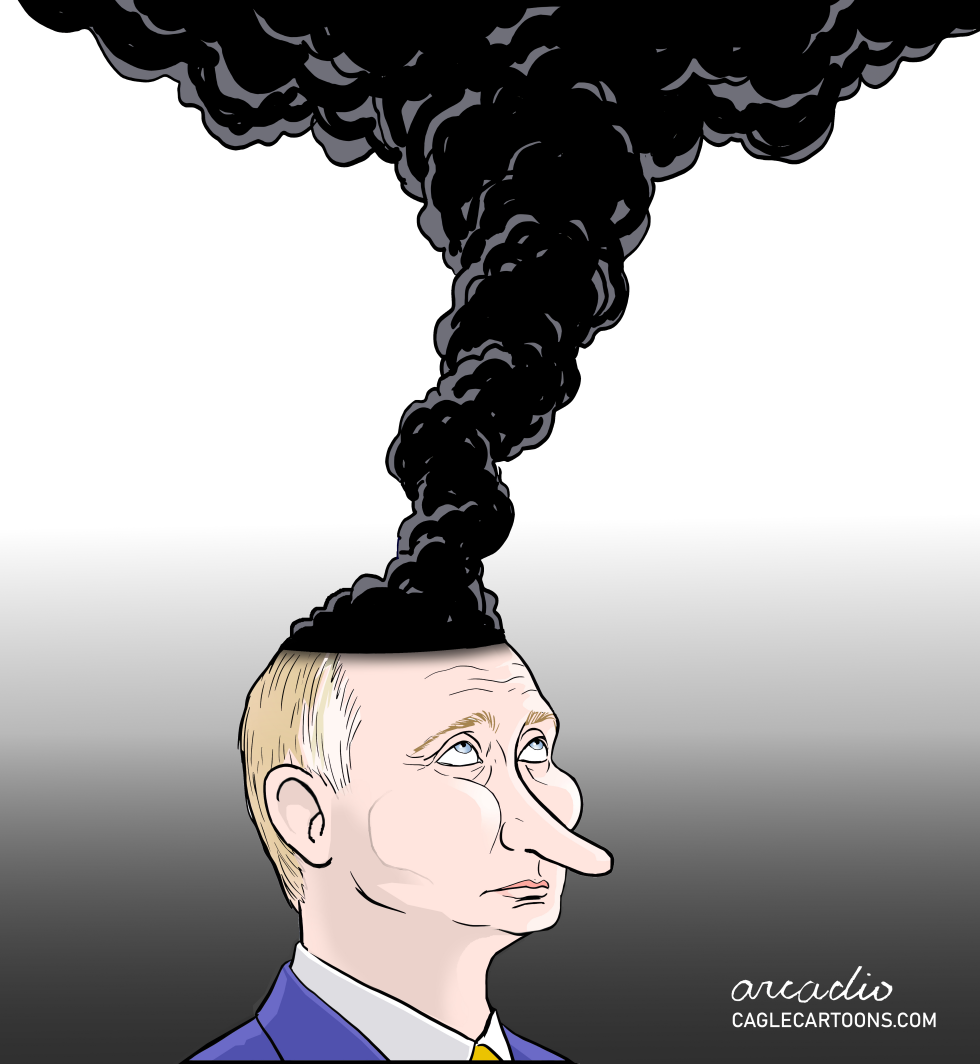
Ukraine has intensified strikes on Russian energy and industrial targets, aiming to disrupt Moscow's war funding. The moves come as Western sanctions already limit Russia's export revenues and force budget reallocations. The editorial position holds that sustained Ukrainian pressure can force Russia toward negotiations by eroding its financial base.
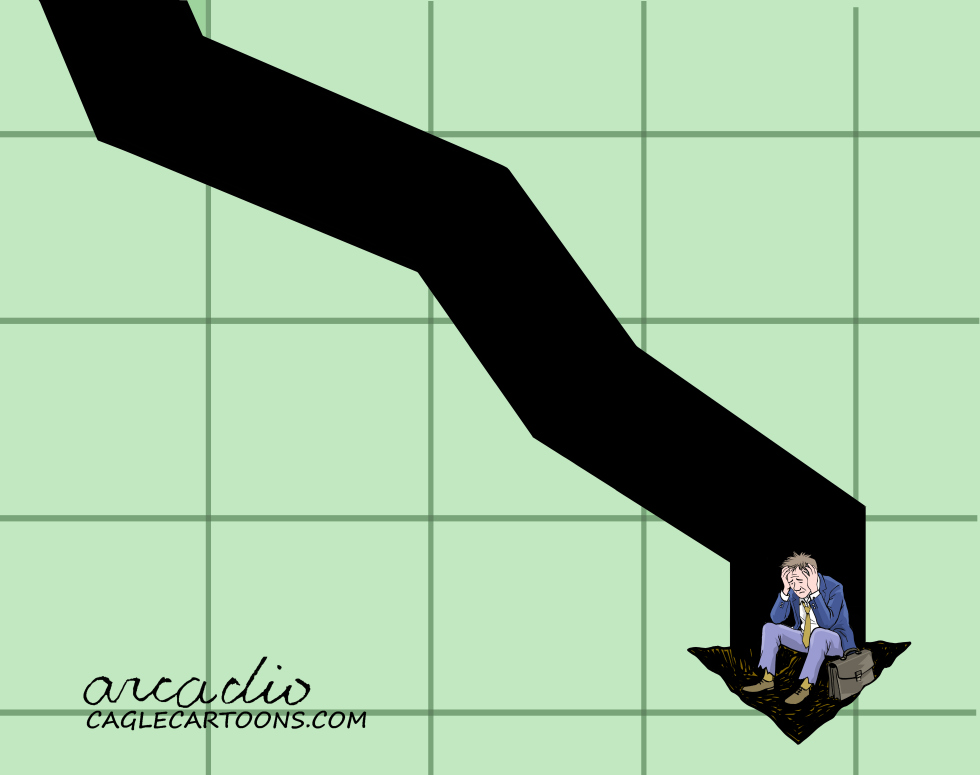
Businesses face mounting pressure from ongoing economic contraction that leaves executives isolated and without clear recovery paths. The decline affects employment, investment, and market stability across sectors. The piece highlights the personal toll on those navigating the downturn and underscores the urgency of addressing root causes before further damage spreads.
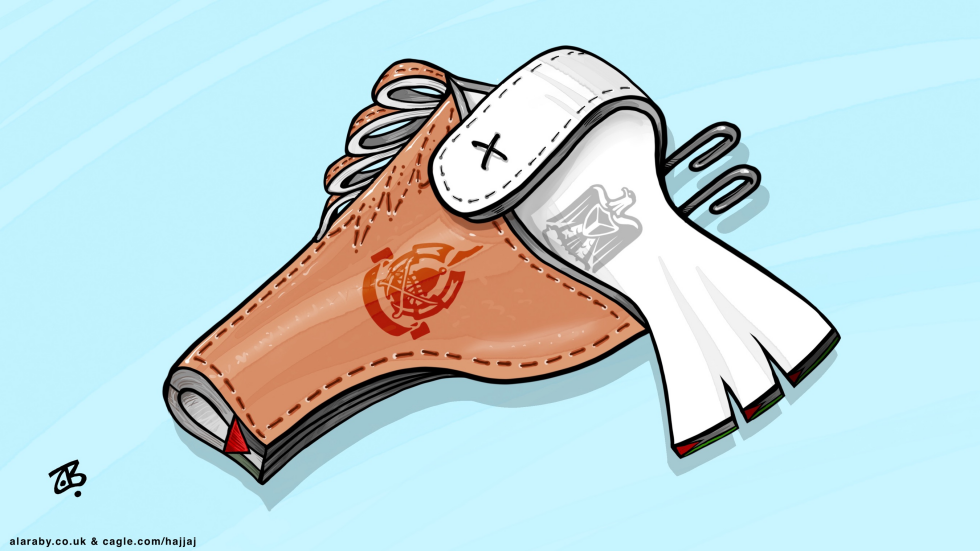
A holster containing a white gloved hand with a cross has surfaced in regional commentary. The image responds to persistent Israel-related security dynamics in the Middle East, where armed posture and symbolic gestures continue to shape public discourse. The piece frames the holster as a container for controlled yet visible force.
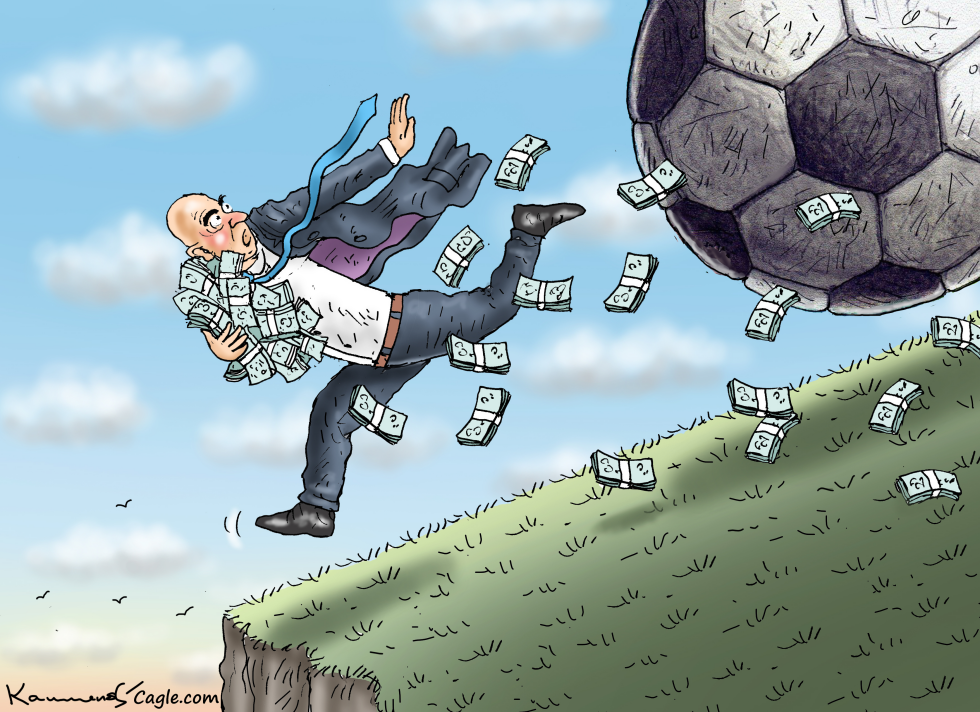
A businessman entangled with cash loses his footing at a cliff edge while a large soccer ball advances. The situation highlights risks in high-stakes financial dealings tied to sports ventures. The piece portrays the precarious nature of such pursuits without assigning specific blame.
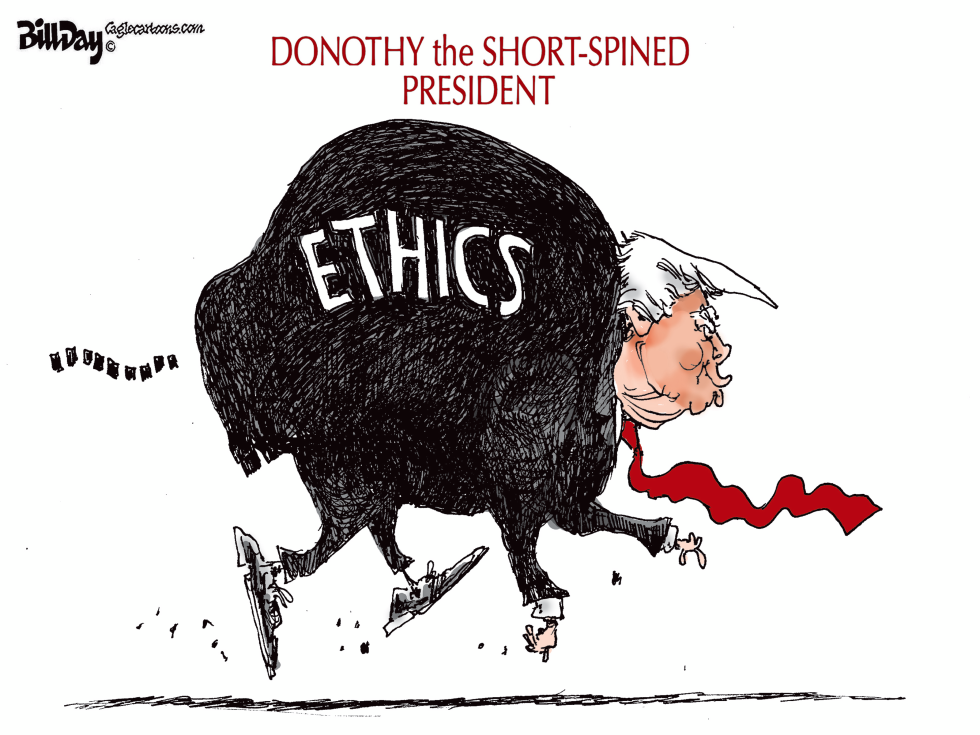
Donald Trump faces ongoing scrutiny over ethics compliance during his presidency. The piece portrays him shedding responsibilities and fleeing the issue. It critiques his approach to ethical standards in office.
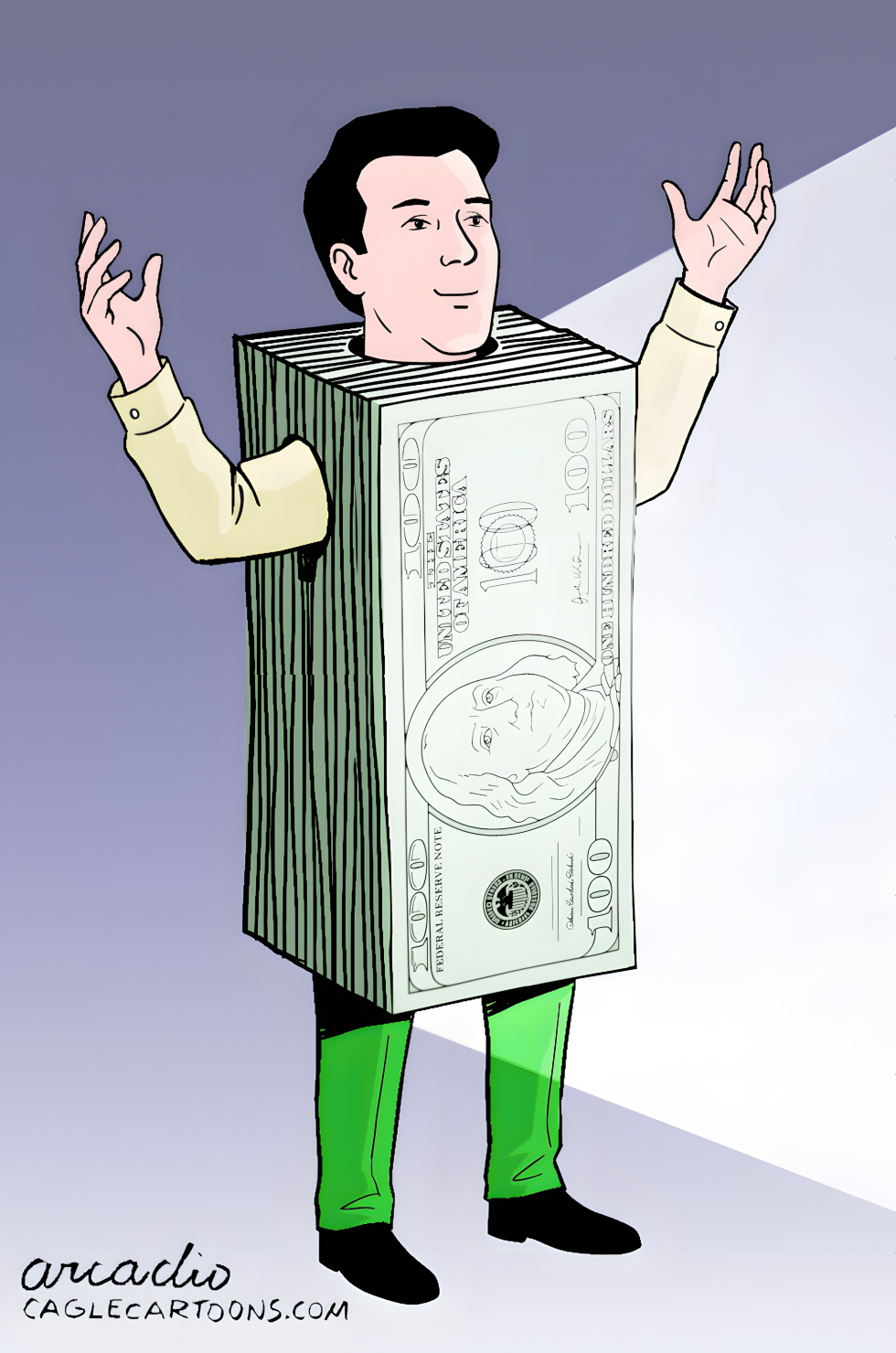
The US dollar maintains its central role in international finance and trade. Its status as the primary reserve currency supports global transactions and stability. The editorial highlights this continued influence without recent policy shifts or challenges altering the dynamic.
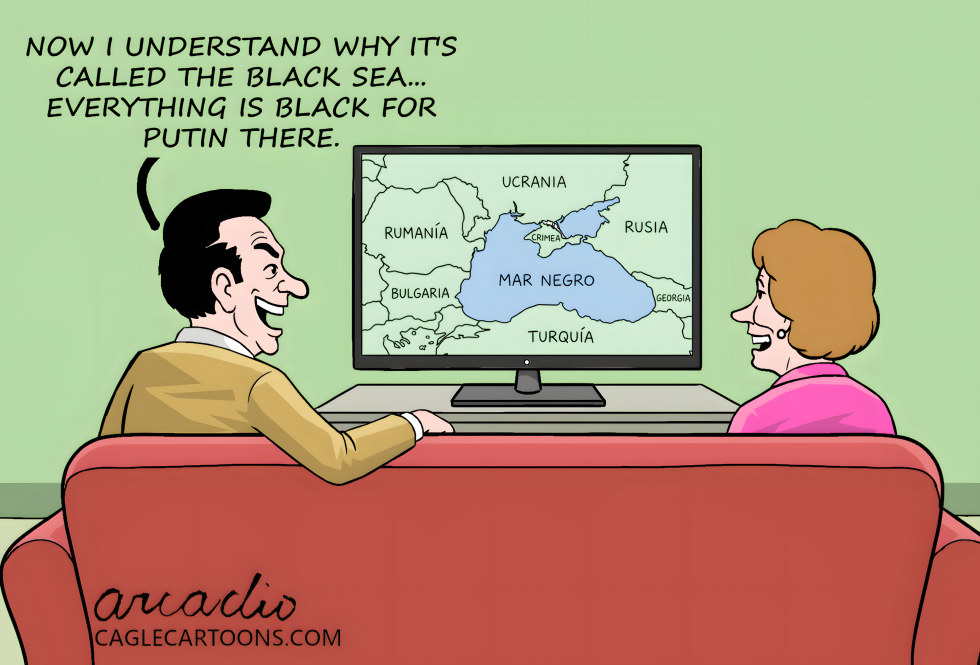
A couple watching television commentary on the Russia-Ukraine war notes the Black Sea's name in a pun about Vladimir Putin's difficulties. The piece highlights persistent Russian setbacks around Crimea and neighboring states as of late July 2026. It frames the conflict's geography as a source of frustration for Moscow.
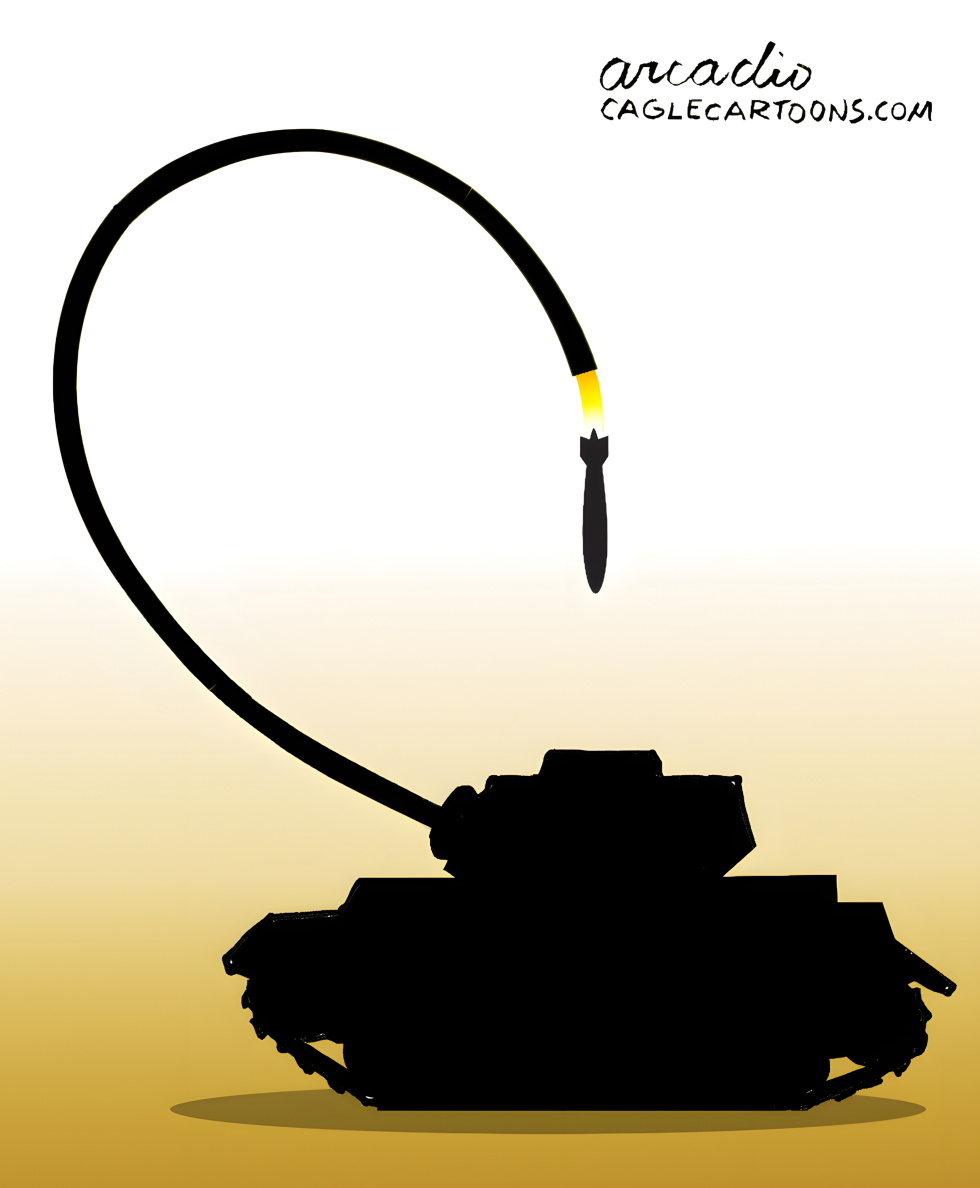
A military tank deploys a projectile attached to an unusually long curved fuse in this editorial image. The setup implies hardware that could rebound on its user. The piece comments on defense strategies where advanced systems carry built-in risks of unintended harm to the deploying force itself.
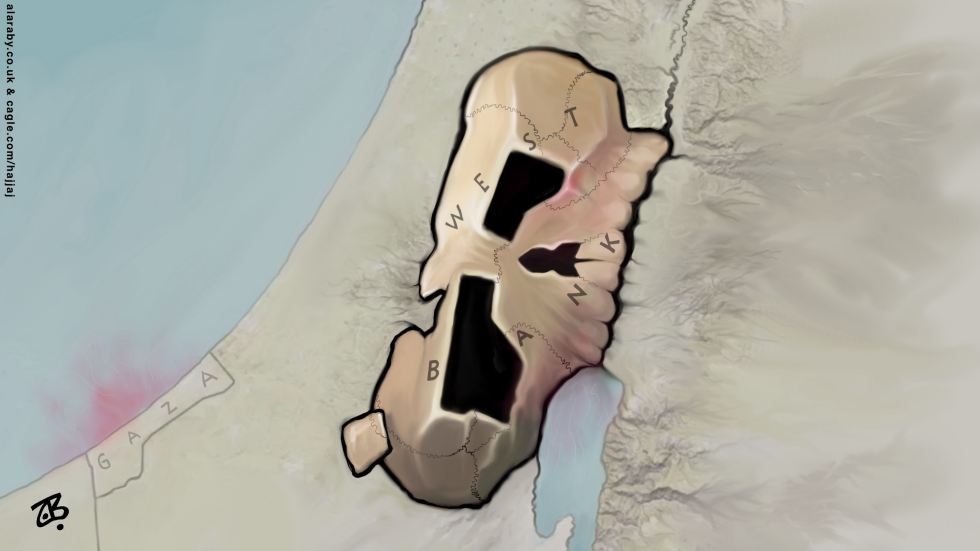
A map of the West Bank is depicted in the shape of a skull with black voids for eyes and mouth. The image responds to persistent Israeli-Palestinian tensions over the territory. The editorial position frames the West Bank as a site of death and destruction under current control.
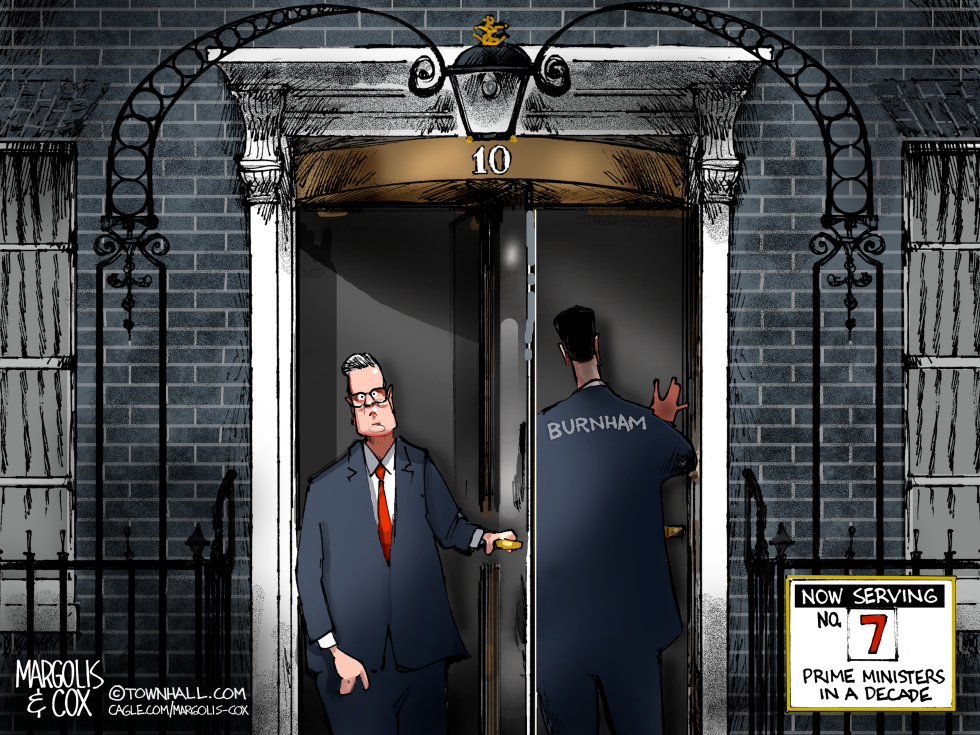
Keir Starmer exits the revolving door at 10 Downing Street while Andy Burnham enters from the opposite side. Starmer wears a dark suit with a red tie and glasses. Burnham has his name printed on the back of his jacket. A sign in the corner reads now serving number seven prime ministers in a decade. The image shows rapid leadership turnover at the United Kingdom government headquarters. It responds to ongoing political instability marked by multiple changes in the prime minister position over the past ten years, with the latest transition from Starmer to Burnham continuing the pattern of short tenures in the role.
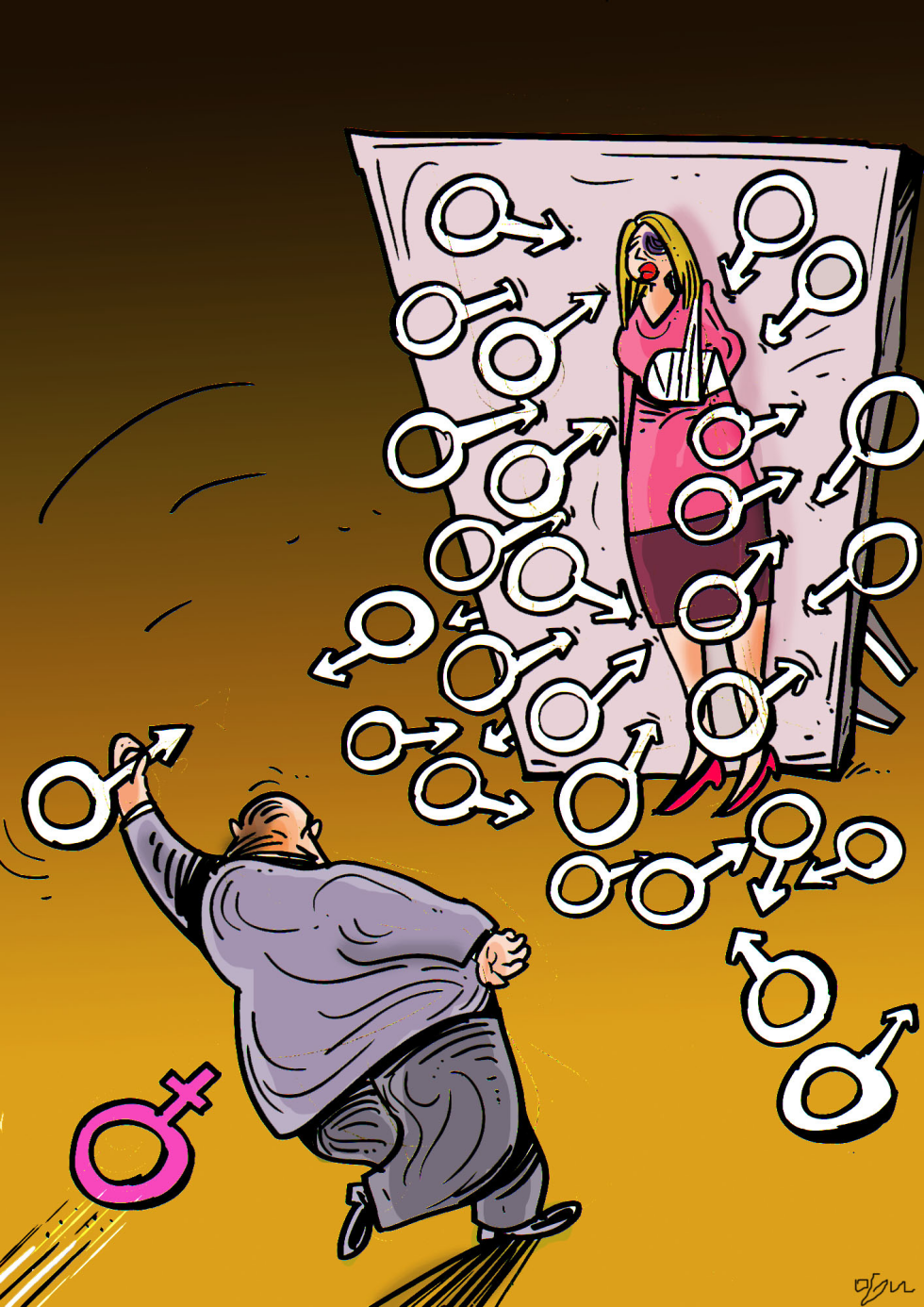
Violence against women remains a persistent social problem, with physical assaults and intimidation continuing in many communities. The piece responds to this ongoing dynamic by showing a male figure directing male symbols at an already injured woman, underscoring the editorial position that such aggression must be confronted directly.