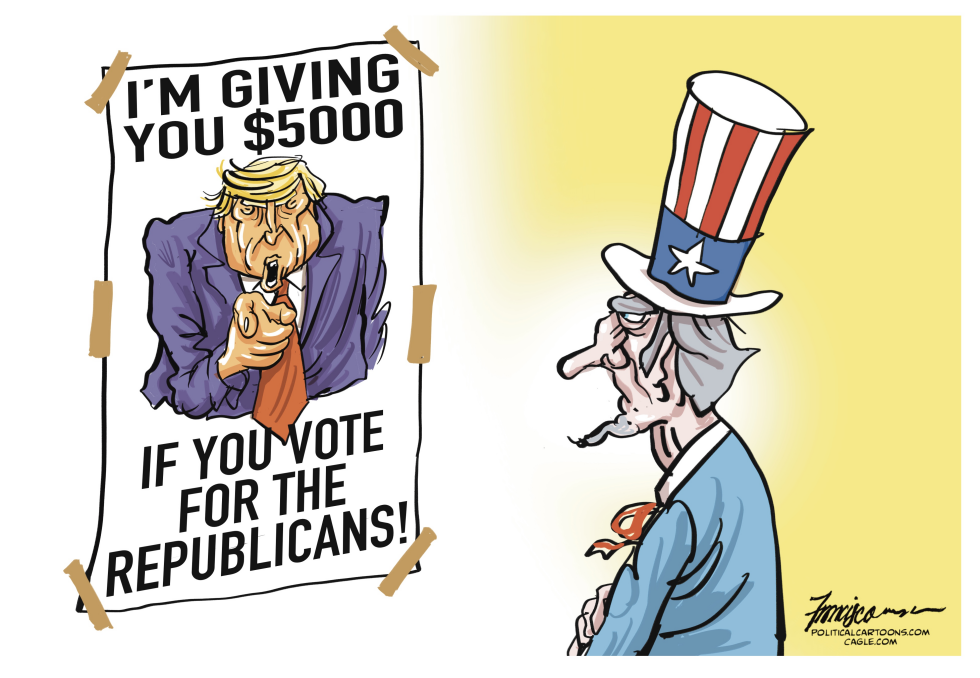
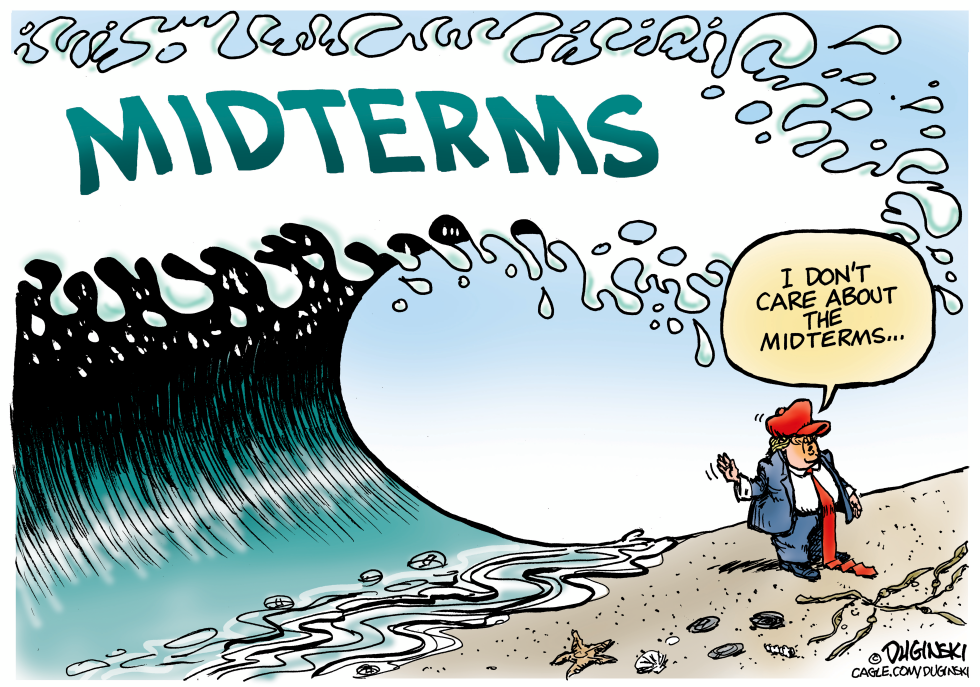
Donald Trump has floated direct cash payments to voters who support Republican candidates. The proposal surfaces weeks before the 2026 midterms and draws immediate scrutiny over its legality and intent. Critics argue the move risks turning elections into auctions. Supporters frame it as economic relief. The cartoon depicts the offer as a blunt transaction that leaves traditional symbols of American integrity uneasy.
Donald Trump has publicly offered $5000 payments to Americans who follow his directives, framing the incentive as a direct reward for alignment. The pledge has drawn immediate questions from his own base about the status of related DOGE checks previously promised. The move underscores ongoing efforts to maintain supporter enthusiasm through financial inducements. Critics view the tactic as an attempt to convert political loyalty into personal obedience. The cartoon highlights the transactional nature of the offer and the skepticism it has already generated among core supporters.
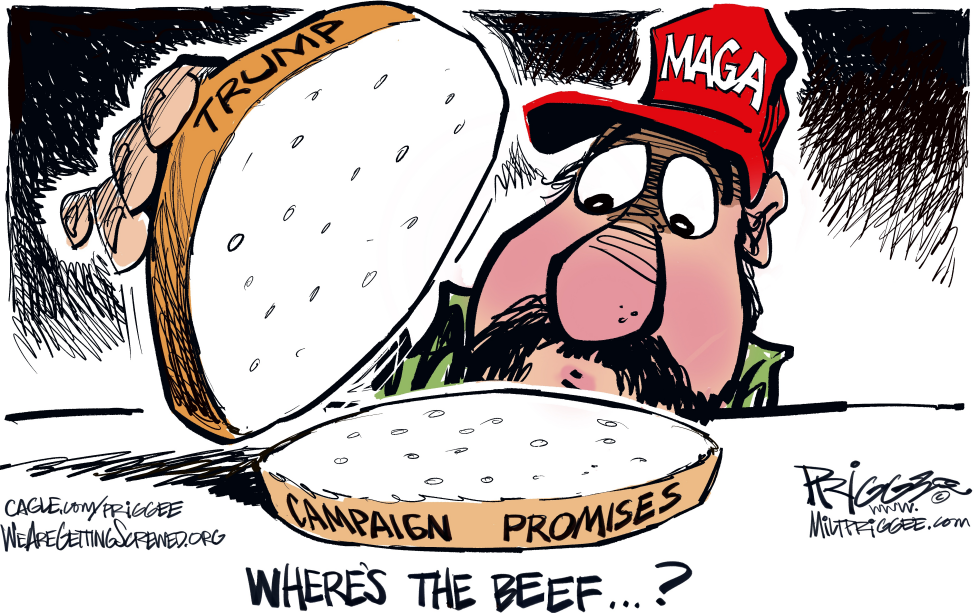
The cartoon depicts a figure resembling Donald Trump in a MAGA hat presenting a sandwich consisting only of bread labeled as campaign promises. The image references the classic Where's the beef slogan to underscore the absence of concrete policy details. Published on September 3, 2026, the work comments on ongoing debates about the substance of political pledges during election seasons. It aligns with broader discussions of voter expectations for tangible platforms rather than rhetoric alone. The visual metaphor emphasizes criticism of repeated patterns in campaign messaging without delivering specifics on key issues.
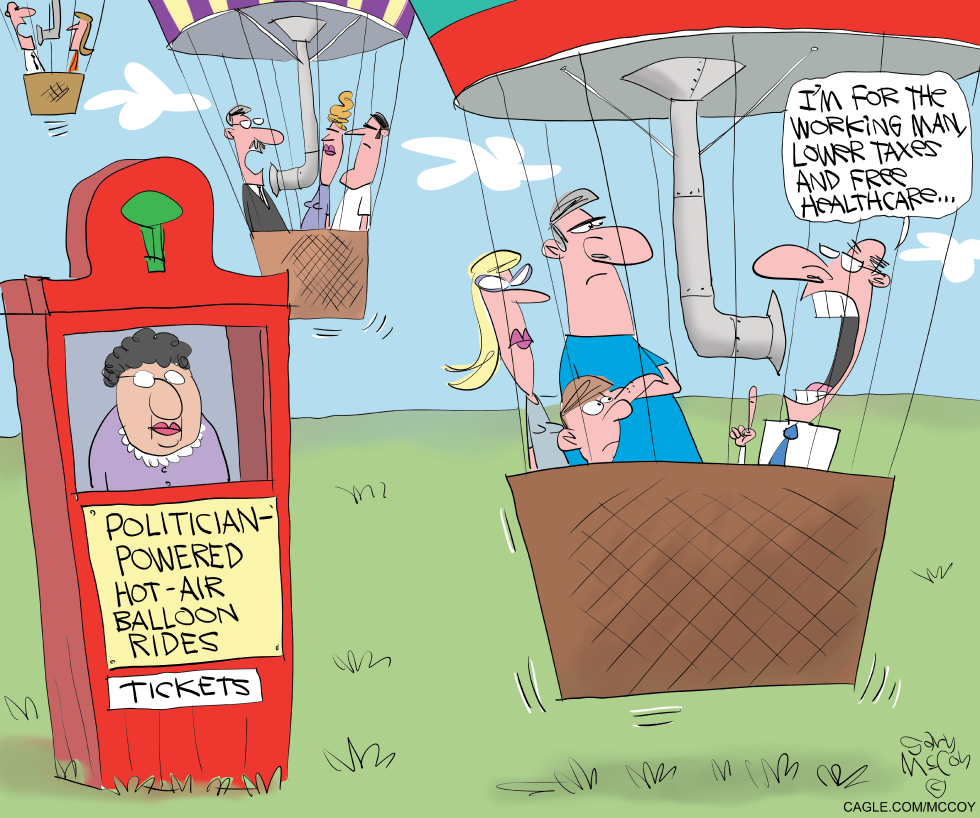
Politicians continue to campaign on lower taxes for workers and free healthcare access. These pledges remain central to attracting voter support ahead of elections. The piece portrays such promises as inflated rhetoric detached from delivery.
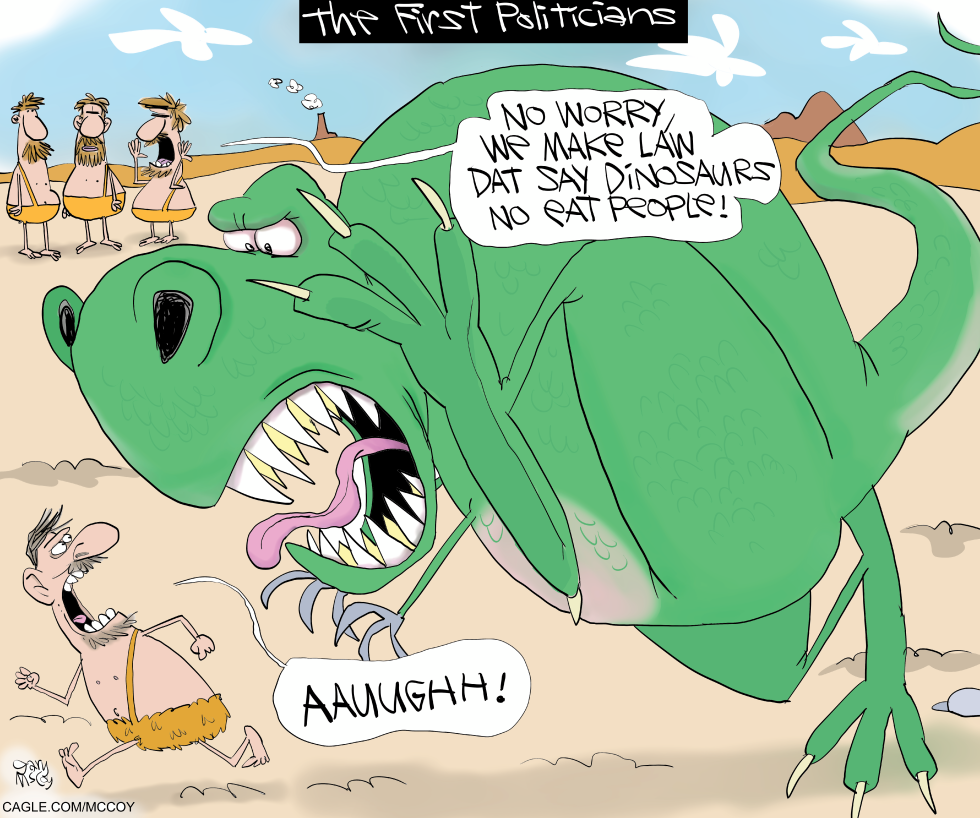
Politicians in prehistoric times promise a law banning dinosaurs from eating people. The pledge comes as a T-Rex looms over a fleeing caveman. The move highlights how leaders often make rules they have no intention of following. The piece takes the position that such assurances are empty and self-serving.
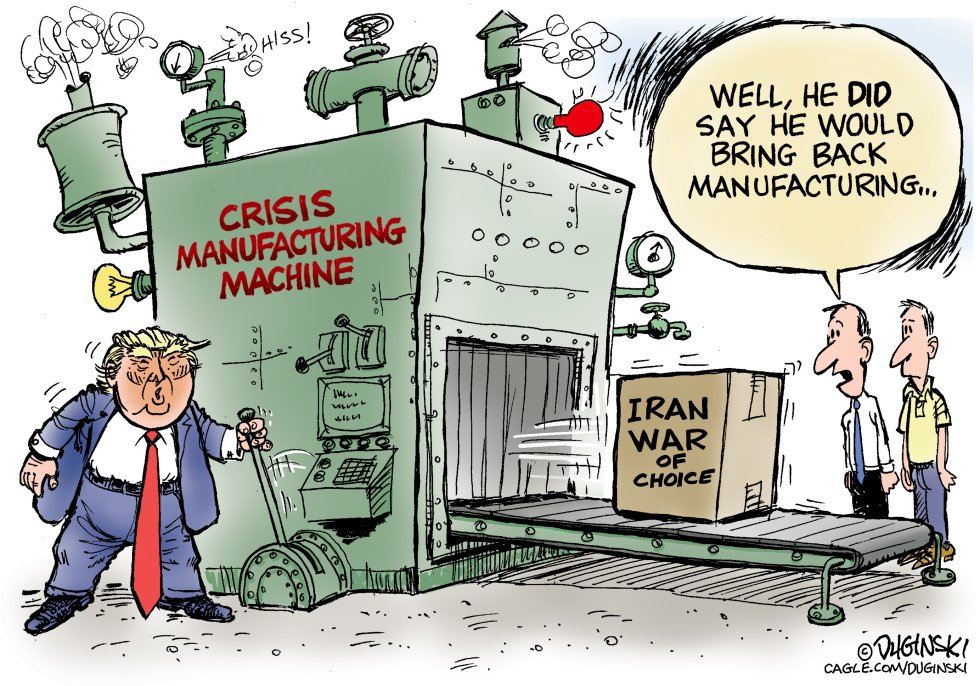
Donald Trump, holding the presidency in 2026, faces renewed scrutiny over foreign policy toward Iran. Recent statements revive campaign pledges to restore domestic manufacturing while tensions with Tehran escalate. The administration\\\'s approach draws criticism for prioritizing confrontation over diplomacy. Observers note the pattern of generating external crises rather than economic gains at home. The cartoon argues that Trump\\\'s actions fulfill a literal version of his manufacturing rhetoric by producing conflict instead of jobs.
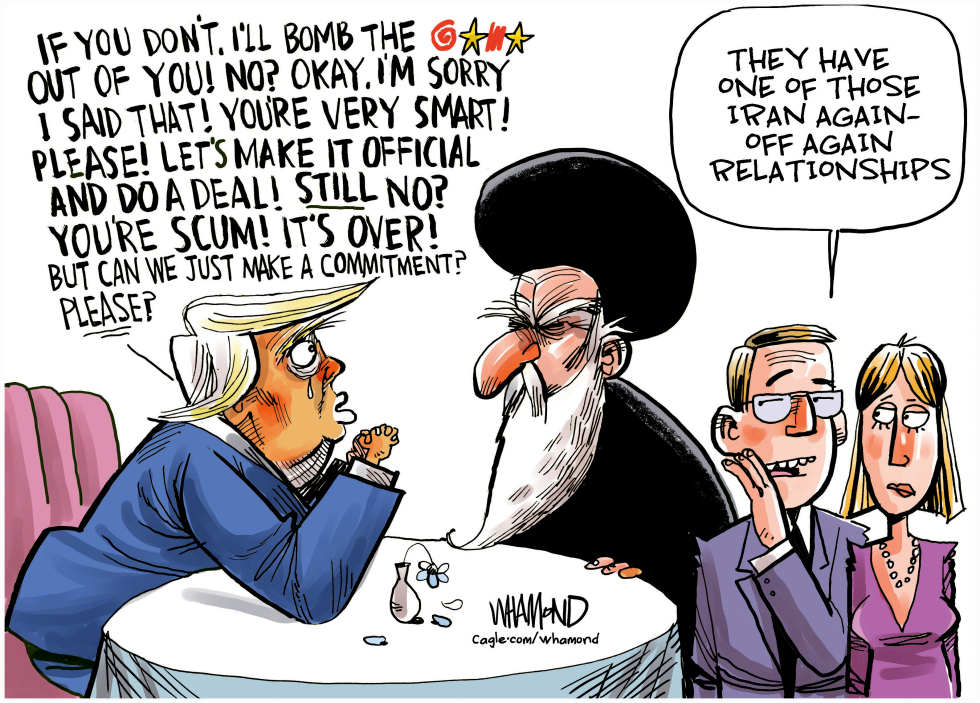
Donald Trump engaged in direct outreach to Iranian Supreme Leader Ayatollah Ali Khamenei amid stalled nuclear talks. The effort mixed ultimatums with appeals for a deal. The cartoon portrays the approach as inconsistent and ineffective.
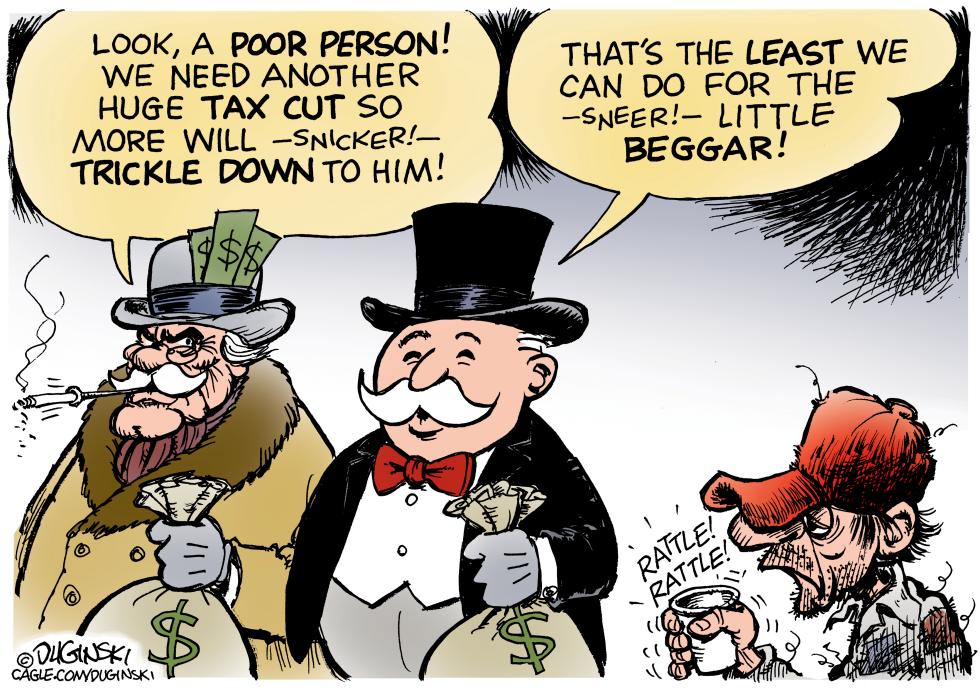
Wealthy interests continue to advocate additional tax reductions framed as broad-based relief. Critics note that such measures primarily benefit high earners while leaving lower-income households with minimal gains. The piece highlights the disconnect between policy promises and visible outcomes for those at the bottom.
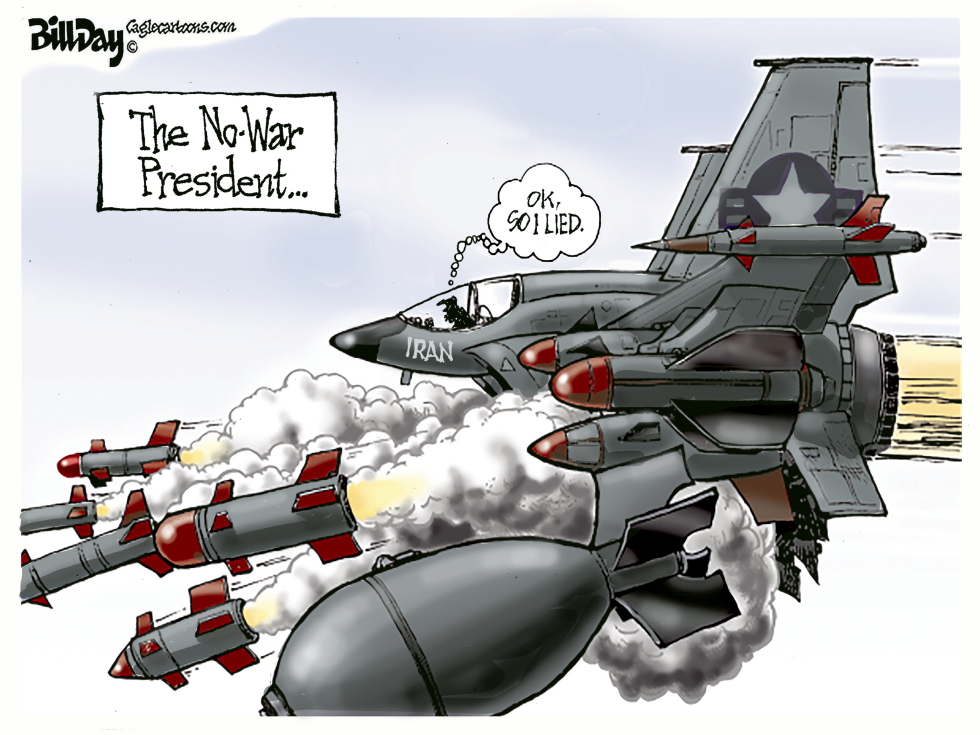
A political cartoon published July 21, 2026, depicts a fighter jet marked Iran launching a barrage of missiles while a speech bubble from the cockpit reads OK, SO I LIED. A sign overhead labels the scene The No-War President. The image responds to recent reports of U.S. military action against Iran that contradict earlier campaign assurances against new conflicts.
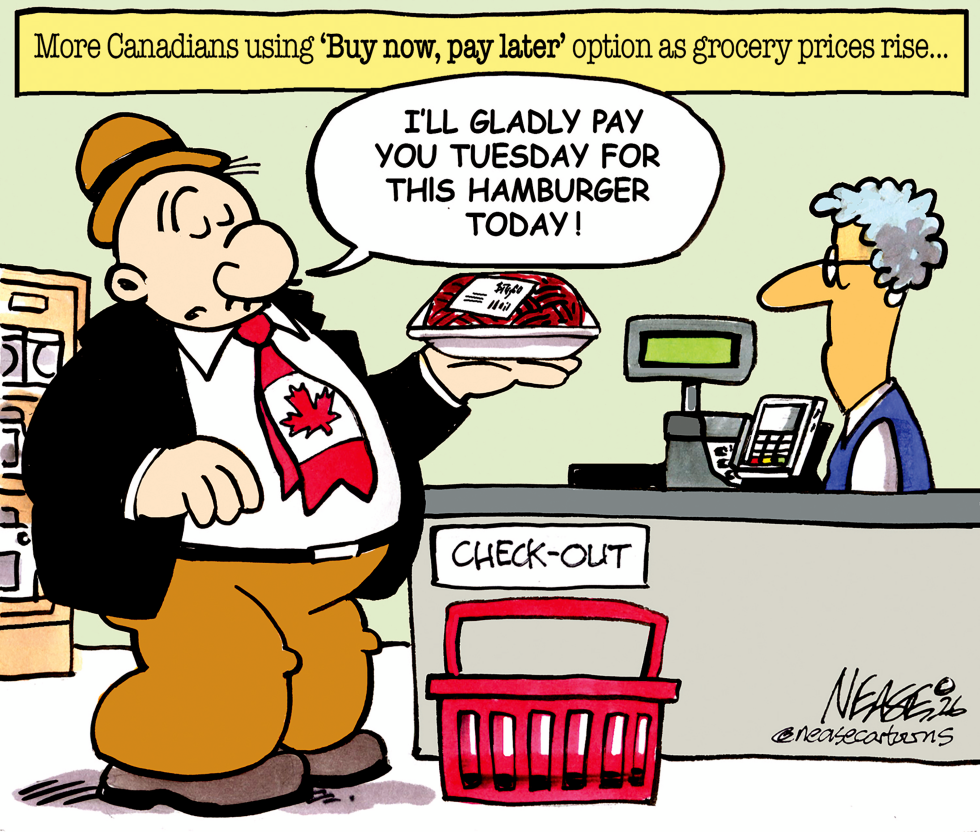
A cartoon published July 8, 2026, shows a Canadian shopper at a grocery checkout counter holding a package of hamburger meat while declaring he will gladly pay Tuesday for the item today. The scene references the classic Wimpy line and highlights growing use of buy now pay later services as grocery prices continue to climb in Canada.
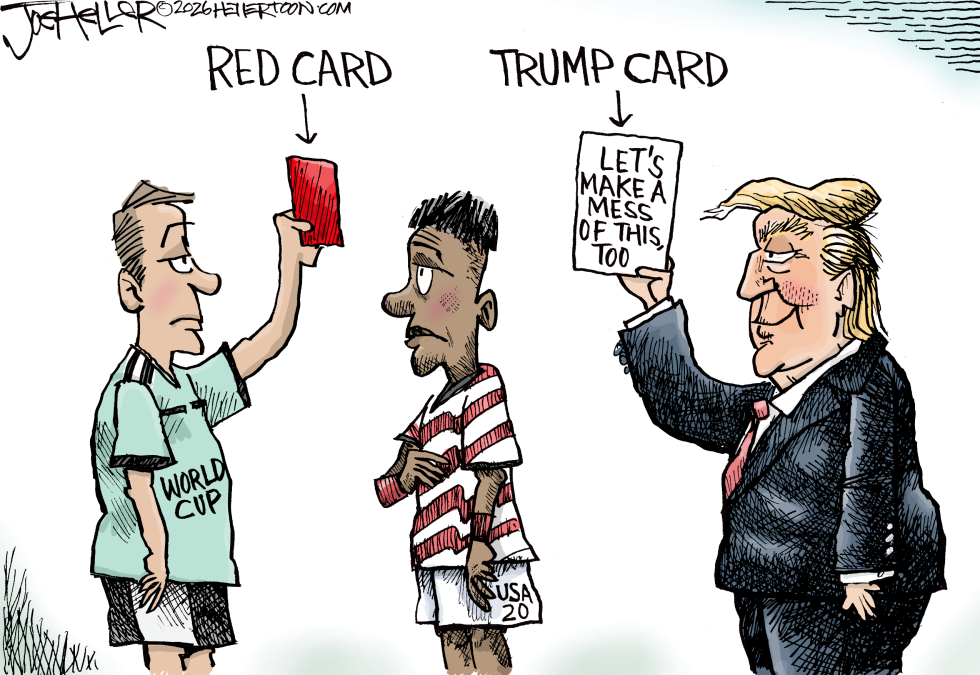
On July 6 2026 Joe Heller depicts a World Cup referee displaying a red card to a USA-jersey player while Donald Trump holds a sign reading LET'S MAKE A MESS OF THIS TOO. The cartoon contrasts the standard soccer penalty with Trump's alternative card. Publication occurs weeks before the 2026 World Cup begins in North America. The image places the referee on the left the player in the center and Trump on the right. Text labels identify each card clearly.
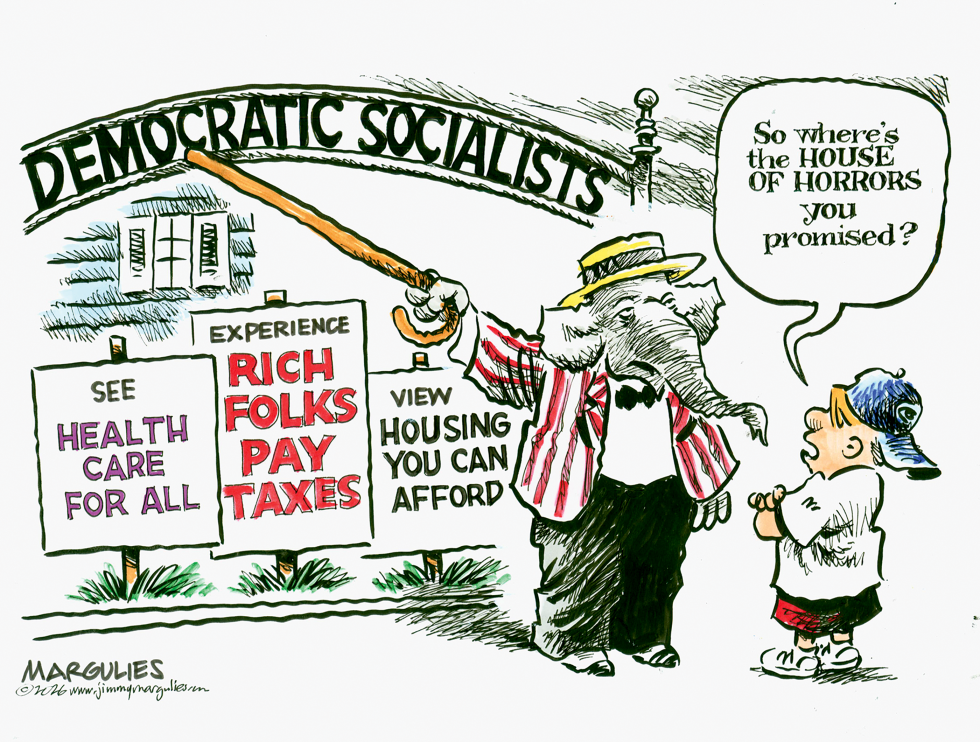
An elephant representing Republicans conducts a tour of attractions labeled Democratic Socialists on July 1 2026. Three signs advertise health care for all, taxes paid by the rich and housing that average people can afford. A young visitor in a cap asks where the house of horrors is that was promised. The scene uses the classic elephant symbol to frame policy offerings as ordinary exhibits rather than frightening outcomes.
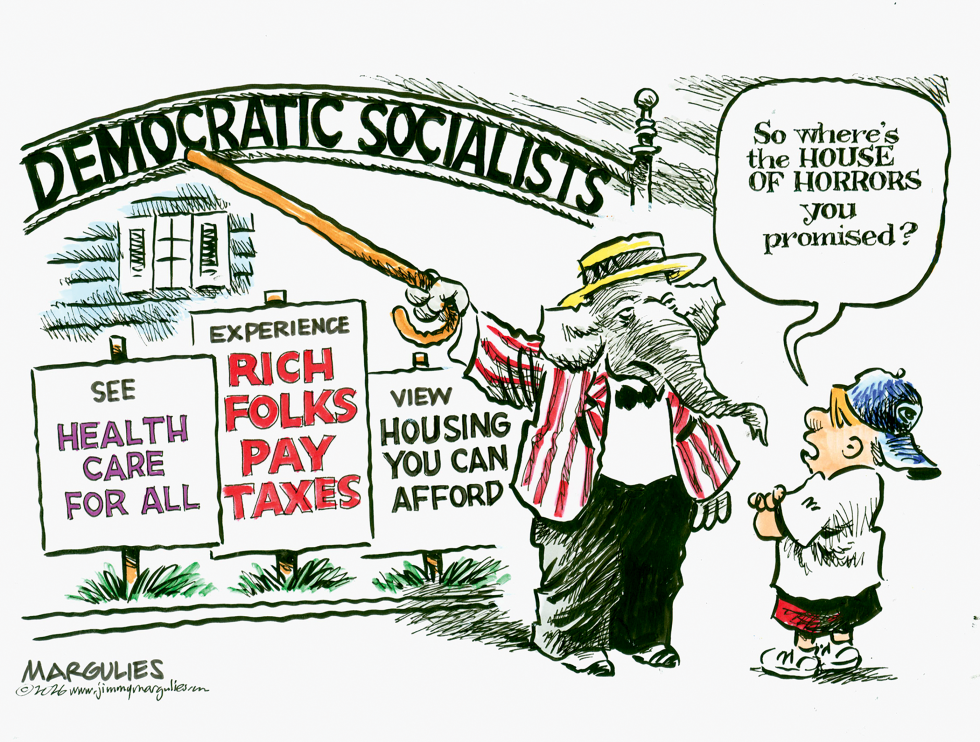
An elephant dressed as a barker stands at a Democratic Socialists booth displaying signs for health care for all, rich folks paying taxes, and housing you can afford. The figure holds a pointer toward the arch and addresses a child visitor. The child asks where the house of horrors is located. The scene is set outdoors with a building facade visible behind the signs. Publication occurred on July 1 2026.
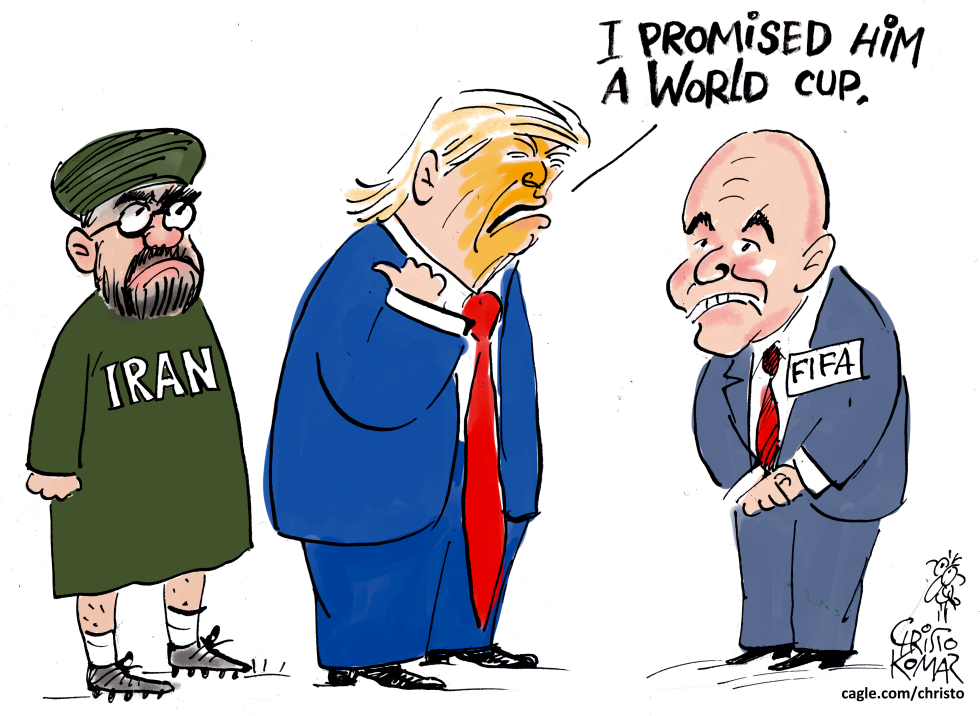
On June 21 2026 the cartoon depicts Donald Trump assuring a figure labeled Iran of a World Cup win while a FIFA official looks on with concern. The scene references Trump's past statements on international deals and the upcoming tournament hosted partly in the United States.