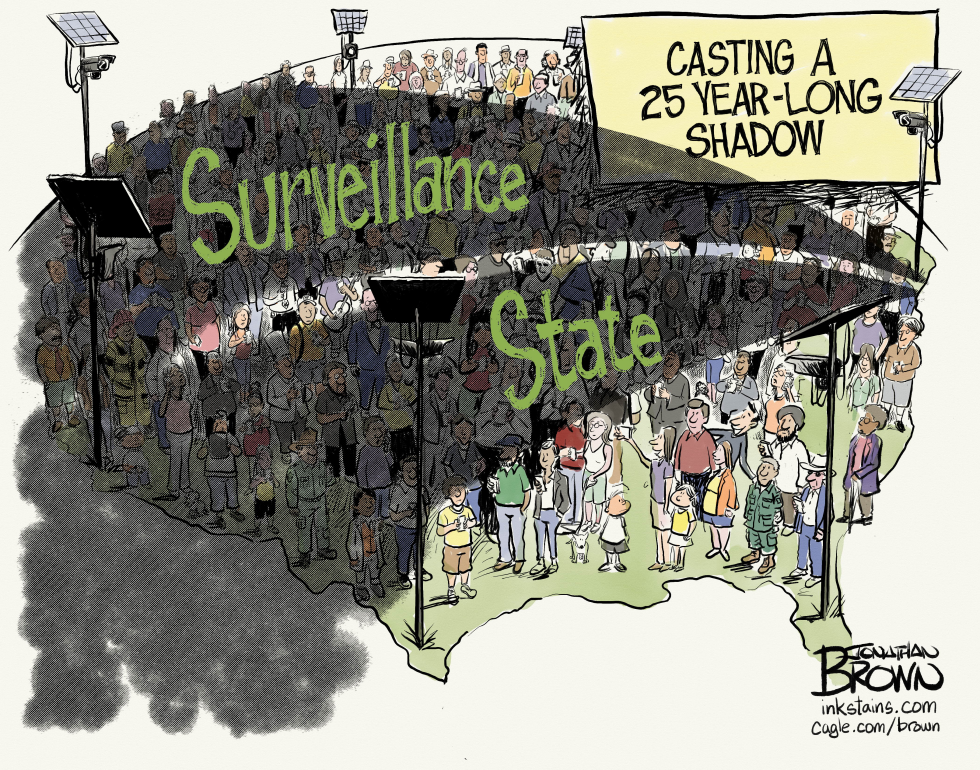
The cartoon depicts a dense crowd of Americans standing on a map of the United States, partially obscured by a large dark shadow cast by surveillance cameras mounted on poles. The words 'Surveillance State' appear prominently in green lettering across the scene, while a sign in the upper right reads 'CASTING A 25 YEAR-LONG SHADOW.' The image comments on the lasting effects of expanded government surveillance programs that began after the September 11 attacks, now spanning a quarter century. It illustrates how these measures continue to influence daily life and public spaces in 2026.
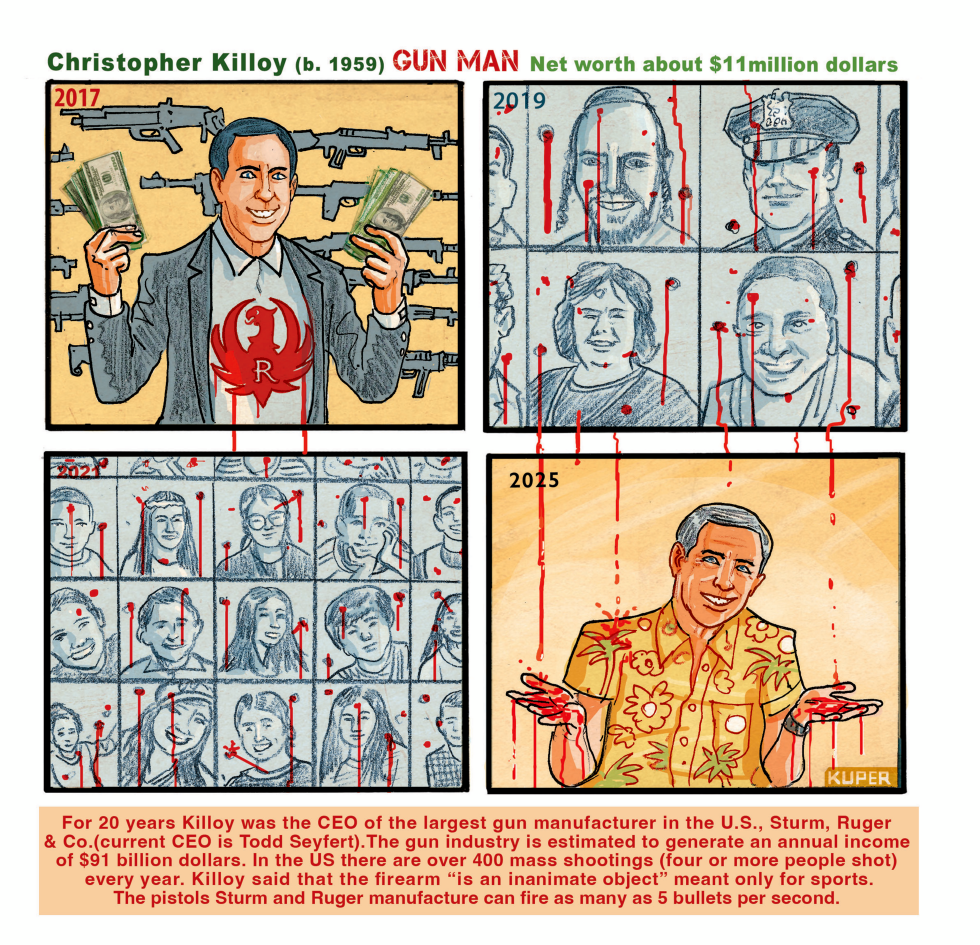
Christopher Killoy served as CEO of Sturm, Ruger & Co. from roughly 2005 to 2025, during which the company generated billions in revenue from firearms used in hundreds of U.S. mass shootings. The industry earns an estimated $91 billion annually, and more than 400 incidents occur each year. Killoy described guns as inanimate sporting objects. The cartoon criticizes the disconnect between corporate profits and the human cost shown in the accumulating portraits of victims.
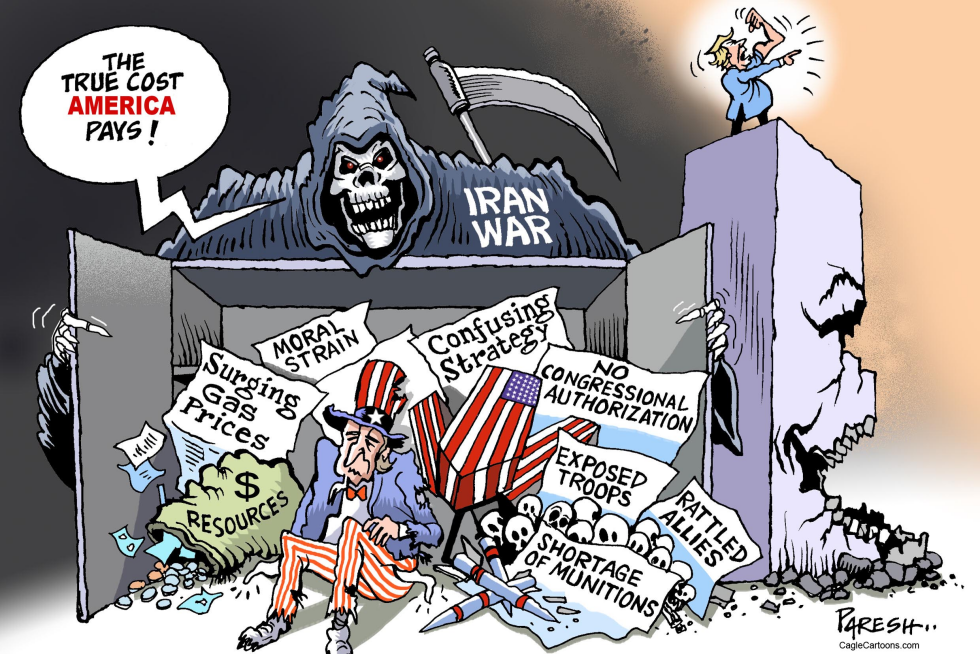
The cartoon depicts the Grim Reaper personifying the Iran War looming over a box of American costs including surging gas prices, moral strain, confusing strategy, no congressional authorization, exposed troops, shortage of munitions and rattled allies. Uncle Sam sits defeated among the debris with a broken flag and skulls. Donald Trump stands on a pedestal pointing upward. A speech bubble declares the true cost America pays. Published September 4, 2026, the piece critiques the drain on U.S. resources and lack of oversight in the conflict.
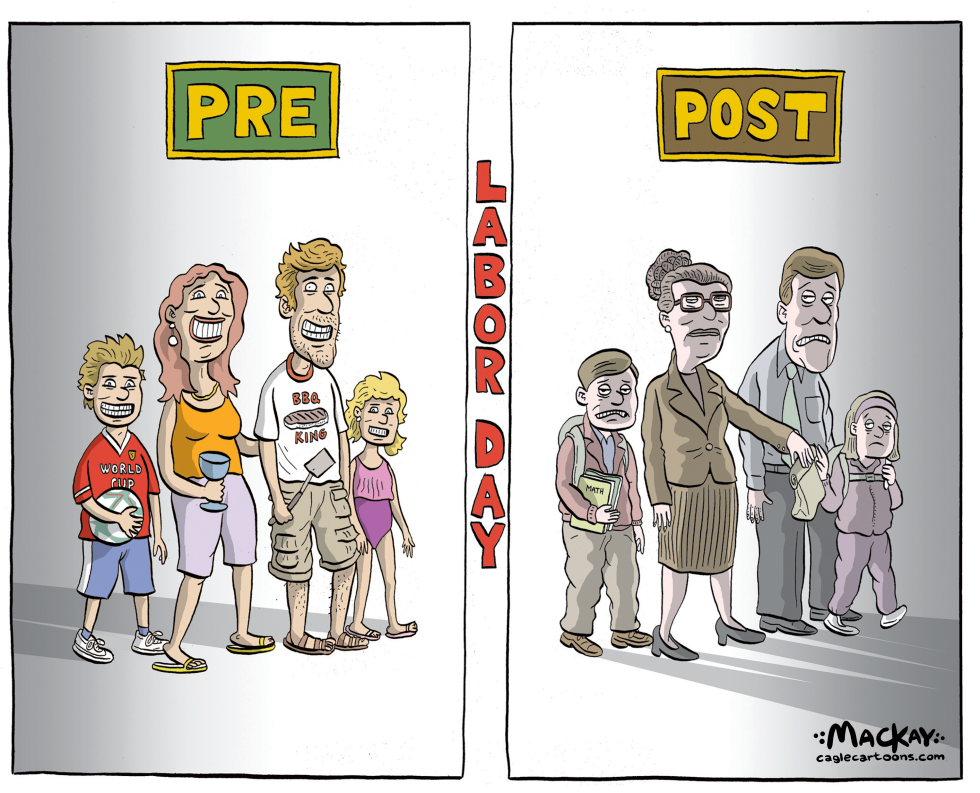
The cartoon by Graeme MacKay contrasts a joyful pre-Labor Day family scene with a weary post-Labor Day version. On the left, parents and children smile in casual summer attire while holding leisure items. On the right, the same family appears drained as they prepare for school and work. The vertical label emphasizes the holiday as the dividing line. This reflects the annual transition many households experience each September. The piece uses simple visual comparison to highlight the end of vacation freedom.
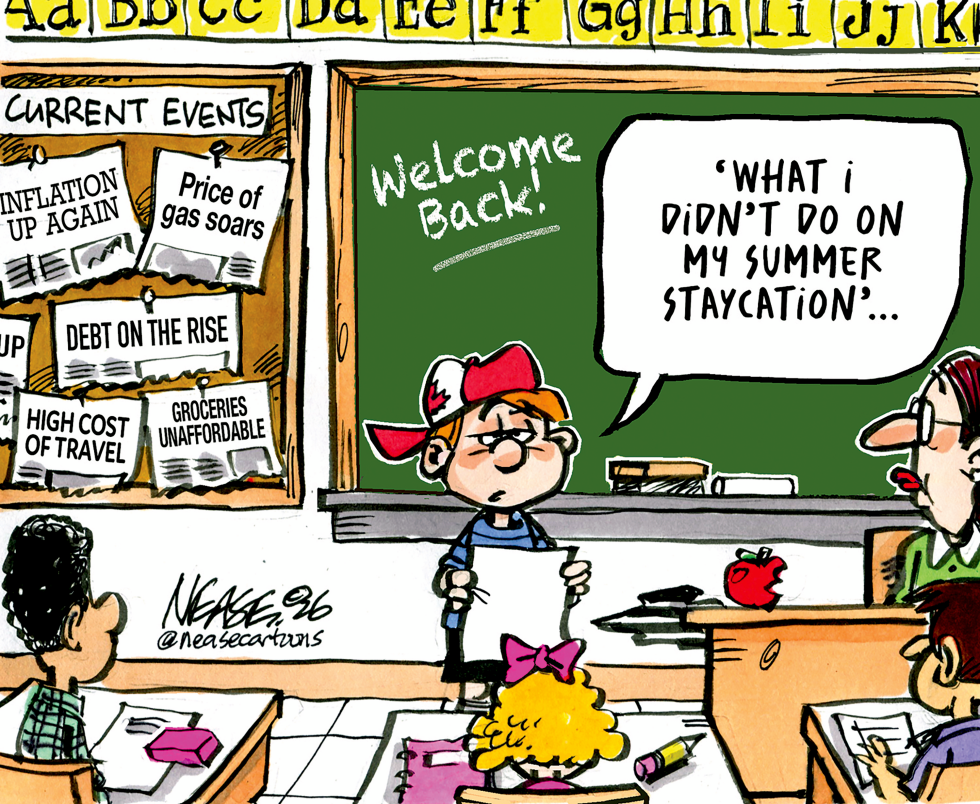
Rising inflation, gas prices, and household debt have made traditional summer vacations unaffordable for many families, leading to increased staycations as the new school year starts. The cartoon captures this cost-of-living squeeze through a classroom presentation on what students did not do over the break. It underscores how everyday expenses now dominate family decisions and limit leisure options.
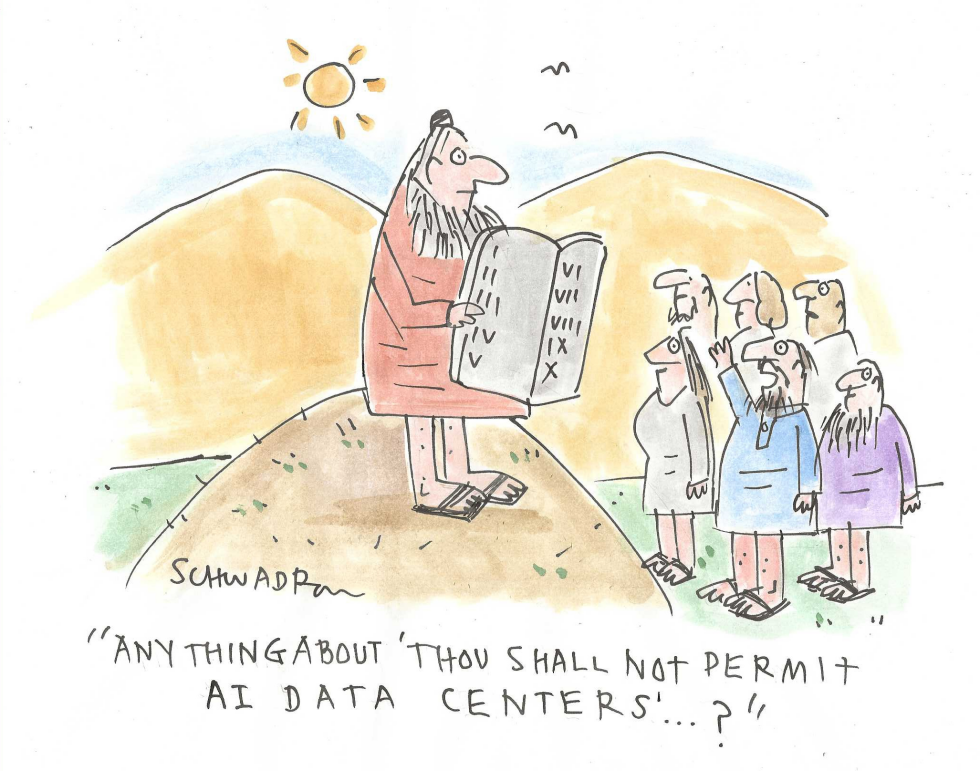
AI data centers face growing regulatory scrutiny over energy use and land impact in 2026. Lawmakers weigh new permitting standards as facilities expand rapidly. The cartoon uses the Moses figure to highlight the absence of explicit restrictions in foundational rules. It suggests modern governance struggles to apply old frameworks to new infrastructure demands. The editorial stance favors clearer limits on data center approvals.
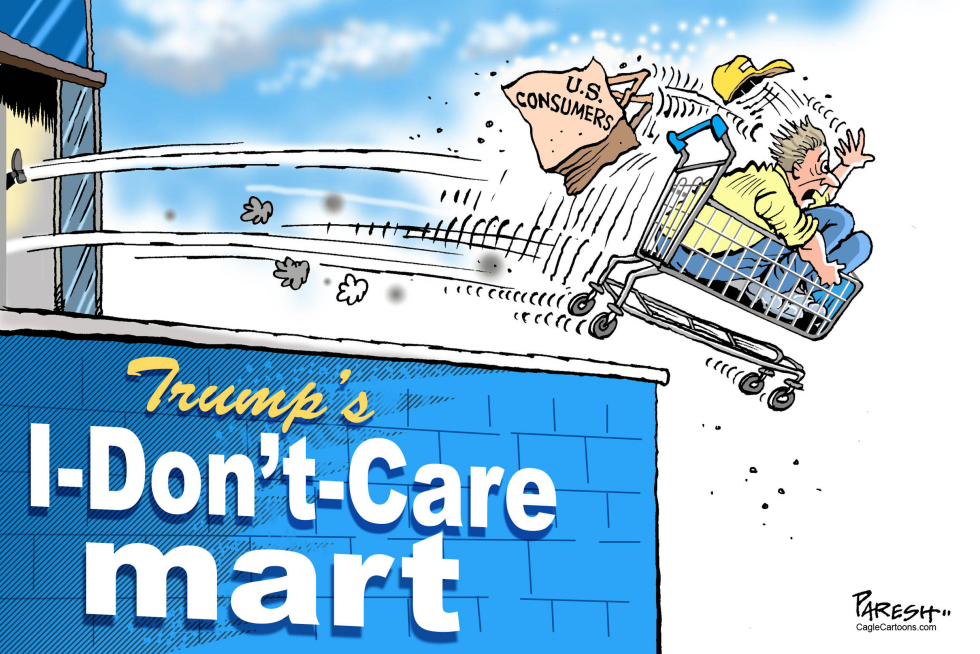
Trump administration policies on trade and spending have contributed to higher prices for everyday goods. American households face increased costs at stores as tariffs and other measures take effect. The cartoon argues these policies prioritize other goals over consumer welfare and leave families paying more.
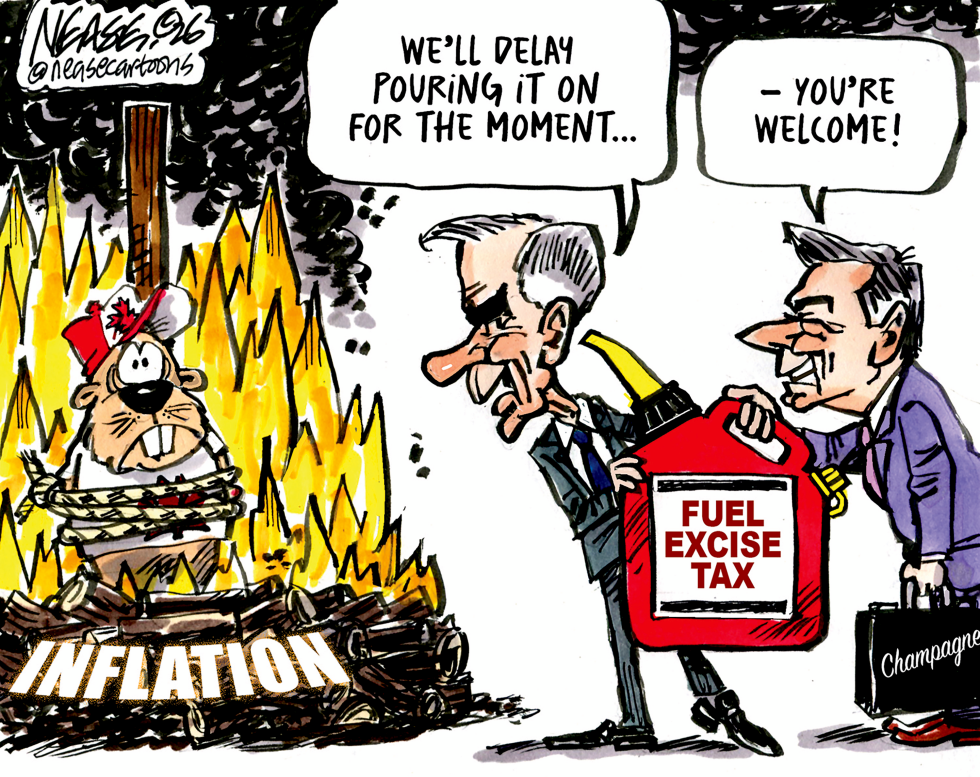
President Biden announced a delay in implementing a fuel excise tax increase amid ongoing inflation pressures. The move aims to ease costs at the pump for consumers. Critics argue the delay offers only temporary relief without addressing root causes. Supporters see it as a pragmatic step to stabilize prices. The editorial takes the position that such delays highlight inconsistent economic leadership.
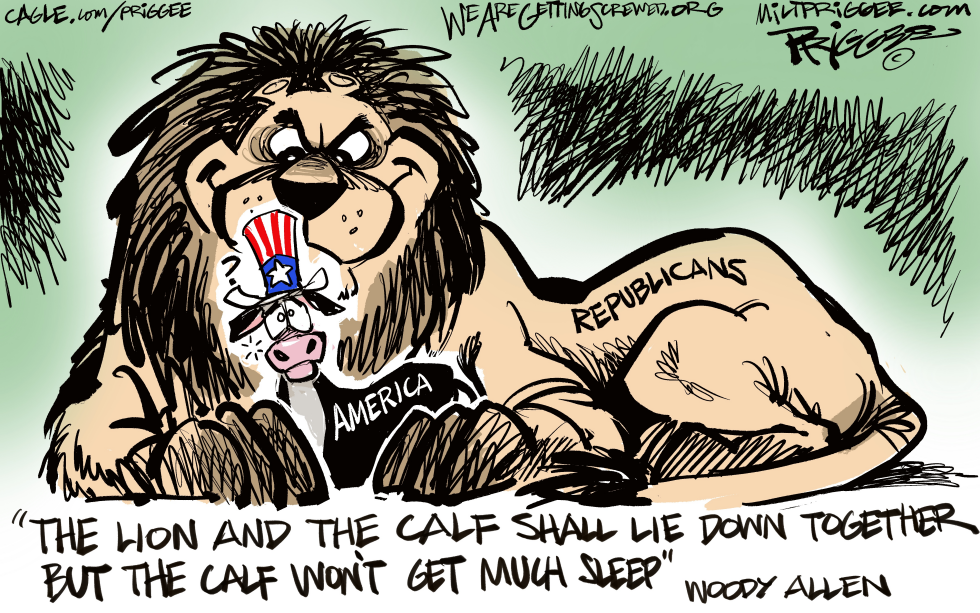
The cartoon shows a lion marked Republicans with an American calf in its mouth. A Woody Allen quote about the lion and calf lying down together runs along the bottom. The image uses the biblical reference to comment on political power dynamics as of the September 2026 publication date.
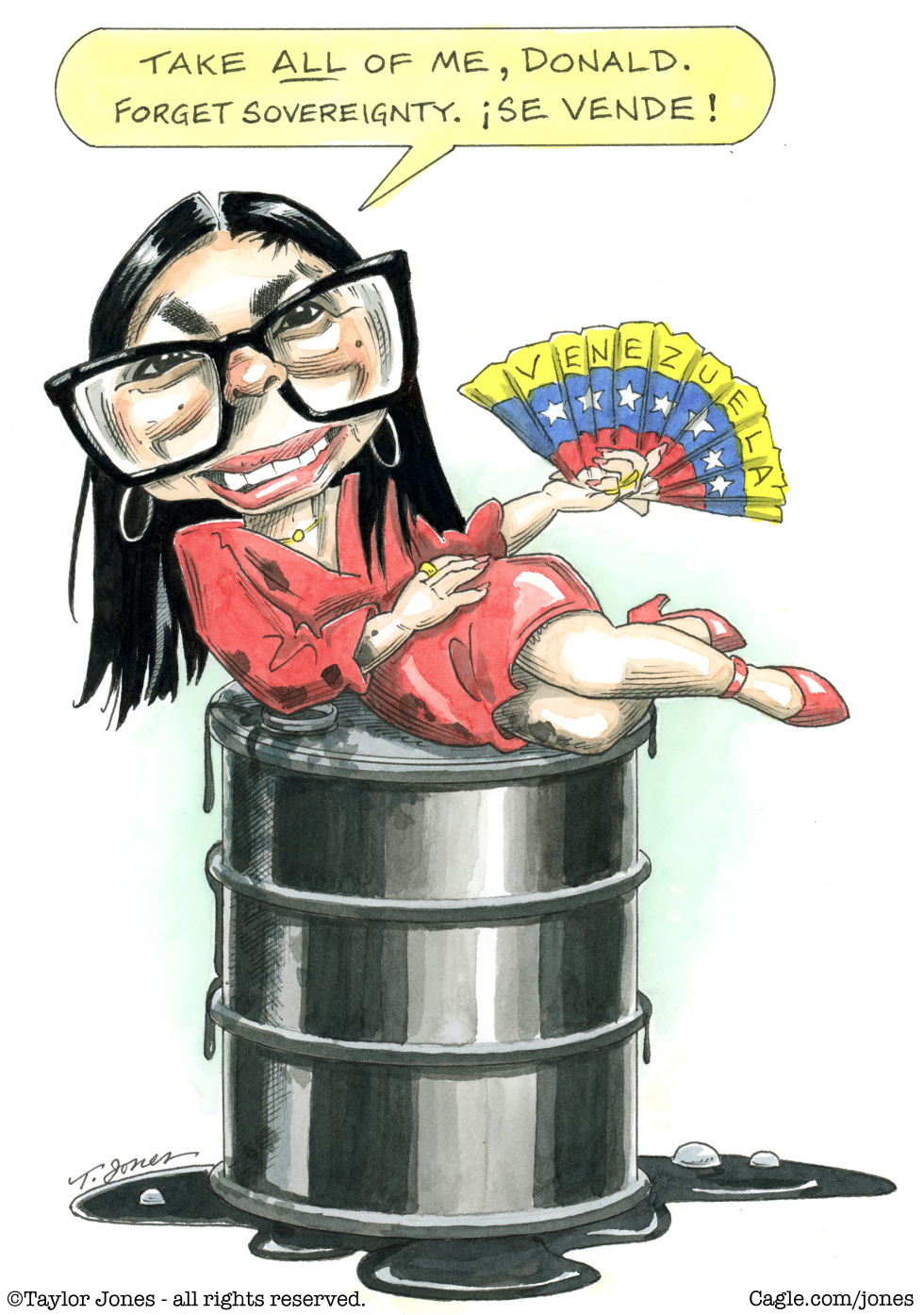
Venezuelan Vice President Delcy Rodriguez has long managed oil sector outreach to foreign powers including the United States. Recent diplomatic signals suggest renewed interest in easing sanctions through resource access. The cartoon frames this outreach as a direct offer to Donald Trump that prioritizes economic deals over national control.
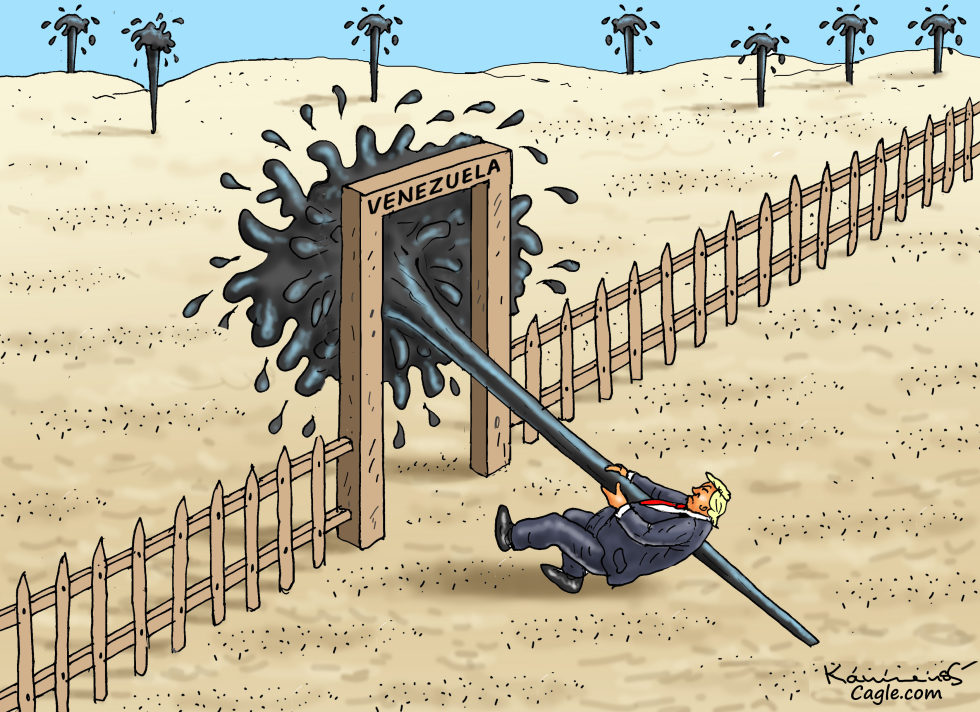
US policy toward Venezuelan oil exports shifted in 2026 as the Trump administration eased certain sanctions. This allowed increased crude shipments to reach American markets. The change raised questions about energy security and relations with Caracas. Critics argued the move undermined prior pressure on the Maduro government. The cartoon depicts the oil surge directly impacting Trump, suggesting the policy backfired on its architect.
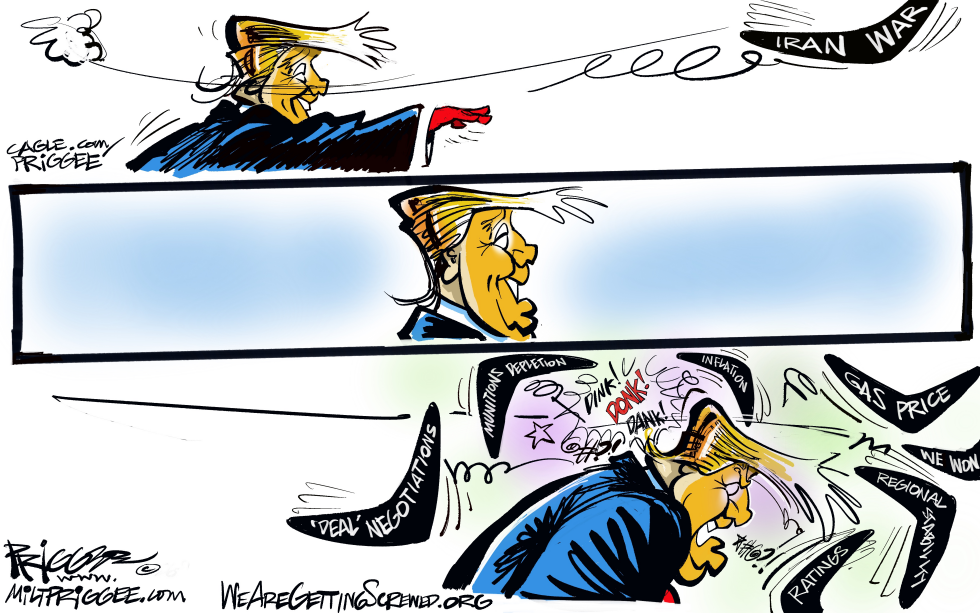
A political cartoon depicts Donald Trump launching an Iran war boomerang that returns to strike him with multiple crises. The image shows the former president hit by labels including inflation, gas prices, munitions depletion and falling ratings. The cartoon responds to ongoing tensions with Iran and the domestic fallout from military engagement. It illustrates how the conflict decision led to economic pressures and political damage as of the September 2026 publication date.
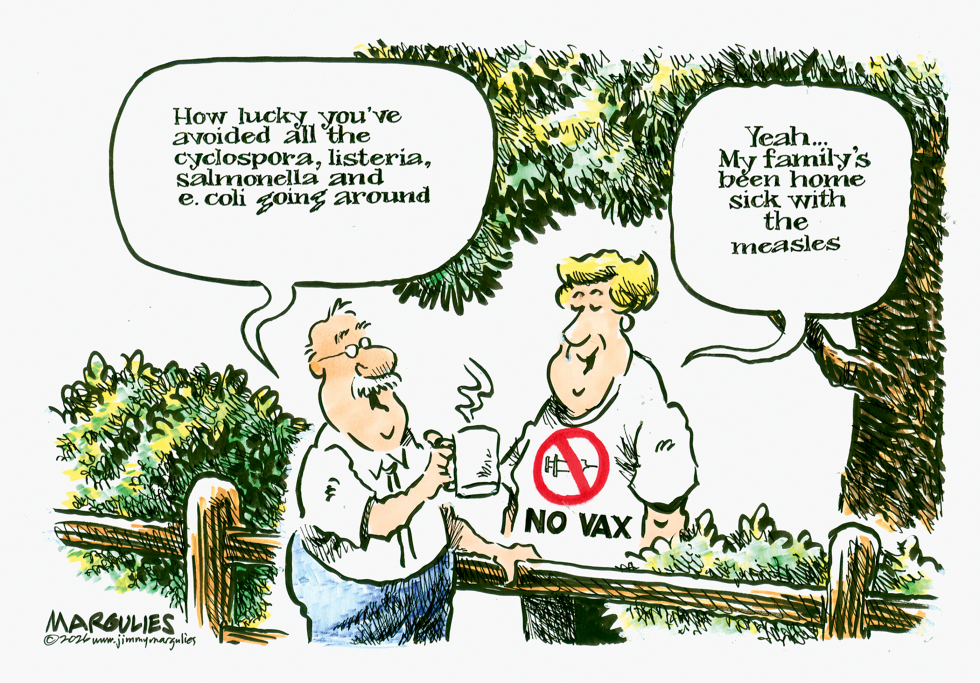
Vaccine-hesitant individuals continue to cite food safety concerns while measles cases rise in unvaccinated communities. The dynamic underscores ongoing public health tensions around immunization decisions and preventable disease spread.
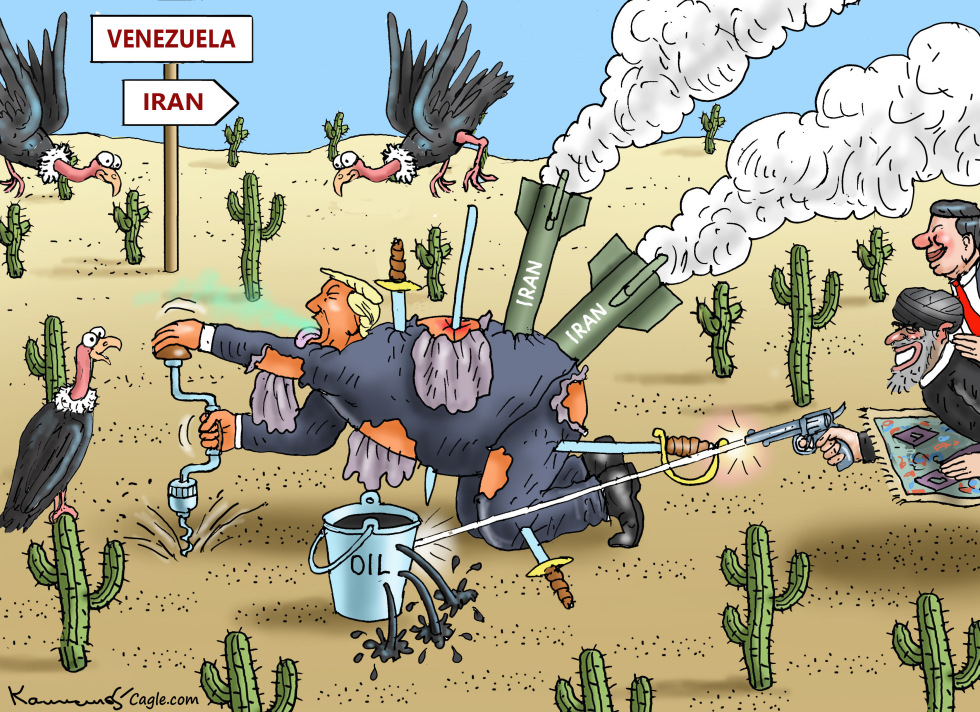
Donald Trump continued efforts to secure oil resources from Venezuela and Iran despite ongoing missile strikes and political pressure from those nations. The moves highlight US energy independence goals amid regional instability. The piece portrays these actions as defiant and opportunistic in the face of direct threats.
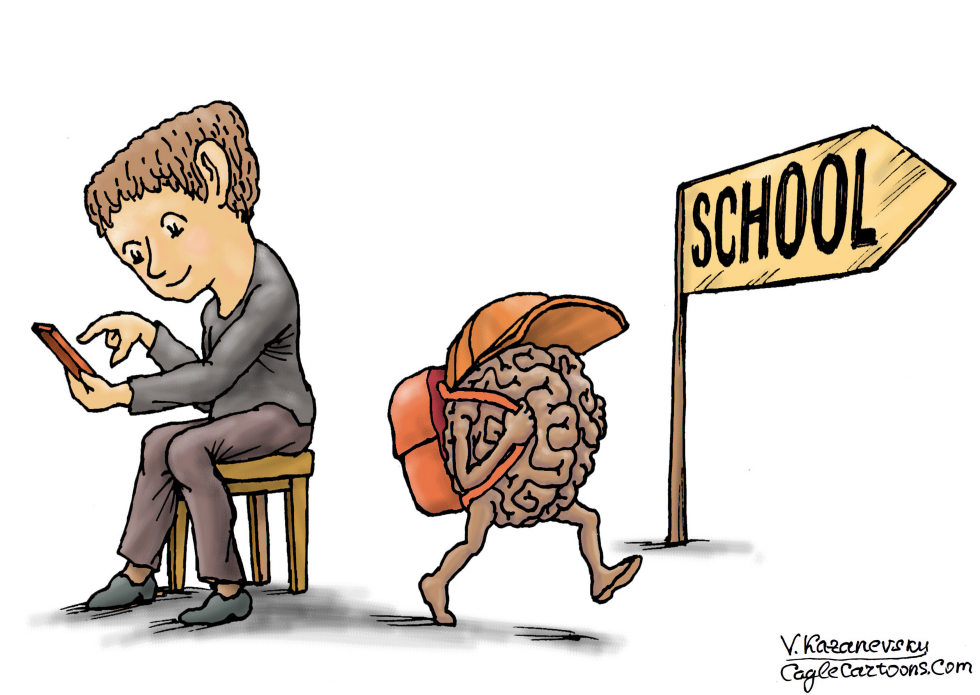
Schools continue to grapple with widespread smartphone use among students that diverts attention from classroom learning. The issue matters because constant device access fragments focus and reduces academic engagement at a critical developmental stage. The piece argues that the brain itself must literally head to school while the distracted student remains behind.