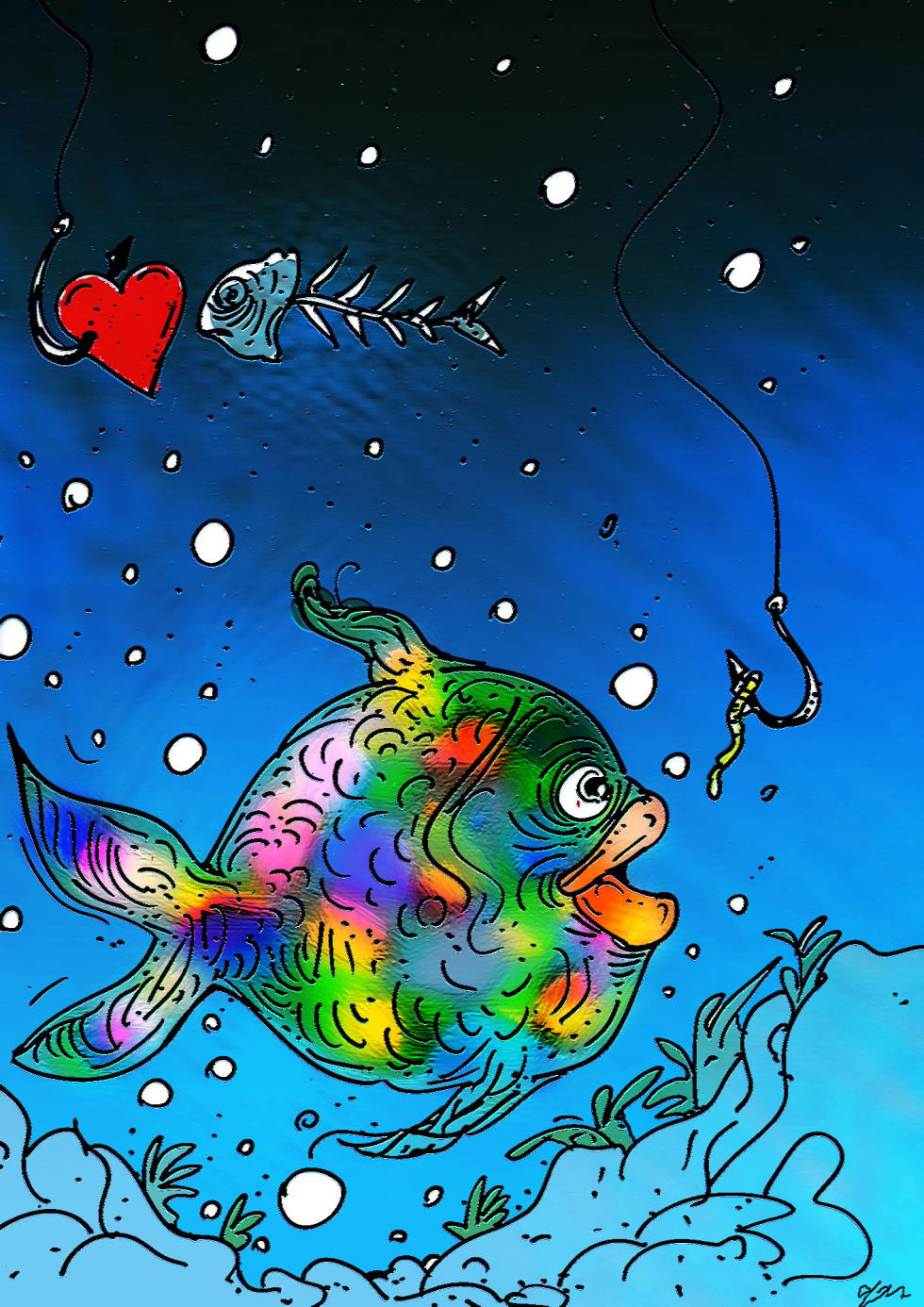
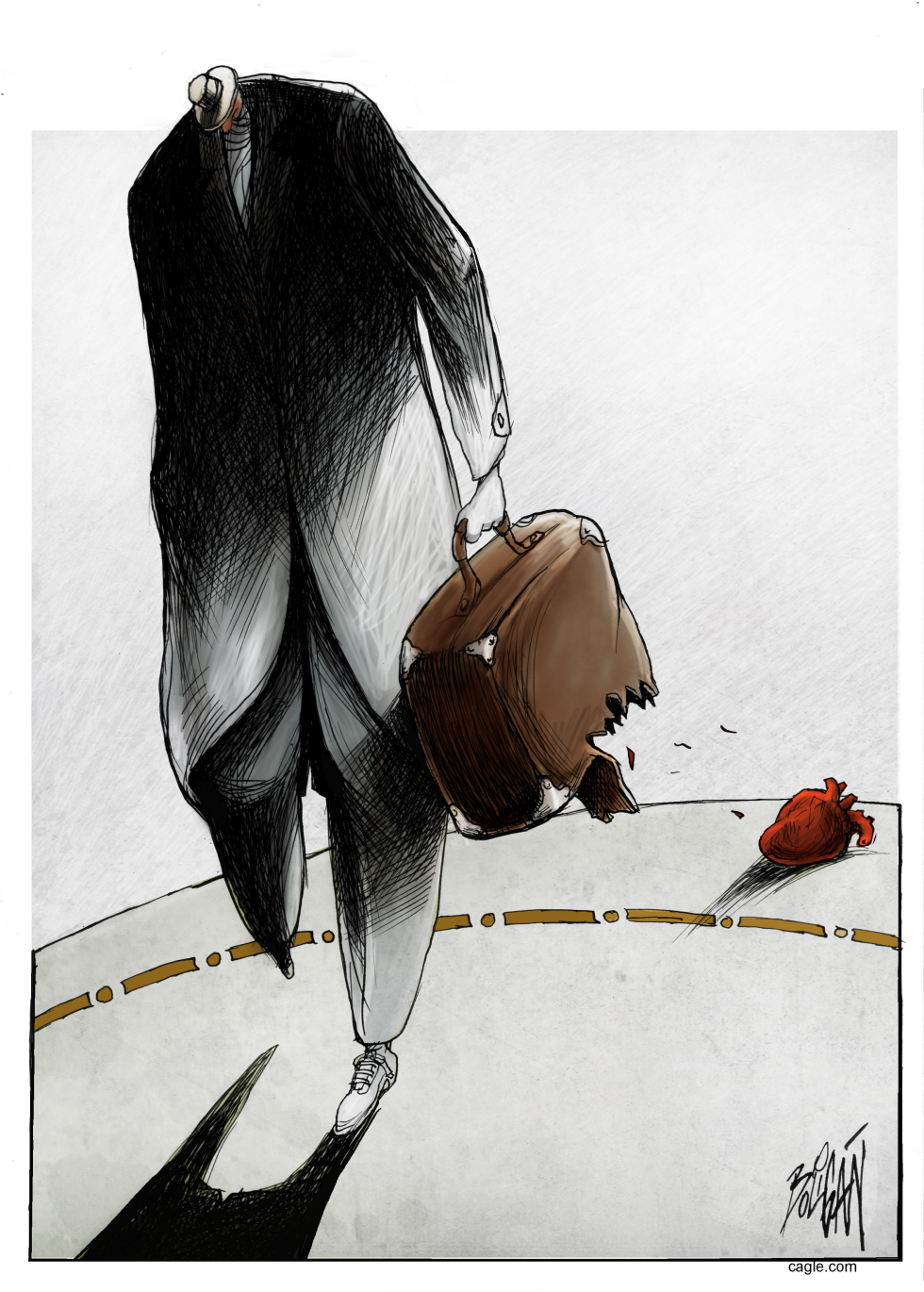
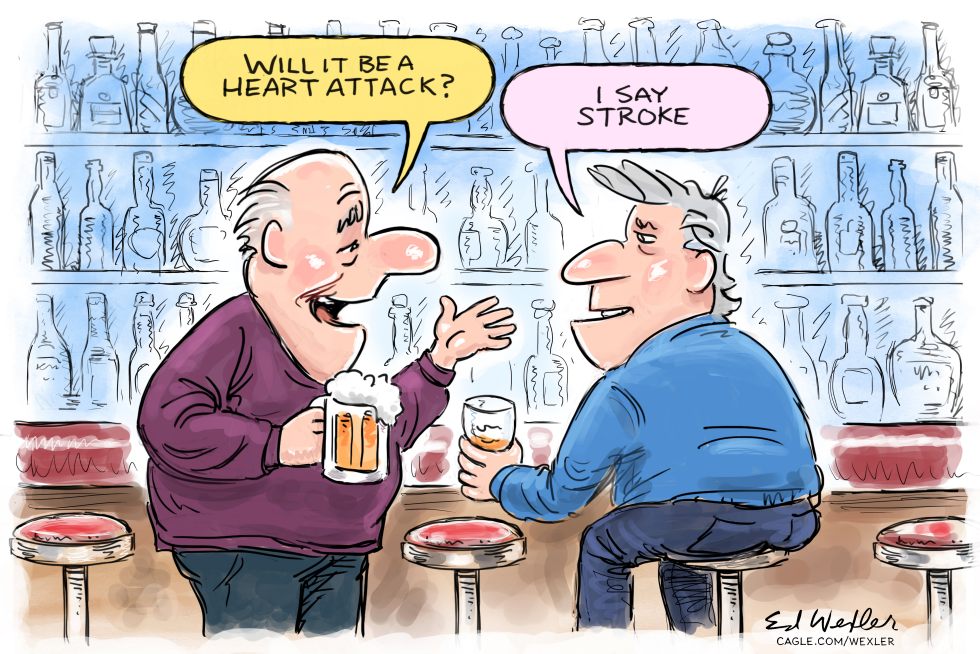
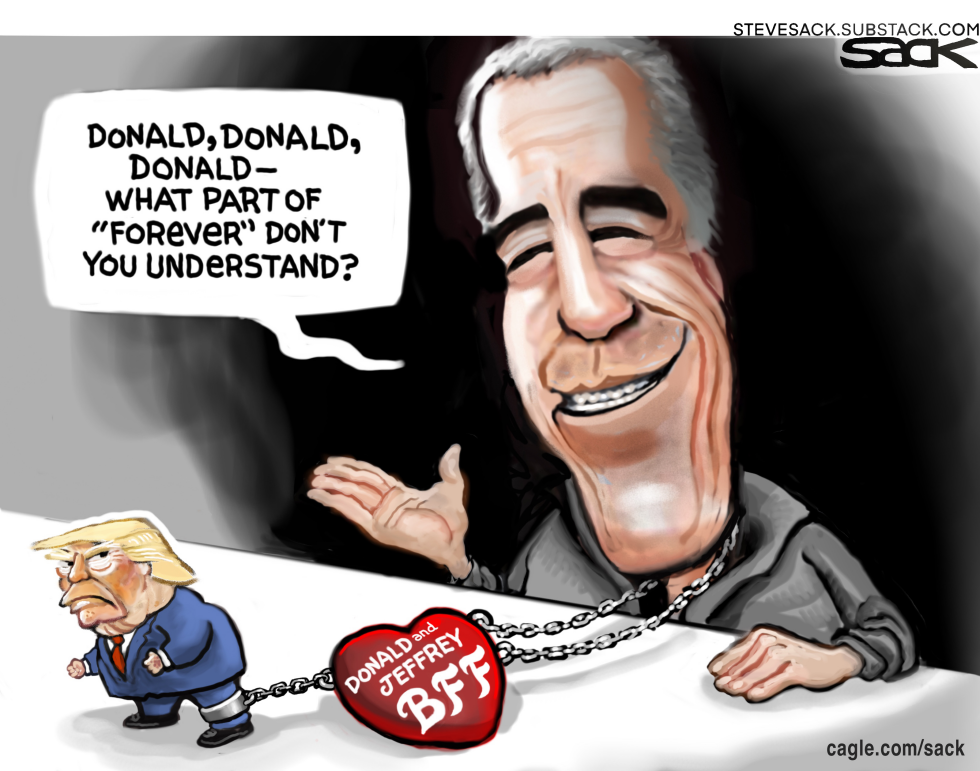
The cartoon captures the recurring human tendency to overlook evident dangers when drawn by temptation. A previous victim serves as stark evidence, yet the lure remains compelling. The piece underscores how easily judgment fails under the pull of immediate gratification. It argues that such lapses carry predictable and severe costs.
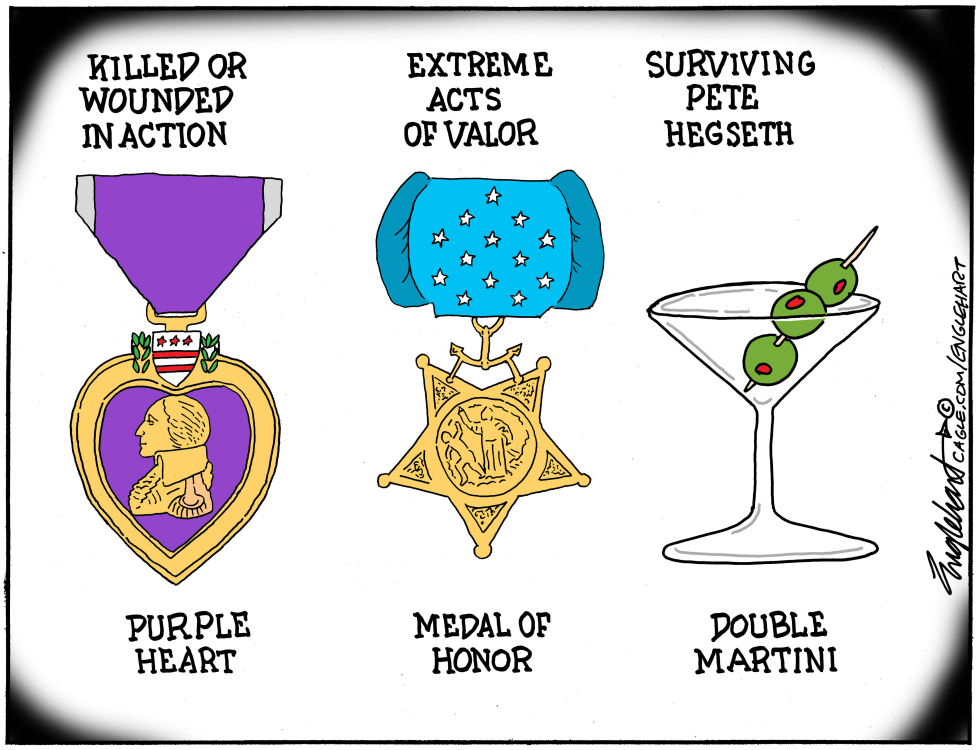
Pete Hegseth's nomination for a senior defense post in 2026 revived questions about his military service record and personal conduct. Critics highlighted past statements and behavior that some viewed as disqualifying for oversight of the armed forces. The cartoon responds by equating endurance under Hegseth with a dubious achievement on par with battlefield valor awards.
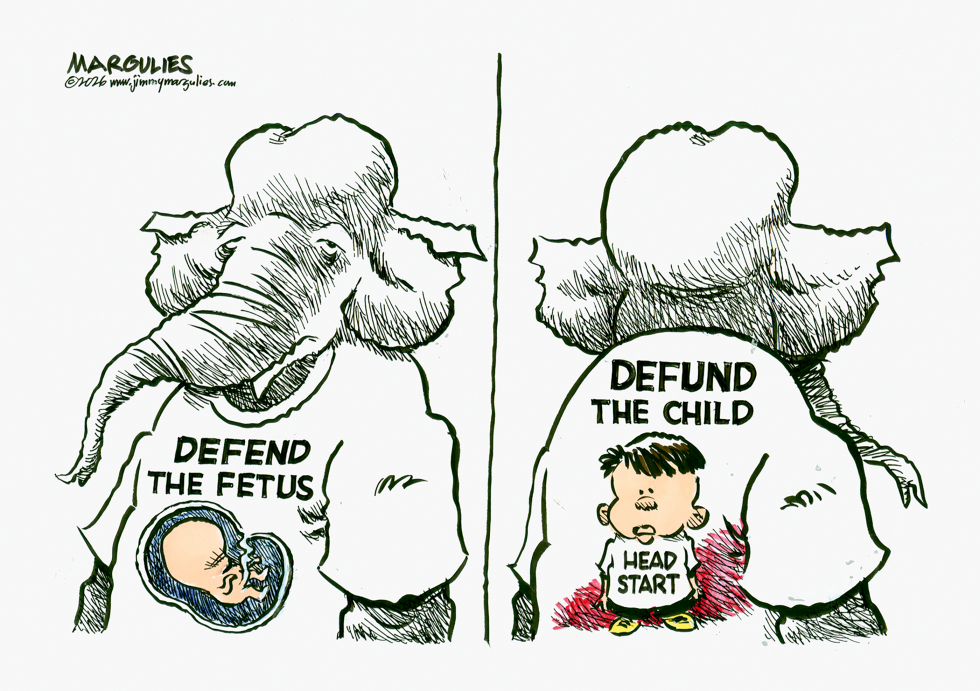
Republicans continue to champion fetal protections while proposing cuts to early childhood programs such as Head Start. The divide highlights ongoing debates over when government support for life begins and ends. The cartoon criticizes the inconsistency in prioritizing the unborn over living children in need of assistance.
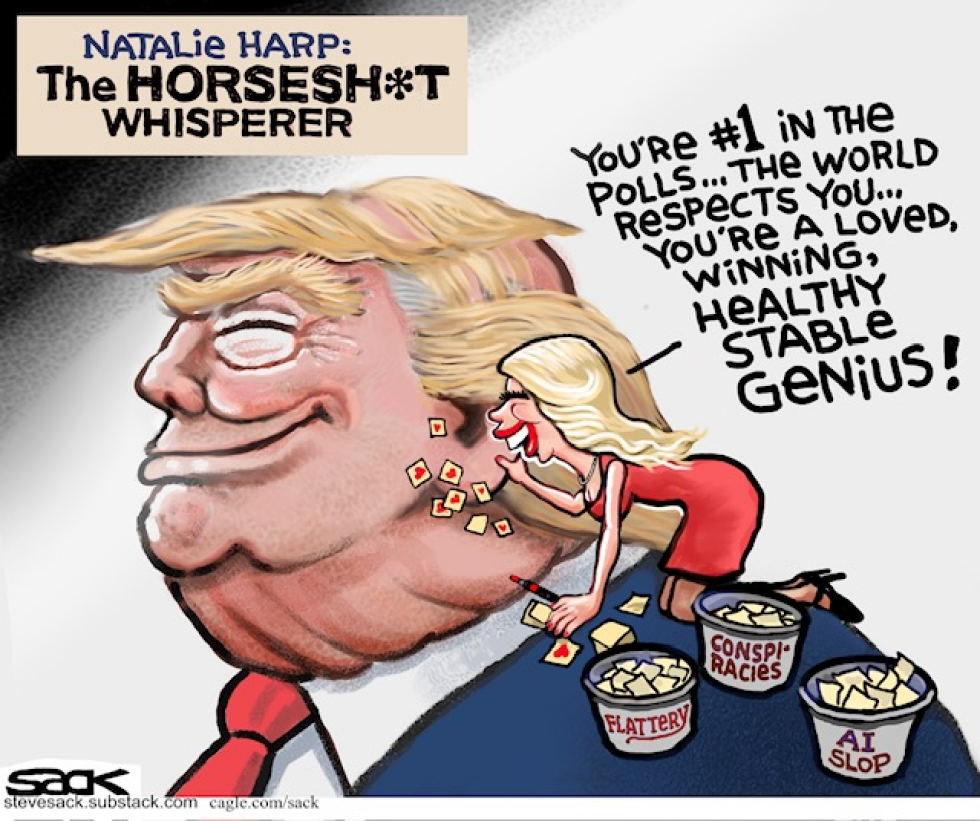
Natalie Harp, a close aide to Donald Trump, has been noted for delivering curated positive updates and affirmations to the former president during his political activities. This ongoing dynamic occurs as Trump navigates public perception challenges and internal circles that mix traditional flattery with newer elements like AI-generated content and conspiracy discussions. The approach matters because it shapes how information reaches a key political figure ahead of future electoral considerations. The piece presents this interaction as an echo chamber reinforced by selective inputs rather than broader scrutiny.
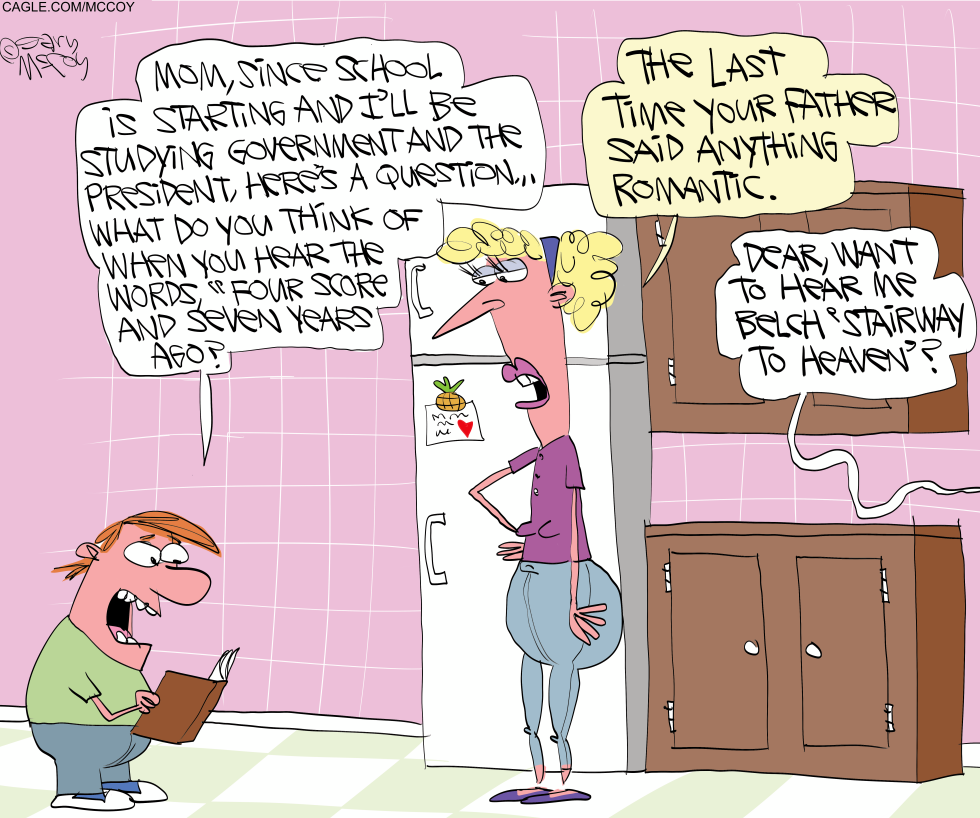
A child preparing for school asks his mother what she thinks of upon hearing Lincoln's famous opening line from the Gettysburg Address. Her reply points directly to the last time her husband said anything romantic. The father, hidden in a kitchen cabinet, responds by offering to belch the lyrics to Stairway to Heaven. The exchange highlights an ongoing household dynamic of mismatched expectations around affection and daily behavior.
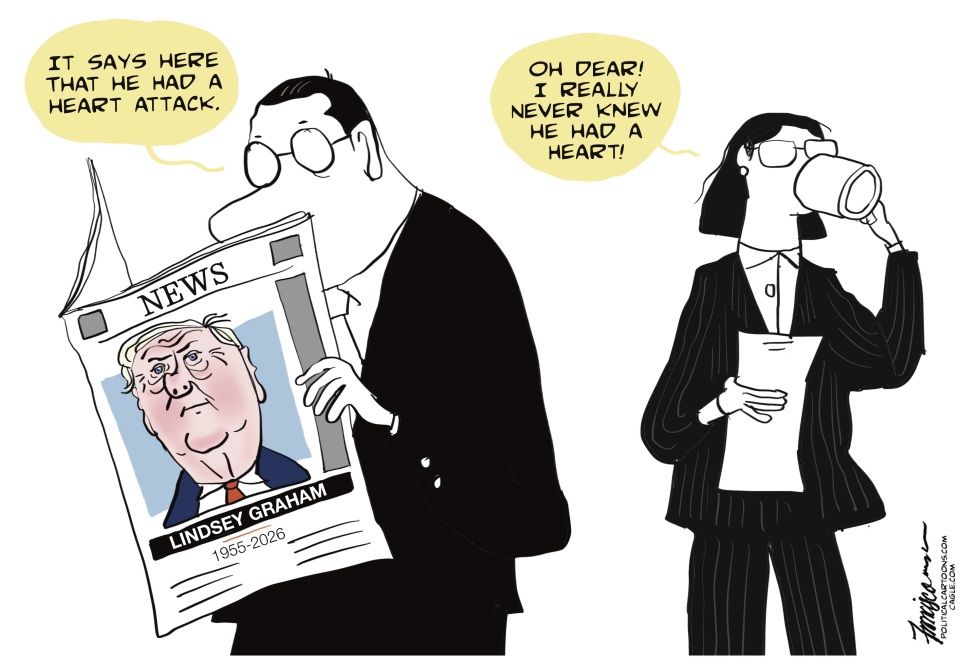
A man reads a newspaper reporting Lindsey Graham's heart attack and death in 2026. A woman standing nearby reacts with surprise that the senator had a heart at all. The exchange highlights the swift and pointed responses from political figures to the obituary.
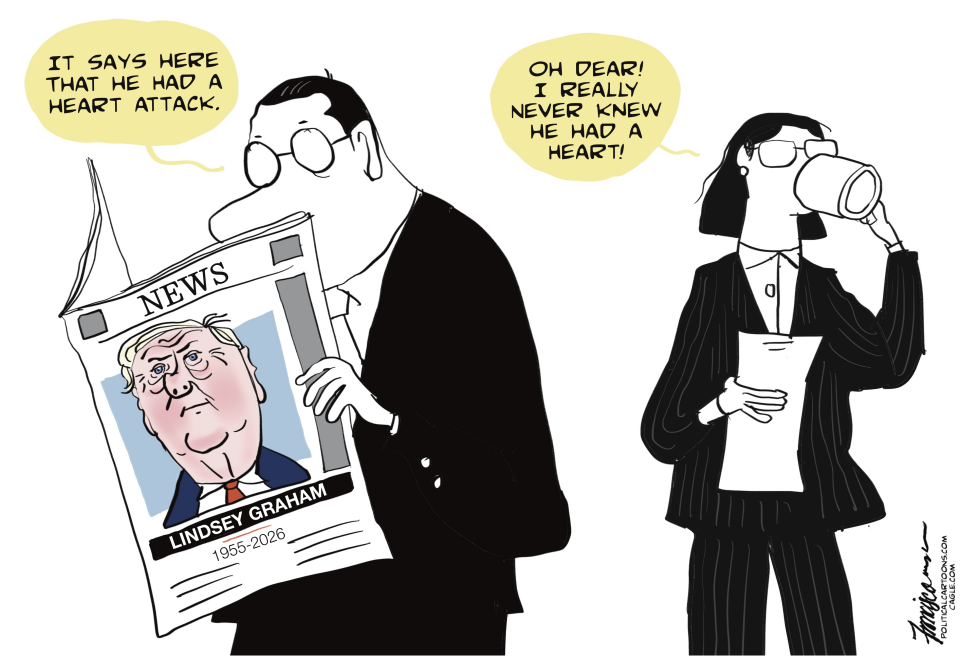
A political cartoon depicts a man reading a newspaper announcing the death of Sen. Lindsey Graham from a heart attack in 2026. A woman standing nearby responds with a pun, stating she never knew he had a heart. The image uses the obituary format and the double meaning of the word heart to highlight perceptions of the senator's demeanor.
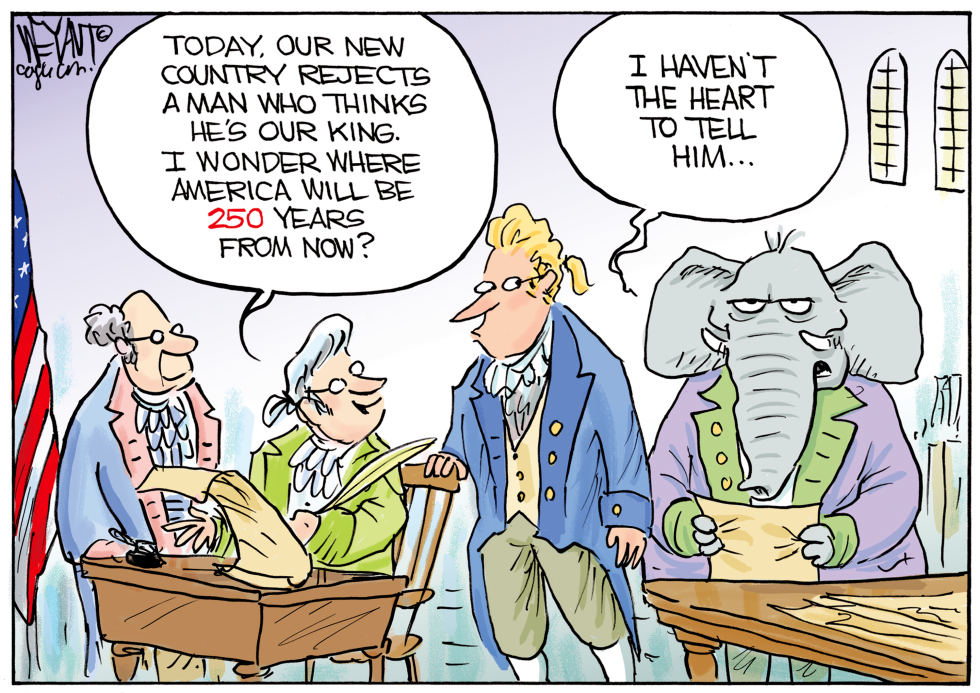
On July 4, 2026, a cartoon shows Founding Fathers in colonial dress at wooden desks with papers, one central figure speaking about rejecting a self-proclaimed king and wondering about America in 250 years, while a Republican elephant in matching attire holds back a reply beside an American flag.
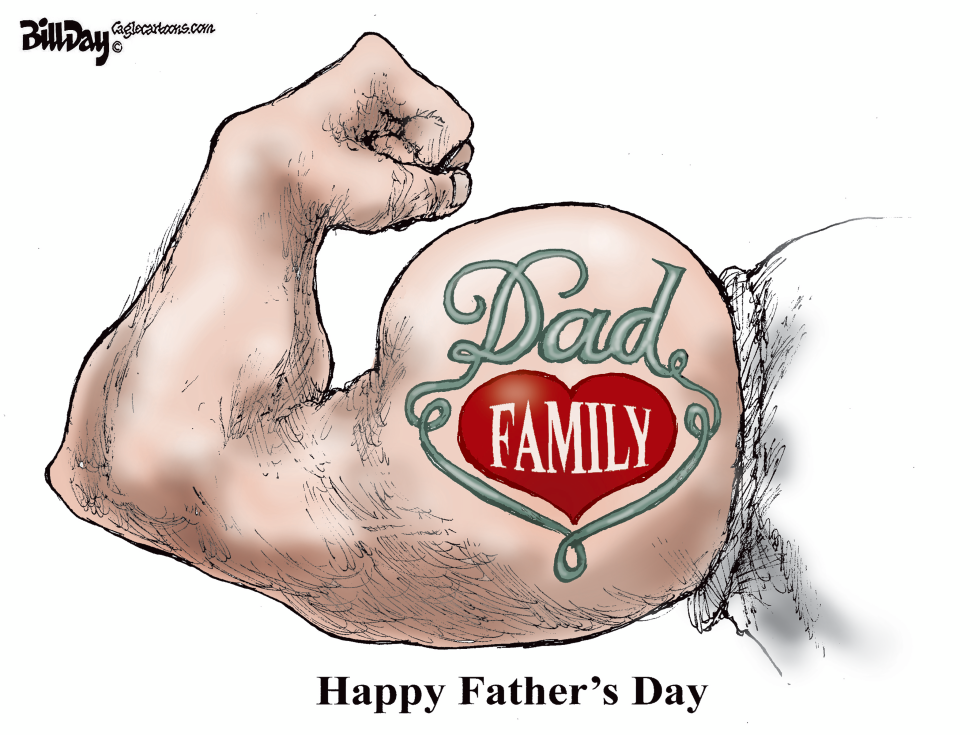
The illustration depicts a muscular arm flexed to reveal a tattoo reading Dad above a red heart inscribed Family. The image is presented as a Father's Day greeting. Artist Bill Day created the piece for caglecartoons.com on June 17 2026.
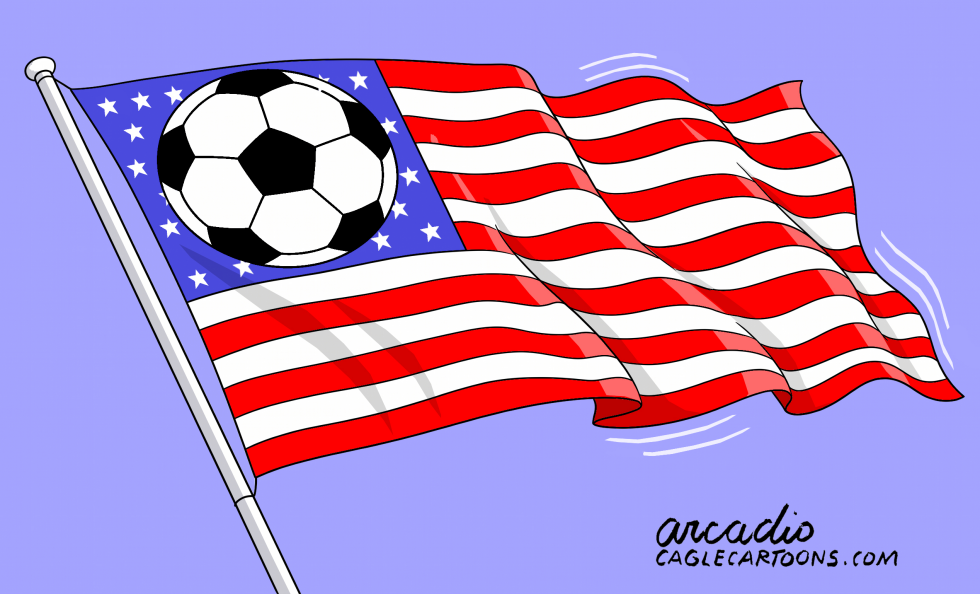
The image presents a modified American flag with a soccer ball replacing the stars in the canton. The flag waves from a pole against a solid background. Publication occurs during the 2026 FIFA World Cup hosted in the United States, Canada and Mexico. The design places the sport at the center of national symbolism.
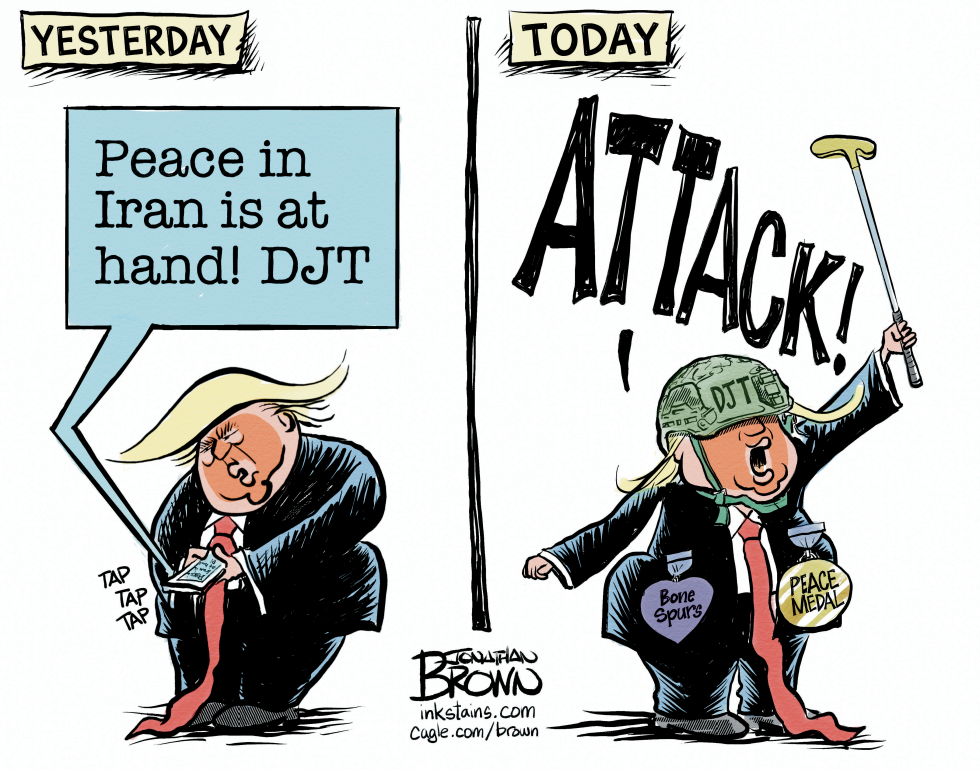
The image is a two-panel cartoon labeled yesterday and today. Yesterday panel has Trump kneeling while tapping a device and a speech bubble stating peace in Iran is at hand. Today panel shows Trump in a helmet labeled DJT holding an object aloft with the word attack in large letters and medals reading bone spurs and peace medal visible on clothing.
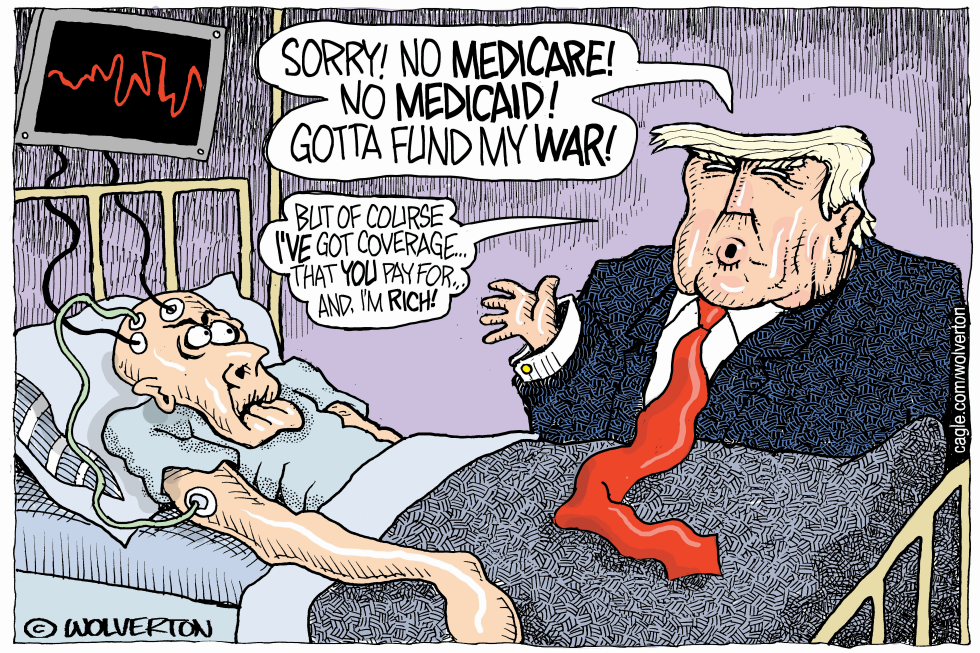
On April 3, 2026, a political cartoon depicts President Donald Trump at the bedside of a patient in a hospital room. Trump states that Medicare and Medicaid cannot be provided because funds must support an ongoing war. The patient replies that coverage exists because Trump pays for it and the patient is wealthy. The image references the Iran War and healthcare access issues.