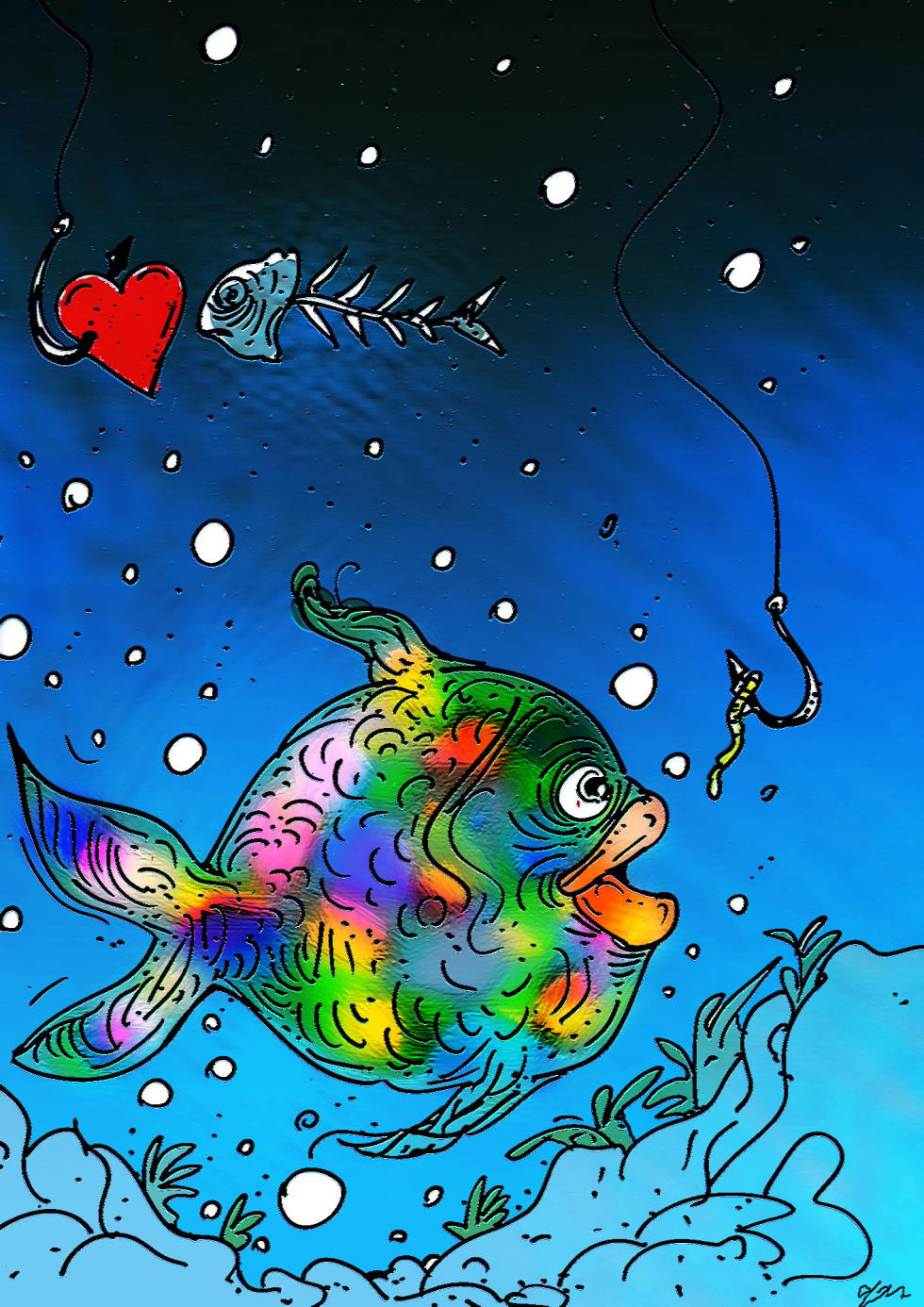
The cartoon captures the recurring human tendency to overlook evident dangers when drawn by temptation. A previous victim serves as stark evidence, yet the lure remains compelling. The piece underscores how easily judgment fails under the pull of immediate gratification. It argues that such lapses carry predictable and severe costs.
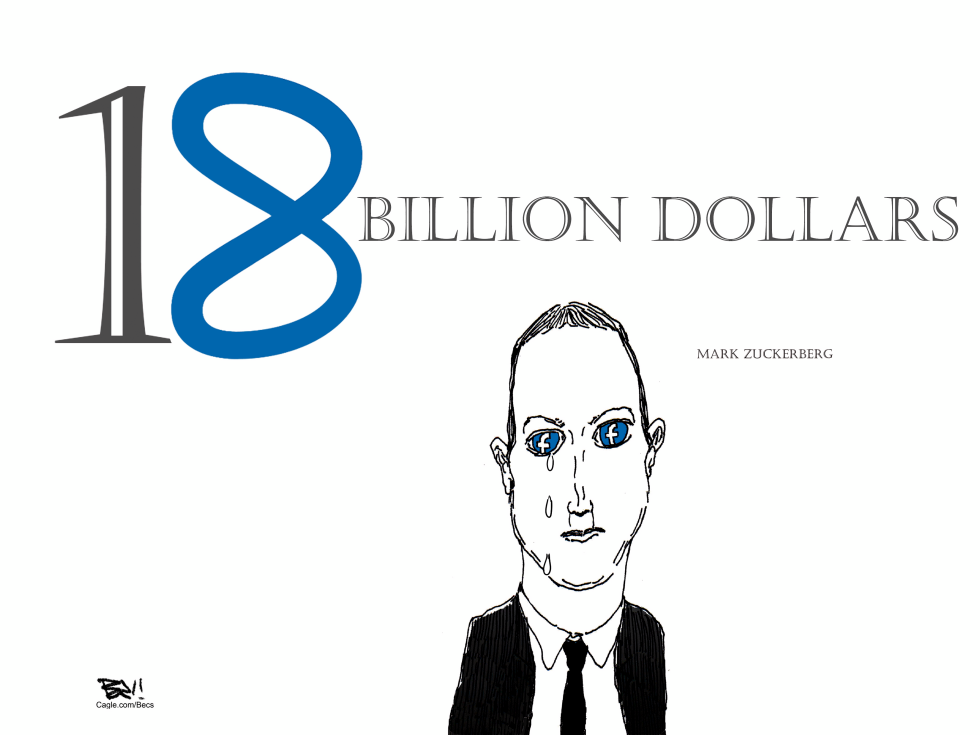
Meta Platforms reported a significant valuation drop that erased 18 billion dollars from Mark Zuckerberg's holdings. The loss reflects broader volatility in social media stocks and investor concerns over advertising revenue. Zuckerberg's public profile makes the personal financial impact a focal point for discussions on tech wealth. The piece portrays the event as a moment of visible distress for the executive. It underscores how quickly billionaire fortunes tied to public companies can shift with market sentiment.
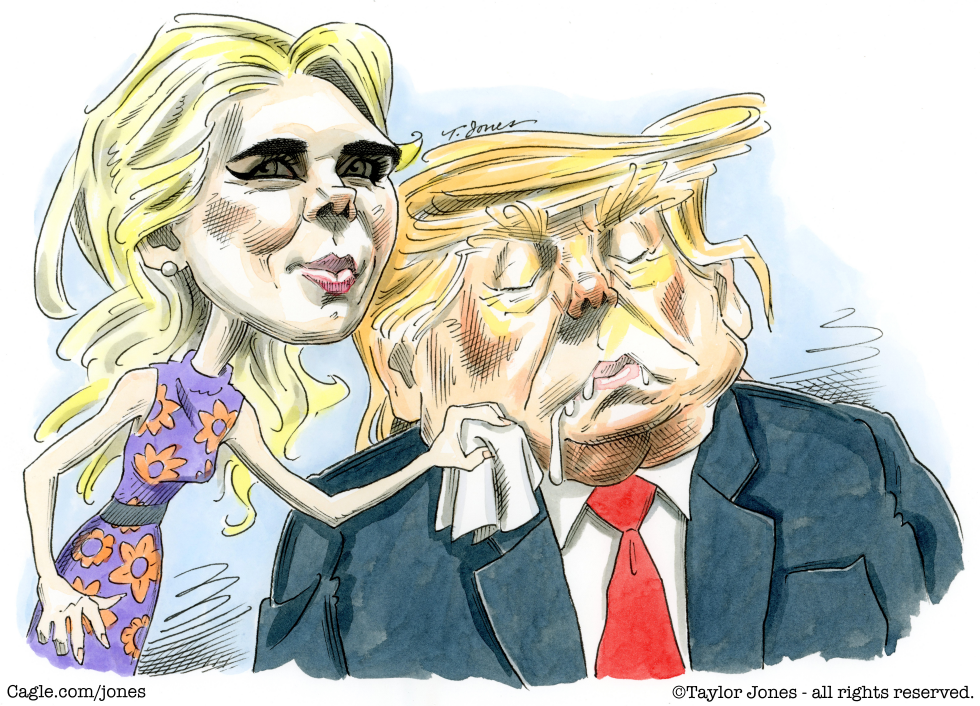
Donald Trump appears in a vulnerable state during a public or staff interaction in 2026. Natalie Harp, a known associate, tends to him by wiping drool from his face. The moment highlights ongoing scrutiny of the former president's health and stamina. Observers note the personal nature of the assistance amid continued political activity. The piece presents the scene as evidence of reliance on close aides.
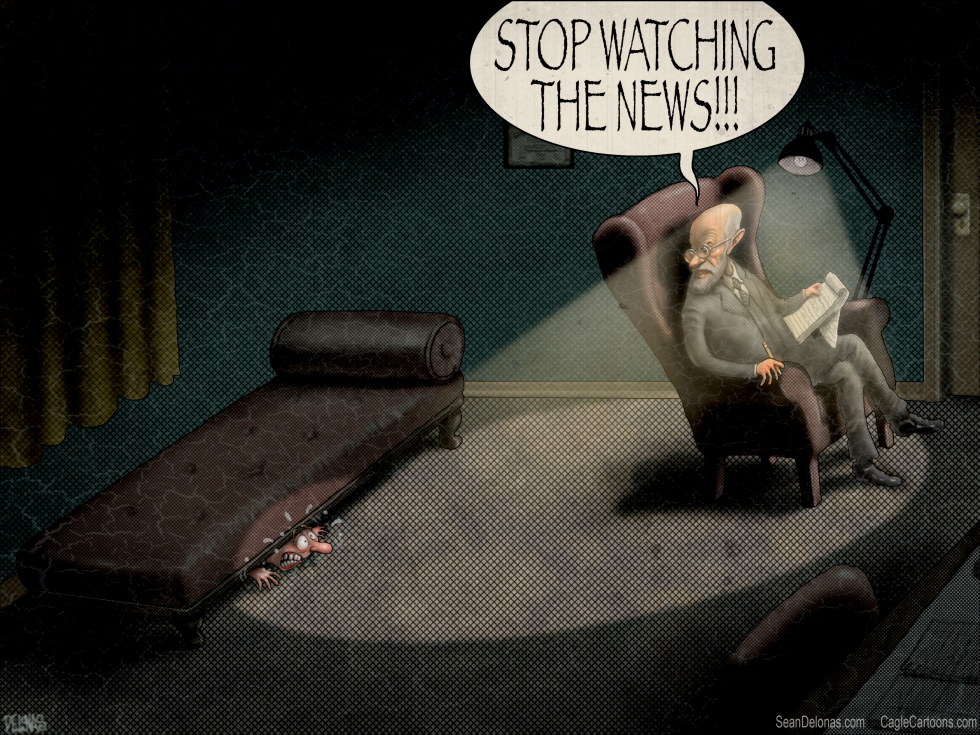
Mental health experts report growing numbers of patients seeking therapy for anxiety linked to nonstop news consumption. The trend reflects broader concerns over how constant coverage of crises affects public well-being. The editorial argues that disengaging from news can protect mental health without ignoring real issues.
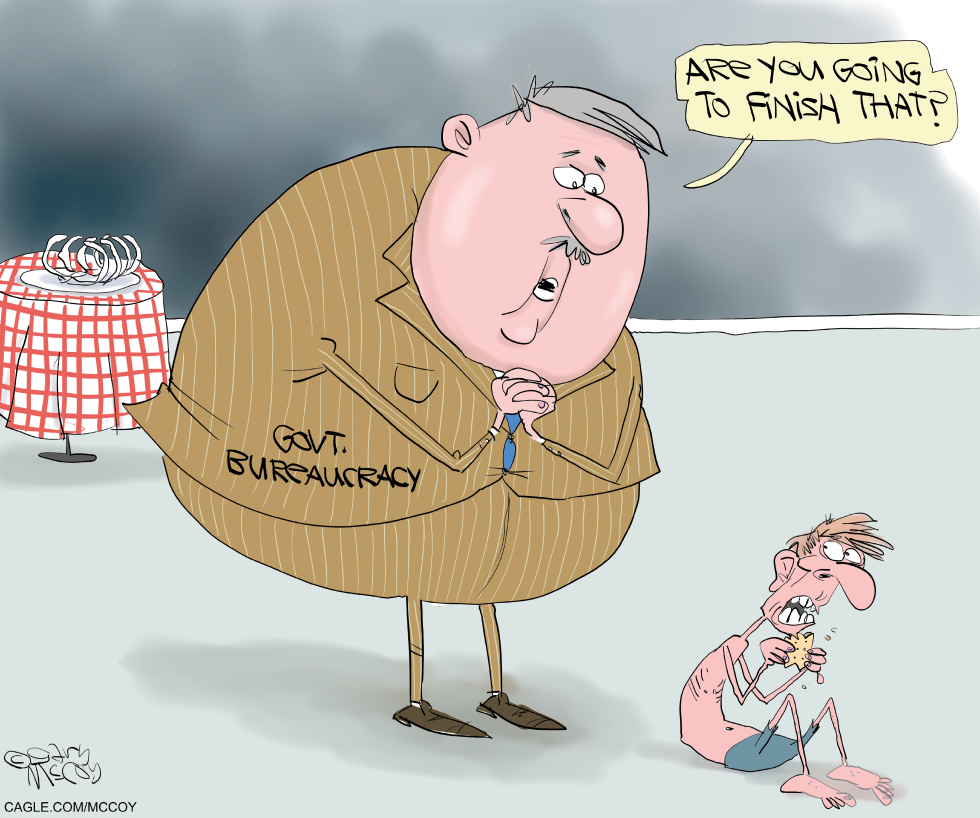
The cartoon shows an oversized man labeled Government Bureaucracy standing above a gaunt citizen who clutches a small star-shaped item. A nearby table holds only scraps. The large figure asks if the citizen plans to finish the food. The image comments on how expanding government operations can leave ordinary people with fewer resources. It uses scale and positioning to illustrate the imbalance between bureaucratic size and citizen need. The publication date places the work in a period of ongoing debate over federal spending and agency growth.
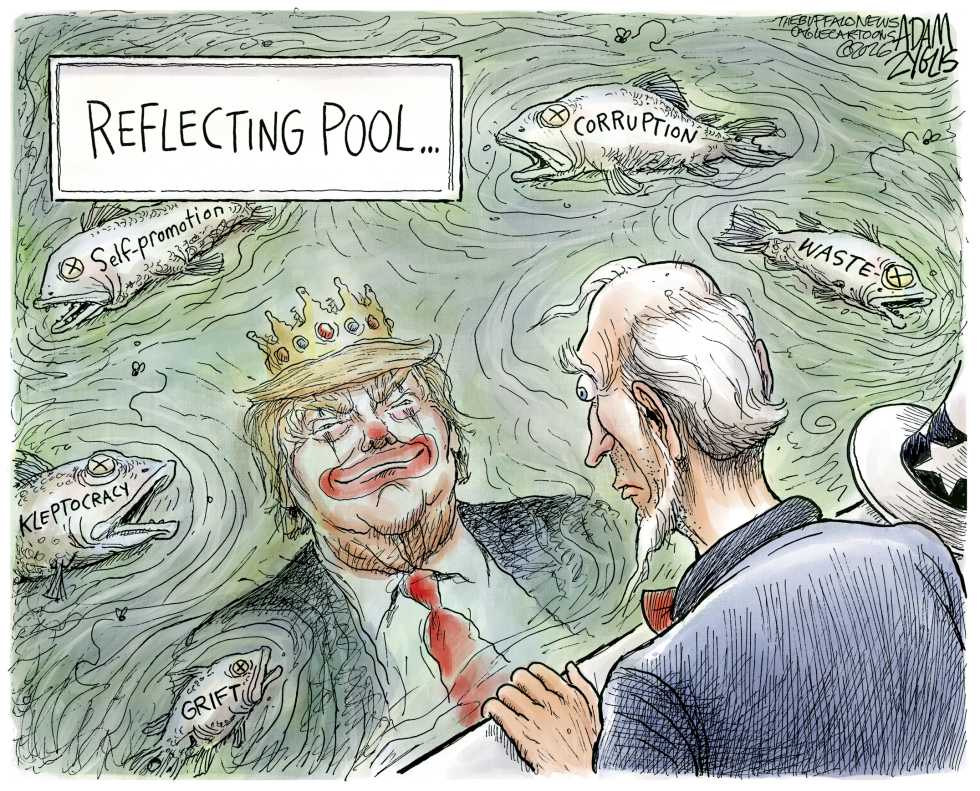
Accusations of kleptocracy and self-dealing have followed Donald Trump through multiple phases of his political career. Critics point to patterns of self-promotion and waste in government dealings. The cartoon frames these issues as dead fish surfacing in a reflecting pool, with Trump depicted wearing a crown and clown makeup while an older observer looks on. The editorial position criticizes Trump as emblematic of corruption and grift.
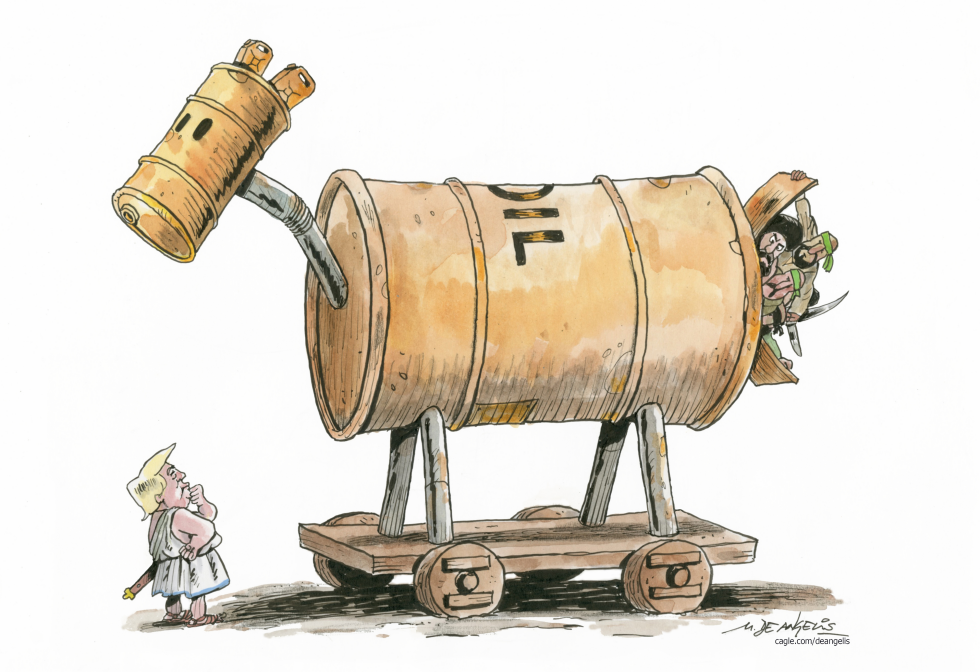
Donald Trump examines an oil barrel presented as a Trojan horse containing hidden armed figures. The image highlights risks in energy dealings or foreign entanglements involving oil supplies. The editorial position warns against accepting such barrels without scrutiny due to concealed threats.
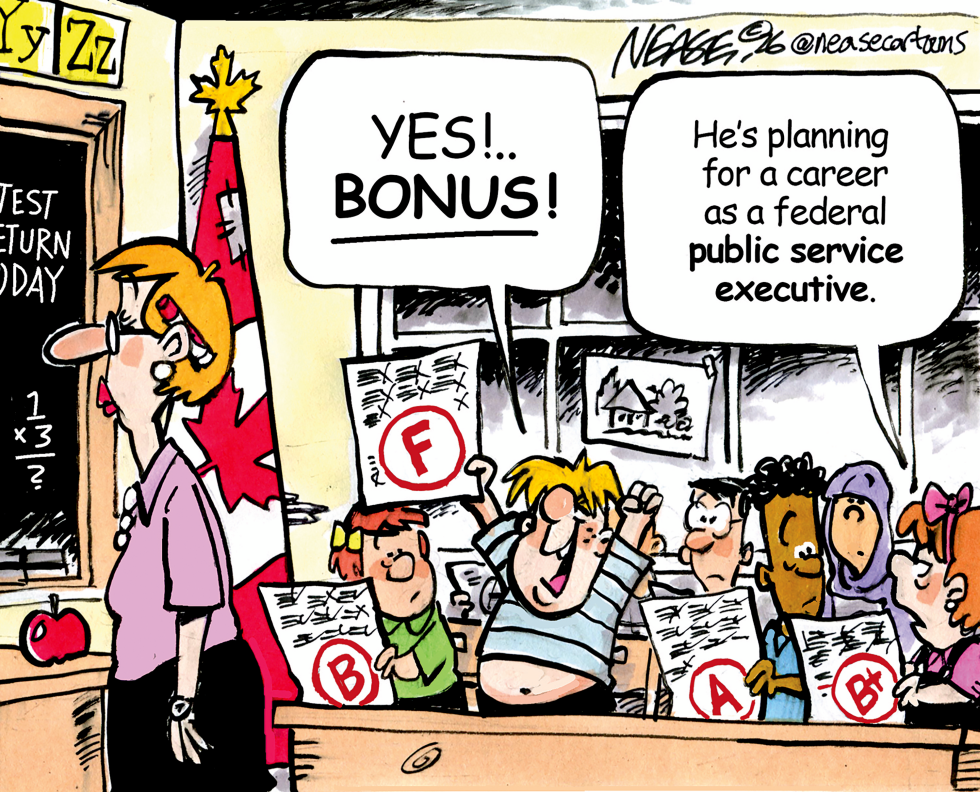
A Canadian classroom cartoon depicts a failing student celebrating a potential federal public service bonus. The piece critiques how government bureaucracy may reward poor performance through executive incentives rather than merit-based advancement.
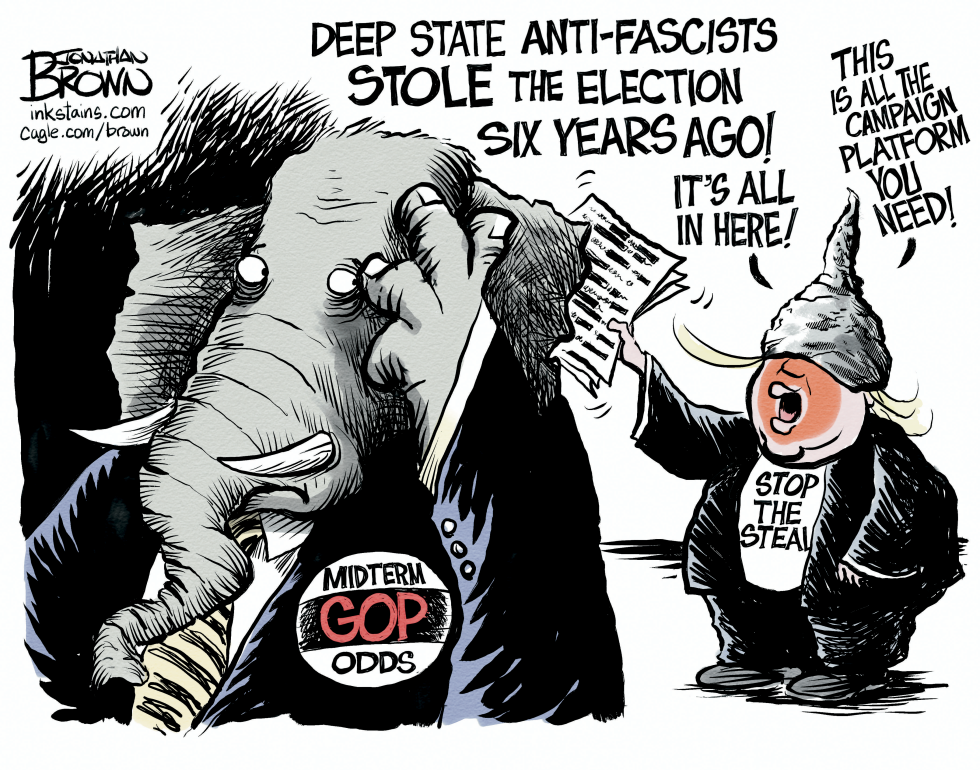
The cartoon shows a large Republican elephant in a suit covering its eyes while a small figure in a dunce cap labeled Stop the Steal waves papers claiming deep state anti-fascists stole the election six years ago. The elephant wears a Midterm GOP Odds button. Speech bubbles declare the papers contain the full campaign platform. The image comments on Republican candidates shifting focus from 2020 election disputes toward midterm races.
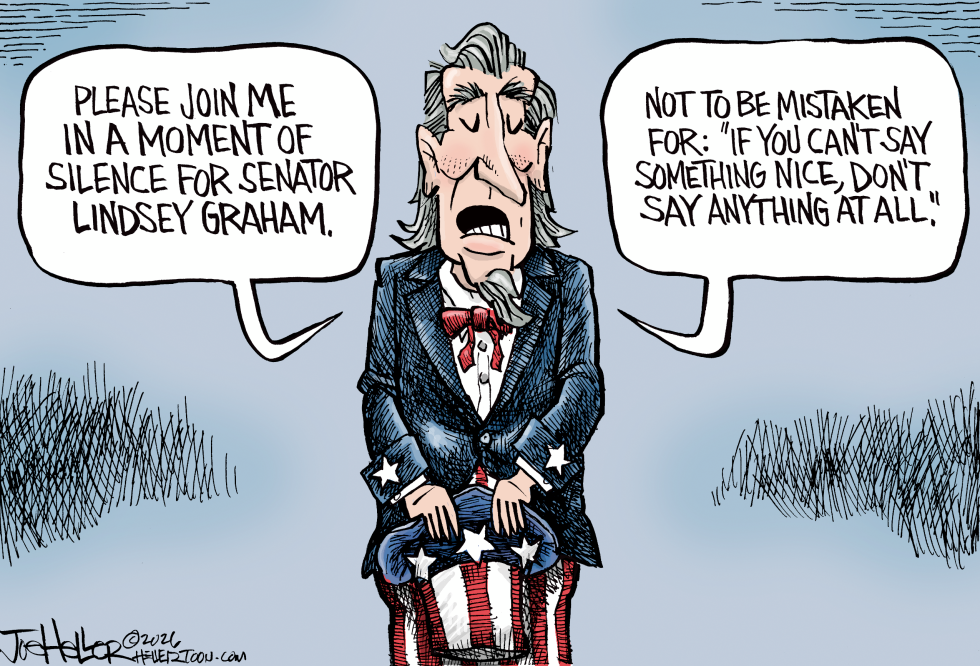
The cartoon shows Senator Lindsey Graham dressed as Uncle Sam calling for a moment of silence in his own honor. A second bubble clarifies the request is not meant as a polite evasion of criticism. The image appeared on July 13 2026.
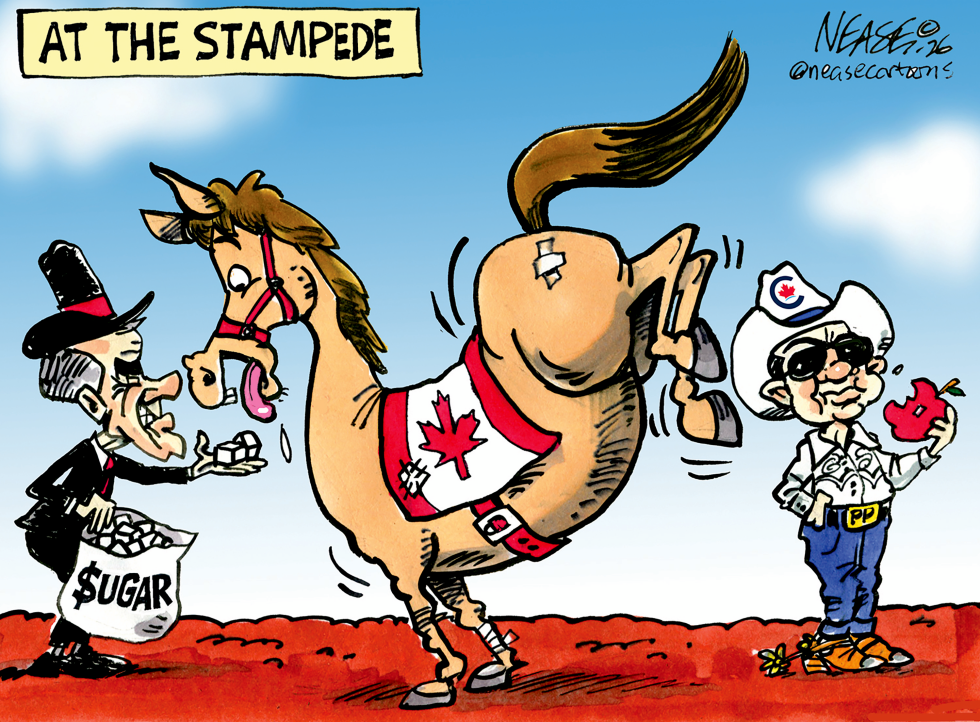
A horse wearing a Canadian flag blanket rears and kicks at the Calgary Stampede as a top-hatted figure extends sugar cubes from a bag marked $UGAR. A Mountie in cowboy attire stands nearby holding a bitten red apple and frowning. The cartoon, dated July 13 2026, depicts Canada turning away from the sweetener offer in favor of the fruit. The visual plays on the annual Stampede event and ongoing economic negotiations between Canada and its southern neighbor. The horse's bandaged hindquarters and the spilled sugar emphasize the abrupt refusal.
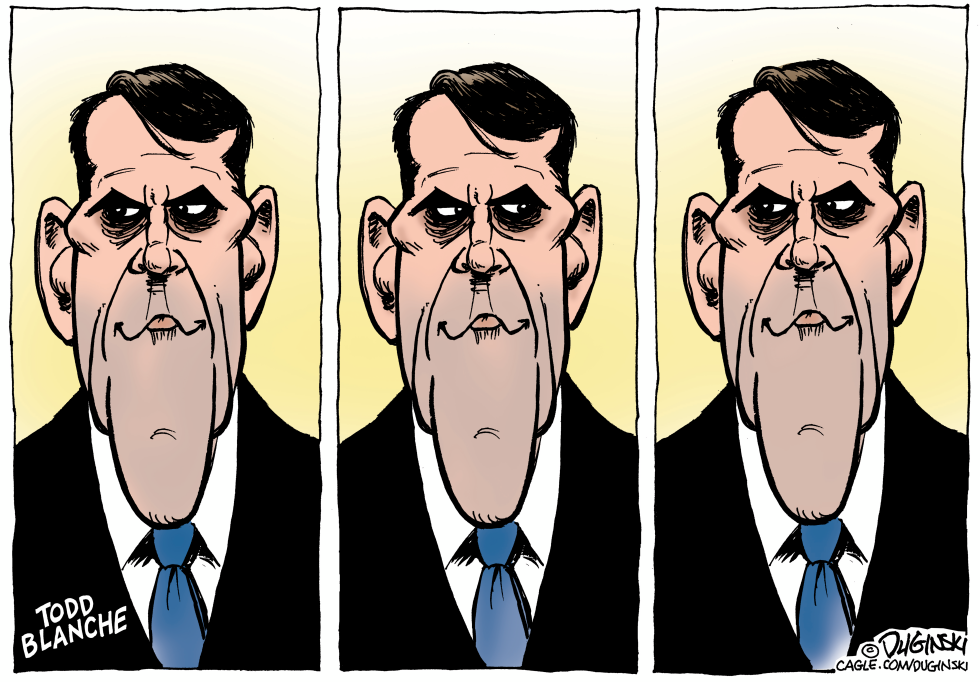
Todd Blanche is shown in three adjacent panels. Each panel presents a close view of the same man wearing a dark suit, white shirt and blue tie. The expressions feature narrowed eyes, furrowed brows and a downturned mouth. Slight variations appear in head angle and eye direction between the panels. The left panel includes the name Todd Blanche in capital letters at the bottom. The right panel includes a copyright notice at the bottom. All three images share a light yellow gradient background and black borders.
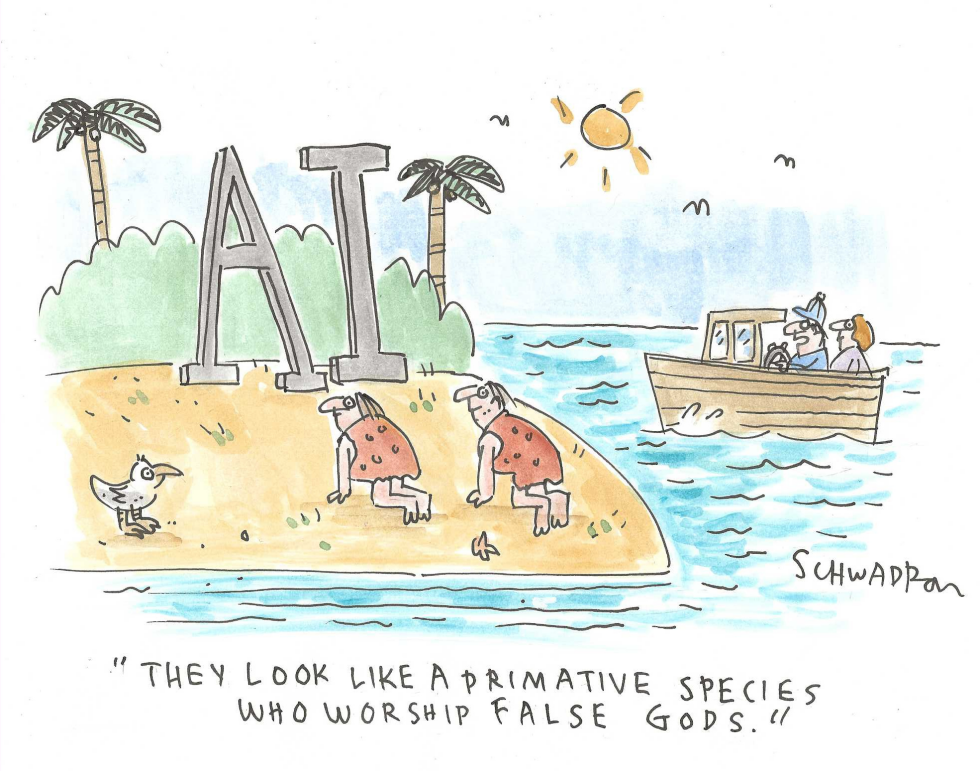
A boat carrying two observers approaches a tropical island where large gray letters spelling AI stand on the beach. Two primitive figures in spotted coverings kneel on the sand facing the structure. A small bird stands to the left. The caption reads that the figures resemble a primitive species worshiping false gods. The scene is set against blue water, a yellow sun, and green foliage on the date of July 9, 2026.
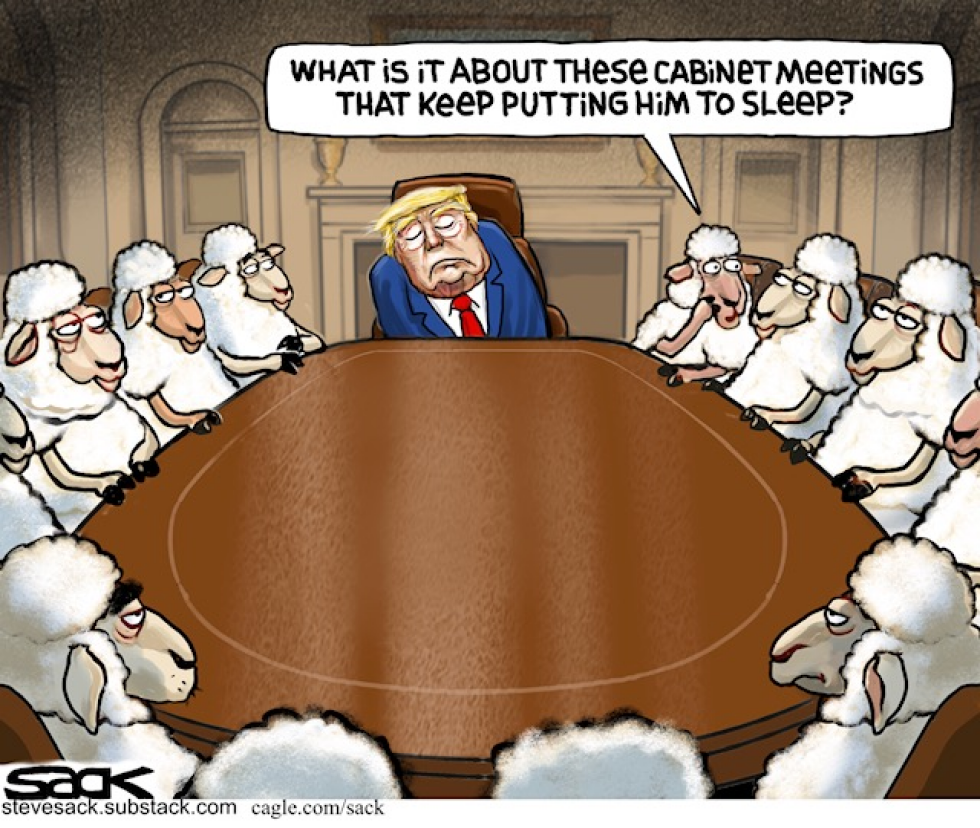
Donald Trump appears asleep at the head of a long conference table while sheep dressed in business attire occupy the surrounding seats. A speech bubble above the scene asks what about cabinet meetings keeps putting him to sleep. The July 2026 image from Steve Sack depicts the president in a blue suit and red tie with eyes closed and head tilted. The setting shows a formal room with arched doorways and a large wooden table. Text at the bottom includes the artist's signature and website links.
A goat wearing a crown stands in grass with the words BLAME OTHERS -DJT printed in red across its side and the label SCAPEGOAT beneath it. The image from July 2026 uses the animal to represent a political figure associated with shifting responsibility.