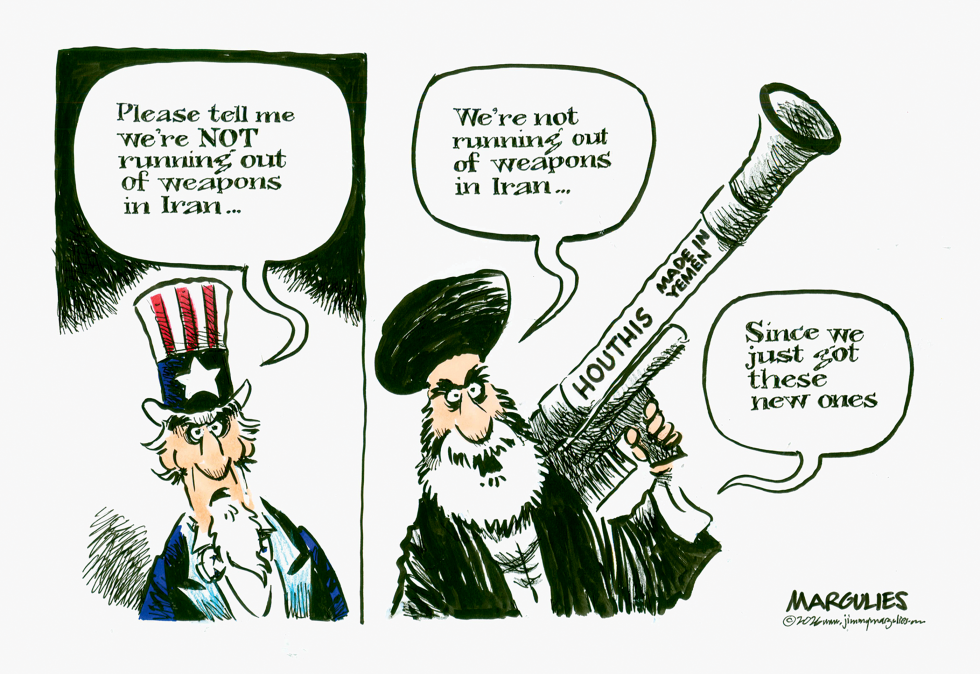
Reports indicate Houthi forces in Yemen have begun supplying missiles to Iran, addressing potential shortages in Iranian stockpiles. The development raises questions about regional arms flows and US policy responses in the Middle East. The cartoon highlights American concerns over whether Iran is truly facing weapons deficits, given the influx of Houthi-provided arms from Yemen. It portrays the situation as undermining claims of Iranian vulnerability while underscoring ongoing tensions in proxy dynamics.
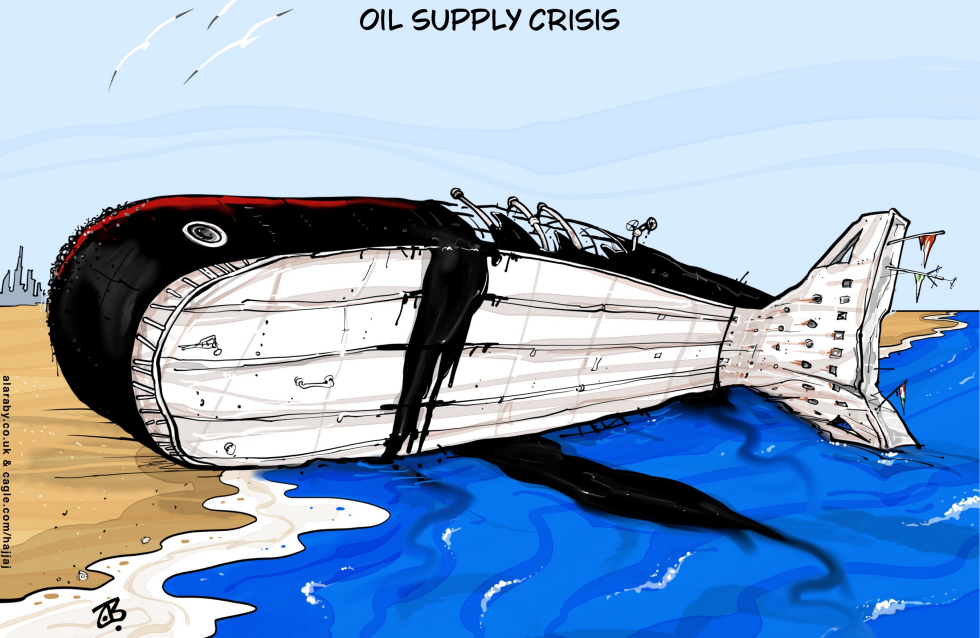
A major oil tanker has run aground, disrupting supply routes and releasing crude into coastal waters. The incident underscores vulnerabilities in global energy transport networks that rely on aging or poorly maintained vessels. Such events can spike fuel prices and trigger immediate cleanup costs for affected regions. The cartoon frames the grounding as a direct cause of the broader supply crisis rather than an isolated accident. It points to systemic weaknesses in oversight and infrastructure that allow one failure to cascade into wider shortages and ecological harm.
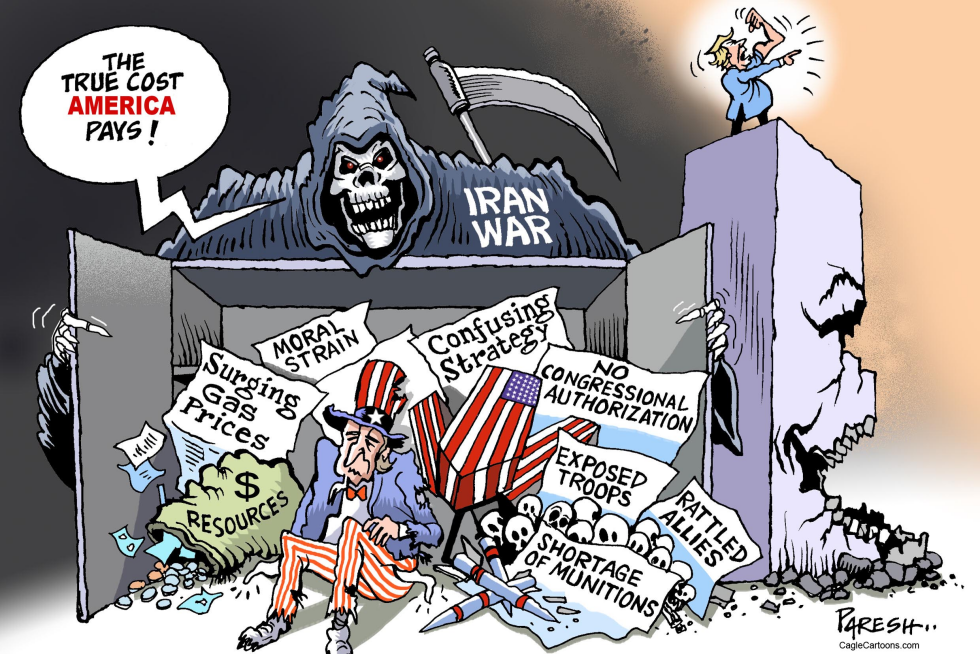
The cartoon depicts the Grim Reaper personifying the Iran War looming over a box of American costs including surging gas prices, moral strain, confusing strategy, no congressional authorization, exposed troops, shortage of munitions and rattled allies. Uncle Sam sits defeated among the debris with a broken flag and skulls. Donald Trump stands on a pedestal pointing upward. A speech bubble declares the true cost America pays. Published September 4, 2026, the piece critiques the drain on U.S. resources and lack of oversight in the conflict.
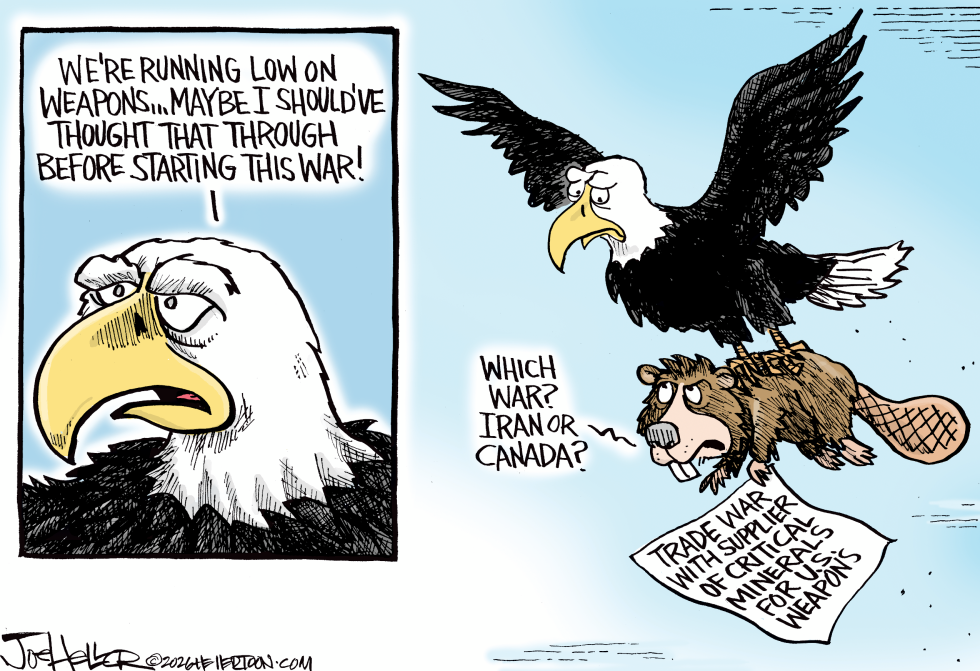
The United States faces potential weapons shortages linked to trade tensions with Canada, a key supplier of critical minerals, while also managing conflicts involving Iran. The situation highlights risks to military readiness from disrupted supply chains. The piece argues that initiating trade disputes with essential partners undermines defense capabilities at a critical time.
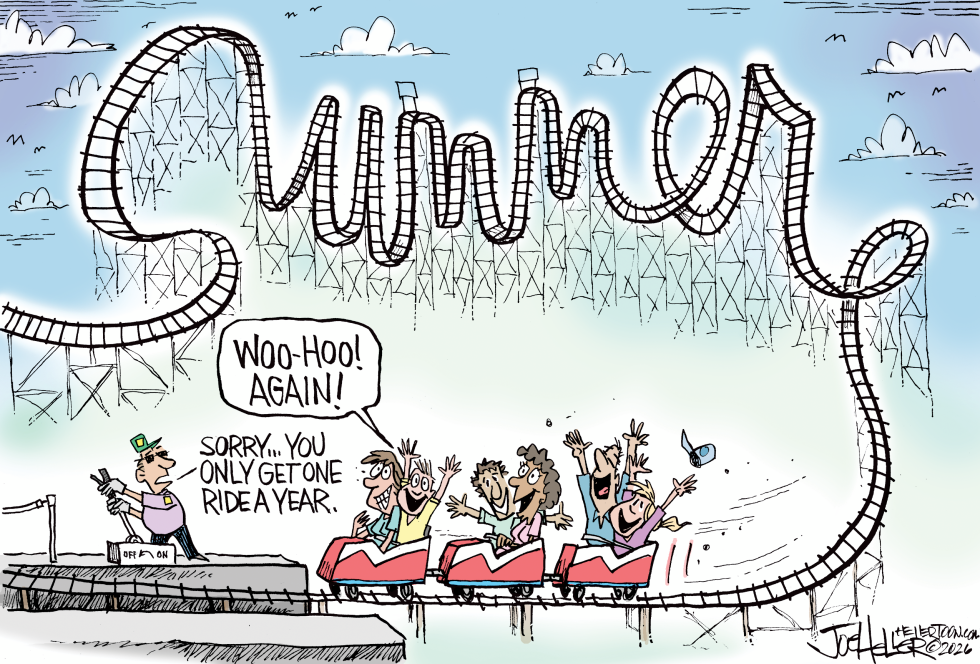
Late August brings the familiar end-of-summer realization that warm weather and leisure time feel fleeting. The cartoon depicts an amusement park enforcing a one-ride-per-year policy on a coaster shaped like the word summer. The editorial position highlights how quickly the season passes and how little time remains for enjoyment.
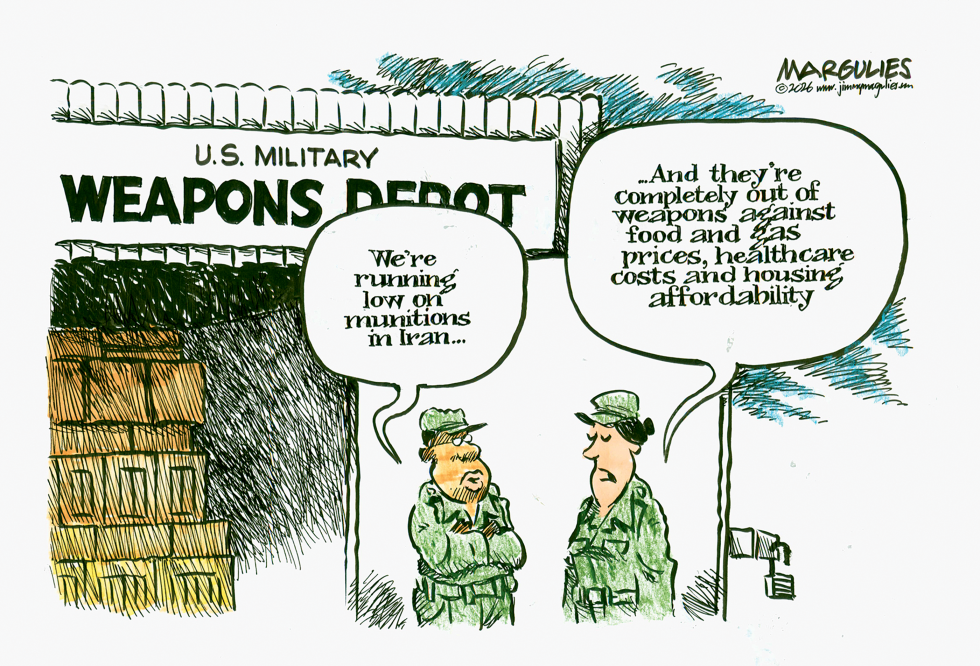
The cartoon depicts two U.S. soldiers outside a weapons depot labeled U.S. Military Weapons Depot. One soldier states the facility is running low on munitions in Iran. The second replies that domestic fronts are out of weapons against food and gas prices, healthcare costs and housing affordability. The image responds to ongoing debates over U.S. military aid commitments abroad and competing budget pressures at home as of the August 2026 publication date. It uses the depot setting and dialogue to contrast foreign military demands with economic challenges facing American households.
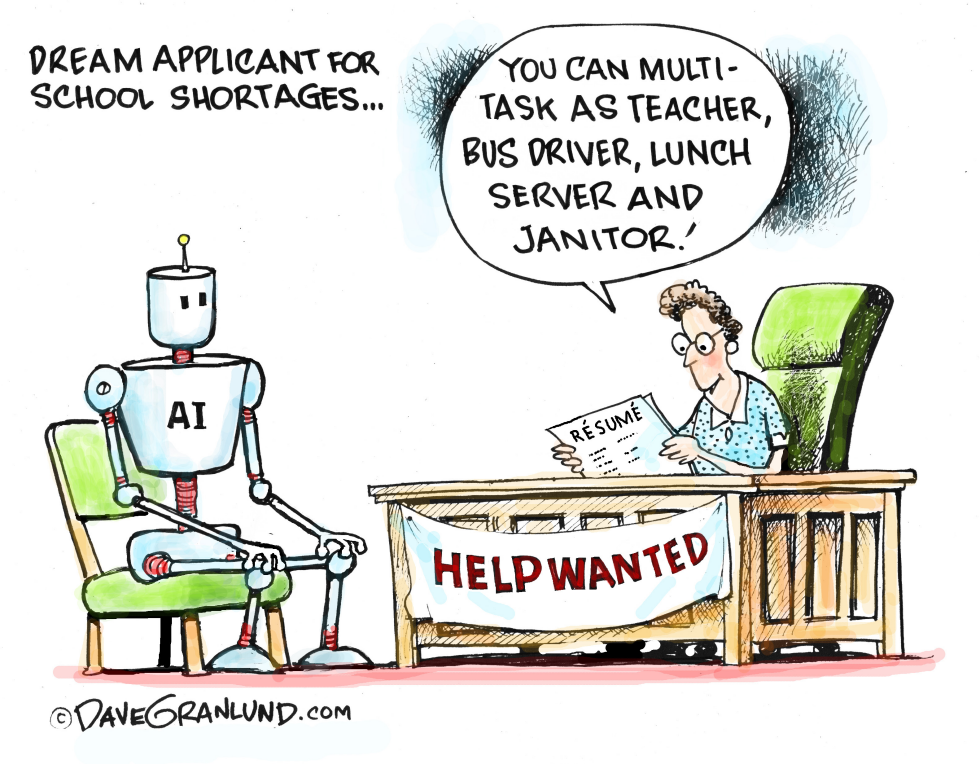
A political cartoon depicts a robot marked AI seated across from a school administrator during a job interview. The administrator holds a resume and states the applicant can serve as teacher, bus driver, lunch server and janitor. Text in the upper left identifies the robot as a dream applicant for school shortages. A help wanted banner hangs on the desk. The image comments on ongoing efforts to use artificial intelligence to ease teacher and support staff shortages in schools.
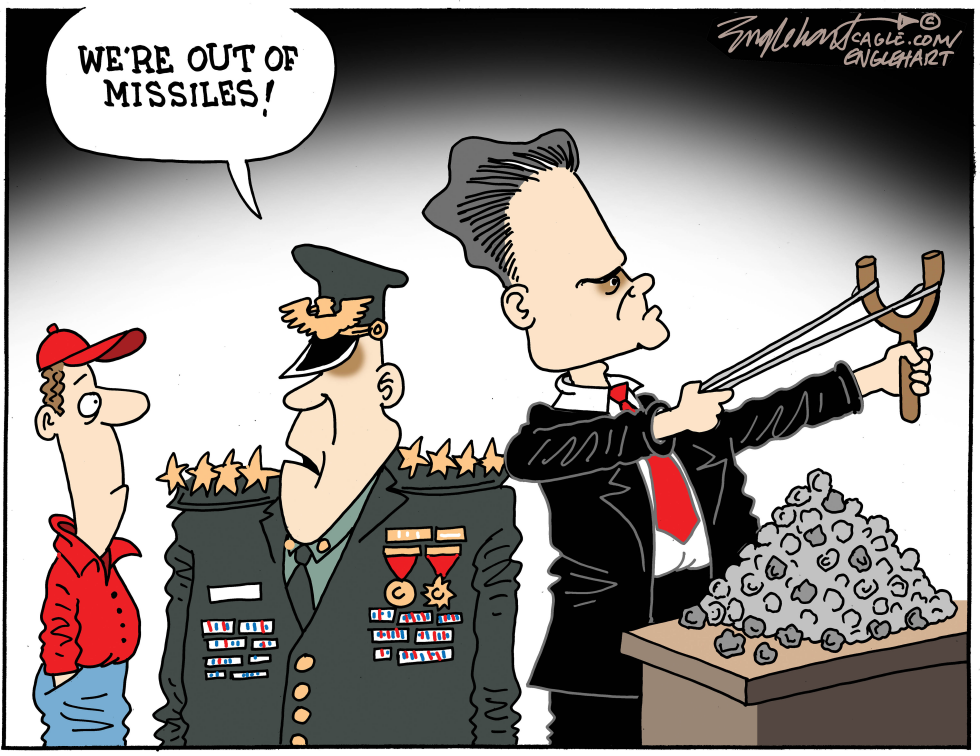
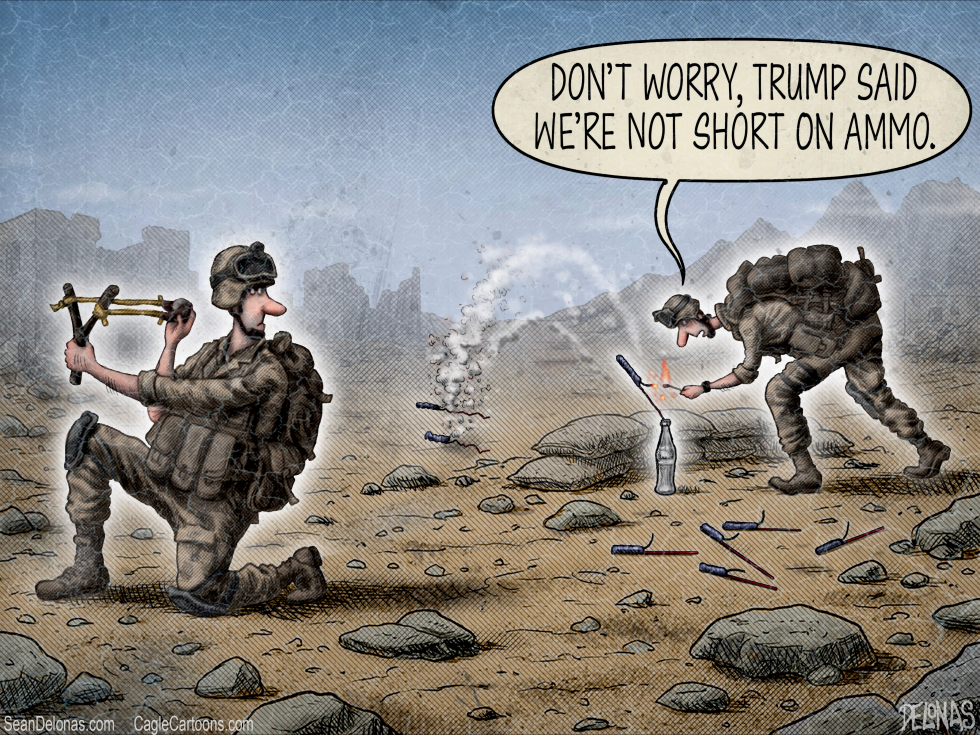
The Pentagon confronts depleted missile inventories during active defense needs. Officials explore improvised options including slingshots loaded with rocks. The development highlights supply chain strains and readiness questions for U.S. forces. The piece criticizes the situation as a failure of planning and resource allocation.
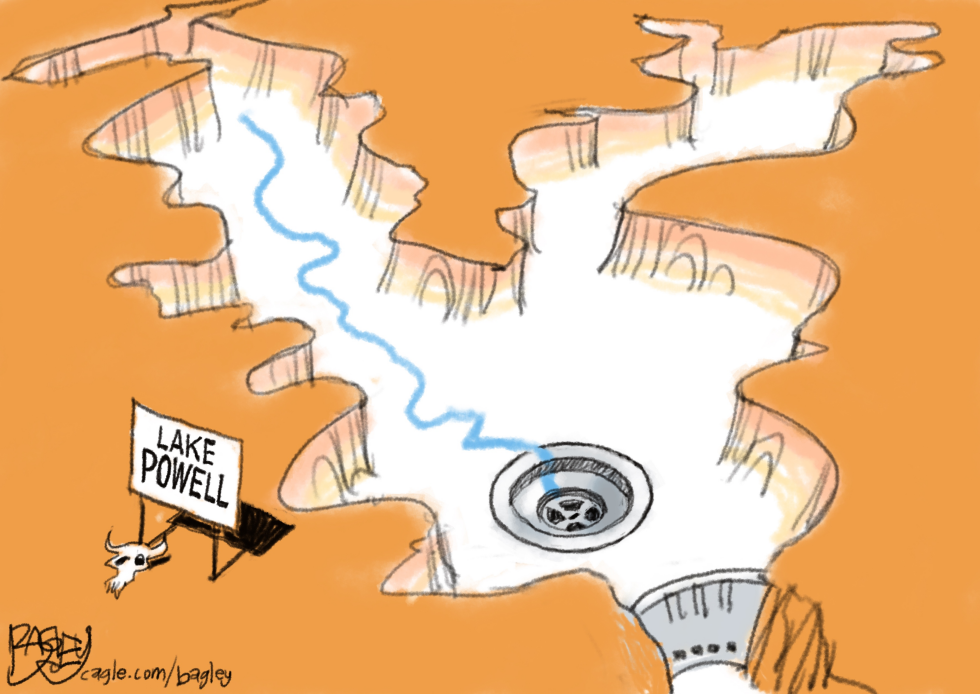
Ongoing drought has pushed Lake Powell to critically low levels along the Colorado River, threatening water supplies for millions across the western United States. The reservoir's continued decline raises urgent questions about allocation agreements among seven states and Mexico. The editorial highlights the severity of the water loss and calls for immediate policy action to address overuse and climate-driven shortages.
U.S. forces in a desert conflict zone report ammunition shortages forcing improvised weapons. The situation highlights strains on military logistics during ongoing operations. The piece critiques assurances from leadership that supplies remain adequate.
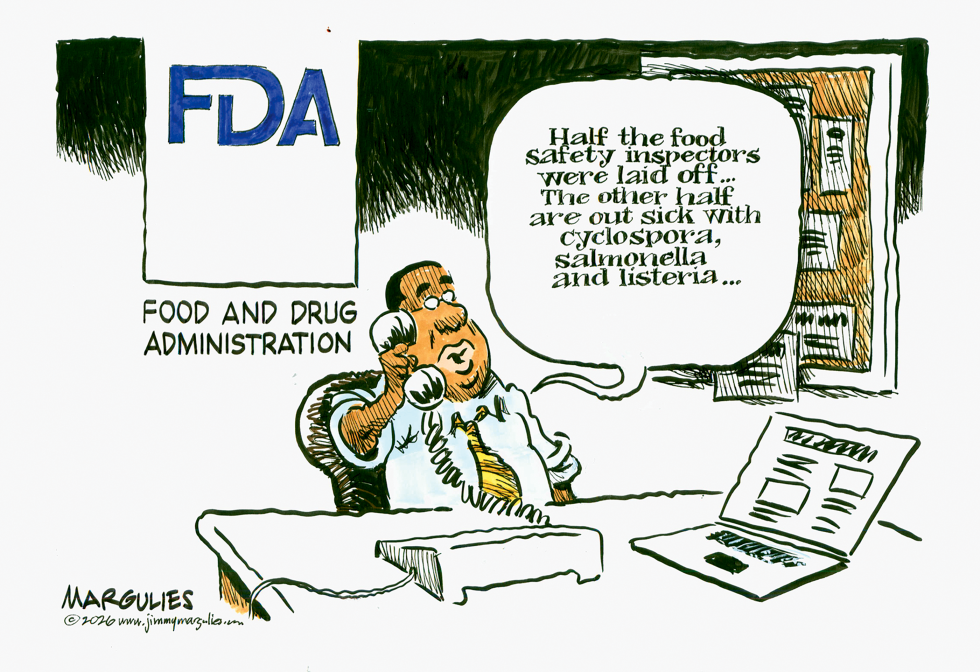
The FDA confronts a critical shortage of food safety inspectors after half were laid off and the remainder fell ill with cyclospora, salmonella and listeria. This development directly threatens public protection against contaminated food supplies. The editorial highlights how these staffing gaps undermine the agency's core mission and calls for immediate restoration of inspection capacity to prevent wider health consequences.
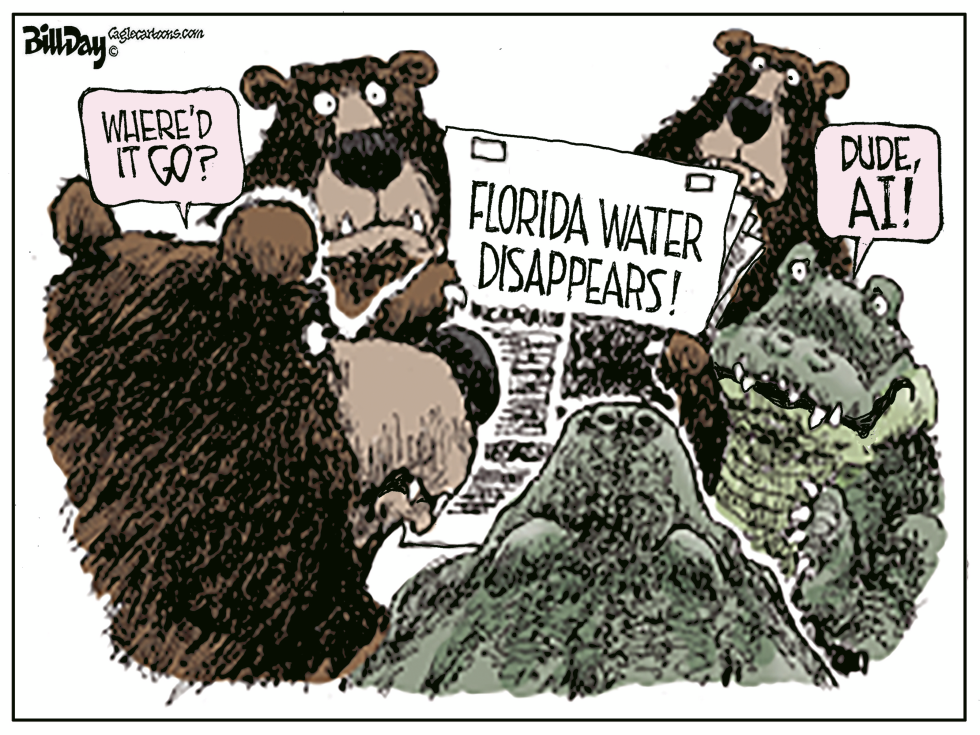
Florida faces ongoing water supply pressures amid population growth and technological expansion. Bears in the cartoon accuse artificial intelligence of causing the shortage. The piece highlights how data centers and computing demands draw scrutiny for resource consumption. The editorial position frames the blame on AI as a simplistic deflection from broader environmental and policy challenges in the state.
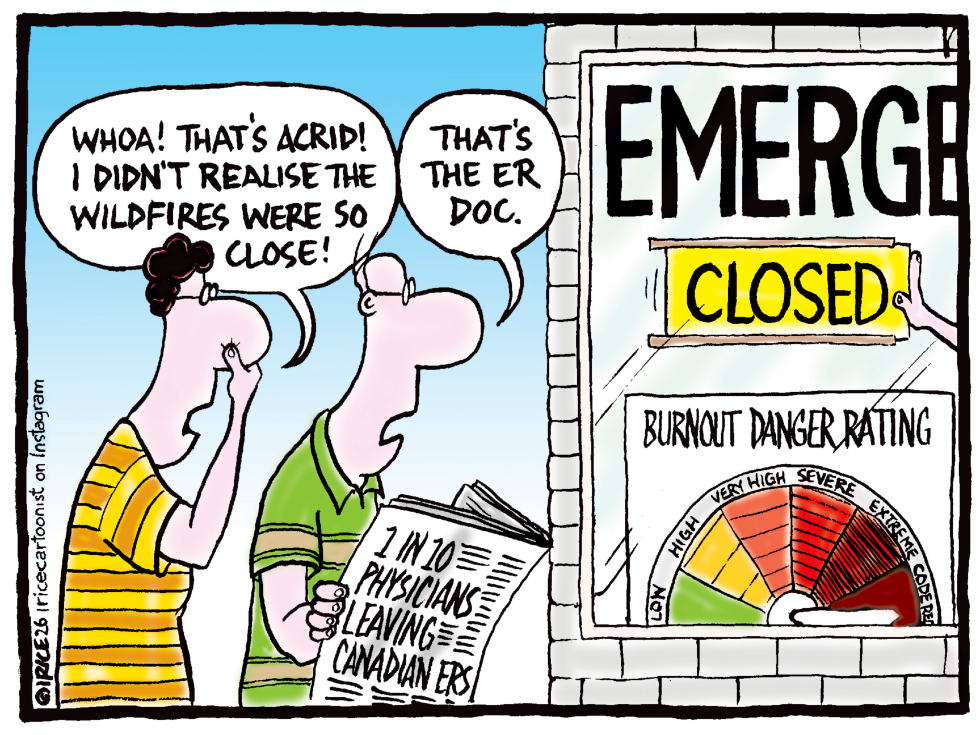
Canadian emergency rooms face mounting closures as one in ten physicians depart amid rising burnout, compounded by wildfire smoke exposure. The staffing crisis leaves communities without timely care during peak summer health threats. The editorial highlights how environmental pressures accelerate an already fragile healthcare system, urging immediate policy intervention to retain medical staff.