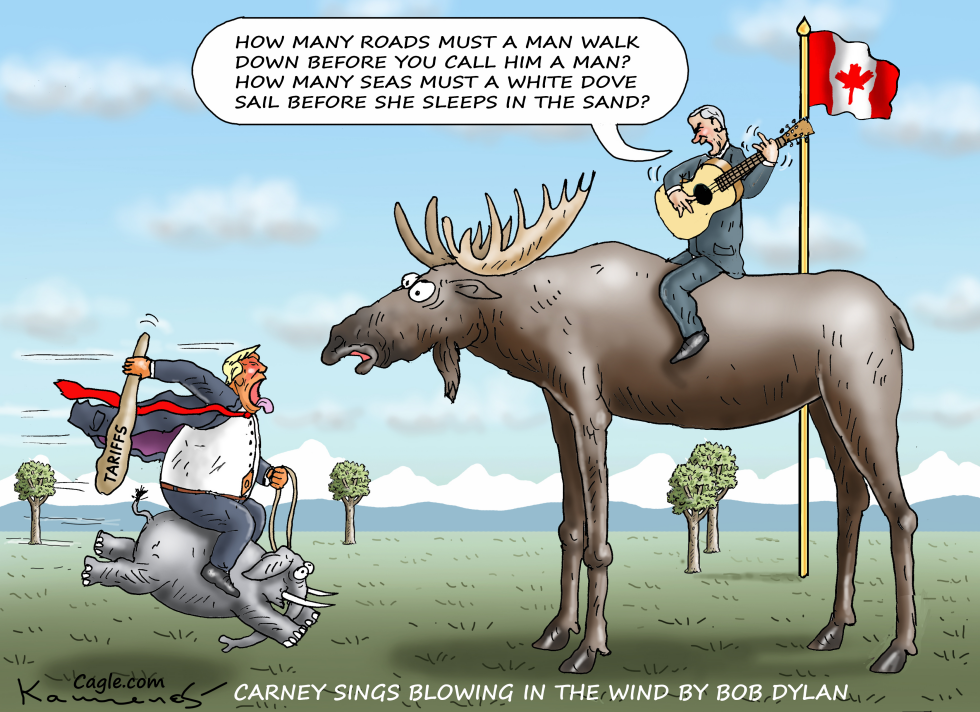
On August 27 2026 President Trump escalated tariffs against Canadian goods in a bid to pressure Ottawa on trade terms. The move drew immediate pushback from Canadian officials including Mark Carney who framed resistance through cultural references to enduring protest songs. The action risks higher consumer costs and strained bilateral relations at a time when supply chains remain fragile. The cartoon portrays the tariff push as a futile assault on Canadian resolve symbolized by the steadfast moose and the defiant singer.
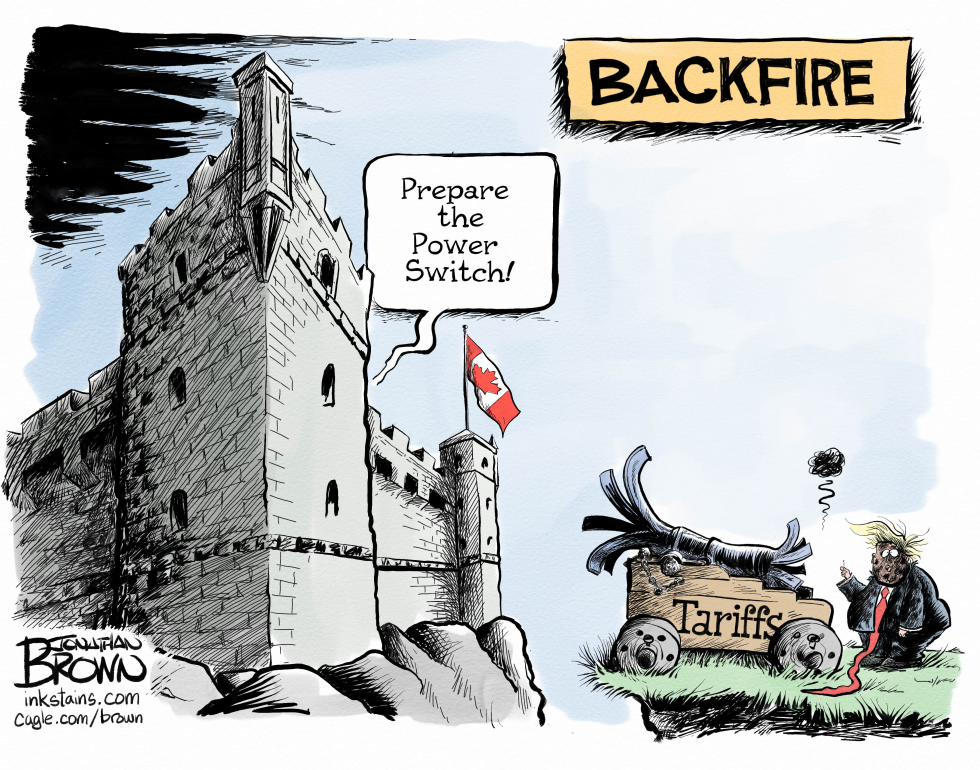
The cartoon shows a Canadian castle flying its flag while a cannon labeled Tariffs explodes backward toward a figure resembling Donald Trump. The scene responds to ongoing trade tensions where U.S. tariffs on Canadian goods prompted retaliatory measures. The visual emphasizes the policy rebounding on its originator rather than achieving intended pressure.
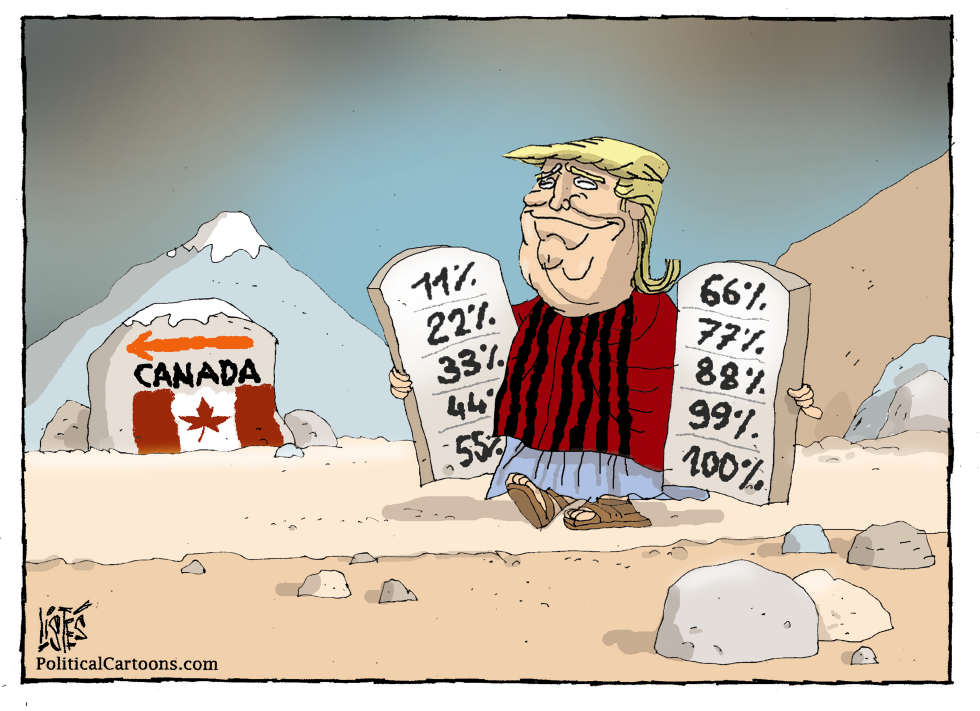
Donald Trump appears in a desert scene holding stone tablets inscribed with rows of percentages while standing near a rock labeled Canada. The image responds to ongoing trade and tariff discussions between the United States and Canada. The editorial position frames the percentages as commandments Trump is delivering in the border region.
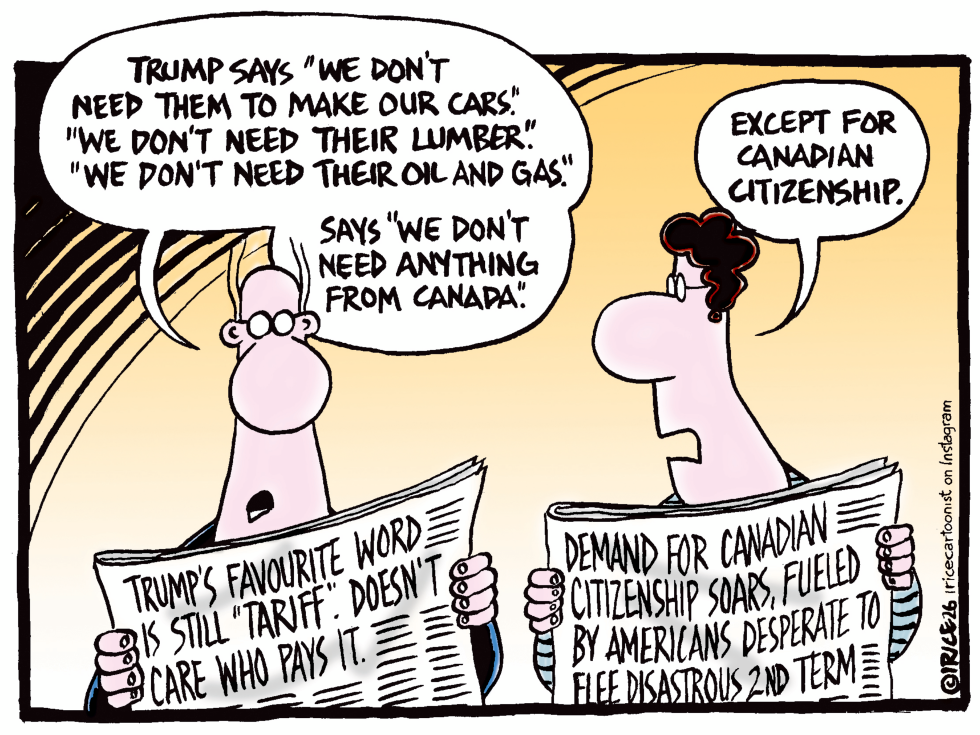
Trump's renewed tariffs on Canadian cars, lumber, oil and gas have triggered a sharp rise in applications for Canadian citizenship from Americans wary of his second term. The move underscores ongoing US-Canada trade friction and domestic policy backlash. The cartoon frames the policy as self-defeating, highlighting the irony of Canadians becoming the one Canadian product still in demand.
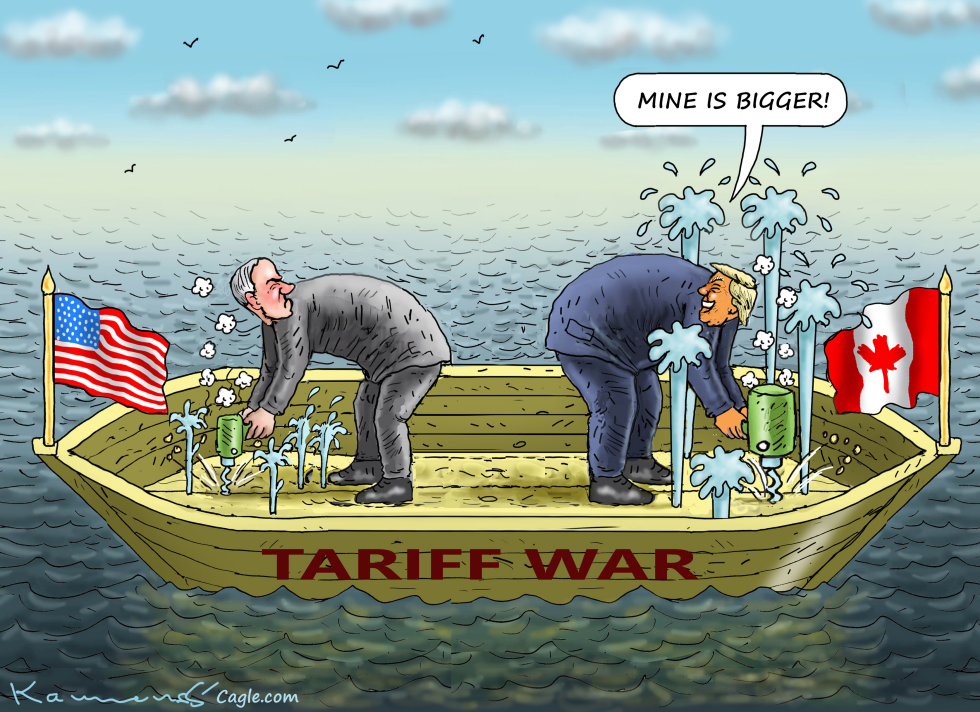
US and Canadian leaders have intensified a tariff dispute through reciprocal trade barriers that threaten cross-border supply chains and consumer prices. The editorial depicts both sides actively undermining their shared economic vessel rather than seeking negotiated relief.
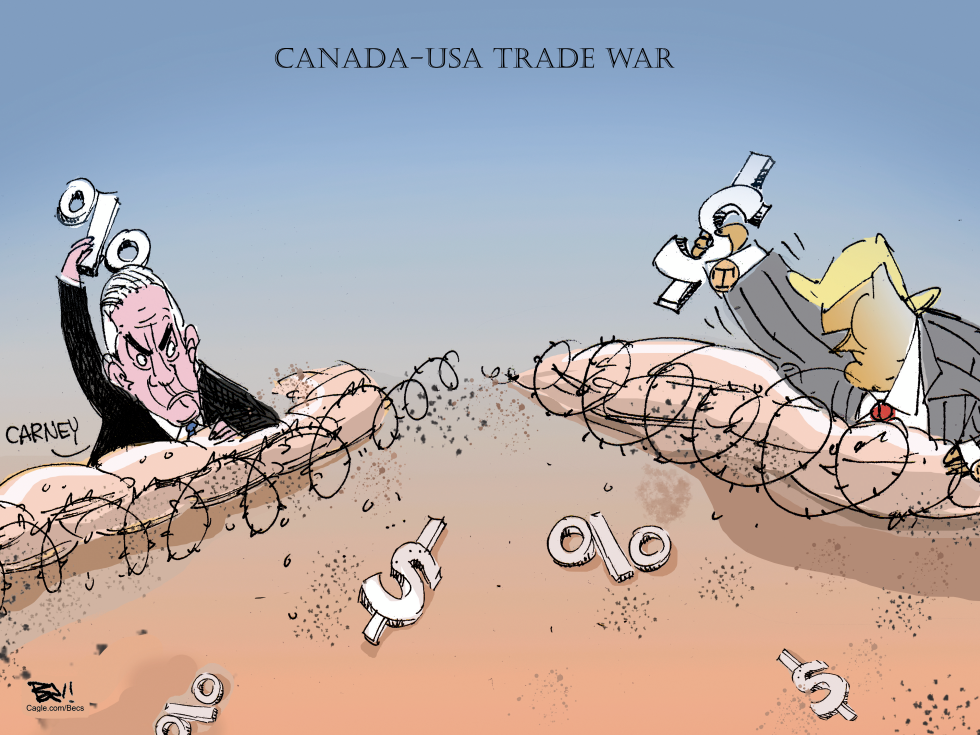
Mark Carney and President Trump clashed over Canada-U.S. trade policies in August 2026, with both sides imposing tariffs and barriers that disrupted cross-border commerce. The dispute centers on economic protections and retaliatory measures affecting businesses and consumers in both countries. The editorial highlights the mutual damage from escalating trade hostilities between the two nations.
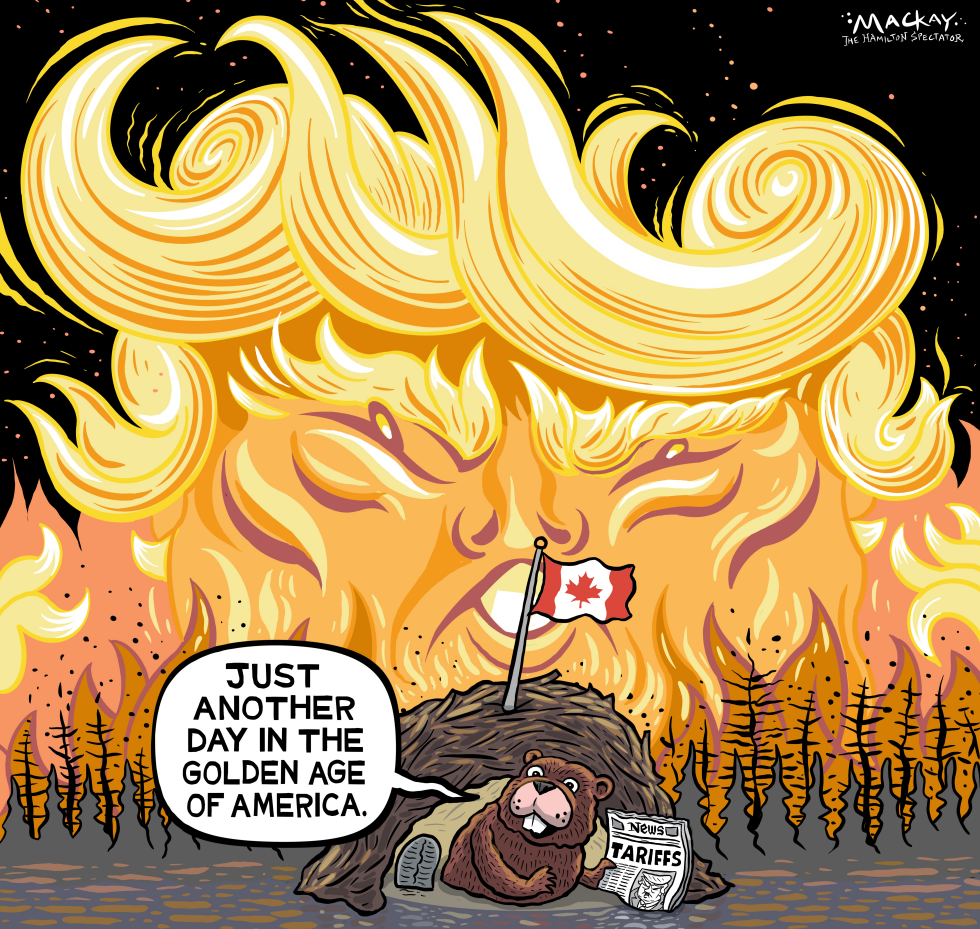
President Trump escalated tariff threats against Canada in mid-August 2026, targeting key exports and prompting Ottawa to brace for economic pressure. The move reignites bilateral trade tensions that have simmered since earlier rounds of duties. The cartoon portrays Canada hunkering down while dismissing the disruption as routine under the current administration.
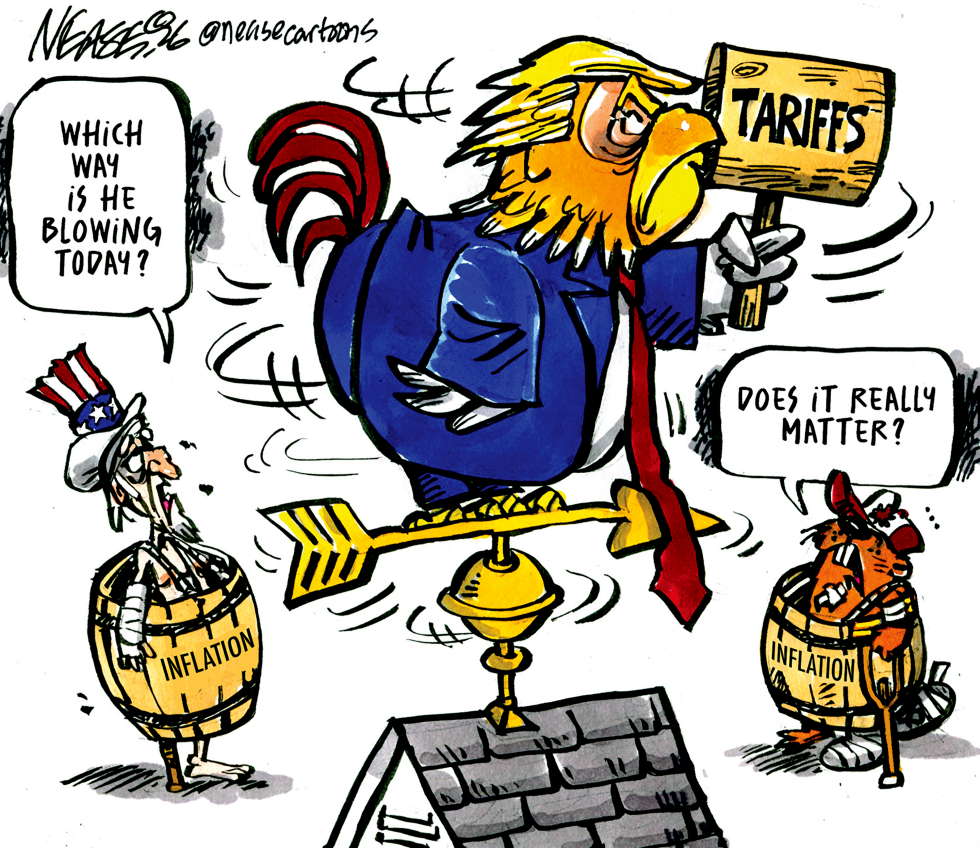
Donald Trump has proposed broad new tariffs on imports as part of his economic agenda. The measures have raised concerns about higher consumer prices and renewed inflation pressures. Markets and businesses are watching for clarity on timing and scope. The cartoon illustrates the confusion over which way tariff policy will ultimately point and whether the direction even matters to those already feeling inflation's effects.
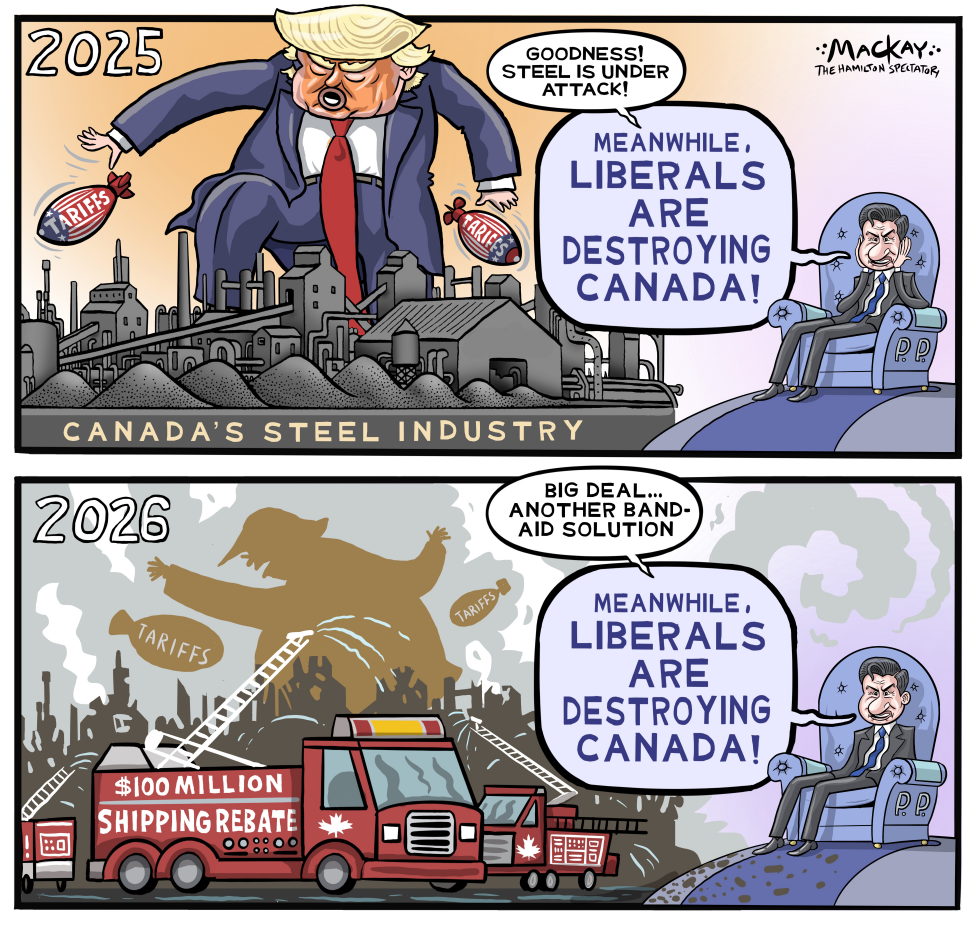
U.S. tariffs imposed on Canadian steel in 2025 triggered sharp declines in the domestic industry by 2026. The federal government responded with a $100 million shipping rebate. Conservative Leader Pierre Poilievre continued to focus attacks on the Liberal government rather than the trade shock. The cartoon argues this stance amounts to a repeated distraction from the core economic damage.
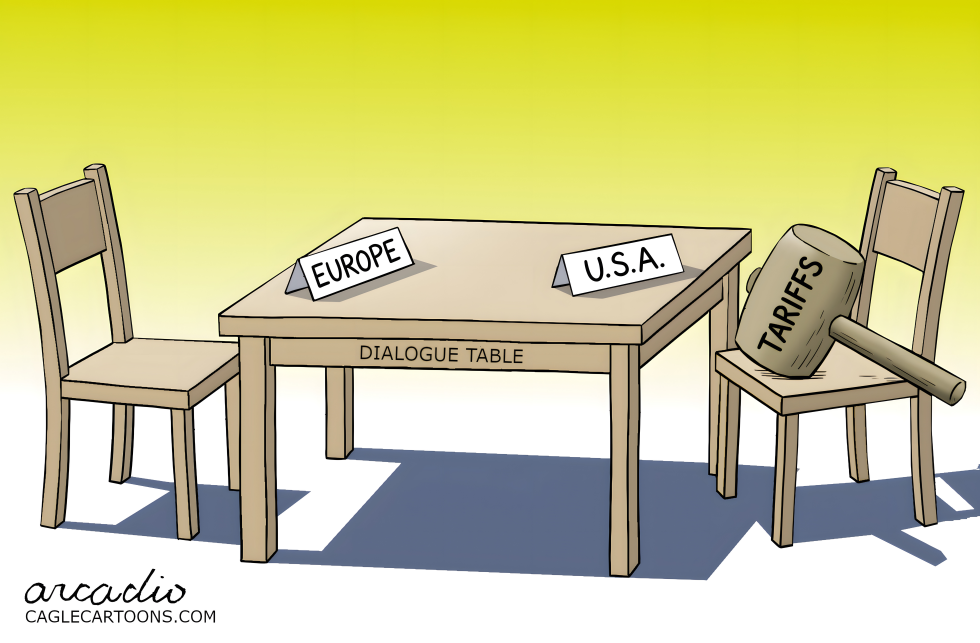
US and European officials face renewed friction over trade measures as tariffs disrupt scheduled talks. The impasse highlights ongoing disputes on import duties and market access that affect supply chains and consumer prices on both sides of the Atlantic. The editorial position criticizes the tariff approach for preventing constructive engagement and prolonging economic uncertainty.
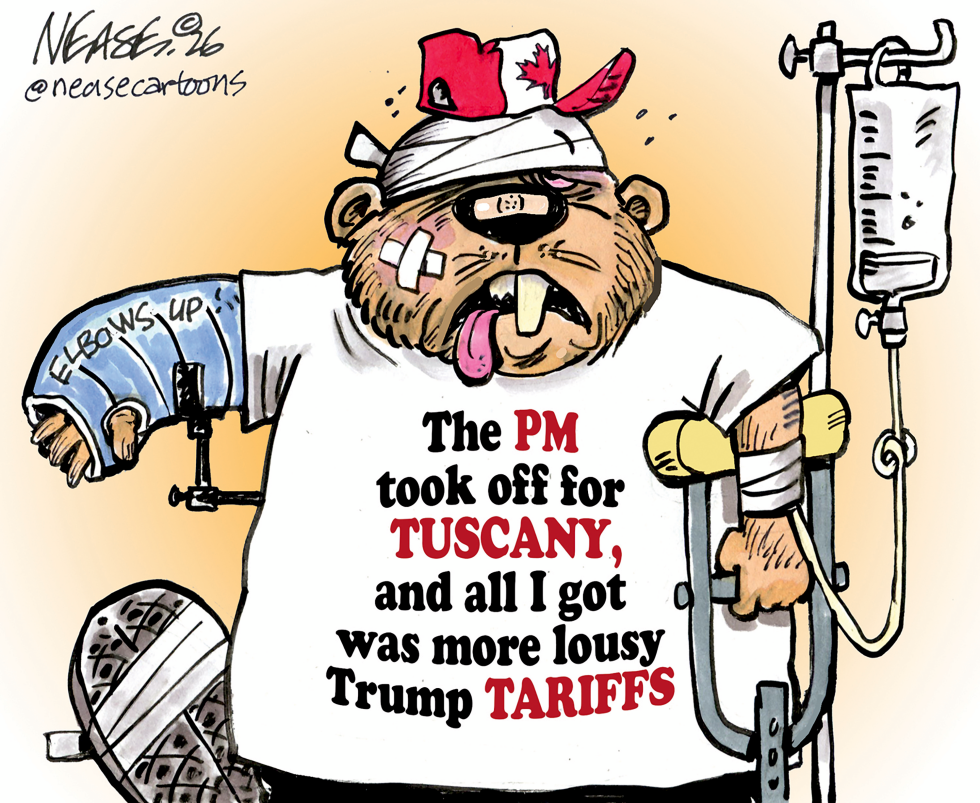
US tariffs on Canadian goods continue to strain bilateral trade relations in 2026. The Prime Minister's extended vacation in Tuscany coincides with renewed economic pressure on Canadian industries. The situation highlights tensions in North American trade policy. The piece argues that leadership absence compounds the damage from external tariffs.
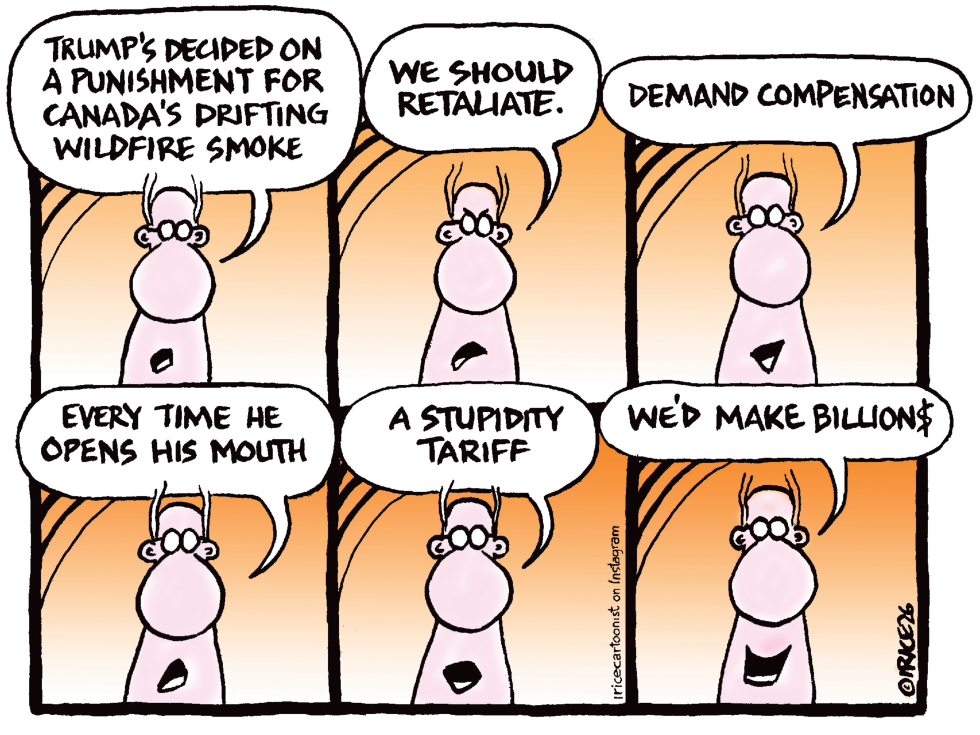
Donald Trump has floated imposing a tariff on Canada as punishment for wildfire smoke drifting across the border. The move draws immediate pushback from Canadian officials who suggest retaliation and compensation demands. The episode highlights ongoing trade tensions between the two neighbors and the economic stakes involved in cross-border disputes. The cartoon frames the tariff idea as a foolish overreaction likely to backfire financially on the United States.
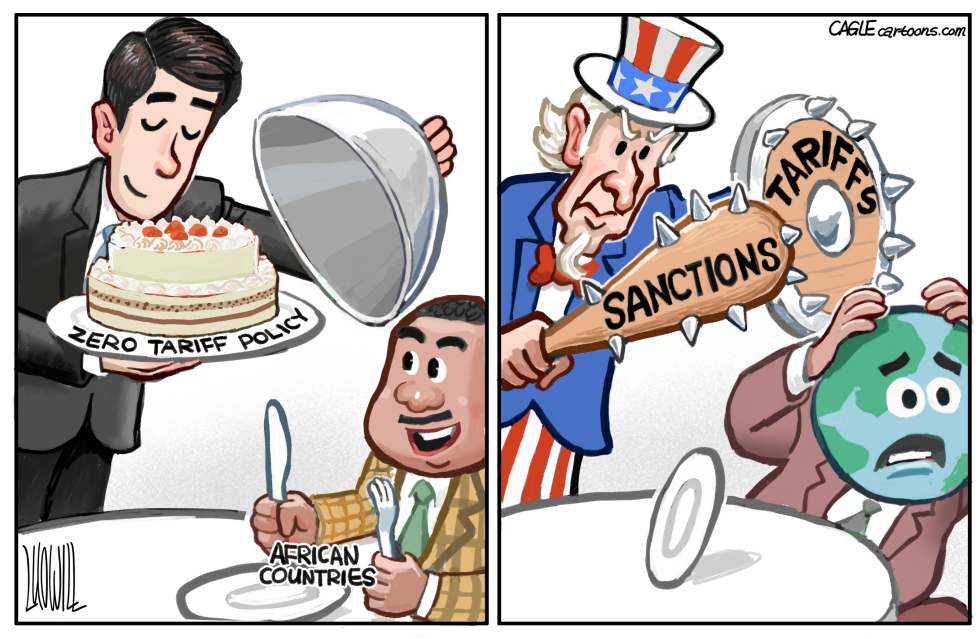
The United States has extended a zero-tariff policy offer to African nations amid ongoing global trade tensions. This move stands in contrast to simultaneous use of tariffs and sanctions against other trading partners. The policy highlights selective economic engagement by Washington. The editorial position criticizes the inconsistency between the overture to Africa and the punitive approach applied more broadly.
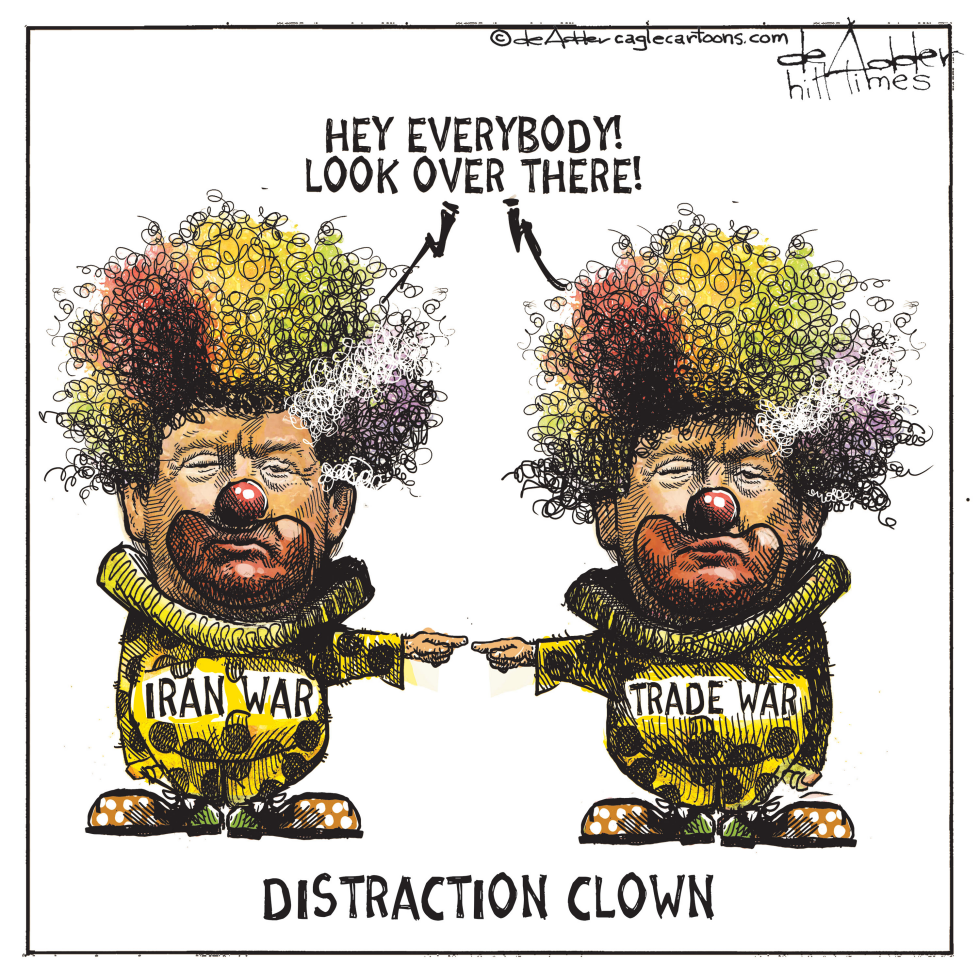
Public attention is being directed toward simultaneous Iran and trade conflicts as potential diversions from other issues. The editorial depicts the two crises as interchangeable distractions promoted by the same source. It argues that leaders are using these flashpoints to shift focus rather than address underlying problems.
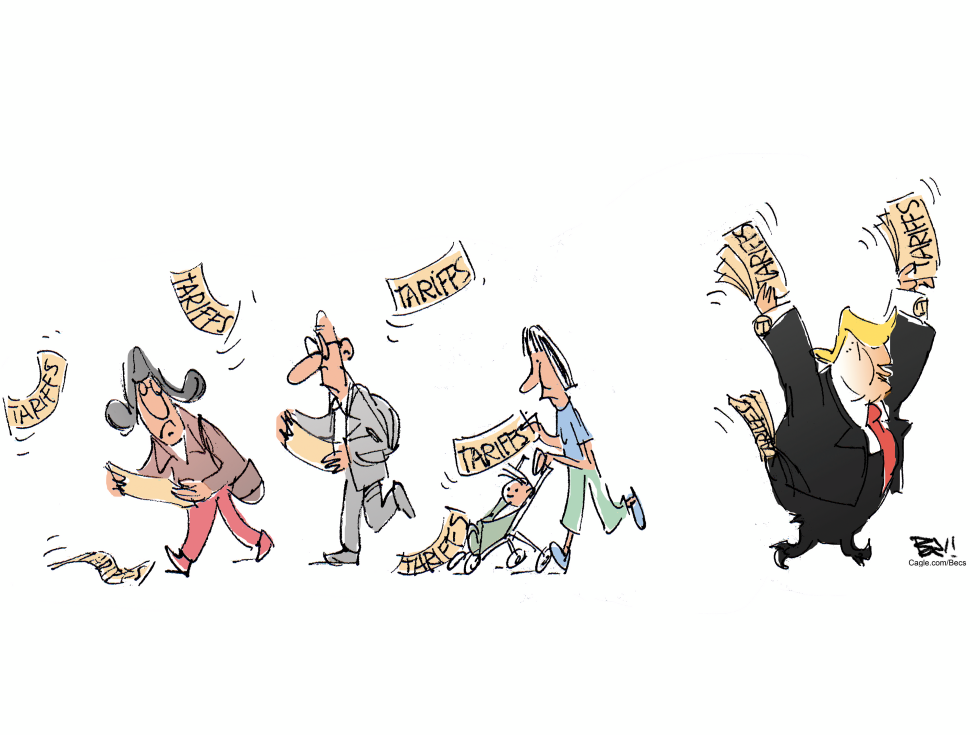
Donald Trump expanded tariffs across trading partners in mid-2026, triggering immediate market volatility and diplomatic pushback. The move raised costs for consumers and businesses reliant on imports. The piece portrays the policy as an indiscriminate barrage that disrupts daily life and global commerce.