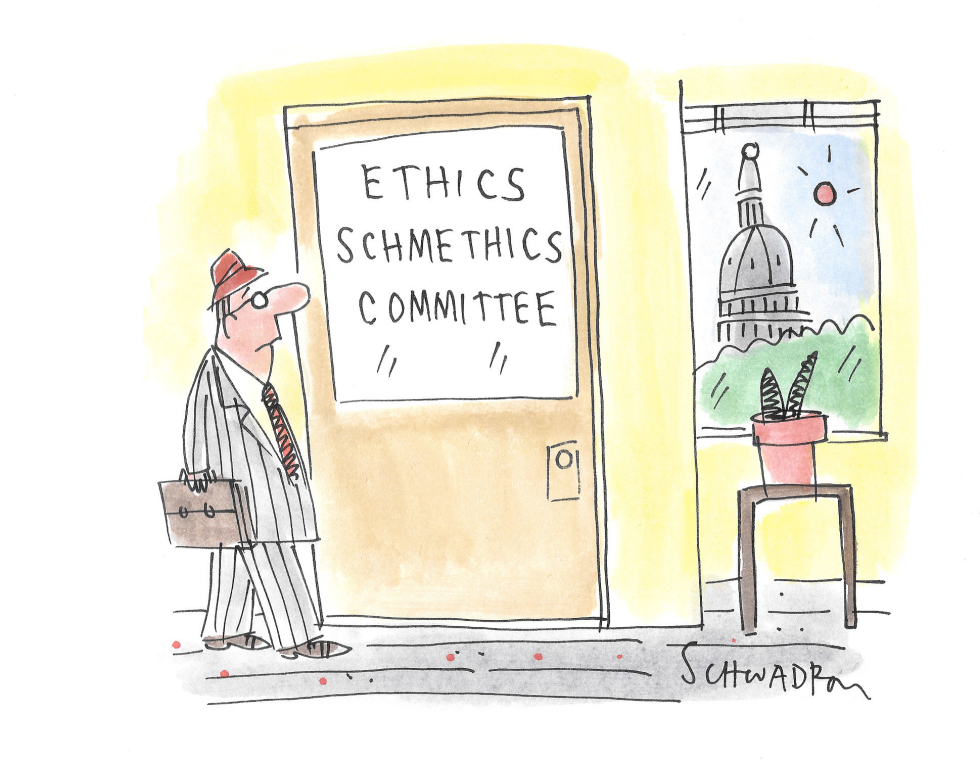
Congress continues to sideline meaningful ethics oversight, with lawmakers showing little interest in strengthening or even respecting the chamber's ethics committee. The panel exists on paper but carries little practical weight in daily operations. This dynamic matters because weak internal standards erode public trust in legislative institutions and invite outside influence. The cartoon captures the prevailing attitude that ethics rules are an afterthought rather than a core responsibility.
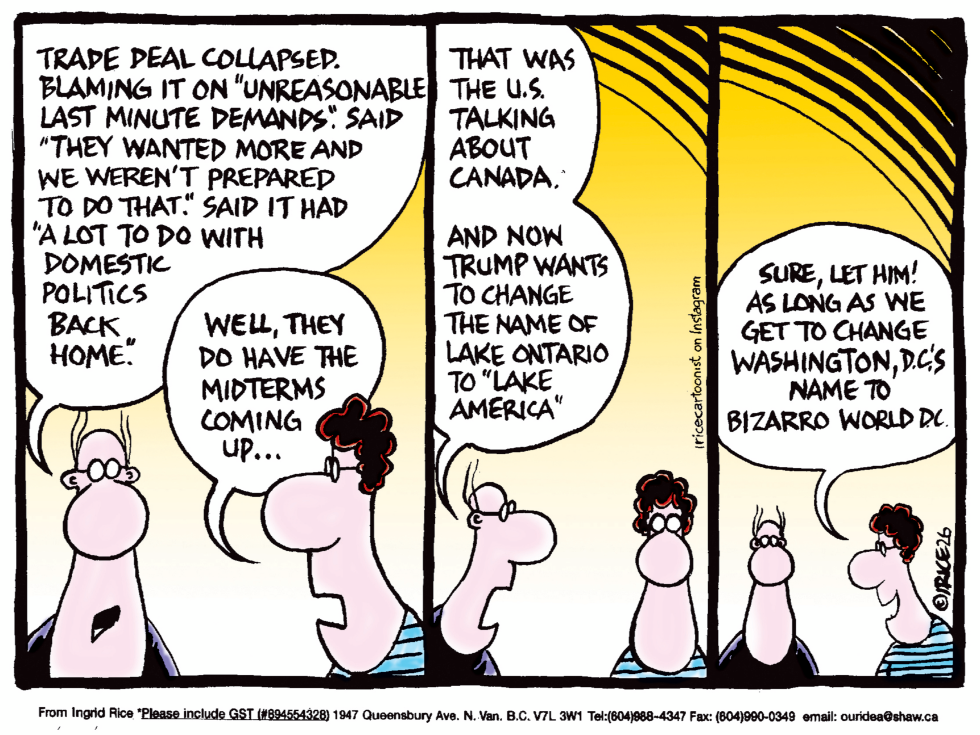
A Canada-U.S. trade deal collapsed after U.S. negotiators cited unreasonable last-minute demands and linked the failure to domestic politics ahead of midterms. President Trump then proposed renaming Lake Ontario to Lake America. Canadian officials responded by offering to rename Washington D.C. to Bizarro World DC if the change proceeds. The exchange highlights how trade tensions and political posturing are escalating between the two countries. The cartoon mocks the name-change idea as emblematic of broader dysfunction in bilateral relations.
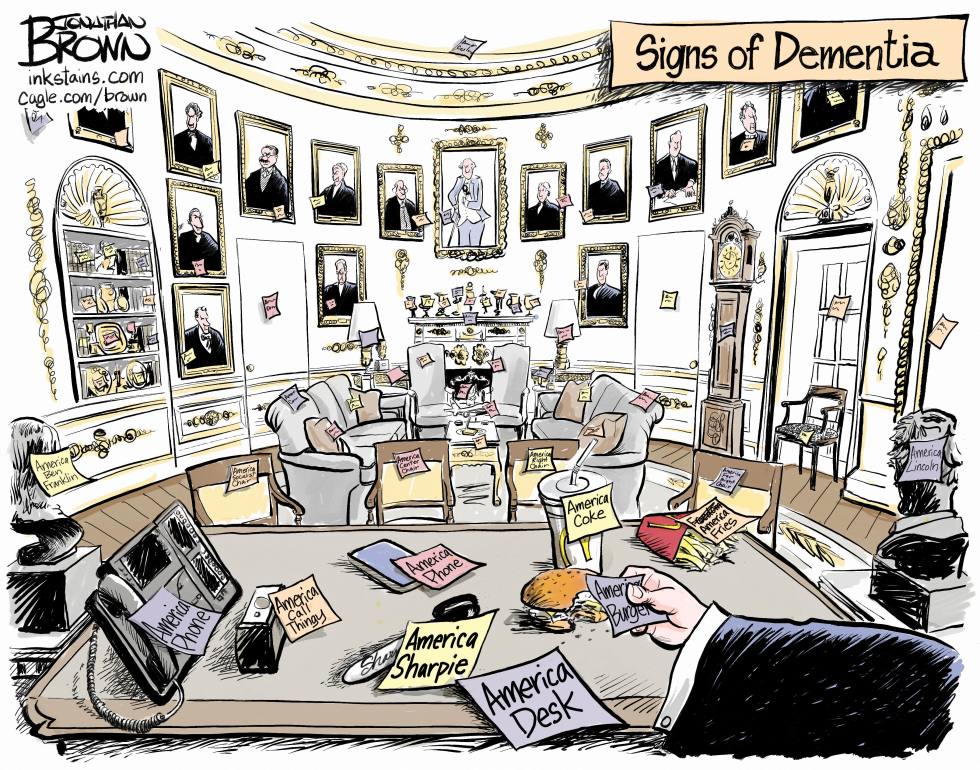
A new editorial cartoon depicts the Oval Office overrun with sticky notes labeling everyday items as America. The scene highlights signs of dementia through repeated branding on phones, desks, food and furniture. Published on September 9, 2026, the work comments on ongoing concerns about cognitive fitness in the presidency. The visual uses the familiar setting of the White House to underscore confusion and memory issues. Observers note the cartoon captures public debate over leadership capacity without naming specific individuals.
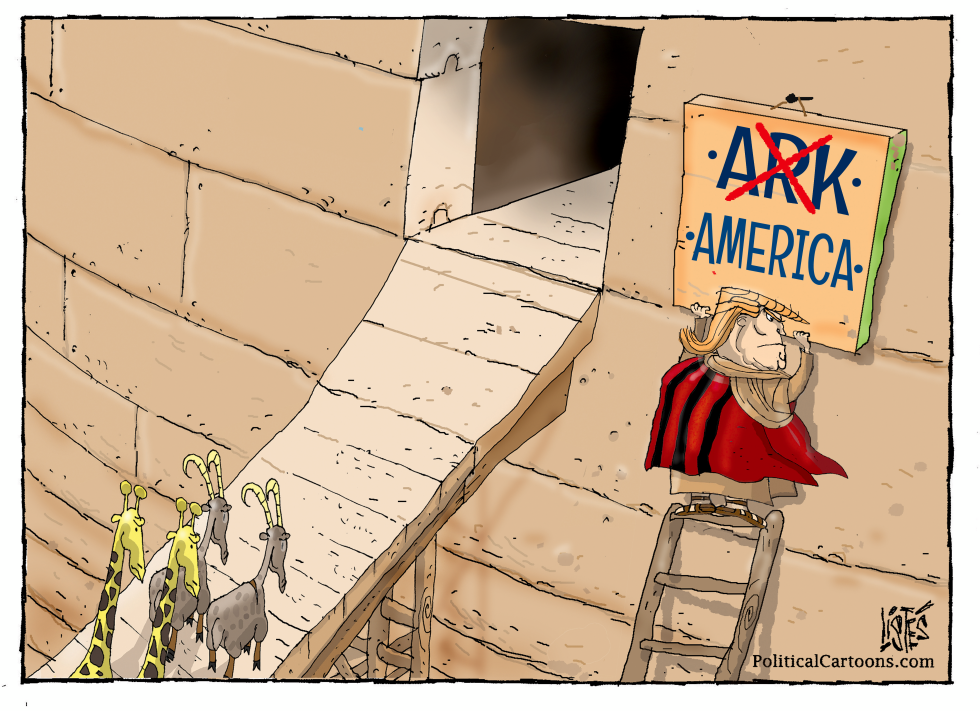
Donald Trump has long inserted his personal branding into public institutions and language. The cartoon responds to this pattern by showing him literally striking through a biblical reference to force an America-first substitution. It argues the impulse reveals unchecked ego rather than policy substance.
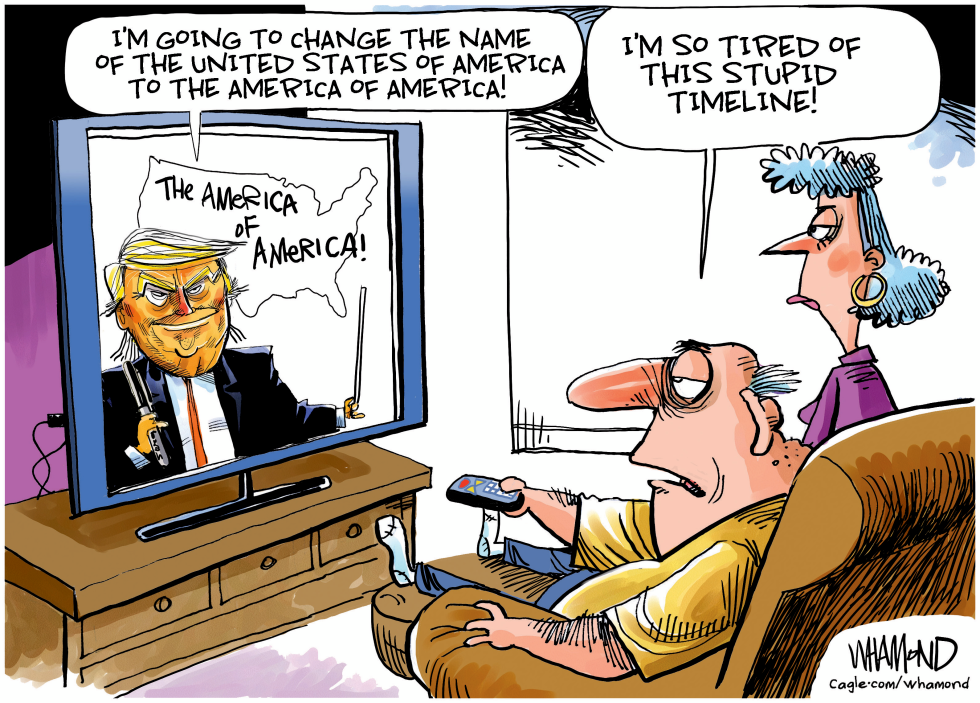
Donald Trump proposed renaming the United States to the America of America during a televised appearance. The suggestion fits a pattern of attention-grabbing rebrands that dominate headlines and fuel public cynicism. Critics argue such moves distract from substantive governance while supporters see them as bold assertions of national identity. The cartoon captures widespread viewer exhaustion with the constant stream of provocative statements. It highlights how repeated name games erode trust in political discourse and amplify perceptions of a chaotic timeline.
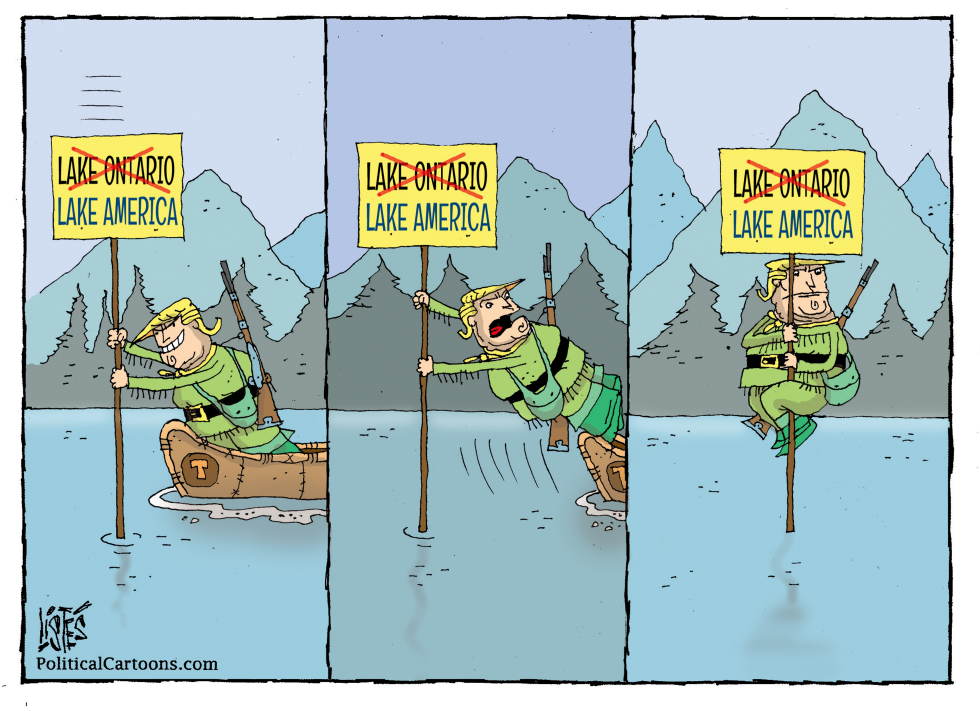
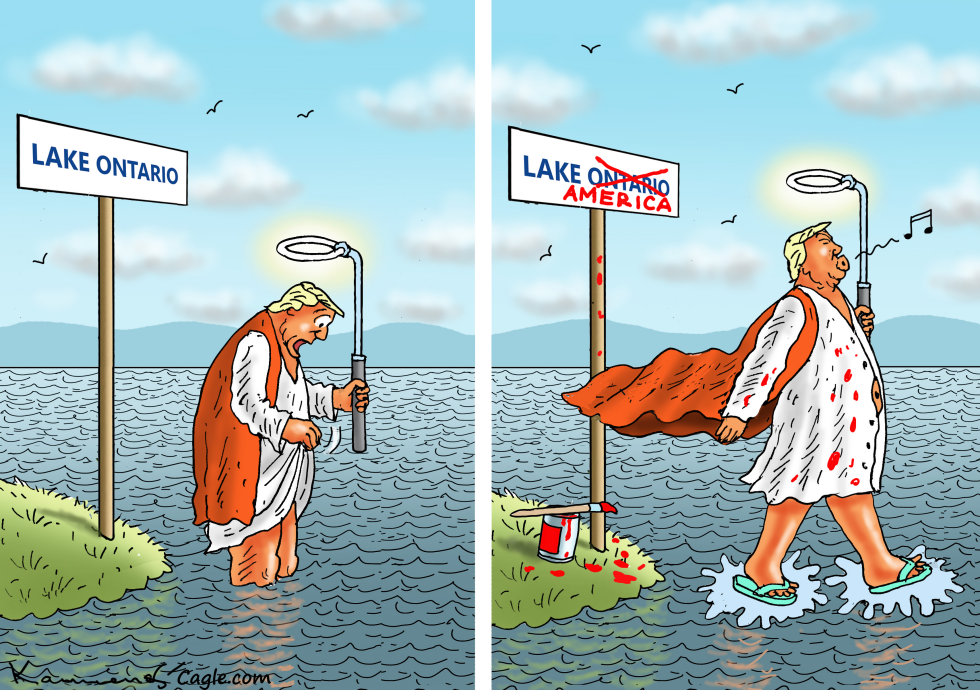
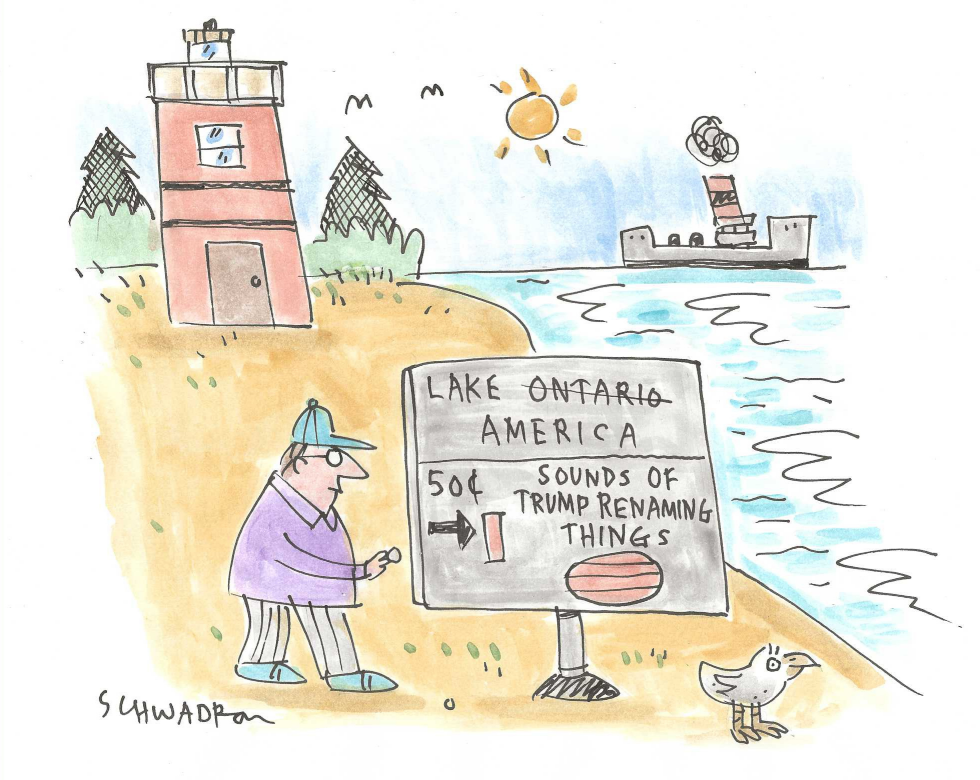
Donald Trump directed the renaming of Lake Ontario to Lake America in a move targeting shared U.S.-Canada waters. The action underscores ongoing tensions over border resources and national identity. The piece portrays the effort as an overreaching nationalist gesture that ignores international boundaries and practical realities.
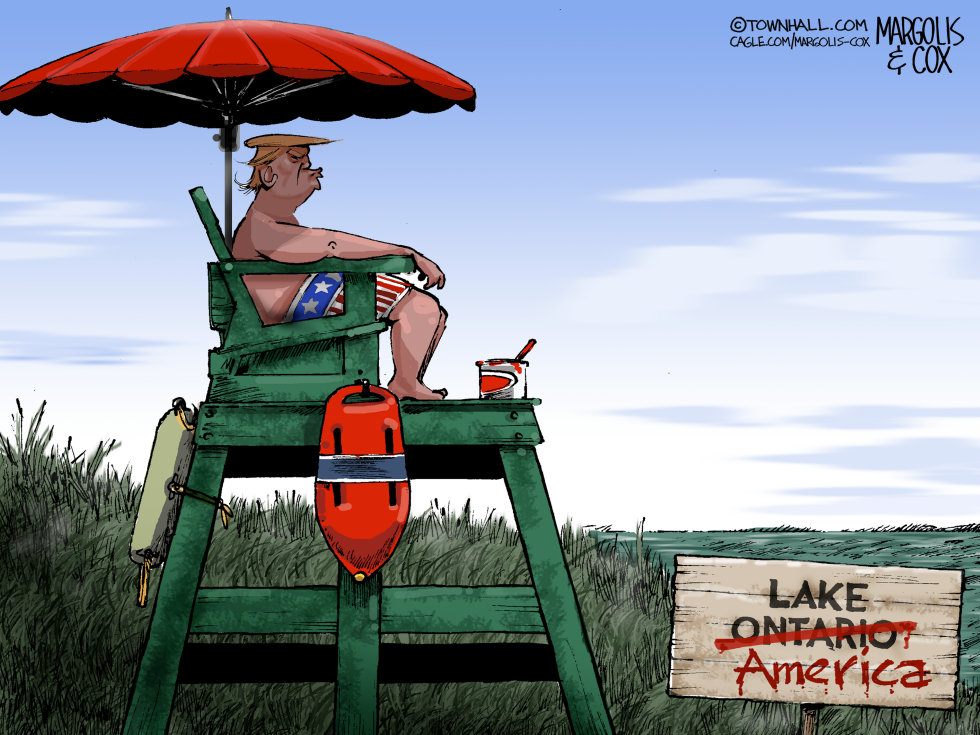
President Donald Trump directed the renaming of Lake Ontario to Lake America on or around August 30, 2026. The move continues a pattern of executive actions rebranding federal and natural sites. Supporters view it as assertive national identity reinforcement while critics see unnecessary overreach into established geographic names. The cartoon depicts Trump overseeing the change from a lifeguard post, underscoring his direct involvement in the decision.
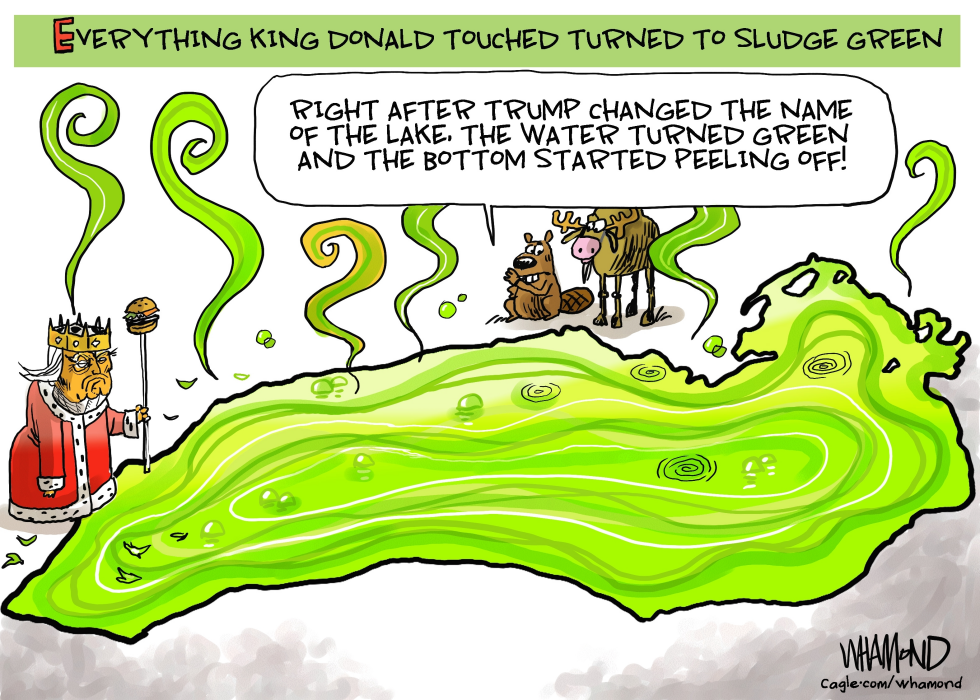
Donald Trump, depicted as a king, changes the name of a lake, after which the water turns green with sludge and the bottom begins peeling. Wildlife observers connect the timing directly to the renaming. The development raises concerns about environmental damage tied to executive actions. The piece portrays the outcome as an inevitable result of Trump's influence, turning natural areas into polluted sludge.
Donald Trump has moved to rename Lake Ontario as Lake America in a symbolic gesture tied to national branding efforts. The action underscores ongoing debates over executive reach into geographic and cultural symbols. Critics view the move as an extension of personal branding into public spaces. The piece portrays the effort as self-aggrandizing and detached from practical governance concerns.
Donald Trump has floated renaming Lake Ontario as part of broader efforts to rebrand geographic features. The move fits a pattern of executive actions targeting names tied to prior administrations or international norms. Critics see it as unnecessary distraction while supporters view it as asserting American identity. The cartoon takes the position that such renaming efforts carry a tangible public cost and reflect repetitive branding impulses.
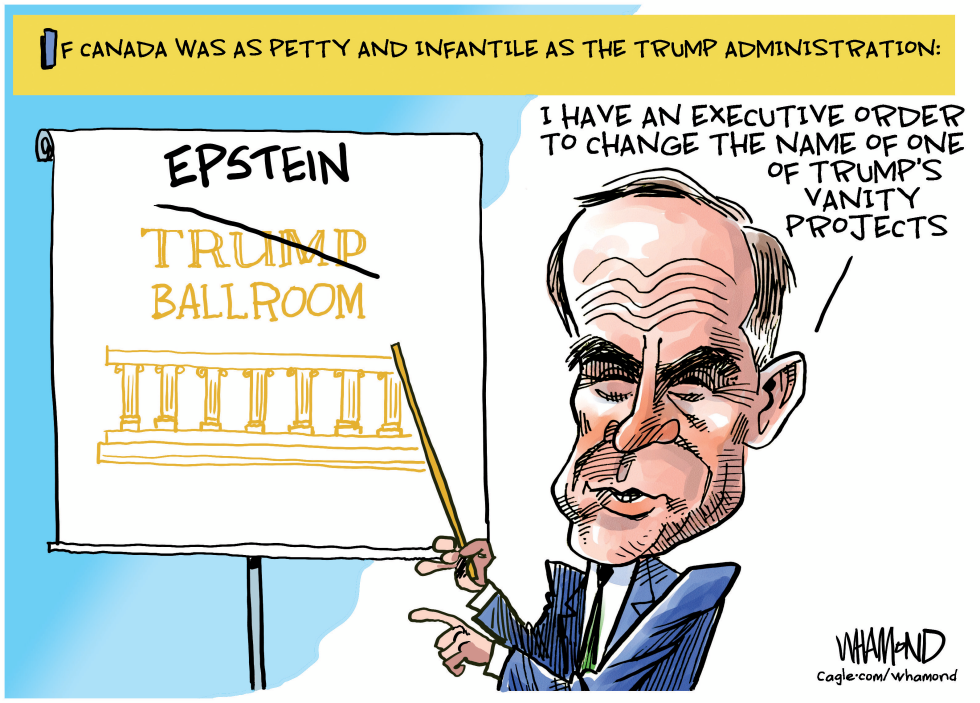
On August 27, 2026, a cartoon depicted Canadian Prime Minister Justin Trudeau issuing a mock executive order to rename a property tied to Jeffrey Epstein as the Trump Ballroom. The move parodies perceived pettiness in the Trump administration's handling of vanity projects and branding disputes. The piece argues that such tit-for-tat gestures underscore how executive actions can devolve into personal score-settling rather than substantive governance.
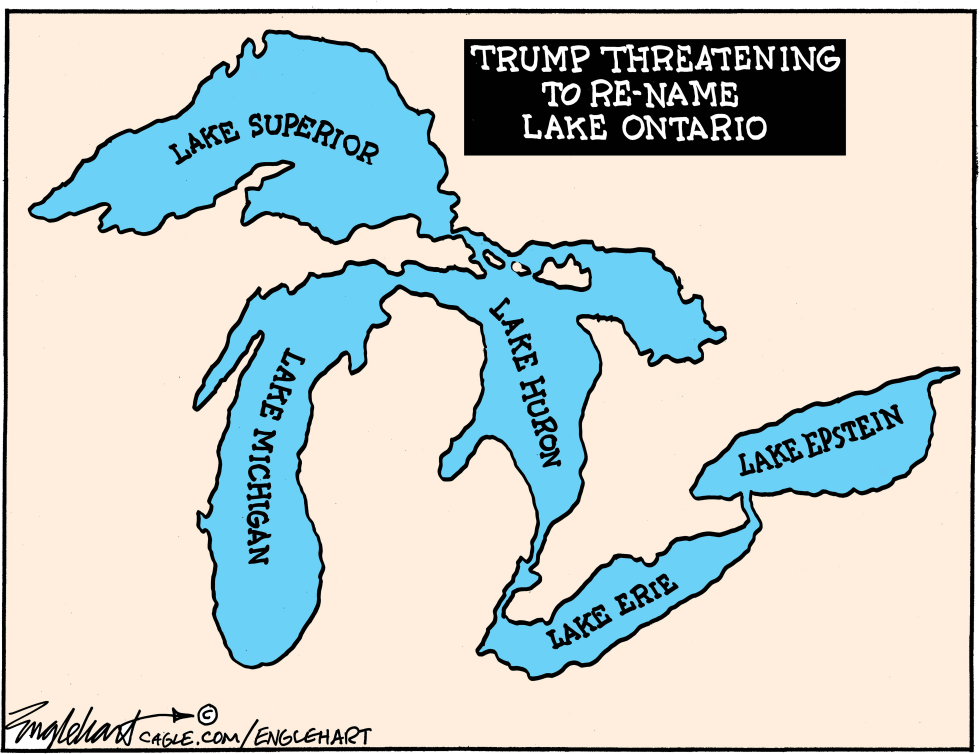
Donald Trump has floated renaming Lake Ontario, prompting fresh debate over presidential authority and decorum. The move echoes past naming controversies and raises questions about using federal power for personal or political statements. The cartoon criticizes the idea as frivolous and inappropriate.
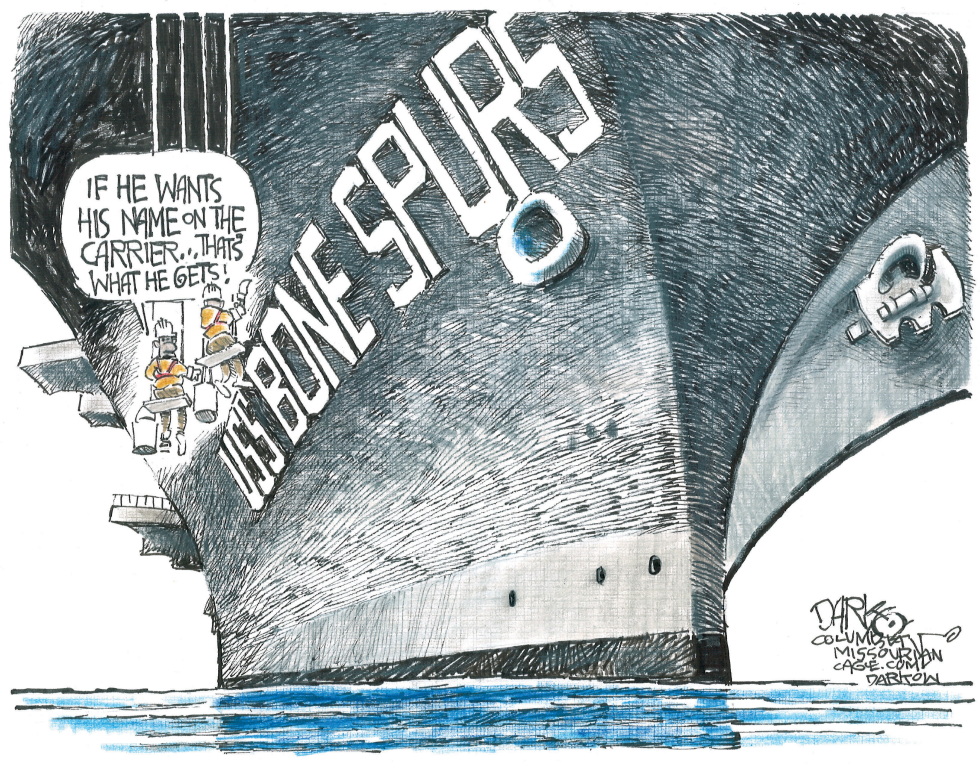
A proposal to rename a U.S. aircraft carrier after Donald Trump has drawn attention to his Vietnam-era draft deferments for bone spurs. The move highlights ongoing debate over military service records of political figures. The piece portrays the renaming as a pointed reminder of those deferments.
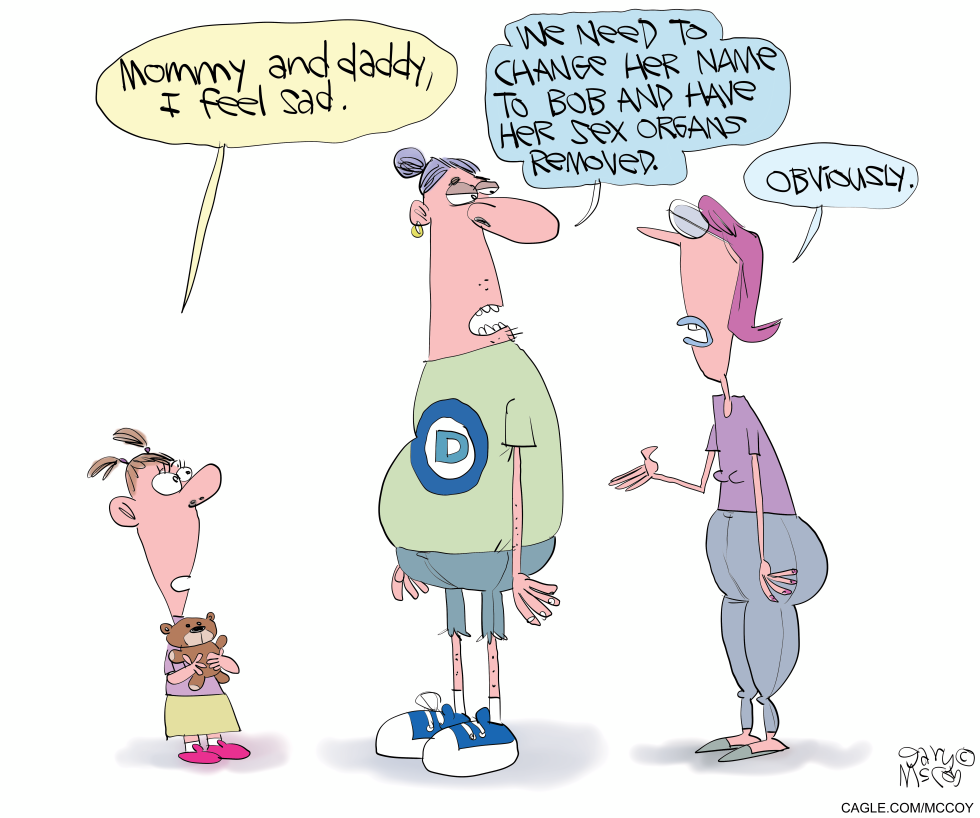
A child tells parents she feels sad. The adults immediately discuss changing the child's name to Bob and removing her sex organs. The exchange highlights a rapid pivot from emotional distress to medical intervention in family settings. The piece takes the position that such responses overlook the stated feeling and rush toward irreversible steps.
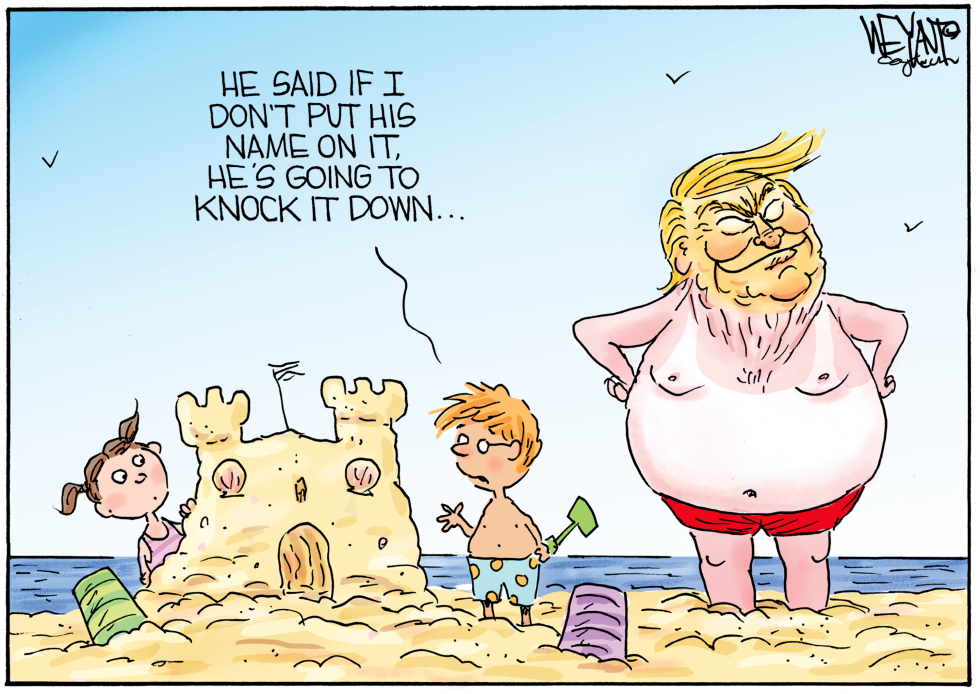
Donald Trump has long pressed for personal credit in public projects and political dealings. The pattern involves demands for recognition that extend even to minor or symbolic matters. This dynamic matters because it reveals how one figure seeks to dominate credit and loyalty across settings. The piece takes the position that such demands reflect an outsized need for acknowledgment that overrides ordinary boundaries.