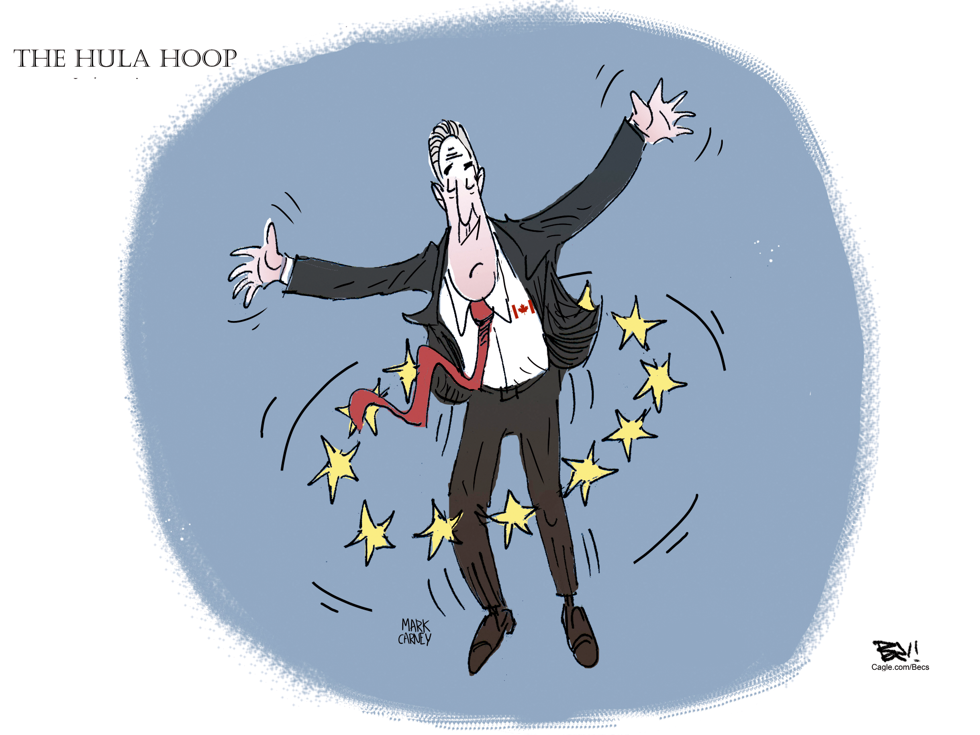
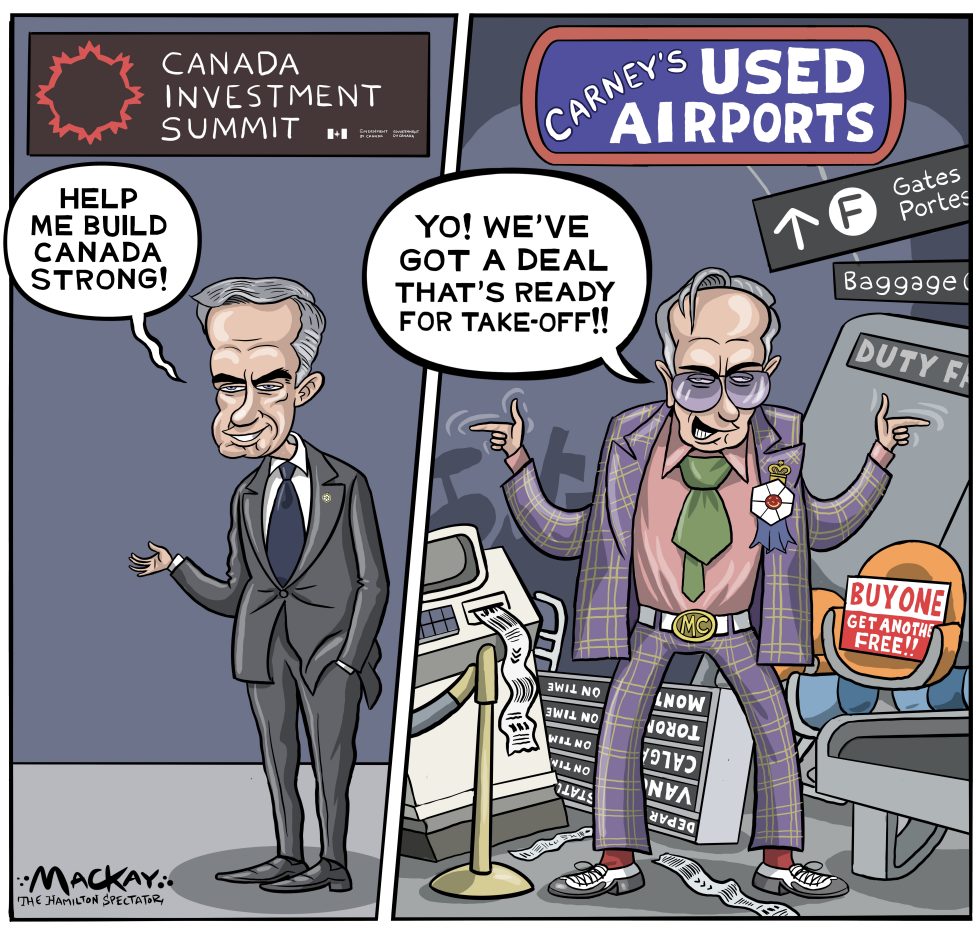
Mark Carney, a prominent Canadian figure with central banking experience, has positioned himself at the center of efforts to strengthen economic and diplomatic links between Canada and the European Union. Recent developments in trade negotiations and regulatory alignment have placed renewed focus on these ties, which matter for supply chains, investment flows, and geopolitical stability. The cartoon frames Carney's role as one of active management in this relationship, suggesting both opportunity and the need for careful coordination.
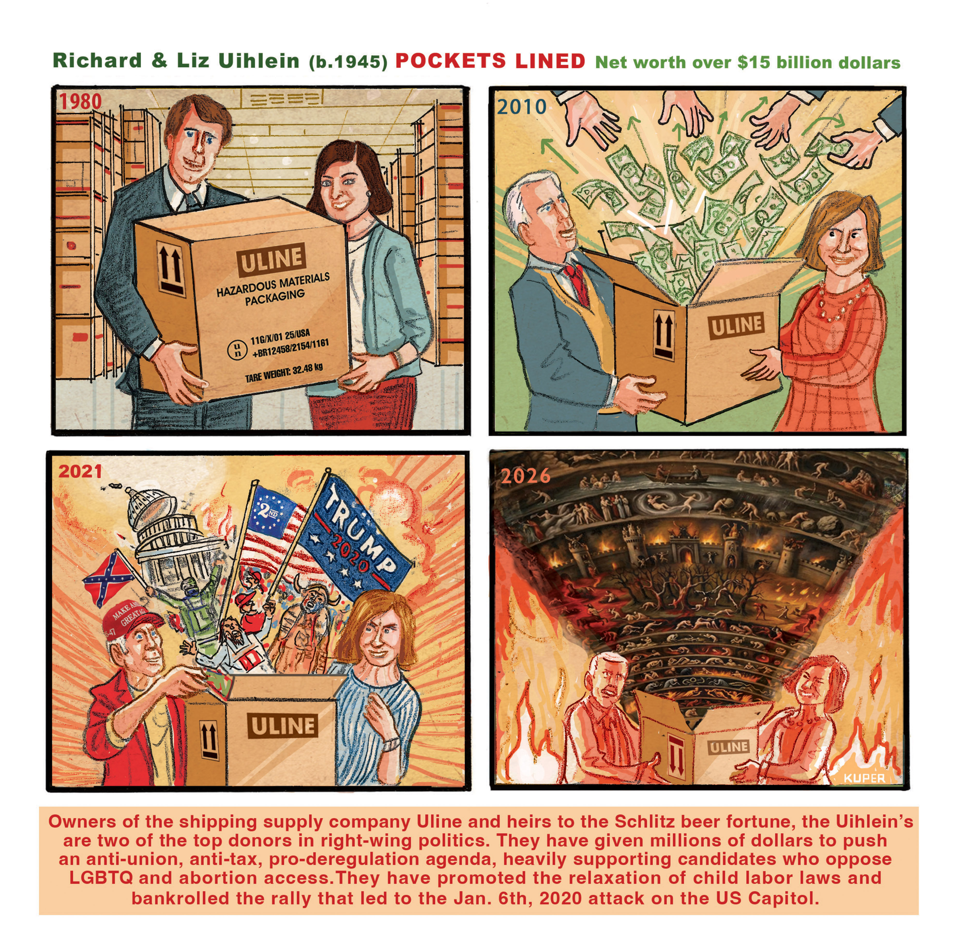
Richard and Liz Uihlein, heirs to the Schlitz fortune and owners of Uline, have donated millions to right-wing candidates and causes. Their support helped organize the January 6 rally and advanced anti-union, anti-tax, and anti-LGBTQ policies. The cartoon portrays their growing influence as corrosive to democratic norms.
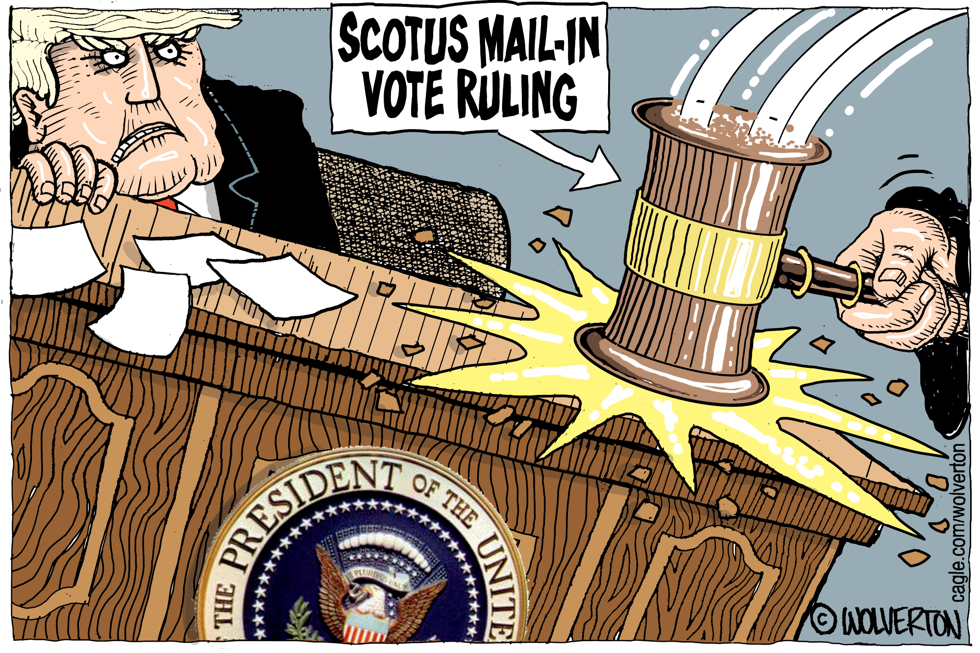
A new Supreme Court ruling on mail-in votes has drawn a sharp reaction from President Donald Trump. The decision appears to restrict certain ballot practices ahead of future elections. In the cartoon, the gavel smashes into the presidential podium where Trump stands, sending papers flying. Trump is depicted with an angry expression, leaning forward as the impact occurs. The image uses the visual of the striking gavel to illustrate the direct effect of the ruling on the administration. The cartoon was published on September 16, 2026, by artist Monte Wolverton.
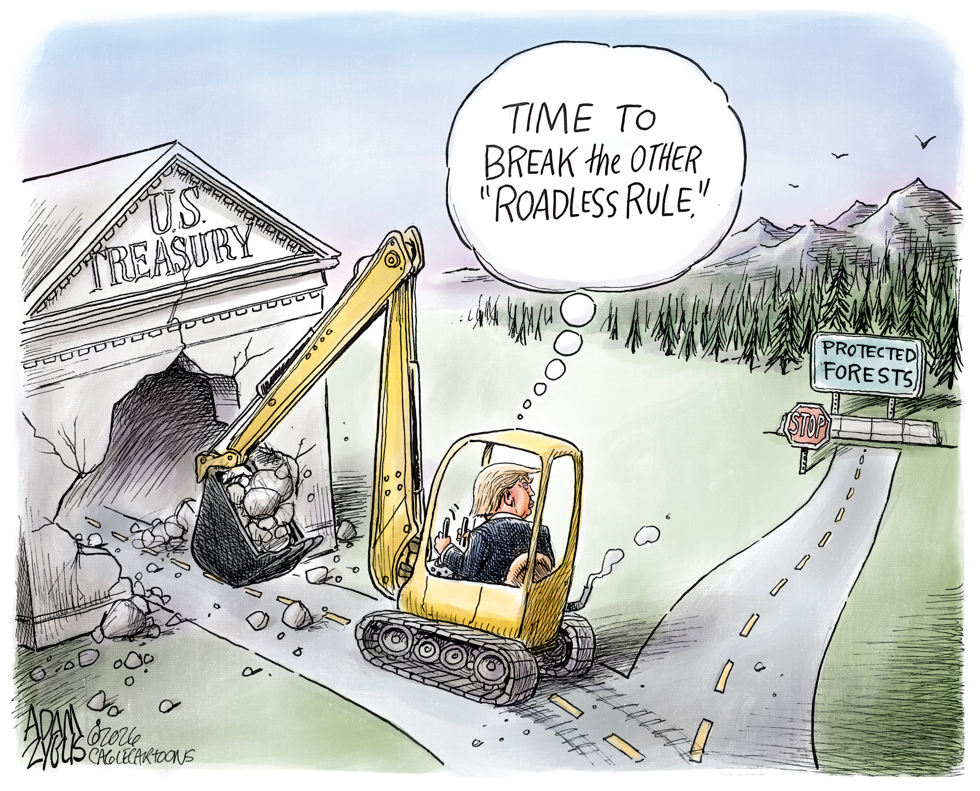
The cartoon shows Donald Trump at the controls of a yellow excavator that has already damaged the U.S. Treasury building. His thought bubble calls for breaking the other Roadless Rule while a sign marks protected forests ahead. The image comments on efforts to open national forests to development by repealing the 2001 Roadless Rule. It links the policy shift to broader questions about federal spending and regulatory priorities. The visual places the Treasury in the path of the machine to suggest fiscal or institutional costs alongside environmental changes.
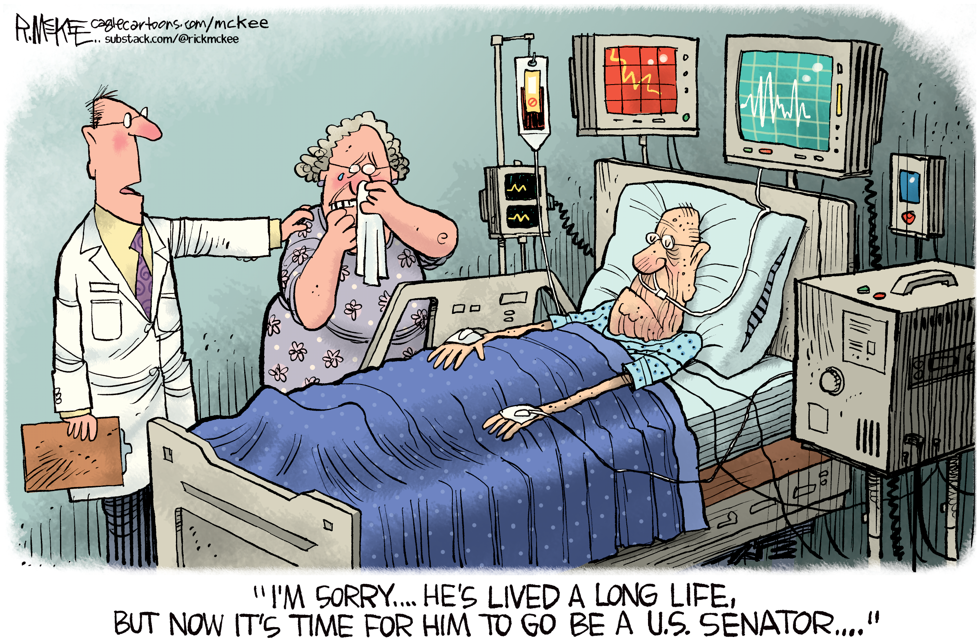
US senators continue serving well into advanced age and declining health, prompting renewed debate over whether longevity in office serves the public. The cartoon frames the Senate as a final posting for those whose physical condition would otherwise signal retirement from demanding roles. It takes the position that voters and parties tolerate or encourage this pattern rather than demanding younger replacements.
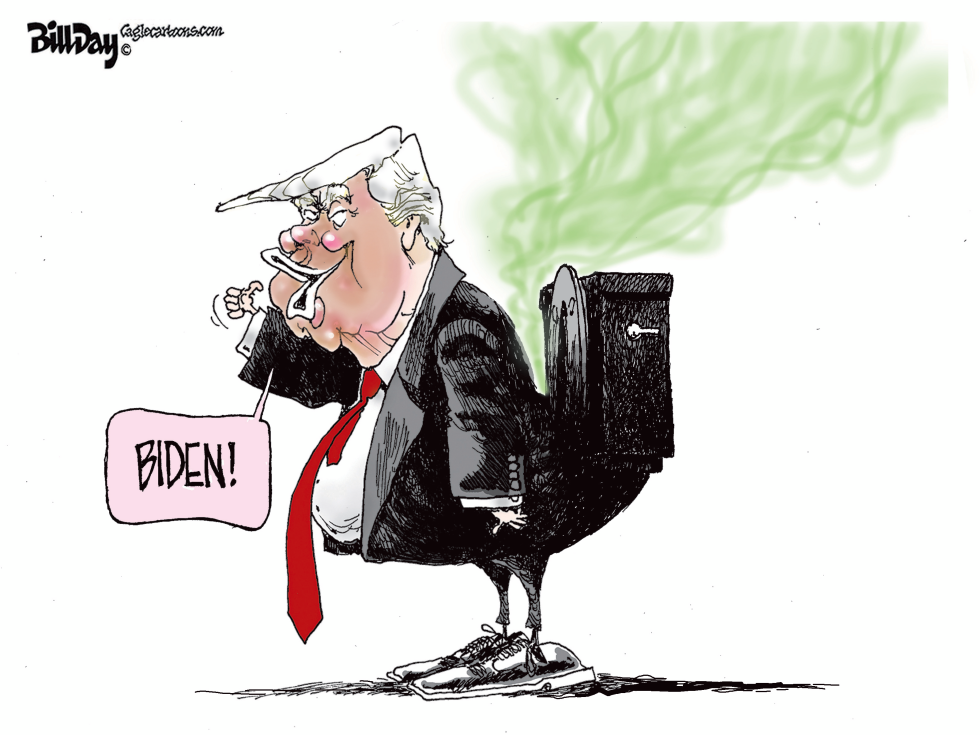
Donald Trump has repeatedly attributed policy shortcomings and political setbacks to his predecessor Joe Biden throughout 2026. This pattern continues a long-standing approach of shifting responsibility rather than addressing current challenges directly. The editorial position criticizes this tactic as evasive and unhelpful for resolving real governance problems.
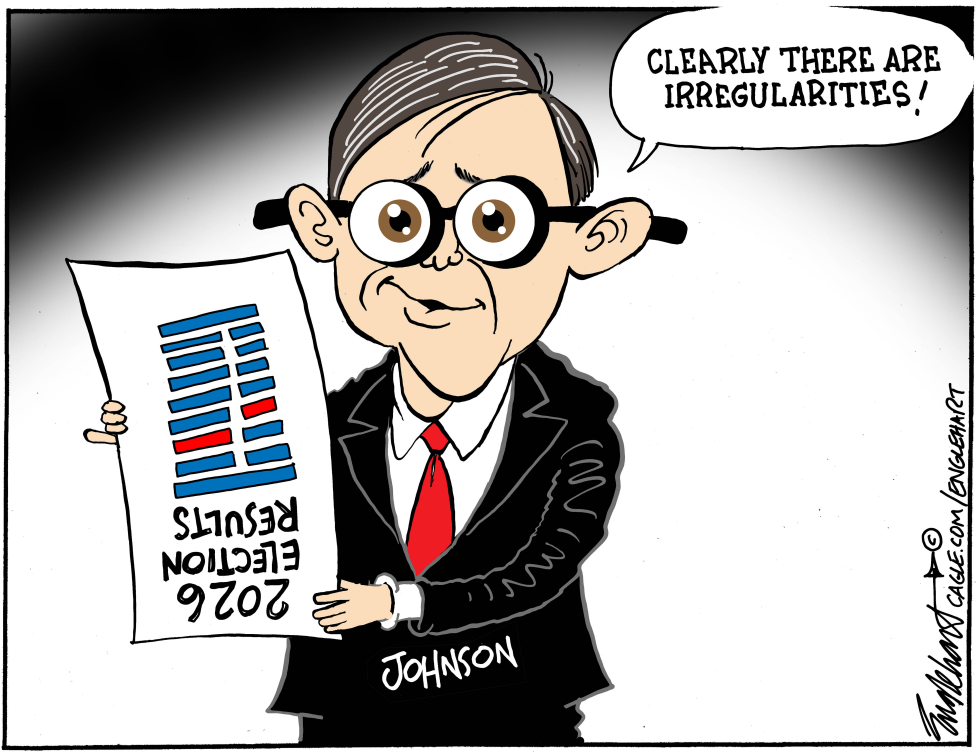
House Speaker Mike Johnson publicly questioned the integrity of the 2026 election results in September 2026, citing irregularities in a bar chart of outcomes. The move raised alarms about potential delays or challenges to congressional certification of the vote. Critics argue the statements undermine public confidence in the electoral process without evidence of widespread fraud. The cartoon portrays Johnson as actively sowing doubt in the results to influence outcomes. It takes the position that such rhetoric from congressional leadership threatens democratic norms and the peaceful transfer of power.
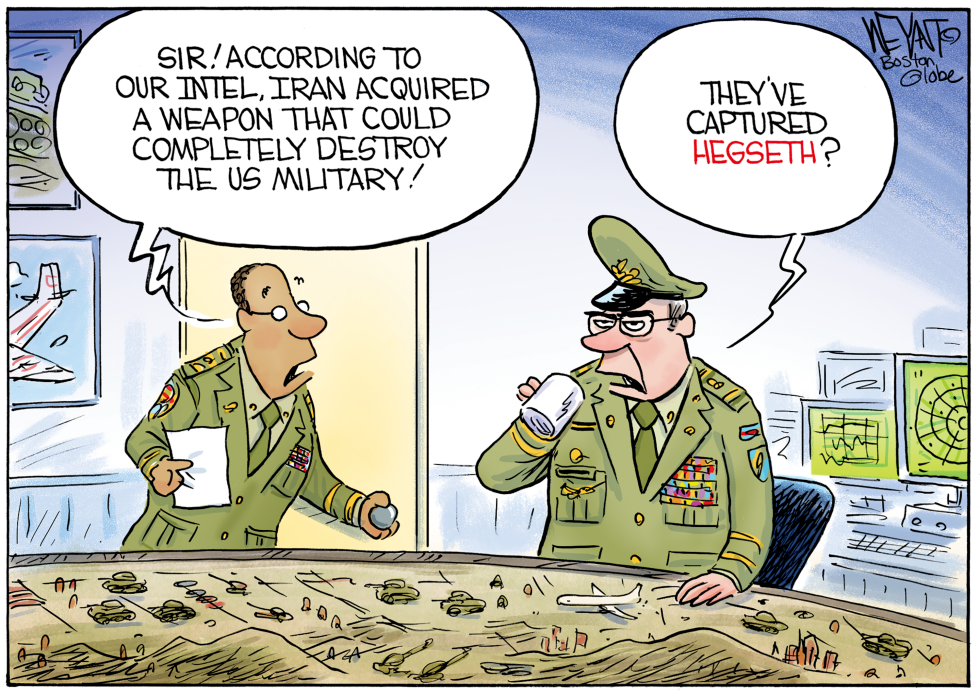
On September 16 2026 a cartoon depicted two US military officers reacting to intelligence about an Iranian weapon capable of destroying the American military. The senior officer immediately identifies Pete Hegseth as the captured asset in question. The piece responds to ongoing debate over Hegseth's fitness for senior defense leadership and questions whether his presence undermines readiness more than external adversaries.
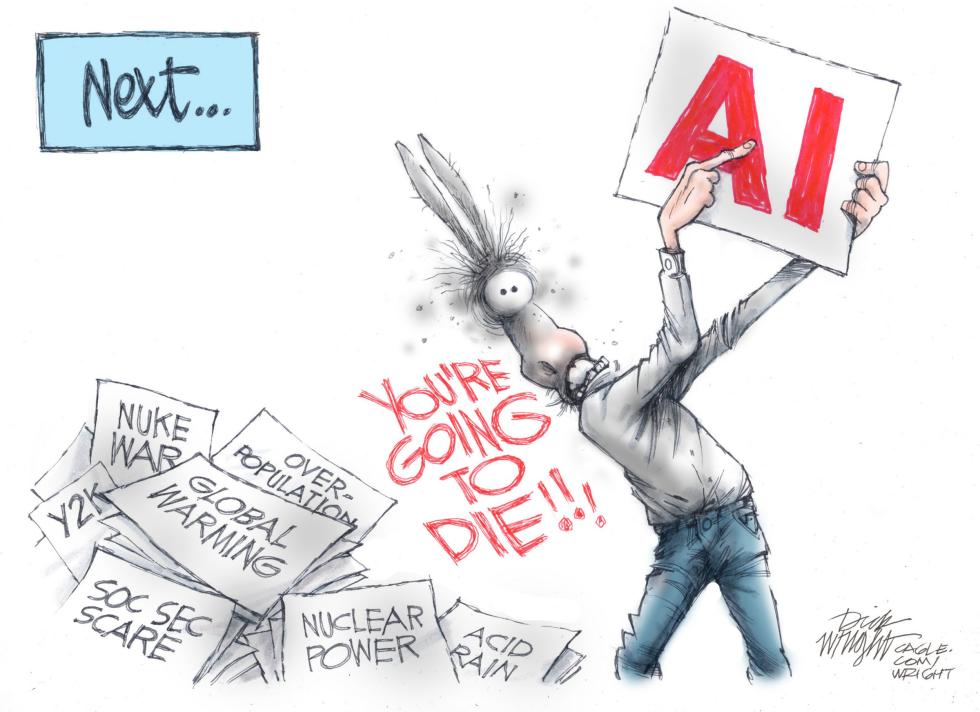
Democrats have renewed warnings that artificial intelligence poses an existential threat, echoing earlier alarms over Y2K, nuclear power, and climate change that later lost urgency. The pattern suggests political use of successive crises to maintain attention. The cartoon argues these claims recycle familiar tactics without new substance.
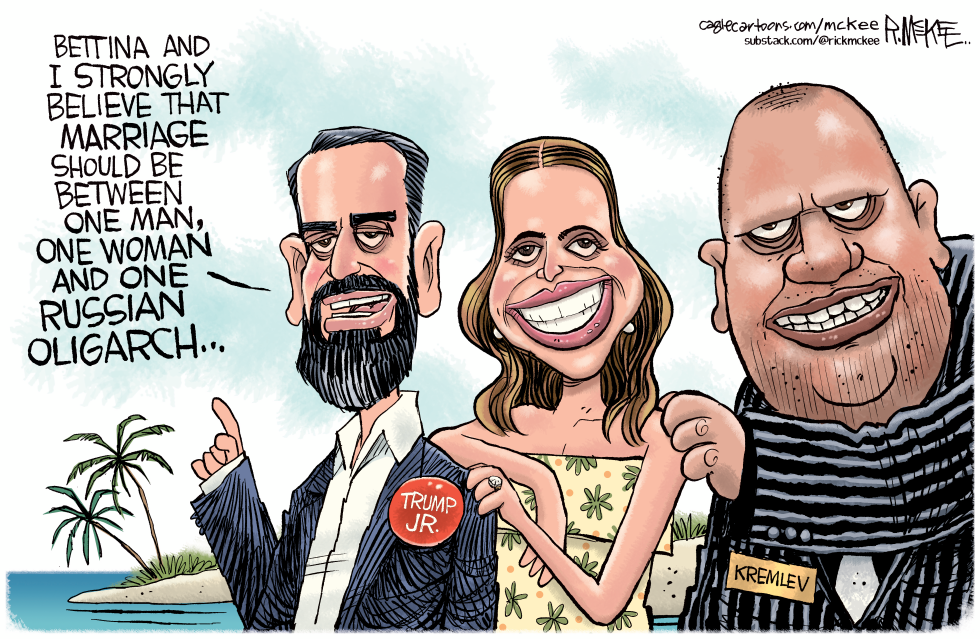
On September 15, 2026, commentary emerged around reports of Russian oligarch involvement in events tied to Donald Trump Jr. and Bettina. The development raises questions about foreign influence on the Trump family. The piece argues such connections undermine claims of independence from external interests.
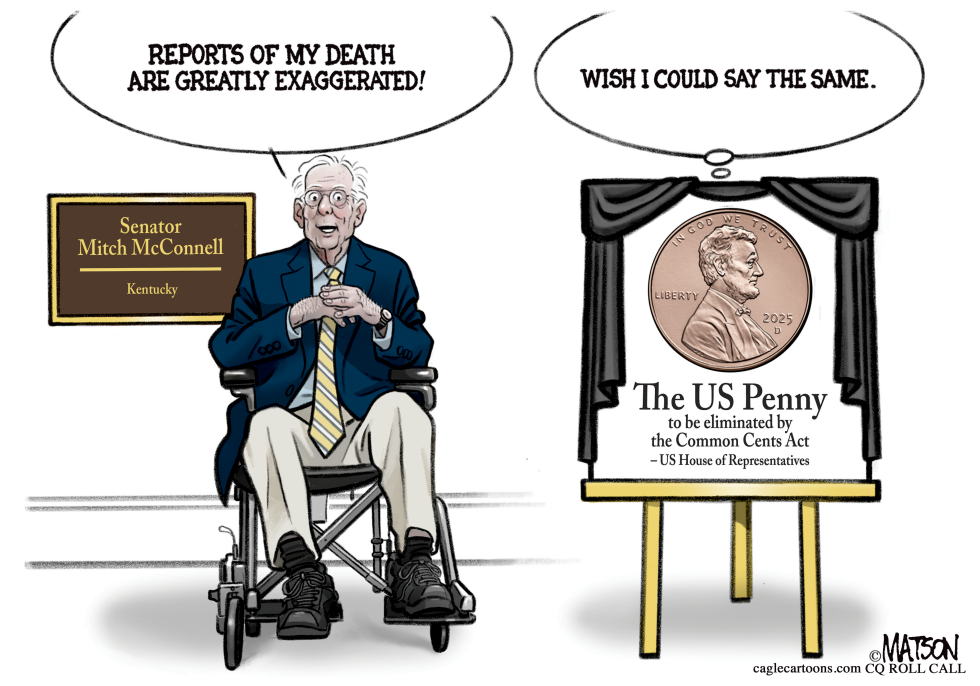
Senator Mitch McConnell returned to the Senate floor on September 15, 2026, after health-related absences, directly addressing rumors of his political demise. At the same time the House has advanced the Common Cents Act to eliminate the US penny. The move reflects ongoing efforts to modernize currency amid rising production costs. McConnell's return underscores his enduring influence in the chamber despite physical challenges. The cartoon uses a classic quote to juxtapose the senator's resilience against the penny's planned demise, suggesting one survives while the other does not.
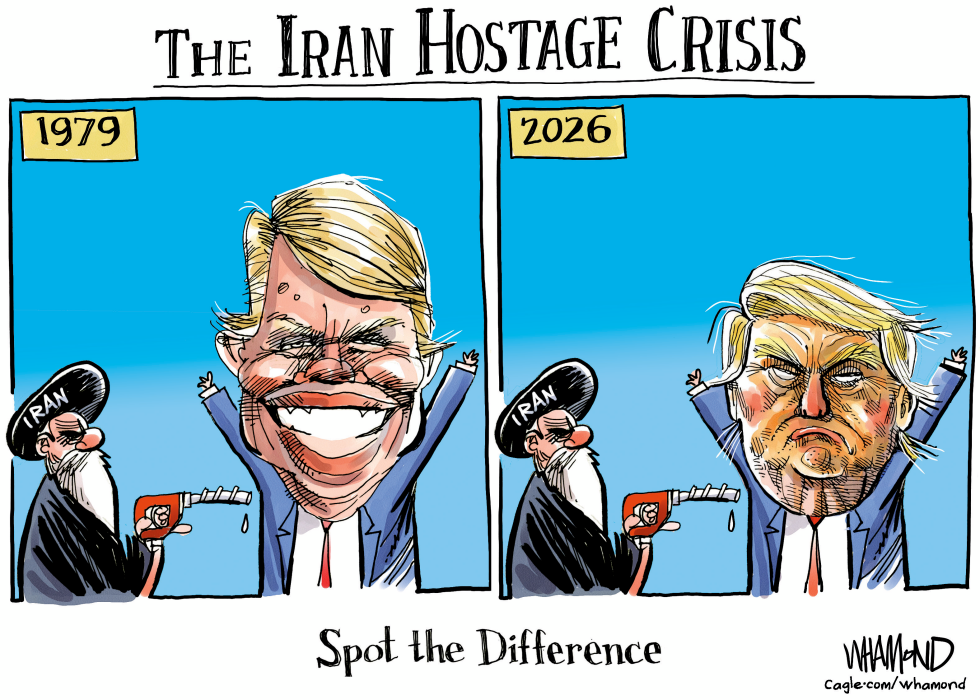
The cartoon splits the Iran Hostage Crisis into 1979 and 2026 panels. In the first Trump appears elated while an Iran-labeled figure holds a gas pump. In the second Trump looks distressed with the same figure present. The piece uses the visual contrast to comment on how Iran-related pressures affect US political figures differently over time.
The cartoon depicts Justin Trudeau at a Canada Investment Summit appealing for help to build the country strong. In the adjacent panel, Mark Carney appears as a used-car-style salesman hawking airports with a buy-one-get-one-free offer and a ready-for-takeoff deal pitch, highlighting a satirical take on airport privatization efforts.
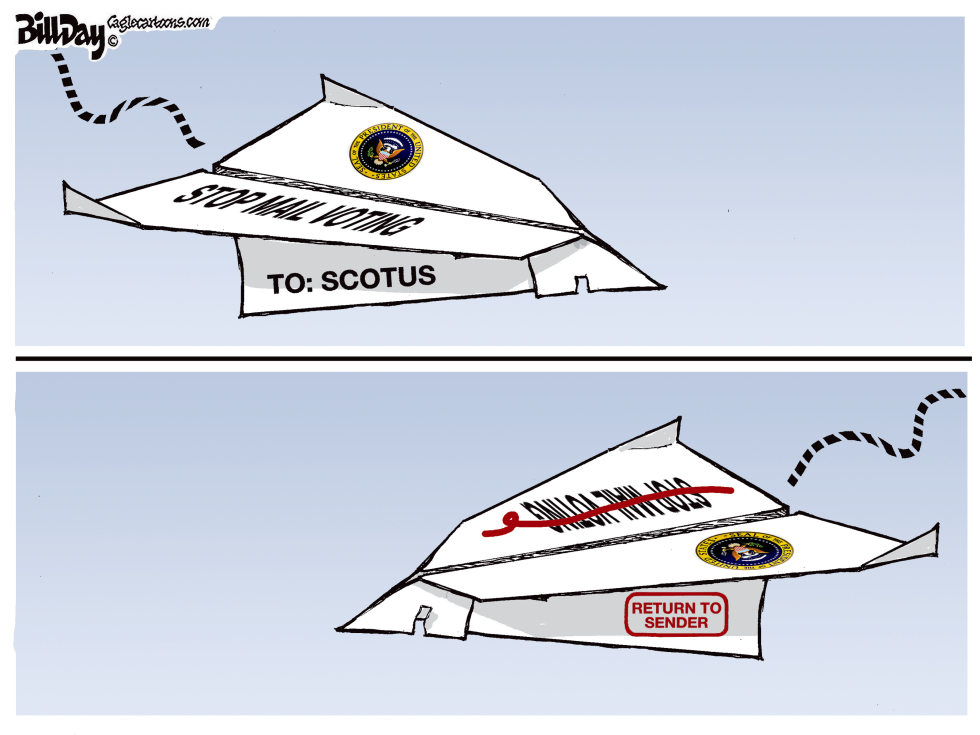
A presidential directive aimed at ending mail-in voting reached the Supreme Court but was promptly returned. The action underscores ongoing disputes over election procedures and access. The cartoon frames the effort as an unsuccessful attempt to restrict voting methods through judicial channels. It highlights institutional pushback against executive intervention in ballot processes. The piece takes the position that such restrictions lack support and are properly rebuffed.
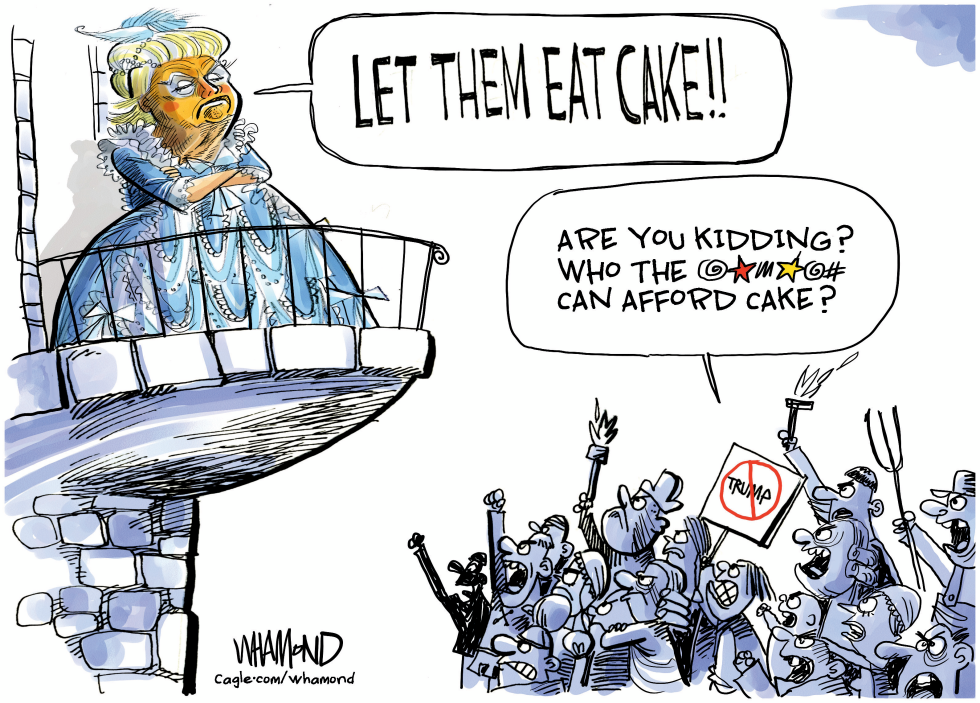
The cartoon by Dave Whamond depicts Donald Trump as Marie Antoinette on a balcony declaring 'LET THEM EAT CAKE!!' while a crowd below protests with signs and questions who can afford cake. Published on September 15, 2026, the image draws on the historical quote to comment on contemporary affordability concerns during Trump's term. The visual contrasts the elevated figure with an agitated crowd holding anti-Trump signs. It captures ongoing public discontent with rising costs. The piece uses the famous anecdote to underscore perceptions of detachment from everyday economic pressures.